
Tagged: wine
THE A B C: A- Amour, B- Beatles, C- Champagne DAY 1
(This is an interactive post! please press play for music as you go along reading)
A visit to Champagne with Yair – Day 1
June 7th 2011, My 58th Birthday is 4 days from today, Decided to treat myself with a visit to Paris and combine a two days trip to Champagne This is something I have been meaning to do for A LONG TIME… for me coming from Tel-Aviv the general direction due west …or as the Beatles say follow the sun…
We set out early morning from Paris its a rainy Day. The mini cooper is quick to gulp the 137Km to the village of Vertus Where we’re suppose to visit Pierre Larmandier, of Larmandier Bernier later this afternoon.
But we took off early and the mini is swift , so we have several hours to “kill” in the area before our meeting for a tasting at Larmandier starts.
Yair is the ultimate Guide in the wine regions of France and there is a structure to his wine Journeys for Pros and Novices alike, it contains much more than just some visits for tasting wines.
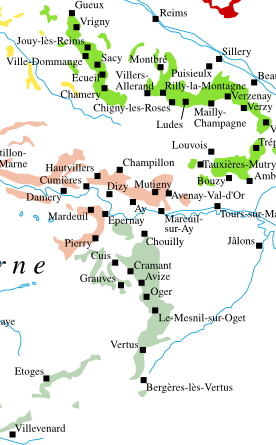
There are Visits to the vineyards,a bit of history, and other places of general or particular interest are all included. So we set out into the vineyards of the Côte de Blancs Our destination for the first day with the Men and Legends of the sub region. This is the source of the vines of the Best Chardonnay lots of champagne. We take the vineyards road all the way up to the top of the cote de blanc up to the forest,

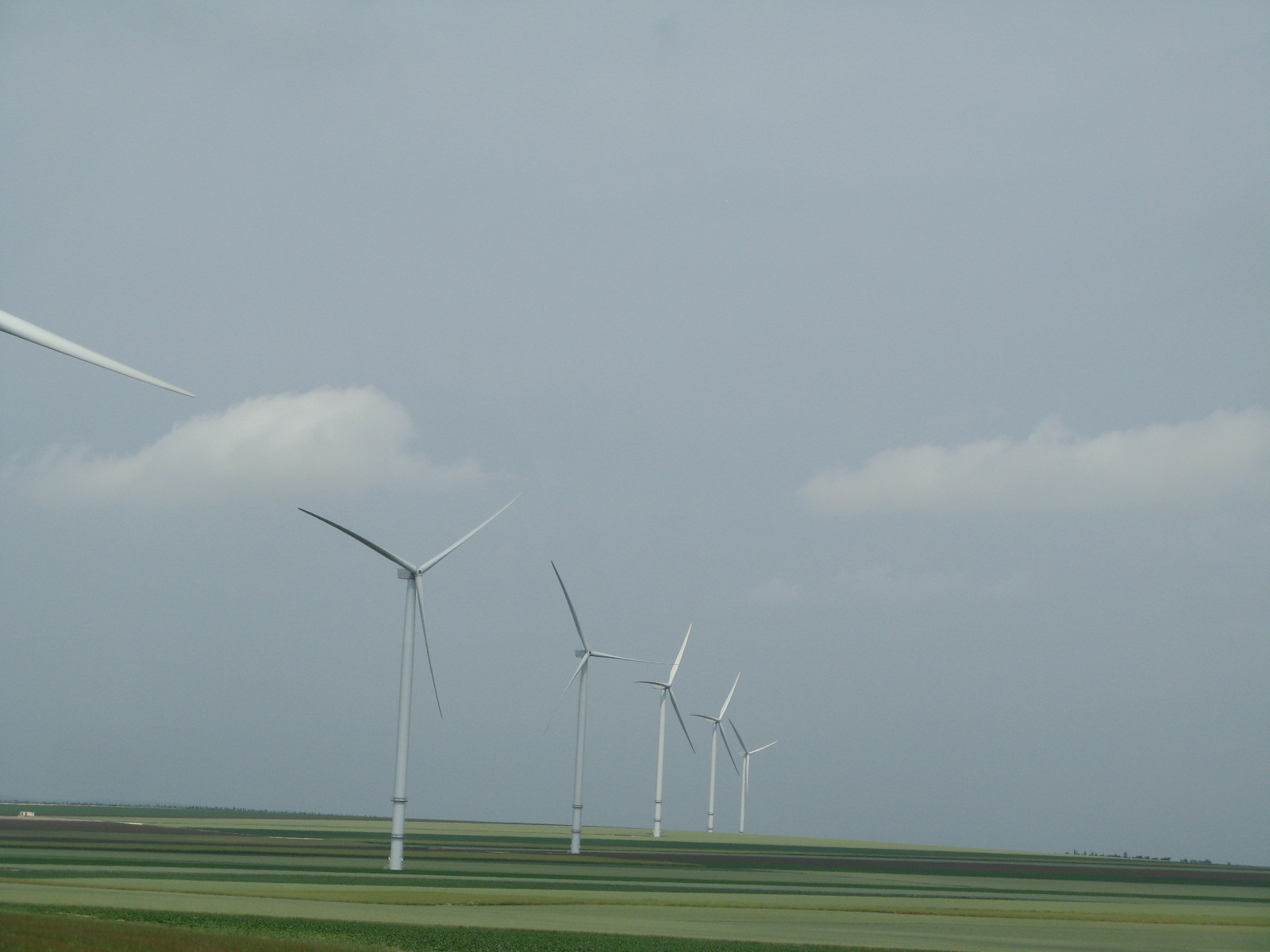
we look down the slope of the rows of chardonnay vines to the valley below and the sun comes up The sun rays caressing the vine leaves and the air gets warmer. Now I understand (at least I think I do), why those farmers of champagne installed those giant Ventilators in the entry to the Valley, it gets pretty warm here even though we are on the 49th parallel, in fact this is the northern most wine region on the northern Hemisphere.
We stroll carefully amongst the vines, the grapes are just starting to cluster, we look down the rows, what a sight. I must show you something says Yair we drive into a little village: Mesnil-sur-Oger. Tucked in between the small houses, just off one of the streets is the the renowned Clos du Mesnil vineyard. The small ally leading to it is almost unseen called: Allee clos du Mensil (the S in silent pronounced Menil).

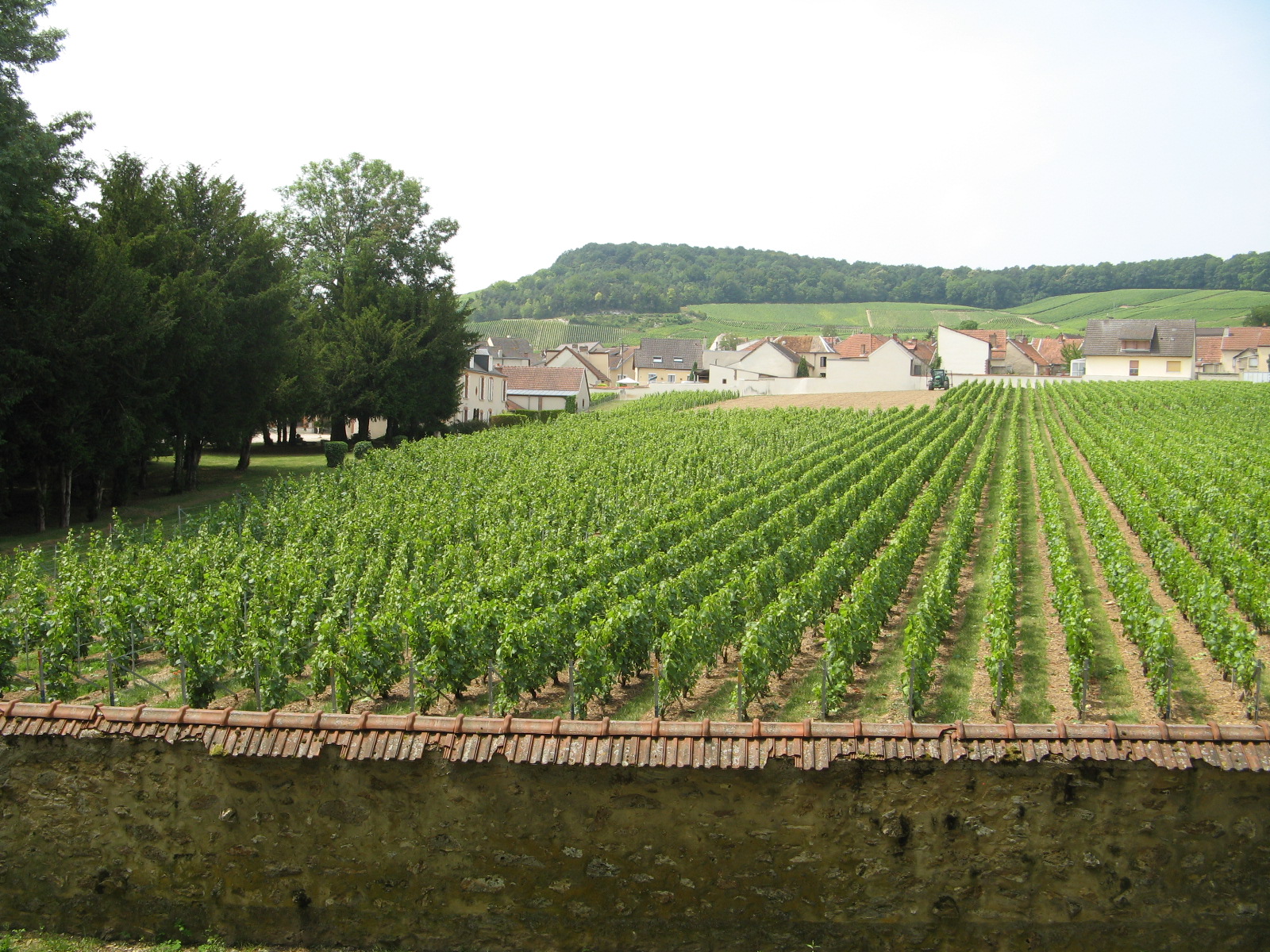
This historic 1.85ha vineyard has been enclosed by a stone wall since 1698 and is set on a southeast-facing slope and is sheltered from the weather by its wall and the Vilaage houses. Purchased by the Krug family in 1971 it was restored to its previous glory by replanting the Chardonnay vines one section at a time. The 1979 vintage finally achieved expected quality by Krug standards and the first vintage of the Krug Clos du Mesnil was produced since than about 12,000 bottles of this wine are made in only the top vintages. We climbed an elevation of the ground which set us just above the wall line, The “Legend” infront of our eyes and the wall separating us humans and wine Royalty. I was not humbled but certainly excited. A sip from a 1985 Clos du Mensil would make this moment perfect, Alas Krug do not have a stall of wine by the glass on site.

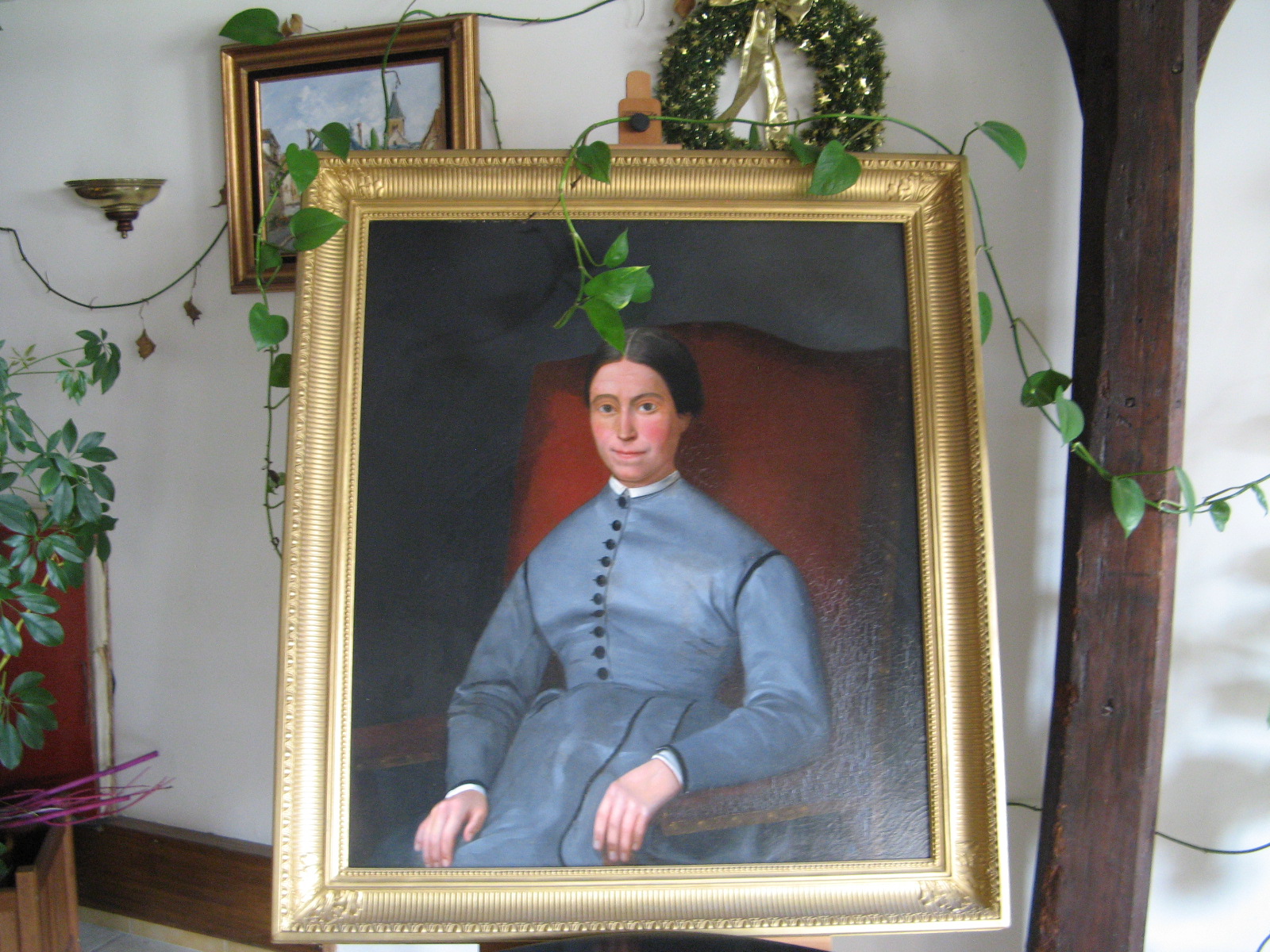
Lets pop in to see my friend Pierre Gonet and his sister Chantal says Yair since we’re in Mensil Sur Oger, Only Chantal is there but she gives us a very warm welcome and a proper tasting of ALL their wines The one with the intriguing name: Philippe Gonet EXTRA-BRUT 3210 Blanc de Blancs, means Aged 3 years, 2 terroirs, 1 variety, 0 dosage is the crisp, fresh and the most acidic of them all and they start with higher acidity than your usual blended champagnes here at the Côte de Blancs! It’s a backbone that stretches through all the other different wines, an excellent start to a sunny day in the countryside CAMPAGNE. ..Grandma Gonet (picture above, deceased over a century and a half ago), was overlooking the tasting with her stern posture
We depart and set out the short ride south to VERTUS to our first “booked” visit of the day at Larmandier Bernier. Sophie Larmandier welcomes us to the wonderful tasting room on the ground floor


Pierre ia an artisan producer, he says: “we do disgorge the bottles, we add the dosage, to give the final touch to the champagne. But while most brut Champagnes are dosed at around 12 grams per litre, we never exceed 5 grams for our brut cuvées. For the ‘Terre de Vertus’ Non Dosé’, it’s simple: we add no sugar at all. Generally speaking, there is about 1 gram of residual sugar anyway”.
“We prefer to favour the maturity of the grapes and their natural sugar rather than adding sugar when the bottles are disgorged and running the risk of making the Champagne heavier and losing sight of the terroir”.
First we go down the spiral stairs to the cellars to have some of last vintage wines before bottling. The acidity at the moment is sky rocketing though it will mellow at the end of the process but keep an elegant, tight, dense and fresh, but delicate champagnes of the highest order.
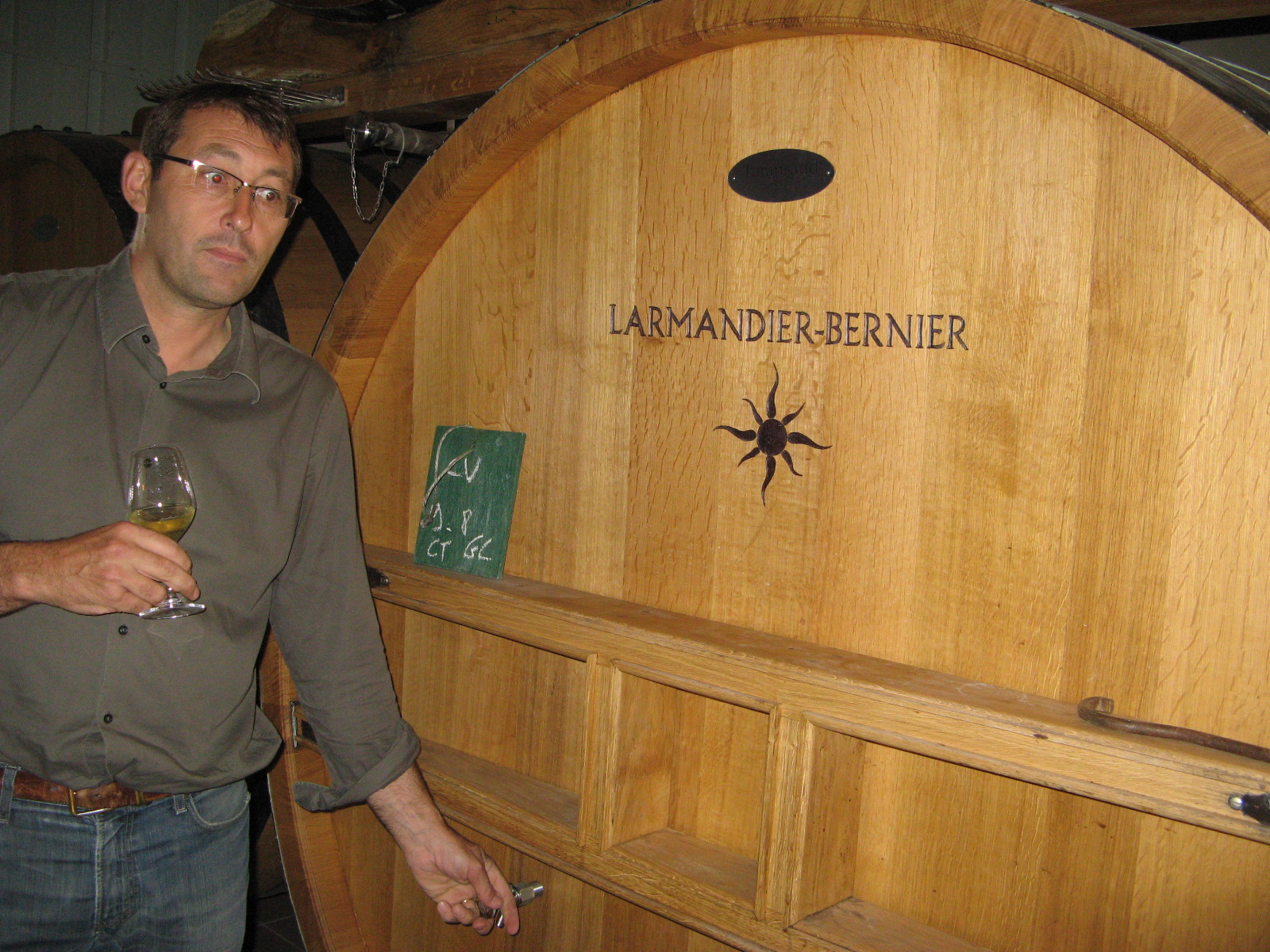

Pierre is so enthusiastic and feels at home amongst the Oak barrels on one hand and the strangely looking egg-shaped concrete tanks. These small tanks assist in oxygenation of the wine. Their shape aids fluid movement for temperature and reduces pressure on the lees. The shape also aids the deposition of the lees across a larger floor area than a barrel and avoids the need for stirring. The material is porous, allowing fermenting wine to breathe without imparting the oaky flavors. Concrete is insulative while stainless is conductive, so concrete acts as a low-tech temperature control.
This is not your everyday champagne these are “terroir-related” champagnes, with very little interference in the essence of the initial wine produced.
” Current trends among these artisan producers include decreasing yields, increasing use of oak for fermenting and ageing the still wines, lower levels of dosage with the likes of Gimmonet, Larmandier-Bernier and Jérôme Prévost offering wines with no dosage at all, and wines that are rather less aggressively fizzy than the champagne norm. Many of these producers also give far more information about make up of the blend and disgorgement dates than the average champagne producer.” Jancis Robinson
We tasted the :
Larmandier-Bernier Tradition Premier Cru NV
Larmandier-Bernier, Extra Brut Blanc de Blancs Premier Cru NV
Larmandier-Bernier, Terre de Vertus Non-Dosé Blanc de Blancs Premier Cru NV
Larmandier-Bernier, Vieille Vigne de Cramant Extra Brut Blanc de Blancs Grand Cru 2005 and 2006
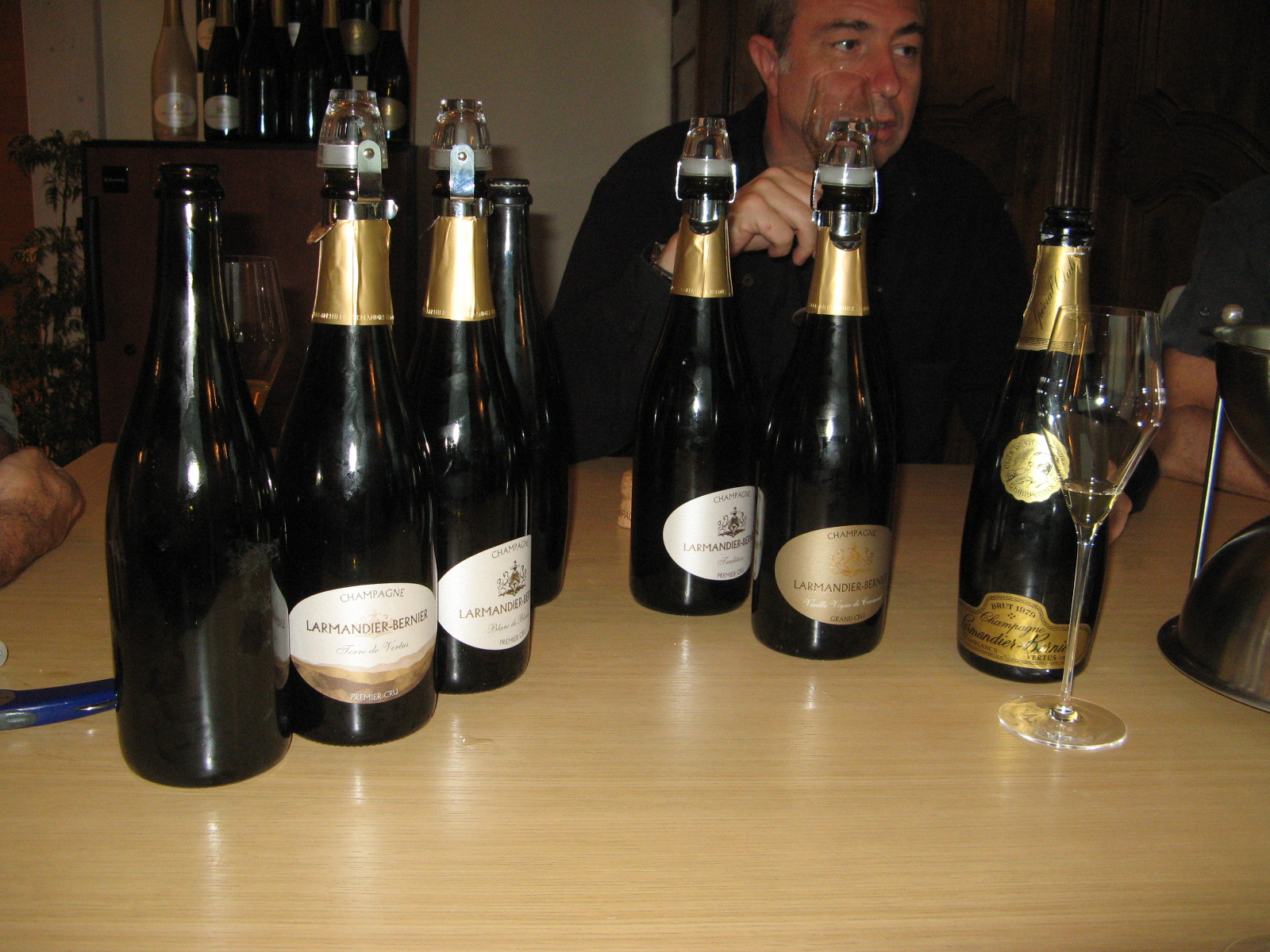


Some non disgorged cloudy 2009’s which had the scent and feel of a delicate cloudy fresh apple and grapefruit juice.
 These were rushed up from the cellar and opened on the porch spitting their enchanting scent as they were allowed to burst out into the air when the crown cork was opened.
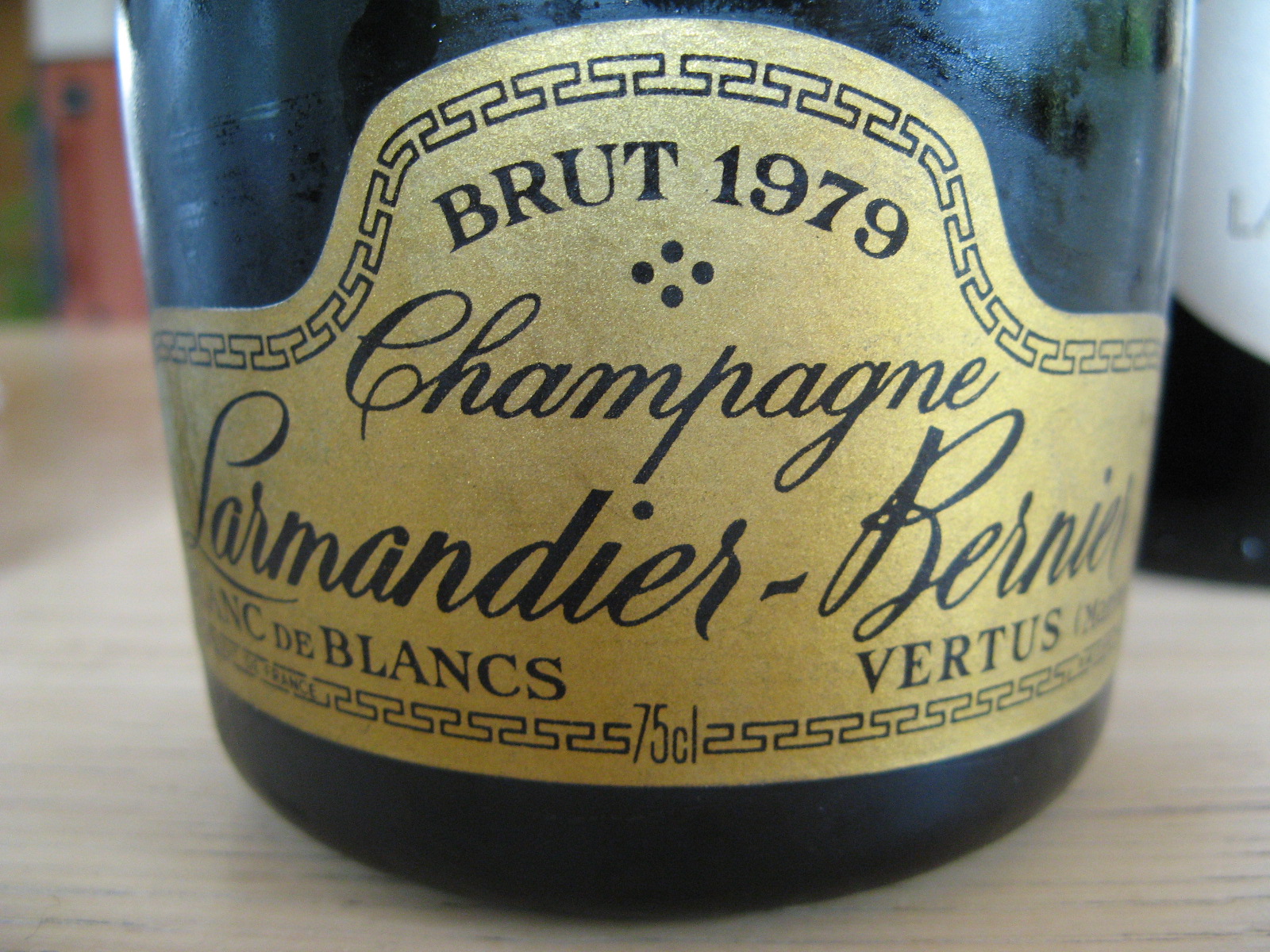
And the Brut 1979 Larmandier Bernier Blanc de Blancs
All the above are excellent champagnes each with its own character according to “pedigree” They can be described as very delicate with smooth small bubbles size, delicate to creamy mousse and excellent balance with long and lingering presence of citrus fruit and mineral touch of “Pierre à fusil” (It is the smell of heated flint or burned gun powder), aromas associated with the mineral character of the wine and that of the terroir. They are lighter champagnes when young with perfumes of flowers, slight aromas of grilled bread spread with butter, brioche and hazelnut. When getting older, they gain in smoothness, developing notes of fully ripe white pears and peaches. Wonderful precision!!!
As Pierre was preparing to fly abroad the next morning, we parted with sorrow but fully content and joyous
We are now heading to our final destination of the day to meet champagne’s “High Priest” in Aviz, Anselme Selosse, a good friend of Yair, what a lucky guy I am to have such friends.

It is hard to think of a single winemaker in Champagne today whose work is more influential on the new generation and on the philosophy of champagne production than that of Anselme Selosse. In heart he is a farmer, a wine grower, who happens to have this genius sparkle, which come to him with ease. (He answers to nobody but himself in the vineyard and the cellars…at home he answer to the wife like we all do)
I do not know him well enough but they say that his brilliance he has change the course of wine making in champagne region and that Anselme is the man most responsible for the revolution that’s taking Champagne to a new level. Since he studied oenology in Burgundy, he coined the idea that first you have to produce a great wine and only than make them into a great champagne all produced from grand cru vineyard in Avize, Oger, and Cramant.
In the winery, Selosse uses only indigenous yeasts for fermentations and by minimizing the use of SO2. He ferments his wines in wood barrels on their lees for more than 2 years, and in 1994, Gault-Millau named him France’s best winemaker in every category take that for an achievement. Some describe him as the most original winemaker in France today, and still he goes on with his aspiration and interests and seemed to me utterly unaffected by all the Razzmatazz around him. He is friendly, humble and thank god still eager to improve the small intricacies on the path to perfection. “Chapeau”!!!!
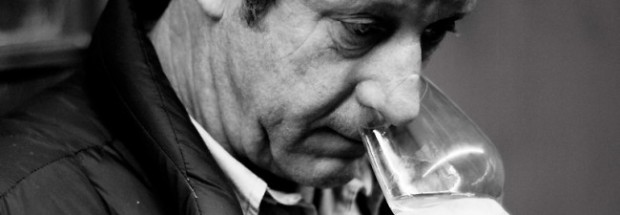
We tasted great (young) chardonnays from the Barrels bursting with fruit and livelihood some almost 2 years old and still expressing youth characteristic of a month old wine from a steel tank rather than a wine in an oak barrel on it’s lees.
The Champagnes: (we did not taste them all, left a few for the next visit)

Blanc de Blancs
Initial. A “classic” Brut. An assemblage of three vintages. Aged 2 years before degorgement.
Version Originale. Anselme’s great multi-vintage cuvée is aged 42 months before degorgement, and bottled with very little (1.2gr) or no dosage.
Millésime. The expression of character of a single vintage year.
Substance. The taste and character Avize’s vineyards.
Exquise. With a slightly higher dosage
Blanc de Noirs & Assemblage
Contraste. Show off with Pinot Noir from Aÿ.
There’s something very correct and precise about these wines on both the wine and the champagne stage, but it also has its “sexy” side. It is voluptuous. elegant with tons of finesse. BRAVO!
I had so many exquisite wines on the day for tasting which seldom went into the spittoon (sheer greed) with nothing to eat since last night , I was beginning to feel a bit weary and tired.
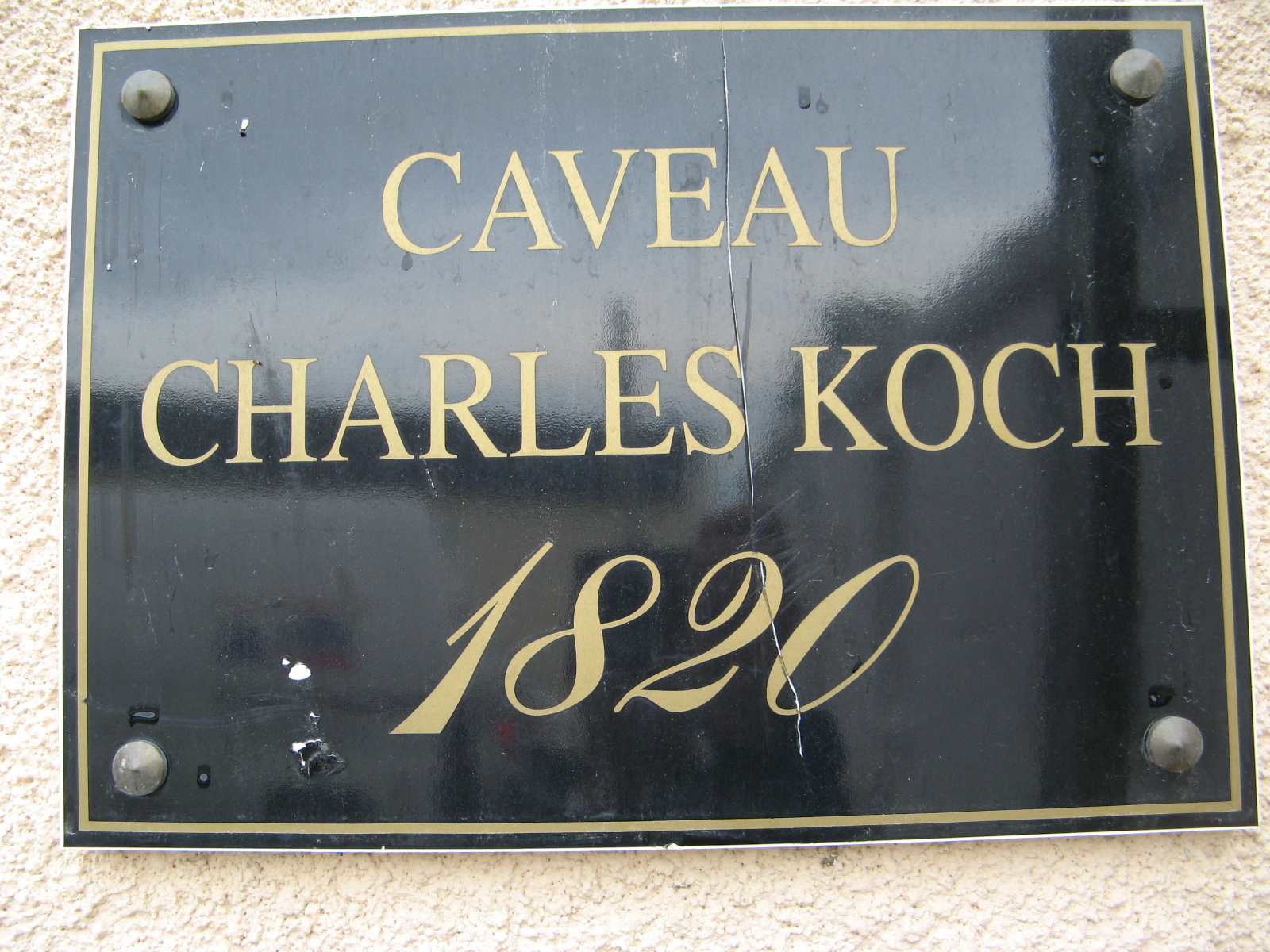
I was thankful that we were invited to spend the night, at the exquisite almost finished new hotel his wife Corinne erected. a nice neoclassical residence linked to the production of wine CHARLES KOCH since 1820 it make you share the soul of champagne in the past with the luxuries and amenities of the present. It is a perfect place to stay rest eat with style and quality
At the moment I leave you only with the details of the Hotel (below)

Hôtel Restaurant Les Avisés – 59, rue de Cramant – 51190 Avize
Tél (33) 326 577 006 – Fax (33) 326 577 007 – Email : hotel@selosse-lesavises.com
Check the dates with reception
A separate post, about the Hotel and Restaurant will be posted in the near future.
Your wineguide
The magnificence of the Douro A Visit to Niepoort
This is our first visit to Portugal, though my love of Port (the wine), always allured me to this lovely country it is only now the opportunity of a short visit came about…
The Romans arrived here a long time before me, around the 2nd Century A.D., conquering the Celtic inhabitants and establishing cities like Conimbrigia Setúbal, Aveiro, Obidos and Lamego to name but a few. The Romans brought wine and vines with them, and are responsible for introducing some eastern Mediterranean grape Varieties such as Muscatel Graudo, to the Iberian Peninsula. Its distinctive aroma is quite easy to recognize being one of the few grapes whose wine smells like the fresh grapes, plus scents of young raisins, lemons, tropical fruits, lime and citrus bloom. It has good, fresh acidity. Elsewhere in the world, it is known as Muscat of Alexandria, mainly used for sweet, fortified wines, most famous of which is Moscatel de Setúbal with its firm aromas of acacia blossom.
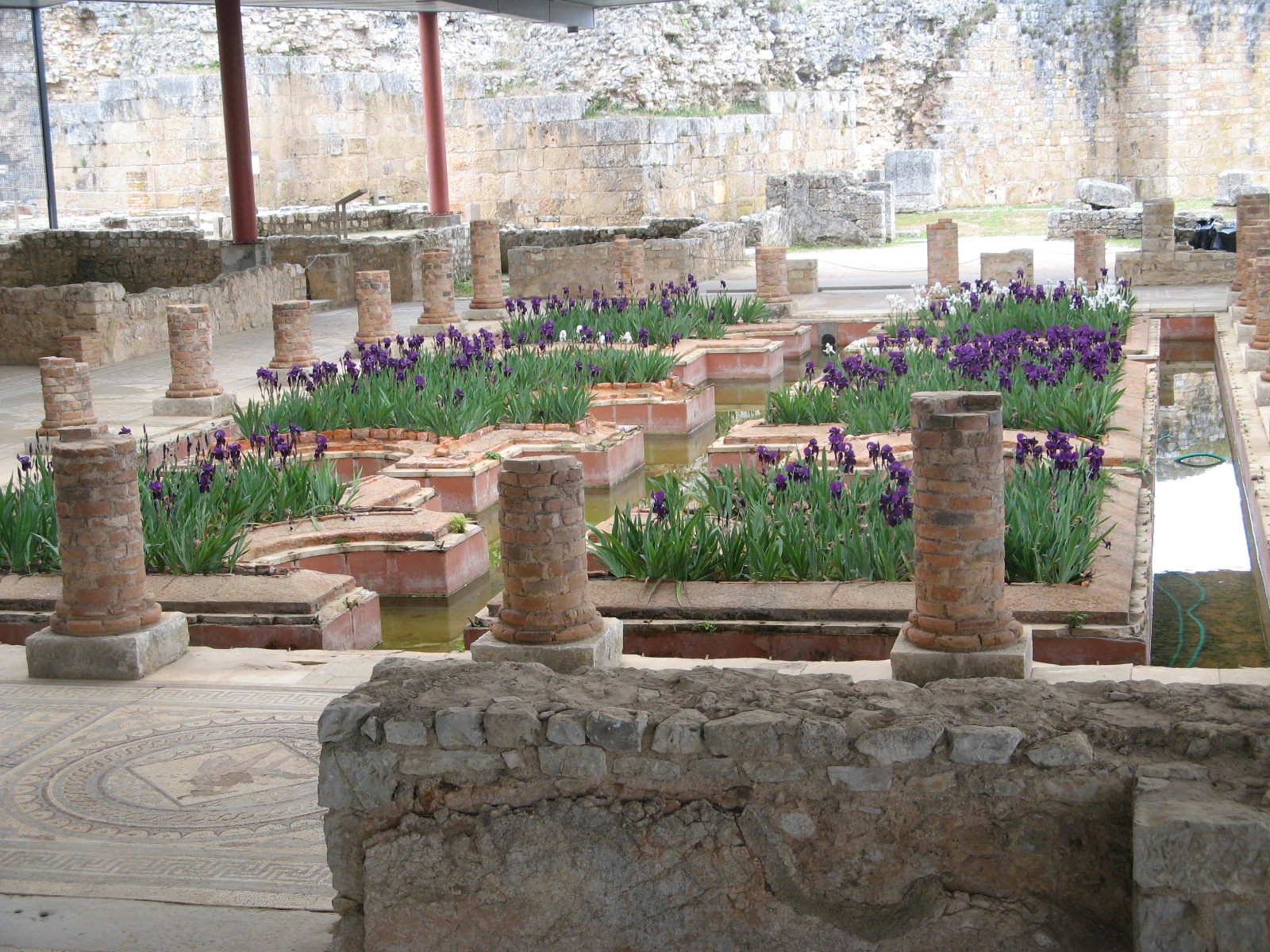

It is mid April and the fields are flowering with some wild flowers (it hardly rained this year in the Cima Corgo region, but this is an arid piece of land in European standards, still the vines are used to water shortage and hardship, and the vintners, as always complain about the weather…
We are leaving ancient Conimrigia, the largest Roman settlement in Portugal. Driving due north and entered through the “gate” to the Northern wine regions of Portugal, via Lamego the small town with the monumental baroque Sanctuary of Nossa Senhora dos Remédios.
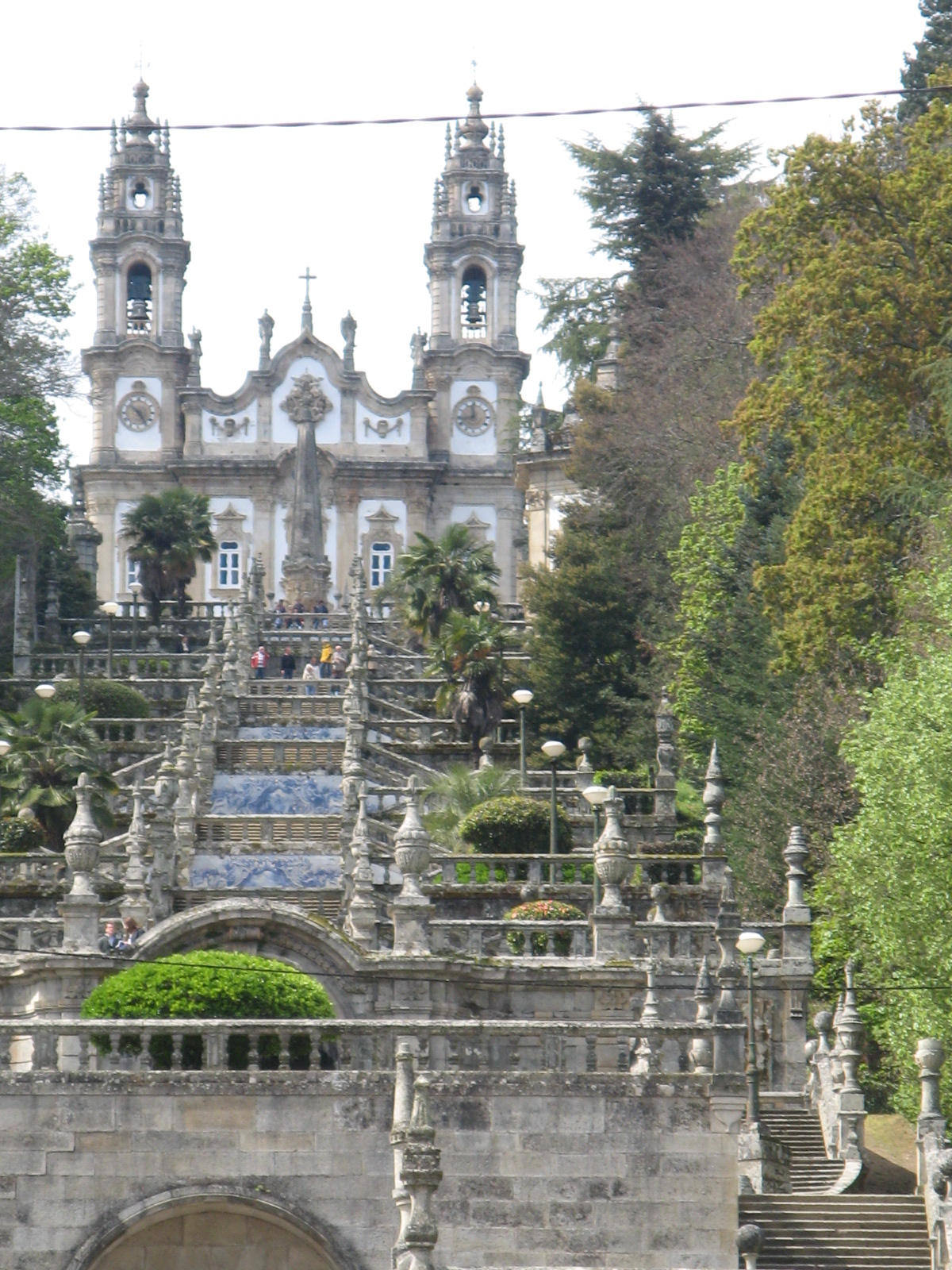
 A marvelous granite staircase decorated with tiles, allegorical fountains, small chapels, and statues which lead to a baroque church up the hill. What a wonderful sight, with views all over the town.
Next stop Pinhão in the Cima Corgo, one of the three sub regions that form the Duoro wine region. Cima Corgo – Located further upstream from the Baixo Corgo in the west, centered on the town of Pinhão (municipality of Alijó). The rainfall is about 600 mm a year. We’re heading towards the centre of the meticulously terraced Duoro Valley, enjoying the magnificent view of this spectacle: The oldest legally defined (AOC), wine-producing region of the world!


As a local saying goes, “God created the Earth and man created the Douro”, with its dramatic landscapes on the steep banks of the river created over centuries of human cultivation, made up of carefully terraced vineyards of the home of port wine. the Douro Valley is breathtaking with its hills covered with terraces of vines falling down steeply all the way to the river banks. The Douro River originates in Spain and flows west in the north of Portugal until it reaches the ocean in the town of Porto.
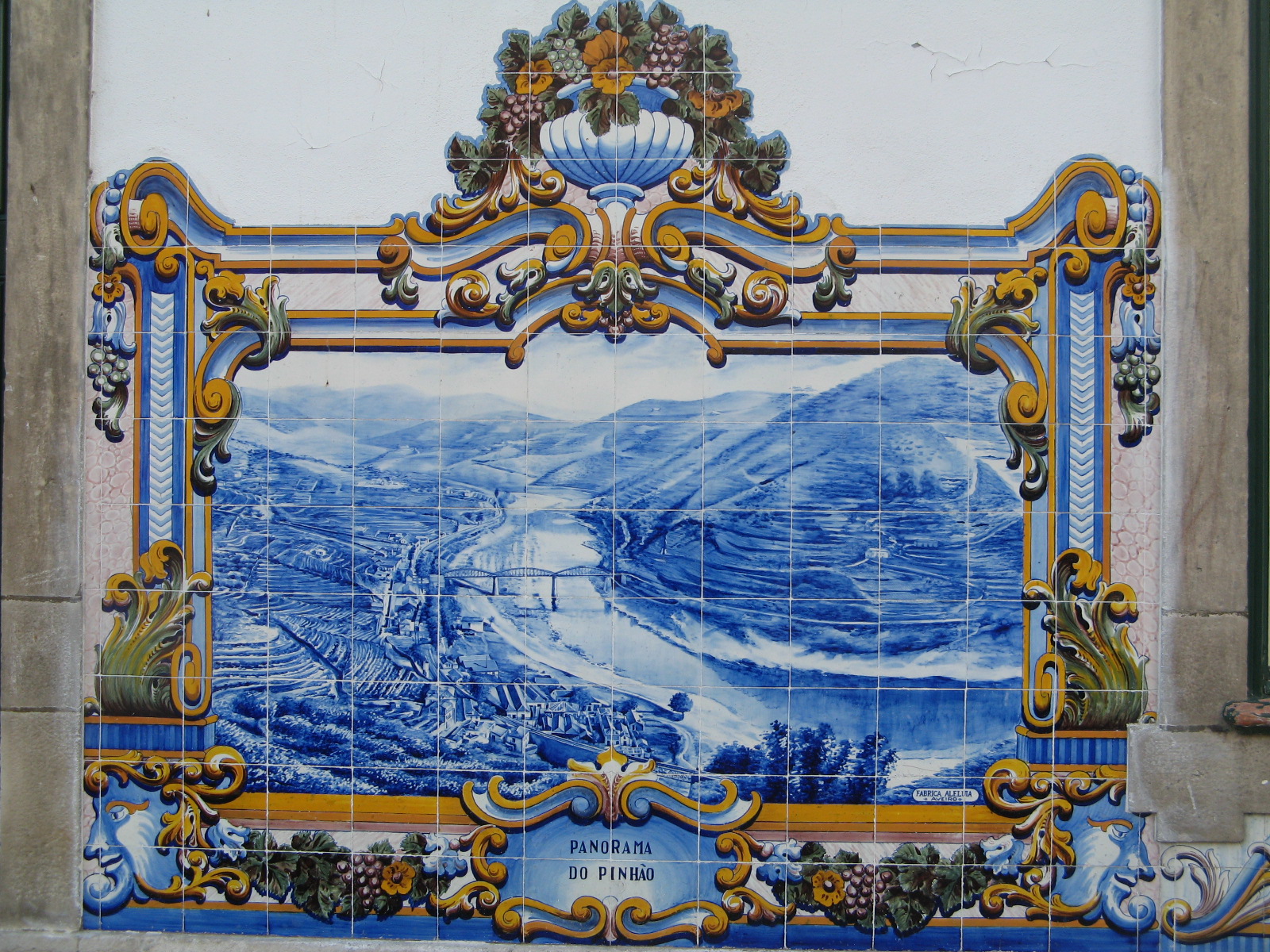
Today we enjoy the view and some wine and Port from various producers, and a good rest in The splendid C S VINTAGE HOUSE HOTEL, on the river bank in Pinhão, tomorrow we are invited to a visit at Quinta de Nápoles Just outside the town of Pinhão. It is one of Niepoort’s acquisitions of own vineyards, with wineries adjacent to them.


We cross the river to the north bank. The winery building designed by Austrian architect Andreas Burghardt, is camouflaged in the terraced hillside. Grapes travel a short ride from the vineyards to the reception area, which is the “roof” of the winery, and from there brought down the four floors of the building. Everything is there from the clusters stage start to the finished wine stage in the basement. It seems to fulfill Dirk Niepoort’s wine making philosophy. It enables a close watch on quality control of the wine, on the wine drop level, rather than the bulk Juice that starts in the “lagares”. (A lagare is the traditional container made of granite or cement where grapes are foot pressed for juice extraction).

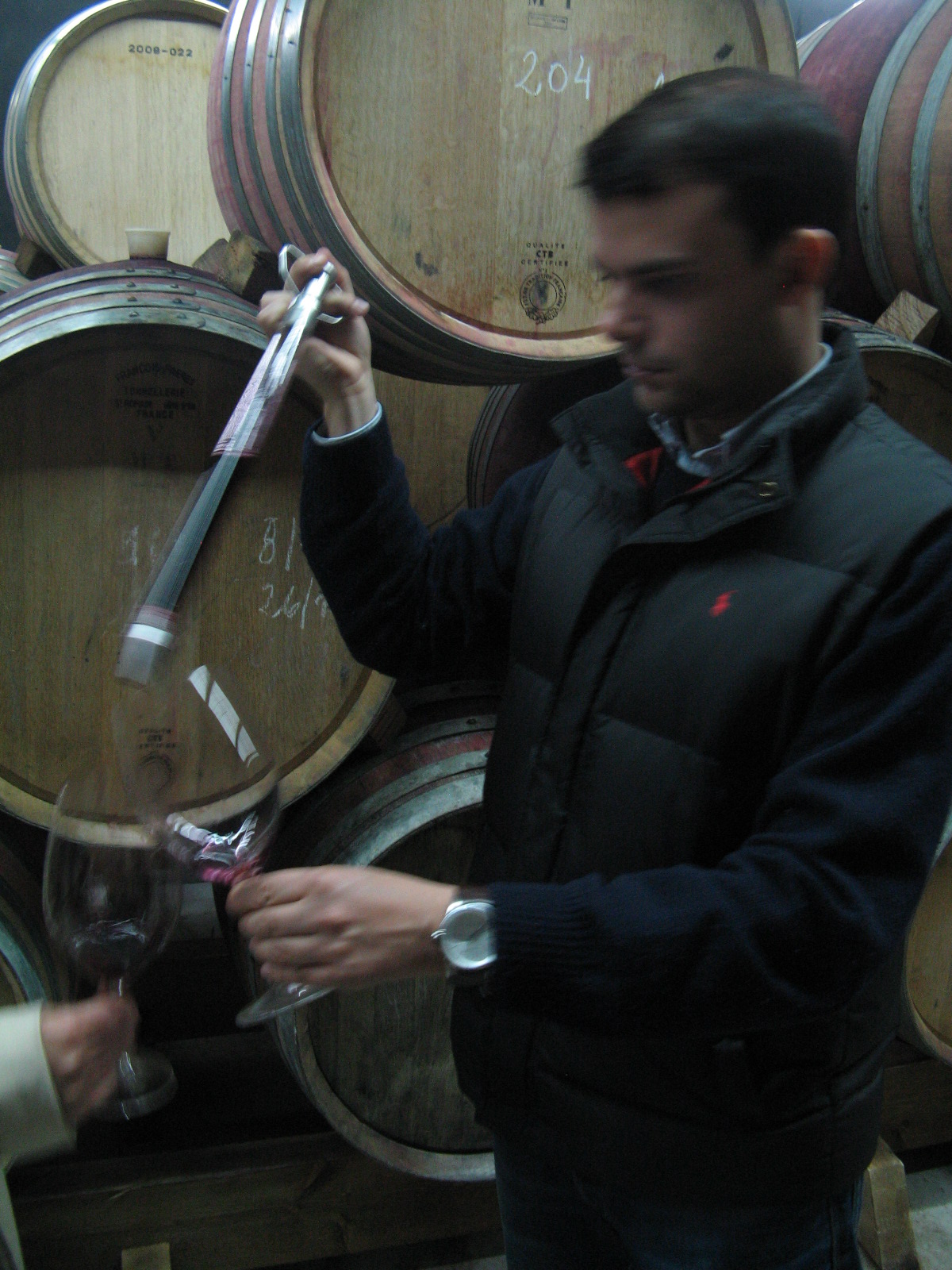
As our hosts Gabriela Santos and Carlos Raposo emphasized, that owning Quintas and vineyards in the Douro was an important step in the continuation of the port wine tradition and the first step for the creation of Niepoort table/dry wines. Niepoort is now at the top of Douro winemaking, I guess this is because he originates from the love of excellent wine in general, placing him amongst the leaders of the new generation of quality winemakers who combine the best of both the world, that of 350 years old local tradition with a desire to produce world class wines. Some of which we will taste shortly from the barrels and from the bottled past vintages.
Till today Niepoort, was in my mind, the winery that produces the best Colheita Ports and as it turned out it produces serious and sophisticated dry red and white table wines.
I will not bore you with the laborious job of barrel tasting we did in the barrel cellars, some of which were absolutely surprising to me as a novice to those Portuguese grape Varieties for whites: Rabigato, Codega do Larinho, Arinto, Gouveio and Viosinho, for reds: Tinta Amarela, Touriga Franca and Nacional, Tinta Roriz, Tinto Cão, and several others. The region’s geology of mica slate and schist’s soils of the region, the usually harsh climate and the fact that most wines are made from old age vines 60-100 years old and that all wines are blends.
Here is where the secret lies, and the Art shows. Lead by the winemaker at Quinta do Nápoles Luis Seabra. The aim is for blended wines which sum up to much more than their separate parts, and it works!


Food is prepared with love and attention by the Quinta’s cook Maria José da Fonseca Mansilha. Who cooks and serves and over sees the lunch country style fare meticulously presented as you can see. With us set to the table Paulo Dinis Barreto the owner of EnoMania wine Distributor from the Isle of Madeira and his friend .
We start with Redoma Branco 2010 here you find an intense mineral flinty character, combined with the a touch of grapefruit bitter flavor with a sweet finish and added aroma of citrus blossom. A bit of smoky oak aroma, that does not mask the aromatic elements of the wine. A good crisp start
We move on to the more complex Coche 2010 a great wine with substantial character, Coche shows intense red grapefruit aroma with a touch of fresia floral notes with multiple layers of flinty mineral touch. A very long multilayered finish on the palate. A wonderful wine!
Than the reds come pouring in
First, the Vertente 2009. It has deep and cloudy purple color. Red and black fruit aromas, a touch of green pepper with mineral finish. Good balance, and elegant but powerful fruit with great freshness. The tannins are firm but not obtrusive. Will keep for another 5-6 years and even improve as the tannins round up.
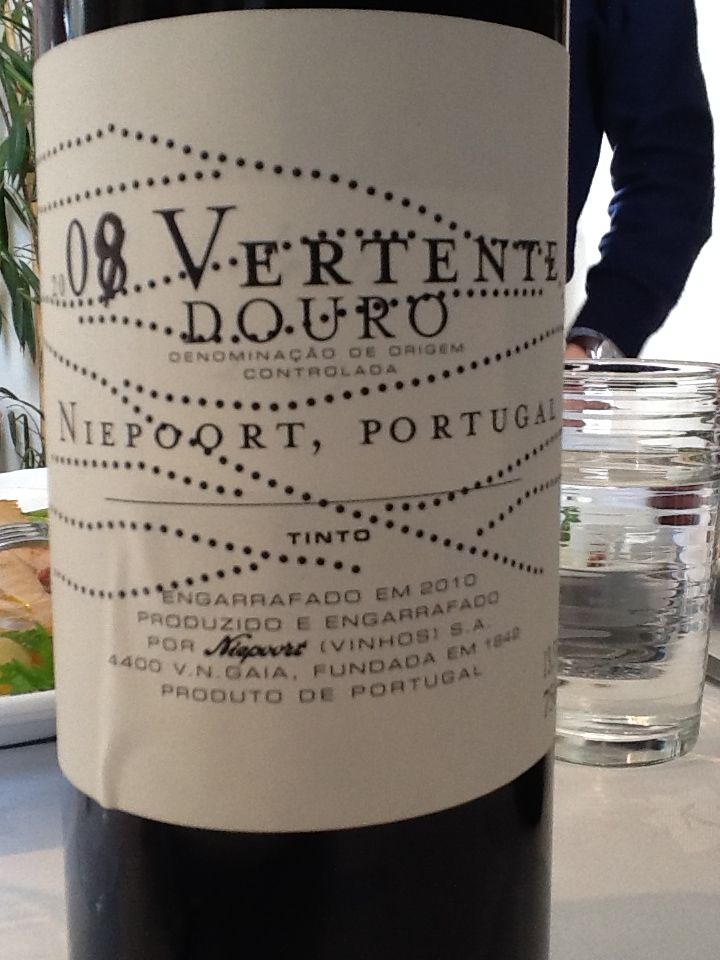

Than came the Charme 2009 although quite Dark in color, the first thing that comes to mind when you sniff in the earthy mushroomy aroma is Bourgogne and it may well be what was on the blenders mind as the wine evolved. Even after 14 months in the barrels not every barrel is chosen to be bottled as Charme. There is an aim here and if not reached the wine will be used in other blends. The Charme 2009 is rich and elegant, with dark cherry, plums compote aromas, deep wet earth, mushrooms and a touch of truffles aroma engulfs the palate, the wine is totally hedonistic aimed at the pursuit of pleasure in the same manner a good Époisses de Bourgogne is. The finish is long with extremely good balance; tannins are well integrated and appear soft but will keep the wine for at least another 10 years. This was my favorite wine of our lunch/tasting.
But the most characteristic of the region in my mind is the Redoma Tinto 2009 Dark in color Mainly ripe black fruit aromas, with plenty of dark plums, a strong aroma of mint and thyme and of wet forest leaves. Flint stone touch and good tannic touch turning velvety well balanced with good acidity and fruitiness. The wine is very expressive almost extrovert, and rich, with very long and persistent finish. A wine true to its origin and Paulo’s favorite of the reds.
And to sum it all up, we had 2 Wonderful Ports

The Neipoort Vintage Port 2009 (Paulo’s preference for dessert).
The color is deep ruby blood red, and the aroma is all about sensuality, with freshly ground mixed sweet spices of cinnamon stick with cloves and English pepper with green cardamom. On the palate, amazing presence of huge tannins and high concentration of ripe re and black forest berries, very powerful but elegant, which is so well balanced that it seems it may keep forever (almost). I would buy a case to keep for my grandchildren and the generation to follow.
And the Neipoort 2001 Colheita (my choice for dessert).
Colheita’s are tawny Ports matured in wood for at least 7 years but most are taken even further before bottling. In Neipoort the grapes were trodden (by feet) in cast cement lagares and later the port is matured in small old oak casks. Colheita Ports are Tawny Ports from a single vintage year.
Wonderful brick reddish brown colour. It remindes the mysterious aromas of the spices street in an oriental souk. Scents of dried fruits, black shriveled grapes with burnet tea leaves, coffee and tobacco all with flavour of dried prunes and Figs in sweet liquor it has a long finish of soft and oily honeyed alcohol. A sip of that and with your eyes closed you can almost see shehrazad dancing in the palace of the Sultan. (Imagine what you see when you drink the 1900 or the 1970 Colheita! Alas we did not have that chance on the day. Maybe on our next visit)
We had the Ports with the amazing cheeses and Marias Orange cake.
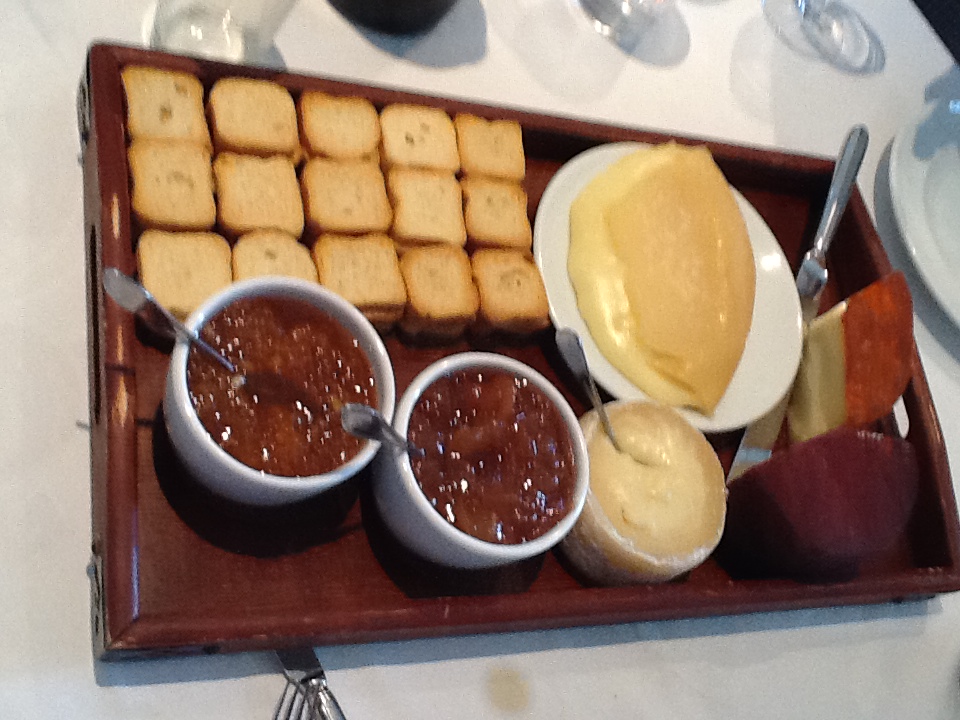
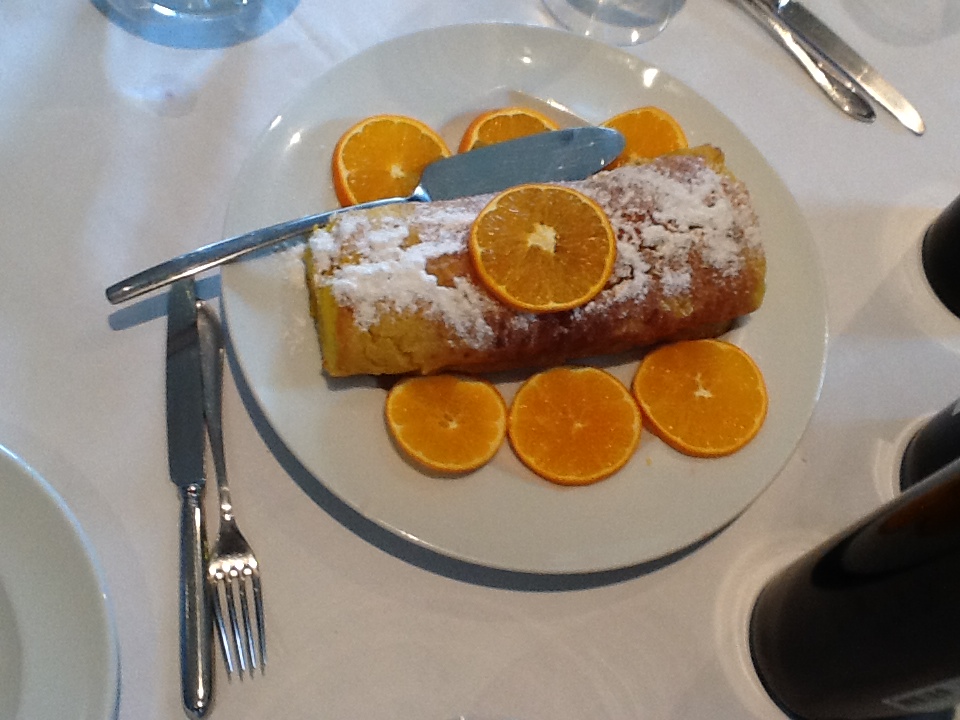
And had to excuse ourselves we still had 2 hours drive to Porto and a fair amount of alcohol in our blood. Vilanova de Gaia looked a far reach But tomorrow we have a plane to catch to London where for ages these wines headed across the ocean and the English channel to it’s destination on the London Docks.
We parted our wonderful hosts sorry we were not staying in the region for at least another day with the magic taste of the Ports still lingering on our palates.
Adeus Porto hasta pronto.
P.S.
The Neipoort Iphone Ipad App is on : http://itunes.apple.com/en/app/niepoort/id517958040#
The wineguide
SYMPHONY OF SENSES The Anatomy and Physiology of wine tasting
The Cranial Nerves
The Scent of wine A Neuro-physiological study of wine perception
Part 1 The Brain
Wine making production, creation, becomes an art when all elements in the finished product are totally balanced. This of course, requires a set of strict and precise actions in all minute details from the vineyard to the winery, through the barrel to the bottle stages, which result in a refined and balanced drink with unique taste, smell and color qualities which cause the consumer, even at the glass stage a profound experience beyond a mere quench thirst.
Drinking wine can be an act meant to quench thirst: just tilt your glass and gulp. On the other hand the art of wine tasting is a challenge, an enigmatic quiz with all the clues stored inside the bottle behind the cork. To solve the quiz one needs specialized tools, all of which are “stored” in our cranium (the part of the skull that contains the brain) our 5 senses: Smell, Sight, Hearing, Taste and Touch for wine tasting you also need good memory and a colorful imagination. Between us this quiz is a game of associations.
I know that tasting wine adds an extra dimension to the basic daily function associated with eating and drinking. It turns the act of consuming food and drink for sustenance, as a source of strength and nourishment into an act of pleasure a celebration of our senses combined in an intellectual act.
Cranial nerves are nerves that emerge directly from the brain and not from the spinal cord. In humans, there are 12 pairs of cranial nerves. Only the first and the second pair emerge from the upper part of the brain, the remaining 10 pairs emerge from the brainstem the lower connection of the brain to the spinal cord.
The Cranial nerves all have specific task to execute and are highly specialized (unlike other motor or sensory nerves that emerge from the spinal cord). Although their function is diverse and spans on many different tasks along our body,
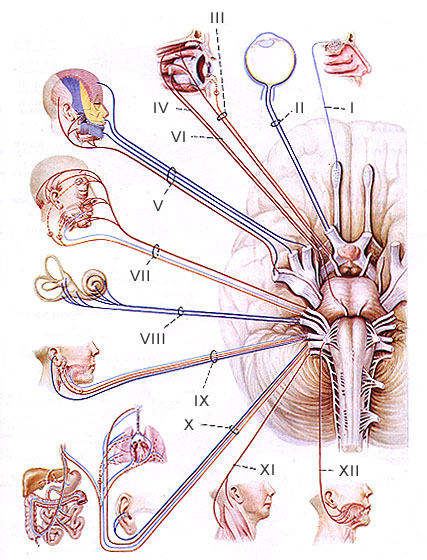
All of the 12 pairs of cranial nerves take part in the process of wine drinking and wine tasting
List of the 12 Cranial Nerves and their function
- 1. Olfactory- sense of smell
- 2. Optic- Sense of sight
- 3. Oculomotor – eyeball and eyelid movement
- 4. Trochlear – downwards and sideways movement of eyeball
- 5. Trigeminal –chewing touch & pain of the face and palate
- 6. Abducens – eyes side movement
- 7. Facial – mimic muscles, tear glands, salivary glands sense of taste
- 8. auditory– Hearing and body balance
- 9. Glossopharyngeal– sense of taste and carotid arteries blood pressure
- 10. Vagus– Aortic pressure, initiator of digestive system,sense of taste
- 11. Accessory swallowing action and neck muscles
- 12. Hypoglossal –Tongue movements
The Cranial Nerves and wine tasting
Nerve No. 1 Olfactory Nerve – sense of smell well this one is too obvious. Without it you’re a goner where wine in concerned. This is one of the easier senses to “train” and improve. The smell center although small (around 2cm2), contains ten million neurons (sense cells), and can detect around ten thousand different smells. You think this is a lot? A German Sheppard dog has one billion neurons within the same size smell center. Still as far as wine is concerned it does the Job!
Nerve No. 2 Optic Nerve – The first encounter with wine is through sight. Colors, hues, clarity and depth are all perceived through the eyes, as well as your company and the surrounding of your wine experience
Nerve No. 3 Oculomotor Nerve – Very important during wine drinking. Who knows who’s after the last sip in your glass of Richebourg 1929 DRC or Chateau Mouton Rothschild 1982 or 1945, it’s always handy to have the capacity to look around discreetly.
Nerve No. 4 Trochlear Nerve – downwards and sideways movement of eyeball, helps you see where your wine glass is before you pick it up or alas spill the above wines (and many others) on the white table cloth!!
Nerve No. 5 Trigeminal Nerve – chewing muscles touch and pain of face and palate. Very important nerve to on all aspects of food and wine, apart from chewing it controls our ability to sense Touch which is important to our taste sensation. This is where we try to feel the wine on the palate the texture, body, temperature, astringency, aftertaste, finish, and length of a wine are all things we feel on our palate cheeks and lips. Wine’s weight (light, medium, full) or texture (silky, austere coarse, chewy velvety). Palate sensation or perception is the scales with which we judge the BALANCE of Wine.
Nerve No. 6 Abducens Nerve – Controls the eyes side movement, carefulwho’s sitting next to you, who sneaks a hand towards you glass during conversation with the person next to you!!!
Nerve No. 7 Facial Nerve – mimic muscles, tear glands, salivary glands and parts of the sense of taste. It’s not always useful that everyone knows (by the expression on your face) what you really think of a wine especially if the tasting is in the winery. But what would we do without the sense of taste where would flavor be if smell and taste would not combine?
Nerve No. 8 Auditory Nerve– sense of Hearing and body balance. The chatter of people the clutter of cutlery and dishes the clinging of glasses the heavenly echoing sound of the perfect handmade glass of wine, cobined with the ability to keep your balance inspite of having a glass or two too many…
Nerve No. 9 Glossopharyngeal Nerve– sense of taste and carotid arteries blood pressure. Controles most of the sense of taste all 4-5 basic tastes. Also controls the proper pressure of freshly oxygenated blood to the brain keeping the brains analytical capacity intact.
Nerve No. 10 Vagus Nerve– Aortic pressure, initiator of digestive system,sense of taste . This one basically keeps us alive (very important to wine tasting) not to speak of its importance in digestion of food and parts of the sense of taste.
Nerve No. 11 Accessory Nerve – swallowing action and neck muscles. Without swallowing we would have to spit wine all the time and it is nice to swallow wine from time to time for some wines spitting is a obligatory some wines swallowing is a MUST. As for the neck action it’s nice to be able to nod yes to an extra top up or to nod nay if you had one too many.
Nerve No. 12 Hypoglossal Nerve – Tongue movements, There’s no swirling of wine around the mouth without the tongue moving folding and caressing the wine. We sense we taste we smell better with the tongue moving. Needless to say we will not be able to let the “world” know what we think of the wine we have all just tasted or drunk. Speech is nonexistent without tongue movements.
Combination of bits of information provided to us through observing, looking, smelling, tasting wine Touch by tongue palate will be used as a means of helping to solve a riddle: What wine is before us?
That’s it for now , anatomy and physiology of all the different senses: vision smell, taste and touch in future Posts
YOUR WINEGUIDE
A New Years Eve Dinner
I like winter celebrations, a cause to PARTY.. A champagne festival. GREAT!
They are “A decoration of our lives”, some with trees and glittering adornments
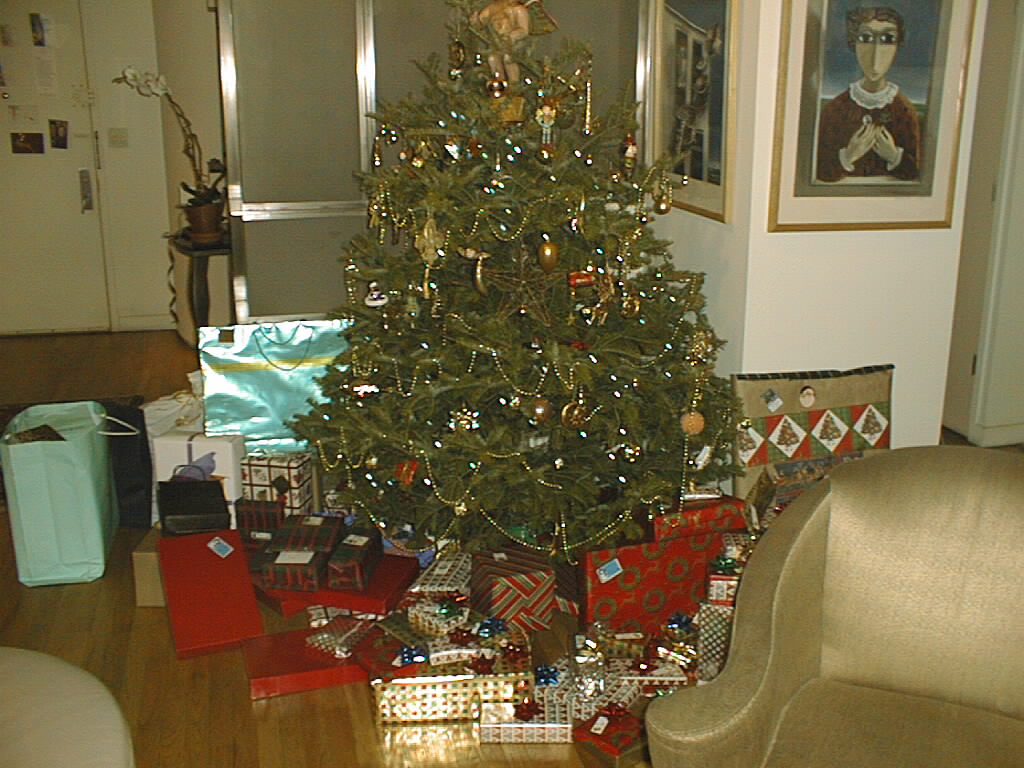
and others with lots of presents around. There are those who would like a trip to a warm exotic place, whatever fills your life with joy and gets you through the next quarter.
I wonder if you celebrate Christmas and New Year’s time around the end of December, and Easter around end of March beginning of April (it goes by the Lunar months) what do you celebrate in mid August Napoleon’s birthday or India’s Independence (both on August 15th), or maybe Just the Kids summer Holiday or just your own Summer. Then you get to stick again to the Gregorian calendar, introduced by Pope Gregory XIII, by a decree signed on 24 February 1582 (the previous calendar was 11 minutes too short per year which means that every million years the Christian faith would lose around 21 and a half days (Oi Vei…) If you asked me pope Gregory wanted to down history with something in his hands and HE DID!!!!!!!!!!
Lets move on Just to let you know (for the next trivia Quiz you will play round the old fireplace with a glass of eggnog in your hand :
The 3 oldest calendars are :
The Byzantine 7520–7521 calendar which calculated the first day of creation to September 1st, 5509 BC to August 31st 5508 BC ANNUS MUNDI + 2012 = 7520/21
The Assyrian 6762
The Hebrew 5772–5773
All the above count from the “day of creation” according to their belief and calculations Nice!
Back to our own humble celebration which celebrates US.
If wine (mostly Champagne is not the issue tonight than the food will balance the occasion.
The menu:
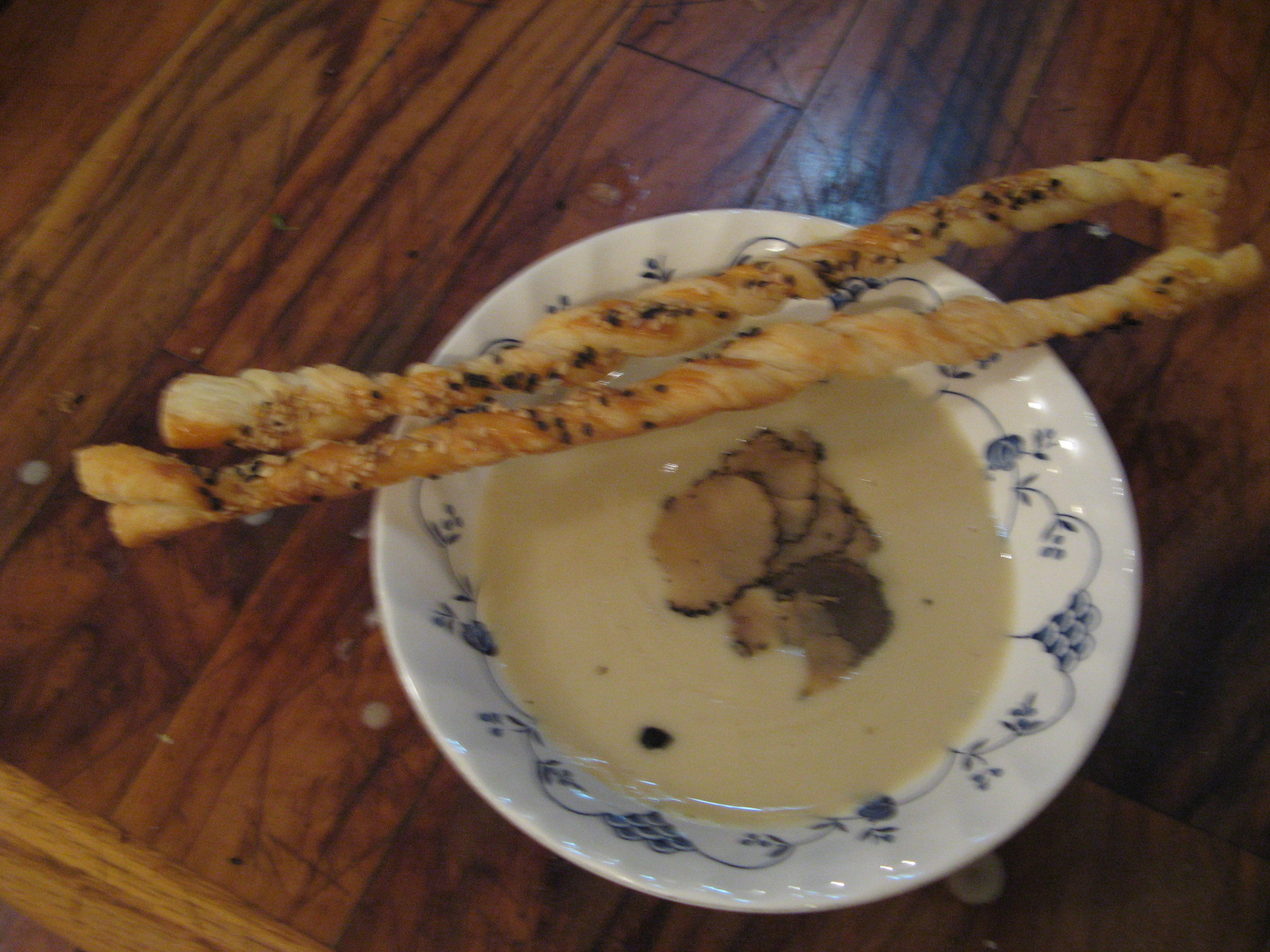
* Cappuccino of white beans with white and black truffles Home made seasame and Parmigiano grissini
- 2 salads: Roasted endive with fresh figs, Rockfort, and Pomegranate dressing.
- Oven Roasted Tomato sald with Tulum cheese
Tulum cheese (Turkish: tulum peyniri) is a traditional Turkish goat’s milk cheese ripened in a goatskin casing. Due to its unique flavor
* Souflee of French goat cheeses and fresh porcini mushrooms

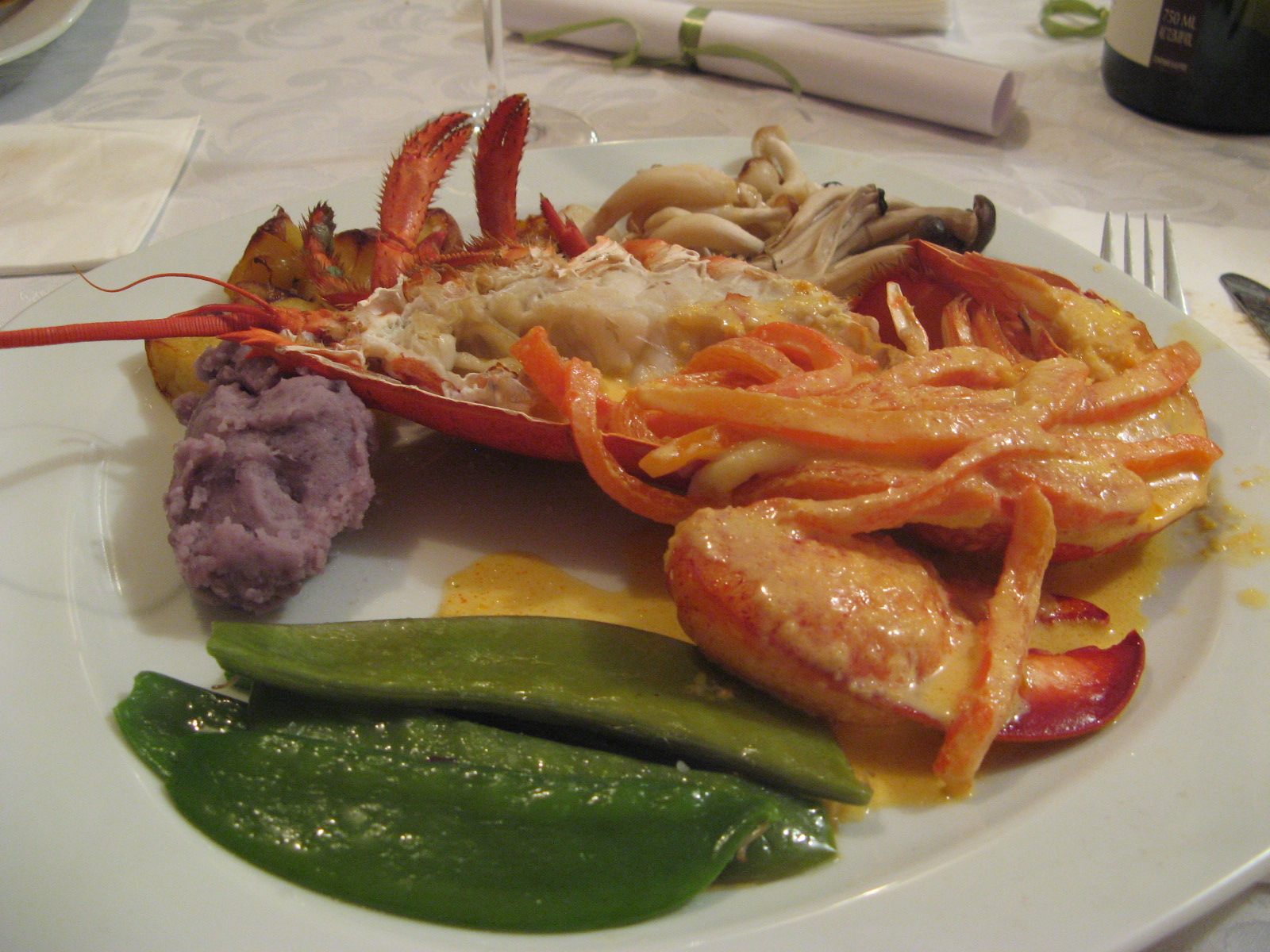
* Lobster whith cream of sweet pepers (Girardet style, I wish…..) servrd with a puree of violet potatoes, fried cubes of yellow potatoes mange tout and baked Shimeji mushrooms

Festive Macaroonsn with Port and Coffee
Drinks:
for starters Duval Leroy Blanc de chardonnay 1999, I must admit it was not the best of choice but since all our drinks were different champagnes leading to our midnight champagne to receive the New Year it was subtle enough. The pronounced sweetness which I personally dislike was appetizing to my family members. It acted as an appetizer with salty munchies and led us
We quickly moved to Bollinger Rose NV to ease my pain of shattered expectations between us it did not but raised the level from our first champagne and took us through the salad break which gave me a chance to grt the soufflé to the table at the best possible timing
With this perfect soufflé (I must add) we had to move to a sure bet one of my favorites The Bollinger grand annee 1990 . The 1990 Bollinger has a rich, light golden hue in the glass, and nice sized bubbles. Upon pouring it reveals the full array of mature aromas, roasted almonds, toffee, even creamed coffee with burnt caramel or honey, than wet mushrooms and even earthy truffles. Full bodied, but vibrant and sparkling. It has fully evolved flavours, still nicely supported by the acidity. What a delightful wine a real mood maker and it is going very well with the mid course. The Champagne and our mid course delighted us and got us closer to the “…stroke of midnight …clock hands join palms in respectful greeting …” of the New Year (may I use and add to the wonderful opening lines of Slman Rushdie’s Midnight’s Children). So Just before the midnight hour we filled our glasses with the last bottle of one of my favorite champagnes: 1989 Heisieck Monopole Diamant Bleu , A rich lemon-brilliant gold color opened in the glass with a perfect mousse of tiny bubbles, complex elegant nose of butter fruit tart in Crème pâtissière, with a whiff of grilled almonds and buttered toasted brioche, all tender but expressive long and persistent aromas of “more” . one of the perfect examples of a perfect champagne of equal amounts of Pinot and chardonnay. The perfect opener to a new year and a wonderful accompanying drink to our desert (eaten after the 10th stroke of midnight)
With the Lobster I wanted a winner We worked our asses off to get the claws out of the shells intact (actually V. did most of th work on that she somehow got the hang of itwhich allowed me more time to look after the tails and the Lobster and sweet peppers sauce so…
So Just before the midnight hour we filled our glasses with the last bottle of one of my favorite champagnes:
1989 Heisieck Monopole Diamant Bleu , A rich lemon-brilliant gold color opened in the glass with a perfect mousse of tiny bubbles, complex elegant nose of butter fruit tart in Crème pâtissière, with a whiff of grilled almonds and buttered toasted brioche, all tender but expressive long and persistent aromas of “more” . one of the perfect examples of a perfect champagne of equal amounts of Pinot and chardonnay. The perfect opener to a new year and a wonderful accompanying drink to our desert (eaten after the 10th stroke of midnight)
Happy celebrations for whatever reason to Ya all.
Your Wineguide
Cooking at home with Yair Yossefi (October 2010)

The Idea: simple enough: to cook a meal together with an accomplished Chef at my home / kitchen and have some great company and wine to complement it with…
So while shopping with Yossefi at Tomer the Butcher (of Tzook Farm) we planned the meal, first second and main courses were wrapped up in situ from the fresh ingredients on offer at Tomer’s, Still I felt like some sea food for balance and offered to prepare crystal giant shrimps rolled in Zucchini, fried in Goose fat, with froth of champagne shrimp sauce a great recipe I picked years ago from a Robuchon book, but Yossefi offered langoustine risotto and after all he is the Chef!!! so I went gladly along with the idea, I love fresh Langoust and they’re not easy to get here… that sorted out third course, for desert we’ll have my cousin’s Dalit amazing Austrian style chocolate Gugelhopf with home mage Ice cream (the kitchen is well equipped)
The Venue: my “tastefully furnished”, kitchen and dining room at home near Tel-Aviv.
Chef: Yair Yossefi (Y.Y), my friend, with an impressive resume: worked with “greats” like, Pierre Gagnaire au 6 rue Balzac – Paris 8, and Guy Martin au Grand Véfour, Restaurant Lasserre in avenue Franklin Roosevelt Paris amongst others. His fingertips are burning to cook for others his palate yearning for good old Bordeaux’s (from my cellar) he’s a bourgundian buff. Since than Yossefi has opened the already acclaimed Bistro Elba t in 36 Ibn Gabirol Street Tel-Aviv Tel: 03-5467905
Sous Chefs:
1. Lionell Pinot (L.P), Chef de Partie de legume (vegetable peeler) and Sommelier du maison for the day. He is now the Sommelier at Elba!!
2. Me (A.S) the Wineguide, as Gaffer (ga for this ga for that) Kitchen coordinator and keeper of wine!
The food / menu :
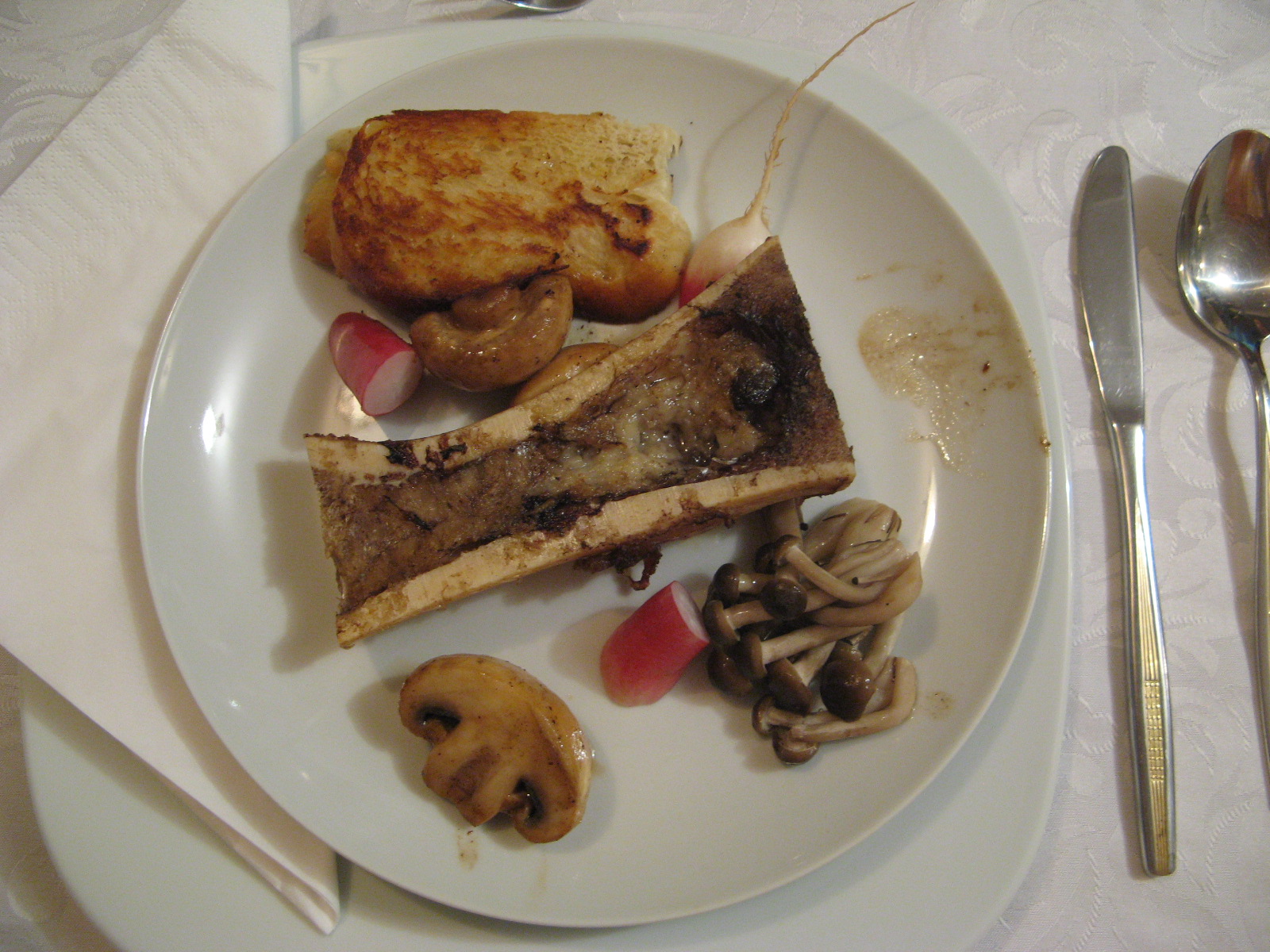
* Roast Bone marrow (on the bone), Shimeji mushrooms, champignons, butter fried Challa (brioche style Friday bread) and radishes.
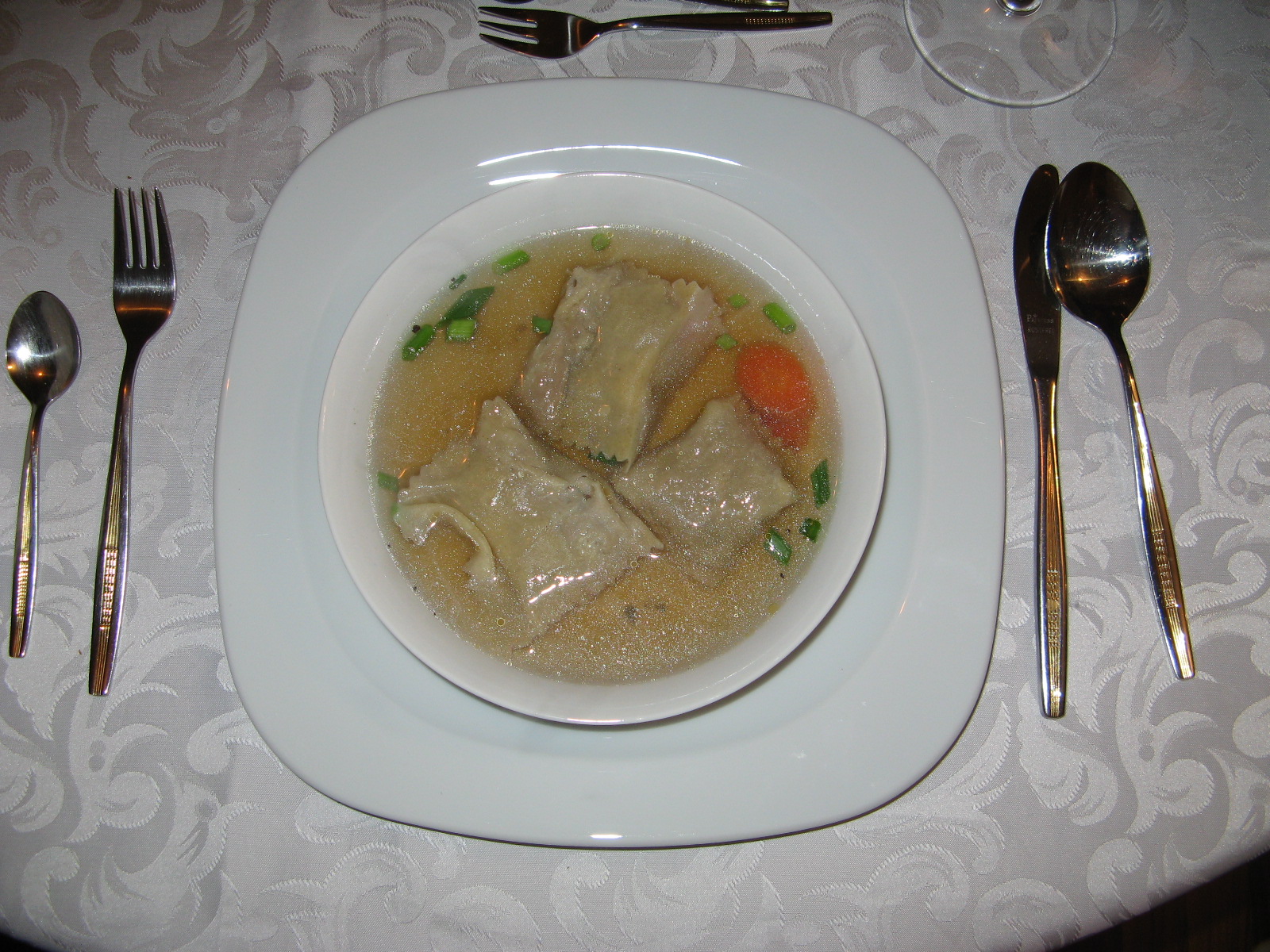
* Pot au feu Soup (consommé) with oxtail raviolis.
* Langoustine risotto foie gras cubes and grilled crayfish on a stick

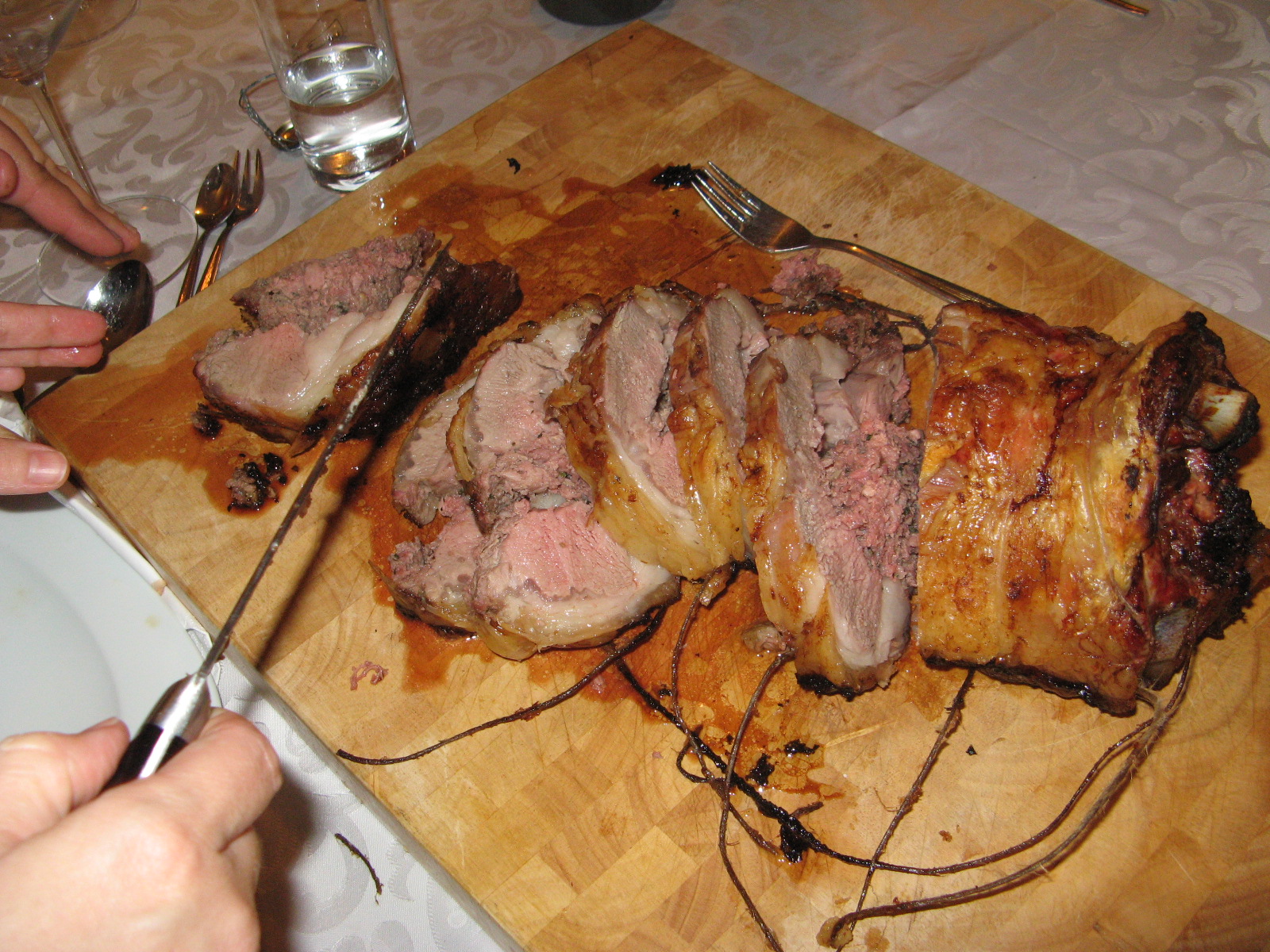
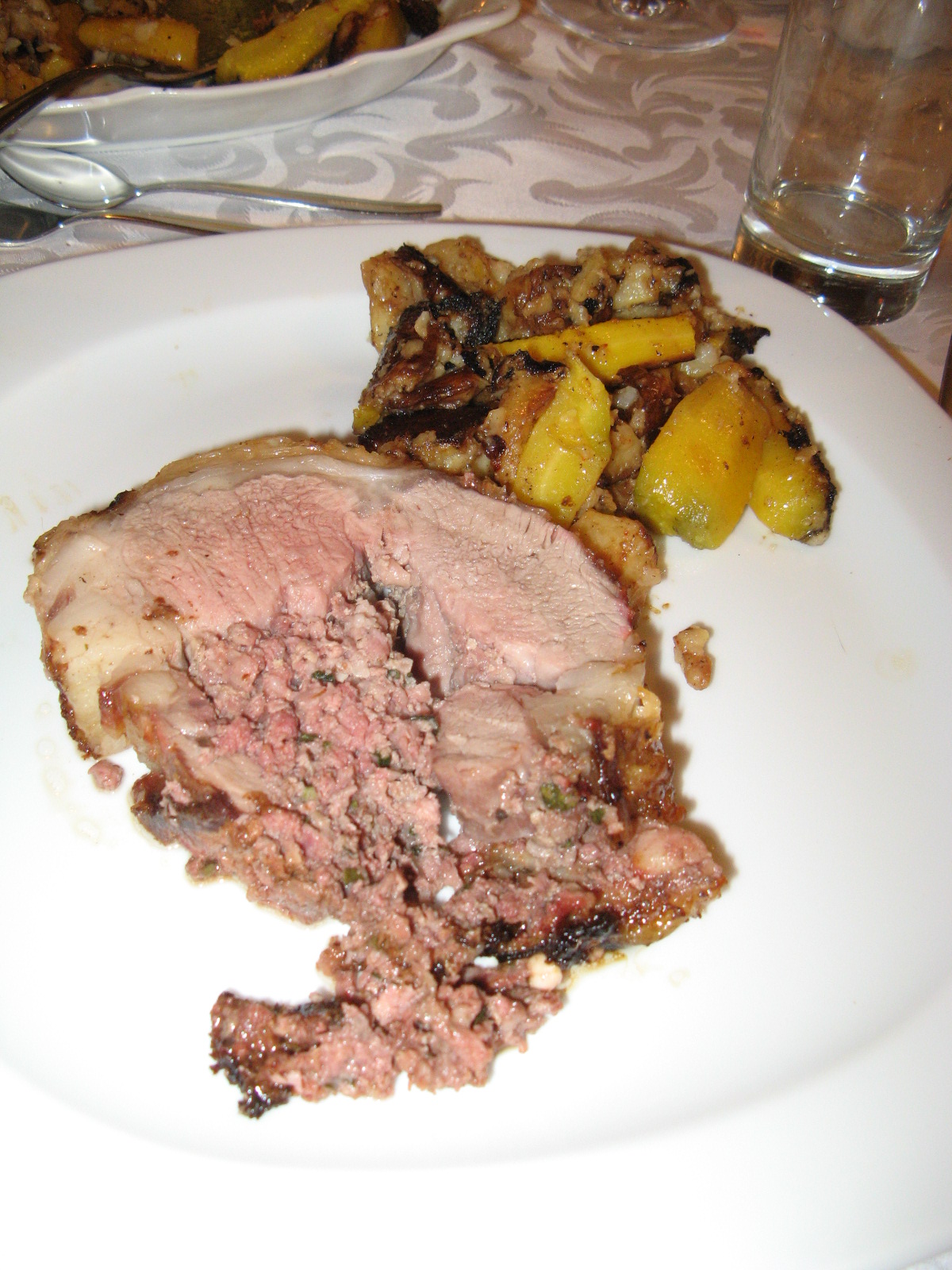
* Saddle of lamb stuffed with lamb offal and herbs with butter sautéed yellow carrots
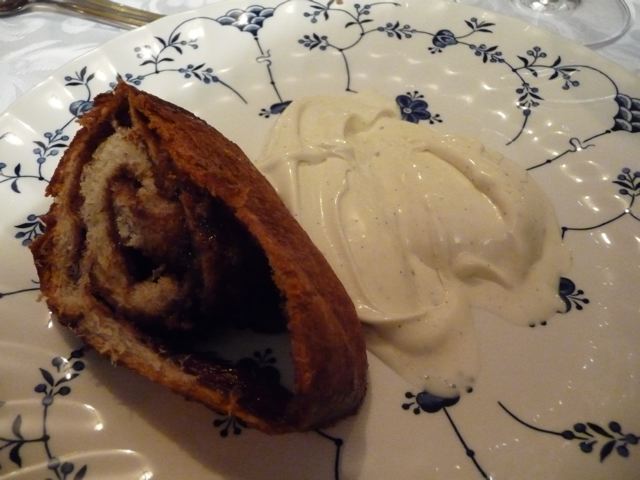
* Warm Chocolate Kugelhopf with Crème pâtissière ice cream

Selection of French cheese

The Wines: (don’t be jealous)
Welcome drink: Bollinger Grande Annee 1995, this is a highly regarded vintage by the Bollinger house. It already, shows good secondary Aromas of mushroom and a slightly burned butter toast, latter showing more cream caramel style in aroma and touch. It is so open, expressive, and forceful in character that these qualities carry through onto the palate where there are notes of honey, brazil nuts and dried mushrooms, even hints of truffles and caramelized dried orange peel. This has a great style and lots of impact, and although very evolved it has good acidity I wish we had 3 more bottles of this wine which turned to be a box of delights, HEAVEN!!!!!!!!!!!
We were hungry and thirsty so we went on to open the wine brought by Lionel the 2007 Puligny-Montrachet Louis CARILLON et Fils what a delightfull wine to start the meal with fresh and modest wine after all this is not a premier or grand cru wine but the aromas of minty peach and the finesse of the lightly toasted almonds really appealed to me but we were 5 at the table and one bottle does not go a long way in our district so we proceeded to the surprise wine of the meal, is it drinkable at all? Is it a gonner?
After all it is a Magnum of 1962 Maison Noemie Verneaux Mersault Charmes, at best a 48 years old White wine from an extraordinary Bourgogne vintage !!! and at worst an unusable vinegar. It’s not easy to open a 48 year old Magnum with the cork “stuck” firmly by what turned to be some sort of deposits that sealed the bottle (luckily) with a hard resin like material. The wine was reborn into the glasses of all of us anticipating bunch, it started as deep gold in color with nice aromas of slightly oxidized very old bourgogne, with an excellent dry fino sherry touch, more like a good old Vin Jaune with its nuttyness but this wine for at least the first 20 minutes of his rebirth kept a fair amount of fruity acidity, as if to remind us of its origin. It was impressive and highly rewarding with depth in tertiary aromas of its nutty bouquet with austerity full bodied touch. As the time passed by the color deepened into old gold yellow-brown color almost maderized but drinkable all the time and that kept us happy throughout the Pot au feu and for some the Languste & Foie Gras, personally I would have prefered a more fresh and acidic wine for this dish. The Langustine stock was creamy and rich (without any cream added!!! (YY) the risotto was made in the traditional manner with us sous chefs having to stir constantly under the chef’s lashes. The foie gras cubes added an extra creaminess to the dish and the firm langustine inside their shells were made properly. So some opted for the acidic touch of the Hubert De Montille Volnay Les Champans 1999 with its austerity of fruit and earthy flavours it was a good intro into the red wine part of the meal. This is a wild bunch of wine guzzlers and no drop was left to spare…
This is a meal at home so we had to rest between dishes which is fun when you have good wine to keep you happy in between and that was not a problem since the cellar is not 39 but only 8 steps away… We started with the wine and had the meat dish well into our second pouring. Lionel was yet again summoned to honor us with the opening of our first heavy duty red wine of the evening The Saint Estephe Chateau Cos d’Estournel 1986 which was prepared well in advance. This is a glorious wine from an ace Cos vintage year and a wine I had many times over the years The 1986 is a highly extracted wine, with dark ruby color and plenty of toasty, smoky in its bouquet that suggest ripe plums and licorice. It should exhibit massive ripe fruit, with extremely concentrated flavors and has impressive depth and richness. But in hindsight maybe because it preceded our next wine, it was not to be the wine to cause all to fall off their chairs today. So we opened what turned to be the crown of the evening: Château Latour 1983. It was robed in rich, dark ruby red color slightly fading to amber. Nose with earthy, mineral scents and a seam of rich blackcurrant fruit, with a slight vegetal undertones. Medium bodied and supple. Mature, meaty flavours of plum and dried fruits, but delightful nuances of fresher violet and floral character, So many superlatives to a wonderfully balanced wine andstill fresh with a deceiving young touch even on its 27th year. The fresh fruit with mineral edge added to complexity. Very good length with a depth of fruit, properly balanced with the rounded integrated tannins. The scents of rotting mushrooms and leather soap adding to the complexity which evolved slowly in the glass into a more creamy touch of sweet dried figs compote with cinnamon and cloves. Another sigh of content was heard around the table and before long whilst we were still having our second helping of the perfectly prepared juicy Saddle And what a wine The Chateau Latour 1983t was! a perfect complement to the dish and more…
I had to take the 8 steps down the pirate ship plank to the cellar to get a wine to match or at least complement the wonderful LATOUR, my selection of Bordeaux’s is not bad for a wine cellar in a remote place, still this is a choice that has to be made quickly my guests are not a forgiving crowd…,, so I decided we would move from Paulliac to what in my mind the best Saint Emilion grand Cru Chateau. The Chateau Cheval Blanc 1988 which on its own would have been what I have on my previous tasting notes from the past: Deep shiny Bordeaux colour, looks younger than its age, with powerful, concentrated bouquet of Blackberry and blackcurrant and very spicy black pepper and cloves.Subtle oak and a slightly toasted. Very elegant and refined wine with good concentration and a classy Cheval-Blanc character. Very well balanced on the palate with freshness (reminiscent of minty green peppers), and firm tannin, but today it was shadowed by the Latour.
Press play to watch Video:
The meal was glorious but as you can see it was a meal to complement a night of wine sampling rather than wines that suited a meal, that in fact does not take anything from our enjoyment of the food or our gratitude to the chef and his efforts.
Thank you Yossefi for agreeing to cook in an unfamiliar surroundings Luckily you brought you own posh chef’s knife. Thanks to Lionel, Meirav, Shaul, for the company and the insights into their impressions of the wines and Vive La France and King John for making Bordeaux (when at best) what it is. Thanks for Riedel glasses that kept the wonderful scent of the Latour well after the glasses where empty and into the desert.
 WINE FOR SOUL