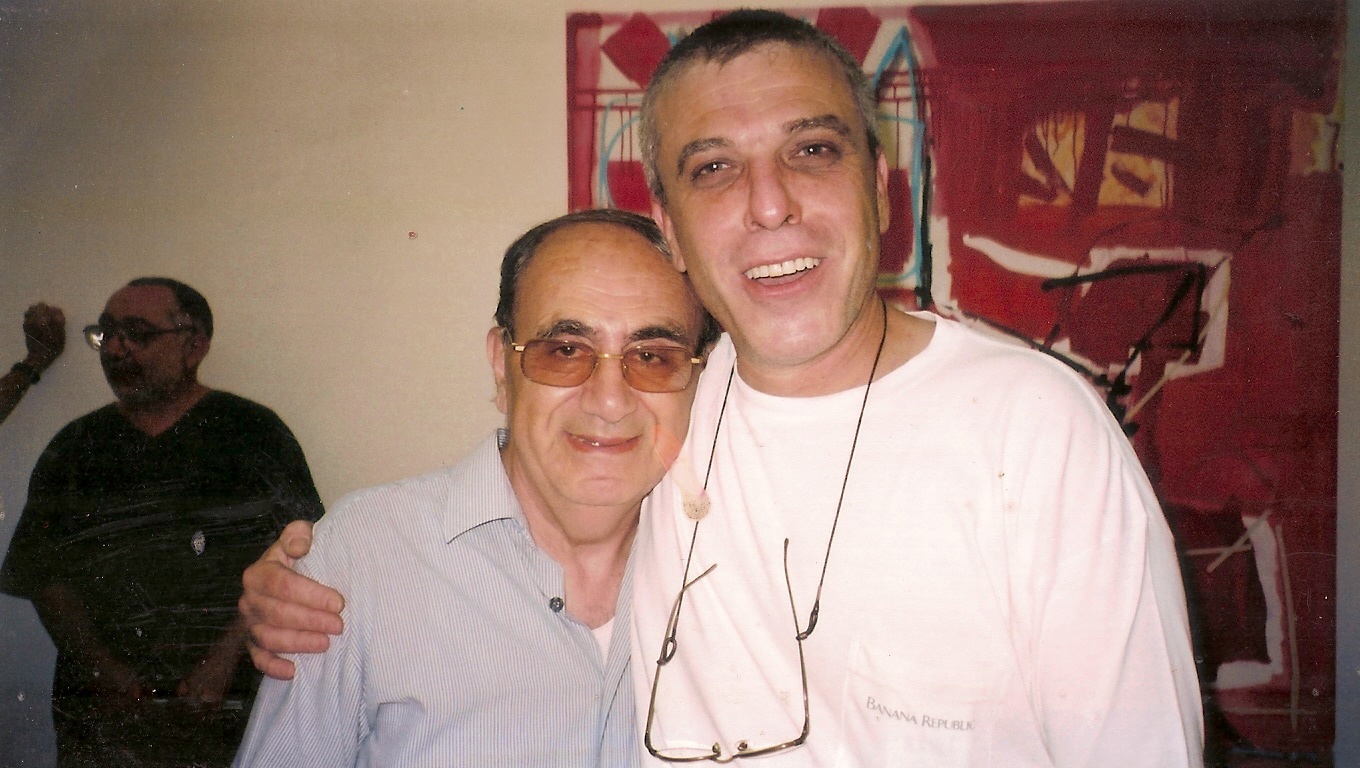
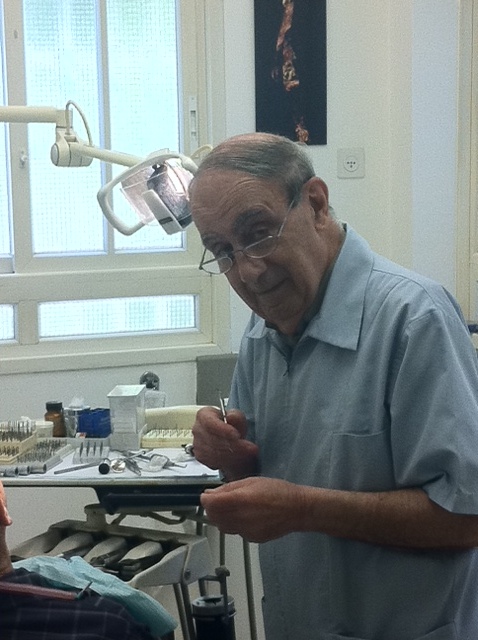
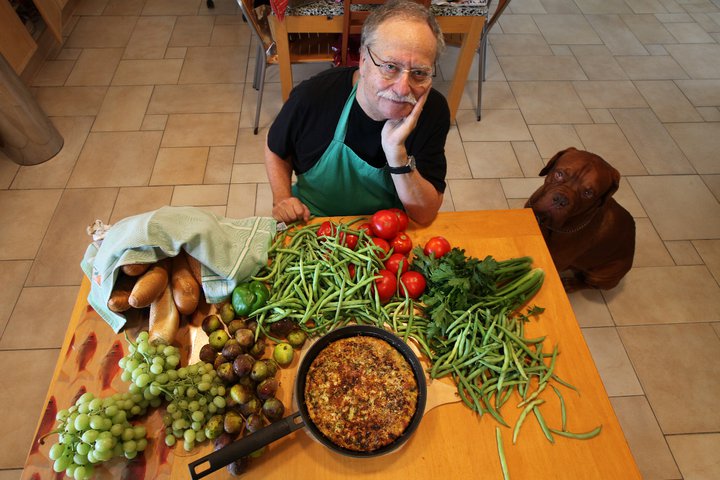
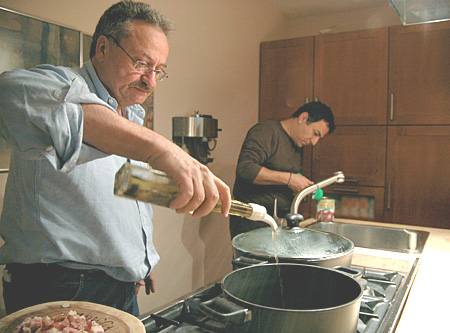
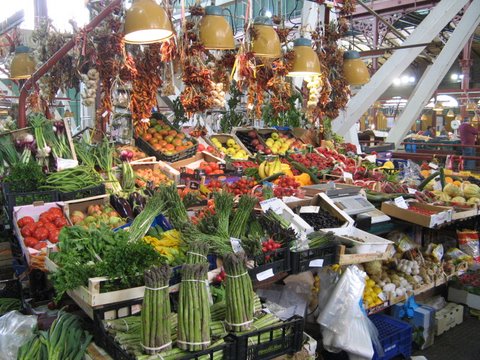
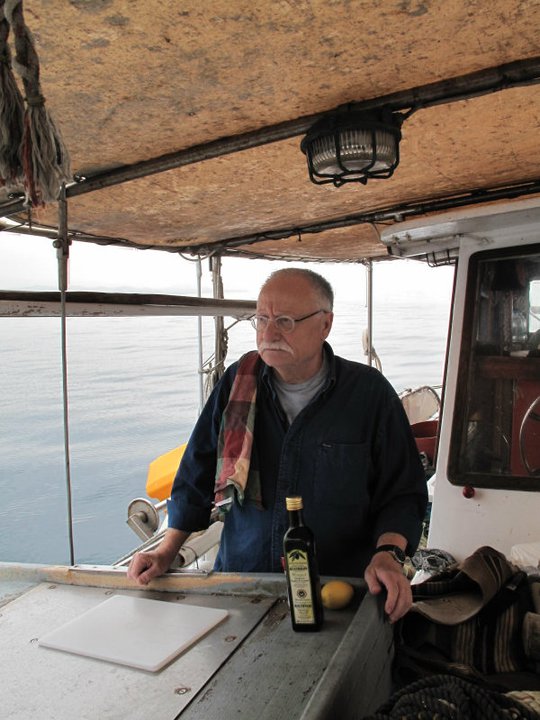
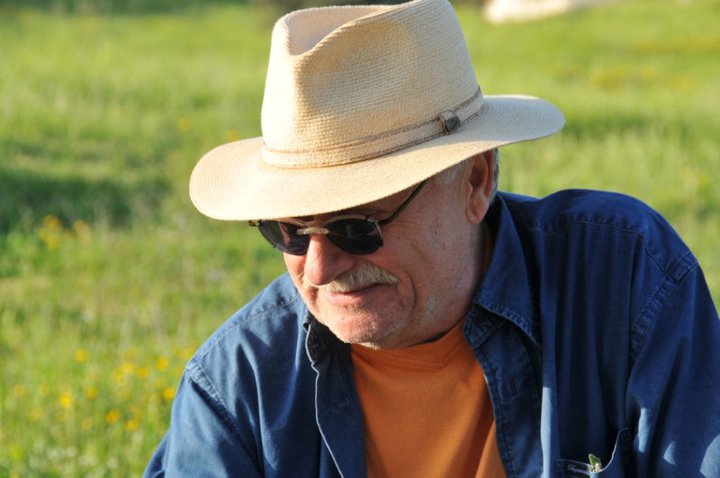
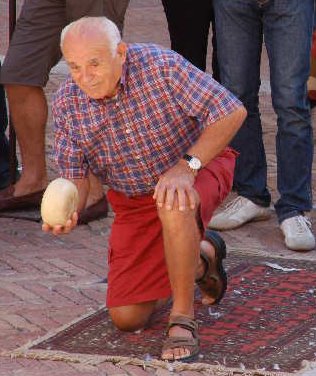
Dr. Gershon Itzhak 1935-2012


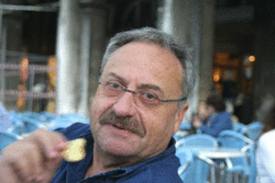
My dear friend and partner in our practice, for the last 50 years,  Dr. Gershon Itzhak, GERI, passed away on Tuesday night 7.8.2012,  In his own bed at home, after 5 months of senseless but brave battle with Pancreatic Cancer. We buried him Thursday night, as the sun was setting in the horizon. He now Rests In Peace, where he yearned to be for the last week: “In the place of peace, calm and quiet…” (His very own words 2 days before he died), and I already miss him.

He was brave, the bravest man I knew, facing this terrible illness. An illness violent but not swift enough, for the merciful death he deserved, cause he was one of the deserved, of whom we read from time to time and of whom we say why him? Why like that? He deserved better maybe in 20 years time, but not now!  Certainly not like that. He himself said to me faintly one night, “Not like that, not like THAT!!”
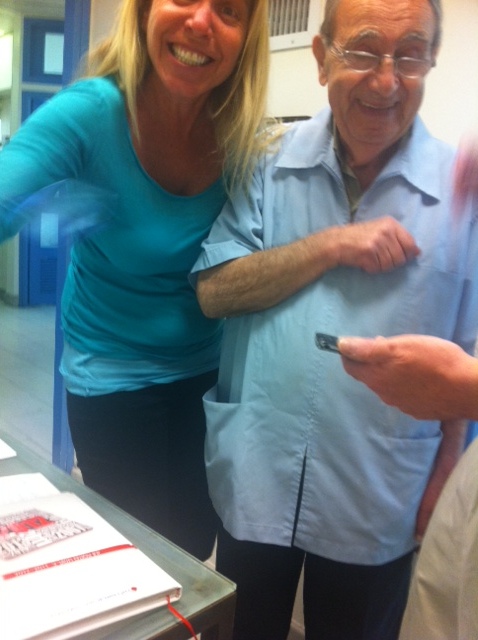
                                                         

For over 3 months into his illness he would come to work as usual every day, work takes the pain off my mind he said (and it did!), he even managed to “squeeze in” a short visit abroad that was planned ahead of the diagnosis, The oncologist, urged him to go as long as he felt reasonably well and when he came back he was full of joy and pride telling me all about the grand visit to Miami.

Two days before his death we had our last “instruction talk” , re raising all the instructions he left with me during the last 2 months regarding his own patients mainly with “attitude” instructions, a revisit, to sum up his wishes, he told me he trusted me to know what to do and when… (not professionally but rather “behavior” wise) he said Thank you, told me to: “GO, GO, GO” and softly closed his eyes as if to say no more talking…let me rest now. The day after he passed away, I already miss him but his Soul will be bundled in My Life forever.

We humans are a selfish bread, me included. His daughter Tami thanked me just before the funeral (again) for all that “I did for her father”, Maybe I did it for him but between us, mainly for myself, for how could I live with the thought that I left him “wounded in the battle field” without trying to help. All that, was futile from the very beginning (we both knew) but still I tried to support him, give him a few moments of light in the darkness he was in, see a smile on his face, catch a hint of his cunning sense of humor, watch him make one step achieved without support “I am independent now”, he said to me playing around making 360º turns on the wheelchair, Basically, between us I failed I’m not sure I made any difference. Dentists like us, (unlike general or specialty medical Doctors), are used to be able to give most of our patients, almost instant relief from pain after the initial first visit, He used to say on medical doctors :”if you have the flu and go to your doctor it goes away after 7 days otherwise it goes away after a week!” (No offence intended).

He was my second pair of hands and eyes and I was his, at 76 he still performed like a young man, as my father before him (who stopped working at the age of 81). They both looked so young when working doing the thing they liked most, solid high quality dentistry full of integrity and empathy towards their patients.

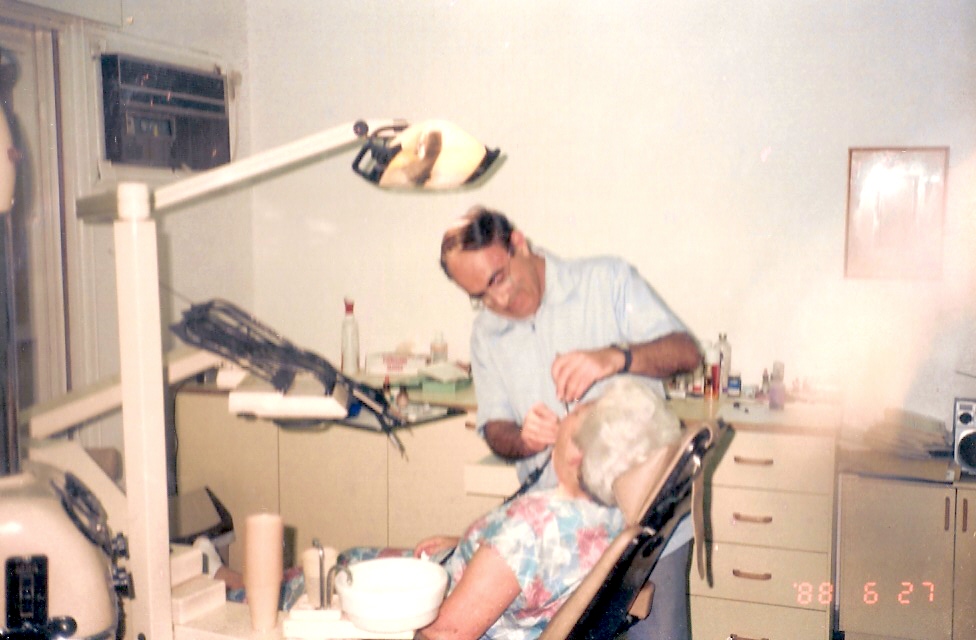
            

He was a real classical music specialist, “Bach is the greatest” he used to say, he knew hundreds of music pieces by heart recognizing most of them by name and composer sometimes even conductor, after 3-5 notes (how he loved those Thursday 2pm quizzes on the radio), he also liked Louis Armstrong especially “What a wonderful world” which he would put twice, in full volume! (he was a quiet guy not the full volume type) but this, the Finale of each week was played aloud to mark the end of the week and then he would go… (until the new beginning on each Sunday morning, Year in and year out).

With his eternal collection of pipes he always chose the best tobacco mixtures and at times mixed several different blends to fit his taste which he kept in a small nylon bag in his pocket, taking occasional puffs in-between patients in his “smoking corner” by the coffee machine. (I really miss his figure sitting humbly in his corner sipping his coffee and puffing his pipe). His coffee was a special blend freshly milled and usually served at a certain time each day.

He was not a Foodie nor a wine connoisseur, in fact he did not appreciate Haute cuisine or “fancy food” he liked simplicity, yet he had good taste. From the foods he did like, he could spot quality against poor imitations; his favorite food was Mediterranean, Balkan food. He was born in Sophia Bulgaria, He loved Hummus always delighted when we had some Abu Hassan Hummus (considered one of the best around),brought over fresh from Jaffa, for this, he would take a break and have half a pita full, he was a moderate eater, small amounts were enough for him. He loved his mothers special recipe Bean soup, “It is really good sit down and have some soup first” he used to tell me when I would pop in for a visit at theirs, of course, Börek with Cheese or cheese and spinach Burek. (He knew a good artisan one from just cheap “industrial” fakes!). As a matter of fact, in trying to cheer him up I made him a Cheese and spinach Burek using the best available Bulgarian cheese (Sirene/ Sirenje) with the finest butter base puff pastry in the hope that the idea would give him some appetite and joy but alas it was hard for him to eat anything not just my final food offering to him. All in all, he had more dislikes than LIKES, that was the man, no way, you could move him astray from is long well known path and order.
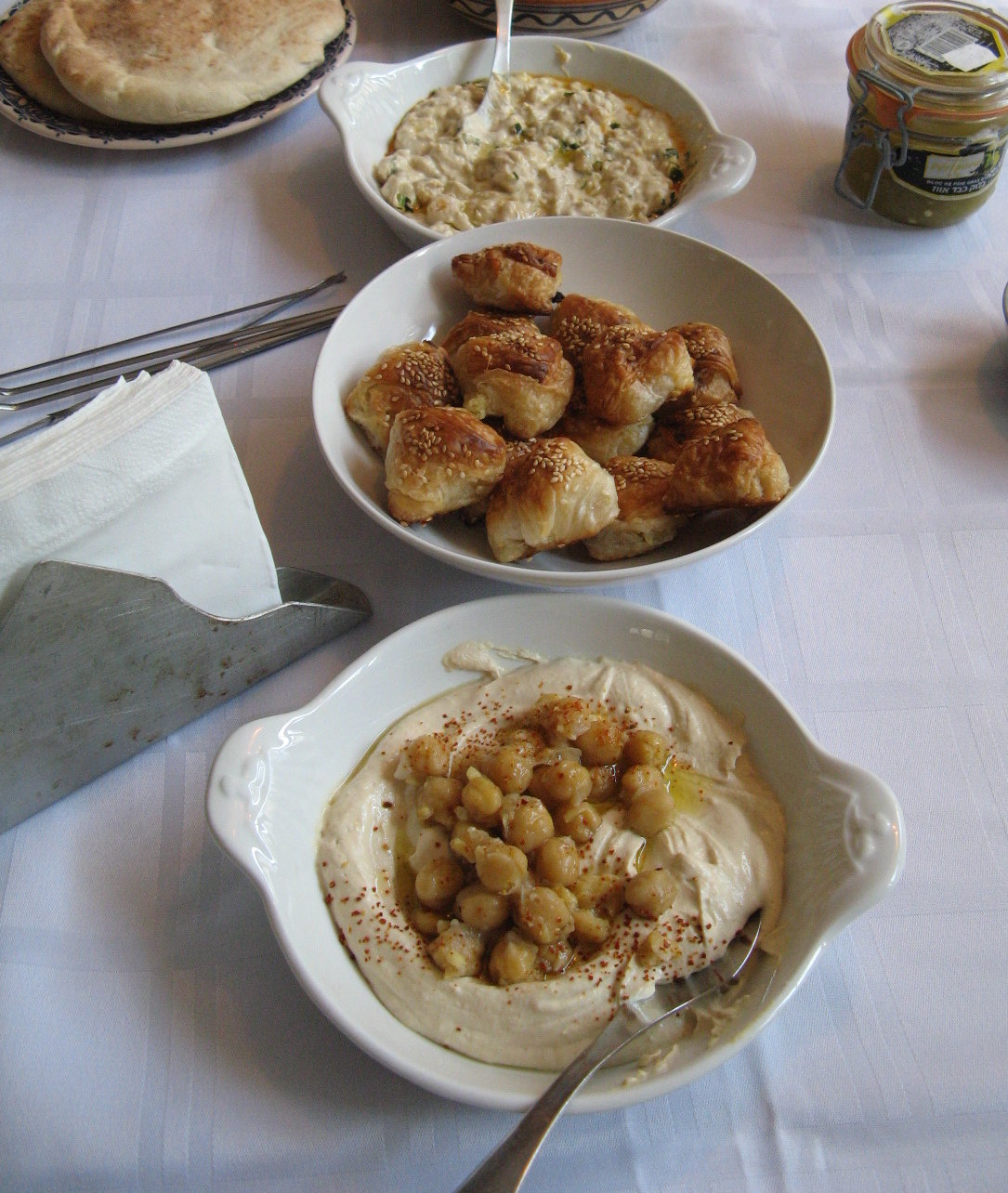
Bulgarian cuisine is one of the pillars of the South Slavic / Balkan cuisine. It is diverse, due to the relatively warm climate that allows excellent growth conditions for a variety of vegetables, herbs and fruits, you will not find in more northern parts of Europe. It is famous for rich salads, an every meal must, and quality dairy products especially Yoghurts and salted brine fresh cheese Sirene/ Sirenje , It is made of goat milk, sheep milk, cow’s milk or a combination of milks. It is slightly crumbly with a solid fat content of about 30-35%. It is commonly produced in blocks (We prefered the sheep milk kind), it is very much like a good Greek Feta, or similar cheeses from Albania or Macedonia.
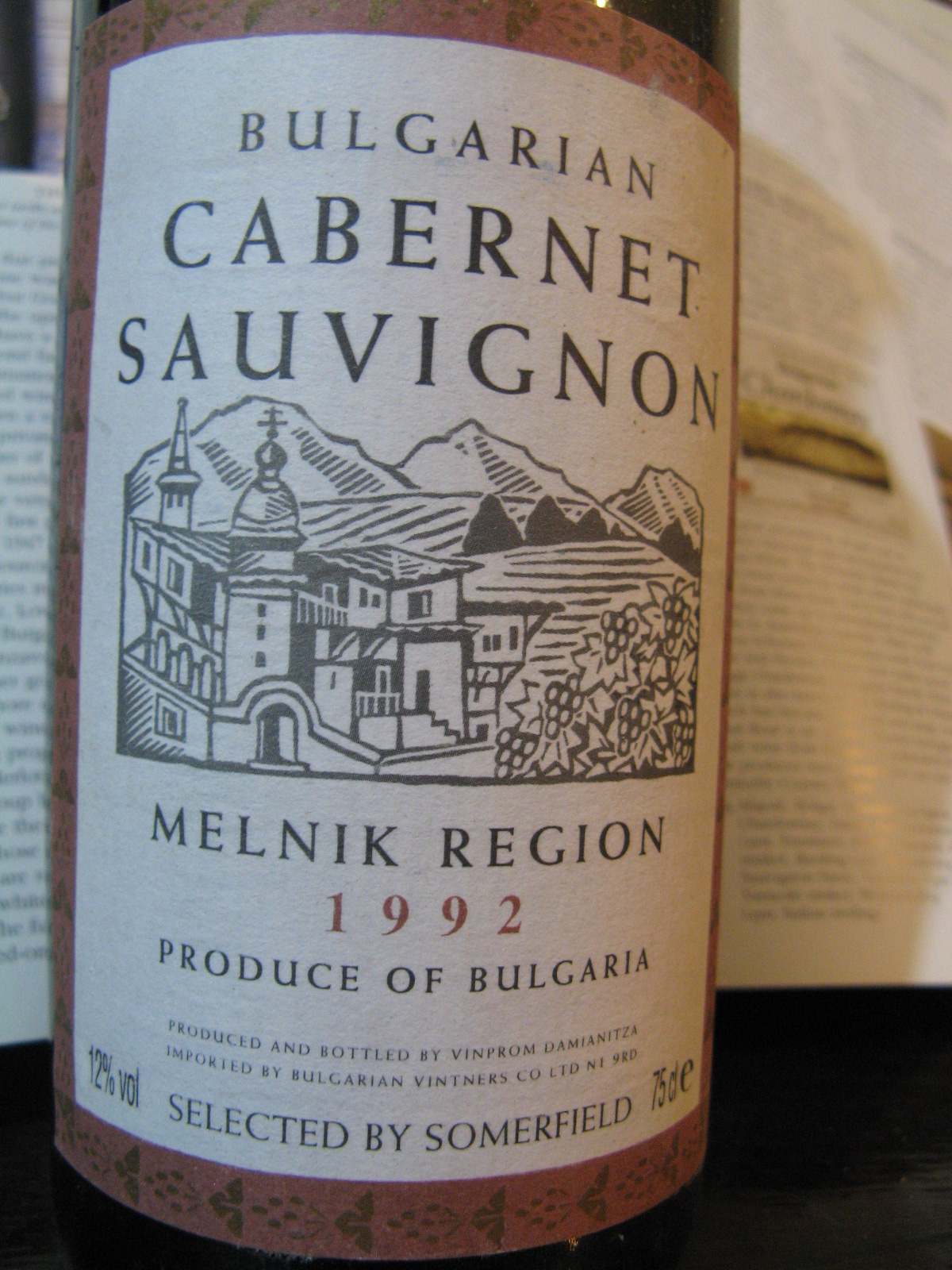
He was not a wine connoisseur but liked wine with his meals especially Red Cabernet Sauvignon, local wine will do, he did not like extravagance but allowed me my follies. From time to time when he got a good red Bulgarian wine he would give it to me to taste “the universal truth”… that the Bulgarian wines are one of the best wines in the world, after all back in the 50’s they used to be the second largest exporter of bottled wine in the world, second only to France. (now Italy overtook the crown from both countries with production of 4.96 billion litres of wine compared to 4.62 billion in France)

Traditionally Bulgarians are known for the production of high quality yoghurt, which he loved so much and towards the end it was the only food that comforted him. They use a unique local variety of micro-organism called Lactobacillus bulgaricus in the yoghurt manufacturing process. Bulgaria is part of a world region that has cultivated and consumed yoghurt from as far back as 3000 BC.

Roast sweet peppers

Ayran – a drink made out of yogurt water and salt, a hot summer weather refreshing health drink.

Tarator – a traditional Balkan dish. It is a cold soup made of yogurt, cucumber, garlic, Olive oil, sometimes with added water walnut, & dill or mint, served chilled.
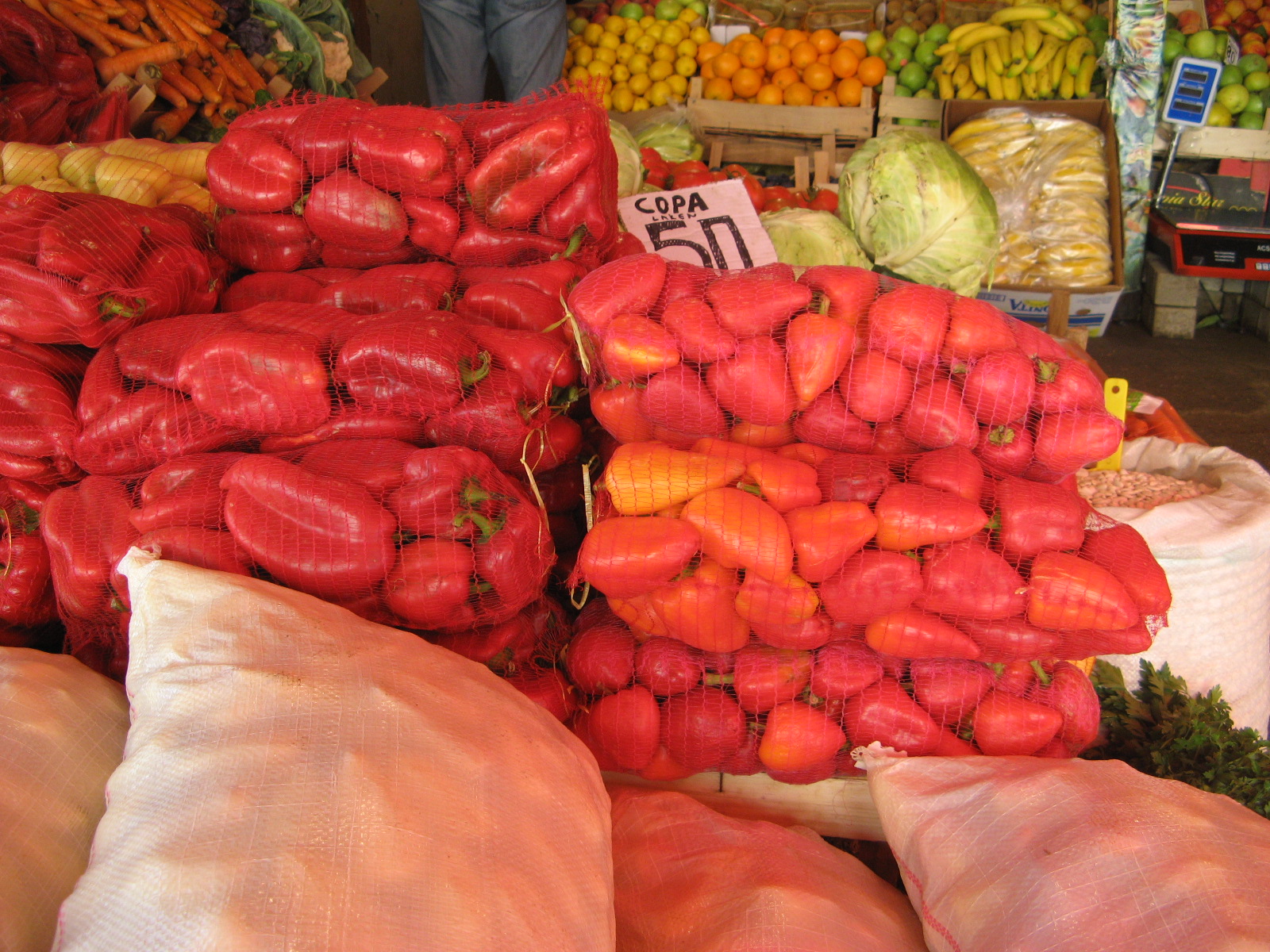
   

Banitsa – is a traditional Bulgarian filled pastry prepared by layering a mixture of whisked eggs and pieces of cheese between filo pastry and then baking it in an oven. Banitsa is usually served with plain yogurt, ayran, or boza. It can be eaten hot or cold. Some varieties include banitsa with spinach (spanachena banitsa) his favorite,

Byurek, is the Bulgarian version of the pastry dish, a variation of banitsa. Bulgarian byurek is a type of banitsa with sirene cheese with eggs added and sometimes spinach.

Bob Chorba – Bean Soup Bean Soup is a traditional dish in Bulgarian cuisine, which is very delicious and easy to prepare. The classic recipe includes beans, vegetables (carrot, tomato, pepper, onion) and spices.

These are the dishes he loved most…

His kind, loving, calm and humble spirit will be with us ALWAYS

Finally, a “piece of me” in the form of some lines from the eternal Jeferson Airplane song “Stairway To Heaven” where he is heading. These feel as a most appropriate farewell words from me:
  • There’s a feeling I get when I look to the west,
  • And my spirit is crying for leaving.
  • In my thoughts I have seen rings of smoke through the trees,
  • And the voices of those who stand looking.
  • Ooh, it makes me wonder, Ooh, it really makes me wonder.
  • And as we wind on down the road
  • Our shadows taller than our soul.
  • There walks a lady we all know
  • Who shines white light and wants to show
  • How everything still turns to gold.
  • And if you listen very hard
  • The tune will come to you at last.
  • When all is one and one is all
  • To be a rock and not to roll.
Cooking for Vegetarians

We humans are Omnivorous, (Omni the Latin prefix for “all” or “every” and vorous from vorare, “to devour”) eaters or more likely devourers of ALL, and ALL is a wide variety of plant and animal products.  It is believed that early hominids evolved into eating meat as a result of climatic changes that caused drying of forests and jungles and the formation of open grasslands. These changes offered various hunting and scavenging opportunities and led to the start of meat consumption.

So we started out maybe as Vegetarians went on to eat all, or whatever was available, and now some of us proclaim themselves Vegetarians. Vegetarianism has its roots in ancient human civilizations from around 8th century BC in ancient India and than in Greece of the “western” ancient world. Vegetarianism is the practice non-consumption of the flesh of any animal by choice, with a large span of dos and don’ts some without even dairy products or eggs. In both instances the diet was closely connected with the idea of nonviolence toward animals (called Ahinsa in India), which was later promoted by religious groups and philosophers. Vegetarianism was reintroduced in Europe during the Renaissance, but Vegetarianism became a widespread practice during the 19th and 20th centuries. (History of vegetarianism From Wikipedia), http://en.wikipedia.org/wiki/History_of_vegetarianism

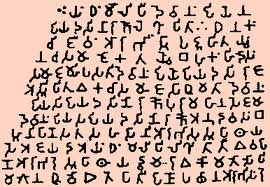
 Ashoka The Great 304 BC – 232 BC was the grandson of King Chandragupta Maurya of Magadh (Bihar). He was instrumental in bringing whole of Indian subcontinent under one rule one flag. He said: “Wherever there is soil on this earth, I want to see it under Magadhan Flag”. Ashoka was the chief cause for the rise and spread of Buddhism in the World. He embraced Buddhism and took the path of non-violence only after the infamous Kalinga war in which a lot of people were killed. (A bit of a timing problem there, but better late than never!).  Ashoka proclaimed a policy of protecting natural resources with powers to enforce his proclamations. After Ashoka embraced Buddhism in the latter part of his reign, he brought about significant changes in his style of governance, which included providing protection to fauna, and even relinquished the royal hunt. He was perhaps the first ruler in history to advocate conservation measures for wildlife. Reference to these can be seen inscribed on the stone edicts The pillars of Ashoka:

  Twenty-six years after my coronation various animals were declared to be protected – parrots, mainas, //aruna//, ruddy geese, wild ducks, //nandimukhas, gelatas//, bats, queen ants, terrapins, boneless fish, vedareyaka, gangapuputaka, fish, tortoises, porcupines, squirrels, deer, bulls, //okapinda//, wild asses, wild pigeons, domestic pigeons and all four-footed creatures that are neither useful nor edible. Those nanny goats, ewes and sows which are with young or giving milk to their young are protected, and so are young ones less than six months old. Cocks are not to be caponized, husks hiding living beings are not to be burnt and forests are not to be burnt either without reason or to kill creatures. One animal is not to be fed to another.     —Edict on Fifth Pillar Ashoka the great

Ashoka did not completely prohibit the killing of animals. he advocated restraint in the number of animals that had to be killed for consumption, protected some of them, and in general condemned violent acts against animals.

However, the edicts of Ashoka reflect more the desire of rulers than actual events; the mention of a 100 ‘panas’ (coins) fine for poaching deer in royal hunting preserves shows that rule-breakers did exist. The legal restrictions conflicted with the practices then freely exercised by the common people in hunting, felling, fishing and setting fires in forests.

 THE EDICTS OF KING ASHOKA from an English rendering by Ven. S. Dhammika:  http://www.cs.colostate.edu/~malaiya/ashoka.html

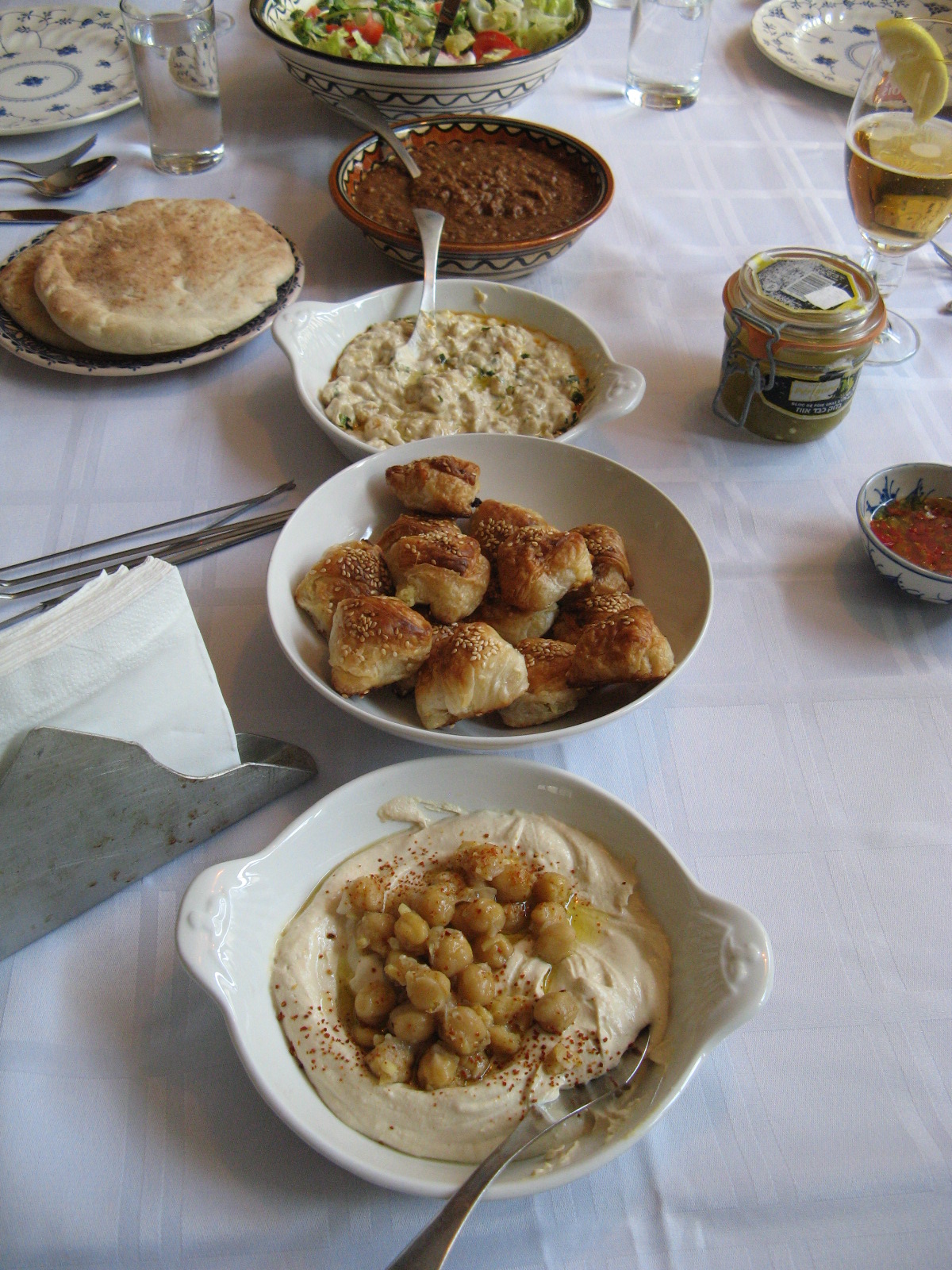
Why am I going round and round the Veggie story? Well, my daughter and her hubby popped in for their yearly visit from London last week, yes some leave the city when the biggest show on earth is in town…(the Olympic games) they are Vegetarians one is “practicing” what is called: Ovo-lacto vegetarianism, it include animal/dairy products such as eggs, milk, and honey in their diet the other Pescetarian, They include fish and some other forms of seafood occasionally in the diet,  (at times of their discretion, our guests fro London go Vegan; Veganism excludes all animal flesh and animal products, including milk, honey, and eggs, and may also exclude any products tested on animals, or any clothing from animals). But now, during this present visit, they are each on their mildest form of zealous conduct, for I wanna cook for them and it isn’t easy, especially if you wish to cook something out of the ordinary. Ordinary Mediterranean / mid eastern cuisine to which they are accustomed to, is as you know, quite strong on the veggie aspect, from wonderful fresh vegetables and fruits to dishes made from fresh and uncooked fruit, nuts, seeds, and vegetables, food sources with significant amounts of essential amino acids like beans, soy, buckwheat, peanut butter, and quinoa, brown rice and beans, hummus with pita, or falafel which is almost the national dish here, with the best of Palestinian Tahina from Nablus …


Mid East Mezze, spinch with Tulum cheese, Arabic Salad, Fava bean Paste, M’ssabacha, Cheese Börek, Hummus, Pitta bread

but how would you combine those requirements (for me restrictions) into a meal to savour? A meal with style and somr diversity. A cooked meal well presented and tasty?

Now most Vegetarians reading these lines would protest towards my ao called difficulties and with amazement at my narrow mindedness. But I am a carnivore (I eat MEAT, POULTRY, FISH AND SEAFOOD), these are part of the products I’m used to cook with and vegetable only! Restriction, makes my life at the kitchen difficult. But don’t forget my food reference points are wider, broad enough to get me safely through the “finish line”

Salads of choice:

  • Roasted endive salad, with arugula, fresh figs, Roquefort and walnuts.

The trick here is to cut the endive to quarters down the center lengthwise, separate and spread the outer leaves and core over a bed of thyme olive oil and Malden salt in several layers repeating the layering after 7 min in 180ºC  turn the bundle over (lower layer on top for another 5 min or until the endive edges turn brown spread overa plate sprinkle the juices (olive oil and endive “sweat”) from the ceramic baking tray sprinkle the juice of half a lemon or more (to taste), cut 2 figs to small cubes and sprinkle on top, cut (frozen) Roquefort cheese to same size cubes and spread over, sprinkle broken walnuts on top and garnish with 2 more figs cut to thin medallions and some Arugula leaves, serve warm or cold.


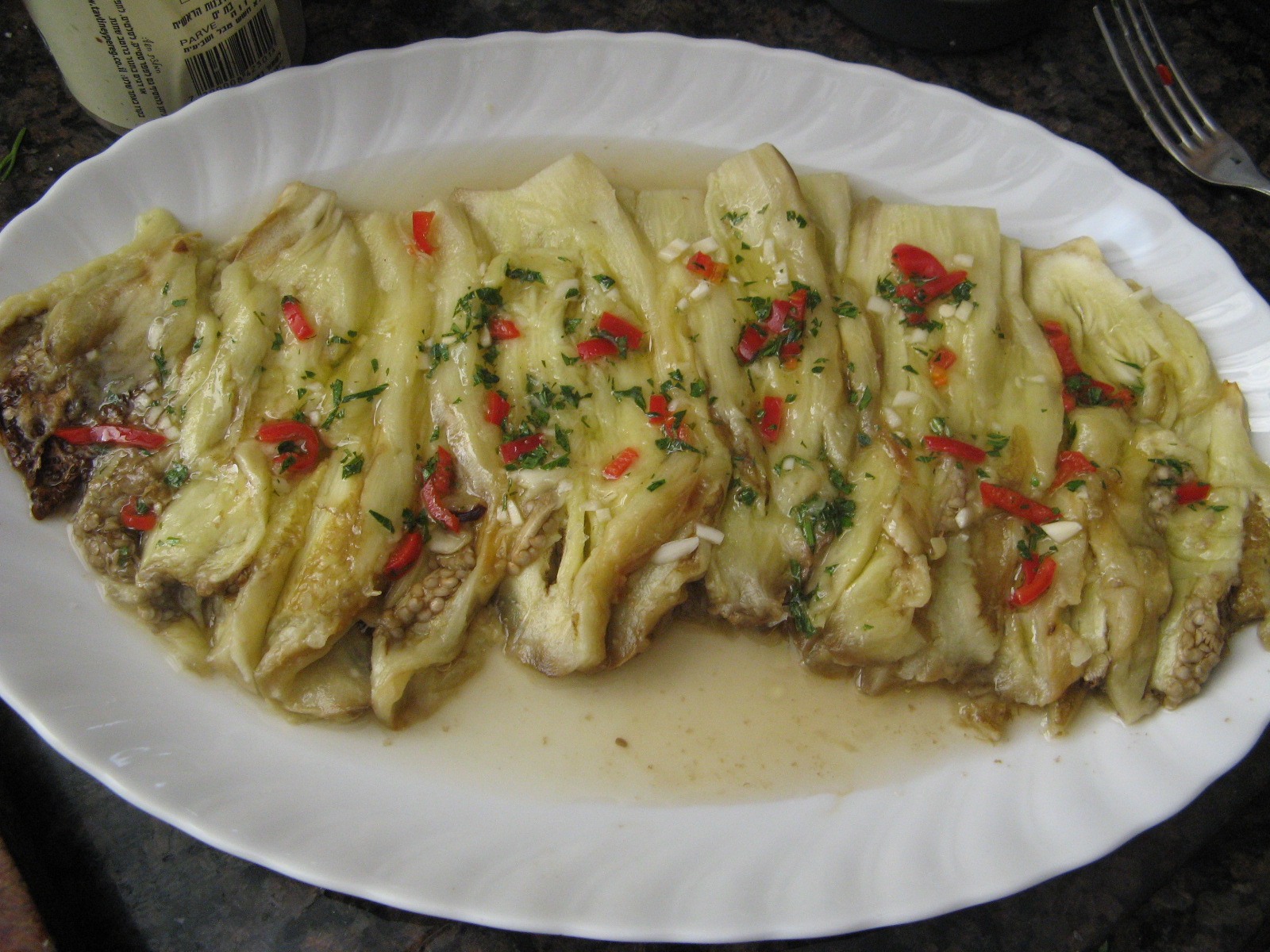
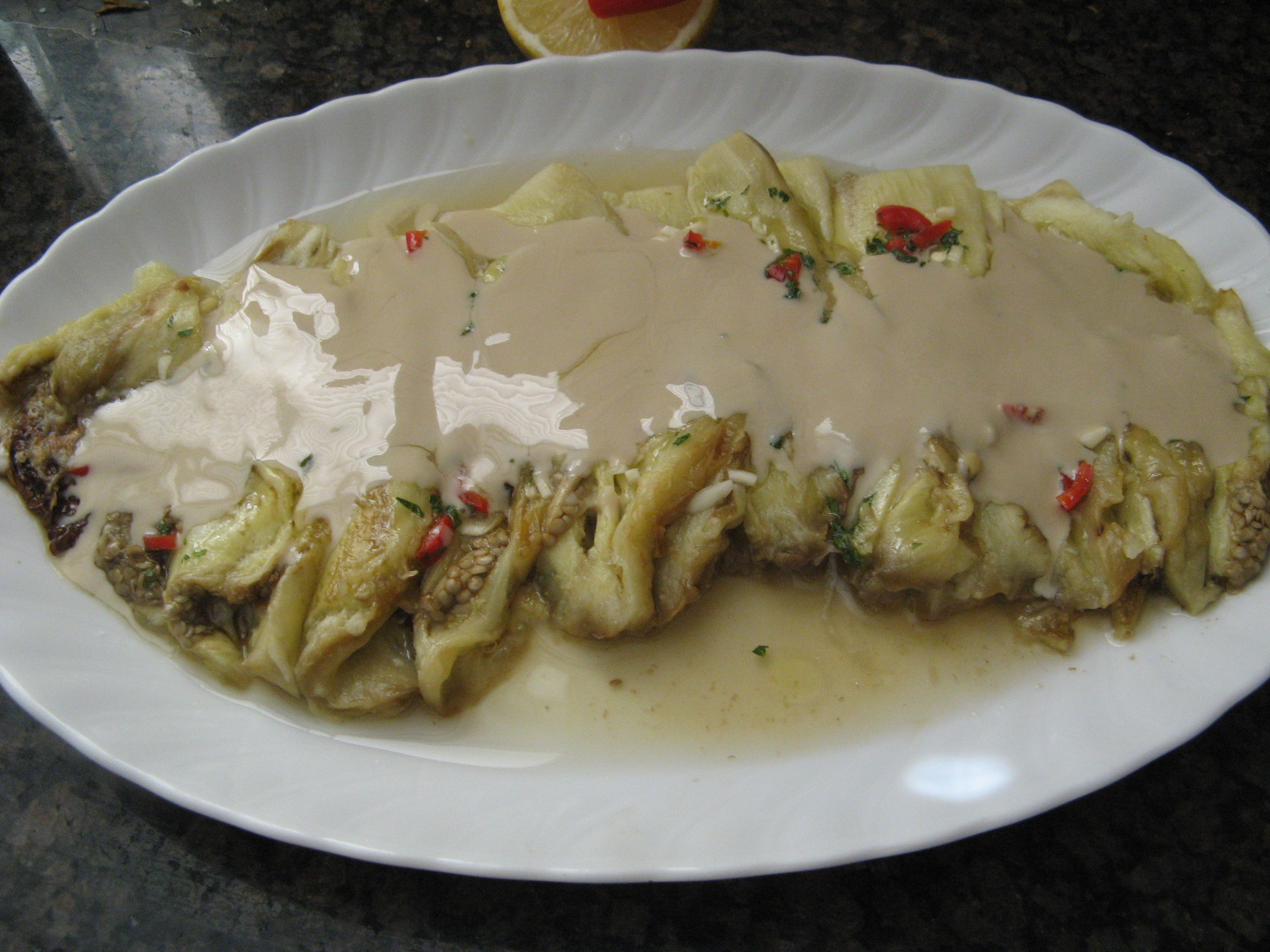
  • “Carpaccio” of roasted eggplant with raw Tahini sauce spiced with chilli garlic lemon and Black salt.

Put an unpeeled eggplant (Baladi) type in the oven unpeeled 190º for 15 min turn over for another 10min test to check the eggplant is soft but not soggy! Let it rest for 5-10 min. cut the top off than peel from bottom to top (easier to peel) slice lengthwise less than 1 cm thick slices,, move the whole cut eggplant to a serving dish and spread with your fingers forming a stepped spread, sprinkle with Malden salt (takes the bitterness off), and juice from half a lemon, cut half a clove of garlic into small cubed and tuck into the Carpaccio flesh with your fingers evenly, do the same with half a small fresh red chilly (tip side) spreas good quality Tahini sauce (sesame butter) straight from the jar, garnish with slivers of thinly cut fresh garlic and thin rings of fresh red chilly, decorate with a line of black Hawaiian salt.


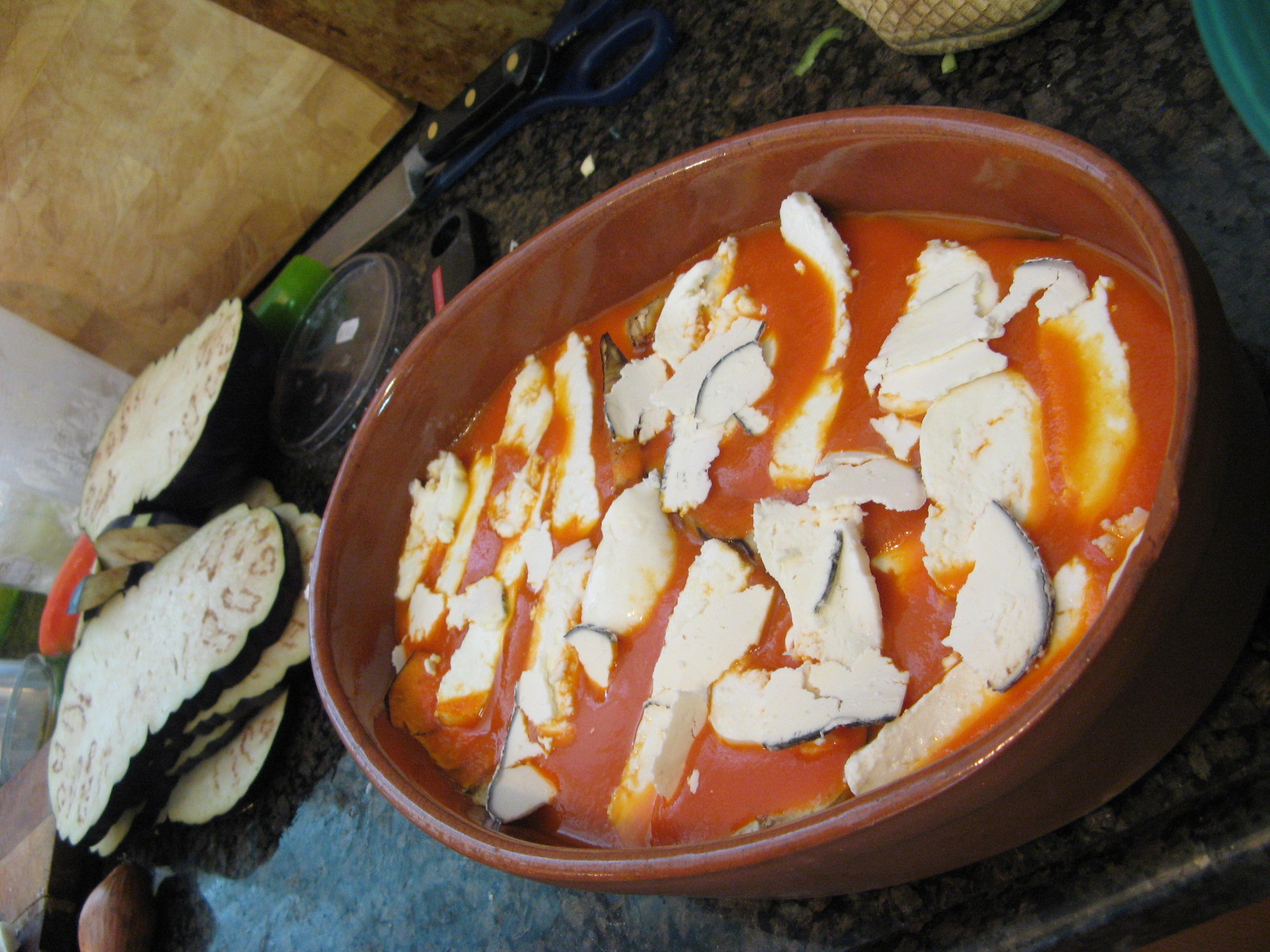
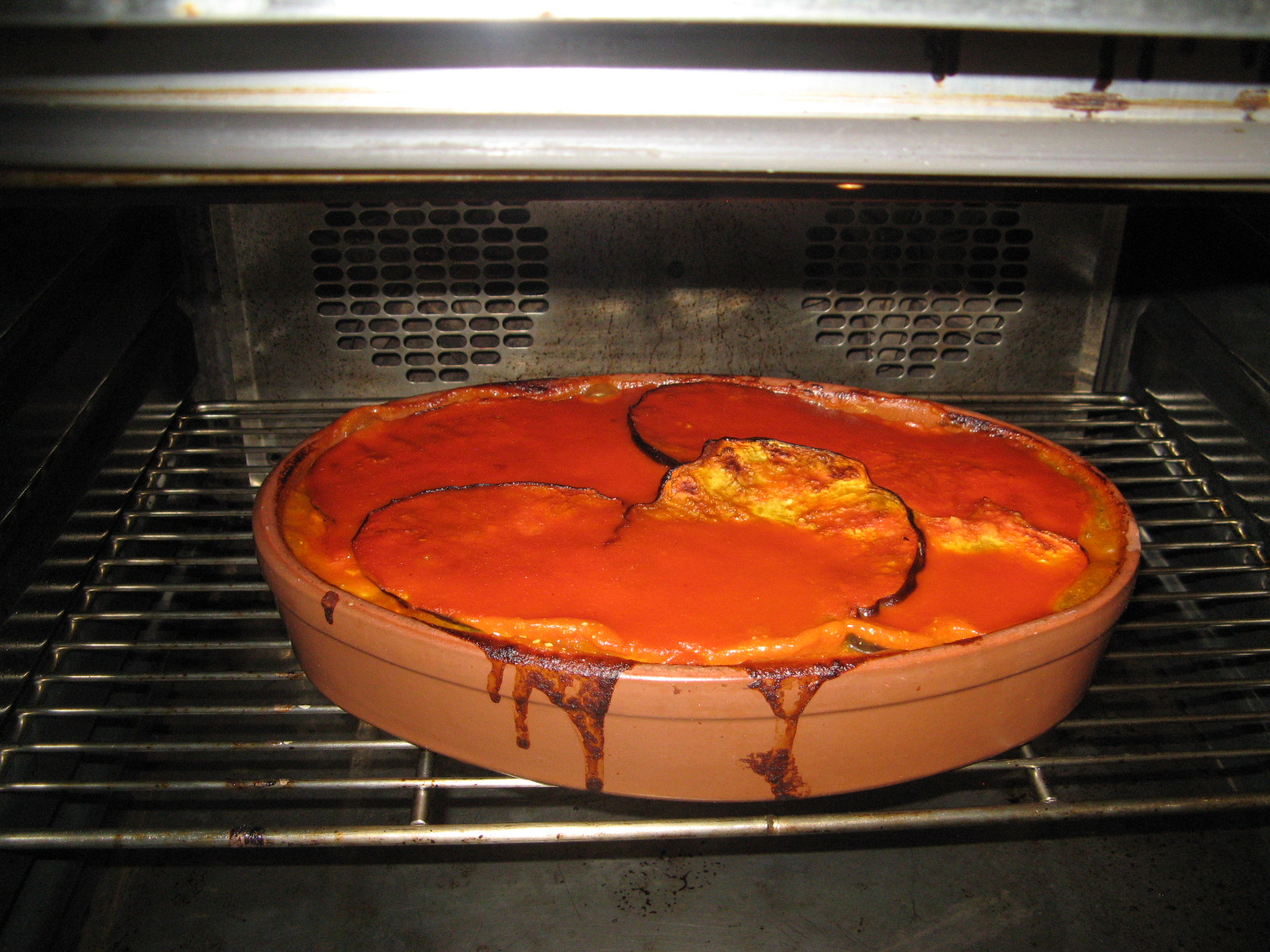
  • Eggplant and cheese Moussaka baked in fresh tomato and peppers sauce.

For the sauce


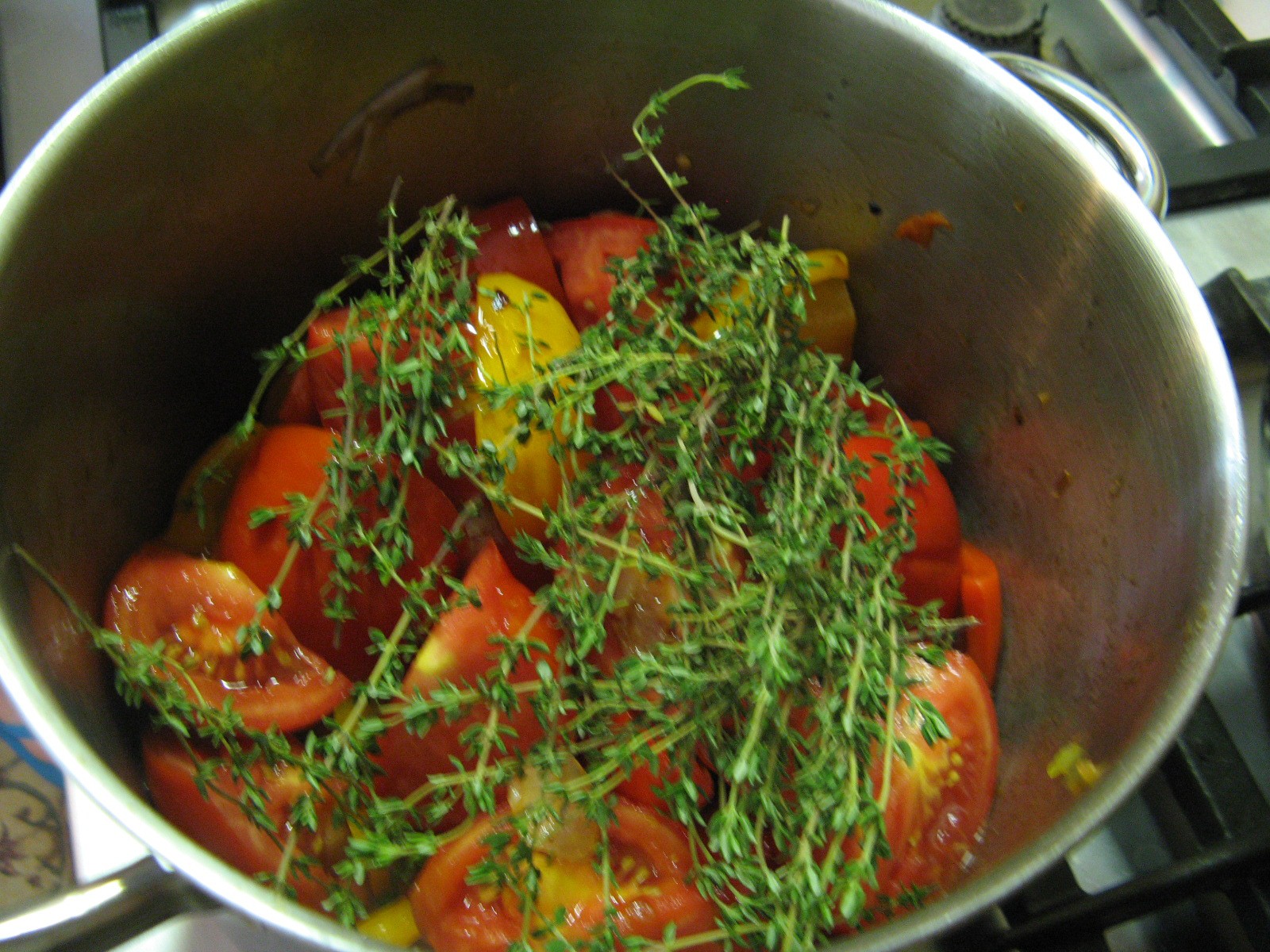
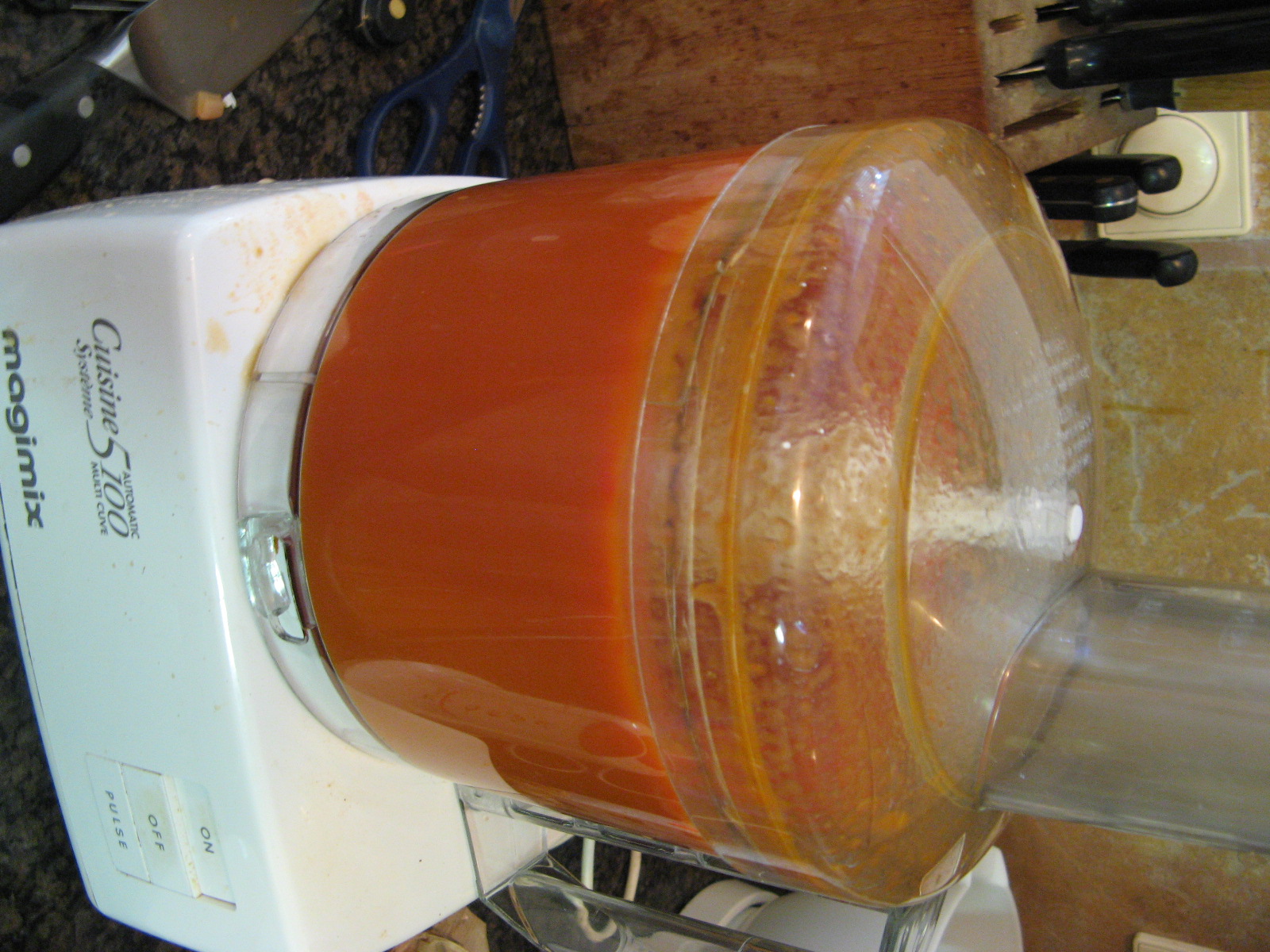
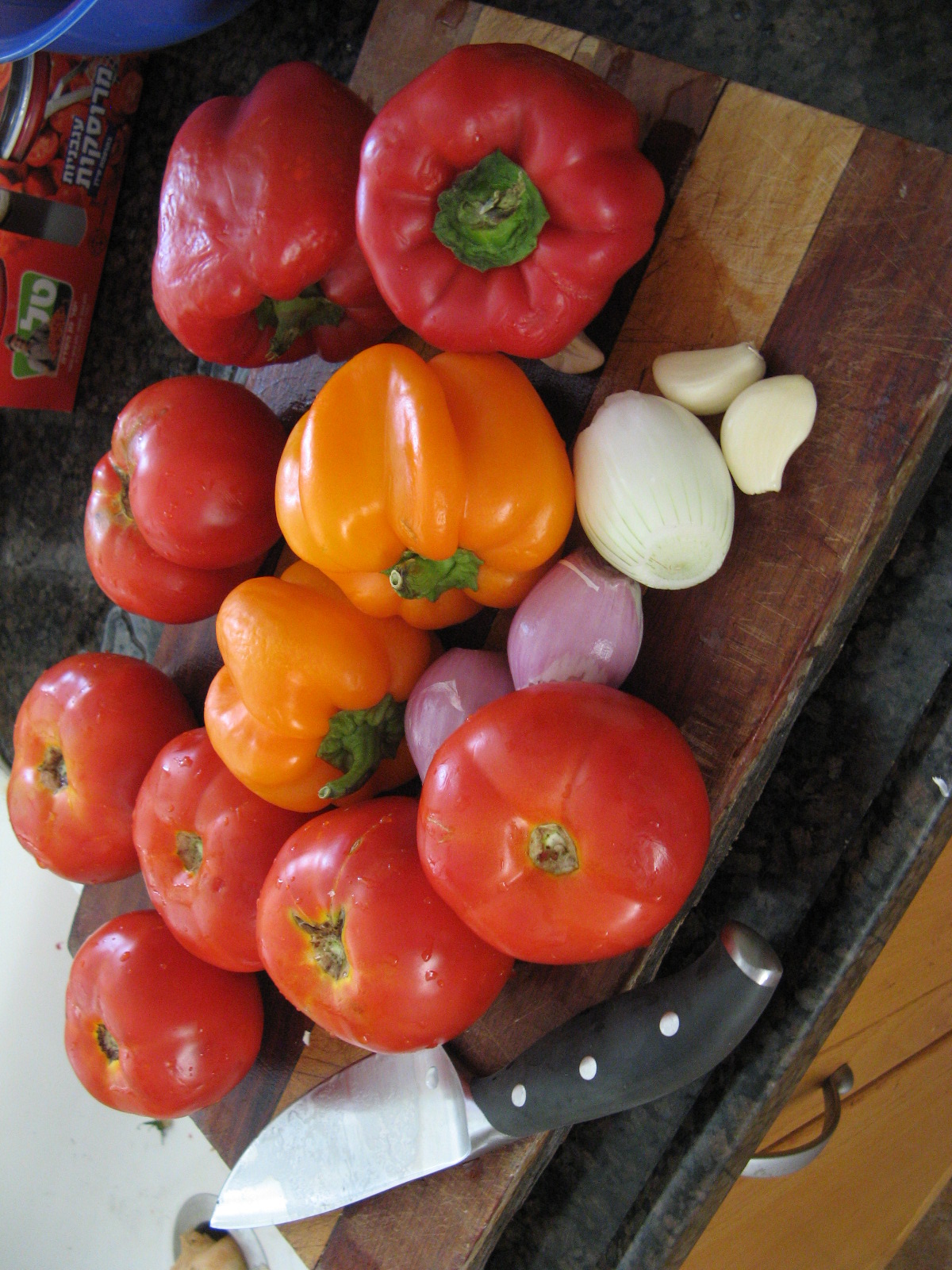
In a saucepan fry square slices of Red Yellow and Orange bell peppers (inner “vein” discarded) and sliced onions in olive oil, when the peppers brown slightly on the outer side add 2 cloves of sliced garlic, half fresh chili pepper a bundle of fresh thyme oregano and Rosemary, salt and pepper let it sweat for another 2 min stirring constantly add 6-10 large ripe tomatoes (cut to quarters) and 200ml white wine and 4 spoons of canned crushed tomatoes, bring to boil and simmer with the lid on until the peppers soften about 10 min (stir occasionally), set aside to cool correct seasoning , “fish” out the herbs stems and “blitz” the rest in a food processor to a unified paste not too thick allow to cool completely and press through a sieve (discard the peal and pits), powder down some good dry Sicilian oregano (most fragrant of all oreganos) keep aside.

Building the moussaka:


Cut eggplant to half cm thick slices salt with coarse salt evenly and lay down on aa oval earth ware dish 7-10 cm high one layer covering the whole base, sprinkle with olive oil, and put in an oven 220ºC higher than the center of the oven, take out from the oven ladle the sauce over, lay down buffalo mozzarella and other goat cheeses, cover the first layer with another layer of eggplant, salt and olive oil return to the oven for another 5 min and repeat until you reach half a centimeter below the dish rim, cover eith the rest of the sauce, sprinkle with  Parmigiano-Reggiano reduce heat to 180ºC and bake in the center of your oven foe up to 40 min make sure there’s enough sauce but not too watery, 5 min before serving spread mozzarella medallions on top and some Parmigiano bake for another 5 min or until the mozzarella melts, let it rest for 5-10 min cut and serve.

Etc. re: recipes, and so on re cooking instructions…, after all I’m not writing a Vegetarian cookbook!

 I guess vegetarian cookbooks written by long time vegetarians are limited in the sense that they are too focused on the “allowed” ingredients and their contribution to health needs, and less into the depth of taste, flavor and harmony. I feel that Carnivore’s points of reference are broader, (no offence), you know what to aspire to and reach it by other, multilayered means to “win” on some else’s home ground.

For the rest I guess photos and captions will do, easily filled with some imagination. (in the near future)

The wines on these hot summer days must surely be a good Rose like the magnificent Rose du Castel 2011 I had about a month ago with a wondefull scent of Red berry fruits and ripe Santa Rosa plums with 13% alcohol it was so well balanced and light refreshing and alluring for more Great success!

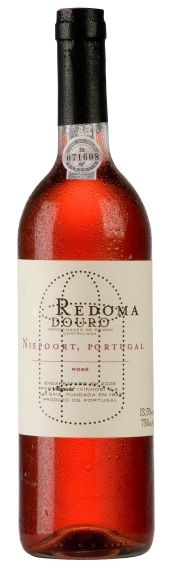
The Niepoort 2009 or 2011 REDOMA ROSE a mixture of many grapes in a blend of 30% Tinta Amarela, 20% Touriga Franca, fermented in French oak and aged in stainless steel, long skin contact (a few hours) to provide complexity. The color is pleasant pink, Dry but fruity and refreshing sort of a red wine to be drunk cold, for the hot summer days. The Intense and nose of red berry fruits, spiced plums, elegant touch and great freshness and intensity, precise balanced of acidity and fruit add to the complexity of this Portuguese wine.

Of course any dry Blanc de Blancs champagne will do nicely , But on the day,  we had the meal with ice cold Corona Extra Beer and lime (which was also the base of the Beer Saffron & chili sauce for the blue crabs).

Tarte Tatin for Judy


press play for background music


               My friends Judy and Yair                                                         Judy Yair and Etienne Hugel Chez moi

My friend Judy Chang is a food and wine Junkie of the 4th  kind. She’s always on the look for the Best in Wine and Food wherever she is, and she gets around A LOT!!! She is almost “obsessed” with food and wine, follows the best of the rest in each category in all 5 continents, relentlessly guzzling and drinking her way to oral and nasal senses heaven.

She is an American of aristocratic Chinese decent (Taiwanese), with a Jewish Israeli Chutzpa – (Yiddish word that can’t really be translated but is something between “outrageous”, “insolence” or “audacity”  “impudence” or “cheekiness”) this is where her charm lies and usually acts as a door opener, she finds her Aladdin Caves of food or wine and opens them with the right command, but one day she will say “Iftah ya simsim” (“Open sesame”) in a wrong place or at the wrong time she might be faced with the “Forty Thieves”…(Ali Baba is the good guy)

In short She Loves Wine, Food, Wine & Food, Food & Wine and anything in between, still she prefers the best of what Chinese, Japanese and French cuisines have to offer. She is more beautiful than any of the most beautiful dishes she ever had (and she’s had quit a few…) and she is Soledad Bleu 😦

 She wrote to me recently:

Dearest Amir,

You need to get to NYC and teach the Spotted Pig (Michelin) how to make a proper tarte tatin!!  Dono what’s going on here but its too soft and floury and quite unedible!!! It’s more like a darn fruit cake/half ass scone! (She’s a bit biased in favor of my cooking I guess) we all know the disappointment of getting something which is just not IT.

Since I cannot get to NYC right away or in the very near future all those concerned will have to do with this post.

Tarte Tatin is basically (as you know…), an upside-down caramelized fruits tart.  (The fruits in the original recipe were apples)

Tales of origin

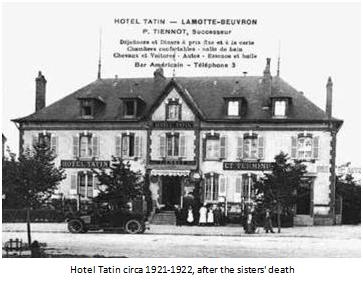
Some claim that Tarte Tatin was first created by accident by the cook, Stéphanie Tatin at  Hotel Tatin. The hotel was run by the sisters, Stéphanie and Caroline Tatin in Lamotte-Beuvron, France, (150 km South of Paris), sometime during the 1880. sister Stéphanie Tatin, who was in charge of cooking at the hotel, started to make a traditional apple pie as part of her daily chores, but left the apples cooking in butter and sugar for too long. Smelling the burning caramel, she tried to rescue the “dessert of the day” by putting the pastry base on top of the pan of apples, and put the pan in the oven for the pastry to bake, after the pastry was baked properly she turned over the tart, and served it hot from the oven. She was astonished not only to find a pleasing result but also to learn that most of the hotel guests requested a second helping.

It must be said that the concept of the “upside down tarts” was not a new one. Chef patissier M.A. Carême (The King of Chefs and the Chef of Kings) already mentions glazed gâteaux renversées adorned with apples from Rouen in his glorious cook book “Patissier Royal Parisien” in 1841.

Ingredients


 Originally, Tarte Tatin was made with two regional apple varieties: Reine des Reinettes (King of the Pippins), and Calville. But my choice of apples is Granny Smith or Cox which are hard and will hold their shape while cooking, and tangy and sour enough to balance the sweetness of the caramel (toffee). “Toffee is basically sugar and butter, Caramel is sugar and cream or milk, with butter occasionally in the mix.”

Tarte Tatin can be made with other fruits or vegetables such as pears, pineapple, and even tomatoes or onions and leeks. As for the pastry top/bottom the Larousse’s recipe opts for shortcrust which is in my mind the downfall of all those attempting this simple dish, my pastry of choice and the only pastry suitable is puff pastry which is certainly NOT the pastry used at the Tatin Hotel. (I’ve learned the basic ideas for this recipe, ages ago from the award winning recipe Pear Tarte Tatin – tarte tatin de poire  by Marco Pierre White voted as the best dessert of one year during the 90’s) I must admit I use less than half the recommended butter and sugar and simplified the method to fit home cooking. (and it works!!!!)

For a Tatin dish 28cm diameter serves 6-7 people:

6-7 green apples: a mix of Granny Smith & Cox is best

100g Demarara sugar

70g butter + 30g butter cut to dots for spreading on top of the apples

1/2 a teaspoon of fresh ground cinnamon

A 20 cm square of best ready-made butter puff pastry

Prep:

  1. Core and peel the apples and cut into quarters (keep in cold water with a squeeze of half a lemon, can be prepared well in advance)  (if using pears core peel and cut in half)
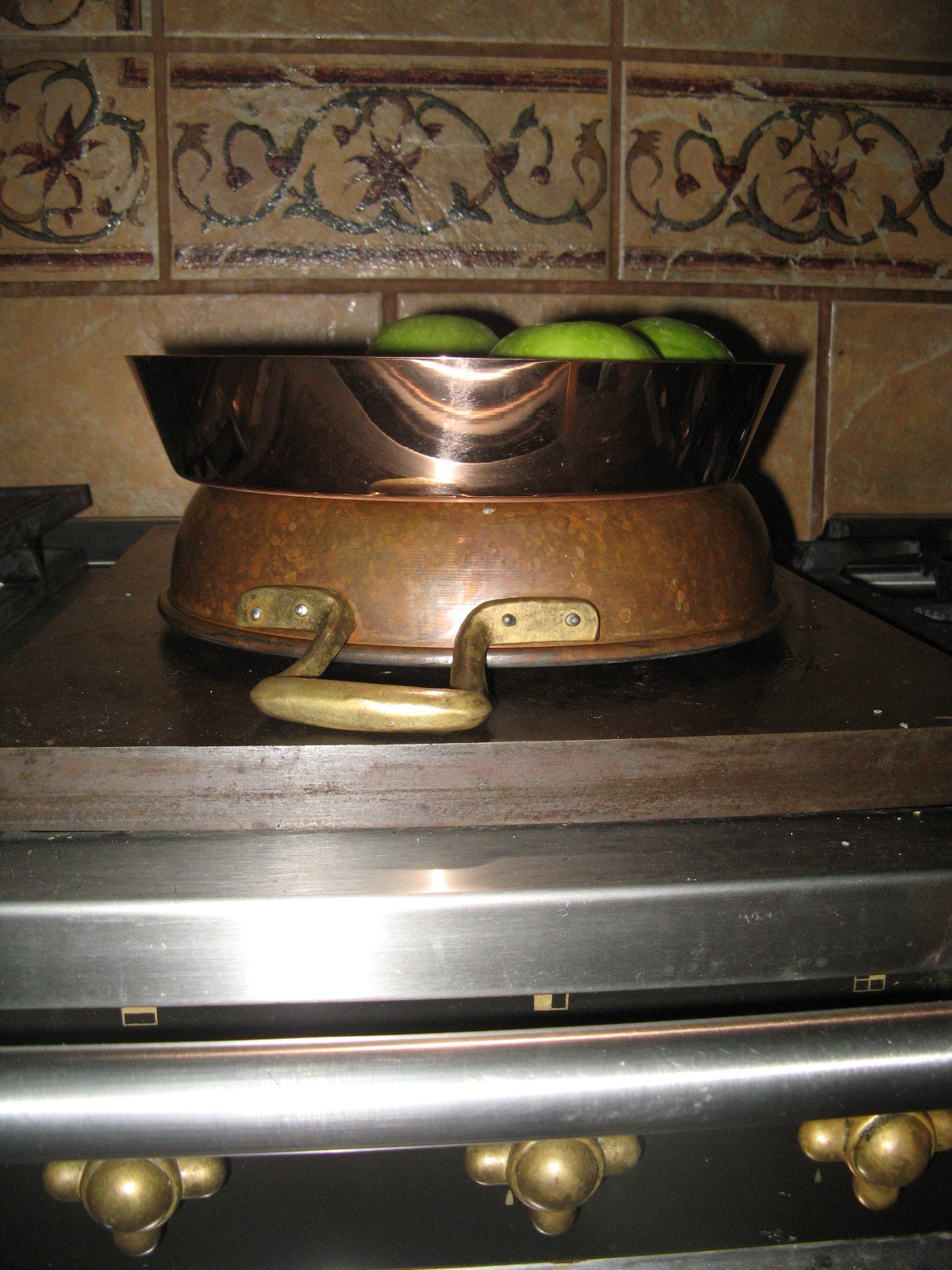
  2. Melt the butter in the Tatin dish on low heat making sure not to burn the butter and sprinkle most of the demarara sugar on top. Crowed the apples as much as possible (round side down core side up), no need to arrange the fruits in any particular order the apples will “arrange” themselves. Turn the heat slightly up and allow the sugar to start bubbling.
  3. Dust the puff pastry (room temperature) and kneed to a circle 5 cm larger than your dish.
  4. Dot the apples with the remaining butter sprinkle with sugar and the cinnamon evenly.
  5. Cover the dish with the pastry circle and tuck in the extra pastry around the inner rim to “hug” the outer ring apples
  6. Keep on medium heat the pastry will balloon up and the butter and sugar will start to caramel at the edges wait until dark amber brown color froth appears at the edges around.

I stand over the dish at this stage with pastry leftovers patching up any punctures in the dough that deflate my balloon. Once the edges turn the right color place the dish in the center of a preheated oven 190º C

  1. Bake the tarte Tatin for about 20-25 minutes, or until golden, with crispy dark brown caramel pieces bubbling up from around the edges. Take it out of the oven. NOW you need to turn it over, which isn’t hard – but you do need to be careful with that hot caramel. So get a serving plate larger than the dish wearing oven glove. Put the plate on top of the pan, then quickly in a smooth  confident move, turn it over don’t worry if the occasional apple gets stuck onto the dish, use a Silicone spatula to collect the caramel and “drop” the apple to its place in the crowd…and the remaining caramel/toffee all over.
  2. Serve with the best Vanilla ice cream you can get your hands on while hot.


And most importantly the wine pairing for this dessert, All of these are suitable depending on personal taste my selection:

Niepoort 10 Years Old White Port – best  served chilled with our dessert .

of course the Hugel Vendange Tardive Riesling 2001 (for those who feel LARGE…)

Or  a good 4-5 Puttonyos  Tokaji

As Judy would say: YUMMM!!!!!!!!

BTW she’s at soledadbleu-etoile.blogspot.com check her out.

Your Wineguide

             Bill Withers – Ain’t No Sunshine

                Writer(s): MOLINA JR., ARTURO/WITHERS, BILL

Ain’t no sunshine when she’s gone
It’s not warm when she’s away.
Ain’t no sunshine when she’s gone
And she’s always gone too long
Anytime she goes away.

Wonder this time where she’s gone
Wonder if she’s gone to stay
Ain’t no sunshine when she’s gone
And this house just ain’t no home
Anytime she goes away.

And I know, I know, I know, I know,
I know, I know, I know, I know, I know………..

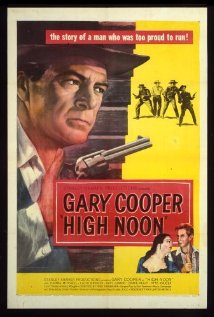
Euro 2012, the Finals- High Noon in my Cellar

 A delayed post to sum up a GREAT event; The Euro 2012 Final


So as the teams get ready for the BIG FINALE, sorting out their players, see who is fit and who would have to miss the squad. Prepare the list of substitutes, the strategy of game, against a known “enemy” on an unknown day. Isn’t that what makes Sport in general and football in particular a mostly harmless (not always!!), substitute of WAR?!


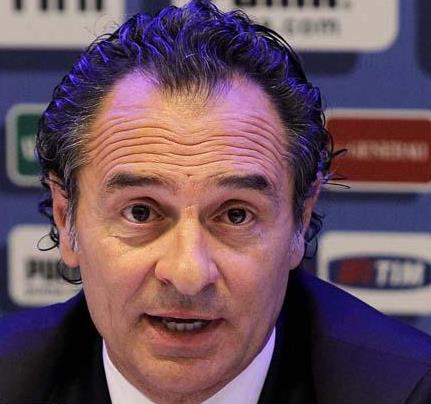
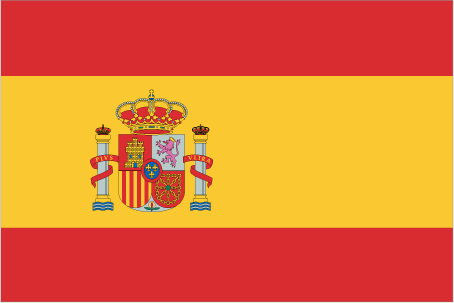
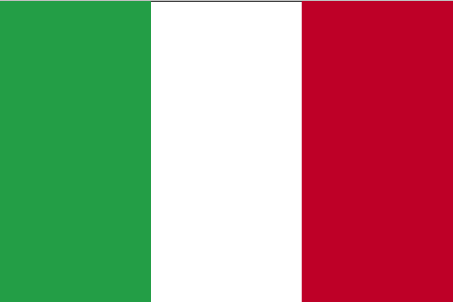
Italy coach Cesare Prandelli has said he will try to find out the weaknesses in the Spain team, and would then set up his team to exploit those during their Euro Cup final showdown on Sunday in Kiev.

We did not invent these notions, us humans of the 20th and 21st century.

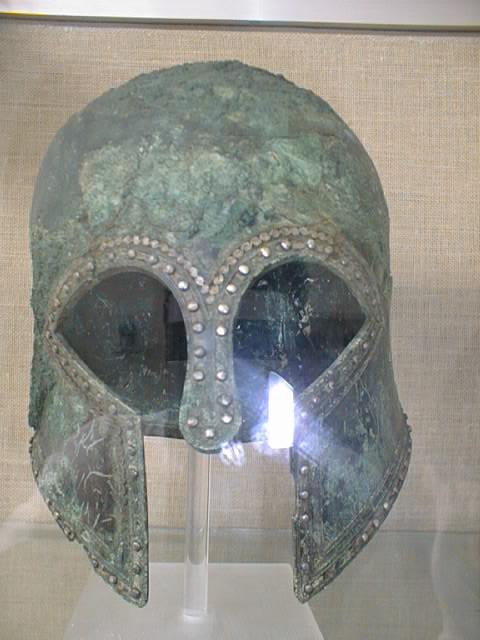
The ancient Olympic Games are shrouded in mystery and legend but first records indicate that they began in 776 BC in Olympia west Peloponnesus Greece. They were celebrated until 394 AD when they were suppressed by Theodosius claiming them to be a ritual of a pagan cult. The Games were usually held every four years, or Olympiad, as the unit of time came to be known. During a celebration of the Games, an Olympic Truce was enforced, wars were willingly stopped in their midst without resolve, allowing free and safe pass to all soldiers / athletes who traveled from their countries to the Games in safety. The prizes for the victors were wreaths of laurel leaves Hellanodikis used to place a sacred olive tree wreath- kotinos, on the winner’s head.


I know I have made a slight U turn from the issue at hand, after all it is my blog, but I’ll get back to the point.

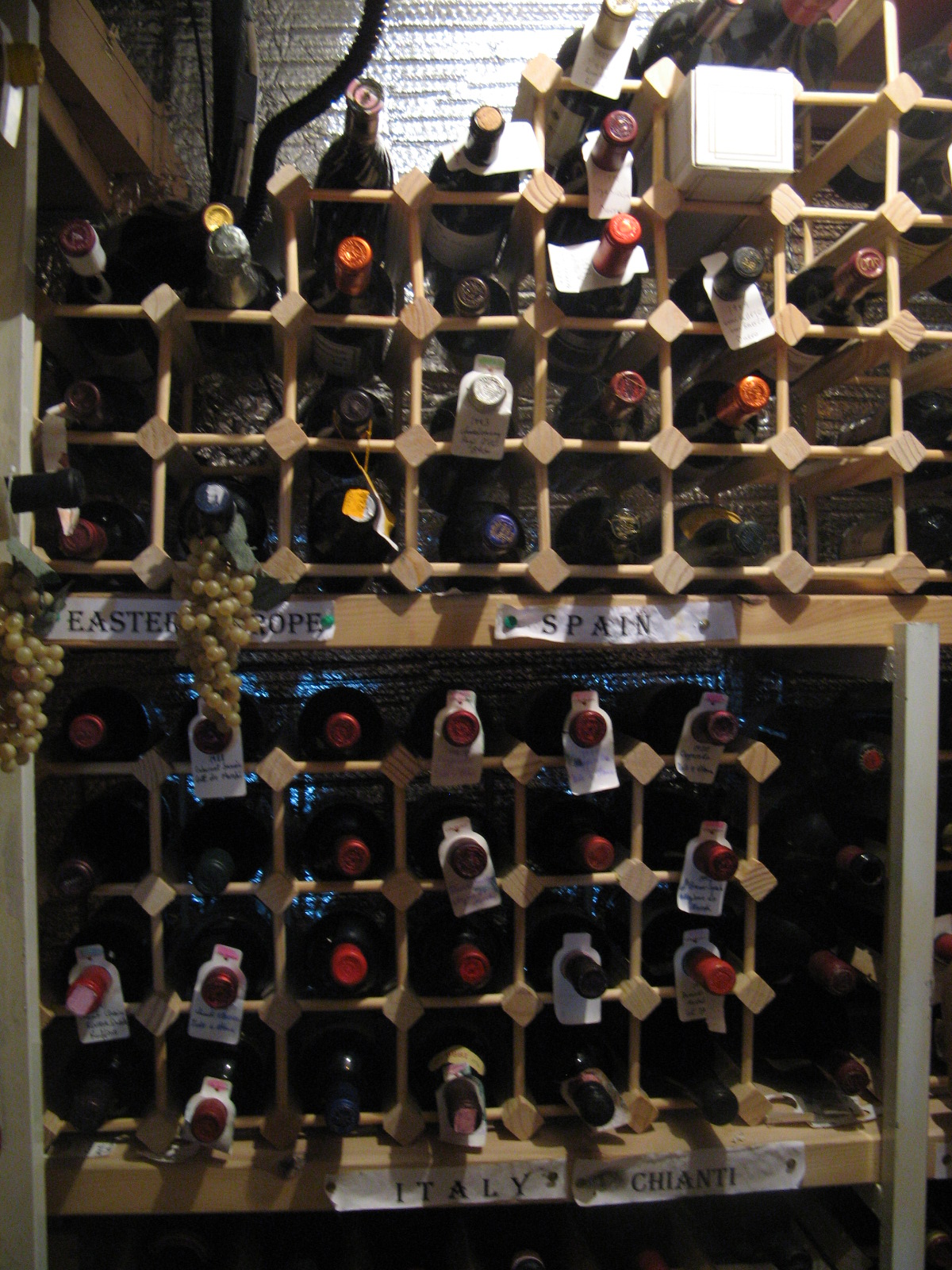
So, as the teams got ready I had to get cracking, choosing the right team from the wines of each country ONLY from my own humble cellar, this is not an easy task since the cellar is unfortunately not amazingly stocked with THE Great wines of any of these wonderful wine countries, but I thinks I can manage fairly on both sides so: same disadvantages or “rules” apply on both sides, FAIR? and so the showdown begins it’s HIGH NOON in my Cellar!


They stand in the tunnel the tension is sky high, I am a bit concerned with the gloom on Casillas face he is usually calm (he is a well trained War Horse), but not today! does he feel the weight of the occasion? Or is he not 100% fit??? On the other side, Buffon is calm and assured on the outside (the poor bugger one of the world’s BEST goalkeepers will collect the ball 4 times from inside the net (But we know all that by now, apologies for the delay)

On the “wine field” the match is more even… I can turn it with words to either side… for… if the final score would have been different (in Italy’s favor) I would still present the same wines as “my teams” but twist it in favor of the outcome so let us be fair, the cellar does contain some great wines from good to great vintage years to represent a winning team on either side… Same as the teams in front of us but how will they perform as a team? Will the sommelier (open the bottles on time to serve them at their best, let them breath to just the right point of oxidation, decide to decant a wine of sorts oversee the correct serving temperature to name but a few of his responsibilities.

The line up

                                         Spain                                        


                                                                         01 Casillas

                                  03 Pique,   15 Ramos,   17 Arbeloa,   18 Alba 

             06 Iniesta (Mata – 87′ ),  08 Xavi ,  10 Fabregas (Torres – 75′ )

                            14 Xabi Alonso,   16 Busquets,    21 Silva (Pedrito – 59′ )

Substitutes:  07 Pedrito,  09 Torres,  13 Mata

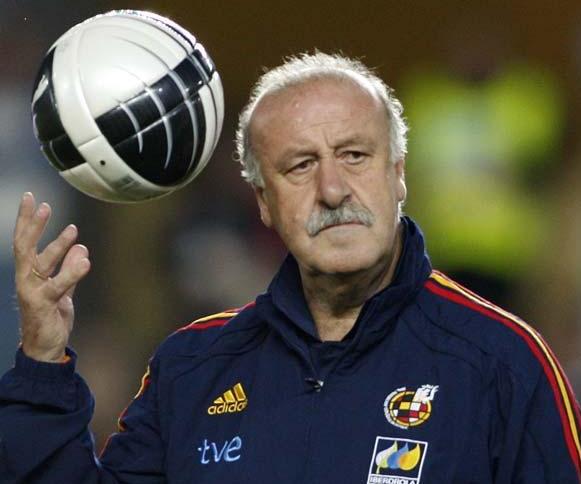
Sommelier Coach– Vicente del Bosque: A coach to envy, with all the talent he has at hand. The players like his calm approach to the squad. He lead his side to the 2010 World Cup final and Cup. Winning the Euro 2012 title will place him among the all-time great national managers/coaches.

The WINES:

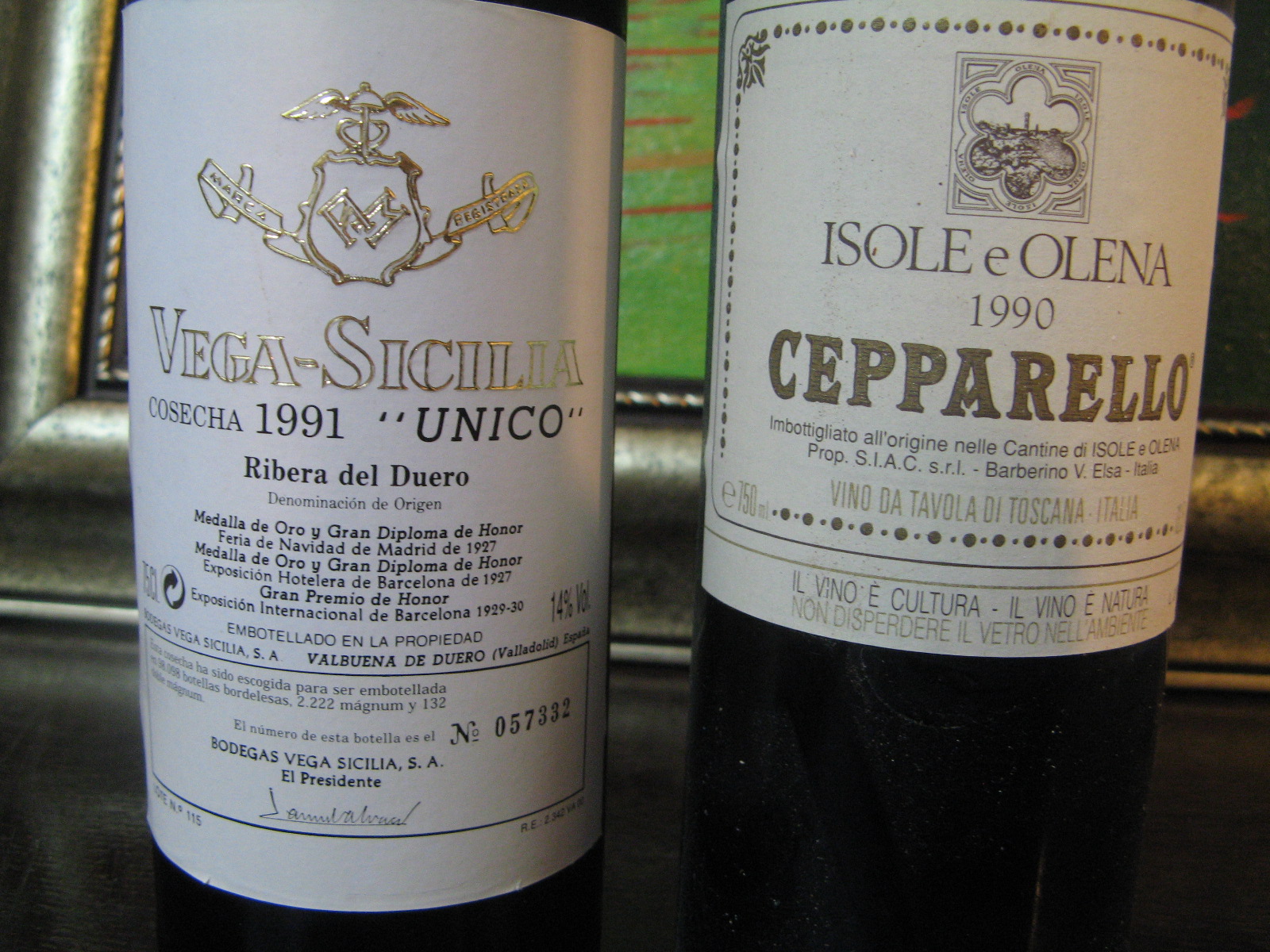
  1. Vega Sicilia Unico 1991 – (Iniesta ) This is Vega sicilia Gran Reserva wine produced only on good vintage years. It is released only on Super Vintages and released a minimum of 10 years or even more after the vintage. Made from the oldest vines in the Ribera del Duero, the wine is mostly Tempranillo ( 80%) and Cabernet Sauvignon ( 20%)

The 1991 Unico Reserva, Laid down for 14 yeard before release on 2005. With a deep dark purple color. Aromas of black ripe forest berries soaked in a good brandy, some Vanilla, dried fruits figs and aromatic Cigar noticeable touch. Very powerful “encounter” on the palate but the tannins are rounded though present, will go on evolving. It’s has great finesse combined with a great balance of youthful fruit and tannins to keep it alive for another 20-30 years.

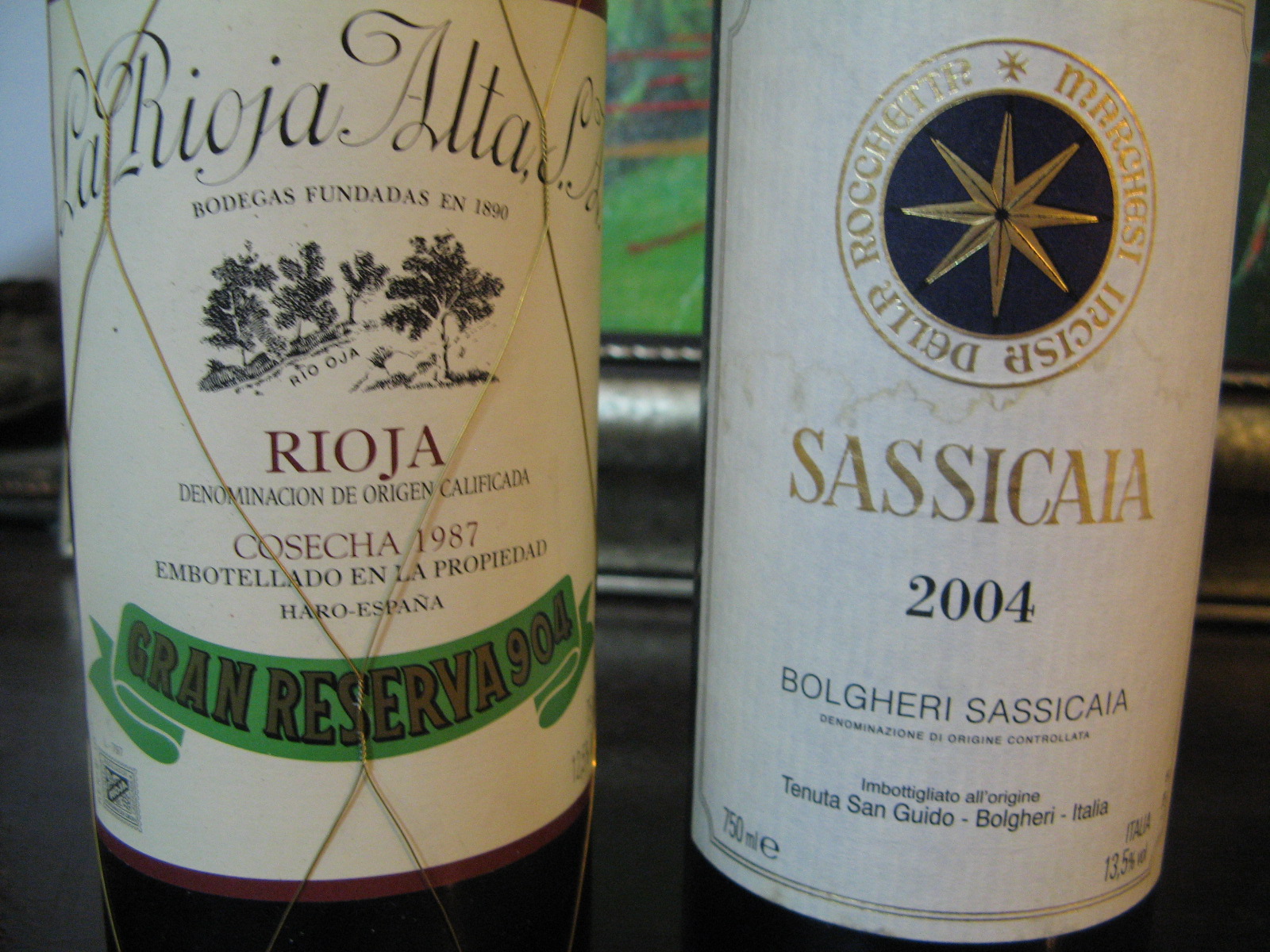
  1. La Rioja Alta Gran Reserva 904 Cosecha 1987 – (Casillas) A wine glistening in brilliant, red colour with light brown edges. The wine is still extremely aromatic and elegant In the mouth, with notes of cinnamon cloves and all spice with a touch of vanilla. It is now smooth with rounded tannins flowing on the palate but has a very long satisfying finish  It will continue to develop tertiary aromas and approachability.
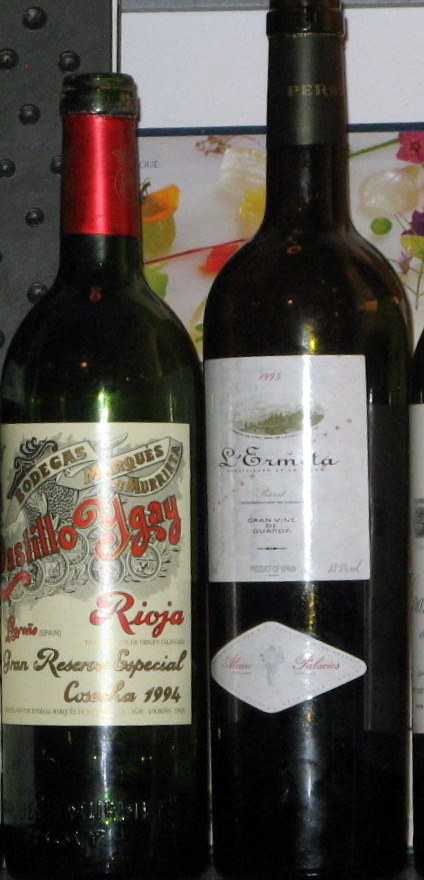
  2. L’Ermita Alvaro Palacios 1997  -( Xavi)  ” Powerful aromas of ripe black fruit  in blueberry Jam, good oncentration of fruits and precise balance with tannins. This must be Spain’s most expensive wine! It reveals a pleasant liqueur touch on the nose as well as on the palate. It is elegant with but powerful, with fresh fruit and pleasant minerality characteristic of its geological origins in Priorat. Great stuff (it wasn’t a waste on you guys “The Wine Guzzlers”  that memorable night in Paris…
  3. Marques de Riscal 1994 Gran Reserva

This Gran Reserva contains 20% of Cabernet Sauvignon and of course  70% tempranillo and 10% mazuelo Probably the best Rioja vintage of the nineties.  Aged 29 months in American oak, then three years in bottle, to become a multilayered wine of great surprise

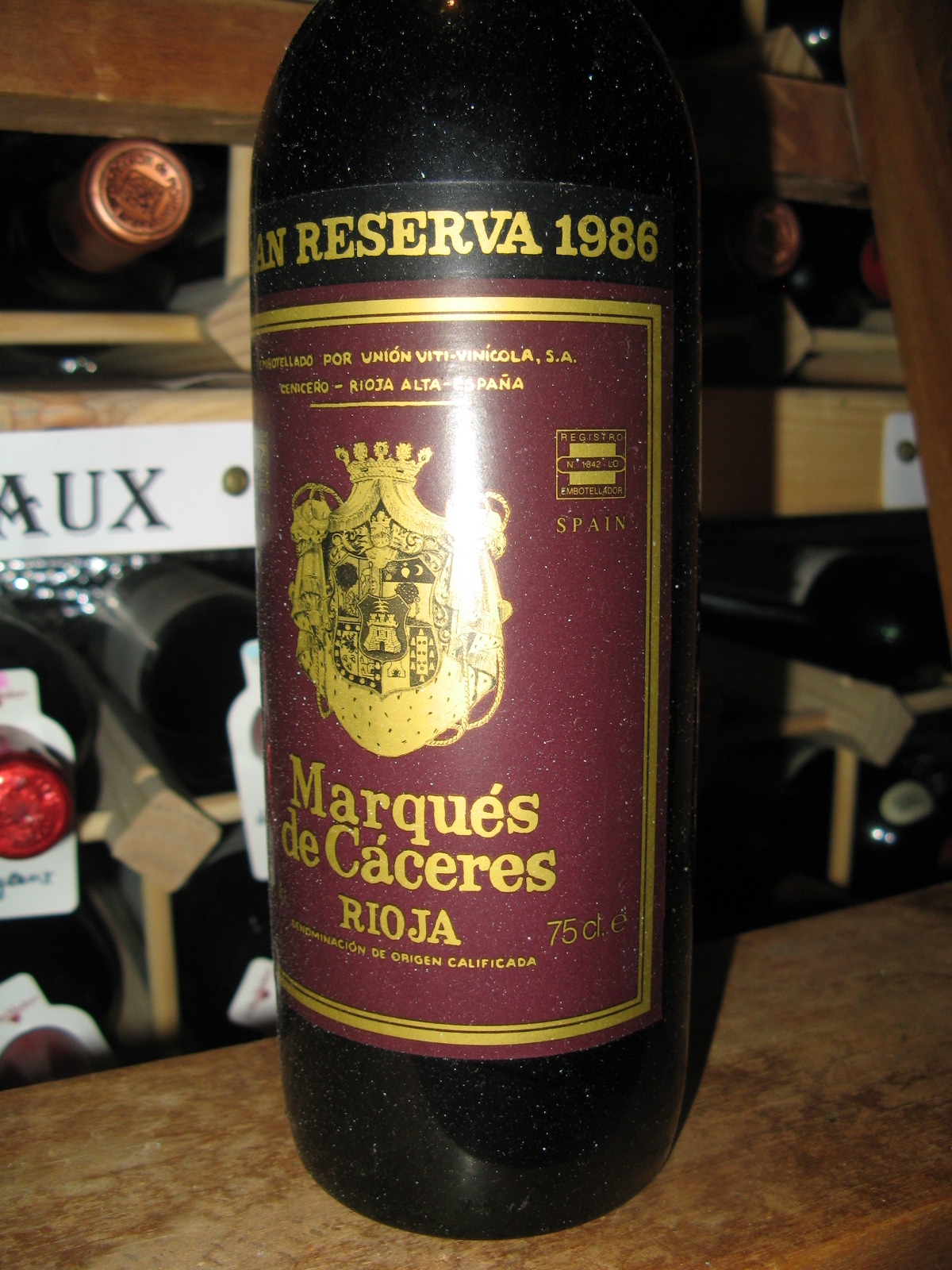
  1. Marques de Caceres 1994 Gaudium

A new super Riojan from Caceres, made only in the best vintage years. Aged in French oak and produced under the watchful eyes of the “flying Oenologist” Michel Rolland. This effort resulted in a wine with aromas of black ripe cherries with a touch of cedar shaving and tobacco with a touch of Mediterranean herbs. It comes out as an elegant wine with fine tannin structure. Very good length and vitality.


6. Muga Reseva 1988 Rioja

7. Vega sicilia, Tinto Valebuena No 5 Ribera del duoro cosecha 1992

8. Bodegas del Marques de Vargas Rioja Reserva Privada 1994

9. 1994 Miguel Torres Cabernet Sauvignon Gran Coronas Reserva Mas La Plana

10. Castillo Ygay Gran Reserva Rioja 1986    When all wines in Spain were local wines consumed by local   people Ygay Gran Reserva was the Spanish wine Ambassador around the world.

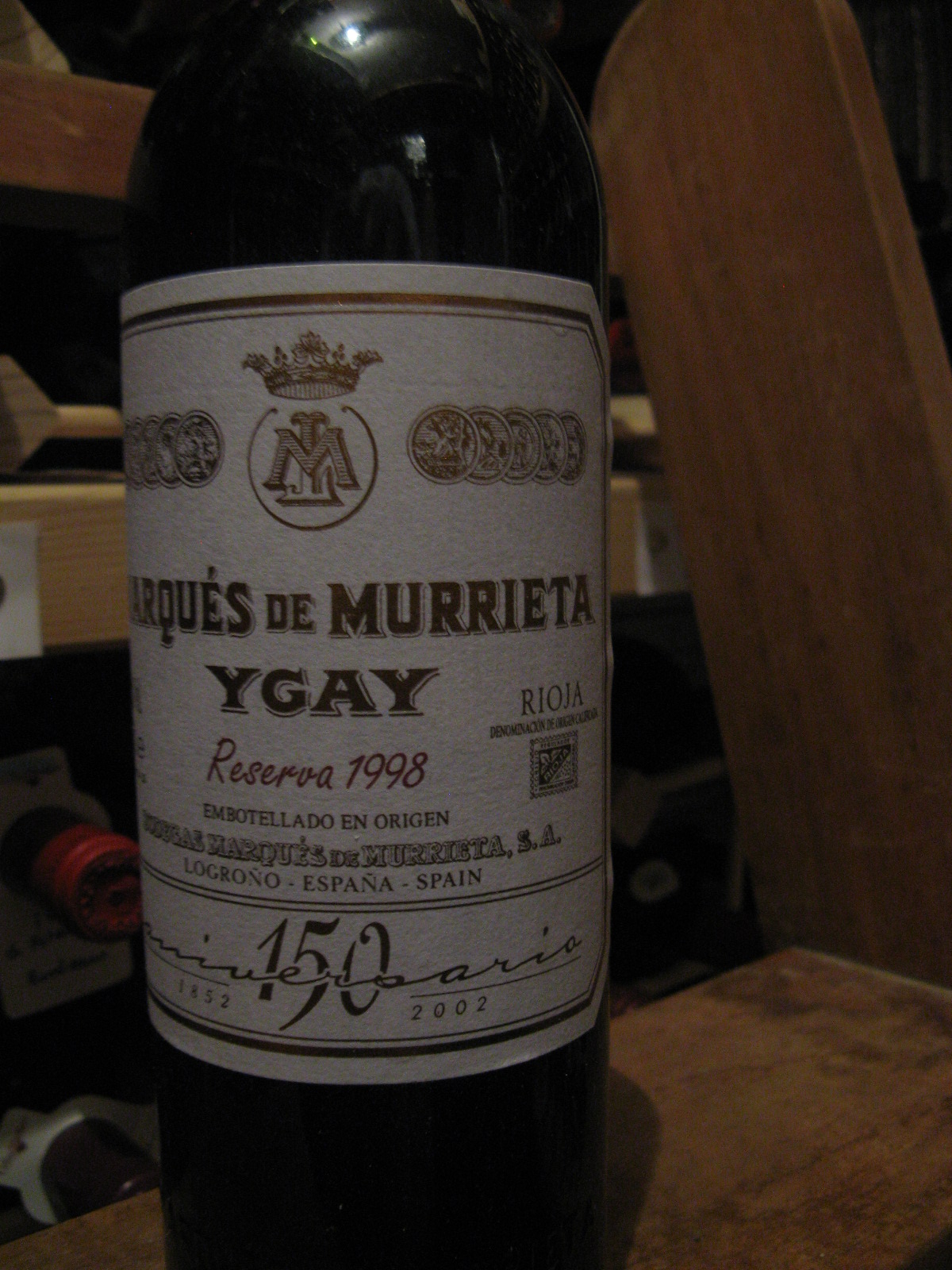
11. Marques de Morrieta Ygay Reserva 1988 Rioja

12. Marques de Haro Gran Reserva 1989 Larioja Alta  This is a dbl. Magnum (3 L) special edition wine for the millenniu


13. Marques de Riscal Reserva 1993

14. Parés Baltà Mas Irene 2003 (Arbeloa)

15. Lustan Pedro Ximénez Murilla , 100 Anos 1896-1996 A Massive sweet wine

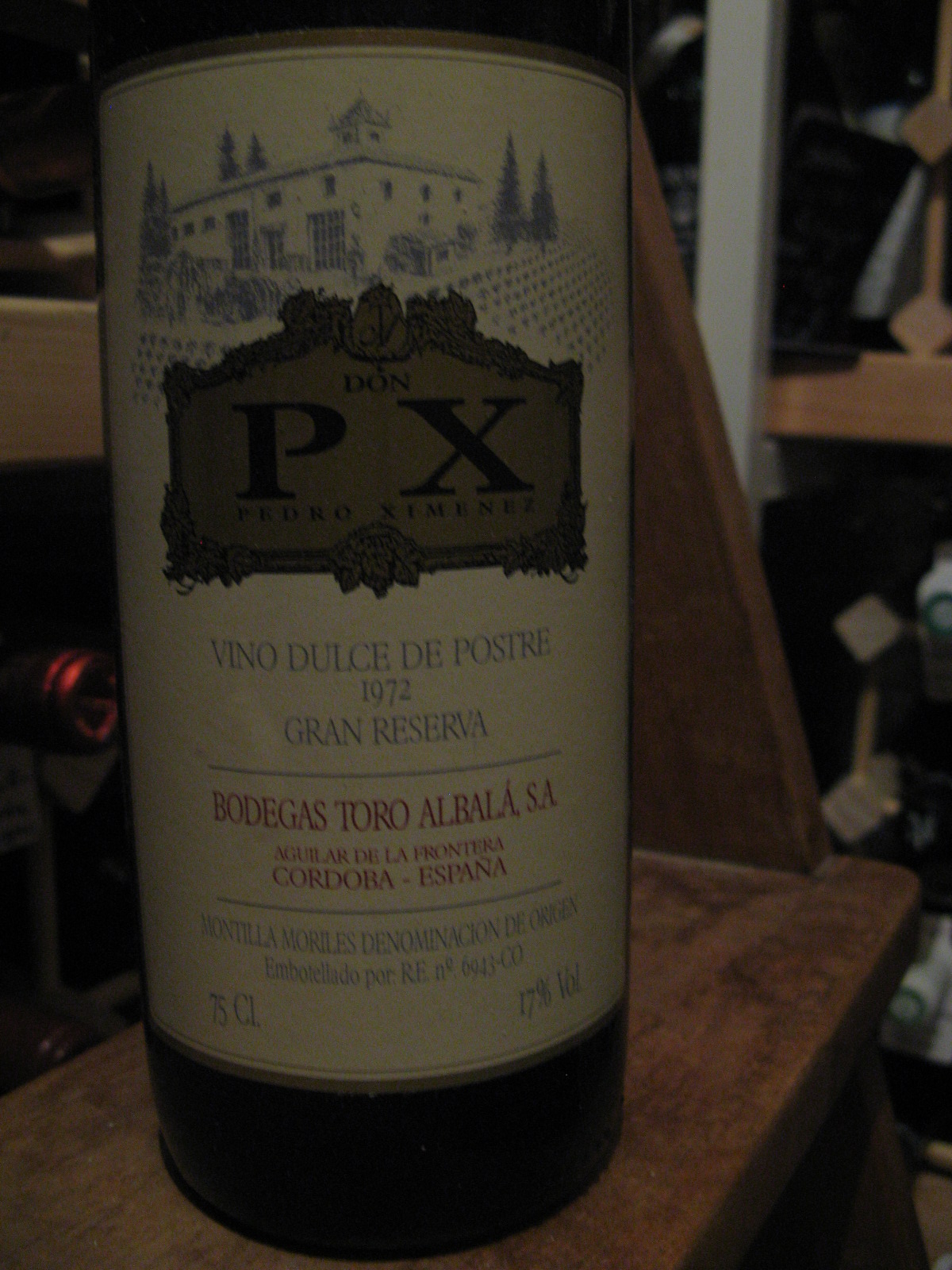
16. Don PX Pedro Ximénez Gran Reserva (1972)Cordoba Sweat Nectar

17. Torre Muga 2004 Bodegas Muga Rioja – Wine Spectator magazine, rated Torre Muga 2004 amongst their 10 best red wines of the world list for 2007.

The Line up


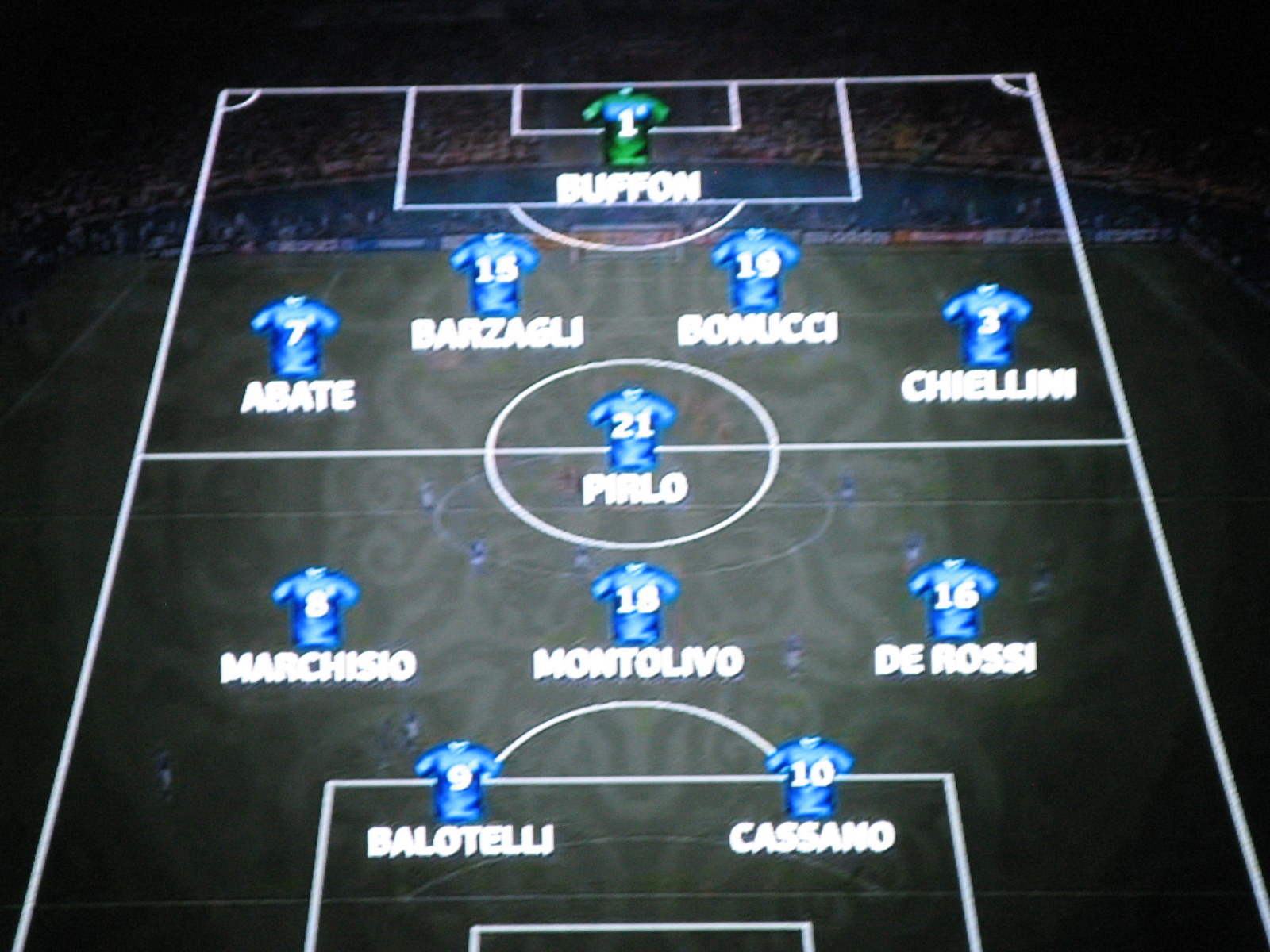
                                       ITALY


                                                                        01 Buffon

          03 Chiellini (Balzaretti – 21′ ),   07 Abate,  15 Barzagli,  19 Bonucci,

                      08 Marchisio,   16 De Rossi,  18 Montolivo (Motta – 56′ ),  21 Pirlo  

                                    09  Balotelli ,  10 Cassano (Di Natale – 46′ )

Substitutes:

    06 Balzaretti,   05 Motta,   11 Di Natale

 Italy coach / sommelier, Cesare Prandelli – After 5 successful years in Fiorentina agreed to try and save the Nation from a disastrous past champagne brought new young players entrusted the Azure (Blue team), in their talented feet they did well on the field and made Italy proud.


The Wines:

  1. 1.    1990 Antinori Chianti Classico Riserva Villa Antinori – (Buffon) An old timer always reliable, sound Toscan wine.
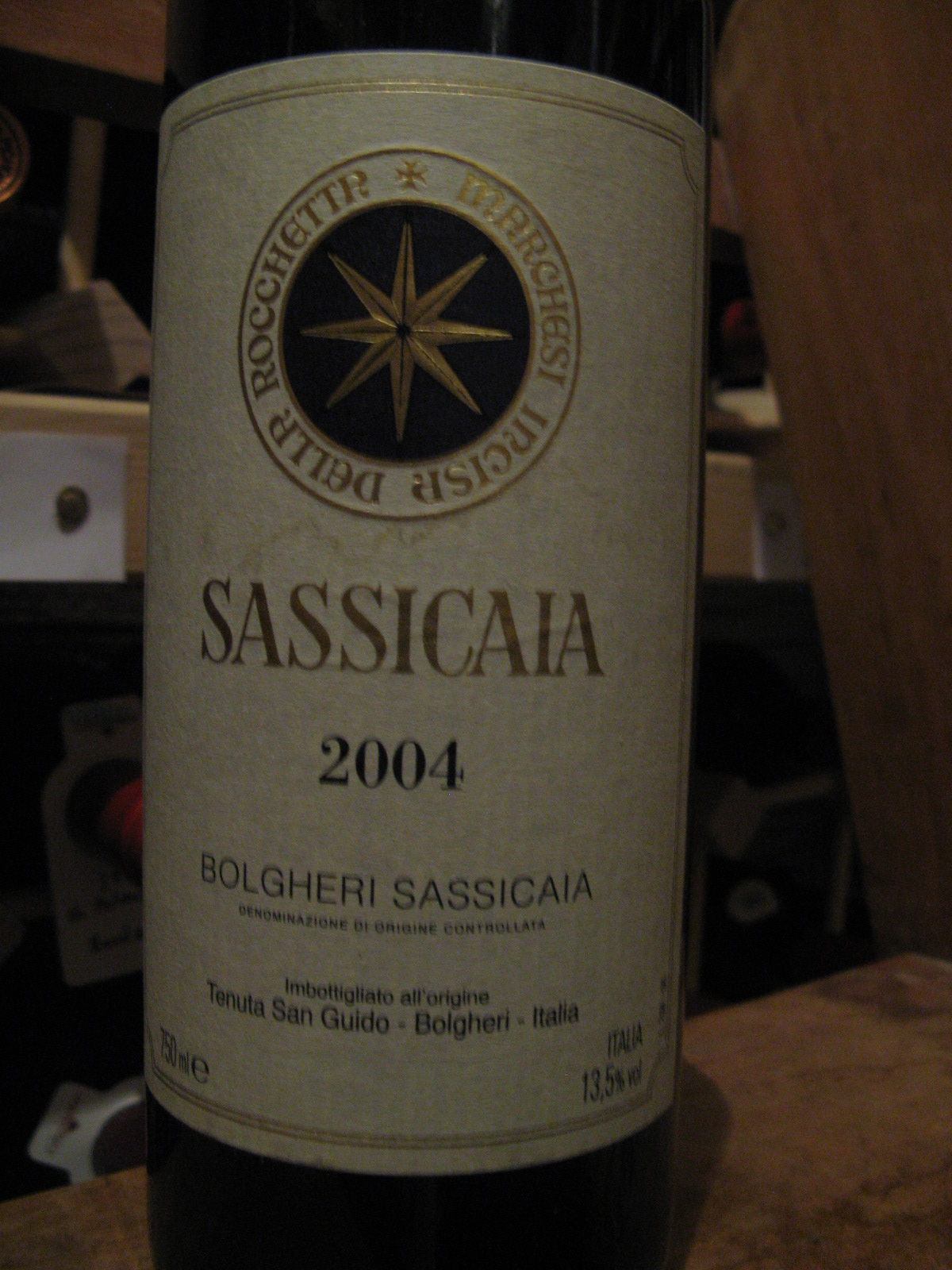
  2. 2.    Sassicaia 2004 – (Pirlo) The best Sassicaia of the last 10 years…A great wine always performs well.
  3. 3.    1998 Isole e Olena Cabernet Sauvignon Collezione de Marchi Toscana IGT
  4. 4.    Cepparello 1990 – always shines amongst the best in good  vintages. The ’90 is sleek and focused, with vivid blackberry, tar and cedar character. Full-bodied, with full, silky tannins and a super finish. Made from Sangiovese.
  5. 5.    Isole e Olena Cepparello 2006
  6.   Isosole e Olena Cepparello 2005:
  7. Isole e Olena, Vin Santo 1997 (bottled 2003) Deep Amber colour, with golden ccopper hue. A dessert wineto die for!!! This the closest you get to the Nectar of the Gods (chosen by Zeus off Dionysus hands), Honeyed thick wine to the eye with rich scents dried figs and raisins and dried orange peel still light on the palate without the sugar overtones other Vin santo’s have, due to good balancing acidic touch some vanilla on the finish make it the perfect desert a blessing to god and men. But I wrote all that in one of the past posts: Utopia etc.


8.    Castellare Chianti Classico 2000

With Intense ruby red in color. The bouquet is very fruity with spiced deep black cherries aroma, very well balanced Chianti with rounded approachable tannins. It reminds blackcurrants and Plum confiture, Yumm

9.    2007 Ripasso Bosan della Valpolicella Superiore ,   Producer: Gerardo Cesari  Veneto  Grapes: Corvina, Rondinella. Alcohol Volume: 14.00% From the Bosan vineyard one of Gerardo Cesari in Valpolicella

This wine is made by refermentation of Valpolicella wines of the same or previous vintage on the fermented grapes used in the Amarone production process: ripasso. The wine gains depth in colour, body, aromas and tannins and extra 1-1.5% alcohol by the process. Winemaking Notes Grapes: 80% Corvina, 20% Rondinella.

10. 1997 Brigaldara Amarone della Valpolicella Classico DOCG, Veneto, Italy

One of Veneto’s most famous and prestigious wines.

11. Badia a Coltibuono Sangioveto Toscana IGT 1997

12. Il Poggione Brunello di Montalcino 1997

13. 1998 Tedeschi La Fabriseria, Amarone della Valpolicella Classico DOCG, Italy

14. Masi Valpolicella  1993

You should all know by now that Spain won 4:0 and went into the history books of world football by winning the last 3 major tournaments they qualified for 2 consecutive Euro Finals and the Mondial becoming Champions of the world with talent and style!!!

Players to remember from both teams:

IKER CASILLAS – GOALKEEPER (SPAIN),  JORDI ALBA LEFT-BACK (SPAIN), SERGIO RAMOS CENTRE-BACK  (SPAIN), XABI  ALONSO ALL ROUNDER (SPAIN), ANDRES INIESTA CENTRAL MIDFIELD  (SPAIN), XAVI  CENTRAL MIDFIELD  (SPAIN), ANDREA PIRLO CENTRAL MIDFIELD –  (ITALY), STRIKER – MARIO BALOTELLI (ITALY)

The wines were all wines to remember in their own way some were better than others, but this is how it always goes… As you see the Spanish sommelier had more quality wines at hand on the substitutes bench and he made better use of them to bring the team to the winning position they did deserve, on the day

We’ll meet again during the Olympic games for (almost) more of the same with new faces and different sports.

Your wineguide

Euro 2012 Football tournament with a Wine twist

It’s Euro Time

So what did we have in the Quarter Finals?

Portugal Vs Czech Republic


Czech Republic

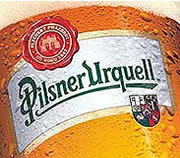
Although I believe that any place that grows wine grape for wine making purposes will have someone who can make decent wine (or even more) Czech is not a real contender amongst traditional european wine producing countries. On the other hand Czech beer is world famous. The Czech Republic is the No. 1 beer drinking nation on the planet, with an annual consummation of 156 liters per capita. Beer also counts on “our” blog so there you go… Most Czech beers are lagers, brewed naturally from hand-picked hops. Czechs like their beer cellar temperature. The best known Czech beer is the original Pils beer, Pilsner Urquell, brewed in the town of Plzen and exported worldwide. Many Czechs also drink another Plzen brew, Gambrinus, or Bernard from Eastern Bohemia. They are good at it since beer making in Bohemia is recorded as early as 859 A.D. (a long enough time to practice)

Portugal

Wine in Portugal dates back to ancient Roman times, sometime from 70 to 270 AD this fact does not surprise you I’m sure! In fact wine culture was exported, through the Roman Empire to all of Western and Middle-Europe by the Roman (Jupiter & Bacchus bless their souls, or were they the Greeks with Zeus and Dionysus, we’ll find out soon!).

There are 8 wine regions in Portugal : they span from south to the north: Alentejo, Terras do Sado, Estremadura, Ribatejo,  Bairrada, Dao, Douro and Minho. All have roots in Roman times. Portuguese wine have made a quantum leap in quality in the last 10 years and still improving especially in the north: Dao and Douru. A worthy earn of ticket to the semifinals and a rightful contender to reach the finals with still a high hurdle on the way.

Without a doubt, a winner of the: Best newcomer, to the dry wine Big League.

As long as dessert fortified wines PORT (of all types) it is at the Top of the League for several hundred years now.

Portugal wins 1:0, Portugal and Portuguese wine go through to semi finals.

Germany           Vs           Greece


Germany

Well you have probably guessed by now that wine in Germany dates back to Ancient Roman times, to sometime from 70 to 270 AD… Germany is a northern country it stretches between 47º- 55 º N, so although German wine regions are to be found on the same degree of latitude as Newfoundland the climate is influenced by the Gulf Stream and allows certain grape varieties to grow and mature (especially now with global warming and all).

There are around 13 German wine growing regions. The Mosel-Saar-Ruwer, and  Rheingau, produce the best wines, mostly white wine varieties (75%), but also produces some very good reds – usually from the Spätburgunder (Pinot Noir) variety

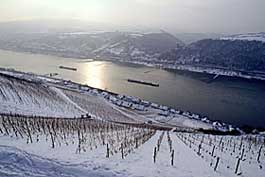
The Mosel-Saar-Ruwer region comprises the valley of the River Mosel from where it joins the Rhine and its two small tributaries the Saar and the Ruwer. The Mosel River winds past steep, slaty slopes covered with some of Germany’s most famous vineyards. The best wines, come from the mineral-rich, slate slopes, and are made from Riesling grown on the steep, southern-facing slopes, The Rheingau, produces some of the finest German wines. mostly Riesling that develops to perfection, producing noble, elegant wines.

Greece

The origins of wine-making in Greece go back 6,500 years some 4000 years before Roman Empire influence (Zeus and Dionysus) win by a large margin. There are archeological confirmations to the fact that Greece is home to the second oldest known grape wine remnants discovered in the world (the oldest is the “kitchen” in Hajji Firuz Tepe Iran). Greek civilization and their worship of Dionysus, the god of wine, spread Dionysian cults throughout the Mediterranean areas during the period of 1600 BC to the year 1.  Ancient Greeks introduced the vines Vitis vinifera and made wine in their numerous colonies from Italy to southern France & Spain.

                                           Harvest from the Nests in Santorini (Vines are arranged on the ground in circular formation that forms a “NEST”)

Some of the best known, recorded wines for their quality come from mediteranian Islands like Crete, Lesbos, Rhodes, Santorini and Thasos. These Aegean Islands form one of the more interesting wine regions of Greece to date. Other regions are Peloponnese, Ionian Islands, Macedonian & Central Greece.

There are some Very impressive winemakers in Greece without enough international exposure or recognition.

Germany wins 4 – 2…and goes through to the semifinals.

Spain          Vs.             France


 France

Archeologists suggest that the Celts first cultivated the grape vine, Vitis vinifera, pre-dates Greek and Roman cultural influences, But the greatest influence on the wine history of Gaul came with the founding of Massalia in the 6th century BC by Greek immigrants from Phocae in Asia Minor. This continued  till eventually the area became a Roman province first known as Provincia and later Gallia Narbonensis. After that there was no looking back and wine industry developed to the heights we came to appreciate in the 20th century.

There are numerous wine regions of wines in France. (I guess) I will mention the two regions that “sum up” all the magic of the French wines:

Burgundy: All the complexity and nuances of “terroir” in one of France’s most prestigious wine regions. From the Côte d’Or with the most noble and various expressions of 2 grape varieties: Pinot Noir and Chardonnay. Bliss on the palate and nose.

Bordeaux: The most renowned wine regions of the world. It produces the region’s traditional wine from a blend of grape varieties mainly Cabernet Sauvignon, Merlot and Cabernet Franc. With famous subregions as Pomerol, St-Emilion, Graves, St-Estèphe, Pauillac, Margaux & Sauternes. Sublime!

Spain

the great diversity of native grape varieties over 600 grape varieties are planted throughout Spain points to a very early viticulture start. There is Archaeological evidence of grape remains to sometime between 4000 and 3000 BC, when grapes were first cultivated for the purpose of wine making. This is long before the Phoenicians wine-growing culture established the trading post of Cádiz around 1100 BC. Later Carthaginians introduced new wine techniques & advances to Iberia and only later served the Roman Empire need for wine of different style and character.

With almost 60 regions and sub-regions Rioja, Navara, Priorat &Ribera del Duero and are the most established.

 Although Spanish wine and wine industry is amongst the oldest in Europe, and nowadays well known for their unique character and regarded with great esteem, still, in my mind, on the wine field Spain “looses” to France this is of course derived from a personal view of taste and style attraction. Football wise the quality over the football field is in favor of Spain.

The Spaniards beat France 2:0 and go through to the semifinals.

Italy        Vs        England.


ITALY

It wasn’t until the Greek colonization of the south of Italy, that wine-making flourished. Viticulture was introduced into Sicily and southern Italy by the Mycenaean Greeks during the Roman defeat of the Carthaginians (True masters of wine-making) in the 2nd century BC that Italian wine production began to further flourish. Large-scale plantations sprang up in many coastal areas and spread to such an extent that, in 92 AD, Emperor Domitian was forced to destroy a great number of vineyards in order to free up fertile land for food production.

With 20 wine regions that are spread evenly throughout the Land and numerous sub regions of particular nature within each region Italian wine especially in Piemonte in the nothe west and Toscana in the center make Italy into a substantial winemaking country and along with Spain and France the most established Old World Pillars of wine making tradition.

The grape varieties that set Italy apart from all other European countries

 Garganega – The main White grape variety for wines labeled Soave, this makes a crisp, dry white wine from Veneto region.

Trebbiano – This is the most widely planted white varietal in Italy. It is grown throughout the country, with a special focus on the wines from Abruzzo and from Lazio, including Frascati.

Nebbiolo is chiefly grown in Piedmont. Considered he most noble of Italy’s red varieties.

Sangiovese – The pride and essence of Toscana. Sangiovese is the main variety in Chianti (Classico), Rosso di Montalcino, Brunello di Montalcino, Rosso di Montepulciano, Montefalco Rosso, and many others. And the backbone in many of the acclaimed “Super-Tuscans” Italy’s claim to fame!

Barbera – The most widely grown red wine grape of Piedmont and Southern Lombardy,

ENGLAND

The wine world as we know it today owes a lot to a country that is too northern to be a wine producing country. Yet the way we look at wines in all respects is due to the the English attitude to wine and continental wines in particular. The English are directly responsible for the quality of the wines of Bordeaux, Champagne, Porto, Madeira, Jerez to name but a few due to their need to quench their thirst…

It all started in 1152 when the marriage between Eleanor of Aquitaine and the future King Henry II of England brought a large portion of southwest France under English rule. When Henry’s son John inherited the English crown, he bestowed many privileges upon Bordeaux merchants giving the exemption from export tax, making Bordeaux wine the cheapest wine in the London market and gained immense popularity among the English, who call it claret (clear). For over the next 300 years much of Gascony, in particular Bordeaux, benefited by the close commercial ties with the English allowing this area to grow in prominence among all French wines. After the end of the Hundred Years War, these lands reverted back to French rule with a lasting imprint of English influence. The collapse of the Bordeaux ties to their largest customer; England, was a blow to both nations. The English soon established ties with Portugal but kept longing for French Claret.

The Aristocracy of Bordeaux  kept “loose” commercial contacts with the English Aristocracy. In 1649, Lord Arnaud III de Pontac became owner of Haut-Brion, and the wine’s growing popularity began in earnest. The first records of Haut-Brion wine found in the wine cellar ledger of the English king Charles II. During the years 1660 and 1661, 169 bottles of the “wine of Hobriono” were served at the king’s court. Samuel Pepys wrote in The Diarist, having tasted the wine at Royal Oak Tavern on April 10, 1663, to have “drank a sort of French wine called Ho Bryen that hath a good and most particular taste I never met with”

In 1666, after “The Great Fire”, the heir to Château HautBrion François-Auguste, opened a tavern in London called “L’Enseigne de Pontac”, or the “Sign of Pontac’s Head” which was according to André Simon, London’s first fashionable eating-house. Jonathan Swift “found the wine dear at seven shillings a flagon”. A 17th century period WINE BAR!!!

The Institute of Masters of Wine and WSET are located in London (more than 60% of around 250 worldwide MW are English!!! , The most prestigious wine Auction Houses Sotheby’s and Christies are in London. Without a doubt England is a center of wine knowledge and import with unparralel importance to world wine without being a wine producing country.

Having “patriotic roots” in England, I obviously supported “Her Majesty’s” team. They started well but played shamefully and deserved to loose.

Italy 0 – 0 England, Italy deservedly won 4–2 on penalties and proceeded to the Semifinals.

SEMI”S

PORTUGAL Vs SPAIN

The Iberian Peninsula Hosts a mini battle this time for the ticket to GLORY and a place at the EURO 2012 FINALS, the “Grand Finale”

This is indeed Guerra de guerrillas “War of little wars” on the football pitch. They stand and fight as equals! But the skill or luck of penalty shootout solution (unfair but Just), finally “defeats” the Portuguese.

Spain wins 4:2  on penalties and proceeded to the finals.

Here’s how it happened:

Spain starts with a Vega Sicilia Unico 1991 on the Field – The Gran Reserva wine produced only on good vintage years. It is a signature wine of Vega Sicilia and is usually released around 10 years or even more after the vintage. Made from the oldest vines in the Ribera del Duero, the wine is mostly Tempranillo ( 80%) and Cabernet Sauvignon ( 20%). In an average vintage,

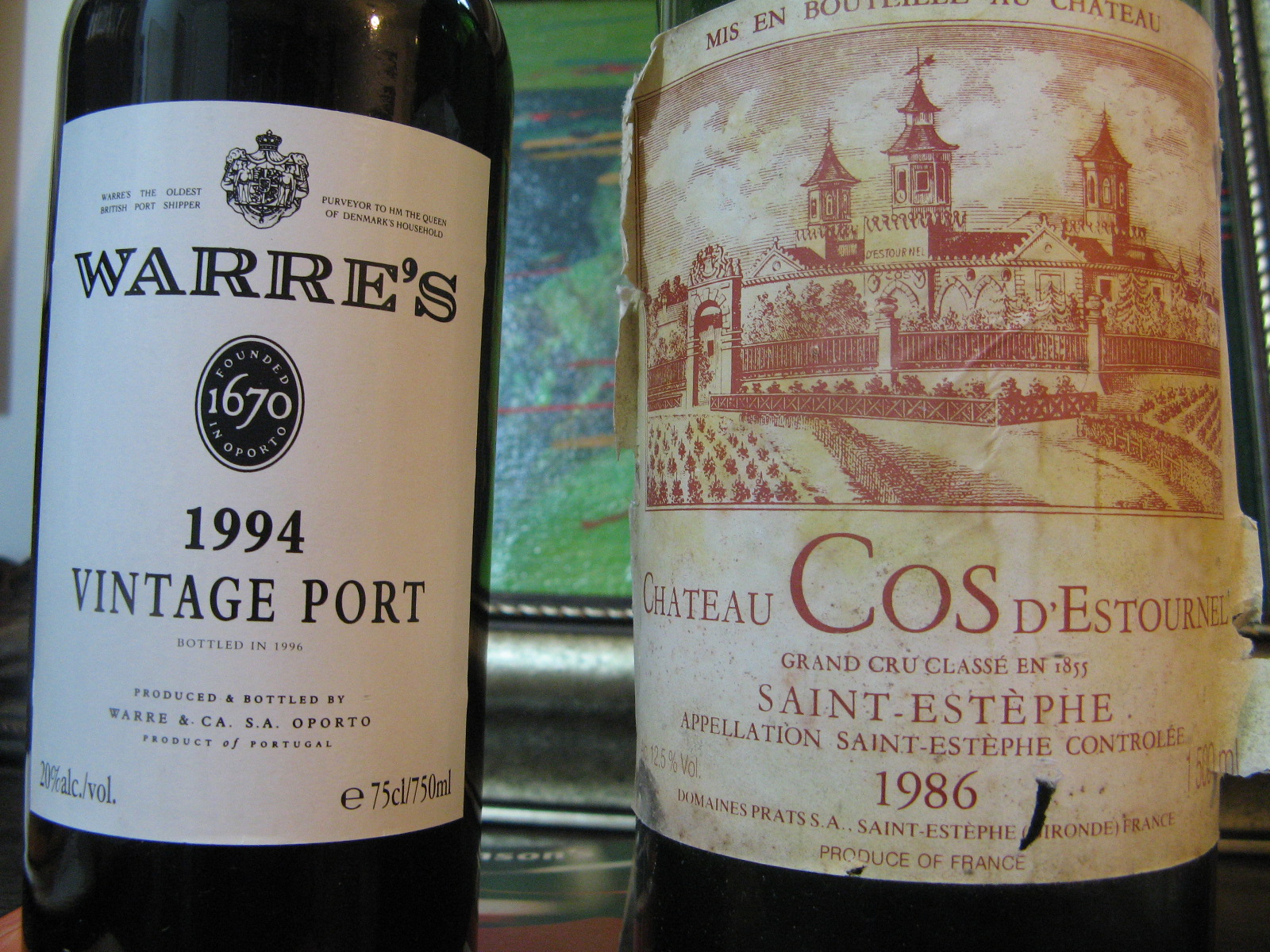
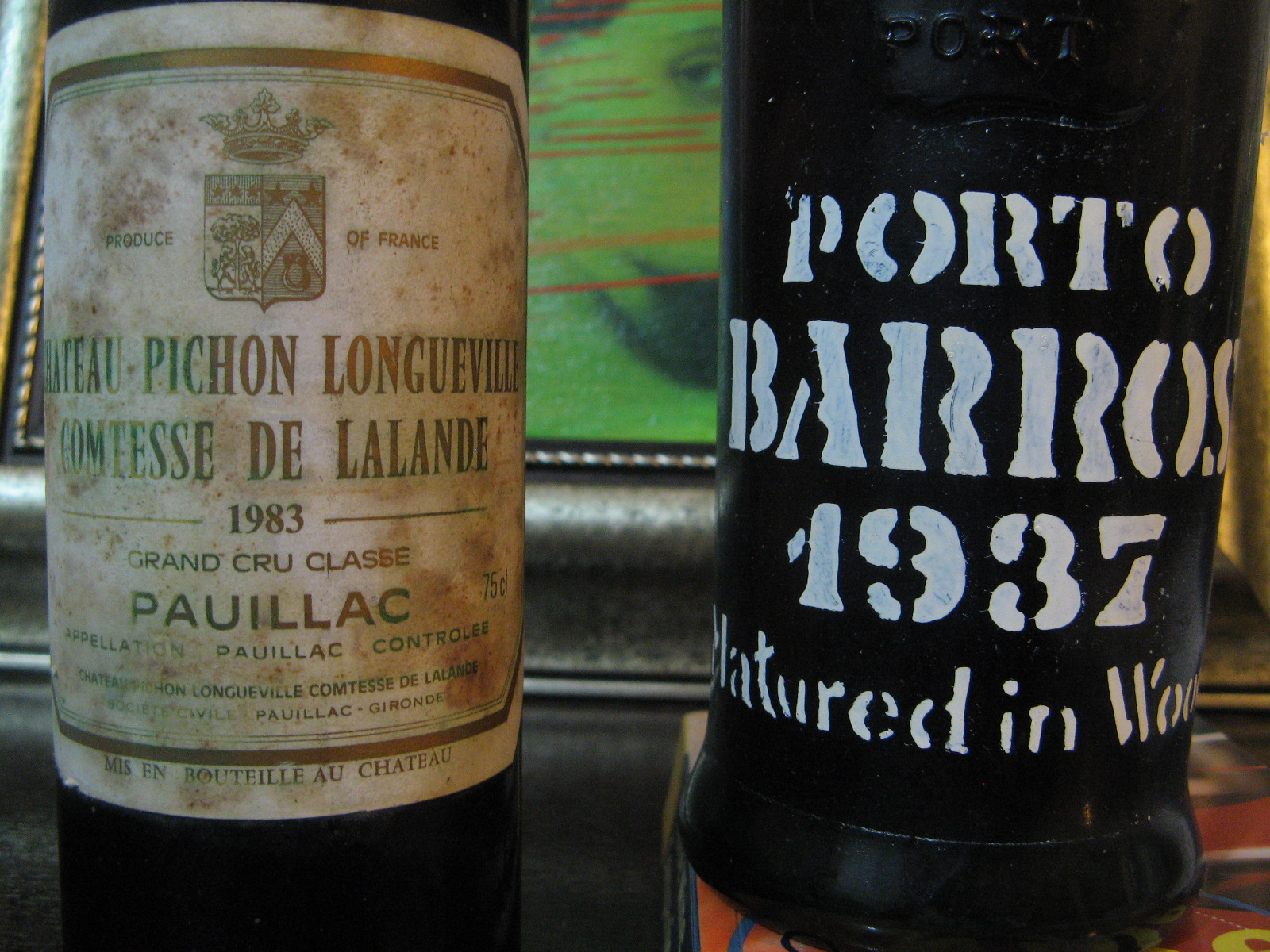
Portugal tries with a 1937 Barros Port than uses 1994 Warres Vintage Port as a substitute in Overtime against this time a La Rioja Alta Gran Reserva 904 Cosecha 1987 On pouring the wine, one immediately notices its brilliant, ruby red colour and its aromatic nose. This wine is in fact so aromatic that it is its dominant feature. In the mouth, the first impression is of roundness and creaminess, then notes of spice and vanilla come through, leading to a warm, enveloping flavour, with a most elegant and distinguished finish. It is a full and lively wine; well-structured and young for its age with a broad and abiding palate which is confirmed by a smooth and long-lasting after taste. It will continue to develop over the coming years with a long life ahead of it. (from:http://www.riojalta.com/datos/vinos/pdf_doc_en29/I%20904%2087.pdf)

ITALY Vs GERMANY

The Italians are all in the vineyard Happy towards a good harvest there is joy in their play (I did not expect). They prune and tend to the grapes knowing the razzmatazz of the harvest will be proceeded with a great wine…

The Germans come on to the pitch serene and with apprehension- fear or anxiety over what may happen, they change their game style that brought them to this occasion and fall down the trap they dug themselves.


The Italians bring Sassicaia 2004 The best Sassicaia of the last 10 years… And score 2 goals! The rest is history which can be told in 2022 when I open the last bottle. At the moment it has Deep Purple ruby color. With intense aromas of ripe black forest fruits, a touch of minty nepitella and earthy mushrooms, rich and velvety with long finish on the palate with high tones of cassis, cloves, dark chocolate and coffee. With a very good balance, between fresh fruit and Tannins. A keeper. They bring on Cepparello 1990 as a substitute and seal the match.

The Germans bring the right wines to give a good fight but at the wrong temperature which spoils the quality of tasting and sends them back to the vineyard to tend to next year’s harvest with new hopes for a better vintage.

Italy wins 2:1 and proceeds to the Finals


And that’s Euro 2012 for you with some wines on the way.

The Euro 2012 Finals are on Sunday ITALY Vs SPAIN let us see what wines the teams bring and wait for the tournaments outcome.

Your WINEGUIDE

“Copyright Disclaimer, Under Section 107 of the Copyright Act 1976, allowance is made for ‘fair use’ for purposes such as criticism, comment, news reporting, teaching, scholarship, and research. Fair use is a use permitted by copyright statute that might otherwise be infringing. Non-profit, educational or personal use tips the balance in favor of fair use.”

Wine and Art meet on the wine Label and beyond .

Art on the Label

A wine Label is an “invention” of not much more than 120 hundred years.  Although nowadays wine labels have turned into a “selling lever” of a wine, an eye catcher for the customer in a wine shop or on the wine shelve in a supermarket, the fly paper for the novice wine drinker, and thus have moved under the jurisdiction of advertizing companies PR advisers and graphic designers some of whom don’t even like wine!!!

Having said that, the wine label is still the ID of the wine and any wine bottle is “legally” required to carry this ID at all times! The basic function of the label is to provide the wine buyer with basic information regarding the product which is essentially a “food” or “beverage” product, which is bound by each country’s laws.


As any label on a food pack, it has a design which conforms to the legal requirements on one hand and to the owners taste on the other. There are “label artists” or “graphic designers” all over the world who produce such labels.

Wine has a long history, it was one of the first things that Man created, and had great effect on many cultures and their religious ceremonies. In ancient times the Egyptians the Greeks and Romans recorded the vintage, vineyard and winemaker on individual jars of wine which could be counted as the first wine labels.


“Gath Carmel” inscription on pottery wine jug 400BC                       Hoshea’s Temed Seal around 50 AD

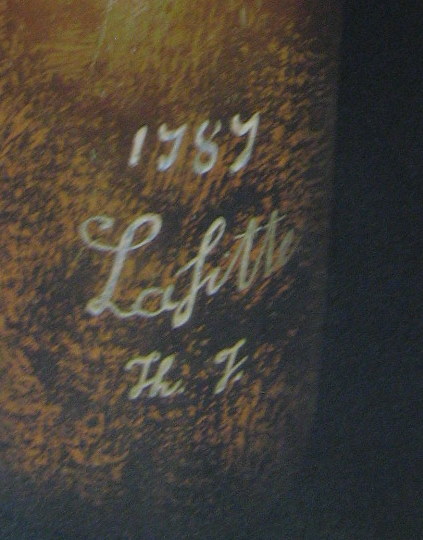
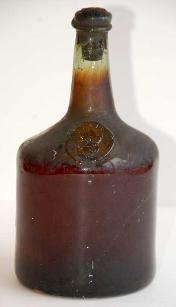
The presumably Lafite 1787 belonging to Thomas Jefferson had the chateaux name and Vintage year and the initials ThJ for the “owner’s” name hand written directly on the glass with “glass paint” possibly by the Chateaux, so were other 19th century Vintages.


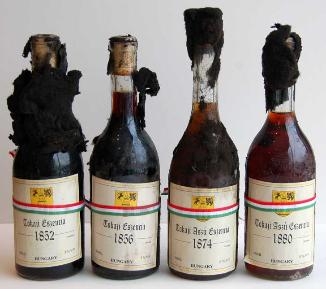
Wine bottles taken away from their region of origin were inscribed on with the wine’s name of producer and Vintage year to allow the buyer or his cellar master distinguish between the different wines in the large cellar of a palace, be it a kings or a Tsar palace (Russian rulers were known to be collectors of Tokaji), they maintained a detachment of Cossacks solely for the purpose of escorting convoys of the precious liquid from Hungary to the royal cellars at St Petersburg. Tokaji reputed to last at least 300 years, was considered a secret potion of eternal youth. From the days of Tsar Peter I, the Great (1672-1725) for more than 100 years the Romanov family accumulated bottles of Tokaji in their cellars, surely there was enough for everyone but again, someone had to be there to know who is who? At the zoo…Surely someone made sure he will be able to tell between bottles of different Vintage years.


Same goes to the Kings of England and their affinity and connection to Bordeaux, or the cellar collection of the Kings of France to name but a few.

Chateau Mouton Rothschild  

       Until 1924 most wine producers were busy working at the vineyard and at the winery making wine in barrels, that they sold the wines bulk in the barrel or casks to wine-merchants, who then were responsible for the “faith” of the wine. Decisions of how to treat the wine in the barrels were out of the producer’s hands. The bottling process was done by wine merchants who labeled the wine under mixed names of chateau and vintage and their own name.  The winery had no say over the finished product and had no real interest on the appearance of the bottle or the label.
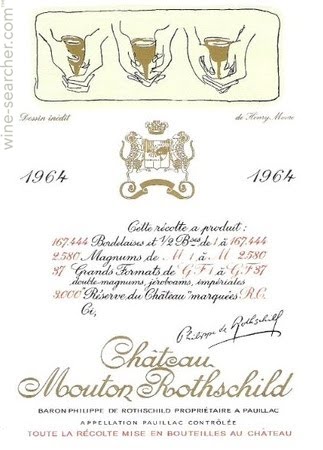
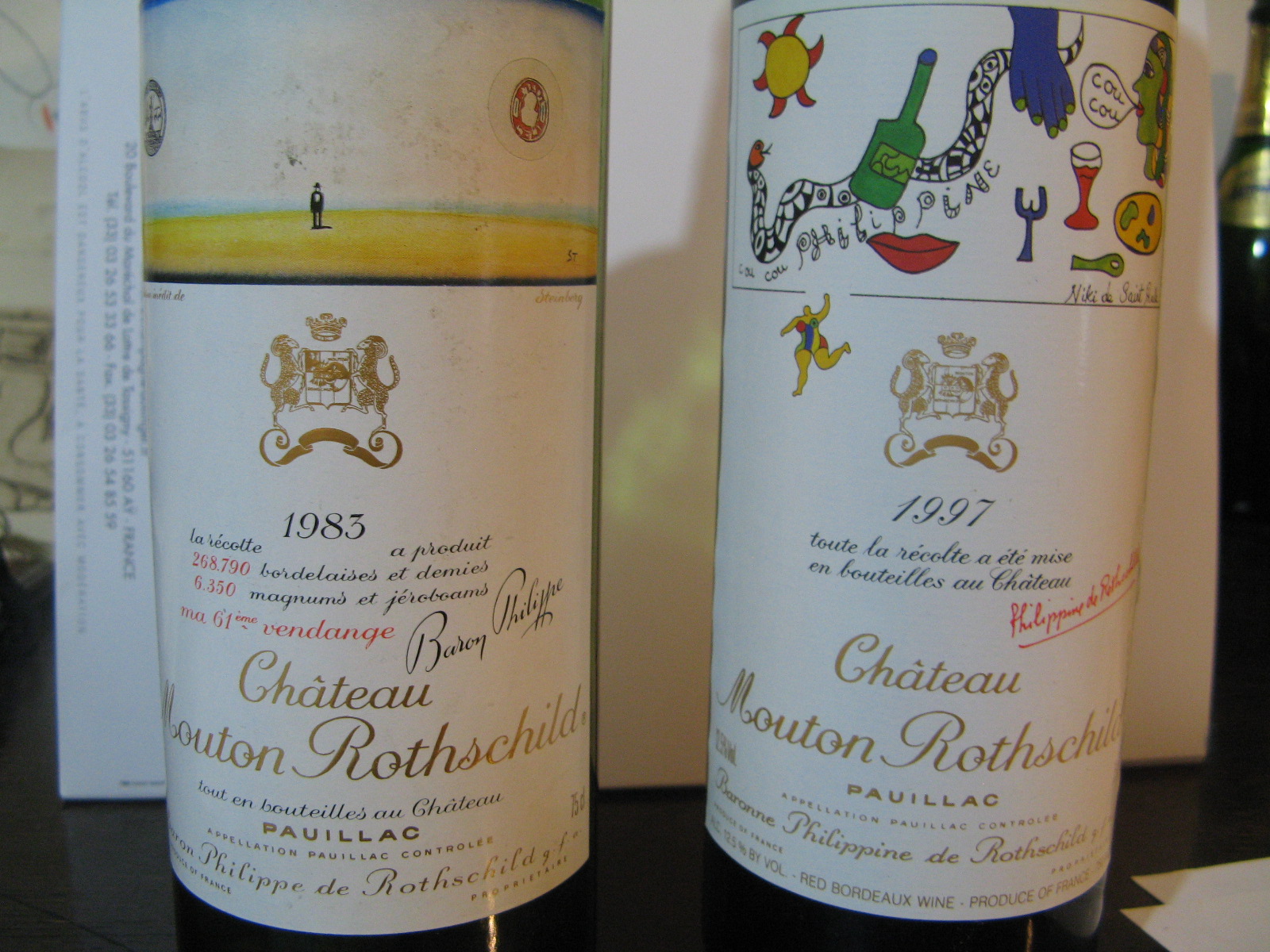
All of this was going to change when in 1924 Baron Philippe de Rothschild decided to bottle the entire harvest before it left the winery (MIS EN BOUTEILLE AU CAHATEAU / DOMAINE.) .  This decision changed the wine world completely and gave the Chateaux/winery, complete control over their product and its final quality. By adding their own label on their wine as a trademark stamp of quality boast: “This is our wine and we stand behind it and its quality under our name and reputation”. A logo to reflect the winery as an individual, to separate “our” wine from others, that bore the first logo as we know it today, and to commemorate this “cry for independence”.

The Logo was ordered from the famous poster artist Jean Carlu, who designed a logo that was used for the 1924 Vintage. The result was a stunning cubist design, which is considered till today as the most successful example of contemporary art influence on a commercial package design.

The basic theme of the 1924 poster was turned into a “family crest” stile logo; the label carried the Bottle number in that vintage year and the chateau name: Mouton Rothschild… All until the legendry 1945 Vintage not only it came at the end of the bloodiest war mankind ever knew but considered to be amongst the 20th century 5 top vintages the fact that it was the victory vintage, following  World War II only added to its legendary status.

They say that everything went down just right for the 1945 Bordeaux wines. The winter freeze helped reduce yields, which added immense concentration to the wine.  Growing conditions were perfect from start to finish. Harvest, under draught like conditions caused even lower yields and highly concentrated berries, an early harvest, which started on September 13.  Massive extraction of tannin meant longevity and long developing period (decades). Due to this high tannin levels, many of the wines still show well today. Due to the ability of 1945 Bordeaux wine to age well some say a few of them will be drunk well by 2045 at 100years old…


Did Baron Philippe know this was going to be such a great wine, a wine to act as reference to all wine before and after it? When he decided to embellish the 1945 vintage label with an Art work to symbolize the return of peace on the land? Was it an art work? After all it was commissioned from a young unknown artist/designer Philippe Jullian. He utilized the V sign (for victory) amongst vine leaves a biblical symbol of peace: “And Judah and Israel dwelt safely, every man under his vine and under his fig-tree” 1Kings 4:25


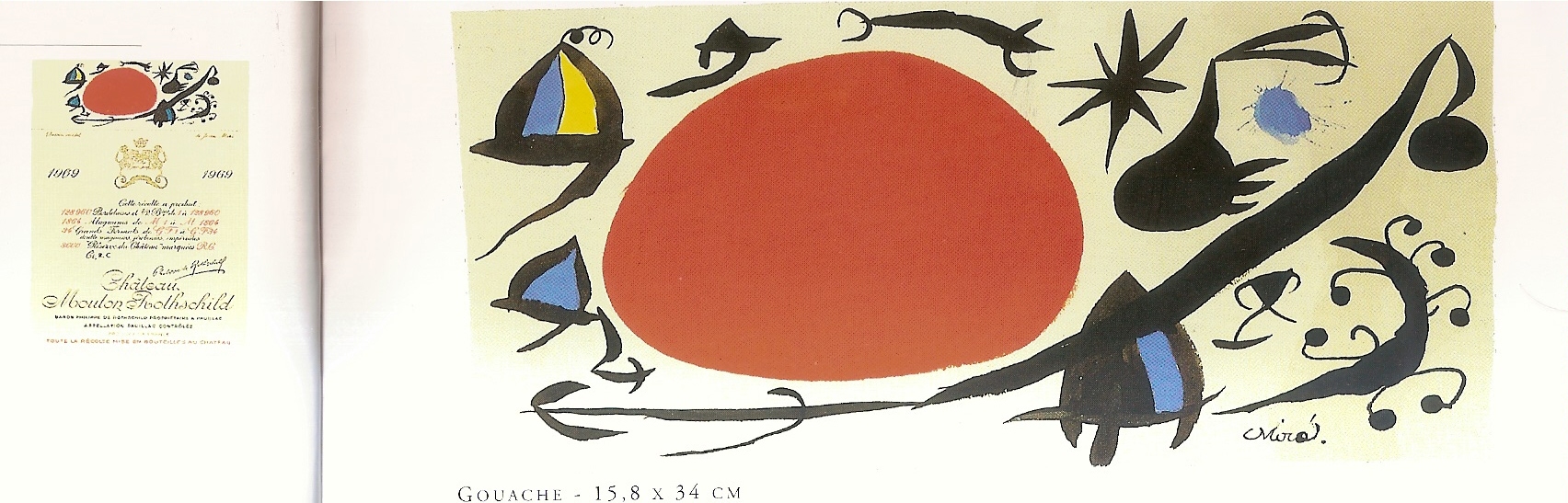
The Labels that followed: The 1946 Vintage label, was commissioned to Jean Hugo (grandson of Victor, who also used a biblical symbol of peace the dove returning to the ark after the flood with an olive branch, commemorating the first year of peace. After that most artists commissioned where substantial figures in the art world of their era: Cocteau, Braque, Dali, Moore, Miro, Chagall, Picasso, Warhol, Herring and many more. Each year since 1945 a label had been adorned by an artist sometimes (by chance) reflecting the quality and character of the content THE WINE, or just as a continuing tradition of the reciprocation between two art forms complementing each other. The art of winemaking at its best hailed by top artists paying their respect to a consumable art form, when the bottle is empty all that is left is the carefully “decorated” bottle with its label.

Since the basic idea is already taken, some wineries opt for introduce their version of art on the label for various reason. One philanthropic reason: special edition to be sold and raise funds for a good cause, the other in an effort to express the wines character or the owner’s whim. (Both are legitimate)
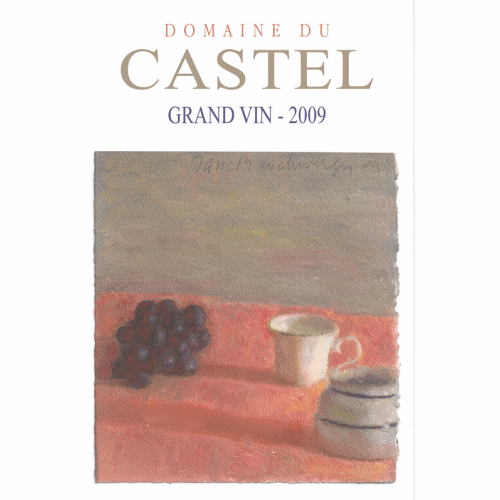
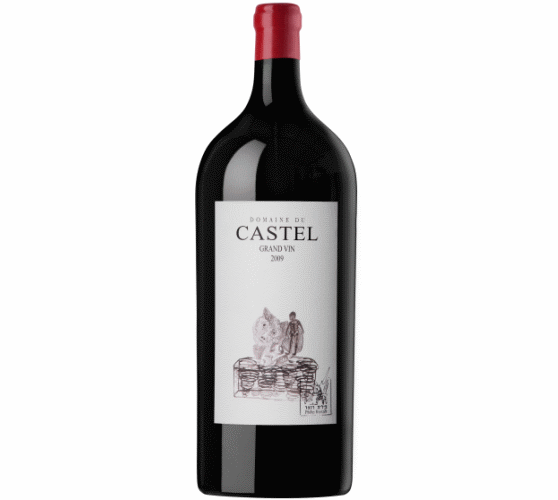
Castel winery Haute Judee, Israel, one of the best boutique wineries in Israel, approached 13 Leading Israeli artists who volunteered to take part in a one off, label project:  Arie Azene, Nissim Ben Aderet, Amnon David Ar, Yair Garbuz, Ori Gersht, Menashe Kadishman, Michel Kichka, Ofer Lellouche, Philip Rantzer, Jan Rauchwerger, Gideon Rubin, Eran Shakin, & Yigal Tumarkin, to prepare or choose from their work of art to appear on the Castel Grand Vin 2009 in bottle, magnum and double magnum formats to be sold at auction to the highest bidder. The choice of artists was careful amongst the elite local artists. The benefit will go to the “Threefold Cord” – a non-profit organization which cares for at-risk youth in Jerusalem.

The entire collection of the works of art, labels can be viewed at: http://castelartandwine.com/products/?cat=35

This is Art on a label for a specific reason it is a one off limited edition, for a worthy cause, All commendations are due to the Ben-Zaken family (owners and winemakers of Castel winery), and the artists who donated from their collection a piece of art suitable for the occasion.  Most of the above artists believe that producing an Art piece especially for a label is not the idea, and happily contribute a piece of their choice or part of an existing painting.

The wine: Castel Grand Vin 2009 , The wine has a deep purple color with strong aromas of black and red berries with a touch of ripe fig and Violets, flavours of ripe Blackcurrants & raspberries with a touch of sweet vanilla and hints of mint. The fruit is full and robust and very well balanced with pleasant rounded rich tannins which give the wine elegant strength and presence to help keep the wine “alive and kicking for another 6-10 years, the velvety touch and approachability on the palate make it a seductive wine and a very good choice for this limited edition. Not that I think it is of great importance (certainly a source of pride for the winery) the Castel Grand Vin 2009 received  92 points from the Wine Advocate annual 2011 tasting of Israeli wines.

More specifically about Castel winery and their wines on a separate post soon…

NIEPOORT

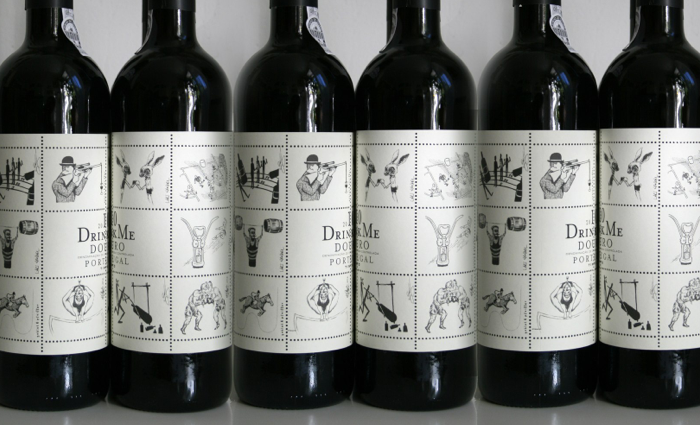
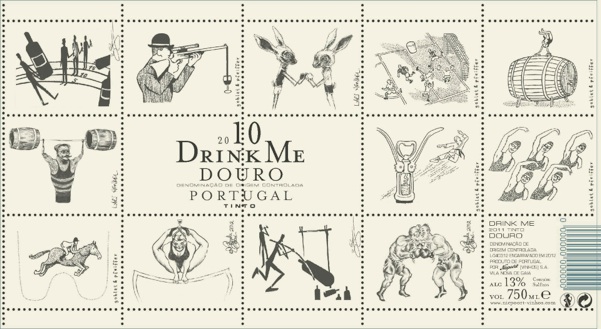
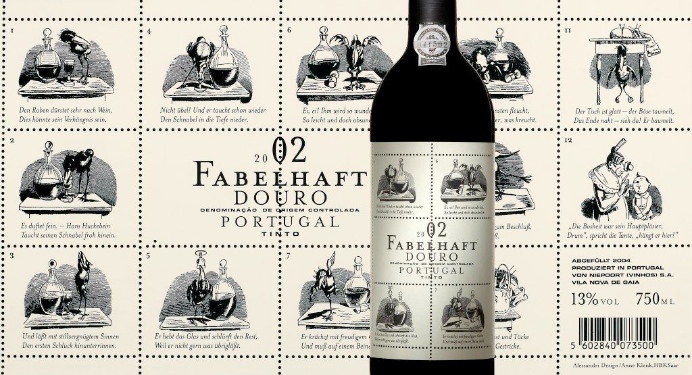
In 2004 Dirk Niepoort and his designer Cordula Allesandri decided to produce an label more suitable and appealing for the German wine buyer with the aim to introduce Portuguese, Douro wines in closer touch to the German wine consumer. Wilhem Busch storyboard label and the name FABELHAFT was the result. Following this trial, Niepoort began to develop different labels suitable to specific countries i.e.: Portugal (Diálogo), Norway (Fabelaktig), Finland (Sarvet), Allez Santé (Belgium), ETO CARTA (Japan), Fantasi (Denmark), Drink Me (UK), Twisted (USA), Berek (Poland), Gestolen Fiets (Holand), OO JA PAEV( Estonia), Ubuntu (South Africa), Sasta (Ireland), Conversa (Brazil).


On top of all the difficulties, the Niepoort tem report that “it turned to be a rewarding project for Niepoort and costumers alike”. The use of wine labels in this case was aimed to reflect the quality and character of their wine in a creative approach involving winemakers and artists. It is also a sort of homage to the Douro region, with its magnificent panoramas of rugged nature, the steep vineyard slopes, the flow of the Douro River and its tributaries, the narrow valleys and the local extreme climate, as well as the difficult conditions for producing wine when using the artisanal processes that make this region so special. (from Niepoort site: http://www.niepoort-vinhos.com/en/fabulous/)

Here the label is an effort to bridge a gap between the wine maker, his locality and aspirations, the character of the wine, and the consumer via an object which is consumed visually at first before the bottle is opened and thus forming an aesthetic dialogue between the label and the wine.

There are 3 groups of Labels :

     The first: “Niepoort’s Soul”, reflecting the “magic of the Douro region through images of the estates and the winery”.

    The second group: “Projects”, is more “experimentalist” in nature.

    The third group: “Fabulous”, tries to emphasis the artistic excellence of the labels. Judge for yourself at : http://www.niepoort-vinhos.com/en/fabulous/

There is no doubt that wine at its best is a work of ART, does not use fixated idea of an effort to “reach” a certain taste and smell, but a proper use of the product at hand : Use of a given vintage, qualities and character, add a bit of their own geography, geology and climate terroir in short, and turn it into a beverage that is not meant to quench thirst  but rather an intellectual sensual travel into the layers of wine and mind from the perspective of all 5 senses: sight, smell, taste, touch and sound.  Just like a good piece of Art is the use of paints and colors on paper or canvas that transcends into an object that evokes emotions. In this sense good art and good wine go comfortably hand in hand together, and wine drinkers /appreciators, get to enjoy the finished product.

Your Wineguide

Dr. Eli Landau ——–1949-2012 ——–Rest In Peace friend.

14th June 2012

Dr. Eli Landau, cardiologist, Lover of good life, Great cook and culinary expert, a Foodie in any respect, and a friend , passed away this evening, he was 63 year old.  What a waste!

I was sitting with Shaul Evron, one of Eli’s best friends, at Yoezer, (a high-end Wine-Bar restaurant in Jaffa, Shaul’s restataurant), having my coffee after yet another satisfying wonder meal, when the phone rang… Shaul’s conversed abruptly with Haim Cohen (Eli’s partner in Jaffa Tel-Aviv Restaurant recently opened), you could see on Shaul’s face that something went terribly wrong he turned to Shlomit the Yoezer Restaurant manager & Sommelier, chief “nurse” (she looks after everyone at the restaurant young and old). “That’s it,  Eli is gone”. They knew what was going on, but I got the situation all wrong! at first, I guess the sudden switch in atmosphere caught me by surprise.


Even though they knew that the “end” was imminent, a somber, heavy feeling filled the air. A sense of complete VOID fell upon, as if facing the abyss of death with total helplessness.  Shlomit said from the bottom of her heart with great sadness: “No more Eli” It really encompassed everything, her grief, her loss her longing to a man who was one of Yoezer’s and Shaul Evron’s best friends. You always saw them together like the odd couple in any culinary event, or of course at Yoezer. They were soul mates in their attraction to wine and food.

Eli really knew his food, loved good wine and top end whiskey, an expert of Italian cuisine cooking and food products and most of the secrets and history of Italian food were an integral part of his being.

I guess on top of everything; His know how, the expertise He had good taste and a unique inner passion for food and cooking.  My kind of GUY.

Eli Landau, was a food columnist for several Israeli newspapers, and food magazines, the author of three cookbooks: Mevashlim 1 & 2 (with Chef Haim Cohen), and the legendary pork recopies cookbook: “The White Book” a must book in every kitchen.


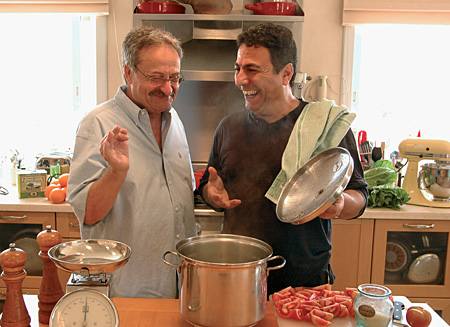
Eli and Haim Cohen met in the early 80’s when young Chef Cohen returned from Provance Cooking at Keren Restaurant in Tel-Aviv. Eli wrote a review in his column and they befriended at first a “friendship of mutual respect” and then after years of meetings and eating together established their 20 years of “friendship of love”. They started to cook together, wrote cookbooks together, had an internet portal “Mevashlim” (Cooking) http://www.mevashlim.com/Section/1515001.asp , plus numerous culinary tours of Europe (mainly in Italy and France).  “We are one palate that separates into 2 stomachs” said Eli


Alon Gonen (chef owner El-Bario Restaurant summed it up very well: “He had the capacity to show us (young chefs) That the simple things are the most delicious makers of a good meal: A visit to the local market for fresh goods, Top class Butter on a fresh Baguette, fire red ripe and bursting tomatoes, Good Olive Oil, a bite on a nice sausage or cured meat and a good glass of wine”


Hilik Gurfinkel (a food and wine columnist, author of food books and ex “chef” at Yoezer in the old days, Just told me at the funeral, how Eli took literally took him by the hand and showed him the secrets of boning a Lamb “He was so efficient like a surgeon in the operating theatre, everything with a smile and patience of no end, a fatherly manner…”

Eli studied medicine near Parma where he tasted his first real prosciutto and other Italian food wonders of tradition. He returned an MD with a passion for food in general and deep knowledge of Italian food in particular. You could see the passion oozing when he was talking about food, always with a sound background of the various ingredients and their “place” in the dish. Even After visiting the best of the rest of European restaurants, he loved simplicity always with a smile and patience no end to onlookers and “groupies” (after he became a “TV celeb” with a wonderful series on Italian food shot in Italy mostly from the simple man and Jewish angle).  On his Pork cookbook that created quite a stir he said: “basically it is a Kosher cookbook, if you swap pork with milk veal… I do not cook with milk or butter JUST OLIVE OIL!!!

So many people at the funeral (everyone who is someone in the Israeli culinary world was there), told me he was their mentor, teacher guide in the dark, culinary father/advisor, a high priest of local culinaria.

The roses gathered on top of the fresh grave, forming a blanket of love, appreciation and thanks to the man who was not only the best Chef amongst the Doctors and the best Doctor amongst the Chefs, but a milestone in the world of local Israeli cooks and food lovers. He will be greatly missed… but never forgotten.

As they say in Hebrew:

                                                    תהא נשמתו צרורה בצרור החיים –  May his Soul be Bundled in the Bundle of Life

…Our lives…

Someone said today: now there are only 2 doctors left amongst the foodies, Dr.Yehuda Abramovitch and me, I say Eli was the ONE, a guide to the culinary Galaxy we are both just hitchhikers enjoying the left over crumbs.

Love to Nadia and Adam

Amir – The wine guide

To Aÿ & back to Epern-Ay

Champagne visit Day 2 PM

By the time we finished our meeting at Moet, we missed our scheduled meeting at Perrier Jouet (Chef de cave Herve Deschamp is busy till late afternoon), but don’t despair Yair Haidu has rescheduled the meeting for 5pm so we’re all sorted out, more or less. Now our next meeting is a good 2 Hours away in Aÿ at Champagne Deutz so he’s calling Bollinger to see if they have a regular “tourist tour” this afternoon… and… “Lo and behold” there’s one starting in 10 minutes time, so we rush over, through the narrow streets of Aÿ and park across the road from the gateway to one of my favorite champagne houses BOLLINGER.


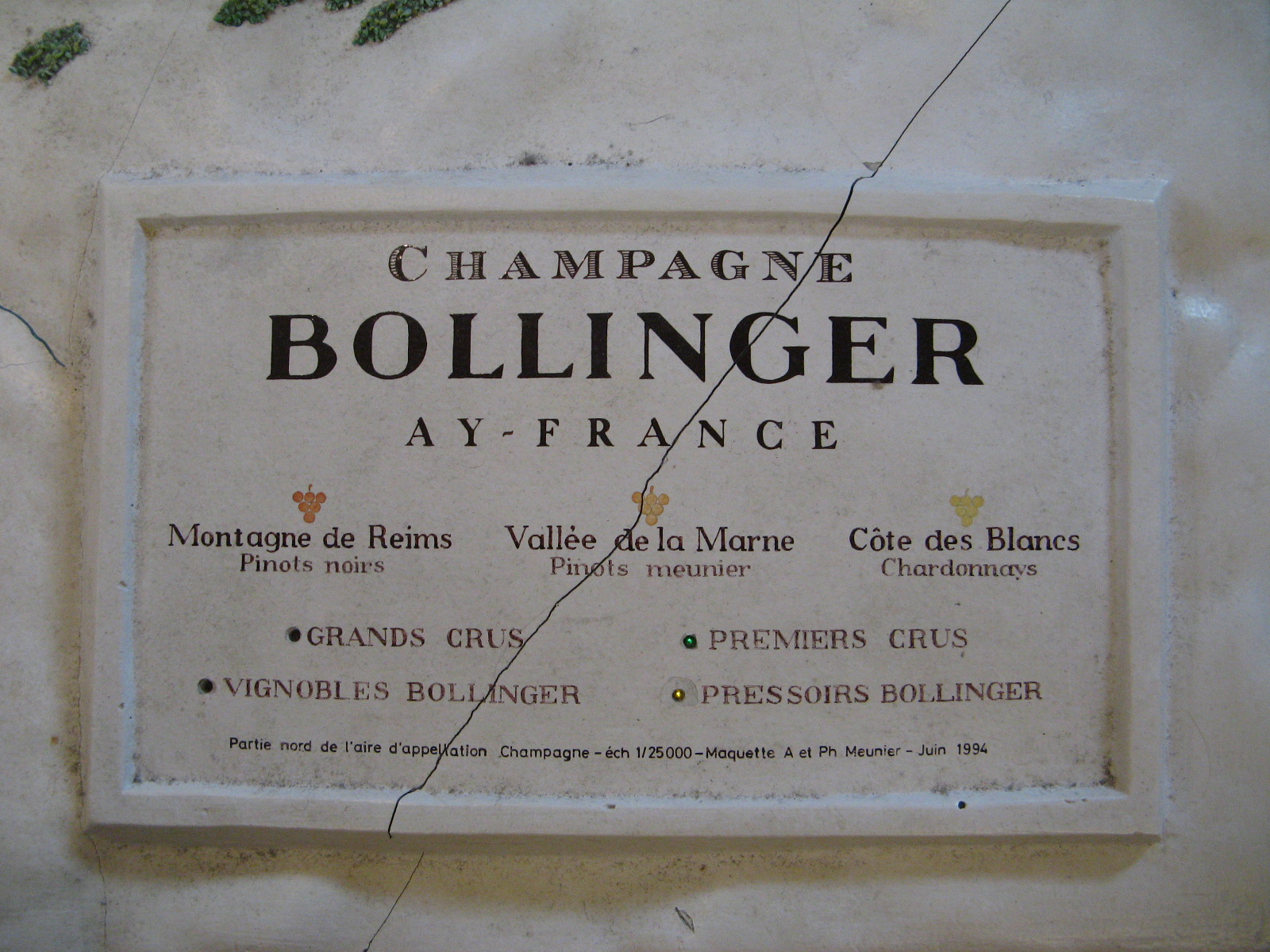
We’ve done the Blanc de Blancs, and here at “Boly” they proud themselves on the fact that Pinot Noir is the Base of the Bollinger Blends 60% in the Special Cuvée NV, and 65% in their Grand Année (vintage) champagnes. And they use for these blends for the NV 80% grapes from Premiers and Grands Crus and for the Vintage Champagne 100%! For all their wines they utilize only the “Cuvee” (the cuvée refers to the best grape juice from gentle pressing of the grapes. In Champagne, the cuvée is the first 2,050 liters of grape juice from 4,000 kg of grapes ), the remaining 500 liters called taille (tail), or pressed juice is sold to other champagne Houses… Impressive! But you knew all that right?


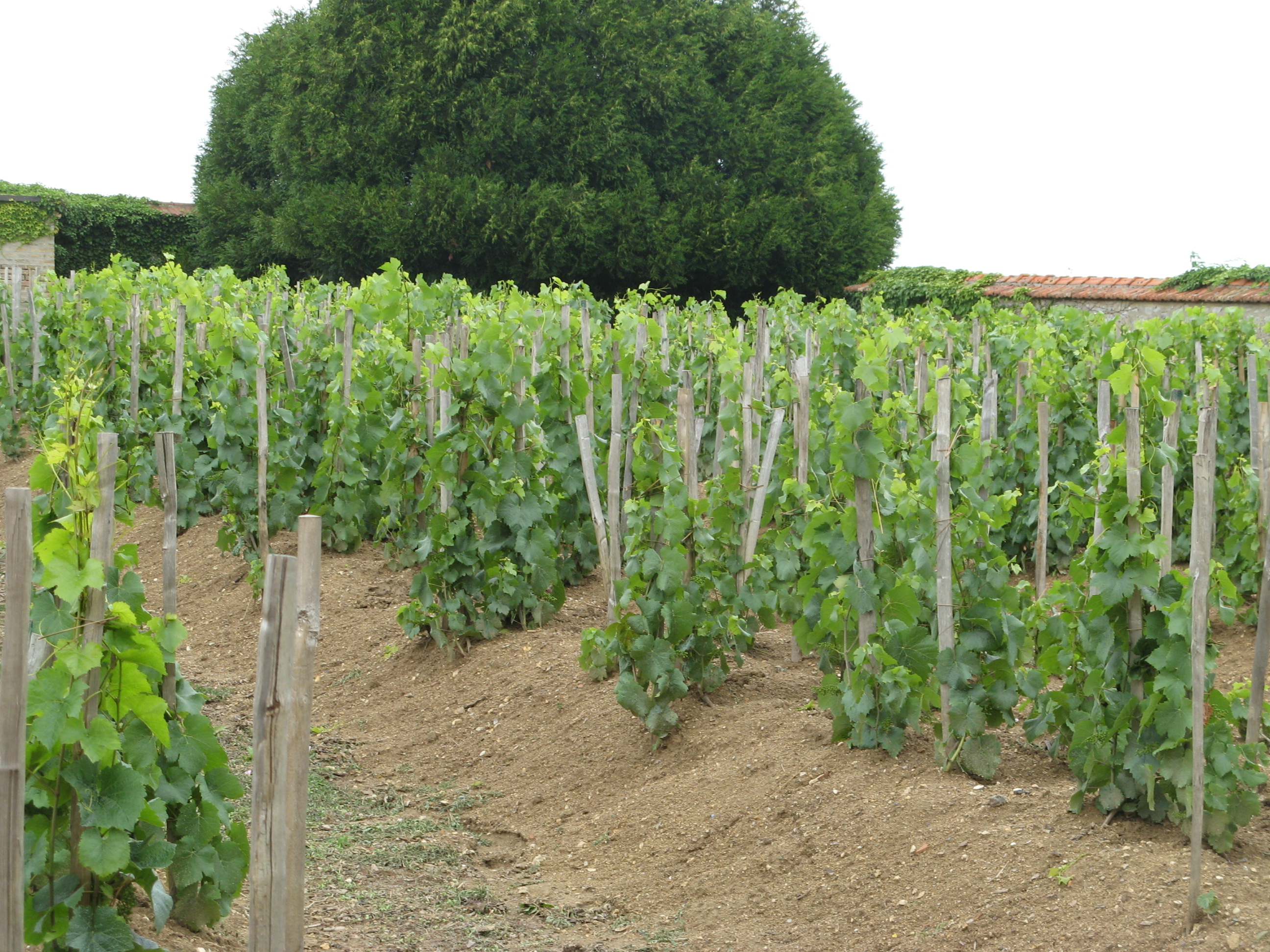
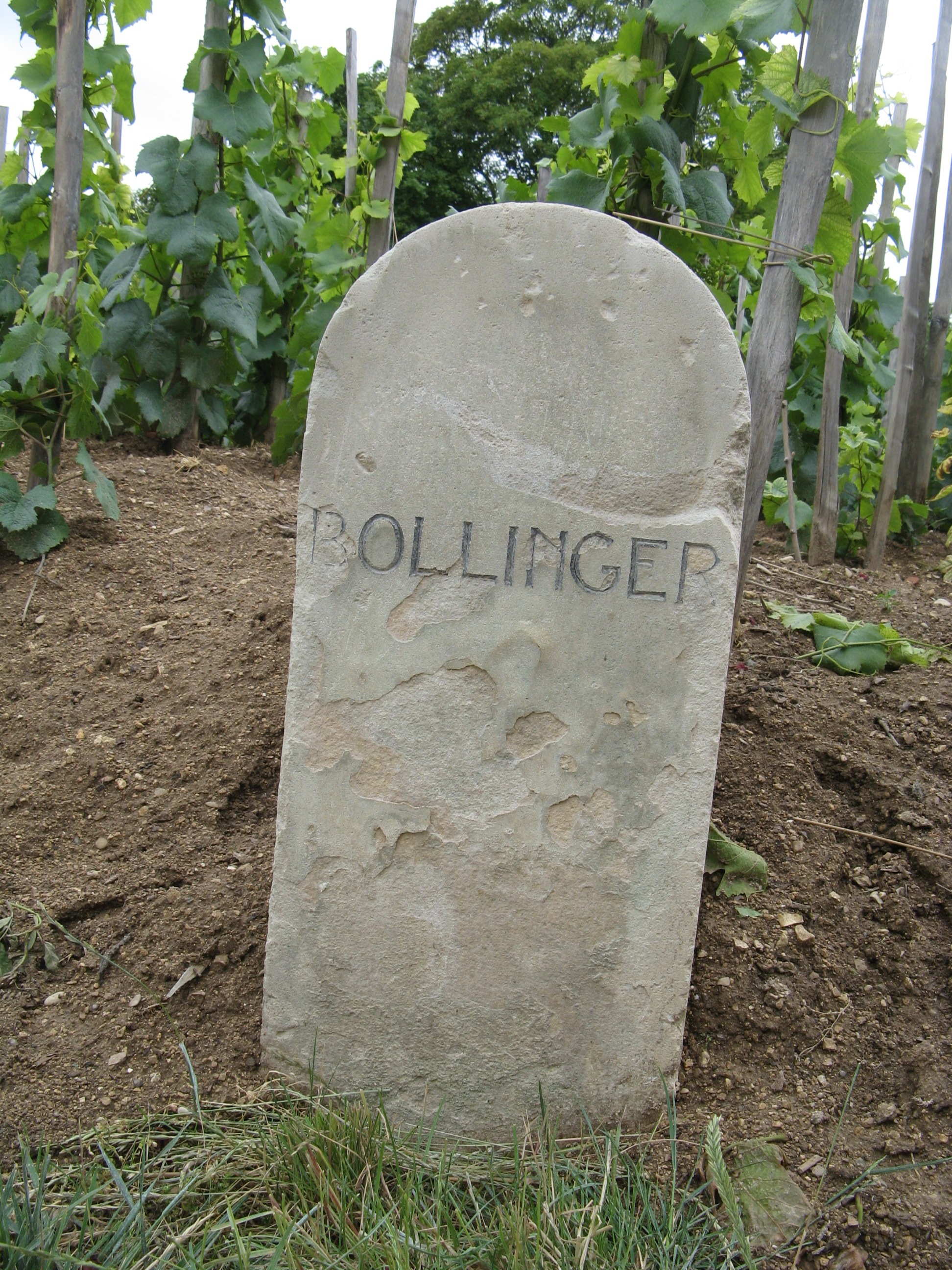
The guide and the group of 3 from Australians and us are led to a small vineyard, a lot of less than half an acre vineyard “the only non phylloxera affected vineyard in the whole of champagne”, still blooming and looking healthy.

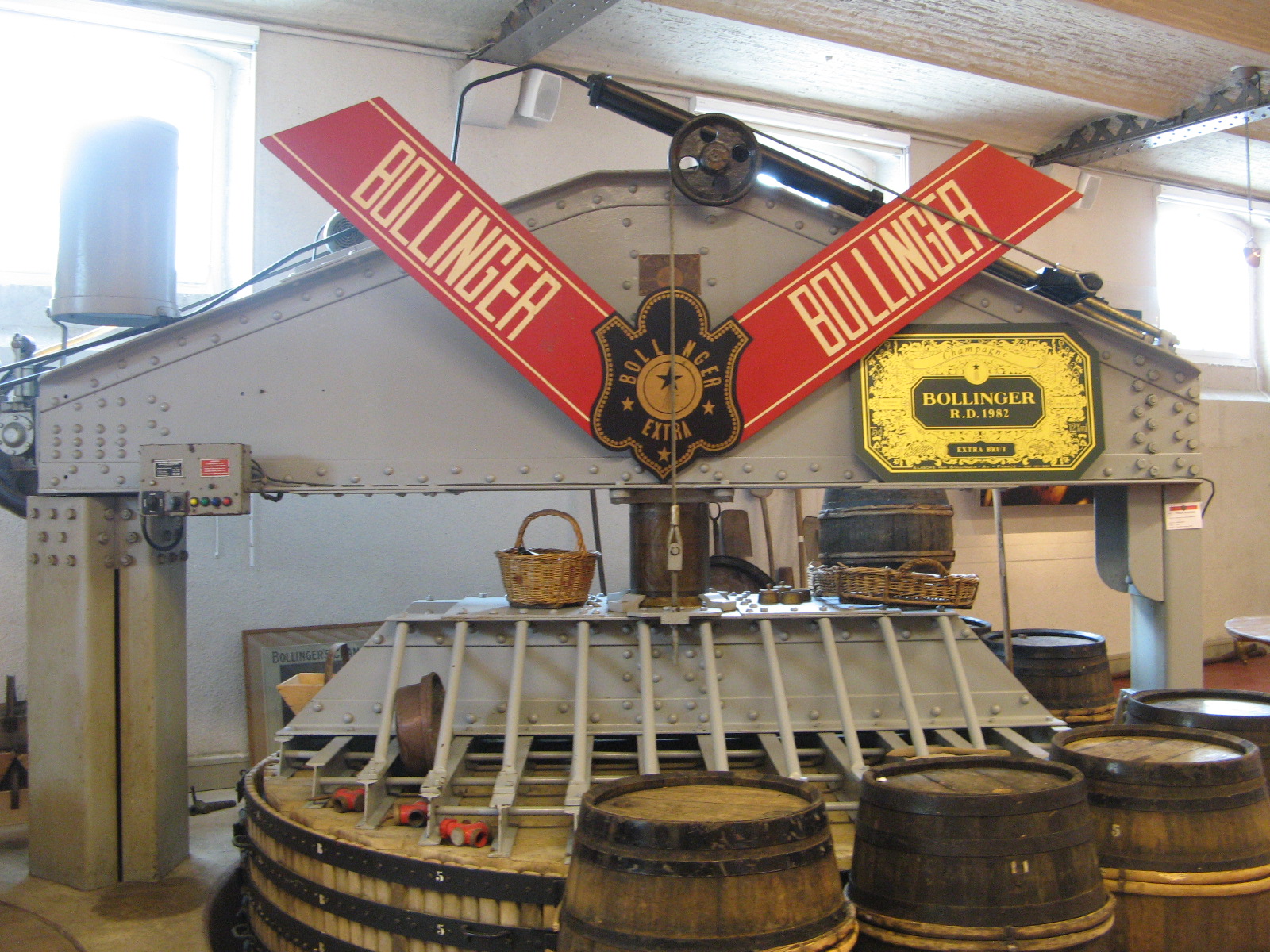
The winery tour starts at the Destemming and Crushing area and passes on, to the Oak barrels room, all Bollinger’s wines undergo first fermentation in Oak Barrels (a great pride) and so we are given the important “tour of the Barrels workshop”,  where the in-house barrel maker makes new barrels, fixes old barrels and prepares used barrels by scraping off the crystal sediments that accumulate and cover the barrels yearly. This guy is quick, showing his expertise to the onlookers.


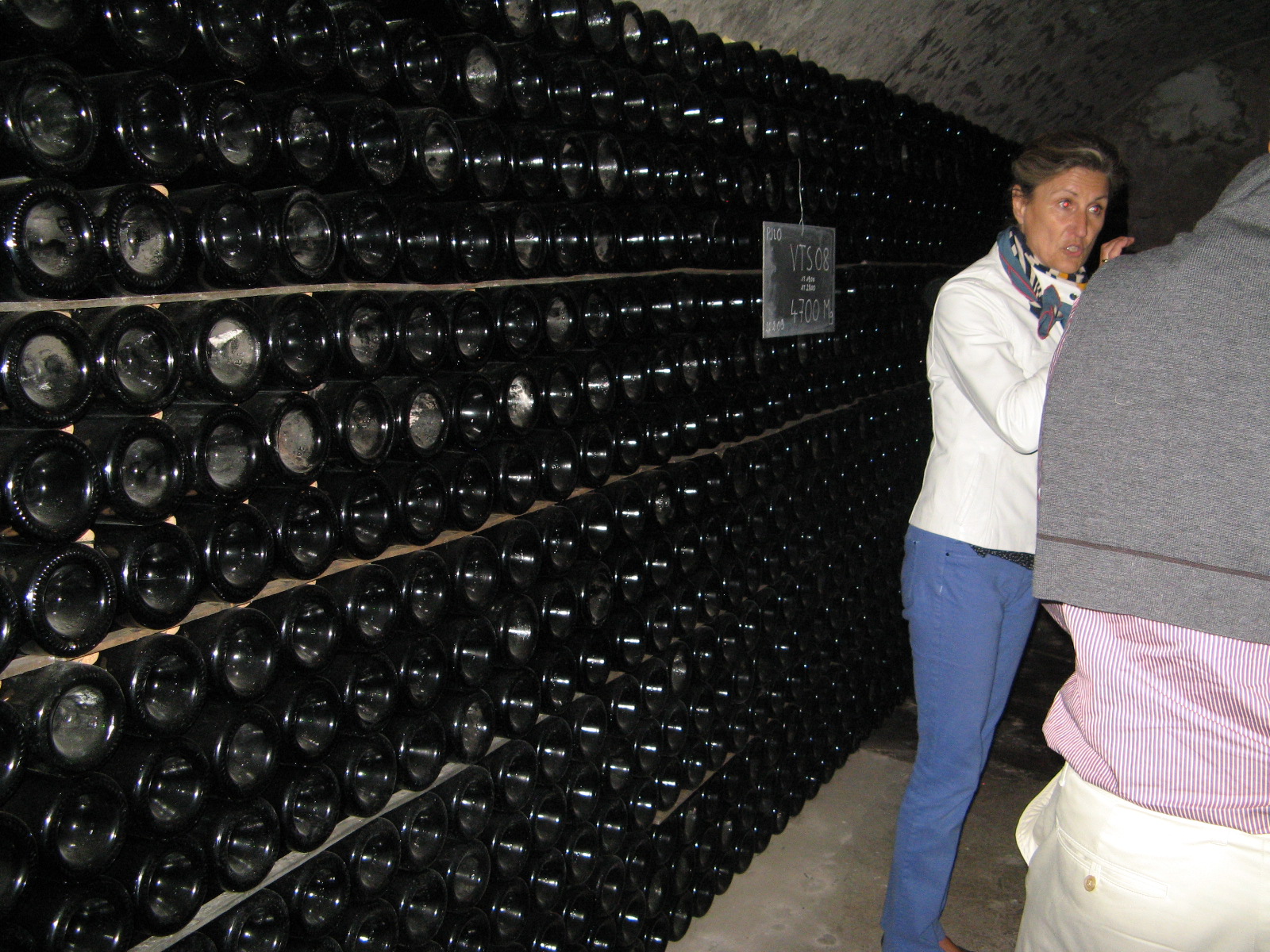
Now we go down the stairs to the cool cellars 8Km long!!!! under the streets of Ay, (you enter in one place and come out somewhere else), with more than half a million Magnums and many more 75cl size bottles all resting in one position or another on their racks or pupitres. A pupitre is a wooden rack made of two hinged heavy boards. Each of the boards has 60 holes that are cut so that a bottle can rest, by the neck, in any position between horizontal and vertical. At first, the bottles lie horizontally, and gradually, through a process called remuage, they are hand “riddled.” This is an arduous process where each bottle is rotated and tilted very slightly each day so that the yeast loosen and finally accumulate into the neck of the bottle.


The Bollinger wines:

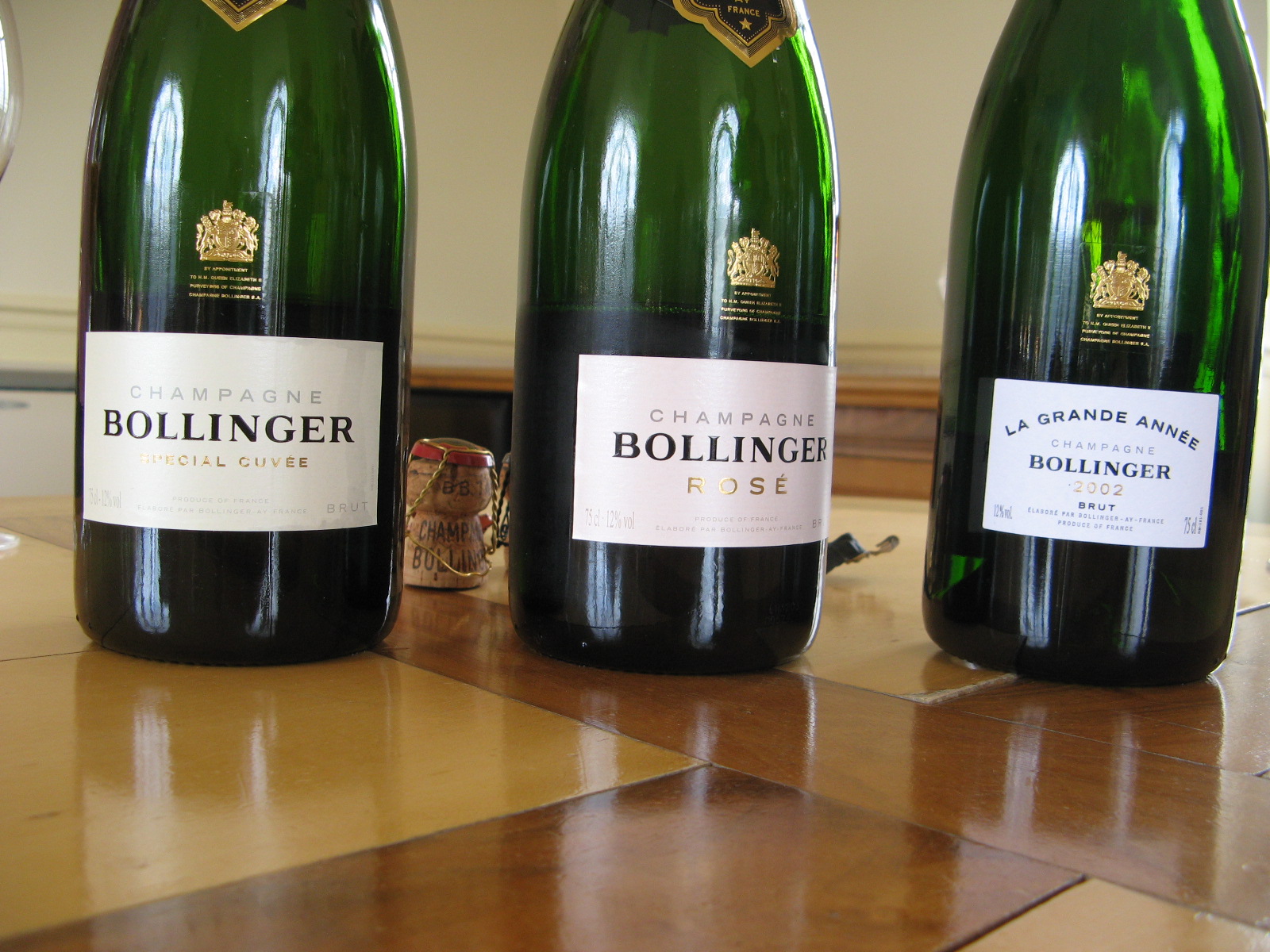
    Special Cuvée (non-vintage):  A Champagne blend that uses grapes from a given year, with a balancing addition of up to 10% reserve wines, from the last fifteen years. The blending gives the special cuvee the complexity and structure on every year. I love it. (60% Pinot Noir, 25% Chardonnay, 15% Pinot Meunier.)

    Grand Année (vintage): Whenever there is an exceptional harvest, Bollinger will produce their prestige Champagne Grand Année (“great vintage Year”), it is aimed to express best the character of the vintage. Only the best wines from the different crus are selected for this purpose. This Champagne is also available as a Rosé. The wine spends five years on its lees and is aged in bottle under cork. (65% Pinot Noir, 35% Chardonnay)

    R.D. (vintage): récemment dégorgé (“recently disgorged”). This is the “Reserve” Grand Année blend. R.D. spends eight years on its lees, aged under cork R.D.  The disgorgement date is given on the back label. The different disgorgement dates are noticeable in aroma and flavor and touch between R.D. Champagnes of the same year. Only 19 vntages since Inauguration in 1952 (first RD) to date where made in the RD format (one of which is my birth year 1953 I wish I could lay my hands on one magnum for my 60th birthday next year).

    Vieille Vignes Françaises (vintage): Bollinger’s prestige cuvee, this blanc de noirs is made in small quantity with wine from two small plots of un grafted rootstock planted in low density (3000 vines per hectare). These two low-density and yield vineyards, Clos St-Jacques in Aÿ and Chaudes Terres in Aÿ, are severely pruned, and thus produce 35% less juice per vine.

We tasted                             

Special Cuvée Brut and  Special Cuvée Rose wonderful wines on all counts!

Bollinger Grand Année 2002 even on its 9th year it is still a youngling very fresh and fruity mainly citrus; with strong grapefruit notes and a faint touch of white tropical fruits. Great balanced acidity and fruitiness. This is a keeper for quite a few years, so… WAIT!

The Best Bollinger I had lately was without a doubt the 1995 Grand Année, The complexity and depth was tremendous, smooth with aromas of ripe white fruits and bursting fig aroma roasted hazelnuts and toasted butter cinnamon brioche with hints of vanilla, a smooth gentle touch on the palate with exceedingly long finish on palate and nose Excellent!!!

We left with a DVD disc of the Various James Bonds ordering Bollinger RD 1961….. My name is B O N D, James Bond!

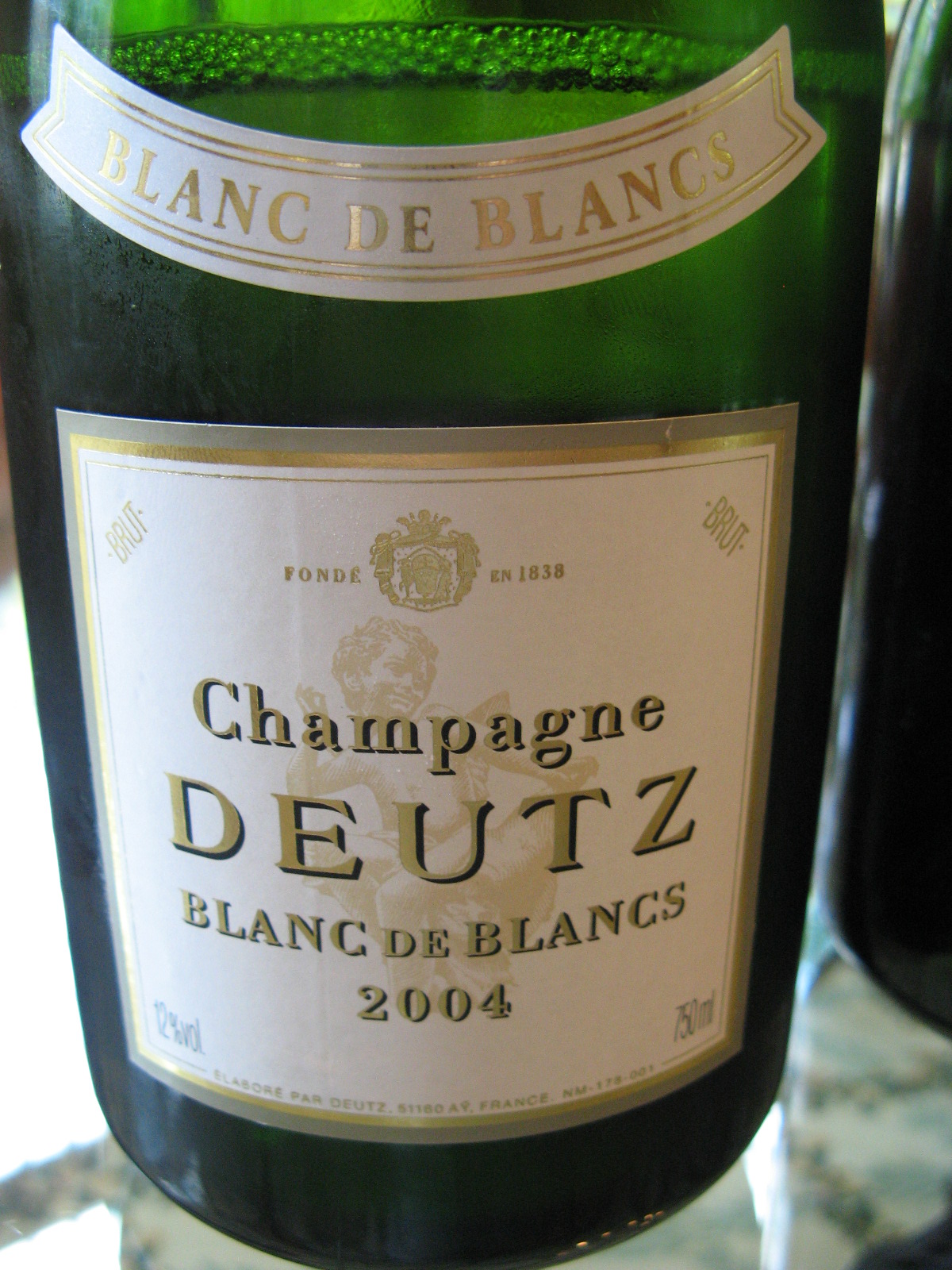
We’re headed to the neighbors Deutz, another small family champagne house in Aÿ (since 1838), also in for a scheduled meeting with Jean Marc Lallier-Deutz,

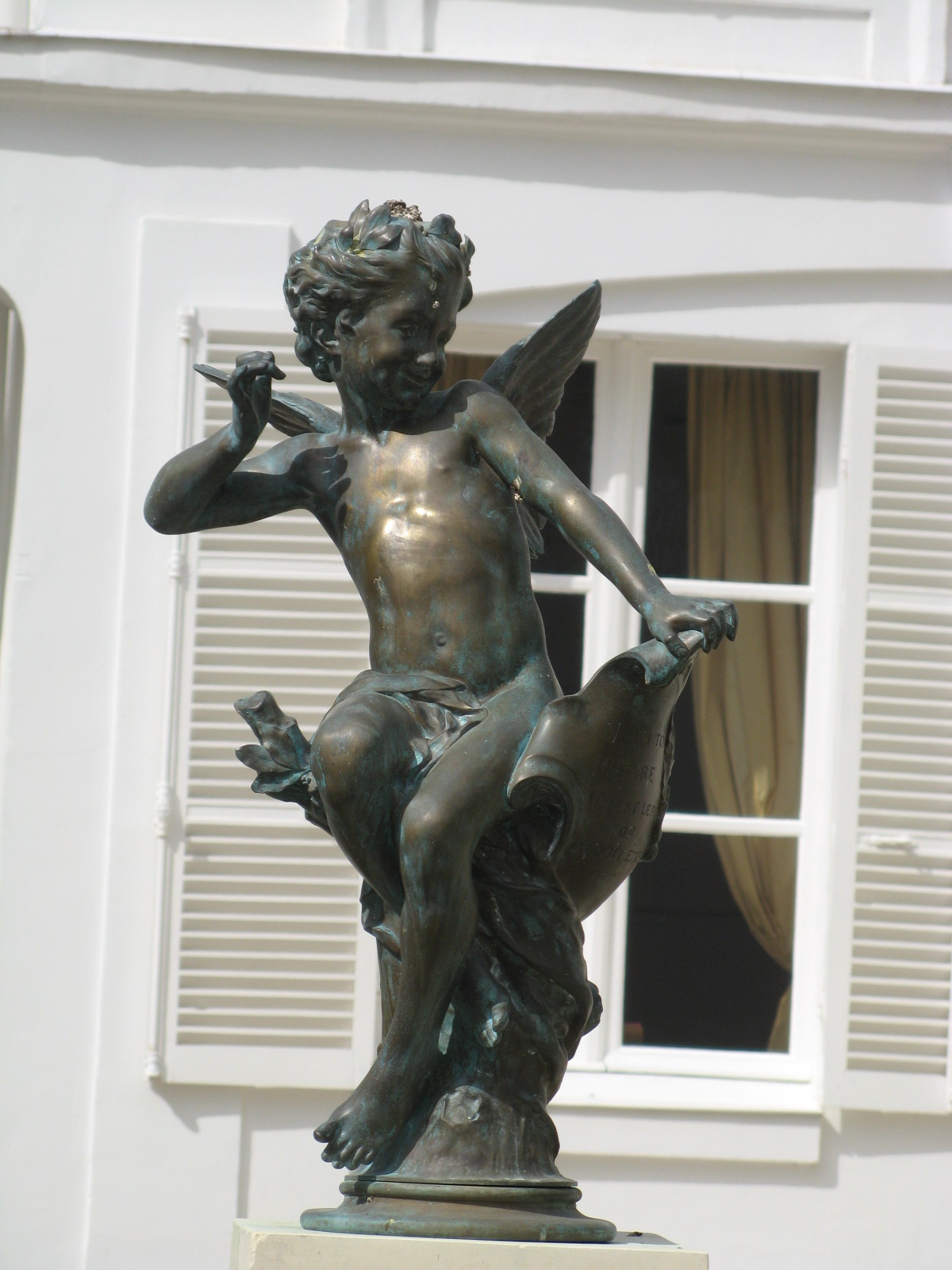
we pass the Courtyard Statue of Cupid, the Roman god of desire, love and affection He is often portrayed as the son of the goddess Venus, His Greek counterpart is Eros. Cupid is also known in Latin as Amor (“Love”). Undoubtedly the spirit of Amour De Deutz.

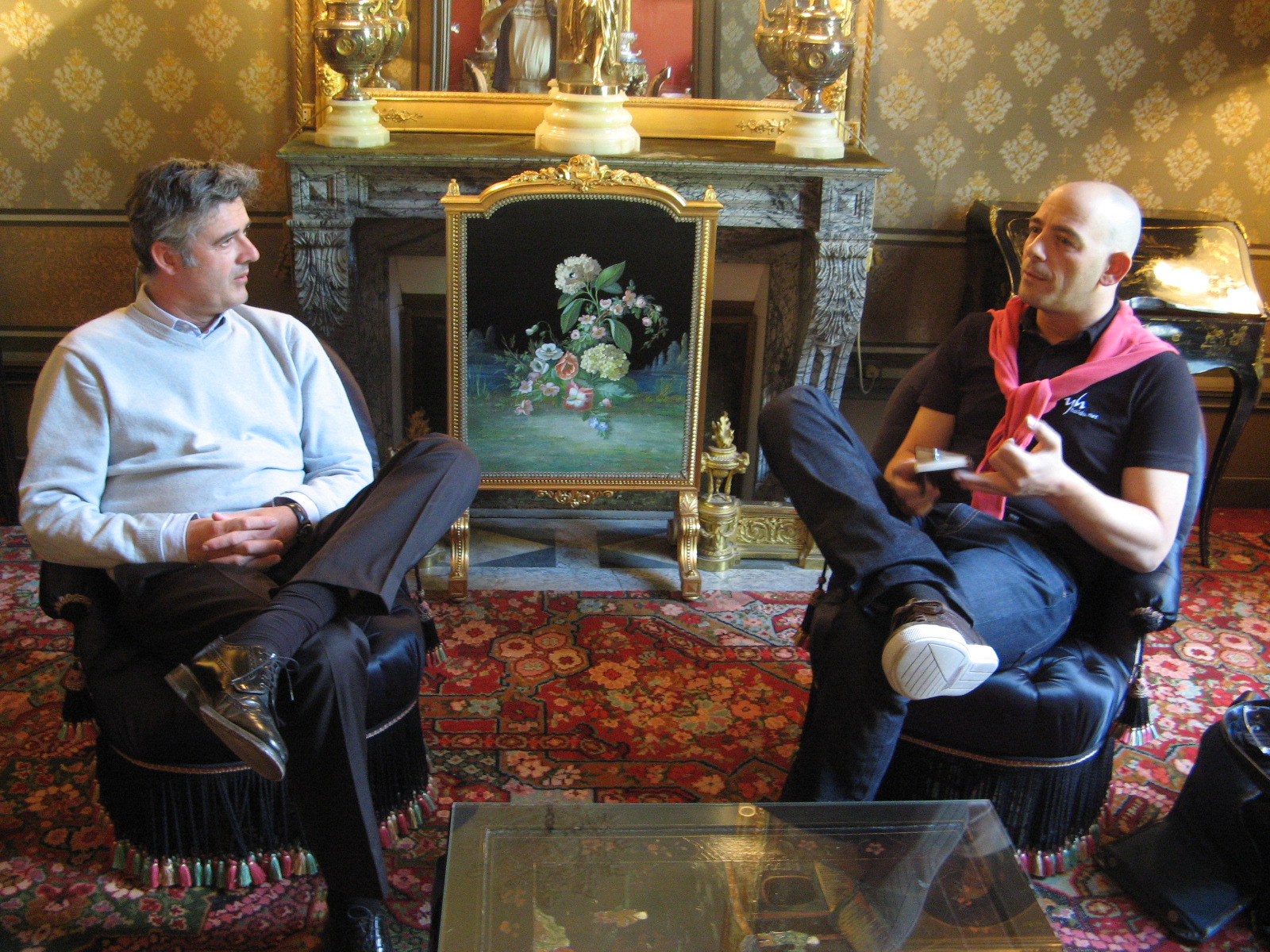
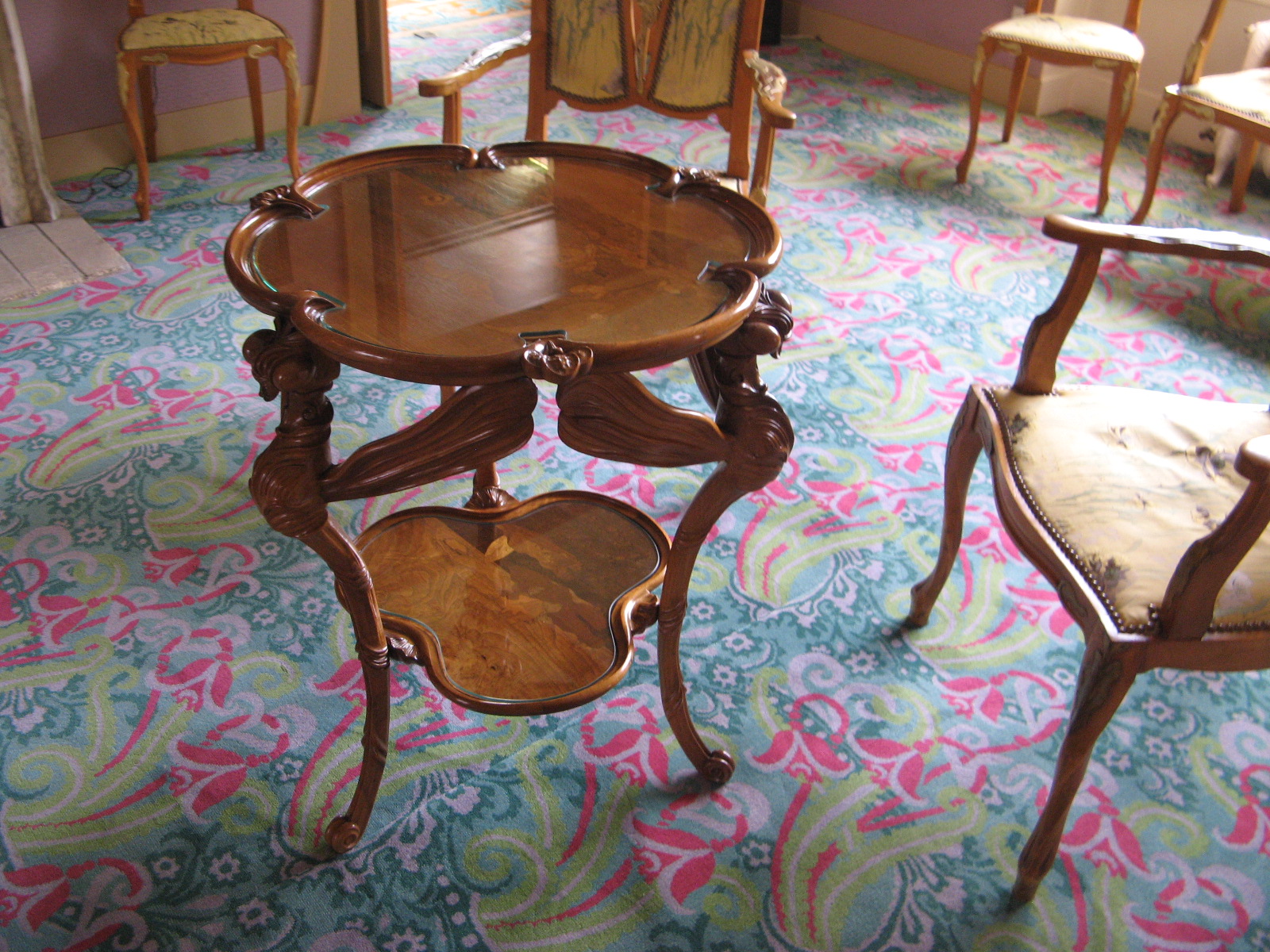
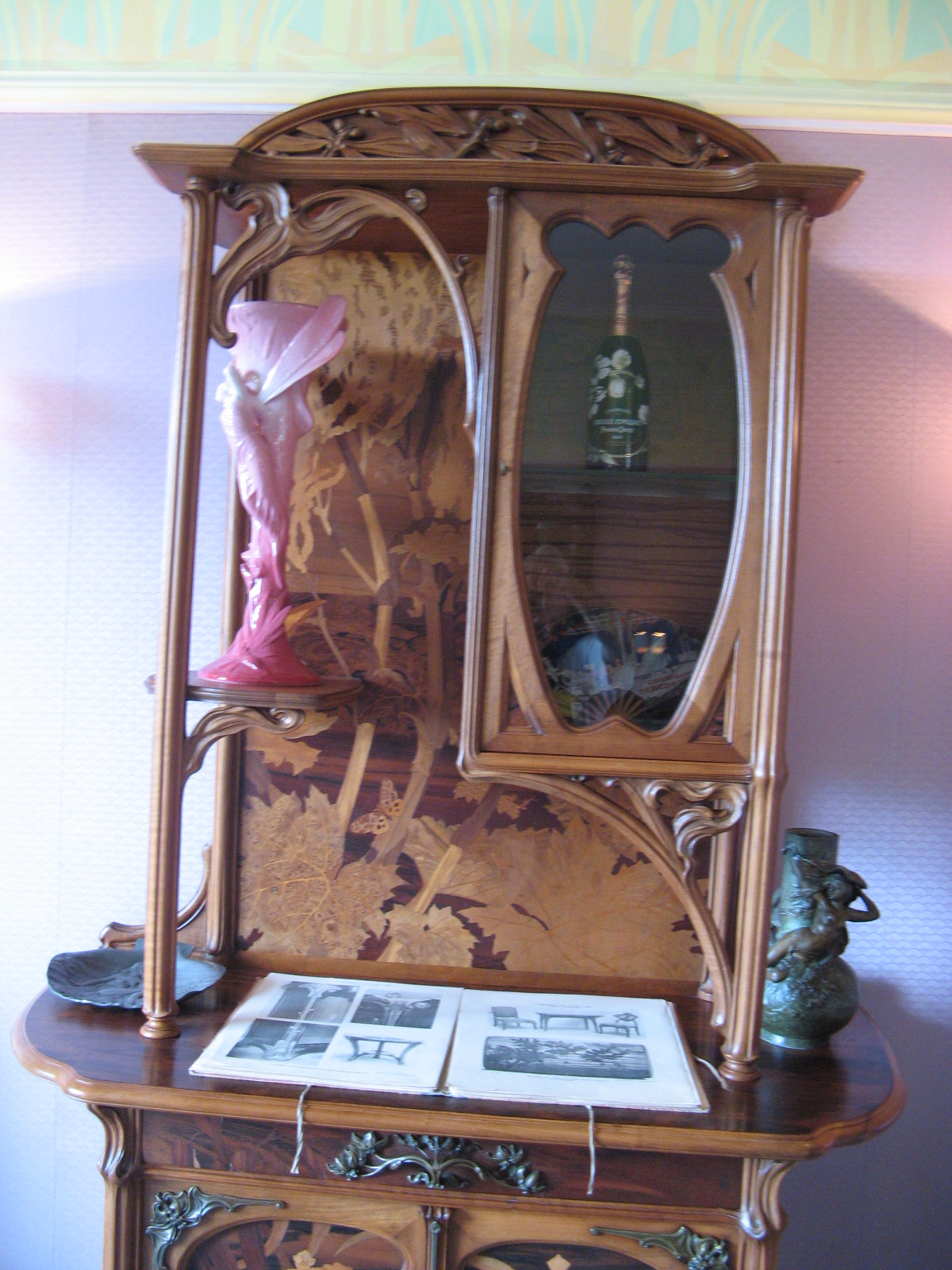
We are, in yet another small and gracious looking estate built in the traditional Champagne style, we sit for a casual wine chat with our host in the drawing room the furniture and surroundings are all original pieces with a very homey feel. We move to the tasting room facing the gardens and champagne glasses are laid down on the glass top modern dining table.


We taste:

Deutz Brut Classic: This is a lovers champagne charming accessible and well balanced for a couple who are about to get acquainted. The classic is affordable champagne that has all the element of style and elegance, but make no mistake this is not the “Amour de Deutz” Millésimé Deutz Brut, The more sophisticated multilayered yet fresh and lively champagne suitable for the private engagement party and a pure Blanc de Blancs Champagne.

Deutz Blanc de Blanc 2004, The 2004 Brut Blanc de Blancs is full of exotic tropical fruit flavours, very rich and elegant mufti-layered Champagne complexity,  and a very sharp clean finish. The Deutz Blanc de Blancs is made principally from vineyards in Avize and Mesnil, with 20% coming from vineyards in Villers Marmery, Oger, and Cramant .disgorged July, 2008.


Cuvee William Deutz 1999

The wine is a crystal clear champagne with lovely small bubbles and a pale lemony golden hue. The nose is fully opened with rich aromas of ripe apples baked in butter, and some hints sweet spices of anis and nutmeg. It has a rich fully ripped, spiced long finish.

 Deutz, formerly known as Deutz Geldermann, based in the Aÿ region of Champagne since 1838. It was run by successive generations of the Deutz and Geldermann families. Today, under the leadership of Fabrice Rosset, the passion for terroir and tradition is at the fore front of the production attitude, the 3 F’s : Finesse, Freshness & Fine.

I could have stayed in the lovely garden sipping away the Cuvee William but “duty calls” we still have our last visit of the afternoon (in Epernay) before parting Champagne and back to “Old Paris”.

This one is at Perrier Jouet with chef de cave Herve Deschamphas.

First the House’s jewel in the crown La Maison Belle E’poque at the historic house of the Perrier family at 11 Ave. de Champagne. This a most amazing living collection of Art Nouveau pieces of furniture, architectural pieces, objects d’art, paintings all from the era known today as La Belle Époque “The Beautiful Era”. This was a period in French history starting in 1890 and ending as the first World War began in 1914. It was a war free period of optimism, a time for scientific inventions and discoveries: Louis Pasteur developed the Pasteurization (or pasteurization)process, antibiotics and the rabies vaccine. Mathematician and physicist Henri Poincaré made important contributions to pure and applied mathematics. Marie Skłodowska-Curie Her study of radioactivity, led to discovery of polonium and radium, winning the Nobel Prize Twice!! for Physics in 1903, and the Nobel Prize for Chemistry in 1911. New technologies such as the invention of the motion picture (Film), The Lumière Brothers held their first private screening of projected motion pictures in 1895. Peace and prosperity in Paris allowed the arts to flourish, and many masterpieces of literature, music, theater, and visual art gained recognition.

The Term Belle Époque was coined in retrospect, when it began to be considered a relative “golden age” in contrast to the horrors of the World Wars that ensued.                                                       (click on the photo to enlarge)


We are honored with a guided visit of the House of Belle Époque with Herve Deschamphas who will be with us throughout the whole tour and of course the tasting. This is almost unreal, the gateway and the splendid doorframe, the furniture, the decorations, the art on the walls (some Henri De Toulouse-Lautrec and others all originals and of best quality) even the double bed, the basin, faucets and the Loo all original Art Nouveau from the best artists of their trade! Inspiring and heartwarming (The house special guests from around the world get to stay the night there, it has its own kitchen and chef!). What a delight!!!


We go down to the Labyrinth of cellars (Its really cold 8-11 degrees) with some caged doors behind which stored bottles of great importance or age tucked in safely. There’s also an area for keeping wines bought by clients and celebs for special occasions arranged separately in niches in the wall and lots more…

We sat down to our Tasting with chef de cave Herve Deschamphas


first he opened the Perrier Jouet Grand Brut NV. This is a Fresh champagne with some delicate bouquet of ripe white fruits like white peach with a touch of Smoky Oak and spiced melted butter biscuits. It contains all the elements to make it alluring to all the participants in for instance a public function or a party.

Belle époque 2004:  (50 % Chardonnay, 45% Pinot Noir and 5 % Pinot Meunier.  A very elegant wine that hits you with strong aromas of wild flowers in the spring, quit reminiscent of the bottle’s artwork, (designed by Emile Gallé in 1902). On the palate, ripe tropical fruits: Annona and  pineapple flavors very open and spiced. Still fresh and elegant with a nice touch of minerality that extends the length.

Belle époque Rose 2002 The orangey pinkish color radiates through the translucent bottle in sensual colours (the usual Belle époque blend the Rosé is made by adding red wine rather than the saignée method). It is all about  finesse and delicacy without the show off of concentration or strength, very good balance.

Belle époque Blanc de Blancs 2000 :  The most prestigious of the Perrier-Jouët Belle époque series. A show off of the house terroir coming exclusively from Cramant and just from two parcels, Bourons-Leroy and Bourons du Midi, at the heart of the Cramant Grand Cru in the Côte des Blancs. Responsible for this 100% Chardonnay wine grown on pure chalk soil, on the south, south-east slopes. Again we are introduced to the floral aroma touch a characteristic sign, this wine, of more fragrant flowers like honeysuckle freesia and acacia, and very sweet spices like vanilla scented toffee delicate and easily approachable.

Thank you Herve.

Perrier Jouet  28 avenue de Champagne, 51201 Épernay

Telephone: +33 (0) 3 26 53 38 00.  www.perrier-jouet.

As the days grow longer, towards the year’s longest day on June 21st ,  we started on our way back to Paris the clouds started to gather again, but the sun rays pierced through the clouds in an heavenly manner, to end up 2 glorious days in champagne .

Thanks Yair for arranging this unforgettable tour.

Your Wine guide

The Guys with the Ties a Visit to Ruinart and Moët & Chandon

A visit to Champagne with Yair – Day 2 morning

The breakfast at L’hôtel restaurant Les Avisés, Chez famille Selosse was so neatly laid out, the coffee and pastries were perfect, (not easy)! the breads  divine, accompanied with local cheeses and cured meats and a fried egg made to perfection what else would you ask for first thing in the morning after a perfectly good night sleep.

We parted with Thanks fairly early cause we have a full day schedule Starting at Ruinart – the most ancient champagne house 1729, a meeting with Ruinart Chef de Cave, Frederic Panaiotis

But first….

A visit to Rheims Cathedral,

We drove up north from Avize to Reims pass Epernay (we will return there soon enough, it is a very busy day…) we enter Avenue de Chamapgne and the Names of the BIG Houses of Champagne at the entrances to each of the Polished “suit wearing” champagne house appear on every corner , Here’s Veuve Clicquot. Than Pommery on the corner of Bd. Henry Vasnier , from there up Rue Libergier.


The glory size and beauty of Rheims Cathedral “hits” you in the face. This cathedral is counted amongst the top 7 Gothic Cathedrals of Europe, proudly stands with Milan and Seville Cathedral, York minster, Notre Dame de Paris, Santa Maria del Fiore in Florence and Chartres Cathedral near Paris.

 All the kings of France were once crowned in Rheims Cathedral. Along with the cathedrals of Chartres and Amiens, Rheims is a member of the illustrious triad of “High Gothic” or “Classical” French cathedrals built in the 13th century.

Yair gives me 20 minute to wonder around this wonder of medieval architecture where In 498-499, Clovis the first King of the Franks who united all the Frankish Tribes in Gaul was baptized by Saint Remi. However, the first king to be crowned was Pepin the Short at Soissons in 751, then again at Saint Denis in 754 by Pope Stephen II.  From then on, all the Kings of France were crowned in Rheims by their archbishops.


But the symbol of the Cathedral and indeed the City of Rheims is without a doubt a statue of a smiling Angel at the North façade of the North Portal (the main entrance). It has a story that goes like this: At the outbreak of the First World War, the 13th-century Rheims Cathedral was seriously damaged by German shelling. The serene heavenly smiling statue of Angel on the north portal was decapitated by a burning scaffolding beam, during the fire of September 19, 1914. In the newspapers, this statue became the “Smile of Rheims” or “Smiling Angel”, a symbol of French engineering and heritage destroyed by German brutality and bombs. The monument quickly became an emotional picture of the tragic and destructive consequences of war. From original fragments and a casting preserved in Paris, this famous figure was reconstructed after the war with American donations and was returned to its place on February 13, 1926. The Smile of Rheims was restored and the “Smiling Angel” welcomes you as you enter the huge Cathedral. This is the kind of building the gives you a sense of humility (although the aim is impress you with grandeur…) The interior of the cathedral is 138.75 m long, 30 m wide in the nave, and 38 m high in the centre.

And so are the so called Great Houses of champagne they have separated themselves from the “agriculture, farm look” side of champagne and reside in Grand houses meticulously kept, with driveways and gardens and proper “dress code” for all employees, after all, Noblesse oblige

The day is set for our first meeting in Ruinart.  Founded in 1729 by Nicolas Ruinart, this is the first Champagne house in existence with the present, young and charming Chef de Cave, Frederic Panaiotis. He is really a most charming person who gives you a warm welcome. In the spacious tasting room, he has prepared for us a variety of wines from the NV Brut to the Dom Ruinart Rose Brut 1996, he emphasizes the difference in champagne making philosophy between the Artisans we met the day before and that of the “great Houses” who sell  millions of NV champagne bottles every year, and “have to conform to a TASTE” their customers got used to… still in the last 10 years they opted to cut vineyard yields by almost 50%, thus improving the quality of the wines tremendously and reaching the level of elegance and delicacy Panaiotis believes is in the essence of champagne in a glass!


We tasted the NV Brut, Blanc de Blancs (Ruinart Blanc de Blancs, 100% Chardonnay, and Ruinart Brut Rosé,  45% Chardonnay and 55% Pinot Noir, The Dom Ruinart Rose 1996 a very pleasant, precise wine with good touch, length and balance and the 1998 Dom Ruinart Brut  with its lovely show of tiny bubbles in the glass. Dom Ruinart Brut 1998 is blended exclusively from Chardonnay grands crus, 66% from Cotes des Blancs and 34% from the northern part of Montagne de reims. I must say The 1998 Dom Ruinart is the most elegant wine of our visit, a very voluptuous wine with multilayer’s of white flowers and fruits with roasted blanched almonds and excellent freshness and balance, WONDERFUL! Merci Frederic.

 Sadly we has to miss the house’s famous deep chalk cellars (called the crayeres) These were excavated around 50BC by the Romans, and are considered a French archeological monument. This is a magical place but alas we did not have time to take the cellar visit. (Some of these old “Grandes Maisons de Champagne” have kilometers upon kilometers of chalk cave/cellars at a constant 11º C, some of the tunneled caves require small trains to travel in or you spend the whole day underground (getting lost in the labyrinth of caves). But the virtual tour of the cellars on their internet site: http://www.ruinart.com is a “must visit”, check it out (there’s also a wonderful free, I pad app version).

Ruinart , 4 Rue Crayères, 51100 Reims, France.‎  www.ruinart.com

Dom Thierry Ruinart, was a learned Benedictine of the congregation of Saint-Maur, been born on June 10th, 1657 and died on September 27th, 1709, in the abbey of Hautvillers in Champagne region. Ruinart collaborated with dom Pérignon with whom he studied and perfected the secrets of champagne-making process. He and Dom Perignon were really good buddies and we are heading across the mountains to the “headquarters of Perignon” Moët & Chandon. A little-known fact is that the talented Chef de Cave of Dom Perignon, Richard Geoffroy, was one of the winemakers for the 1996 Dom Ruinart!

Now we have to cross the Parc Naturel Régional de la Montagne de Reims that separates Reims and Epernay, it is better not to let a busy person like Benoît Gouez, chef du cave at Moët & Chandon to wait for you and we already asked for a 20 minutes delay…

We park our car near Dom Perignon‘s statue at the entrance to Moët, as you know Dom Perignon was one of the developers of the clear, bubbly, Champagne and the initiator of using cork and cage to seal champagnes, almost in the same way we know it today… Dom Pérignon learned to select the best wine from different grape varieties grown in different soils of the area and blend them to a perfect effervescent drink.

It must be said that the Dom didn’t “invent” Champagne, since the art of the double-fermentation process to produce champagne came from the experimentation and later expertise of other cellar masters of his time as well, but his name is in the front of innovations in all aspects of developing the Champagne method to producing quality clear sparkling wine and it all began during his time in the second half of the 17th century partially due to his curiosity and relentless efforts (the mystery concerning the legend of popping bottles down Perignon cellar one morning lingers on either as a fact or maybe local urban legend?).

It is difficult to separate the monk Dom Pérignon from the trademark carrying his name (now belongs to Moët & Chandon) and this “line” is used for their high-end Champagne. Dom Pérignon and his close friend Dom Ruinart both ended up as namesakes of their trademark. Their abbey: Hautvillers, is located 4½ miles from Epernay, and overlooks the vineyards along the slopes of the Mountain of Reims is a testimony to their acheivments.

Dom Petrus (Pierre) Pérignon, (1639-1715) is burried in the abbey church of Hautvillers in Champagne France’s where he served as cellar master at the Benedictine Abbey of Hautvillers for many years.


The entrance to Moët & Chandon premises, is full of chic, style and elegance in black silver and gold colours, a chandelier made of champagne glasses hanging from the ceiling, a celeb feeling in the air (perfect for those who like this style),


Benoît Gouez meets us in a more traditional setting of the tasting room. He conducts pleasant conversation re: Moët’s recent champagne’s aspirations and the influence of the Dom Pérignon’s label and champagnes on the Moët line. The meeting is backed by two exemplary Moet wines of the last 2 decades: The Moët & Chandon 2002 and the Moët & Chandon 1992 Grand Vintage Collection


The  Grand Vintage 2002 is one of the finest wine made under this label and can rival even some lesser vintages of Dom. It has fruit and elegance. Made from 45% Pinot noir, 15% Pinot meunie and 40% chardonnay. The aroma of apple blossom, pears and white wild flowers is apparent, with very long finish of rich and buttery brioche touch. Excellent champagne!

The Moët & Chandon 1992 Grand Vintage Collection Brut is a real keeper on it’s 19 years of age still a very fresh wine, with flinty, mineral, extremely dry texture. The acidity is fully present with a kick, still very refreshing, and crisp.

A different style from the wines we had yesterday and the from your usual NV Moët & Chandon People use to sprinkle on one another from the winner’s podium (This habit is beyond my understanding, still I guess mother earth needs a drink from time to time…)

I paid tribute to the Dom’s statue on our way out, Thank you Benoît for your hospitality and patience, we’re off to Ay to visit 2 smaller Houses in the afternoon

Moët & Chandon , 18  Avenue de Champagne 51200    Épernay, France

Our afternoon adventures and visits in the next post…

Your Wineguide

Utopia, Pienza,some cheese and The wines of ISOLE E OLENA


The town of Pienza was originally know as Corsignano, a small and humble Toscan village. But its most famous son, Enea Silvio de’Piccolomini, a well known poet, philosopher and politician and a ‘Renaissance humanist’, was elected Pope in 1458.  A year later, as Pius II he hired architect Bernardo Rossellino to redesign the entire village of Corsignano along the ideas of ‘Renaissance humanism’ which are basically Utopian. No one is quite sure why Pius II, (born in Corsignano in 1405), decided to create a model city from his humble birthplace, but he did, and he hired the architect Rossellino to do the job.  Another mystery that surrounds the birth of Pienza is the motivation of the architect: did Rossellino set out to build an original model city, a monument to Pius, or a faithful recreation of his patron’s dreams?  No one is quite sure.  What we do know is that the town was built as a model example of classic Renaissance architecture. It took only 4 years, from 1459 to 1462, to achieve this transformation and the town was built to a precise design encompassing the ideals of the Renaissance, a sort of perfect city…and the town is really magnificent. Set in a gorgeous archetypal Tuscan landscape, Pienza, christened so by Pius after his Papal name, draws visitors with Rosellino’s monuments to Pius II that form the core of this model city:  its central piazza Piazza Pio II, , the Duomo, and the Papal Palace. All the major sights in Pienza sit here, on Rosellino’s famous piazza.  The piazza itself is elegantly proportional, and appears simple in design. It is set much more as a place where citizens could carry out their daily lives, rather than an impressive and perhaps grandiose statement.

Half a century later the utopian concept of an Ideal City originated a book: Utopia. by Sir Thomas More (1516) where it is depicted as an imaginary island (the black and white picture top center), enjoying perfection in order of construction of the basic layout of the “city” and all other social elements: law, politics, and social justice. It describes an ideal place or state in all aspects.

The reference to agriculture states: “They cultivate their gardens with great care, so that they have both vines, fruits, herbs, and flowers in them; and all is so well ordered and so finely kept that I never saw gardens anywhere that were both so fruitful and so beautiful as theirs.  And this humour of ordering their gardens so well is not only kept up by the pleasure they find in it, but also by an emulation between the inhabitants of the several streets, who vie with each other. And there is, indeed, nothing belonging to the whole town that is both more useful and more pleasant.

Utopia as an idea has expended to describe any visionary system of political social or esthetic perfection, and nowadays as the unattainable perfection in all aspects of human aspirations. In short as much as we strive to attain perfection it is beyond our grasp partially due to our basic human flaws.

 The Cheese – Pecorino di Pienza


The word “pecorino”, from “pecora” – a ewe –sheep, is a quite recent invention. Until70 years ago, locals used the term “cacio”, and indeed the cheese rolling competition held in Pienza on the first Sunday of September is know as “cacio al fuso” –  The aim of the participants in this popular festival is to see who can roll the cheese so that it stops closest to the spindle.

Pecorino di Pienza is a unique sheep’s milk cheese and it gets its name from the ancient city of Pienza, (just 13Km east of Montepulciano).

The pecorino cheese of Pienza is one of the best in Italy, especially the version ‘sotto cenere’ or ‘under the ashes’. The cheese has ancient origins and has probably been produced in the zone since man first settled here. This particular cheese is sometimes known as ‘Pecorino della Val d’Orcia’ or ‘Cacio di Pienza’ it is produced between October and July and seasoned for up to 2 months to give it its distinctive flavour. The sheep are raised out in the open and graze exclusively on the local flora. The aromas of rare plants that grow in the clay soil of the Crete Senesi (wormwood, meadow salsify, juniper, broom, and  burnet ) Their aroma can be sensed in the sheep’s milk. After milking the sheep, the milk enters immediately into the cheese-making process. It is coagulated with veal rennet, or rennet made from the stamen of wild artichoke, marinated in vinegar and salt, or left to dry and then placed in warm water. The wheels of cheese mature in very humid cellars and periodically their walnut leaf-wrapped rinds are damped first with Tuscan olive oil, then with grease and wax.


The round wheels can vary from around 10 -20cm in diameter around 1-2Kg.  After about 40 to 60 days the fresh cheese is ready to be consumed and has a soft, slightly spicy flavor. If left to age for five to twelve, sometimes even eighteen months.

(The entire process can be seen in this video:   http://www.youtube.com/watch?v=R7jZhDM51CU )

The aged cheese has a nutty tannic aftertaste which reminds fresh pecan nuts with the separating membrane, and a soft, crumbly texture in the mouth. Pecorino di Pienza pairs perfectly with the wines of the region, from Chianti to Montepulciano.

The fresh pecorino (pecorino fresco) is a soft, white cheese with a comparatively mild but still strong flavour. The texture can range from soft and moist to crumbly and granular, but is usually the former. A variety that is often eaten fresh is known as Pecorino Toscano and is made in Tuscany. It has a whiter colored paste that is creamier in texture, providing a somewhat nutty flavour. under recent laws, a cheese marketed as pecorino must now be made 100% from ewes’ milk. Another Tuscan pecorino is the Pecorino Senese or Senesi, which is a cheese that has a reddish rind due to the rind being rubbed with tomato paste. In years past, the rind was rubbed with sheep blood to obtain the red colour. These are so good on their own but also with red or white wine and locak bread of course YUMMM.

As the pecorino ages, the bone-coloured paste becomes darker in color with a firmer texture and a saltier flavor. The rind is light on pecorino fresco, and orange- or black-coloured on a medium and fully matured pecorino (pecorino stagionato).

…And The wines!

My favorite winery and wines of the Tuscan region come from a small but well known winery in the chianti region in a small commune between Castellina in chianti and Greve, Olena Barberino Val d’Elsa Firenze, Italy. Here between the small communes of Isole and Olena lies the beautiful winery and vineyards of Paulo the Marchi and his wife Marta; Isole e Olena winery.


I have known Marta and Paolo for over 20 years now and even had the honor of having them and their children for Lunch at our house on their first and only visit to Israel.(amongst them was young Luca who is now a winemaker in his own right, making Piemonte wines in Proprieta Sperina in Lessona the old family estate) “We must come again for a visit to Israel next Easter” if I can find the time… but he is ALWAYS too busy with the vineyards and winery, so we meet from time to time in Toscana, and over the years Isole e Olena have been transformed from a farm house with muddy paths and winery razzamatazz to a country home with a ultra modern winery beside it and atmospheric, classic looking cellars, Inspiring.

Not only they make excellent wines that gained worldwide acclaim (picked amongst Italy’s greatest ever wines by Decanter magazine in 2008, make it to the top 100 list of Wine spectator Magazine almost every year since 1990’s,  Isole e Olena’s flagship, Cepparello gets 90+ points  since 1982 almost every year. (have a look at this list: http://90pluswines.com/Wine/21461091/Isole-e-Olena)

Cepparello was first produced in 1980, well before the change in local DOC regulations that allowed for a single varietal Sangiovese wine, I think  you can say that Paolo was a pioneer of the pure Sangiovese movement.

Isole e Olena is comprised of two farms/communities: “Isole” and “Olena,” acquired by the De Marchi family in the 1950s. The family’s origins are from northern part of Piemonte. Paolo de Marchi, is the fourth generation of the family to make wine in Italy, but he moved from Sperino in Lessona, Nebbiolo country to Toscana and it’s Sangiovese. It took 15 hard years of work before he was producing the quality wines he aspired to. With the help of enologist Donato Lanati, he has continued to excel as one of the region’s top estates.

Paolo de Marchi’s belief in Toscana’s indigenous Sangiovese, and production of  “Super-Tuscan” wines from grapes not indigenous to the Chianti region, together with his “contradicting” love to the characteristics of good Chianti, has set him apart from other producers in the early days, by making one of the finest Chianti Classico’s on the market. Paolo still produces small amounts of wine from international varieties, such as Cabernet Sauvignon, Syrah, and Chardonnay.

As a young winemaker Paolo was so over occupied with his strive to perfection, that he did not have time for tourism, “It would distract us from our wines.” That was in the 1980’s and 1990’s when the Utopian Idea of a perfect wine being possible was burning in his veins. (If it wasn’t for Marta’s support I cannot see this period passing by without ill effects.) In the last 10 years Paolo and Marta managed to build (mostly underground, and in spite of the strict building regulations of the region) one of the most exquisite and beautiful winery and underground cellars of all Toscana. From a small boutique winery adjacent to an old country farm house, it became a place of pride and joy and rightly so!  Well worth a visit. Isole e Olena is also worth visiting if you like to talk wines (arrange well in advance), the passion and enthusiasm in the air when Polo talks about wine is contagious, educational, and inspiring.

I have a feeling that now the idea of making the best wine I can, rather than the BEST or the perfect wine, is at the core of the winery’s philosophy. It leads to wines produced at Isole e Olena: some superb Chianti Classico, of course the Cepparello, the pure Sangiovese with all its finesse and complexity, the most multilayered perfectly spiced Vinsanto of the region (in my mind), and the Collezione de Marchi line of Cabernet Sauvignon,  Chardonnay, and L’Eremo, from local Syrah grapes, which Paolo originally intended to use to add color and depth to his Chianti Classico However nowadays a careful selection of Sangiovese (Chianti’s principal grape),is used to achieve this goal, and The Syrah is used to produce the wonderful  L’Eremo  .

I have tasted almost all the Cepparello’s from 1985 and on, but today we tasted the cepparello 2005 and 2006, the chianti classic 2006, The chardonnay 2007, and some older Cepparellos 2003, and 2000. (the legendry 1997 was packed as a “take away” present.) and Vinsanto 1997

Just a few tasting notes the rest you can look up on the net…

Isole e Olena, Collezione de Marchi Chardonnay, IGT Toscana 2007

light golden hue, sweet apple compote on the nose with a touch of ripe pineapple scent  notes of sweet oak in the background, Very refreshing in spite of the alcohol feel at the finish.

2006 Isole e Olena Cepparello

This rich wine is a contradiction to the Vintage conditions. A hot year with full maturity still the wine is fairly light, medium bodied and none of the expected alcoholic over feel (14% alcohol). It has mint and nepitella herbal touch very floral on the nose with sweet spices aromas of blackberries and black cherries confiture with a touch of cinnamon and cloves that gives it a sweet jammy feel. But these are so well balanced with the bursting fruit acidity and firm but accessible tannins. It has extremely long finish. (I held on to my empty glass just for the alluring after sniff)

Isole e Olena Cepparello 2005: Dark red with purple robe than Explosuion of ripe red fruits and berries on the nose and firm tannins and good acidity on the palate which balances the wine very well and allow it to be a great keeper. It has the Cepparello elegance with undertones of green fresh peppered oregano. The alcoholic strength it felt and will mellow in time as all the elements combine in a few years.

Isole e Olena, Vin Santo 1997 (bottled 2003)
This the closest you get to the Nectar of the Gods (chosen by Zeus off Dionysus hands), Honeyed thick wine to the eye with rich scents dried figs and raisins and dried orange peel still light on the palate without the sugar overtones other Vin santo’s have, due to good balancing acidic touch some vanilla on the finish make it the perfect desert a blessing to god and men..

Another amazing afternoon with Marta and Paolo,  Grazie mille per la vostra amicizia .

Visits by appointment only!

Contact details:

Address: Isole 1, Località Olena 50021 Barberino Val d’Elsa

Telephone: +39 055 807 2767     +39 055 807 2763

Email: isolena@tin.it