
Category: FOOD
PIZZA with a twist, Bless the Dough
Homemade PIZZA and other stuff
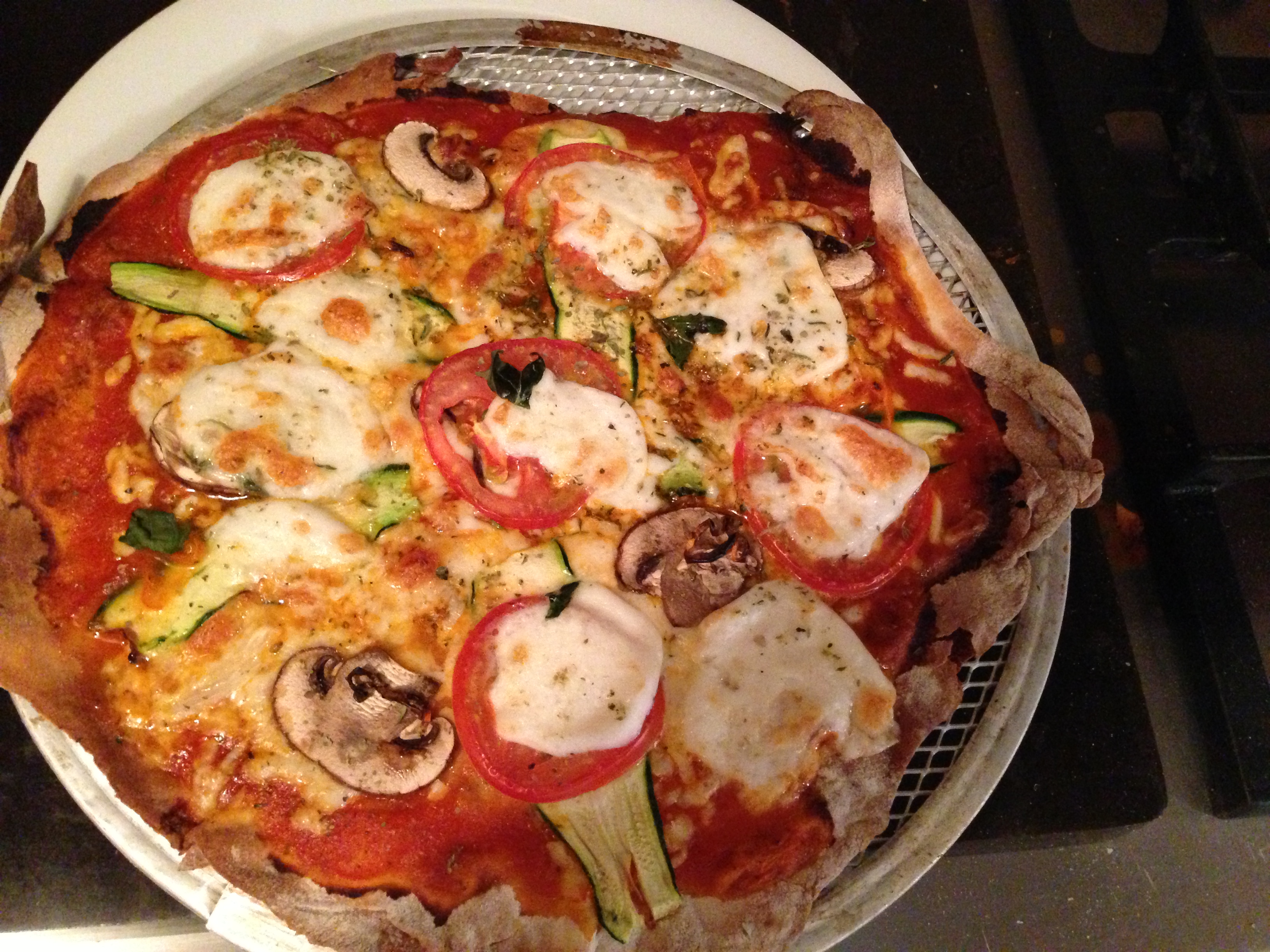

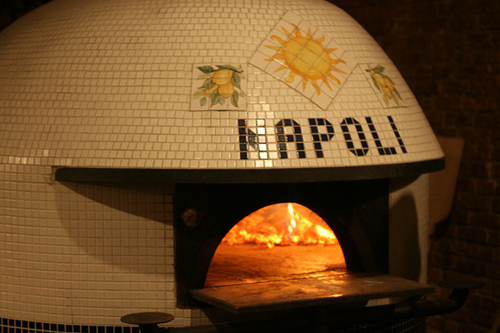 Legend attributes modern pizza to a baker from Naples Raffaele Esposito. In 1889, Esposito who owned a restaurant named: The Pizzeria di Pietro, baked what he called “pizza” especially for the visit of the Italian King Umberto I and his Queen Margherita. Of the three different pizzas he created, the Queen
  preferred the pie with the colors of the Italian flag: red (tomato), green (basil), and white (mozzarella).The legend continues that this kind of pizza was then
  named after the Queen: Pizza Margherita. This legend as all legends go, is a nice story with no real references and remains a pretty Urban Tale.
Modern pizza originated in Italy as Neapolitan flatbread. Since most Neapolitans could only afford inexpensive food, flatbreads with various toppings: Pizza, became popular and was eaten for any meal and sold on every street corner. Early pizzas consumed by Naples’ poor, featured the tasty garnishes, such as tomatoes, cheese, oil, anchovies garlic and local herbs mainly Oregano and Basil.
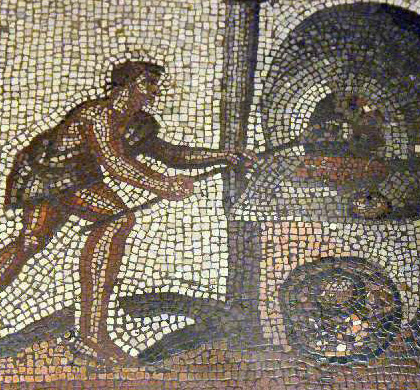 Some say the word pizza from the Latin verb Pìnsere, to press, or Greek in origin from the Greek pēktos, (meaning “solid” or “clotted”), The ancient Greeks covered their bread with oils, herbs and cheese. The Romans developed placenta, a sheet of dough topped with cheese and honey and flavored with bay leaves. In Byzantine Greek, the word was spelled πίτα, pita, meaning pie. The word has also spread to Romanian as pită, Turkish as pide, Bulgarian, Croatian and Serbian called it pita, Albanian as pite and Modern Hebrew pittā.. (Wikipedia)
History of Pita, extends far into antiquity, all over the ancient world, flatbreads, leavened or not, are among the most ancient breads, requiring no oven or utensils to make. Pita or pita bread is as you know a round pocket bread widely consumed throughout the Middle Eastern countries, in Cyprus, even the Balkans, North Africa, the Levant, Iran, Armenia, Turkey, and parts of the India as chapatti or Naan. The “pocket” in pita bread is created by steam, which puffs up the dough. As the bread cools and flattens, a pocket is left in the middle. But flattened dough of varying thicknesses baked in ovens, Tandoors or tanoors with various toppings exist in most culinary cultures around the world.
 Armenian spicy meat pies called Lahmajoon and are made sold in all Armenian streets, the dough at the base is almost paper-thin (similar to a Mexican flour tortilla) and tender with crisp edges; rolled up in a piece of paper served fresh out of the oven, it is basically an Armenian “personal pizza” with very thin crust and a spiced ground lamb and pine kernels topping. Same as the Armenian LAHMAJOON are the Turkish LAHMACUN, or Arab Lahmajoon لحم بعجي, lahm bi’ajīn “meat with dough sold and eaten all over the middle east countries. It is again, a round, thin piece of baked dough topped with fried minced meat (most commonly lamb) and diced vegetables onions, tomatoes and parsley and herbs including, Lahm Bi’ajīn is often served sprinkled with roasted pine kernels.To name just a few non Italian still same part of the world / Mediterranean examples. Pizza like dishes were eaten by many peoples in the Mediterranean including the ancient Greeks and Egyptians.
 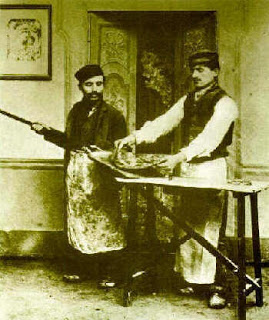 Pizza is considered a peasant’s meal in Italy for centuries. Still each person rich or poor has his own preferences and will visit regularly his “Local” favorite Pizza place which obviously serves “THE BEST PIZZA“. They will all agree that the most important features of Pizza are the touch of the baked dough, and the quality and taste of the sauce.
My preference for home baking is the Basic Pizza recipe by Antonio Carluccio from the book Complete Italian Food, what a wonderful cookbook, a version of which could be found in: http://www.antonio-carluccio.com/pizza
Makes 4 x 28cm (11 inch) pizzas (I make them thinner and slightly larger making 5-6 pizzas:
 220 ml warm water
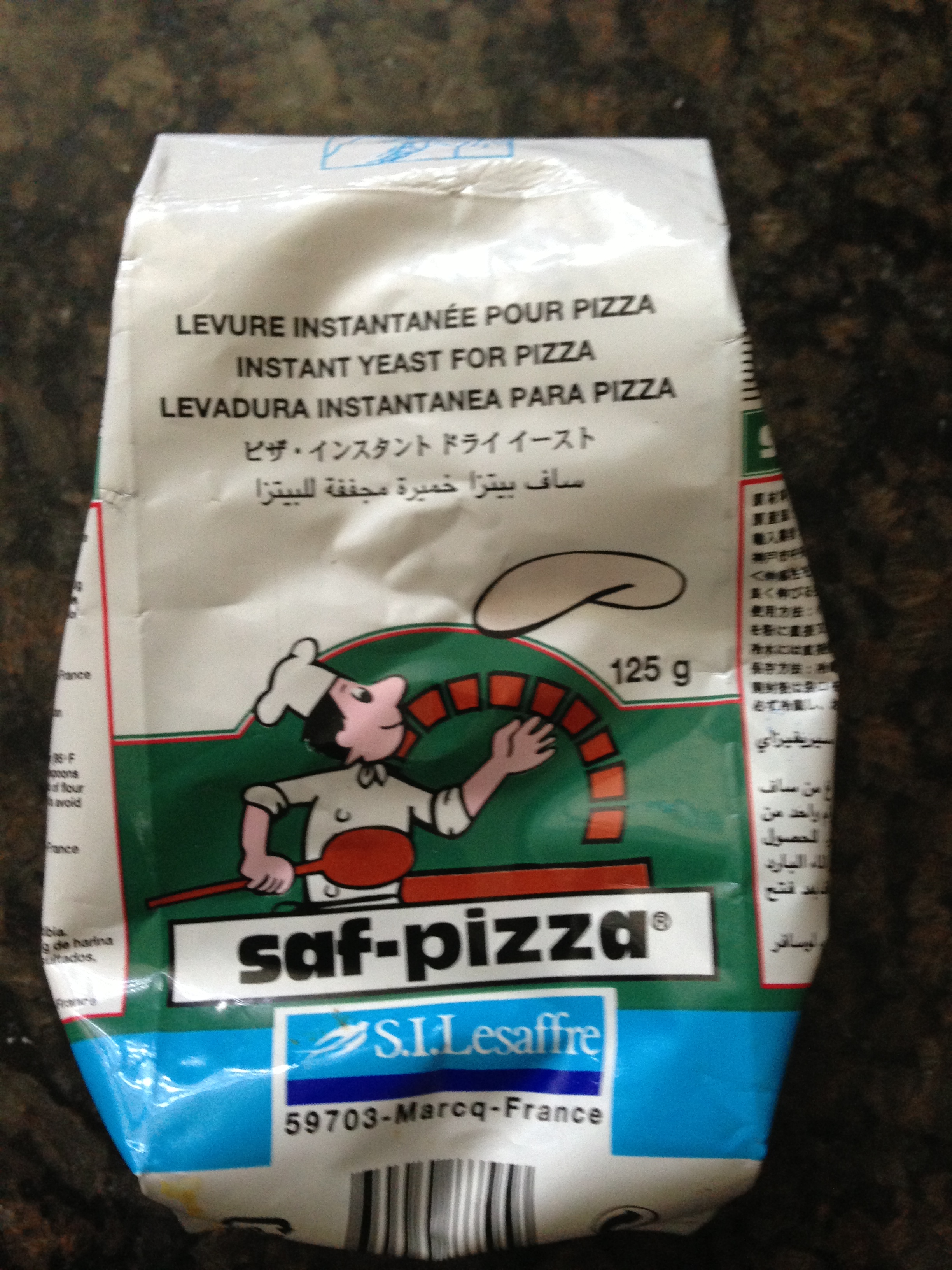
30g fresh yeast or the dried equivalent, (quantity of dried yeast: see the maker’s instructions per amount of flour)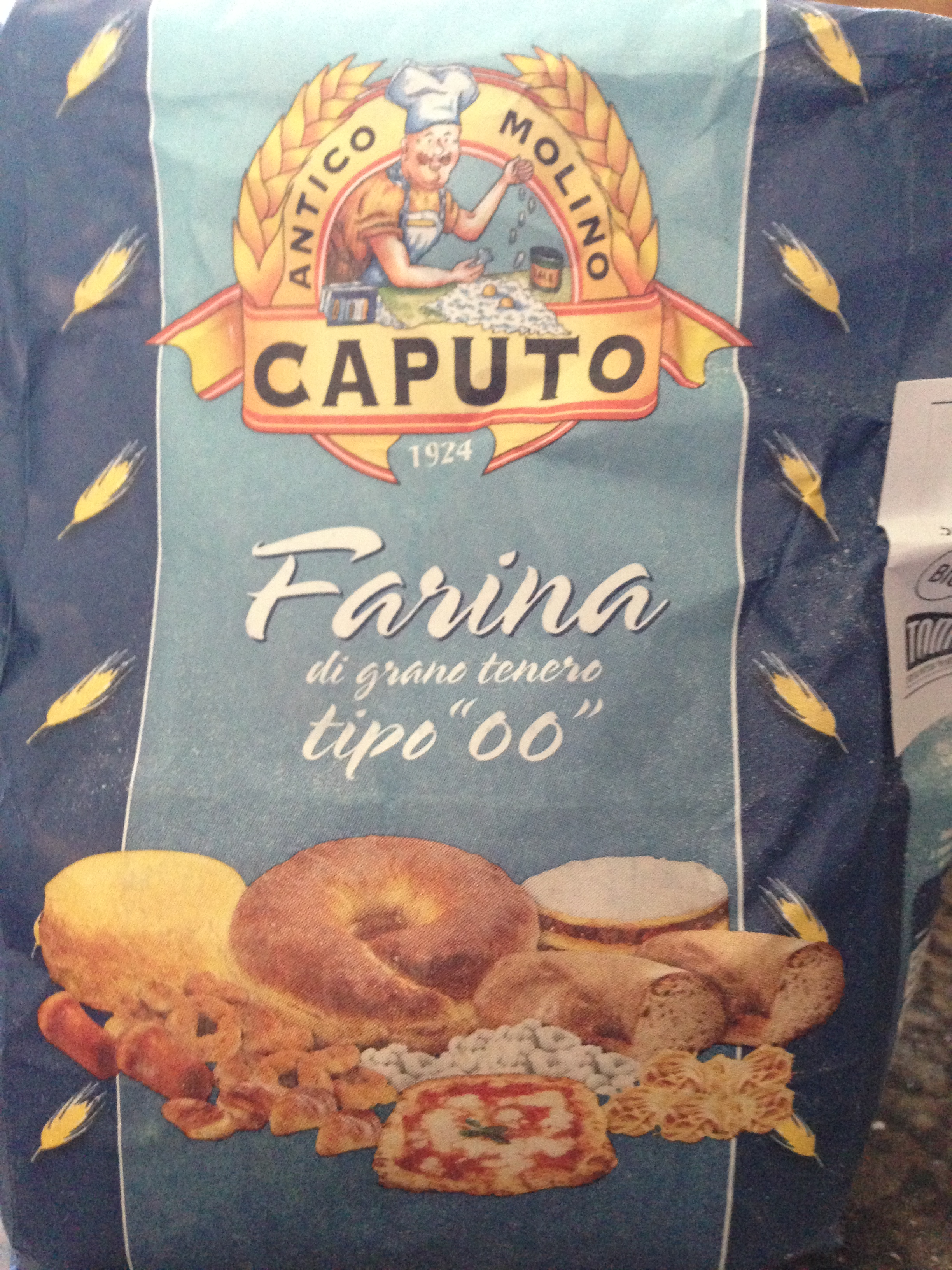
1 tsp Sugar
A pinch of salt
3 tbsp olive oil, plus extra for greasing
500g ’00’ flour (Doppio zero), plus extra for dusting
1 tbsp dried Oregano (Only if you want some oregano smell in the dough)
Dissolve the yeast in the warm water to which you have added the sugar Leave to froth, about 10 minutes. Pour the flour and salt into a mound on a clean work surface and make a hole in the centre of it (or use a mixer with the dough hook). Add the yeast mixture and olive oil drop by drop into the centre of the flour, mixing with your hands until all the liquid is absorbed, forming large lumps. Knead the dough with your hands until it has a smooth texture, then roll it into a ball. “A good pizza depends on the quality of the dough used” (Antonio Carluccio and me).
Next, sprinkle some extra flour into a large bowl, and place the dough in it, spreading a little oil over the top to prevent a crust forming. Cover the bowl with a dry linen cloth and leave to rise for an hour in a warm place – not less than 20 C/ 68 F. (“It was at this stage that my grandmother used to ‘bless’ the dough by making the sign of the cross in order that it should turn out well” Antonio Carluccio) I guess she was giving thanks to St. Honoré, the patron saint of bakers and pastry chefs. After this time the dough should have increased in volume by about three times.
A homemade pizza should have it’s personal signature just like any professional Pizzeria or “favorite pizza place”, my Pizza sauce is this signature. I am sure you can find or concoct any good old tomato based pizza sauce mine has a twist enhancing the wonderfull fragrance of the sauce and not relaying solely on the quality of herbs (Oregano, Basil etc.)
Bell Peppers Pizza Sauce:
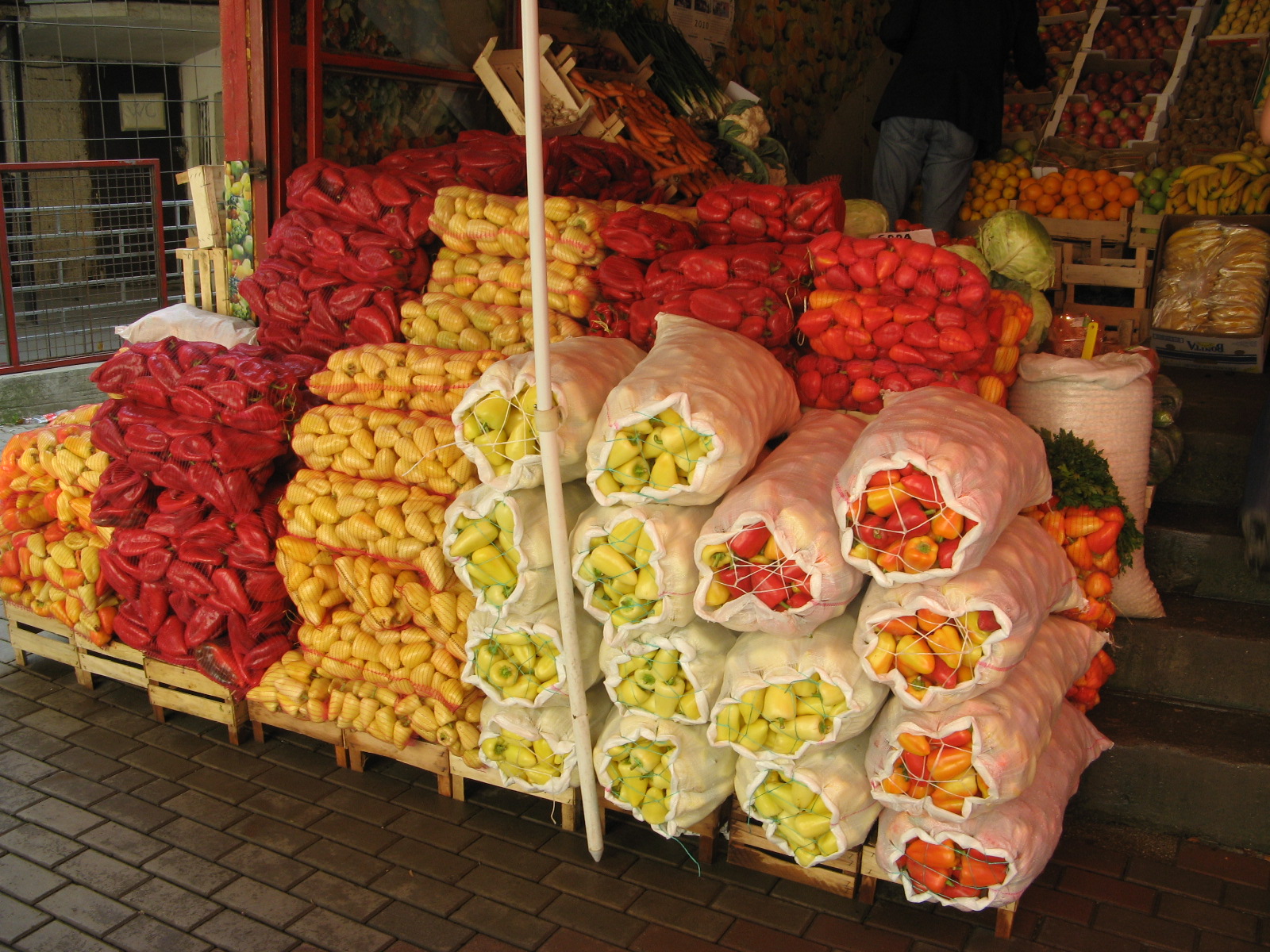 This is an easy sauce to prepare. Use only Red, Orange and Yellow Bell peppers, the specific scent of Orange peppers is the key.
Olive oil to line a good size pot
2 Onions cut roughly (quarters)
6-8 large Red, Yellow, Orange bell peppers (cleaned and cut to 3-4 cm squares)
2 garlic clove, chopped
Half of red chilly (or less if too hot) 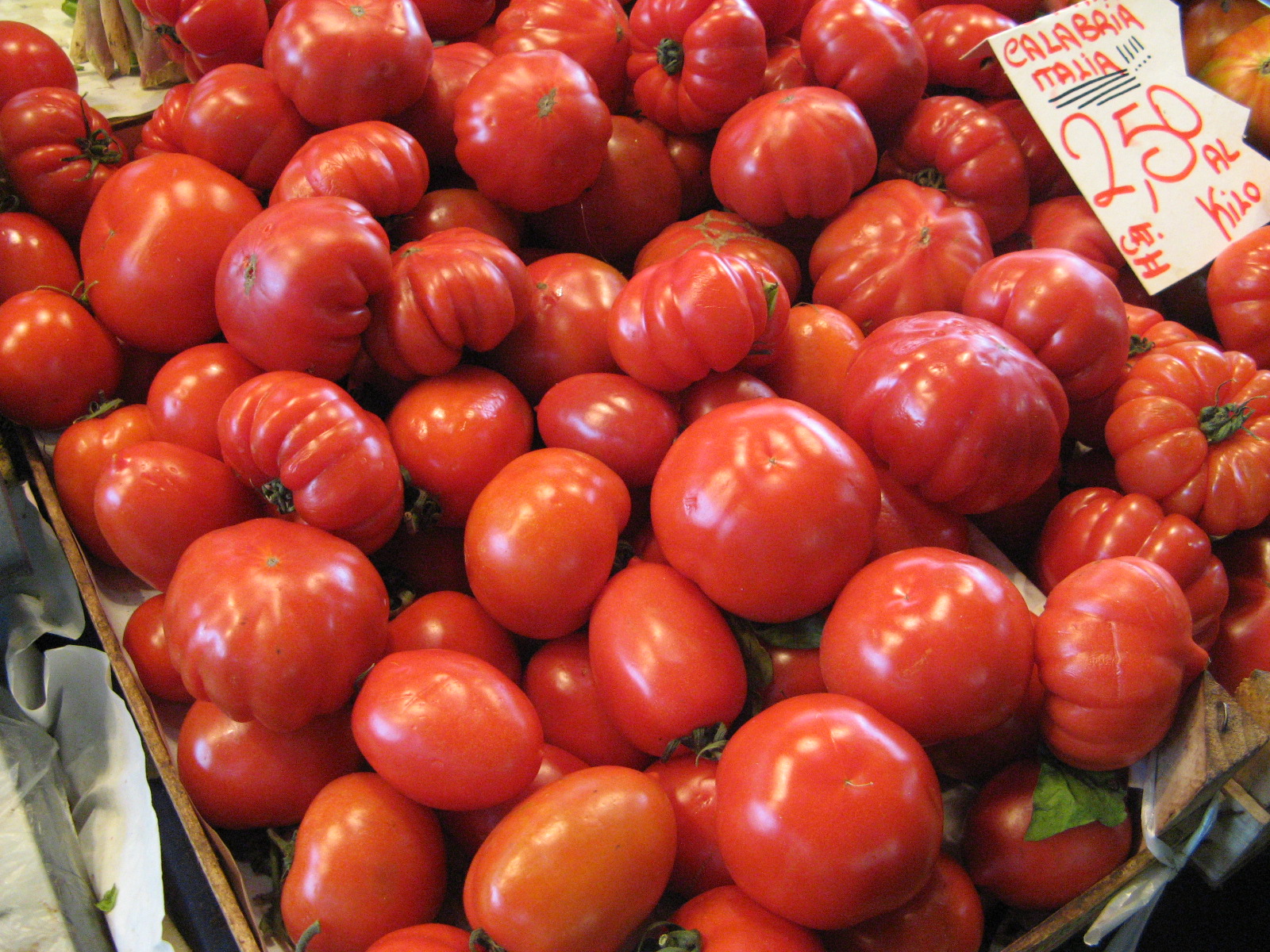
4 ripe plum tomatoes, skinned and halved, or half a can peeled plum tomatoes, chopped in the can, or polpa di pomodoro.
Half glass of wine (white or red)
6-8 stalks of fresh Thyme
10 stalks of fresh Oregano
1 Bay leaf
2 tsp dried quality oregano (I use dried Sicilian Oregano for best quality and strength of smell)
Salt and pepper to taste
For the sauce, heat the oil in a pan, fry the Onions constantly stirring, until lightly browned, you want to get the sweetness out of the onions than add the Bell peppers increase the heat and try to lightly scorch (not burn) their skins, than add the garlic for just a few seconds and then add the tomatoes make sure you have enough but not too much liquid, (eventually after sieving the sauce, you want to achieve a thick sauce). Simmer the sauce, add the green herbs, season with salt and pepper (taste from time to time to adjust seasoning to your taste), keep stirring from time to time, for 15-20 minutes depending on the amount of liquid you need to “loose”
 Once ready take off the heat and let it cool down, in the meantime you can dig out the green herbs by their stalks but this is up to you. I Blitz everything in a food processor
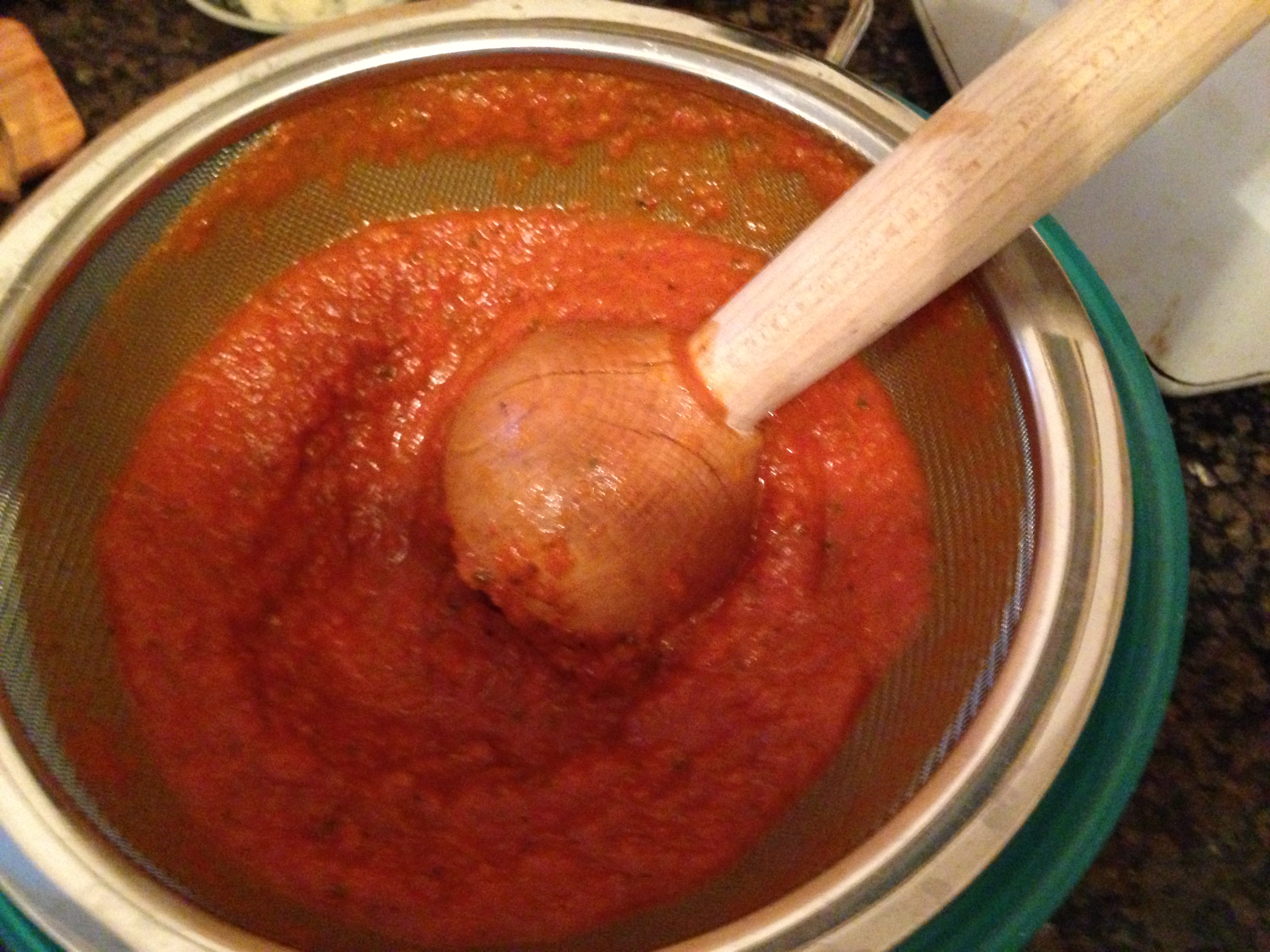 (solids first to achieve smooth paste than add remaining liquids to receive the sauce, strain well and hard in a fine sieve and a wooden ball a bit at a time and discard of all the “solids remains”. Collect the strained sauce in a bowl and keep aside. Prepare a “Mise en place” of all the ingredients you require to make youe pizza toppings

1. The sauce
2. 250 grms of low-moisture mozzarella
2-3 large balls of Mozzarella di Bufala (buffalo mozzarella) sliced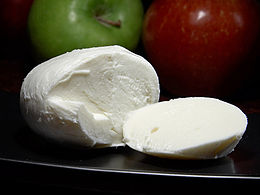
Fresh and dried Herbs: Oregano Basil, Thyme
Very thin slices of ripe tomato
Thin slices of zucchini (sliced with a potato peeler)
Thinly sliced mushrooms (Portobello or brown button)
Zucchini Flowers if in season (Fiori di zucca)
Ultra thin slices of garlic and chilly
Any other topping of your choice
Making the Pizza
Preheat oven to 230-240º C Gas mark 8-9
Divide the dough into four and form into pizzas. Grease each pizza 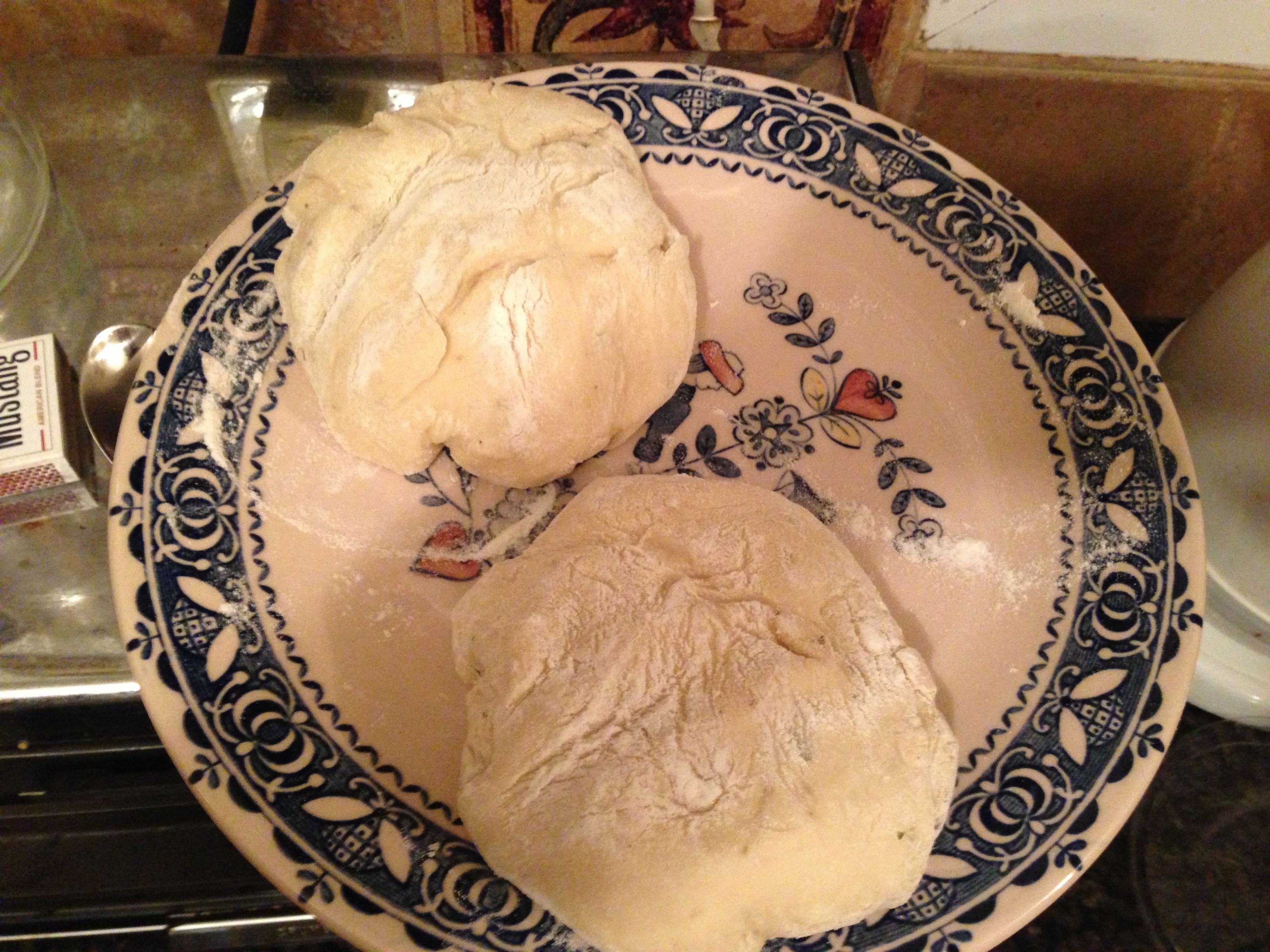 rolled dough with a brush dipped in oil, Place the dough circles on the round metal pizza mesh or on trays. and prebake the base for 1-2 minuts or intill light brown bubbles appear on the surface stay by the oven make sure they don’t burn! Take out of the oven (use gloves), spread on each circle of dough about two spoonfuls of the pizza sauce use the spoon/ladle to circles around to cover the dough. Sprinkle with grated low moisture mozzarella, than your toppings of choice. Spread around some discs of buffalo mozzarella (on top of each tomato slice, sprinkle over the fresh and dried herbs even some salt. Pour a sprinkle of olive oil over the top of each and place in the preheated oven for about 6-10 minutes depending on your oven, until you see the edges become a golden colour, and the buffalo mozzarella bubbling with brownish edges.
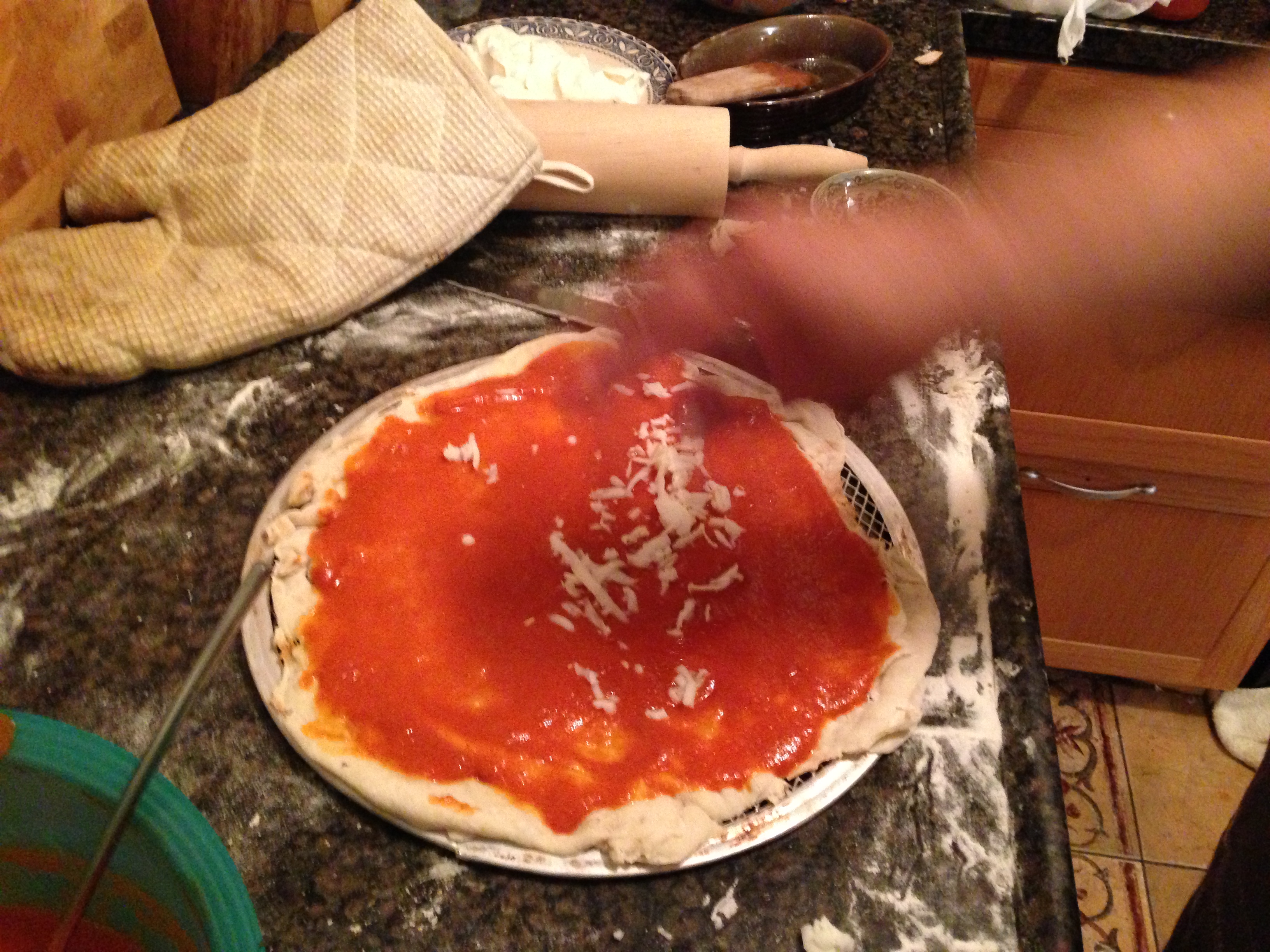
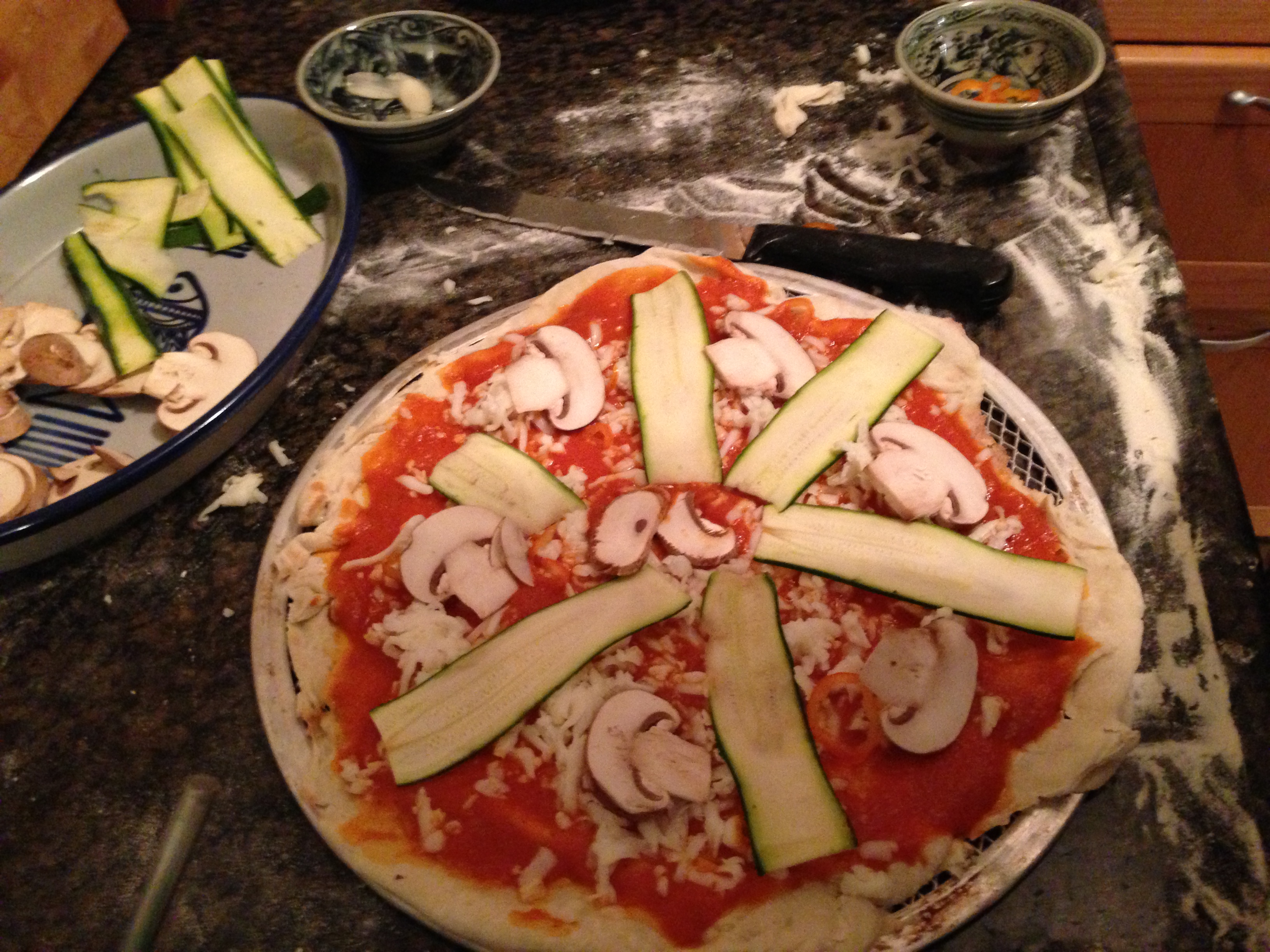
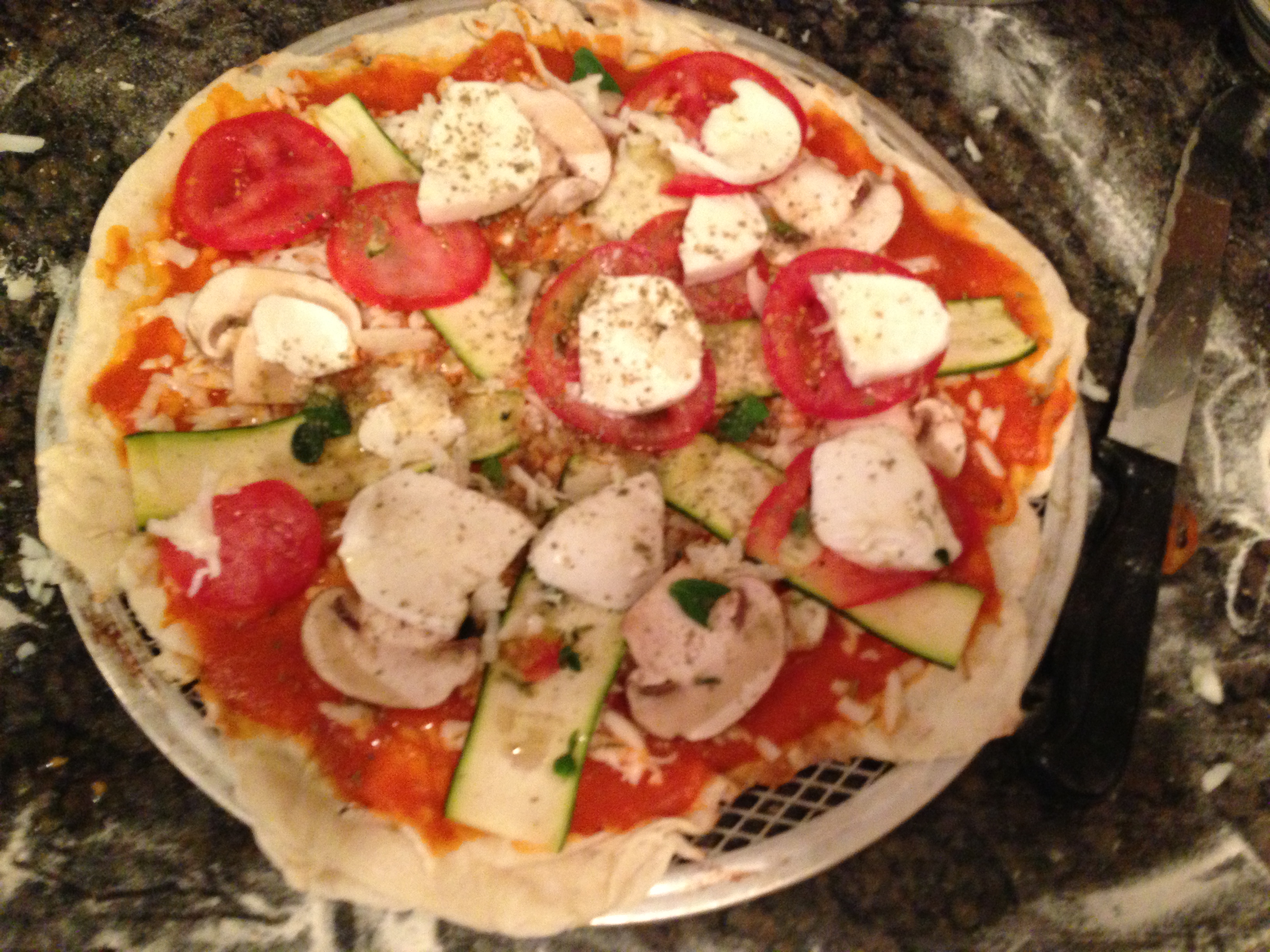
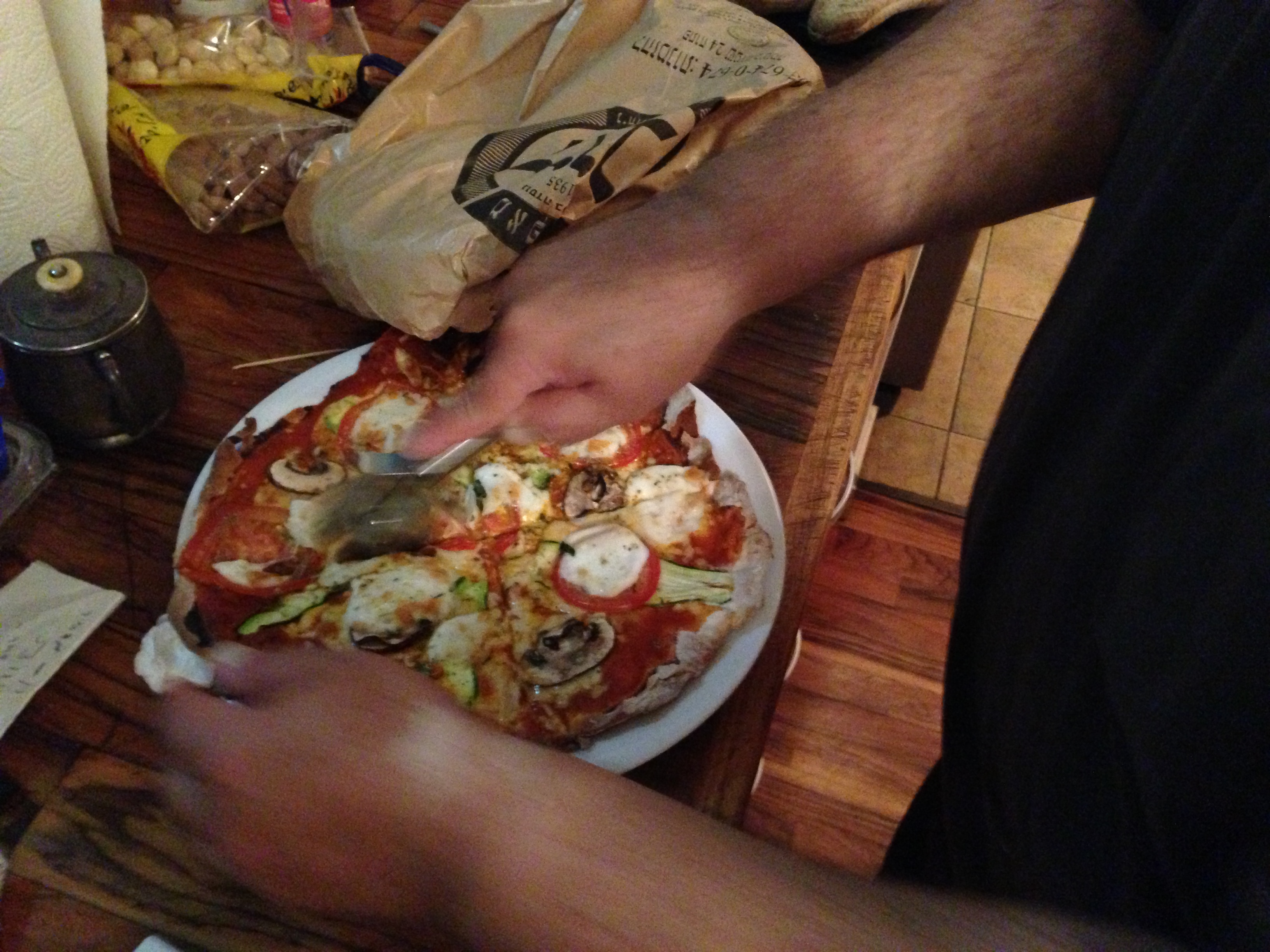 Cut pizza to 4-6 slices serve and make the next one while the first is consumed you can make 2 at a time but the bottom pizza will have to “move” to top oven shelve when the first one is ready
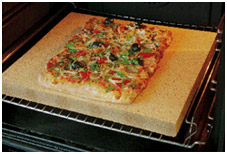 You can also use “Regular fireclay (Chamotte) brick for Pizza” This block of stone does not require the double baking method but good means to lay down the pizza on the fresh dough on the preheated block. Chamotte bricks for Pizza come in varying shapes for various temperatures, alternatively use the round pizza metal mesh (also in various sizes), both can be found in any cooking utensil shops.
Chamotte is not a natural stone it is an artificial stone made from various ceramic materials with high heat resistance, forming a heat resistance surface that is suitable for baking, even heat spread adding crunchiness to the Pizza crust.
The most popular cheeses to use on pizza are mozzarella, provolone, and parmesan. Romano and Ricotta are often used as toppings mainly in white pizzas (no tomato/pepper sauce used)
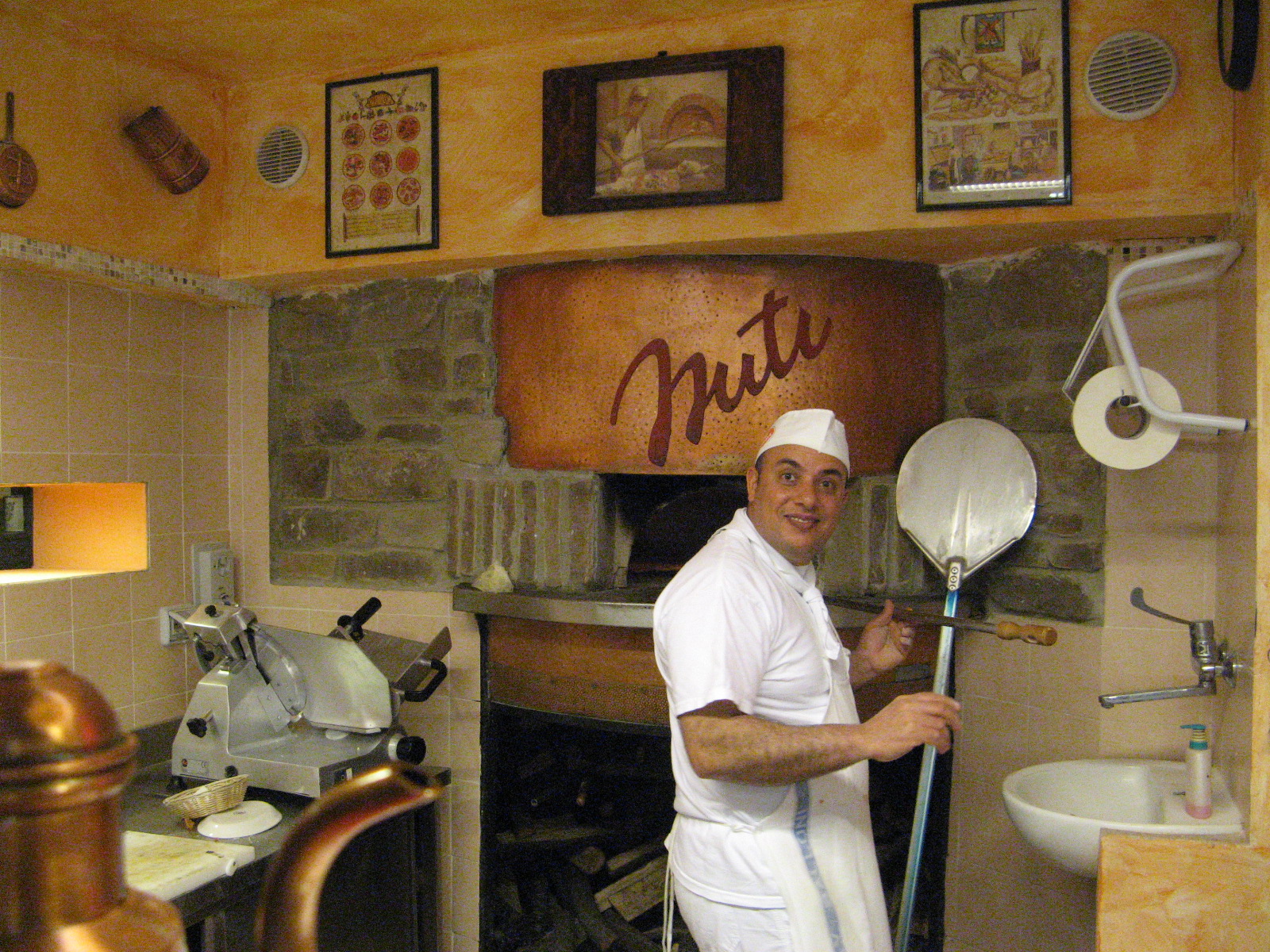 My first excellent Pizza baked in a wood oven was Nuti in Firenze (Florence) in the early 1970’s, The owner has changed since but the Pizza oven (the main asset of the Pizzeria is still working well.
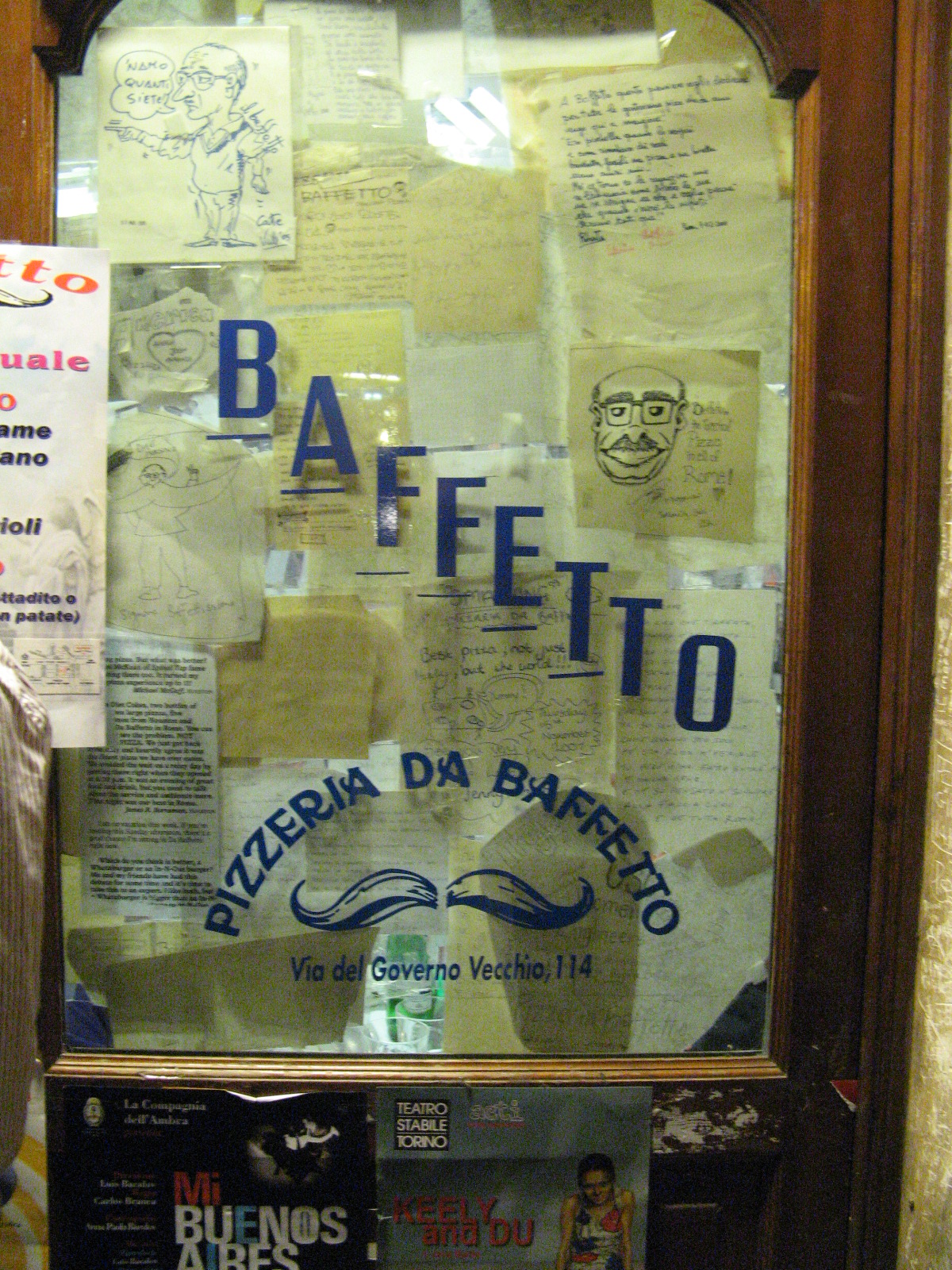 My Favorite Pizza is made in Pizzeria Da Baffetto in Via del Governo vecchio 114 Rome. The line of waiting locals and tourists alike speaks for itself and the Pizza is Perfect by all counts, until you have a chance to visit here are some photos to open your appetite. (press thumbnail to enlarge photos)
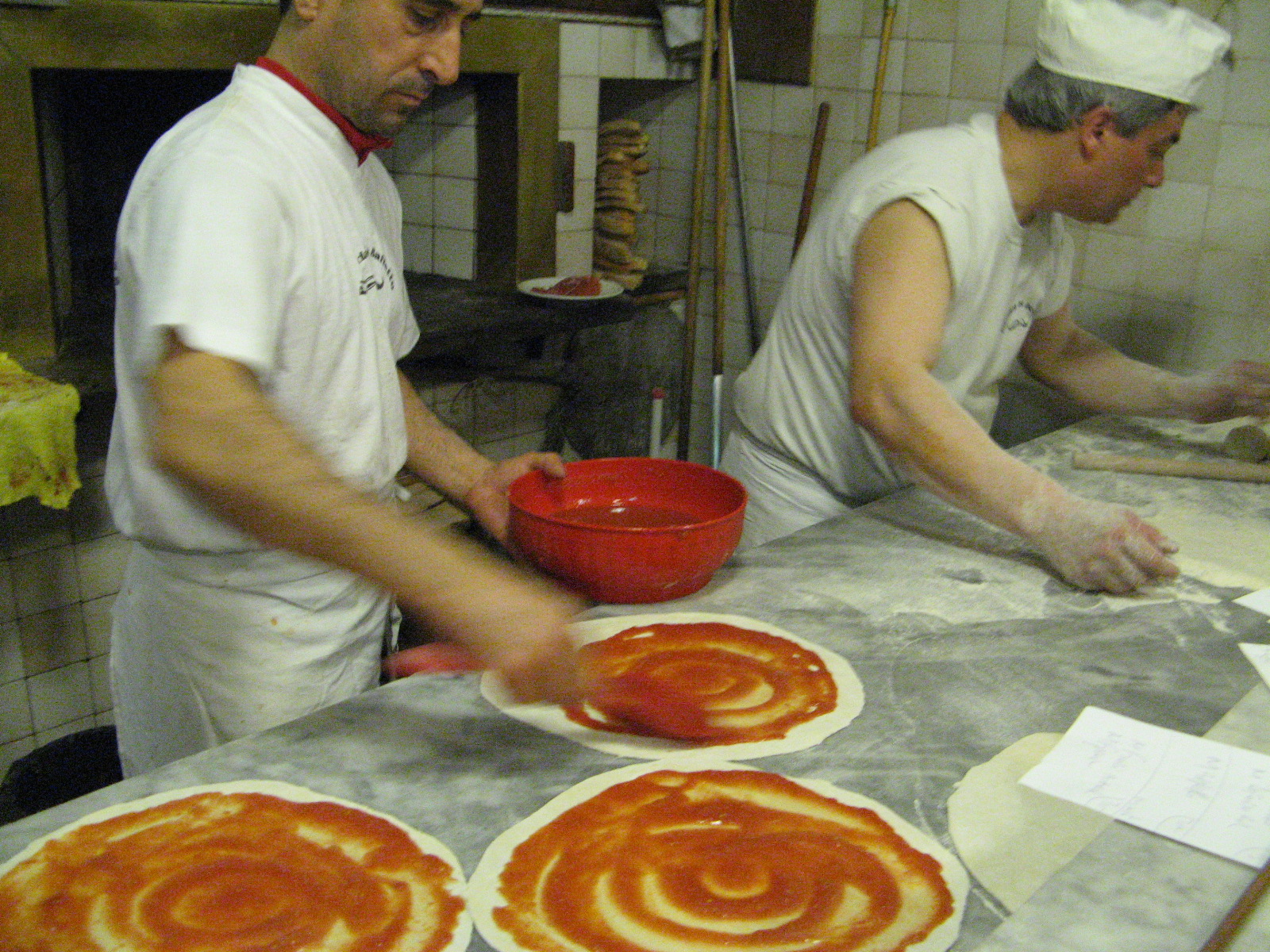
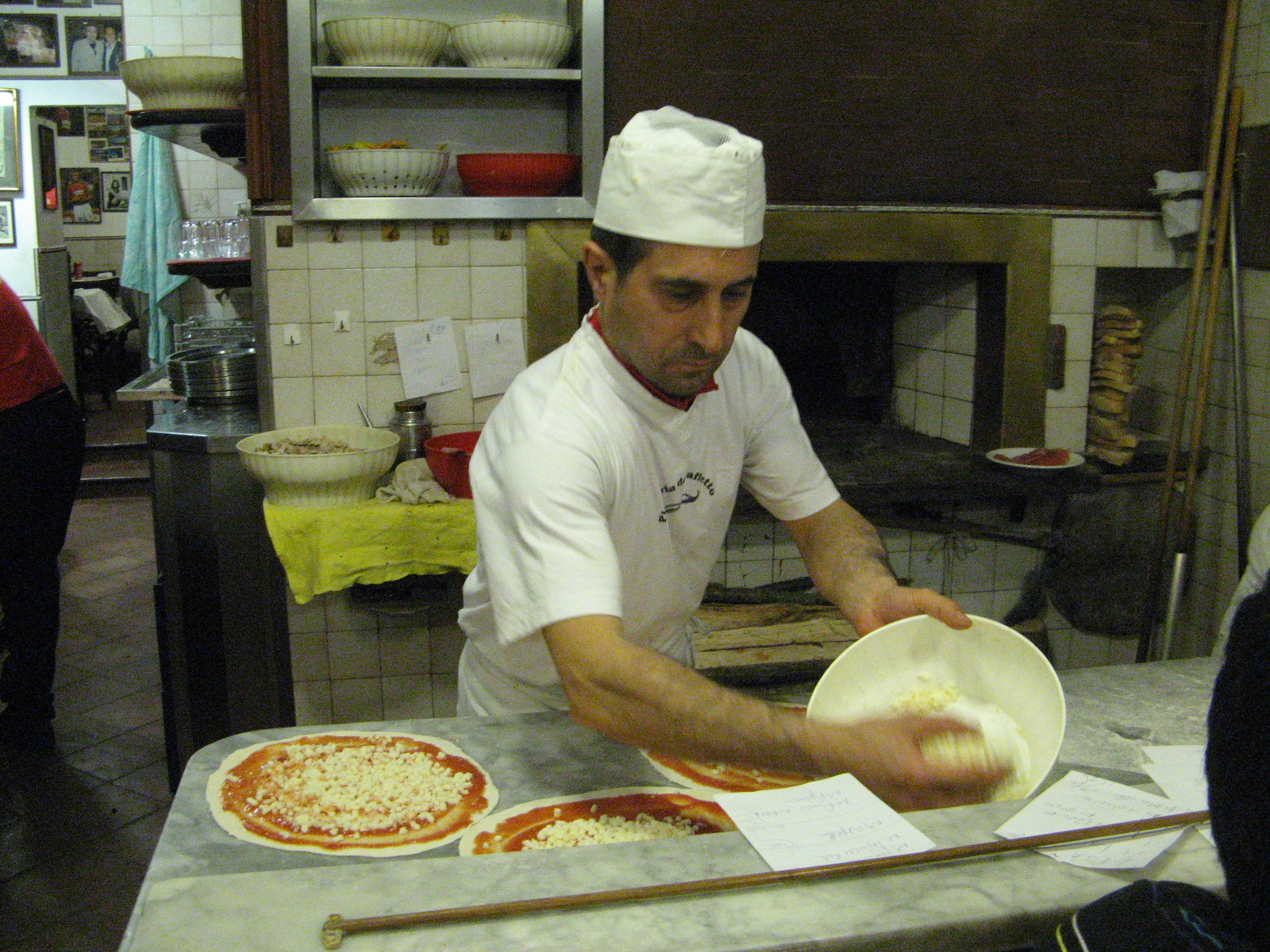

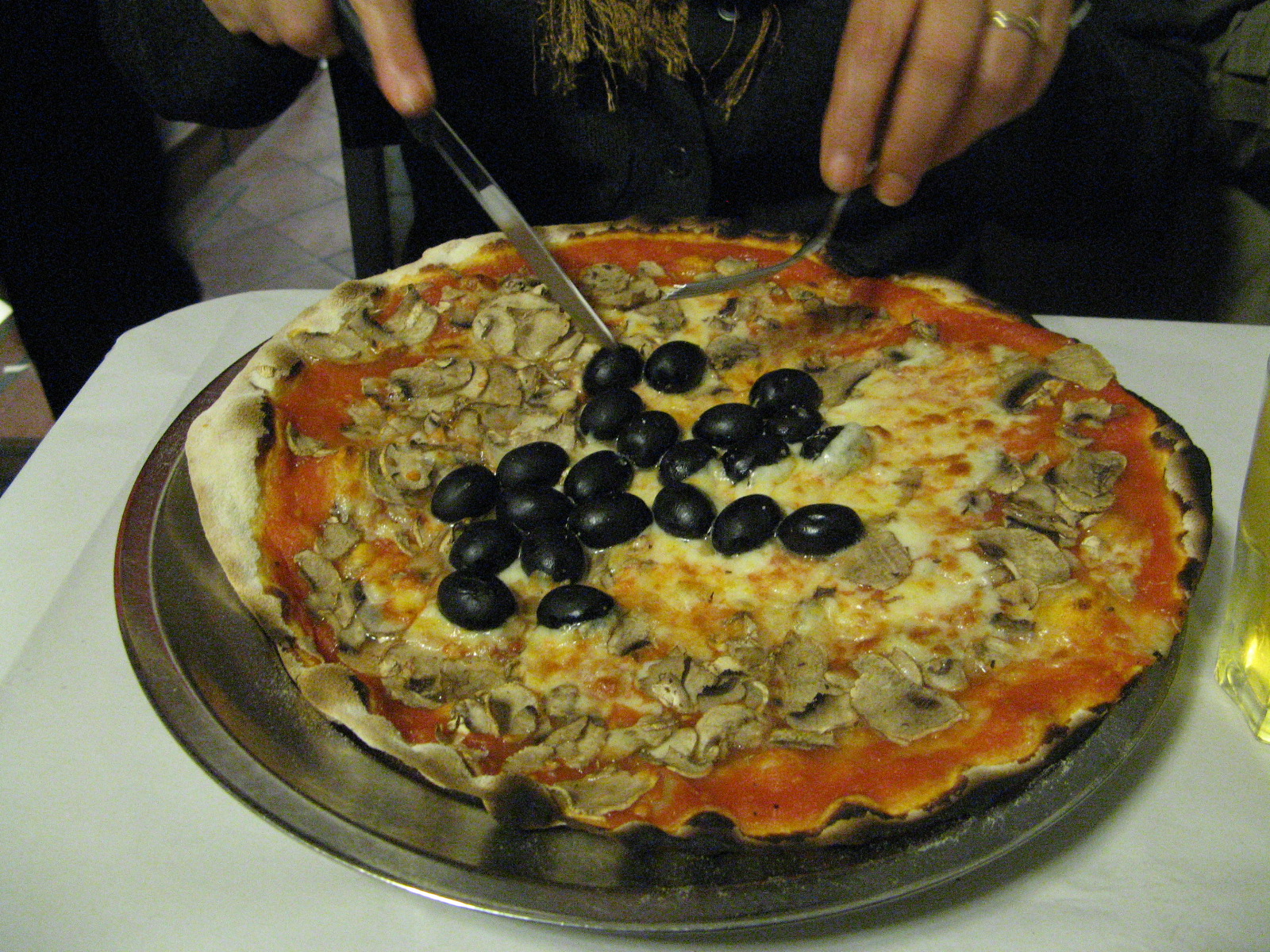
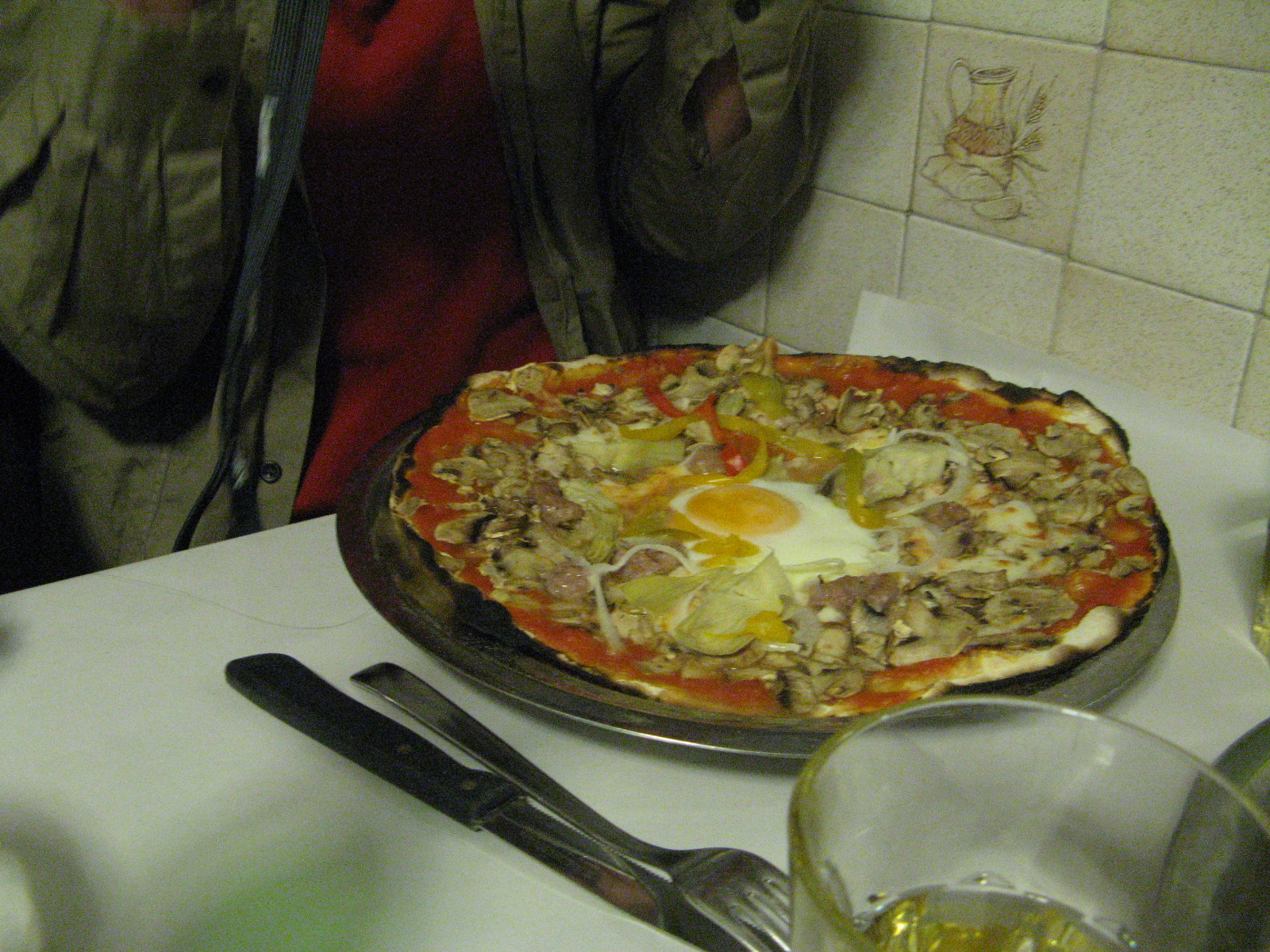
Regarding the notion of wine pairing for Pizza… you don’t have to stick to Italian wines if you prefer or have a different wine I am glad to say that Pizza goes with any wine red or white, just please after such an elaborated work do not drink plonk wine with OUR Pizza, (give it and yourself some proper respect)
As the Italians say: Buon Appetito
YOUR WINEGUIDE

A Birthday Party with the High Commissioner of Palestine.
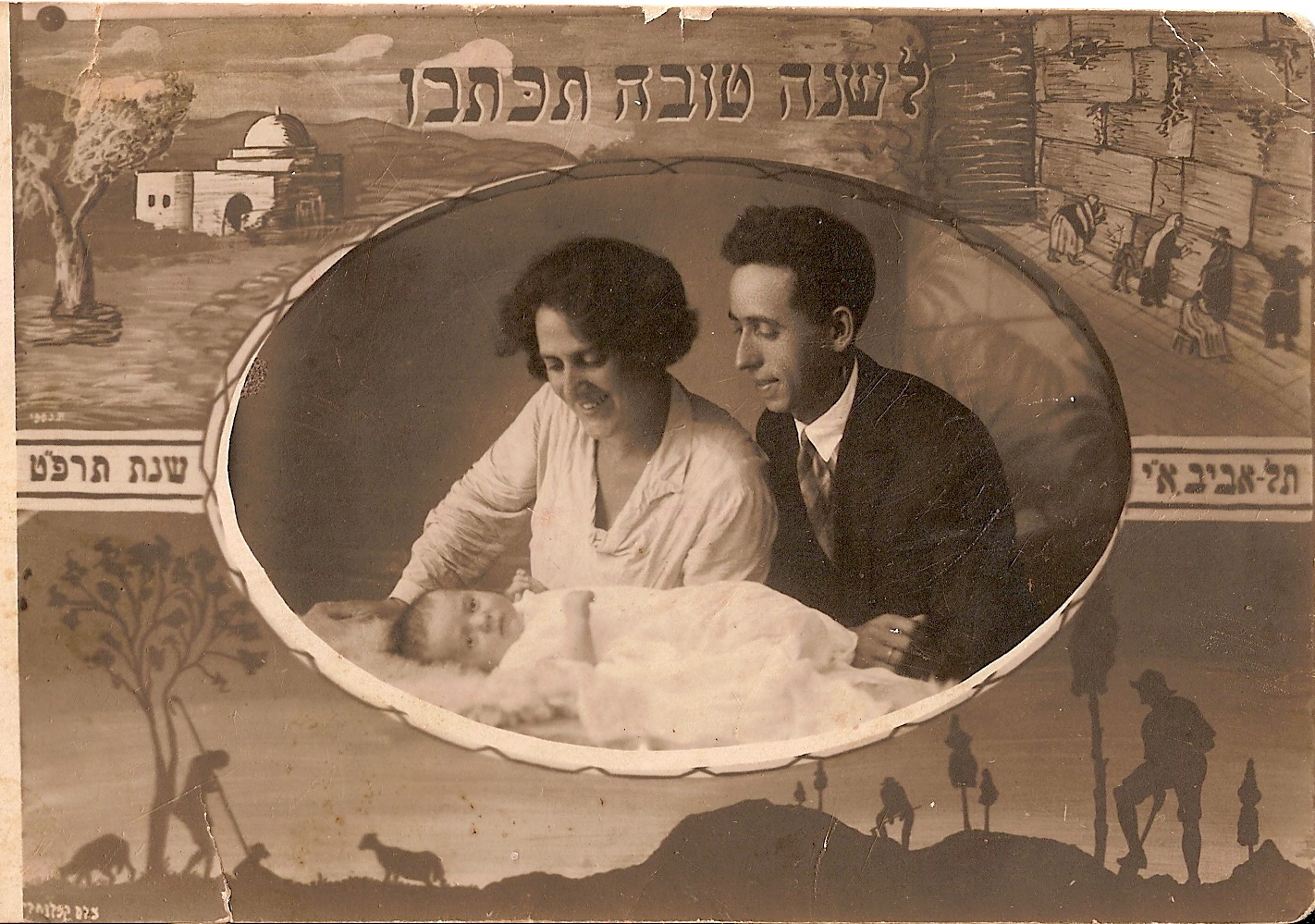 85 years ago (20/4/1928) my mum Aviva Sarnat, was born in Tel-Aviv, Palestine, to my Grandparents Esther and Meir Zagel, fresh new immigrants from Zamość, Poland, who had the sense to leave Poland (1924 or 1927) long before WW2 started. They did not leave in fear they left following their beliefs, arriving to a desert land with mainly sand (some camels to a city evolving in the dunes), no country of their own (just a “homeland” as promised by Lord Balfour).
 Zamość is a town in southeastern Poland in the south-western part of county Lublin. Zamość is a unique example of a Renaissance town in Central Europe, consistently designed and built in accordance with the Italian theories of the “ideal town” on the basis of a plan which was the result of perfect cooperation between the open-minded founder, Jan Zamoyski, and the outstanding architect, Bernardo Morando. The utopian concept of an Ideal City as described in Sir Thomas More book: Utopia, (as described in a previous post:https://wine4soul.com/2012/05/27/utopia-the-wines-of-isole-e-olena/ ) . Indeed they say Zamość is an outstanding example of an innovative approach to town planning, combining the functions of an urban ensemble, a residence, and a fortress in accordance with a consistently implemented Renaissance concept. The result of this is a stylistically homogeneous urban composition with a high level of architectural and landscape values. A real asset of this great construction was its creative enhancement with local artistic architectural achievements. (From http://whc.unesco.org/en/list/564 ).
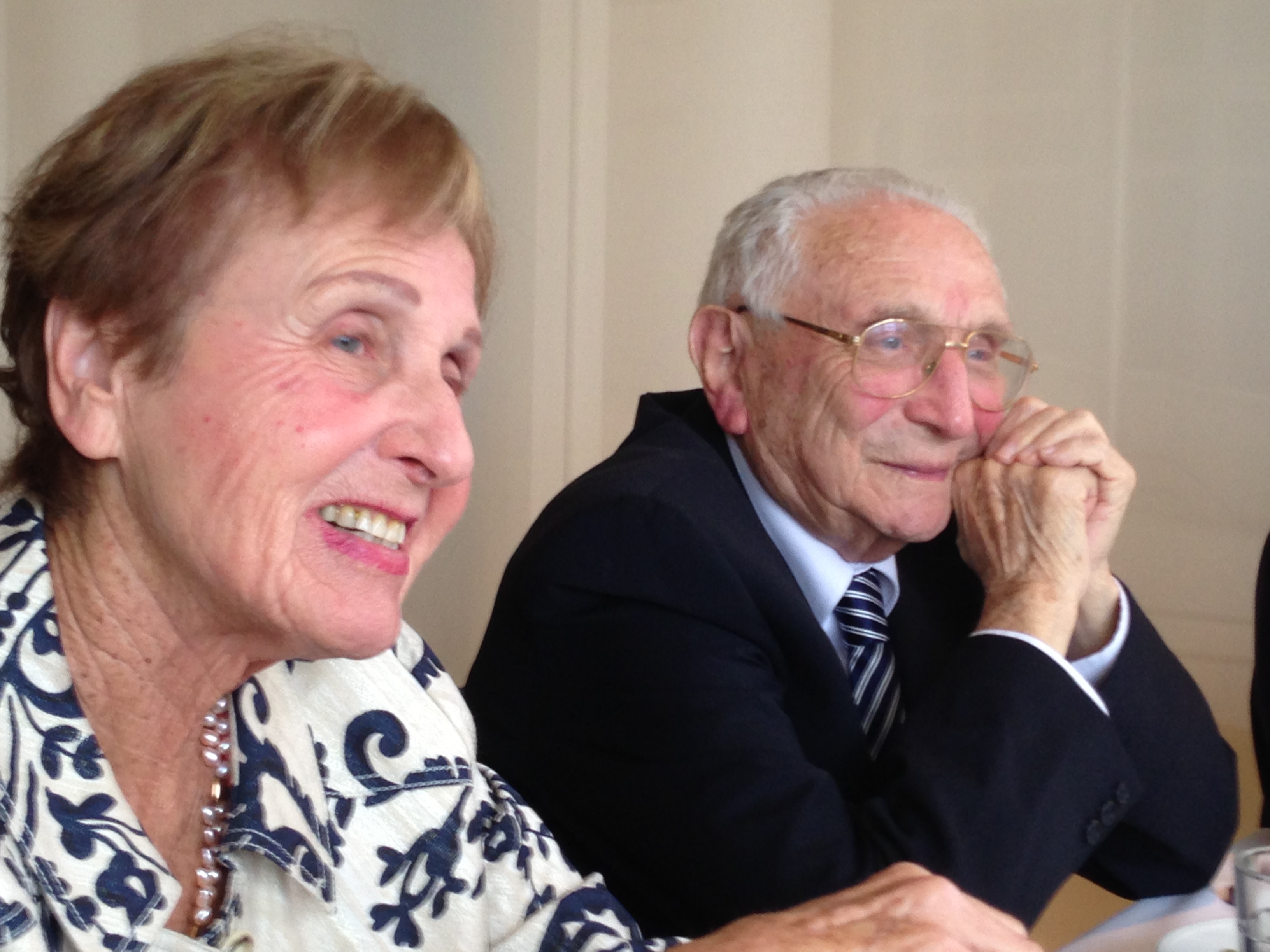
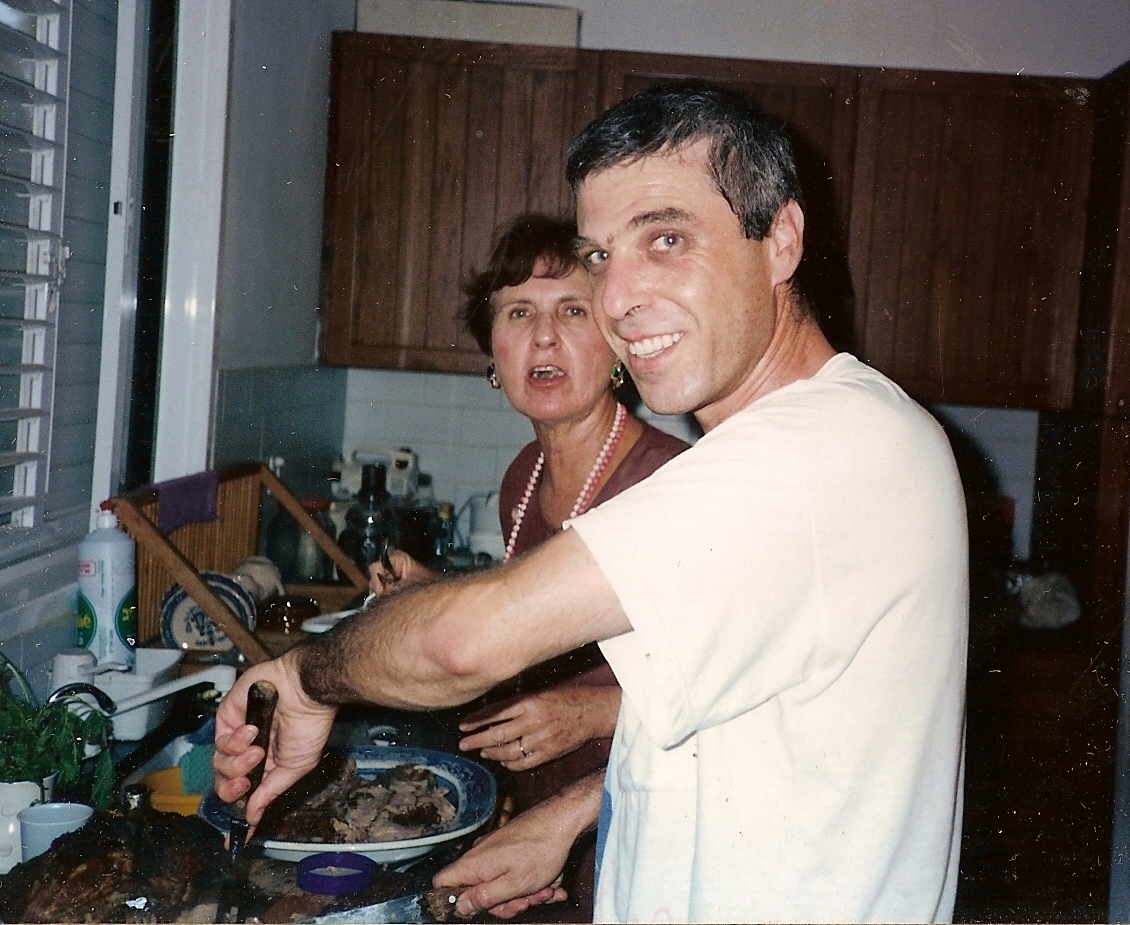 My mum and I, we go along together for 60 years now, amongst other qualities, she is a great cook and most of what I know food/cooking wise is derived from her approach to food and cooking, though we have different styles. I know I have learned a lot from her, now…for her 80th birthday we printed a cookbook from her dishes favoured by each and every member of the family (endorded by Chef Yonathan Roshfeld from one great chef to a great cook, and today, Saturday April 20th is her 85th Birthday.
We marked the occasion at a family favorite restaurant and one of the BEST in Tel-Aviv Herbert Samuel. 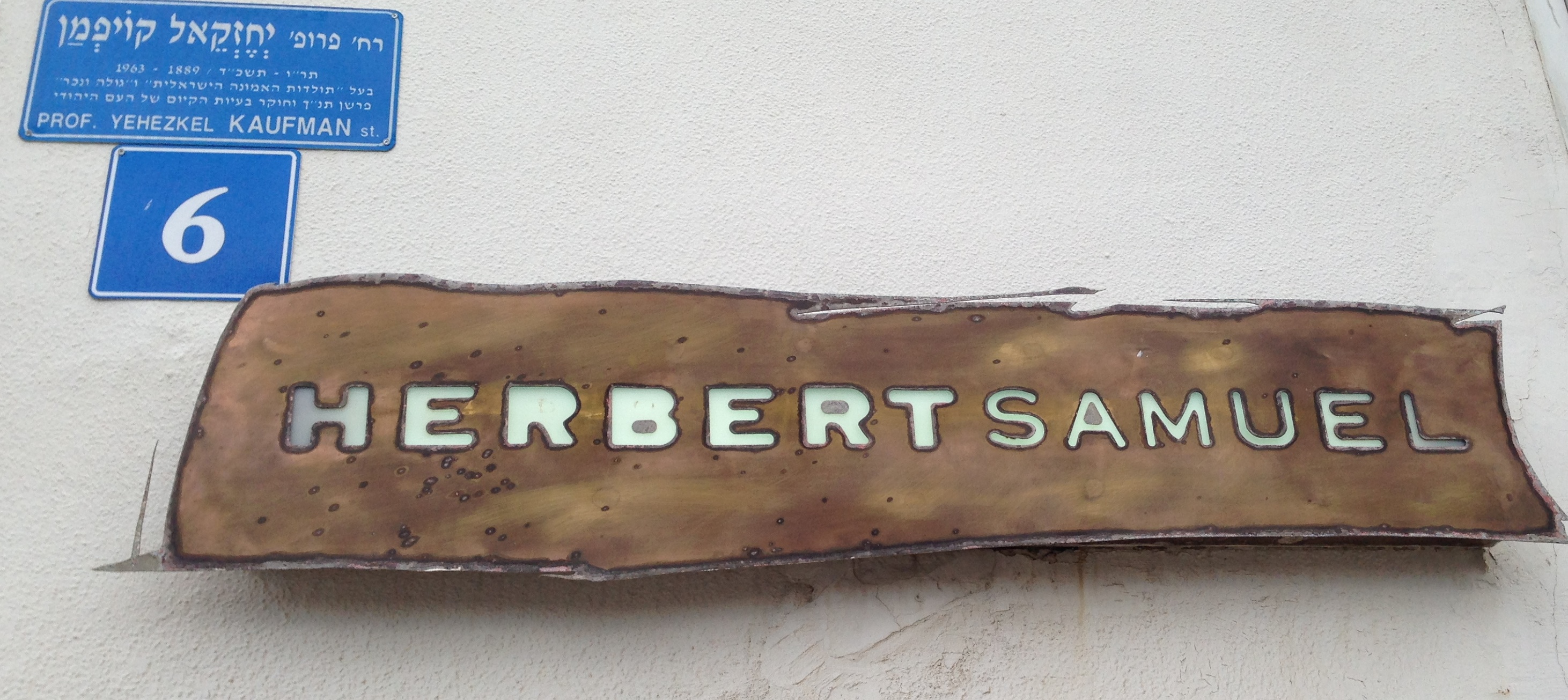

The 1st Viscount Herbert Samuel a British Diplomat and a Zionist Jew, was appointed to the position of High Commissioner of Palestine in 1920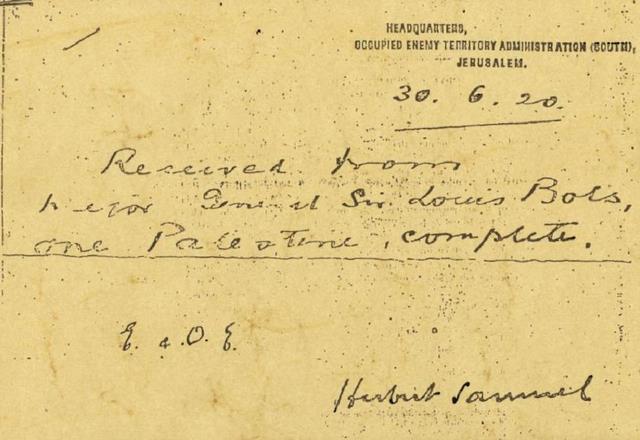 and served until 1925. He received the post from Sir Louis Bols of the “Occupied Enemy Territory Administration”. Who handed over Palestine to the First Civil High Commissioner, Herbert Samuel. In return, Samuel signed a “receipt” stating he had received “one Palestine, complete.”
 Chef Jonathan Roshfeld (Jon), cooked for us at our house several times once 9 years ago for my Father’s Arye Sarnat 80th Birthday, than about 6 years ago, just a few months before Herbert Samuel was opened with all the staff, chef, sous chef and all… eager to cook and no kitchen to cook in, they came to our house, (for Abi’s 22 Birthday but really, just a cause for celebration, we have a semi professional kitchen, and above average large ovens and powerful gas hobs, and they cooked the entire planned first menu of the restaurant, since than our family revisited the restaurant for special occasions and just ordinary everyday meal many a times, never disappointed may I add.
 Jon (Yonatan) and I go a very long time together since his days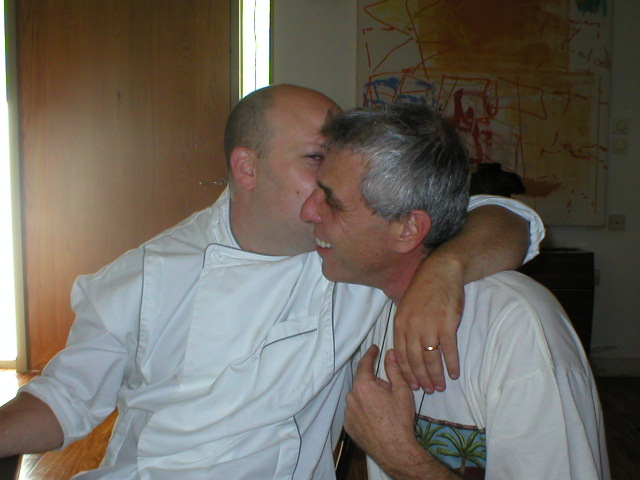
as a very young sous-chef at the “Golden Apple” (In the 80’s the only proper, food worthy restaurant, in Tel-Aviv). Our family connection with Herbert Samuel restaurant is, you can say from the “womb” (the days even before the restaurant was born), I guess you should take part in the photographic highlights of that pre Herbert meal, it seems such a long long time ago:




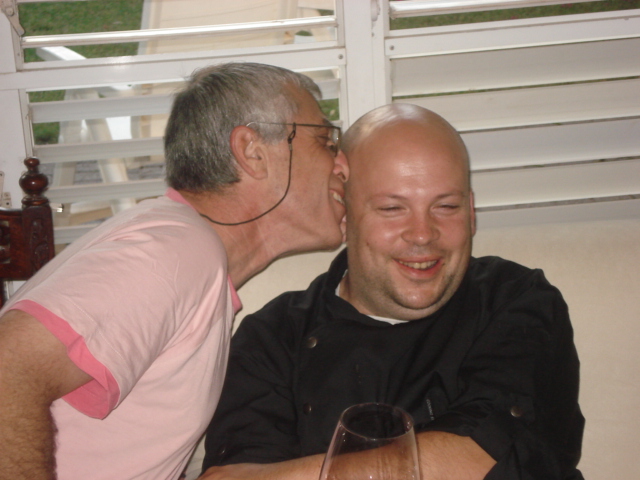

 For our present celebration, Jon surprised us all by actually coming on a Saturday to cook a special dish, not in the menu yet again, “JUST FOR US” (a touching gesture that did not pass by, unappreciated, by all present)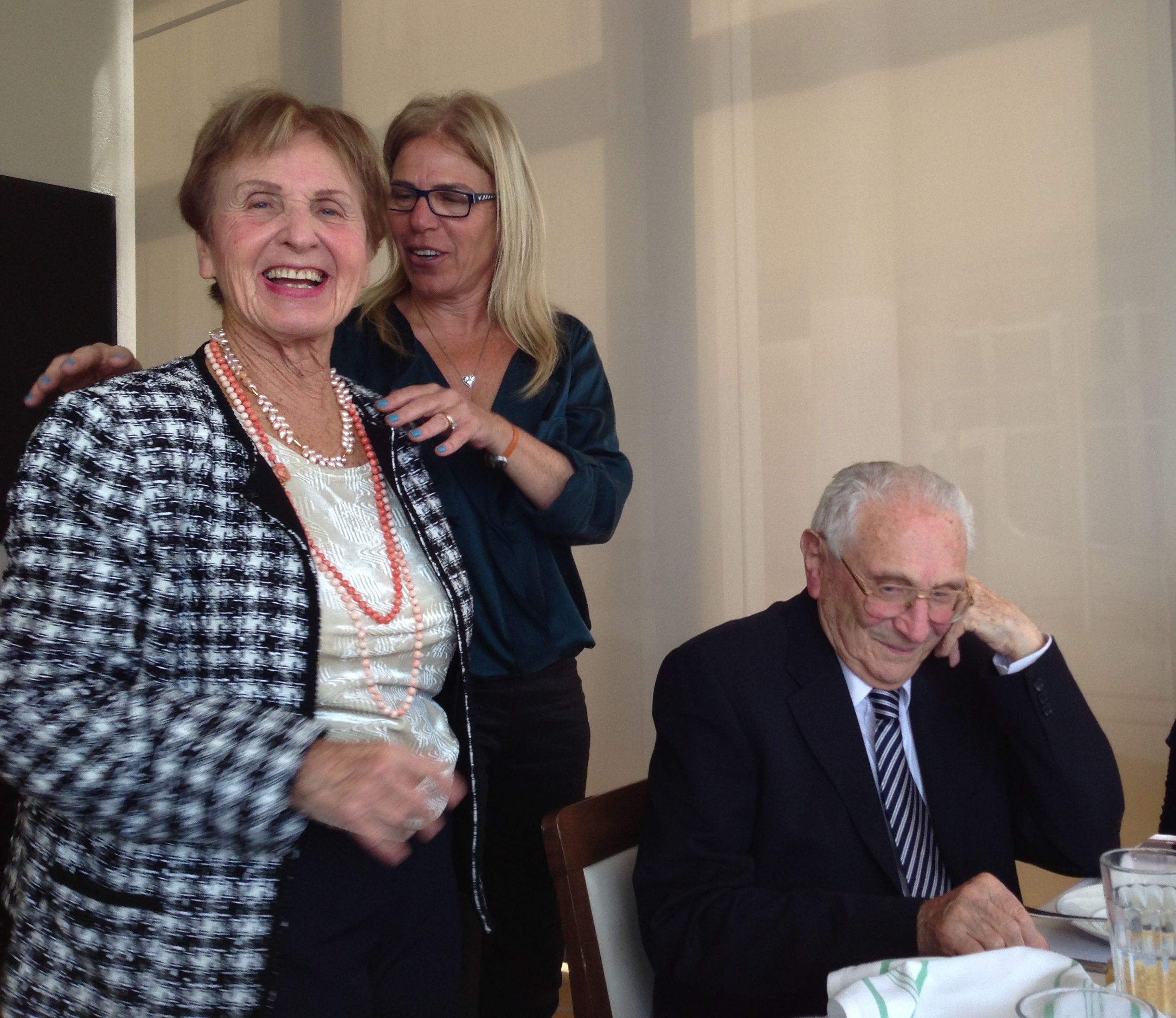
Everyone came fully prepared, some with some written words, some with wines: Moët & Chandon Rosé Champagne, Laurent Perrier Rosé Champagne and several bottles of my new find the 2010 – Simon Bize Bourgogne Blanc Les Champlains, we even had a present courtesy of my young sister Dana.
My I say that all dishes were prepared and presented to perfection, a right balance between traditional French taste and local products, For first course we had:
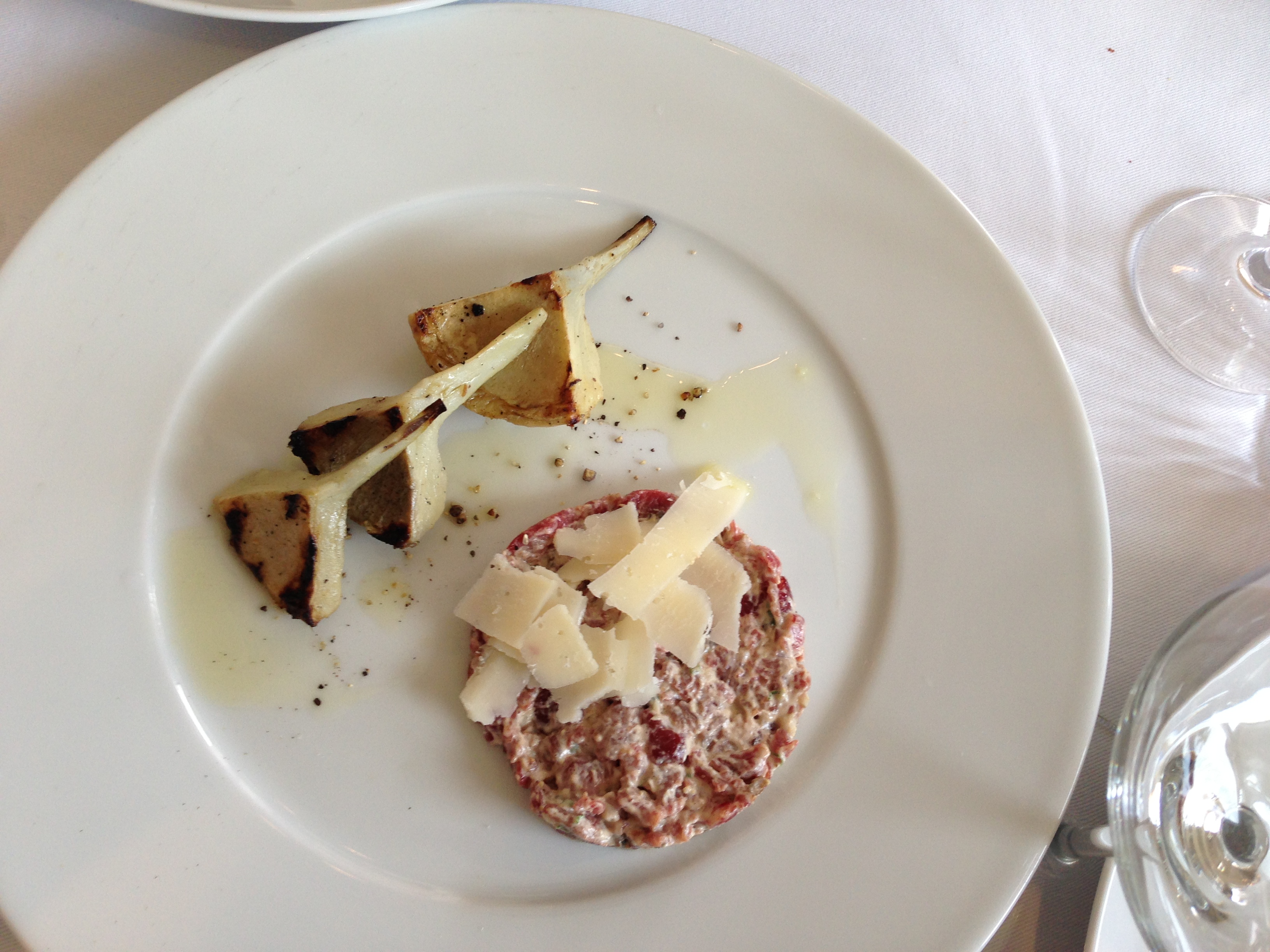 Fresh Beef Tartar (hand cut), Garlic cream and truffles.
A Perfect balance between the meat and the cream, without the garlic “raising its head “too strongly”, and a nice light chilly touch on the finish, roasted Artichoke hearts and shaved parmesan cheese on top refreshing “twist” on the traditional recipe.
Shrimps Taj Mahal
Fresh shrimps a la plancha, lying on a base of ringed “Avocado salad”. soaked in light lassi cream (yoghurt lightly spiced with curry and chili powder, chillies and lemon grass sugar syrup), domed by juliennes of beetroot giving it a Raja feel and look, but mainly tasty and alluring (for the next bite).
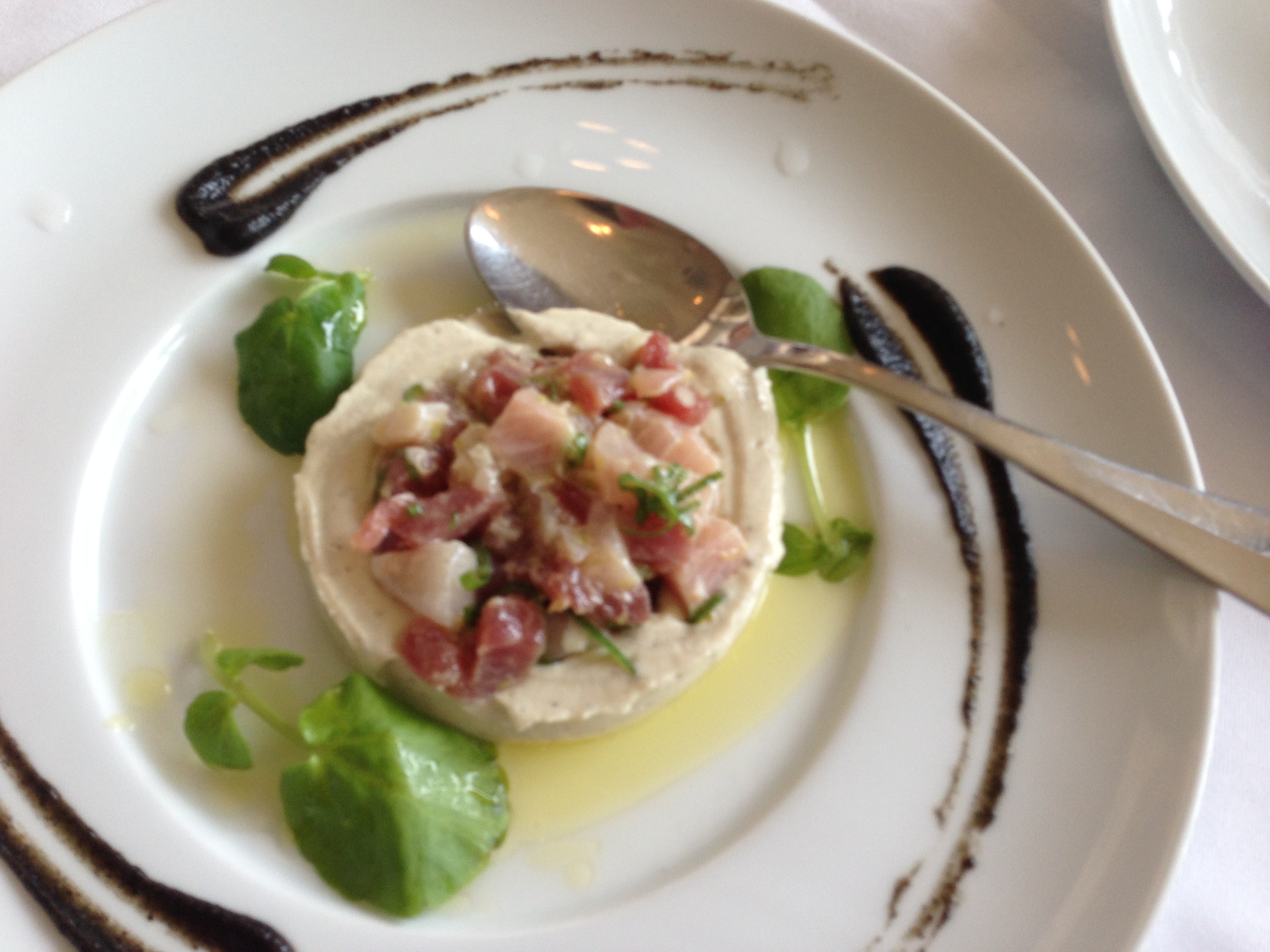 Fresh fish crudo
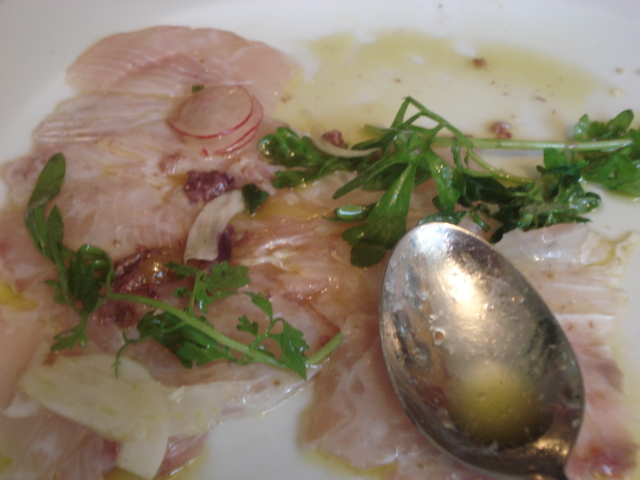
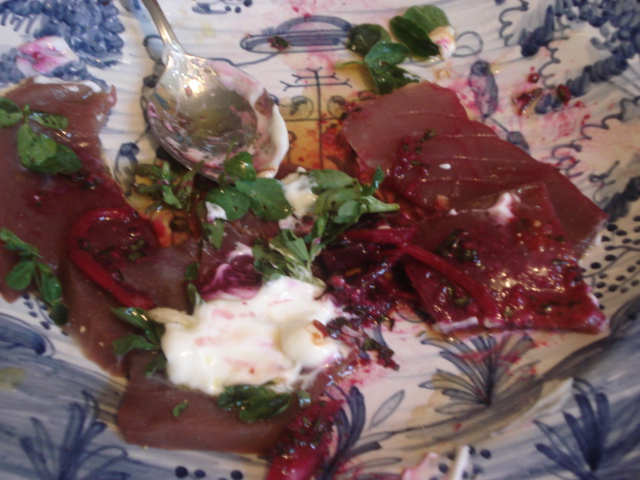
Nice fresh chunks of Ultra fresh raw Tuna and another white flesh fish (maybe Intiass- greater amberjack) on a bed of thick base of ground roasted eggplants and well spiced “Labaneh” cheese, (a sour middle eastern thick yoghurt fresh white cheese).
And the legendary HS Tomatoes Salad (the one “all town is trying to imitate”), grilled and fresh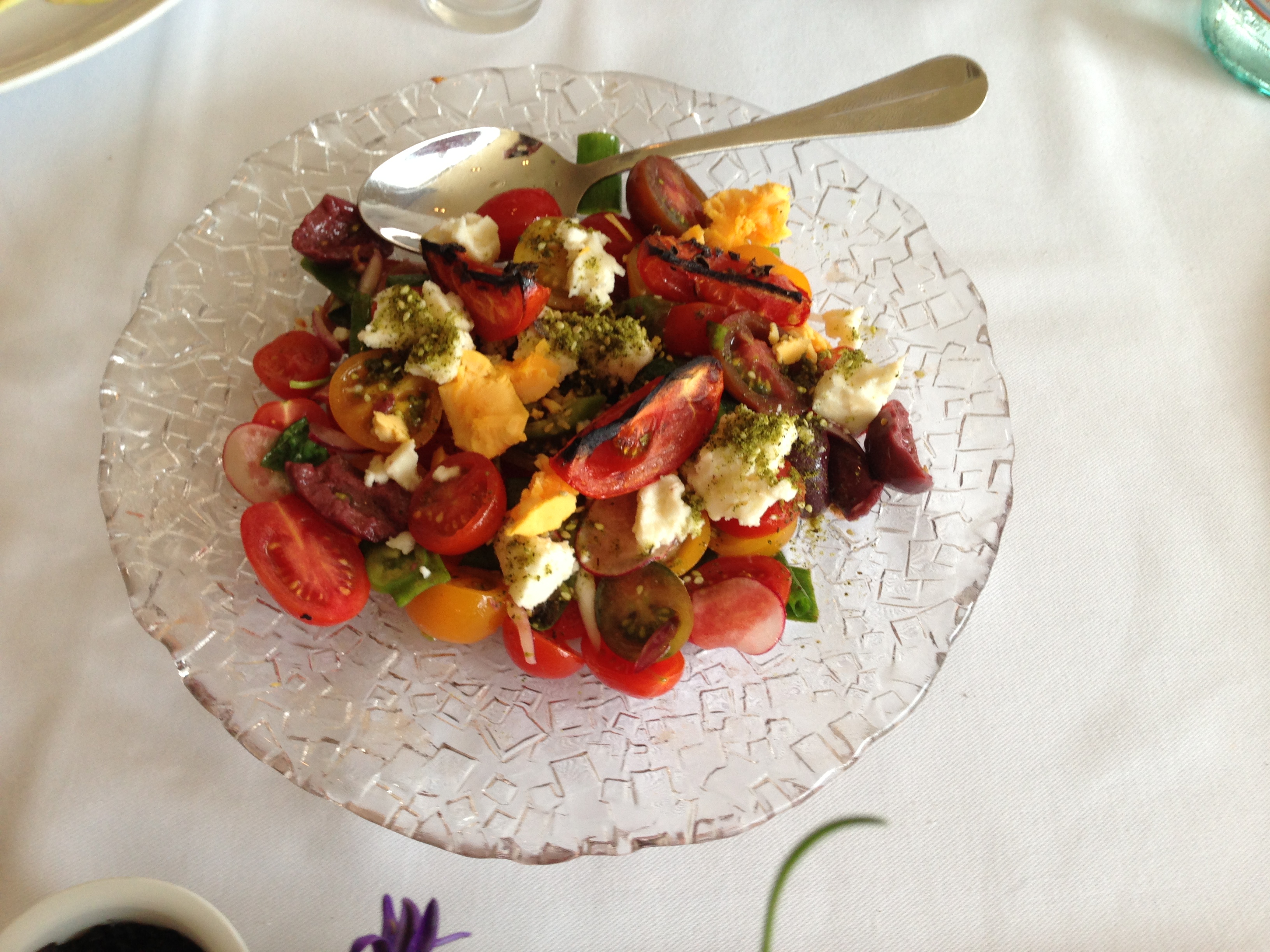 various types of tomatoes of all colours and types, Kalamata olives, green chillies, Basil and quality Tulum cheese, Very refreshing almost a mouth cleanser…
Needless to say all first course dishes were devoured by all present including as many extra helpings as requested and there were more than some exstras.
The menu main courses came before the main course specially prepared for the occasion, these were:
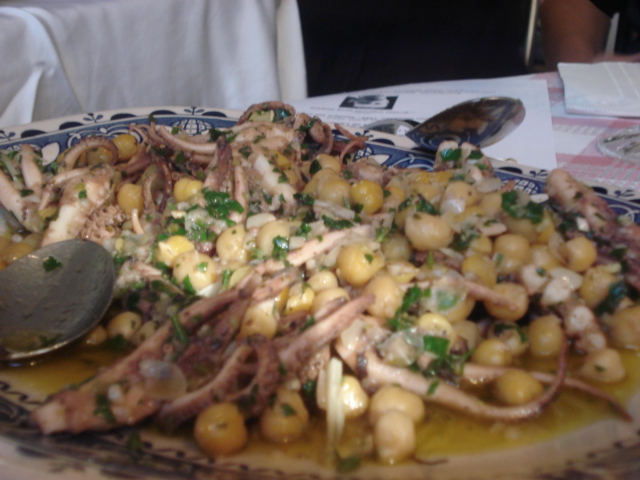
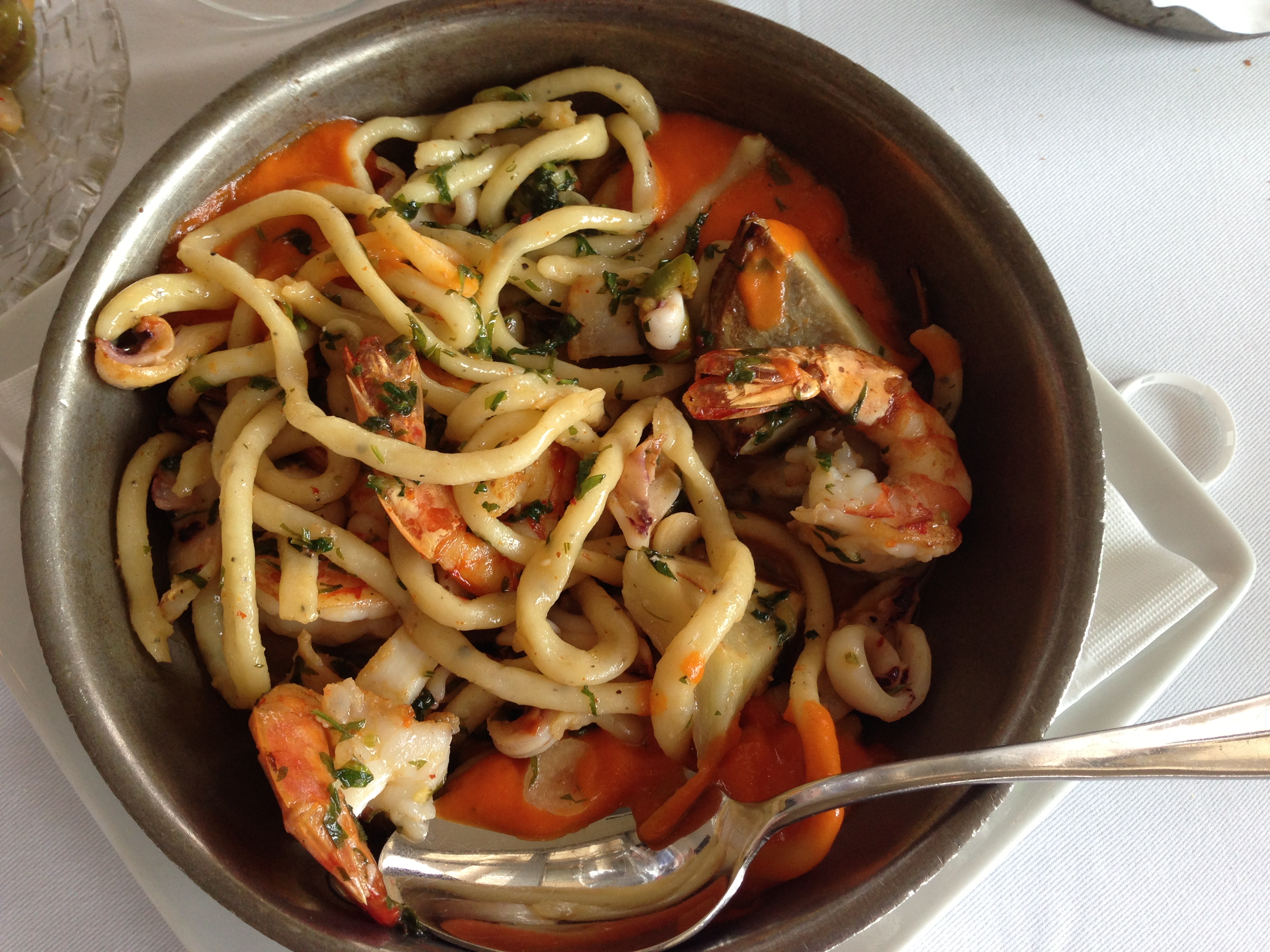 Seafood (shrimp and Calamari) fresh artichokes Lesbos Noodles , these noodles remind me more of Strangozzi or the hand rolled, hard, south Toscan Pici. Stringozzi is an Italian wheat pasta, from the border between the region of Umbria and Toscana, These are slightly harder in touch when cooked, they are as you see long, rectangular cross-section uneven, handmade noodles. The name of the pasta is drawn from its resemblance to shoelaces – stringhe in Italian, in a wonderfully perfumed sauce I wonder if some red and orange bell peppers were “thrown in” while making the sauce (that’s how I make it). Although according to the menu the noodles owe their “claim to fame” to the Island of Lesbos Greece this is a 100% Italian dish…
MILK VEAL Cannelloni, Chard, and Parmigiano-Reggiano, in creamy Veal thick sauce.
This is a perfect Cannelloni, in fact, my favorites. The dough is more like a crepe leaf, with a perfectly cooked milk veal hot pot diced adding some of the juices,mixed with Chard, to lighten the weight of the pot roast. Chard; (Beta vulgaris) is a leafy green vegetable often used in Mediterranean cooking. This rolled crepe (cannelloni) with the slightly (onion sweet brown sauce is a delight, (I ordered an extra helping, could not resist the temptation).
 Potatoes Gnocchi, Truffle oil, King of the forest mushrooms and peas.
The King oyster mushroom is not the tastiest of mushrooms simply because it has little taste (looking almost like elongated  cep or porchini The Boletus edulis) and tasting or smelling none like them, but they are so absorbent they take any flavour you give them, which in many cases is an advantage when cooking…) This dish would not feel a stranger in any restaurant of Umbria or Toscana and would be admired even by the most experienced Roman connoisseur, Italians like home style cooking and this is a very “comforting dish”, a “reminiscence of childhood “

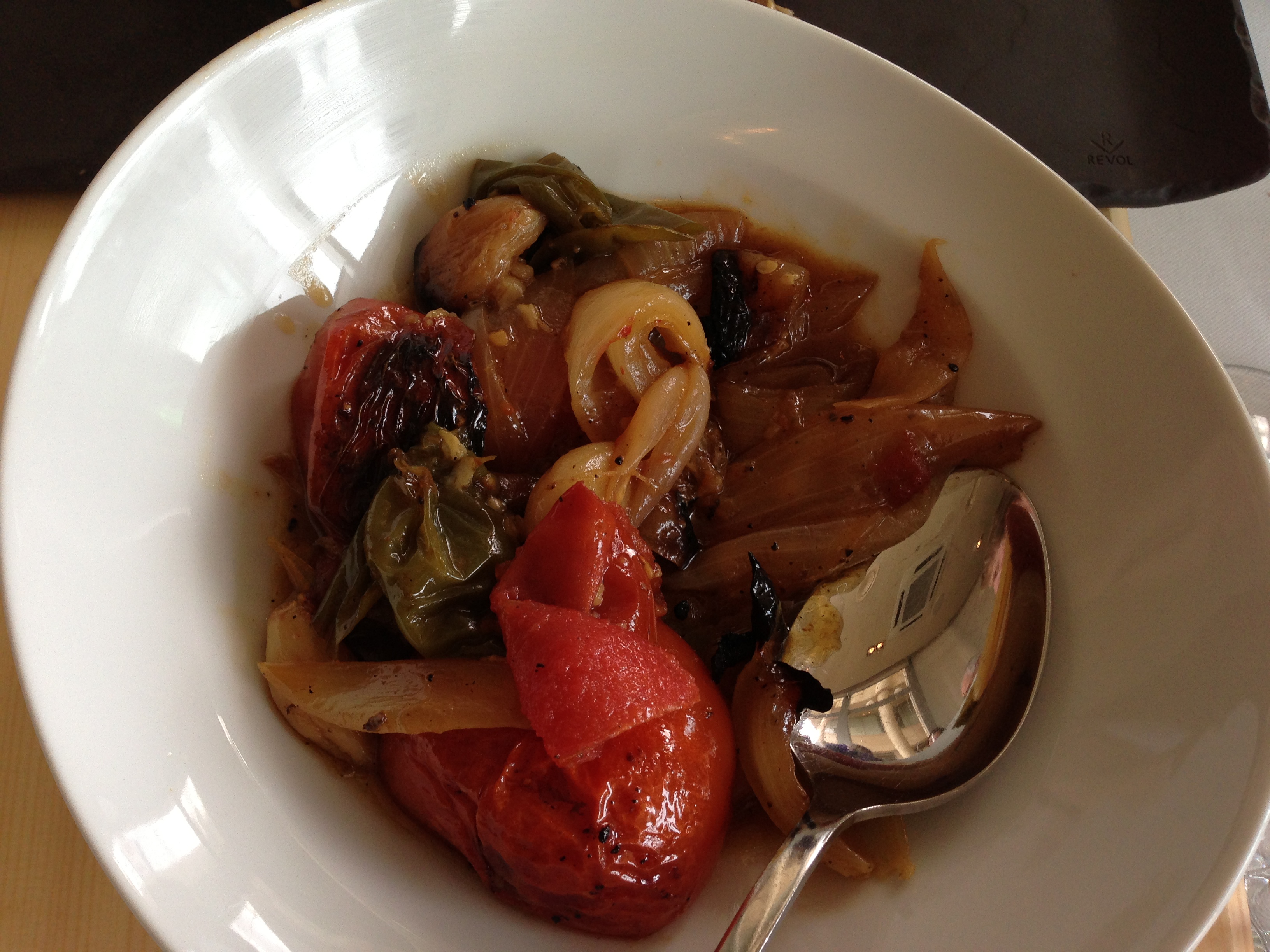

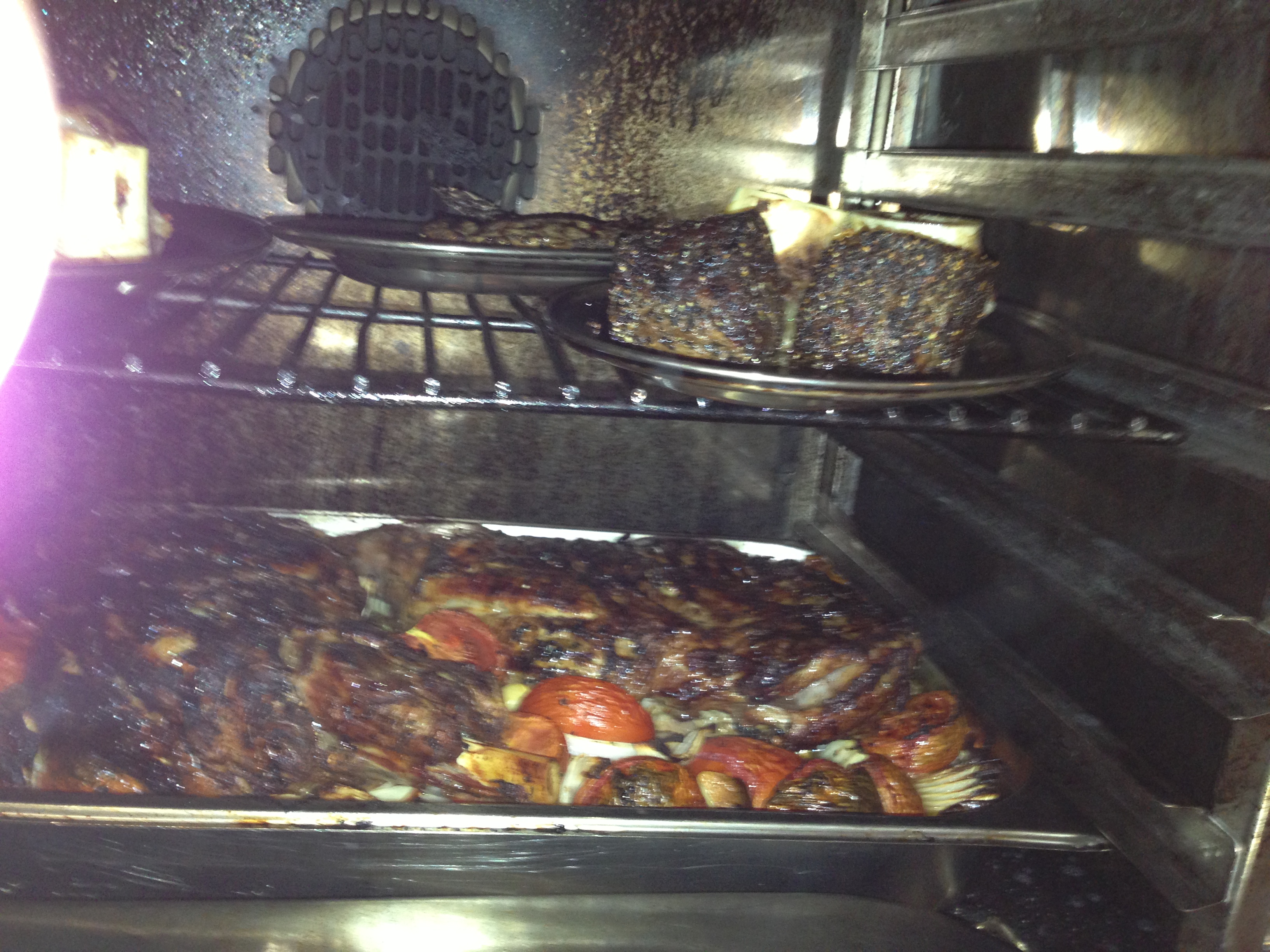
Roasted Leg of Lamb root vegetables and tomatoes and green chillies, Roast Rata Potatoes.
The lunch’s “special” a personal dish cooked ONLY for our table was unfortunately served only after we were beginning to fill up… with it cane the fish dish:
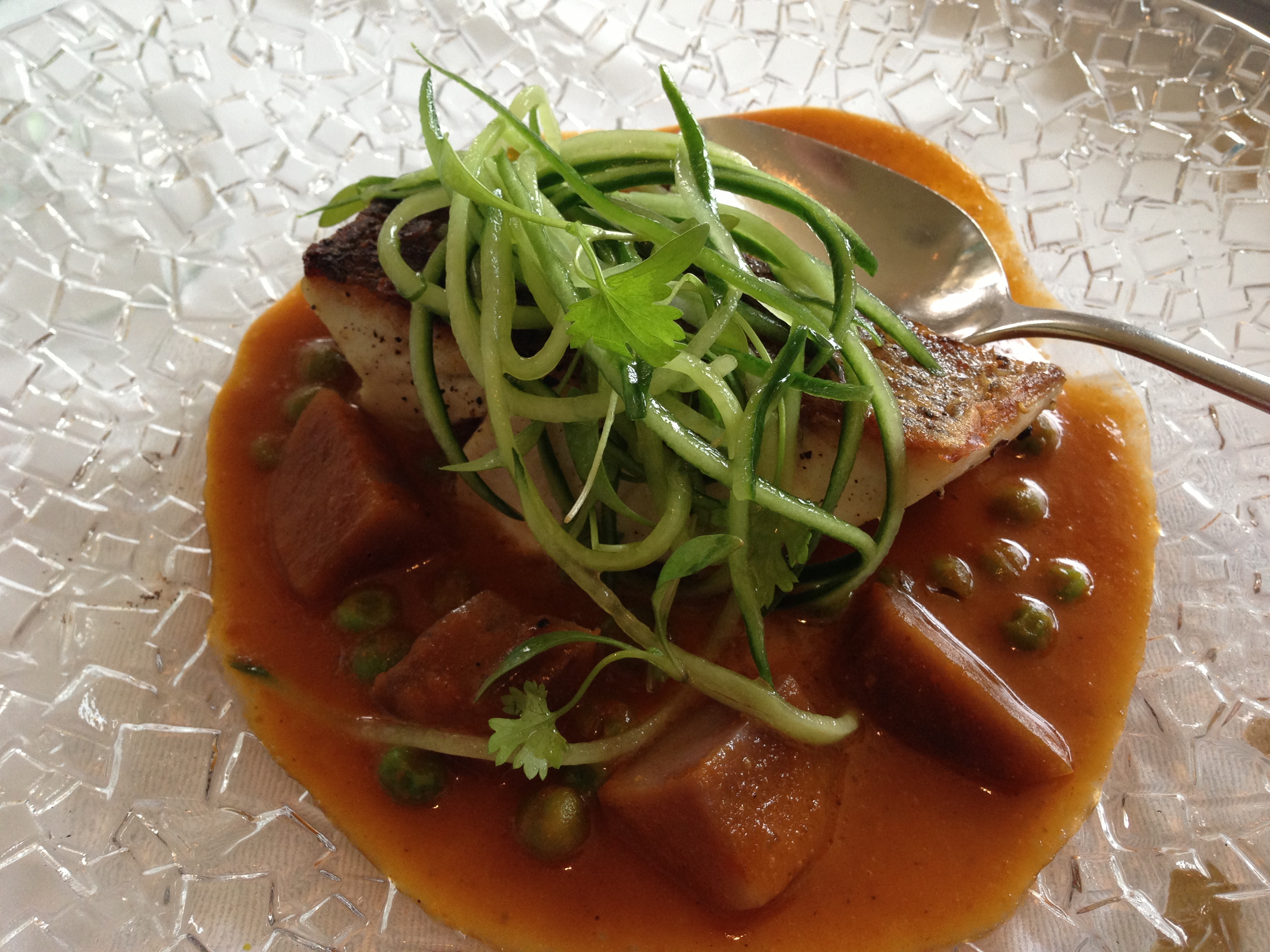 Meager or drum fish (Musar around our shores) in spiced tomatoes fish stock (Jungle curry) and white rice. The sauce was divine, fried fish fillets “swimming in this red tropical sea, freshened up with cucumber Juliennes.
Coffees and deserts


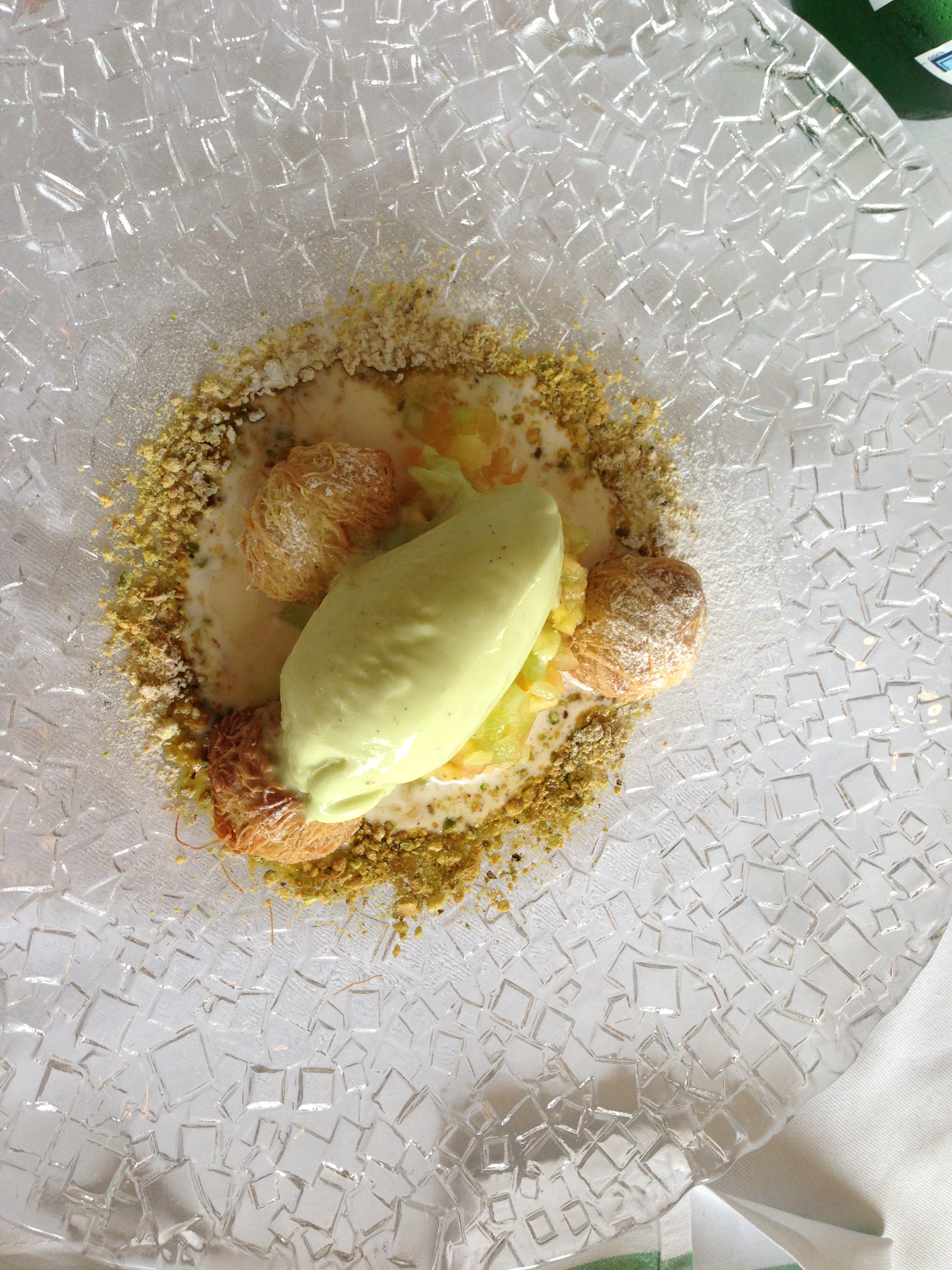
Cheese Cake Luis 14th style
Chocolate Nemesis in seasalt caramel / toffee and Ice cream
The House of Pistachio (Fistook) with pistachio Kulfi
And we were so pleased and FULL!
The WINES
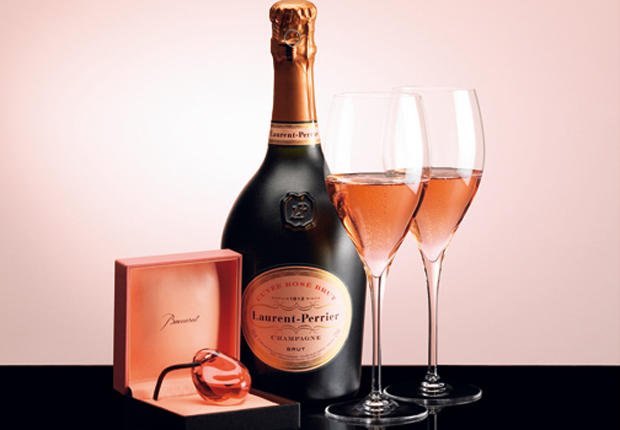 Laurent Perrier Rose Champagne is a salmon colored rosé Champagne crisp and fruity. with aromas of strawberries, raspberries, the Laurent Perrier Rosé Champagne is made using maceration technique, giving it richness without losing its elegance . A fresh, delightful rosé, excellent fit for the occasion.
Moët & Chandon Rosé Champagne,This over 10 year old NV is a Moët & Chandon’s excellent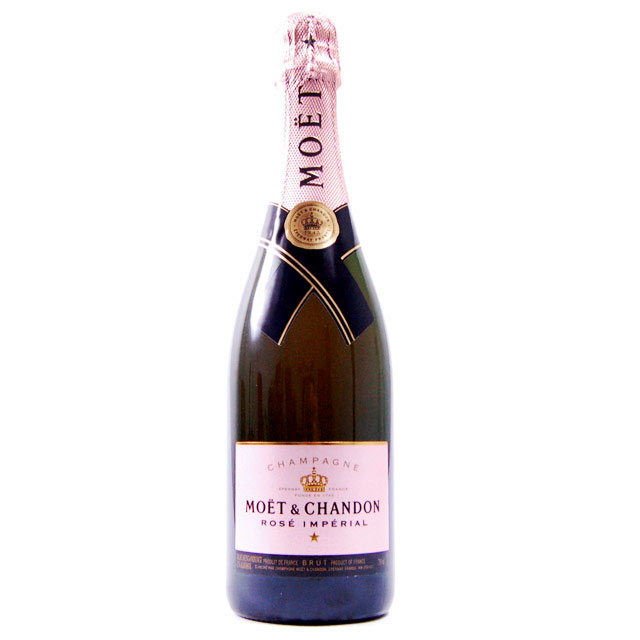 non-vintage pink champagne retained its fresh pink colour. It has all the usual approachable unsophisticated Moët touch yet it comes with a twist of emphasis on red berry scent with light red summer fruit flavours.
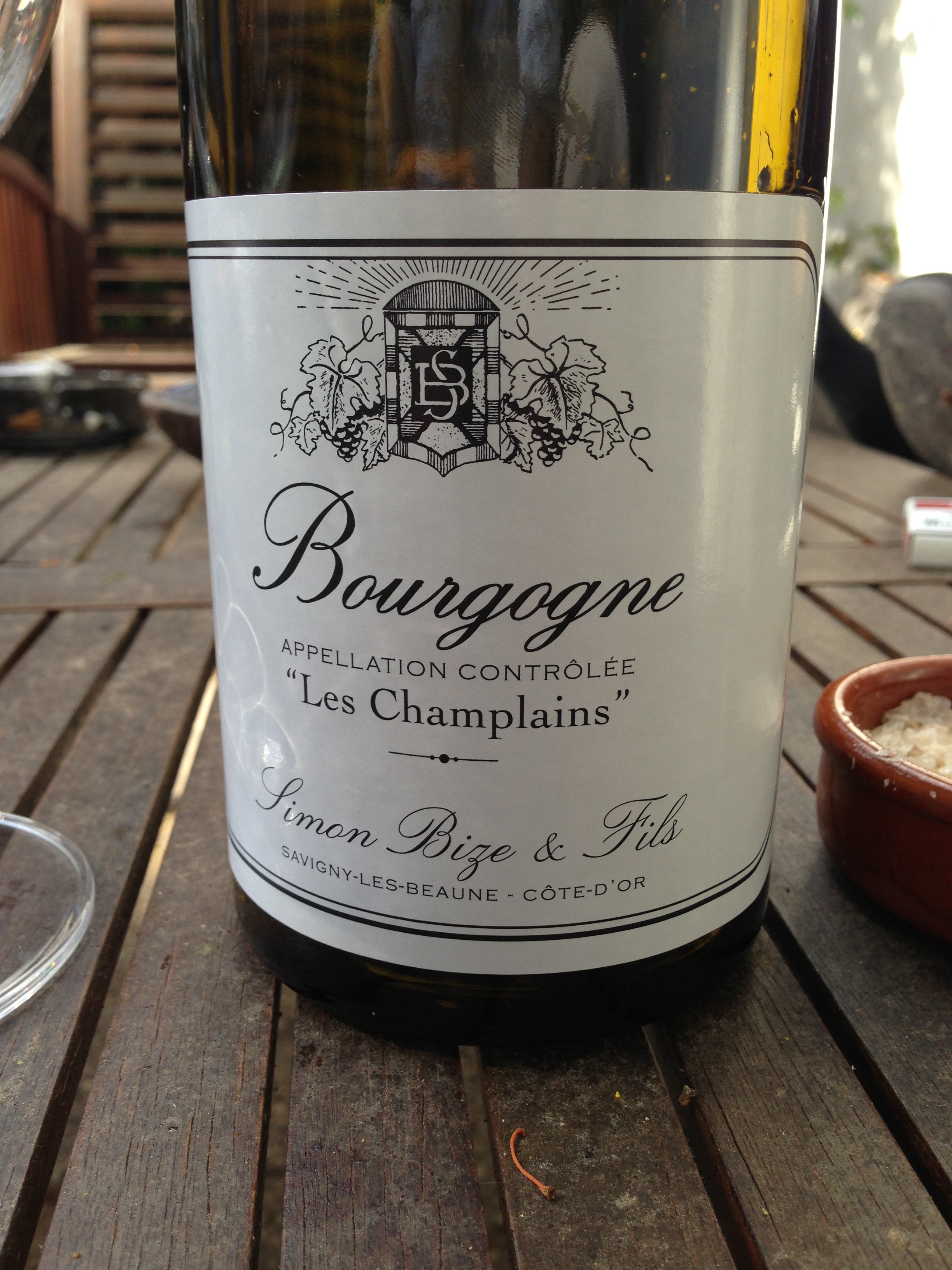 2010 – Simon Bize Bourgogne Blanc Les Champlains, as it went with the BBQ see; https://wine4soul.com/2013/04/19/bbq-for-independence-day/ everyone enjoyed the wine immensely, so much so that I miss calculated the number of bottles required, never mind sometimes less is more…
Thanks Jonathan Roshfeld for your special gesture, coming to cook for us on you free day, for arranging such a perfect Lunch, a lunch to remember and leave good memories of yet another special BIRTHDAY PARTY with Jon, and special thanks to all the restaurant stuff for the effort, the wonderful and caring service making us yet again feel at home. I know this is not our last family celebration with Yonathan and his highly able crew.
Herbert Samuel , 6 Koifman Street (Gaon House), Tel-Aviv Tel: 03-5166516
YOUR WINEGUIDE
BBQ for Independence Day
No one really knows when or why a tradition of celebrating Independence day around charcoal grills started. If you ask me it is a “borrowing” of the American modern 4th of July tradition (also) of unknown origin.
BBQ was not invented in America and no one knows who invented the barbecue. The word ‘Barbecue’ might come from the Taino Indian word ‘barbacoa’ meaning meat-smoking apparatus. ‘Barbecue‘ could have also originated from the French word “Barbe a queue” which means “whiskers-to-tail.” When all parts of an animal where used for preparing meat dishes on fire or smoke. (wiki)
Ancient man song by Daphne Sarnat from: http://daphodil-music.co.uk/the-ancient-man-song-number-8/
We have to go way back to prehistoric times to dig out the origin of slow cooking on fire Barbecue. Fire’s general use, according to paleontological and archaeolgical records, began only about 40,000 to 50,000 years ago. But after cooking, many undesirable substances present in plants and vegetables are deactivated and starch and other nutrients in the plants become absorbable by the digestive tract. All of the major domesticated plant foods, such as wheat, barley, rice, millet, rye, and potatoes, require cooking before they are suitable for human consumption.
From: Cambridge World History of Food, Kenneth F. Kiple and Kriemhild Conee Ornelas [Cambridge University Press:Cambridge] 2000 (p. 1571)
It is possible that men first ate meat that had been charred or cooked by virtue of being caught in a natural forest fire (a positive accident). They might have otherwise eaten raw meat, if necessary, but we can also imagine that our earliest digestive systems rebelled against eating raw meat.


Nowadays, to barbecue means to slow-cook meat at a low temperature for a long time over wood or charcoal. In America, barbecue (or BBQ) originated in the late 1800’s during Western cattle drives. The cowboys were not allowed “perfect cuts” of meat, mainly brisket that required many hours of cooking to tenderize. As they sat after sunset around wood fires, meat and other foods were prepared on charcoals.
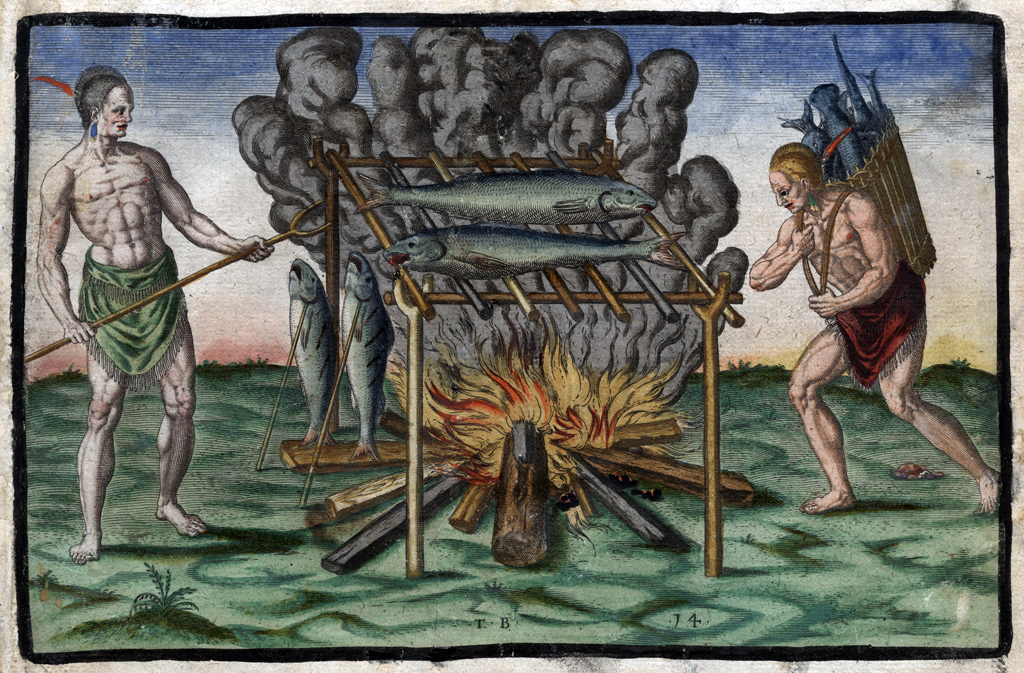 There is a romantic notion regarding “Cowboys and Indians” the open plains and the wild prairie, an Indian tribe cooking meat over fire after the hunt (smoking and drying the rest for future use), town folks eating huge steaks at the local restaurant as portrayed in the John Ford 1962 movie The Man Who
 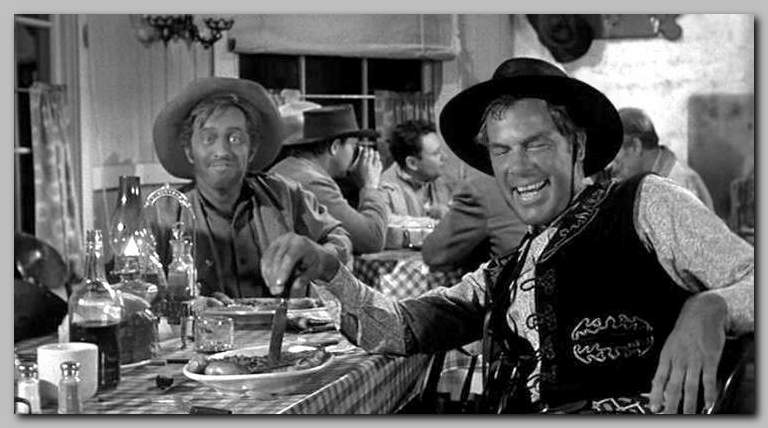 Shot Liberty Valance, including a fight over meat, with Ranse (James Stewart) waiting table, Liberty (Lee Marvin) making trouble, and Tom (John Wayne) booting Strother Martin, in an outrageous confrontation over a steak. I was always amazed by the sheer size of the “wild west” huge steak cuts.
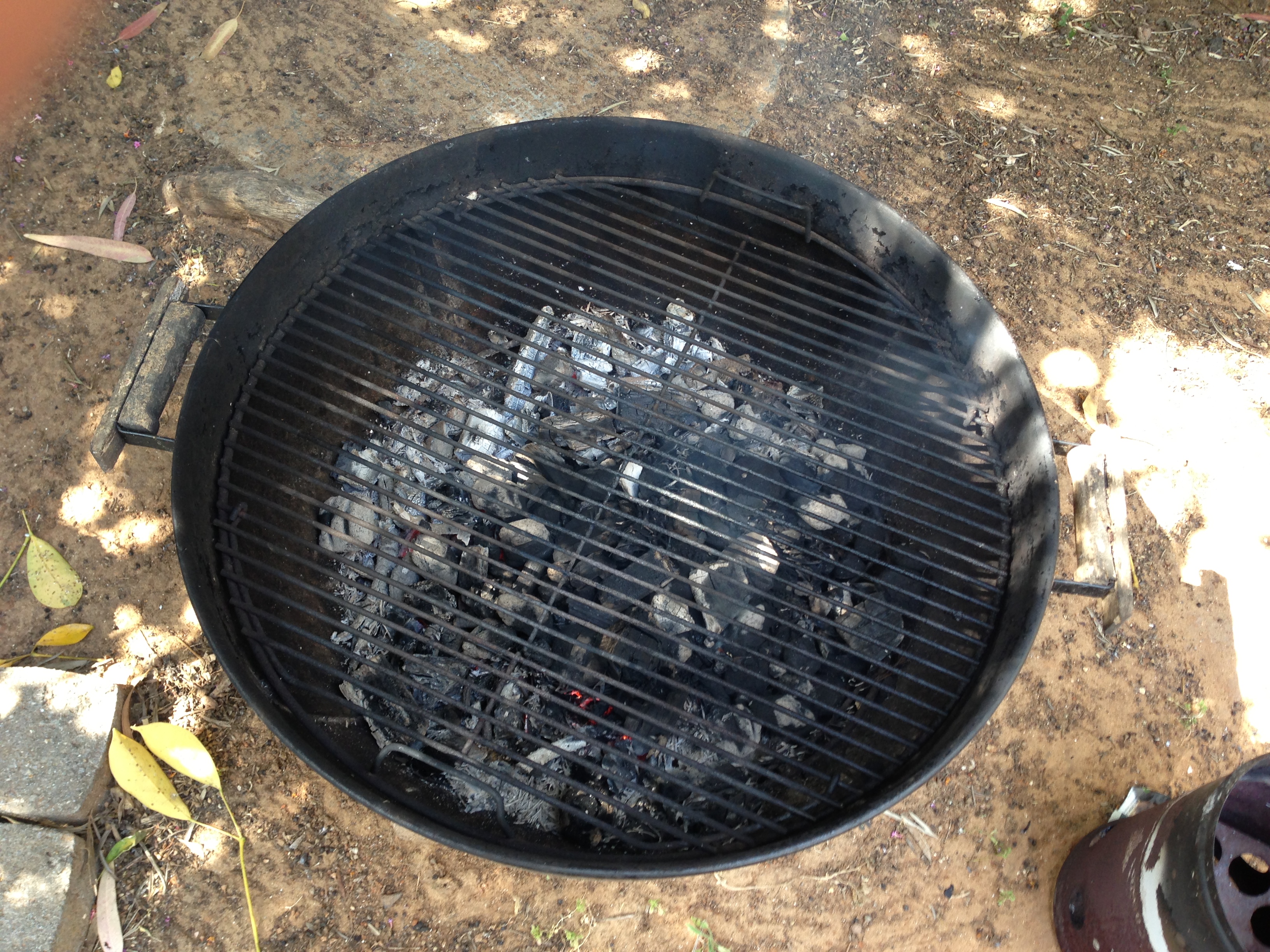
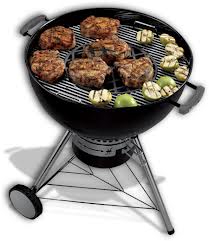
My old Weber grill has long lost its legs but still performs miracles for BBQ grilling all you need is a good bunch of red hot charcoal wood or charcoal briquettes and your prepared or marinated meat, fish, seafood, vegetables etc.
We had :

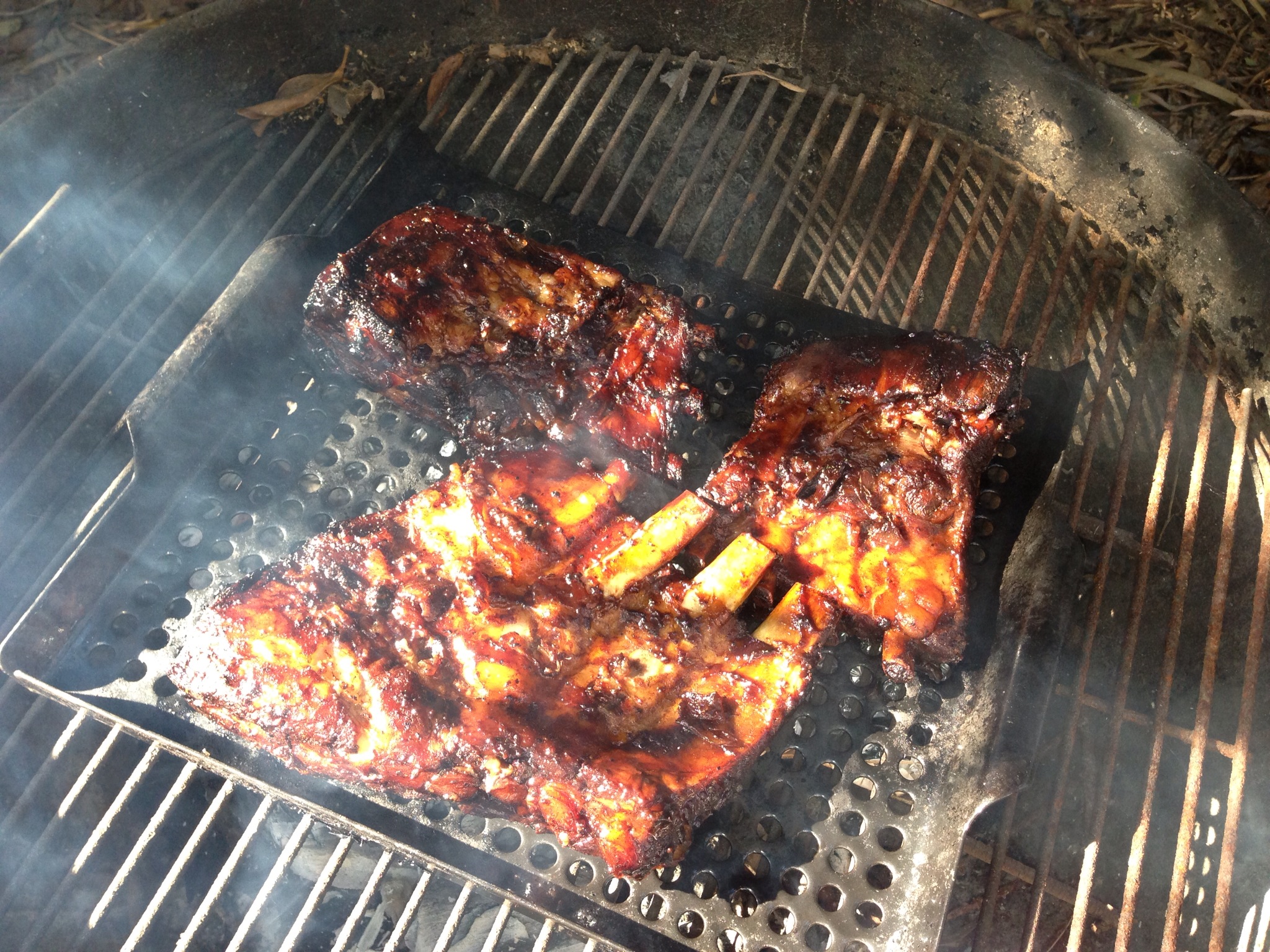
* pork spare ribs prepped in advance finished on the grill

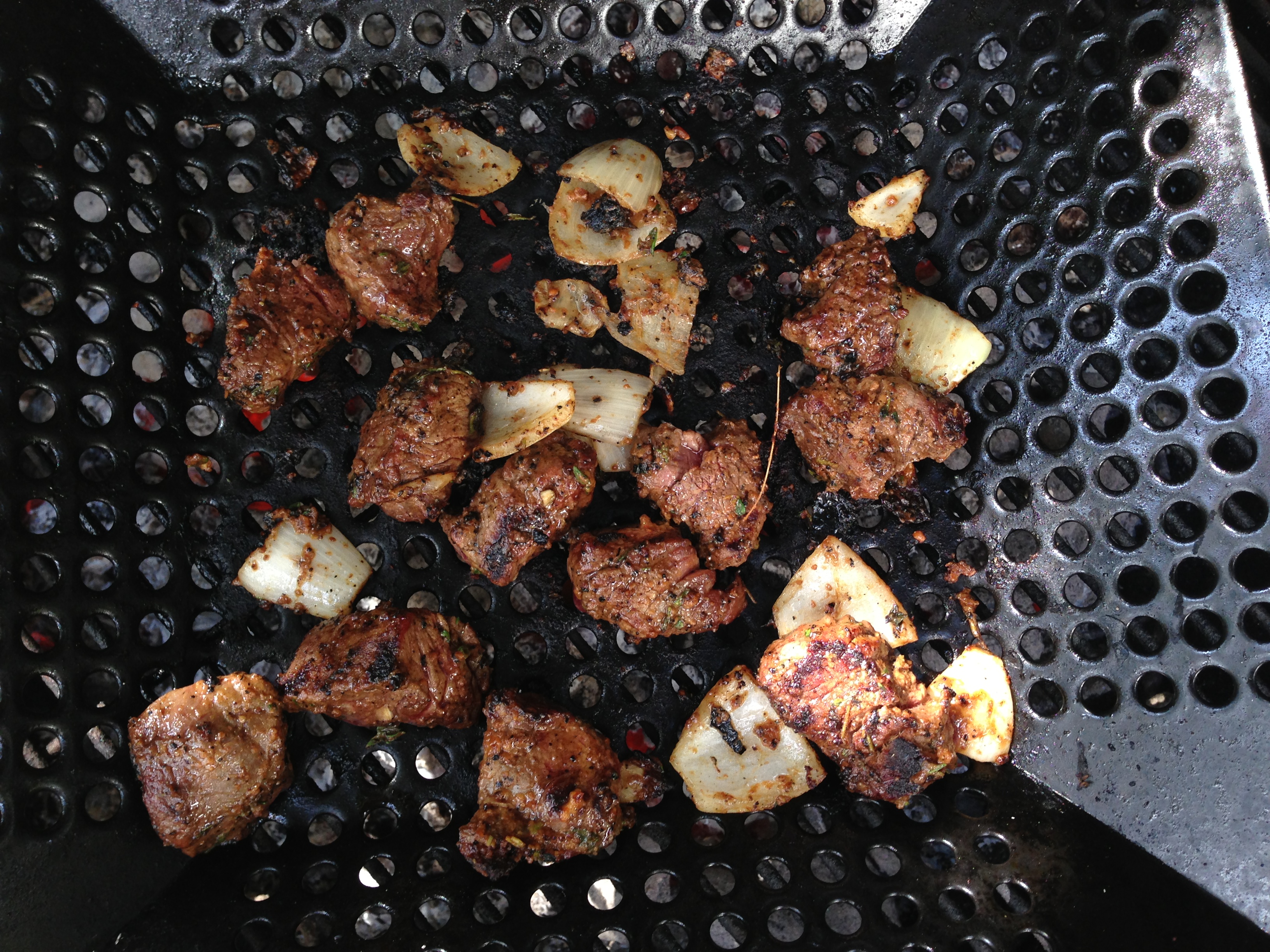
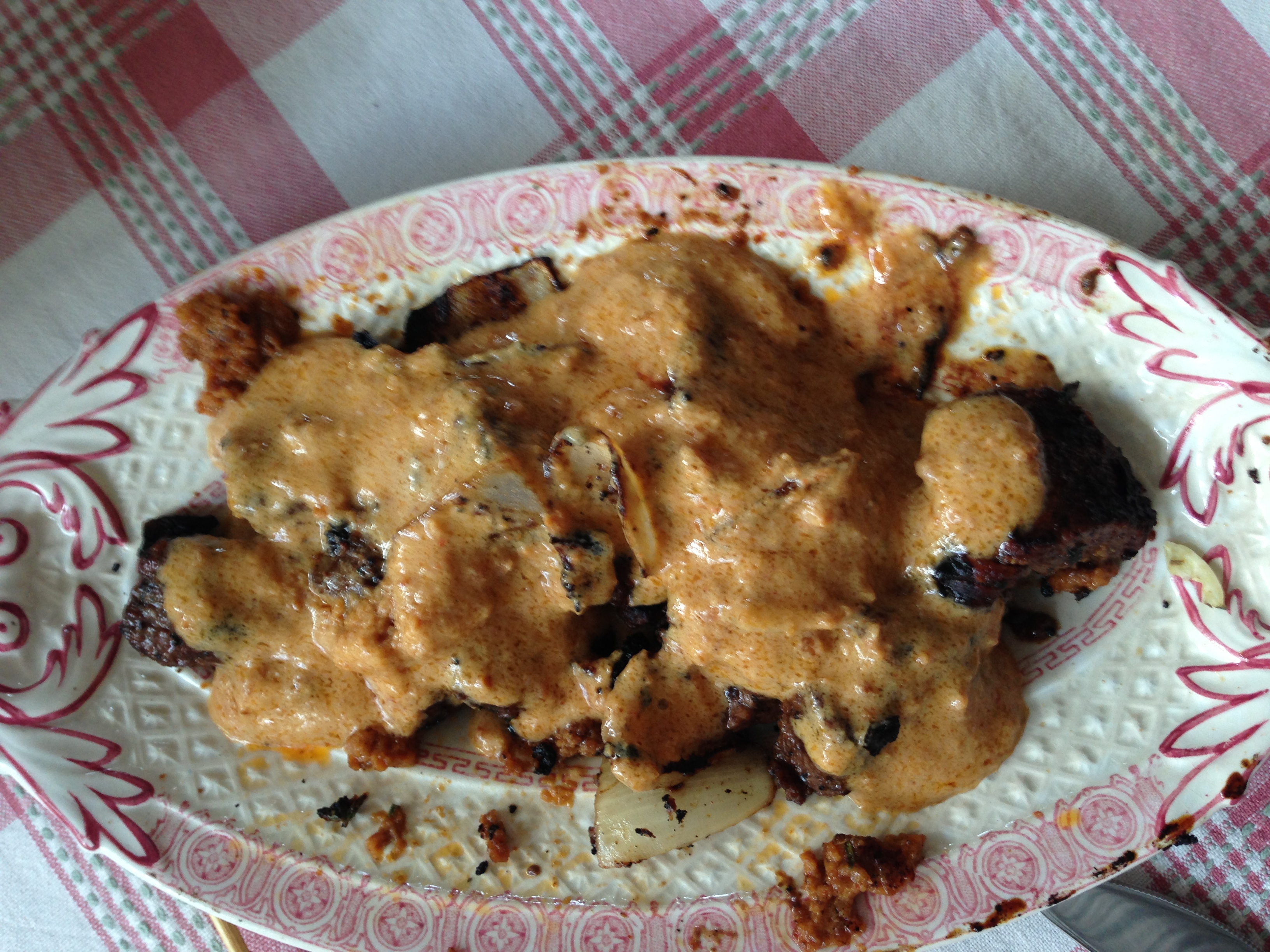
Indonesian Sate Beef (sate marinate and sauce)
 Tandoori Lamb chops in tandoori paste marinade (everyone’s favorite, though not in a tandoor)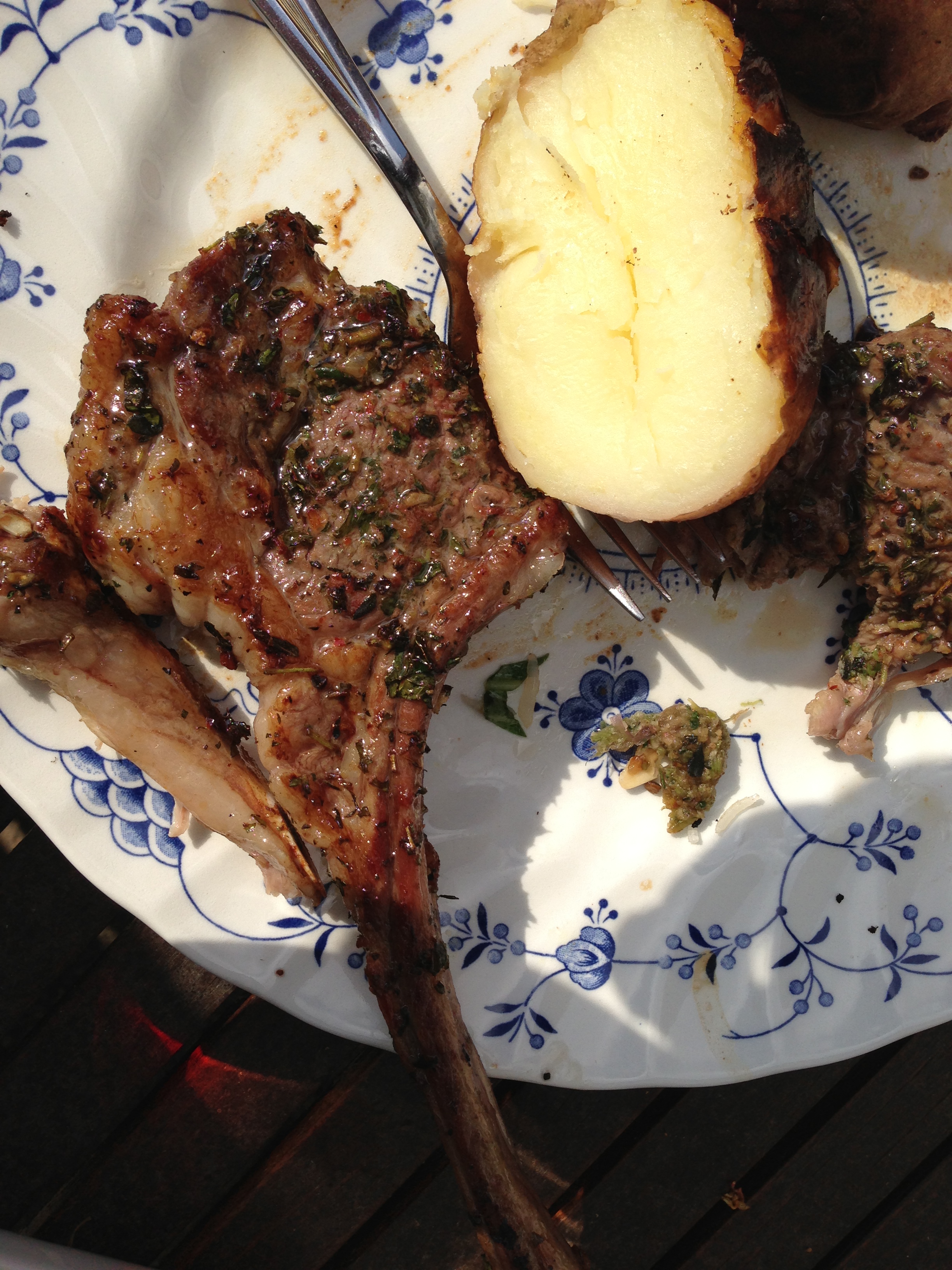

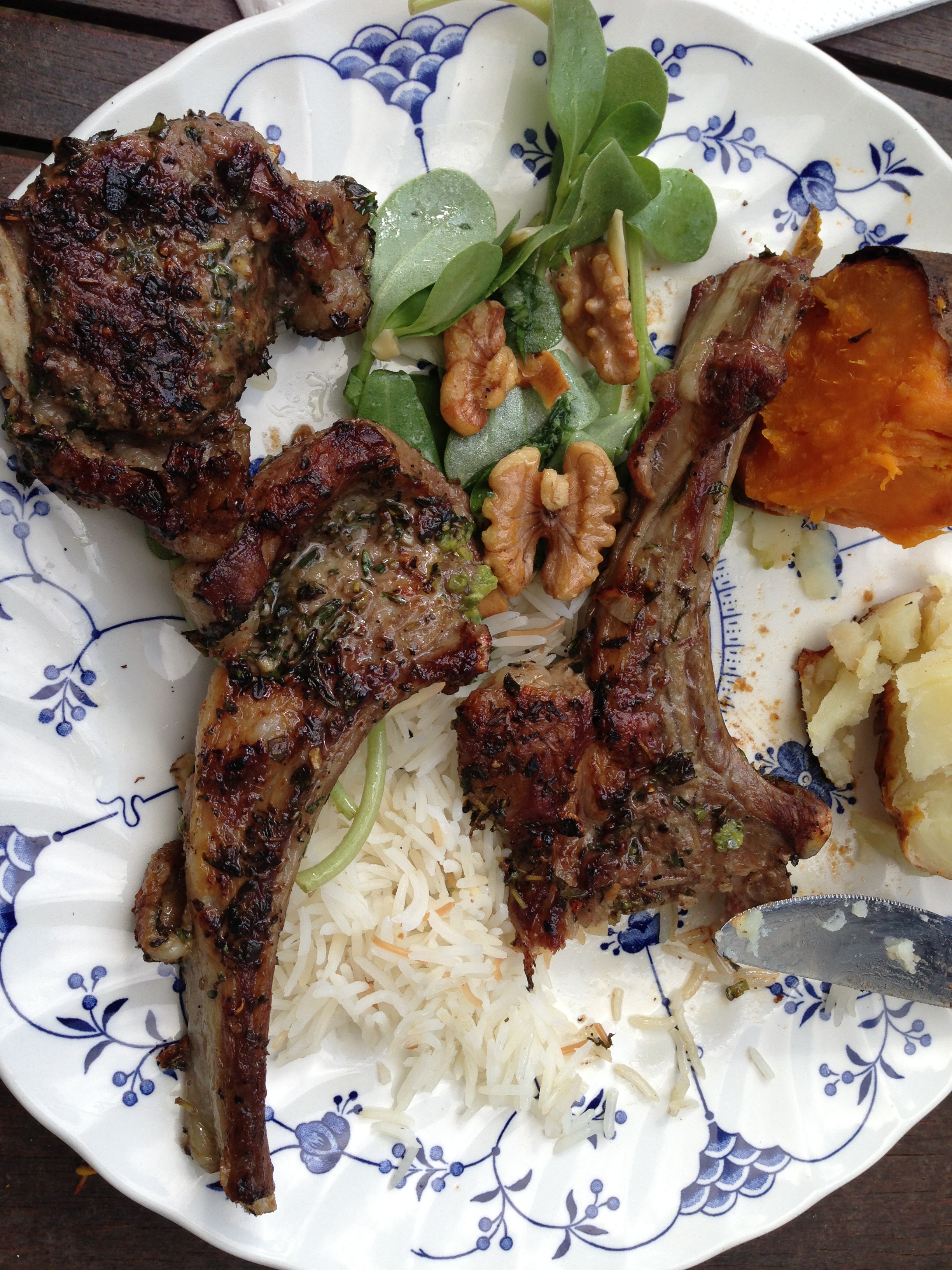
Mediterranean style Lamb chops (garlic, thyme, mint, rosemary)
some Basmati rice for the south Asian fare, and grill roasted potatoes and sweet potatoes with salad as side dishes
The wines
2010 – Simon Bize Bourgogne Blanc Les Champlains
The 2010 les Champlains turned to be a great bottle of wine worth every penny of its relatively low cost. The great nose soars from the glass in a blaze of green apples, with some peaches and citrus blossoms, with a floral note of acacia blossoms. On the palate the wine is substantial and elegant, pure and full of fruit, good length keeping fresh all the time. Wait 10 minutes for the wine to settle down than a gush of green apple peel on the Nose with apple, pear, some tropical fruit. This is not a great wine by definition or pedigree although it comes from a single lot above Savigny les Beaune in Côte de Beaune, Bourgogne. It is an (AOC) with slightly less than 15 per cent chardonnay grapes with no Grand Cru vineyards within the appellation. Great value for money.
Simon Bize is a terrific producer continueing a family tradition since 1880 and making wines in a more meticulous manner around 60 years (early 1970’s)
Dugat Py, Gevrey Chambertin, Coeur du Roi 2003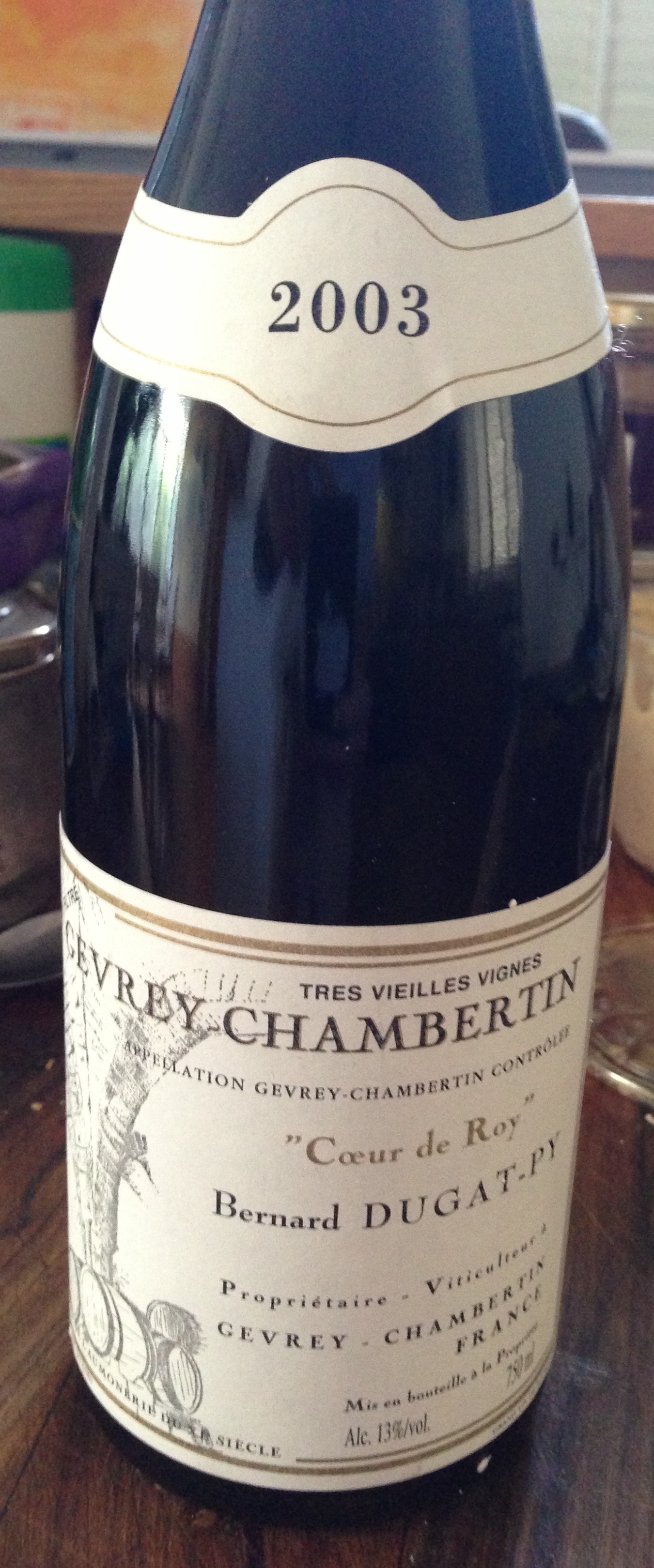
Dugat Py claim for fame comes from the American wine import industry as a true modern day Burgundian superstar. I know this is not my favorite wine making style in the Burgundy area, too much effort on colour, fruit and tannin concentration, Usually I personally prefer the less purple more light reddish translucent traditional elegant wines with a “true” Bourgognian touch, we had the Dugat Py, Gevrey Chambertin Coeur du Roi 2006 a few weeks ago and the wine was still too firm even too tight and failed to open to its full potential even after a long time (the rest of the case will have to wait in my cellar for at least another 5 years I am patient), Yet Dugat Py wine complement juict fatty BBQ meats more than extremely delicate and elegant Gevrey, and so it was chosen; A Dugat Py, Gevrey Chambertin, Coeur du Roi 2003, now at its 10th year (an enigma that has to be solved I also have a case of these…) On the first sniff I was relieved, the wine had some other undertones of the soul and soil of Bourgogne that overcame the strength and power the wine was intended to reflect. Great smell of cherries more than strawberries with lovely wet soil and mushroom scent, on the palate flavour is luscious fruit with pleasant fresh compost/hay or cabbage (on the pleasant side) traces, seasoned with thyme and mint overtone evolving so well. Full to medium body with a full feel and a very long palate, tannins still not round enough for my taste but I was impressed and content with the choice.

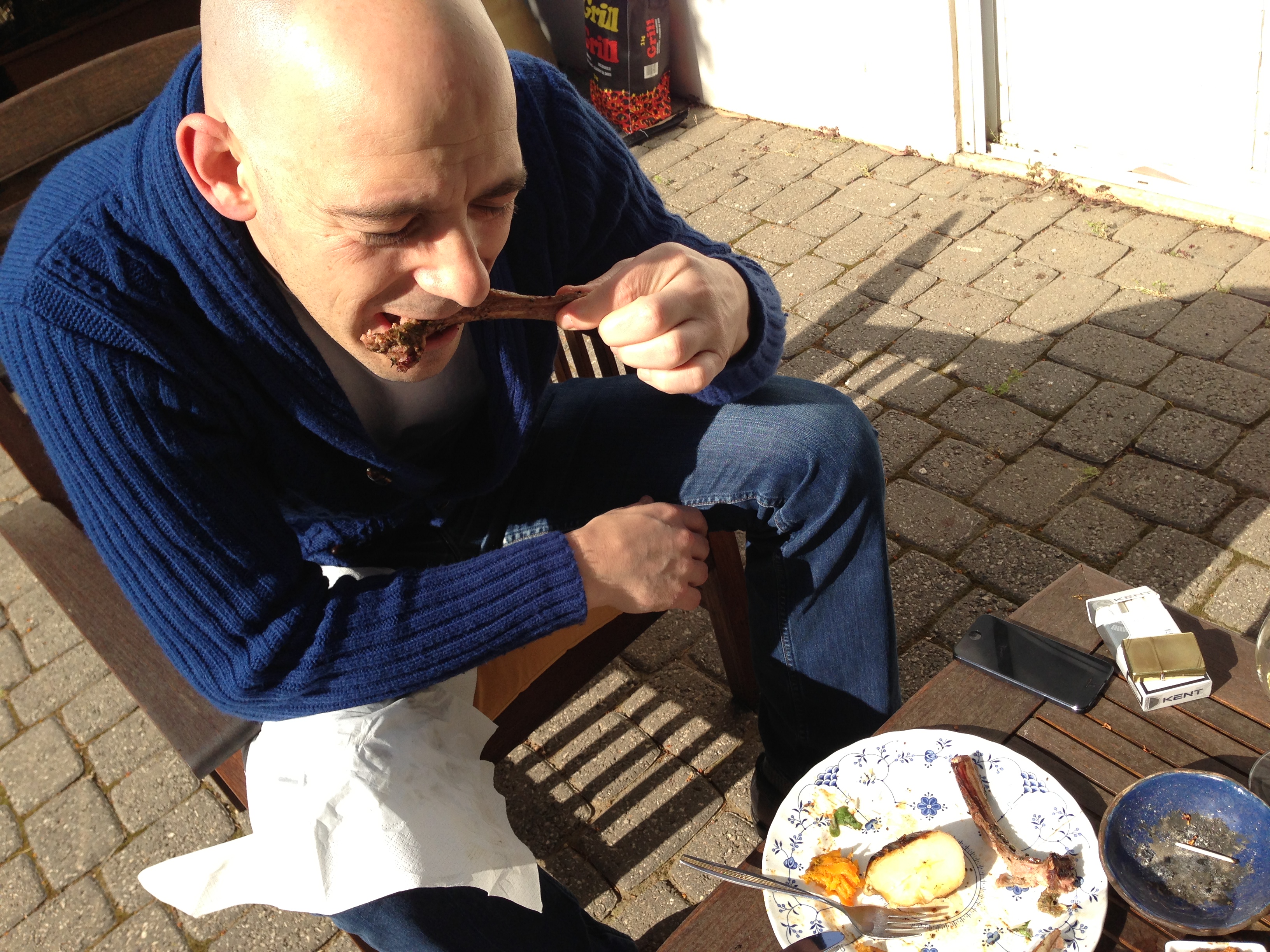
We thought we would not celebrate this year with a BBQ, as it happened we did, in a company of three, a grilled holiday lunch, cooked on charcoal with the moon smiling at us up in the afternoon sky, great wines and company, and my very own tarte Tatin to end the meal.

Your WINEGUIDE
A meal at Yauatcha Soho – A Birthday Party


One of my devoted “followers” is Daphne, and she has her birthday each year on 31st of March. (Yes I invite my regular “followers” to dine on their birthdays, it is a means to increase the volume of readers of my blog: WINE4SOUL.com, a PR stunt and it works) [press play to hear music].
Her choice was; dinner at Yauatcha Soho. Not for the first time may I add and the joy, as always is complete. YAUATCHA is basically a Dim Sum joint at the edge of Soho London. But… there’s dim sum and other “touches of hearts”. This is dim sum at its best with other Chinese nibbles on the side. See menu: http://www.yauatcha.com/soho/files/2011/07/Yau_ALC_271112_no-prices.pdf It serves some of London’s best and most exciting Cantonese food.
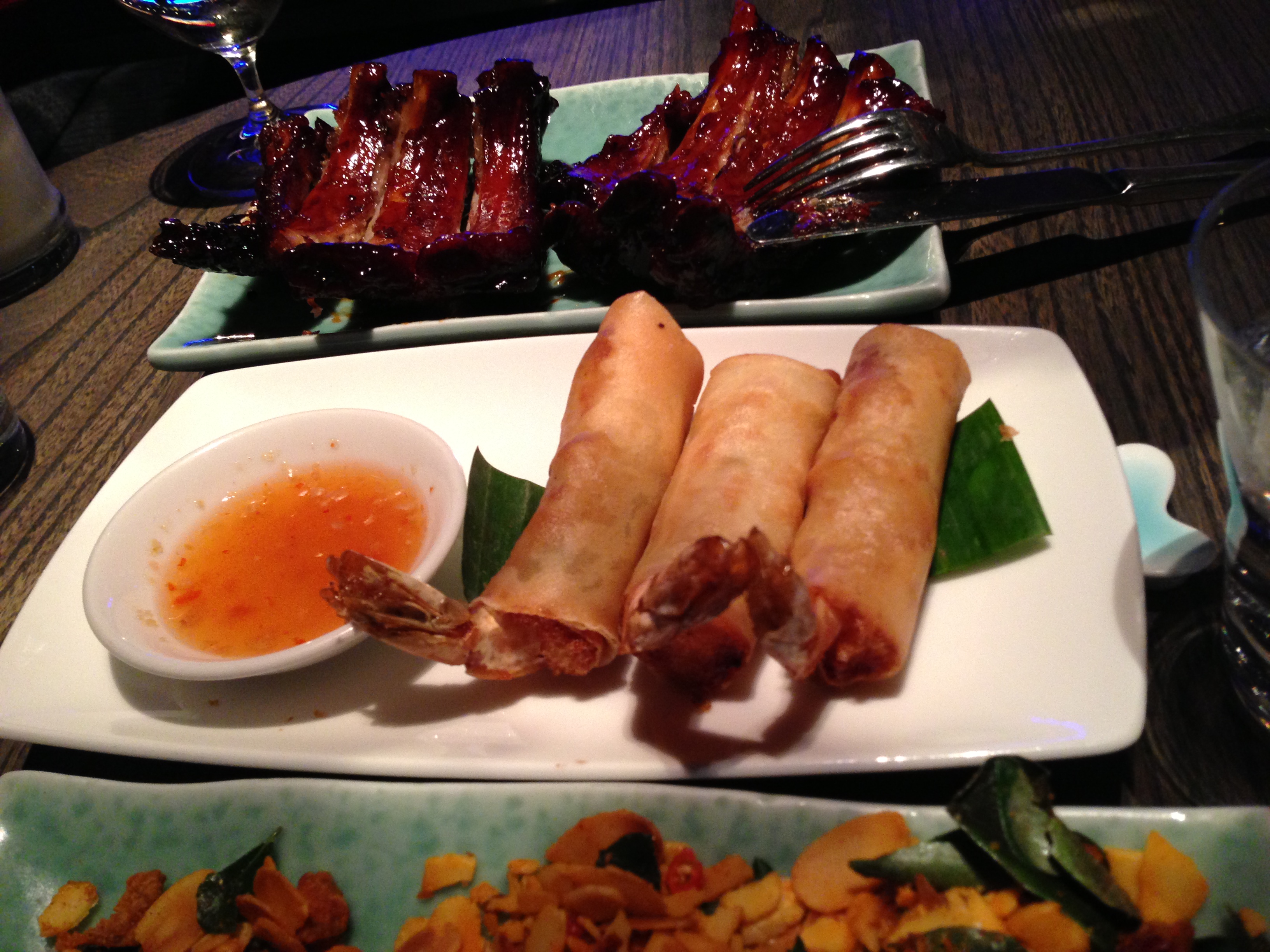
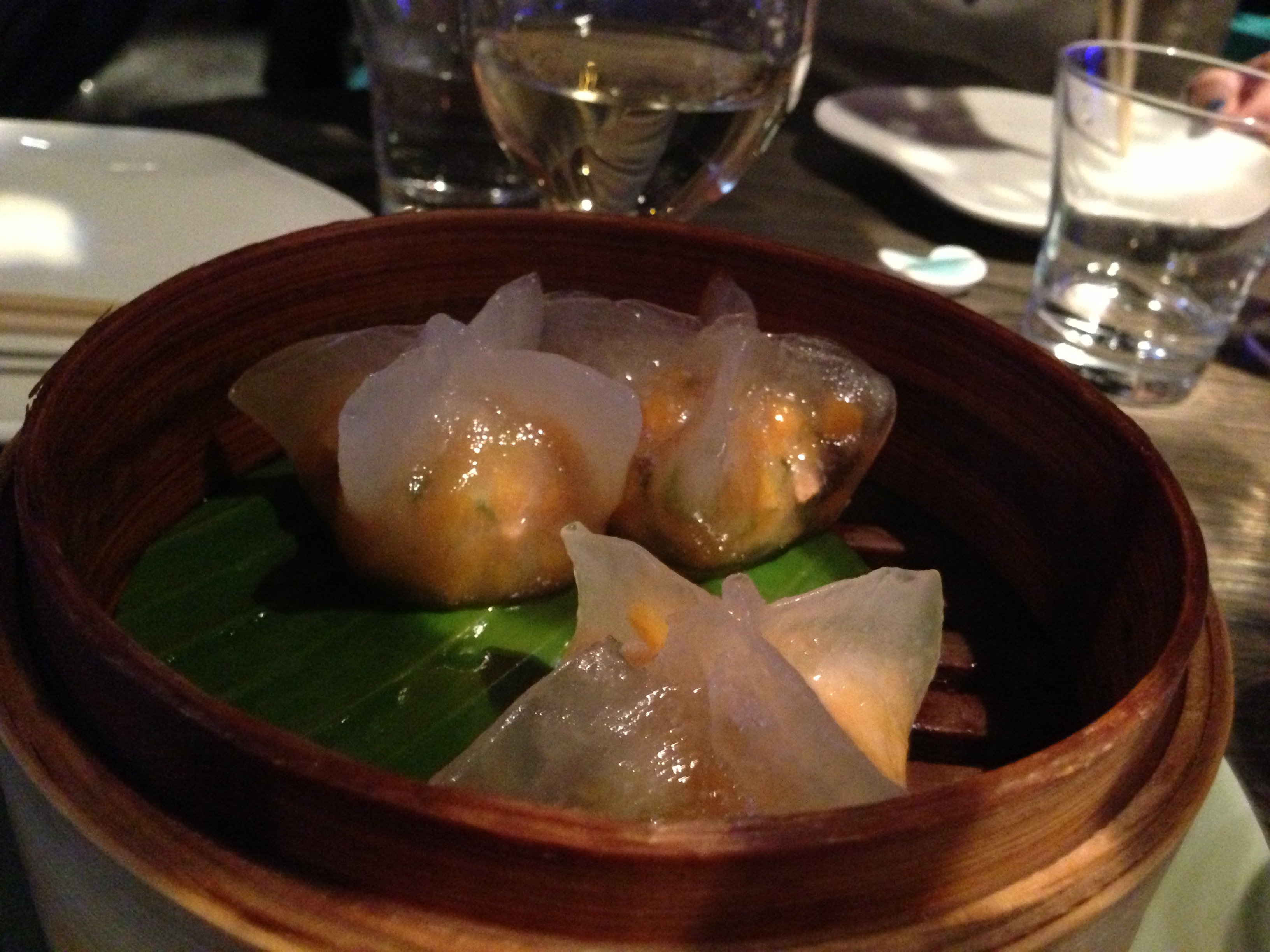

Dim sum 点心 (meaning in Chinese: touch the heart) is (as you all know) a style of Cantonese food prepared as bite-sized or 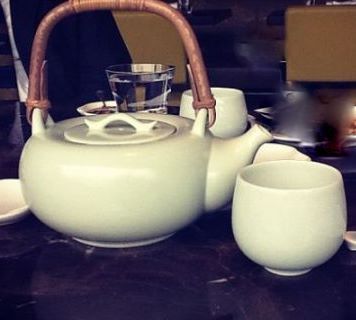 individual portions of food, served either steamed in small steamer baskets or fried, grilled, or baked bite size gems . Eating dim sum at a restaurant is usually known in Cantonese as going to “drink tea” (yum cha, 飲茶), as tea always was typically served with dim sum.
Dim sum has its roots in small establishments that serviced travelers on the ancient Cantonese traveling routes. Those small tea houses, served at first as stations for travelers needing a rest and have a cup o’ tea. Teahouses were established along the roadside. Travelers, merchants and farmers, would go to teahouses for a relaxing afternoon of tea. No food was served as it was considered “inappropriate” to combine tea with food, for dietary reasons. While dim sum was originally not a main meal, only a sort of snack, meant to “touch the heart”, (very much like “Spanish Tapas” traditionally served with Sherry, rather than tea), it is now one of the pillars of Cantonese culinary culture.
The unique culinary art of dim sum was transformed from “yum cha” a relaxing tea break to an exciting dining experience. The traditional dim sum restaurant typically serves dim sum until mid-afternoon. However, in modern society it has become more common for restaurants to serve dim sum at dinner time, Yauatcha follows this trend. In Hong Kong, and in most cities and towns in Guangdong province, many restaurants start serving dim sum as early as five in the morning. It is a tradition for the elderly to gather and eat dim sum after morning Tai Chi exercises.
The characteristics of the elaborate cooking methods of Chinese imperial cuisine, of strict selection of material, which are often extremely expensive, rare, or complicated in preparation, visual presentation as a crucial aspect, and significance of color and shape of the dish arrangement were adopted by Dim sum “masters” who transformed the dishes into Art on a plate.
Dim sum by the way, should not automatically be assumed to be healthy as it contains fatty dishes and ingredients that should be balanced with lighter vegetable dishes.
At Yauatcha, as they testify themselves, “you can sample the delights that first made the restaurant famous when Alan Yau opened it in 2004: top-quality dim sum that’s served day and night. (Yau has long since released control of the business), but standards remain high. Yauatcha is a modern reinterpretation of the old Chinese teahouse. Designed by Christian Liaigre, the restaurant’s open-plan layout and visible kitchen energizes the entire space, engaging both the outside street scene and Yauatcha’s customers. Yauatcha received a  Michelin star within a year of its opening and retained it to date”.
A limited number of restaurants are chosen for the MICHELIN Guides and all aspire to be nominated for entering their “star system” but earning a star is one of the highest honors in the industry. Although The only known criteria on which they judge a restaurant for a Michelin star are: Quality of the products, Mastery of flavour and cooking, techniques, The “personality” of Chef in his cuisine, Value for money, and Consistency between visits, which are vigorously kept at Yauatcha, it is usually more than just that… that enters the list of considerations and very few bustling, noisy, multi service packed restaurants are awarded the Honor of the restaurant industry, Yauatcha, is rightly awarded the aspired accolade. 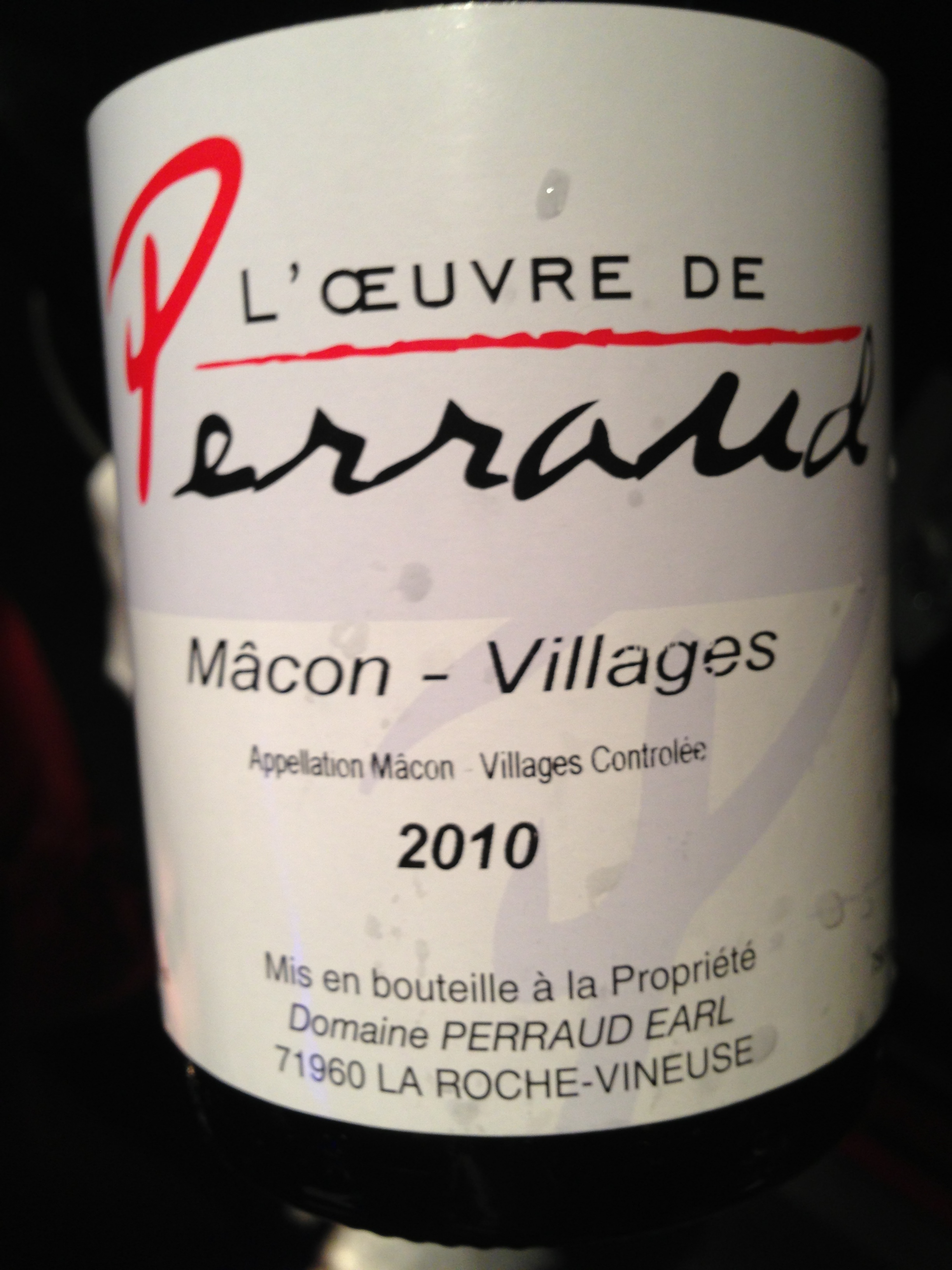
One star indicates a very good restaurant in its category, offering cuisine prepared to a consistently high standard. (A good place to stop on your journey, as defined by the guide). It is worth a visit even out of your journey, I’ve been doing it since the day it was opened.
On this visit we had a selection of the following Dim Sum, and other dishes accompanied by 2010 L’oeuvre de Perraud,Domaine Perraud Mâcon-Villages not a great wine by any standard but perfect for the meal ahead, fresh multilayered with green apple and touches of tropical notes, a light and easy fun wine with no apparent faults.
We had:
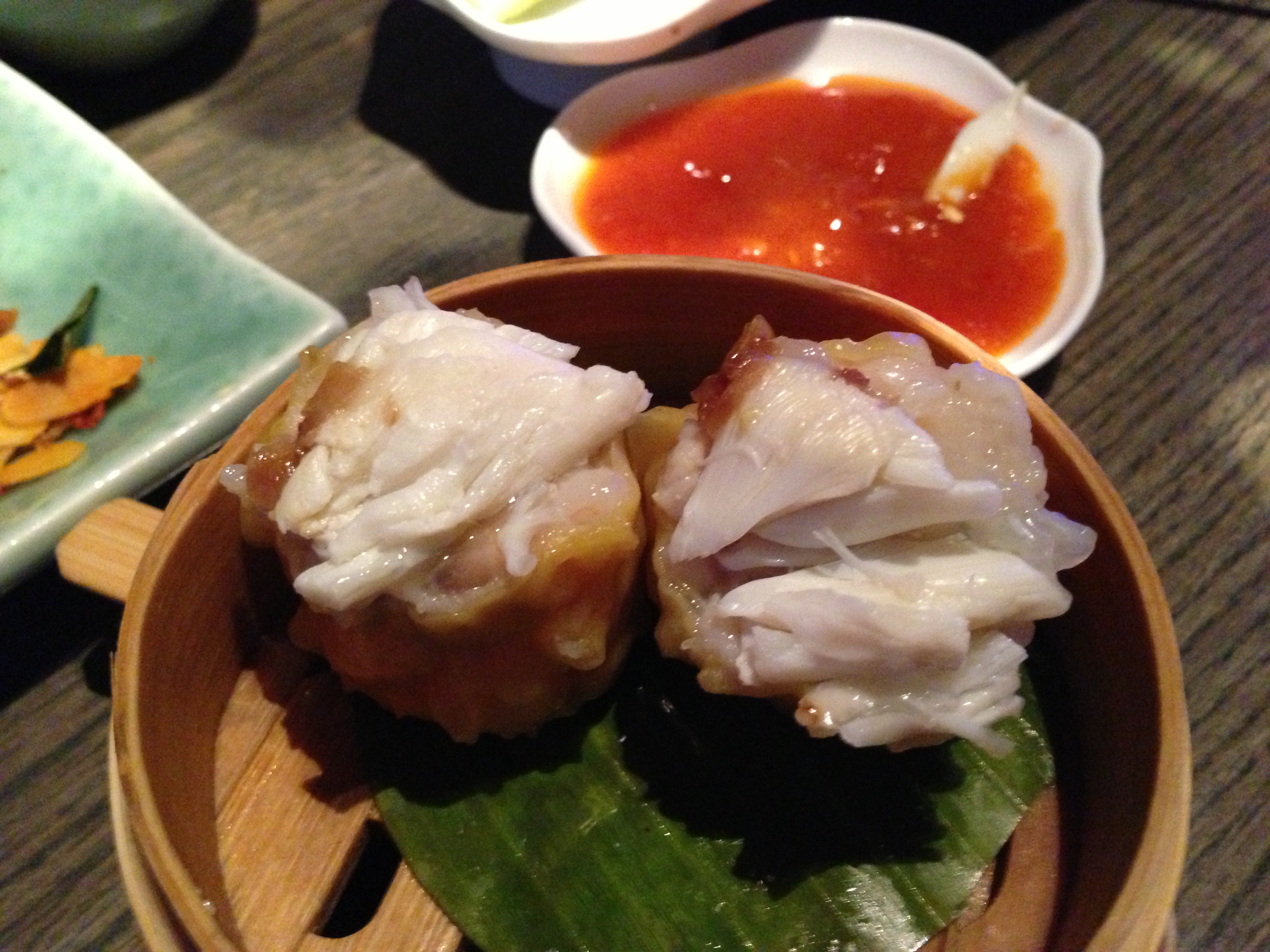 Blue swimmer crab shui mai with pork was an interesting combination of white crab meat and minced pork.
Steamed vegetable dumpling – so well performed and presented the photo says it all
King crab dumpling – simply delicious
Prawn and bean-curd cheung fun an old favorite of mine and one of the ” spécialité de la maison” the perfect balance of oral touch sensation the bite starts at the outer smooth jelly, followed by crispy lining of bean-curd that crunches between your teeth as you get to bite the springy fresh prawn exquisite!
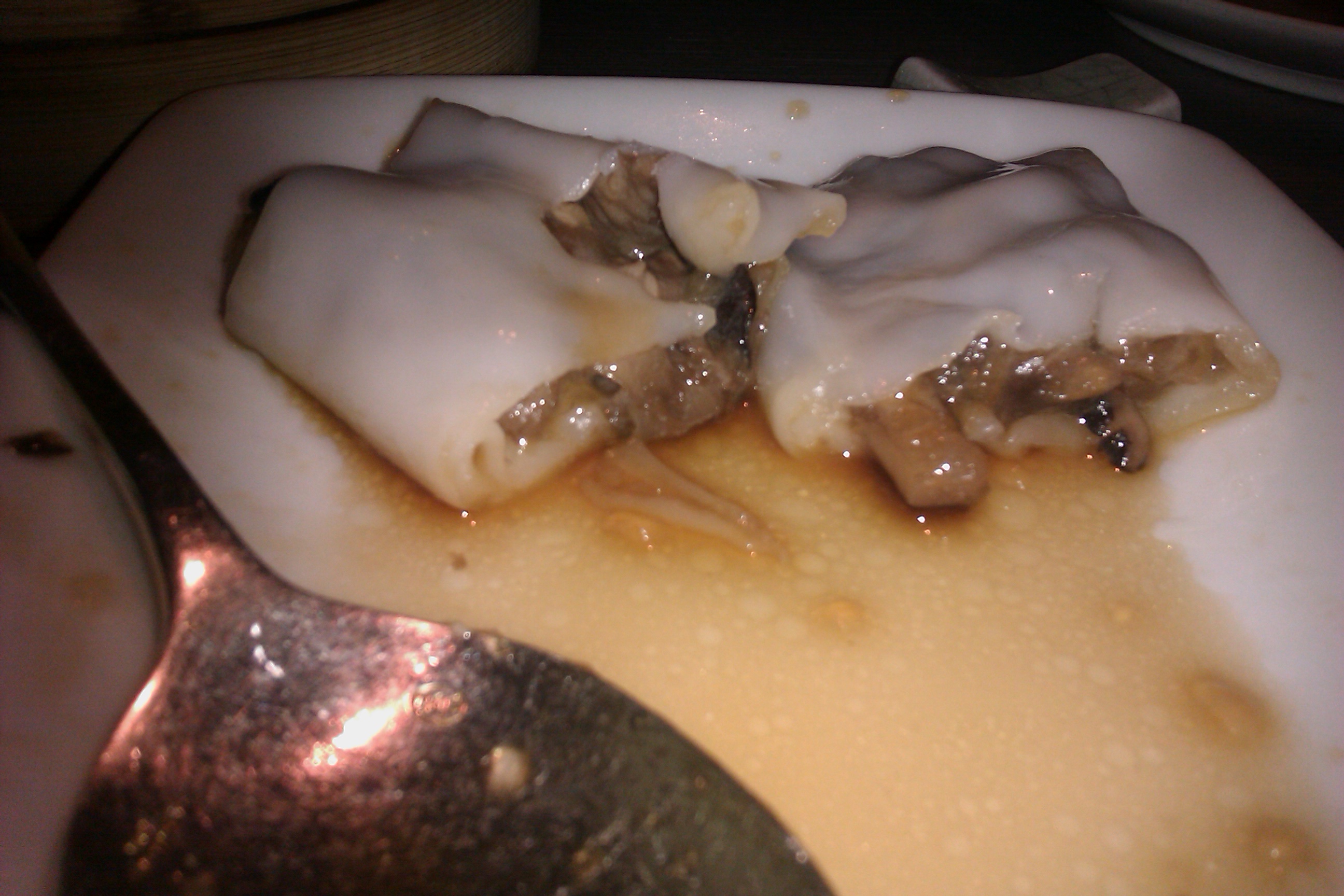
Three style mushroom cheung fun another “house specialty” the gelatinous “flat rice noodle” wraps precisely spiced and deliciously scented mushroom filling.
Of course we could not resist the fried Spicy soft shell crab so we ordered 2 and could have devoured at least 2 more between the 4 of us. The chilly spiced roast almonds with fried and fresh curry leaves and a well fried soft shell crab “swimming” in a yellowish saffron colour, a delight with every bite.
Soft-shell crab is a term for crabs which have recently molted their old exoskeleton and are still soft, most crabs molt their shell and are a delicacy at this precarious stage of their cycle.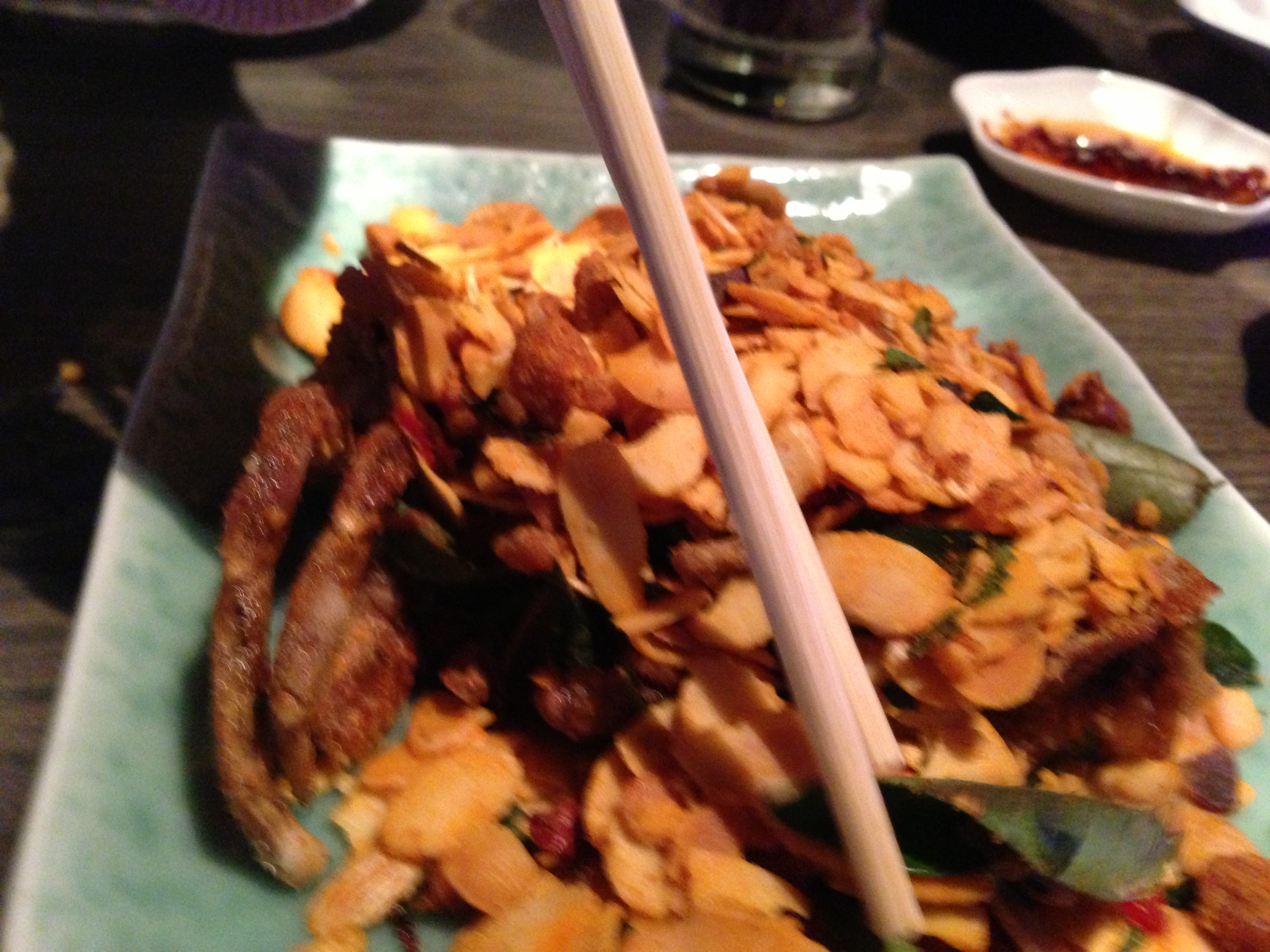
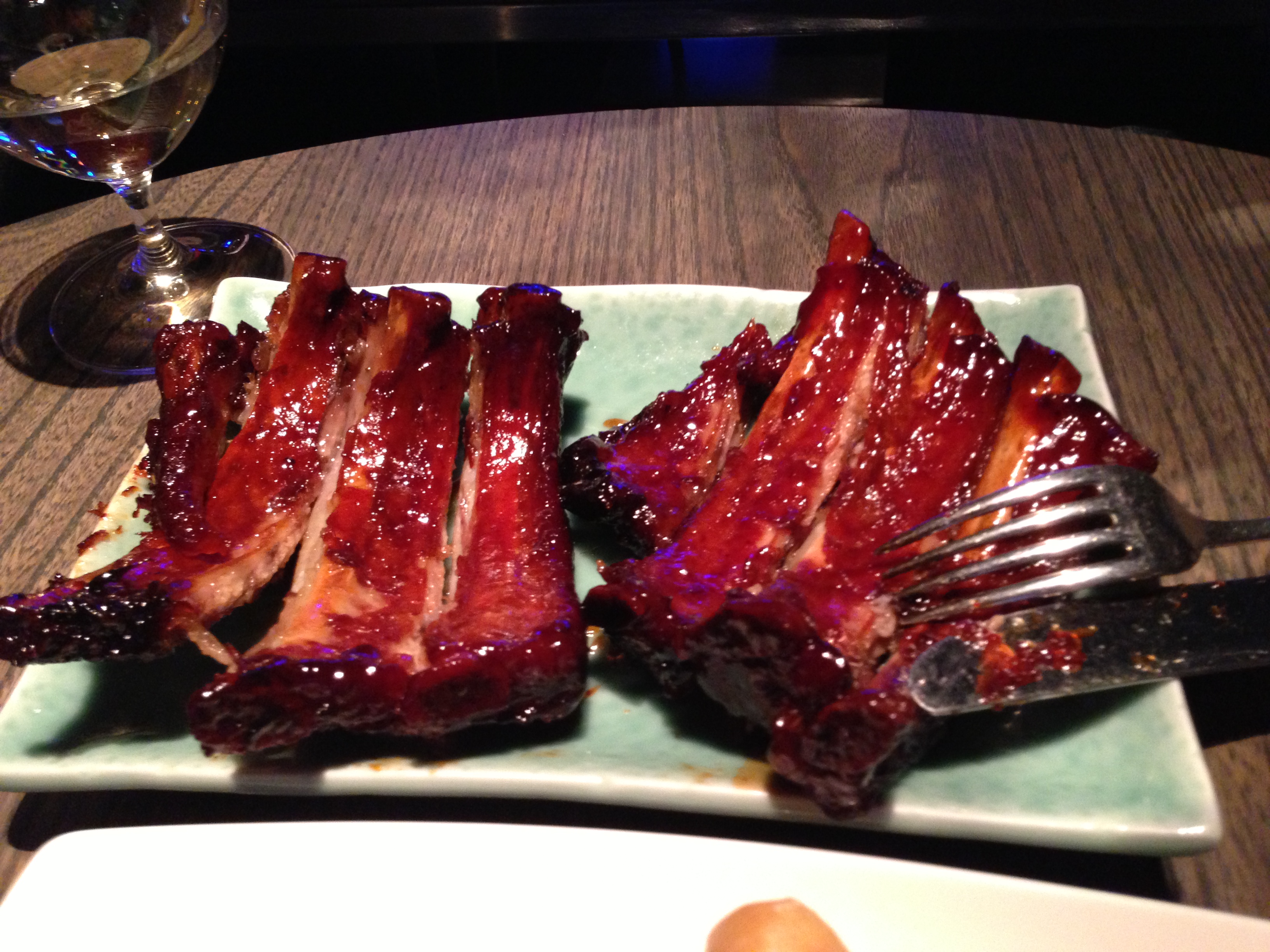 Jasmine tea smoked ribs – so tender and well seasoned to “die for”
Crispy aromatic duck – this is almost a fetish of mine to sample crispy aromatic duck (a most common dish) in every chineese mealand this one tops them all all the fat turned to crunchy crisp deliciously spiced and scented, I like it here, I can skip the whole self wrapping part and just eat it on it’s own.
For vegetables Spicy aubergine, Sato bean, okra and French bean – the wide array of tastes enhanced by the Hedonistic peculiar 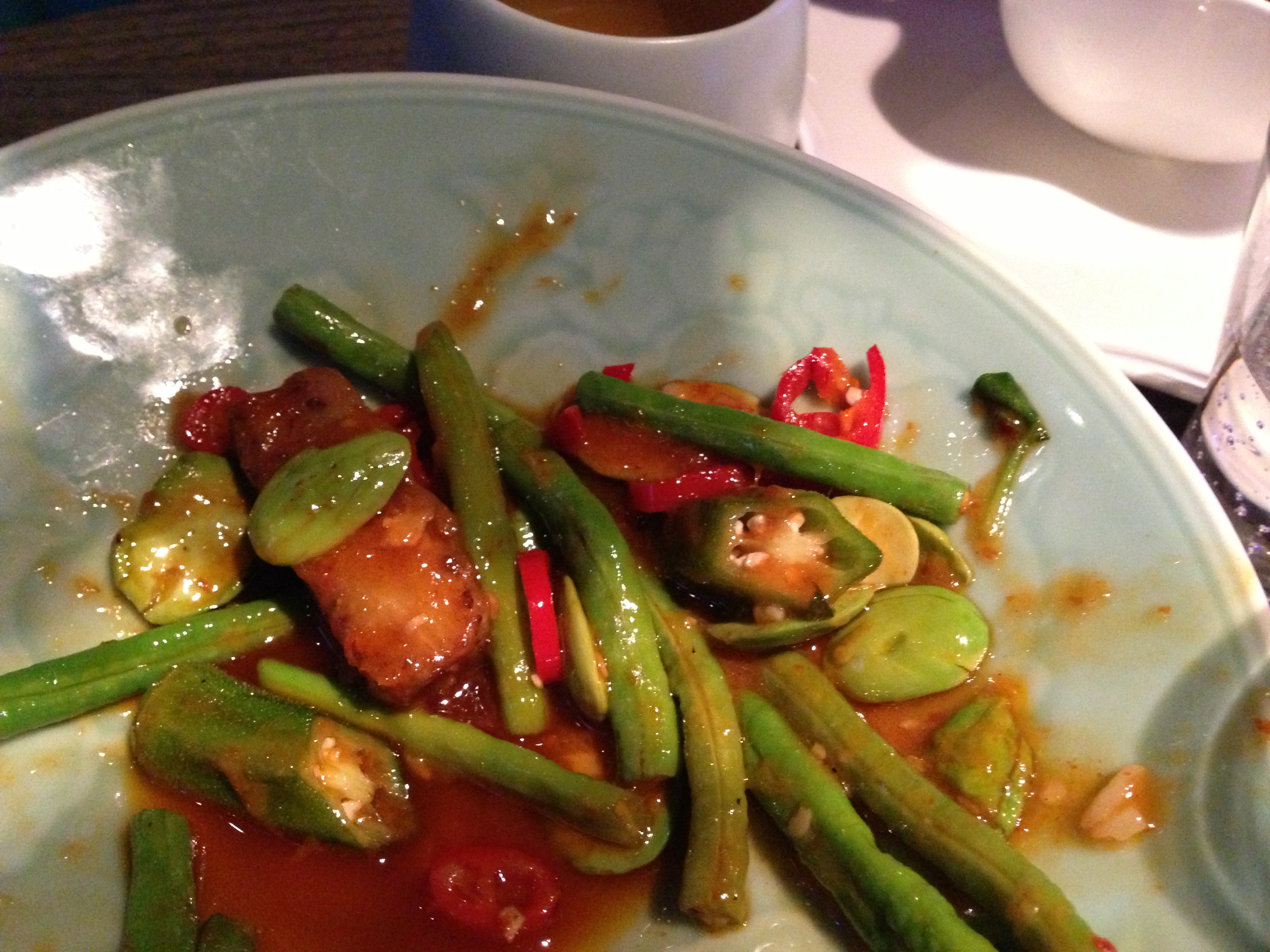 taste of the Sato bean is sensually perfect.
 Sato Bean is a plant of the genus Parkia in the family Fabaceae. It has almonds shape, long, flat edible beans with bright green colour which have a rather peculiar but Hedonistic smell, similar (but stronger) to the Shiitake or even rotting mushrooms. A popular culinary ingredient in most south Asian countries, mainly: Indonesia, Malaysia, Singapore, Laos, southern Thailand, Burma, and northeastern India.
Egg white fried rice with dried scallop and asparagus – my favorite rice here
We finished with a well brewed cup of tea and a complete balance of body and mind was achieved yet again.
The service (as always), was kind supportive informative and efficient.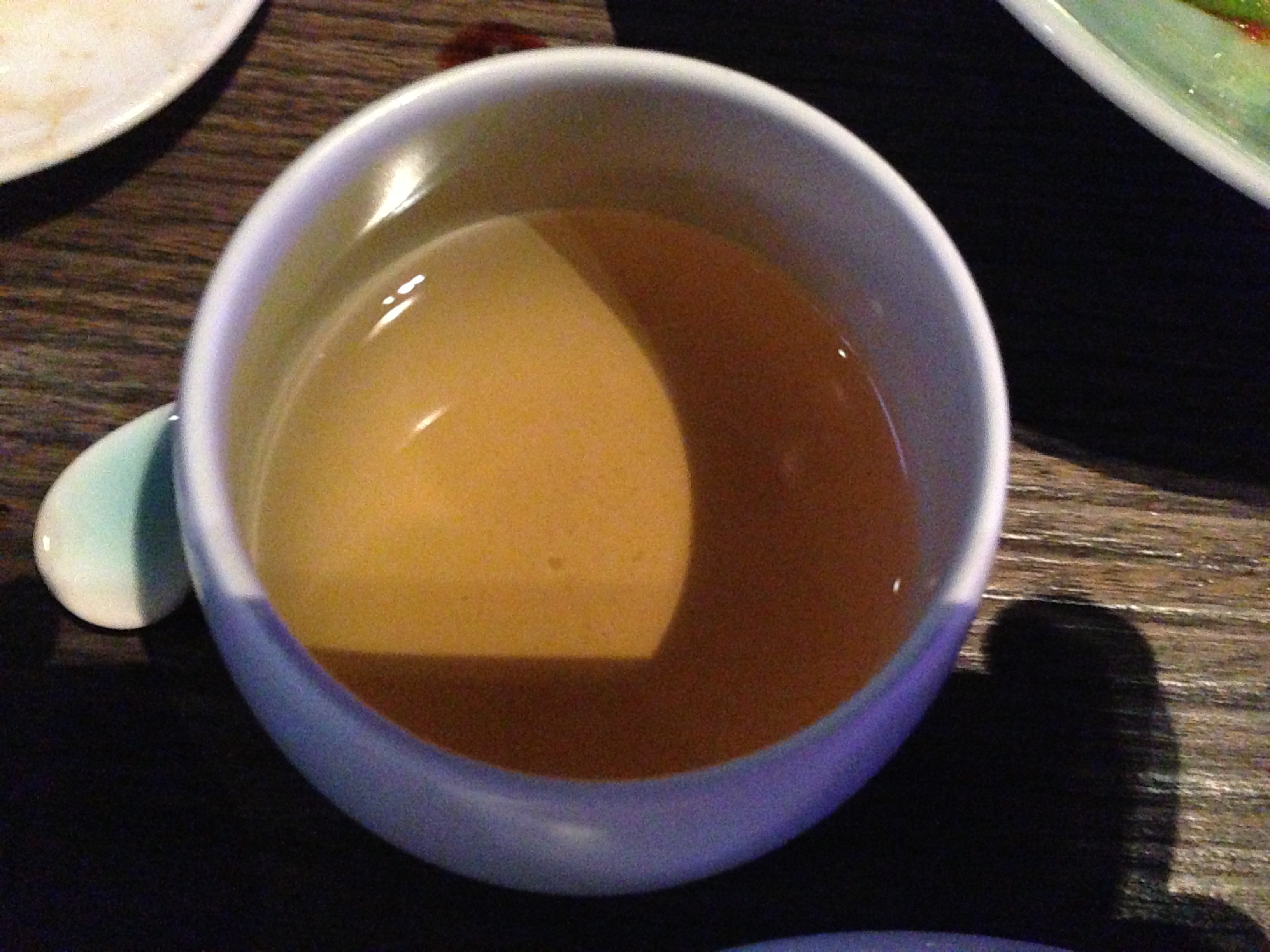
Yauatcha :15-17 Broadwick Street. Soho, London, W1F 0DL,
Tel:+44 (0) 20 7494 8888.
Happy Birthdat dear Daphne
YOUR WINEGUIDE

World dumplings from Momos and Buuz, to Kreplach.
Dumplings from Genghis Khan to Ashkenaz…

Dumplings are made all over the world across borders, cultures, races religions and cuisines. As always when they are made properly they are a great delicacy, always with slight variations, mainly shape, spicing and filling products depending on availability and cost, meat or vegetables according to taste and belief. They are prepared either by steaming, cooking in broth or fried.

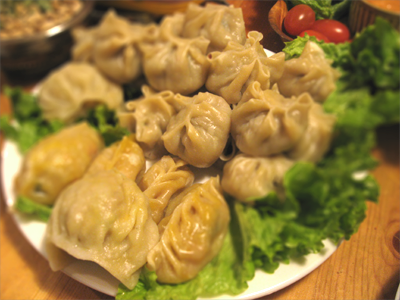
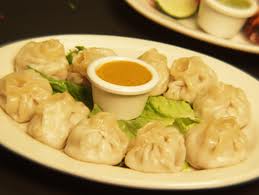
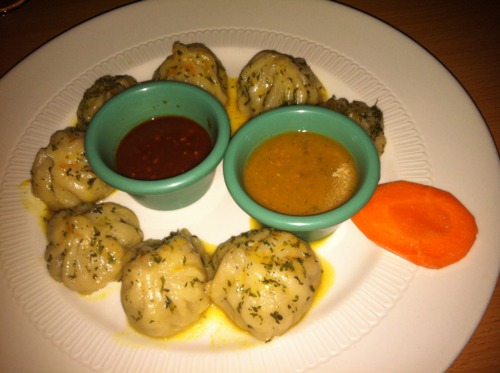
Dishes similar to the Momos of Nepal Tibet Bhutan and the Jewish Kreplach are the Buuz of Mongolia, Khinkali from Georgia and Azerbaijan, Bukharin dumplings Dush Pera , Korean Mandu, the German Maultasche, The Pelmeni & Pierogi in Russia, Italian Ravioli, Tortellini, and the Chinese Jiaozi, bāozi, Wontons or Mantı. Dumplings also come in a fried version: the Chinese Guotie, Japanese Gyoza, Kalduny and many others.
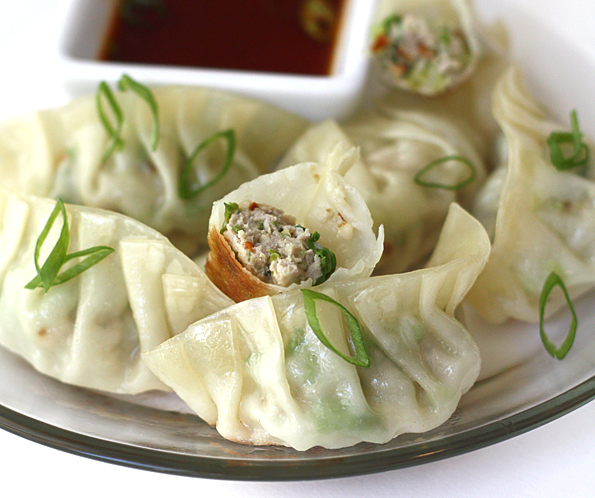
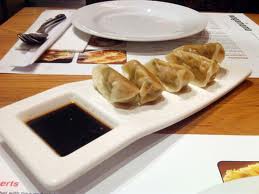

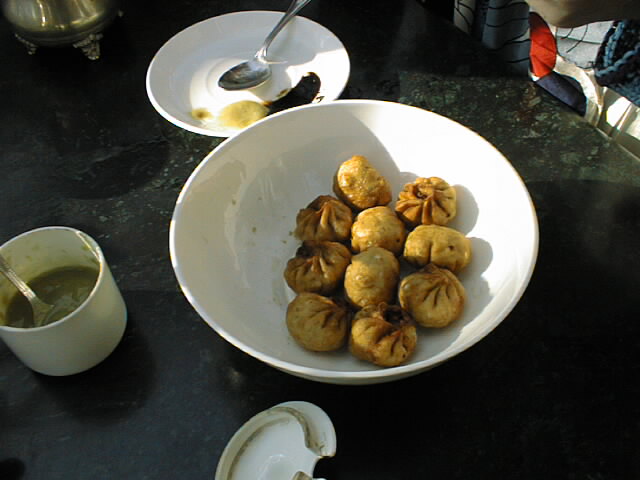
It is Jewish new Year these days, and one of the traditional dishes for the new year is Kreplach (from Yiddish: קרעפּלעך kreplekh, krepl ) these are dumplings filled usually with ground meat, or mashed potatoes boiled and served in chicken soup. And as we said they are similar to all other dumplings. In many Jewish Ashkenazi homes, kreplach are served on Rosh Hashanah (Jewish new year). http://en.wikipedia.org/wiki/Kreplach (as defined in Wikipedia), Sephardic Jews prepare Kalsoness (cooked cheese dumplings for the festivities of Feast of Weeks, the word is derived from the Italian dish Calzone also prepared by Italian Sephardic Jews for the “Feast of weeks” (Shavuot) meal.
Dumplings from around the eastern hemisphere:
The art of dumplings spans from from Japan (longitude 135.8337° E ) to Belgium (06.2273° E )

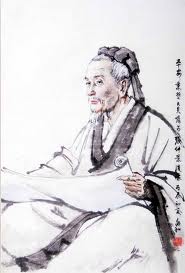 Dumplings originate in China as early as the Han dynasty (206 BC-220 AD) where eating dumplings, became a custom in the capital city of Chang’an (present-day Xi’an in Shaanxi Province). Jiaozi introduced by doctor Zhang Ji of East Han dynasty (2nd century) often regarded as the sage of Chinese medicine.. When he retired and witnessed the poor people fighting hard against the frizzing cold weather. He concocted a wrapped minced lamb meat, and pepper inside a small dough discs into a small ear shape dumpling, boiled them in water and distributed to people to keep them warm in winter till end of Chinese new year, the rest is history, people started to cook those dumplings throughout the year,and eating dumpling became a tradition during the Chinese new year. Later in Tang dynasty(10th century) and Song dynasty(12th century) also had similar dumpling in minced meat in moon shape.

 Jiaozi (Chinese dumpling) is a traditional Chinese food—one of the most widely loved dishes in northern China. In ancient times, Jiaozi, whose shape looks like a horn, was called ‘Tiao” (meaning “horn”). It was also called “bianshi” (literally “flat food”) due to its flat shape The name “Jiaozi” derives from the ancient counting method in China. The Chinese eat dumplings stuffed with meat or vegetables at the junction of the end of the old year and the beginning of the New Year; it is right between eleven pm and one am. Since this period is called Jiaozi (交子) in Chinese, the dumplings people eat during this time are named after it. Later it became Jiaozi (饺子), to indicate it is a kind of food.
The most elaborate piece of cookery in Bhutan, Tibet and Nepal is Momo. Momo’s are “Tibetan steamed dumplings” native to Tibet, Bhutan, and the Nepali part of the Himalayas with slight variations between them. (The Tibetan word momo is derived from the Chinese mómo.)
Momos are made with plain flour and water (unleavened dough) much like European dumplings, , in fact from every corner along the Silk Road from China through Uzbekistan, Russia, Caspian sea region, Black sea region, Georgia all the way to Germany in the north  and Italy along the Mediterranean, in fact, countries all along the Mongols route of conquest, (http://en.wikipedia.org/wiki/File:Mongol_Empire_map.gif) all have their own variation of Momo’s or plain dough dumplings. Did they all start with Marco Polo? Well, the Great Khan, Genghis Khan went almost all the way to Italy 50 years earlier…The Mongols, also have momos they call them Buuz and they are mainly filled with meat.
photo by Andrea NGUYEN
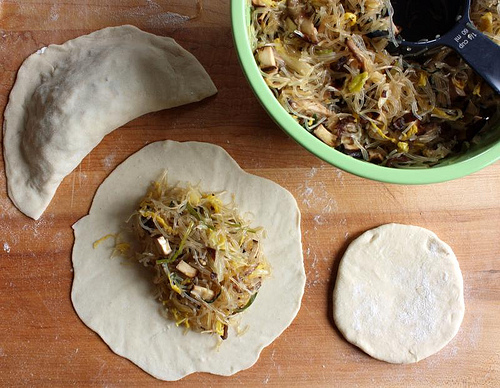 Usually dumplings fillings may be one of the several mixtures:
Meat: Different kinds of meat fillings are popular in different regions of Bhutan, chicken, goat meat, buffalo meat, beef, and yak meat. Minced meat is combined with any or all of the following: Onions, Garlic, Chili, Ginger and Coriander.
Vegetables: Finely chopped cabbage, potato or Chayote (iskush) are used as fillings. (chayotes are widely planted for their shoots, known as lóng xü cài, literally “dragon-whisker vegetable”). Along with the young leaves, the shoot is a commonly consumed vegetable in the region.
Cheese: Usually fresh cheese or the traditional Churpi is used. The hard variety of this stone hard sour milk cheese, is common in upper Nepal, and Bhutan, chewed for hours very much like Betel nut (without the red stains on the teeth)!!!
Seafood: In china and Japan shredded shrimps and crab meat are also used as dumpling fillings
I have encountered momos in different parts of southeast Asia from china through Tibet and the north of India in Nepal and Bhutan and they are all the same in principle yet completely different in taste and filling varieties, and the serving method.
In Xian (China) the eastern gate to the the Silk Road, it is served steamed with a soup / broth on the side, It is believed that eating dumplings on New Year’s Eve brings good luck and happiness. Furthermore, since the shape of dumplings is similar to that of ancient Chinese gold or silver ingots, they are also believed to bring wealth if you have them that eve. Later, when people got married or gave birth to a child, they usually treated their guests with Chinese dumplings, which gradually become an essential ritual food for special occasions or during holidays in northern China. The Chinese dumpling consists of a wrapper and its fillings. There are two main kinds of dumplings: those with vegetable and those with meat filling. The latter include chicken, pork, beef and mutton, etc; whereas the former are Chinese cabbage, celery, Chinese leek, carrot and cucumber, etc. Seafood such as crab, shrimp and fish can also be used as fillings.
 When placing the raw dumplings in preparation for cooking, it is desirable to arrange them in a circle, symbolizing family reunion. When making dumplings for New Year’s Eve, people may hide a coin in one of the dumplings. The person who finds the coin at dinner will likely have good fortune in the New Year, (or just break a tooth).
When dumplings are boiled in water, cooks try their best not to break the skins or wrappers. If some are broken, it is best not to say so because it is not auspicious to say “broken” during the New Year season Chinese dumplings can be cooked in various ways boiled in water, and eaten together with mixed flavorings such as vinegar, garlic, sesames oil and light soy sauce or steamed in a steamer or flied or baked in a pan. In Henan and Shaanxi, people usually boil dumplings and noodles together, thus this food is also called “Ingots stringed with golden threads”, while in some provinces in northeastern China and Inner Mongolia, some people boil dumplings with pork and pickled vegetables in a pot, adding a special flavor to the dumplings.
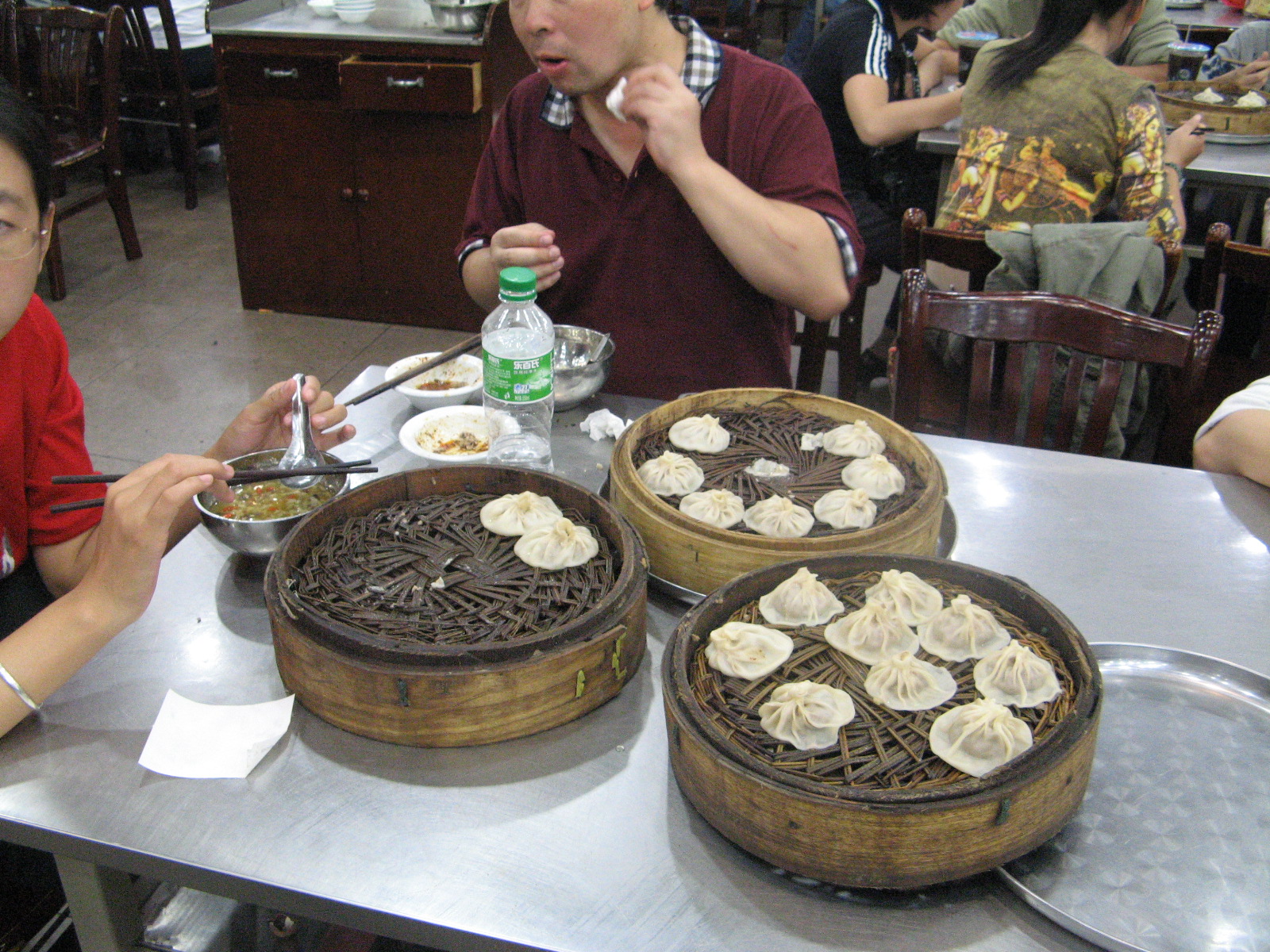


Best dumplings in China, for me were at Jiasan Guantang Baozi , in Xian.
Address: Bei Yuan Men 93, Xian, Shanxi Province Phone 029/8725-7507
The restaurant is located, inside the food market north of Drum Tower. This is still the most popular of the Jia Brothers’ restaurants, you’ll know you’re there when you see the endless queue of people in front the a blue arch with glittering lights over the entrance. Inside the walls covered with photographs of Xi’an notables — Writers, Musicians, Sportsmen etc.. The specialty dish is guantang baozi, of beef, lamb, or “three flavors” — lamb, mushroom, and prawn dumplings. Each dumpling somehow already contains steaming-hot soup inside, (let them cool before taking a bite) and comes with a side broth.
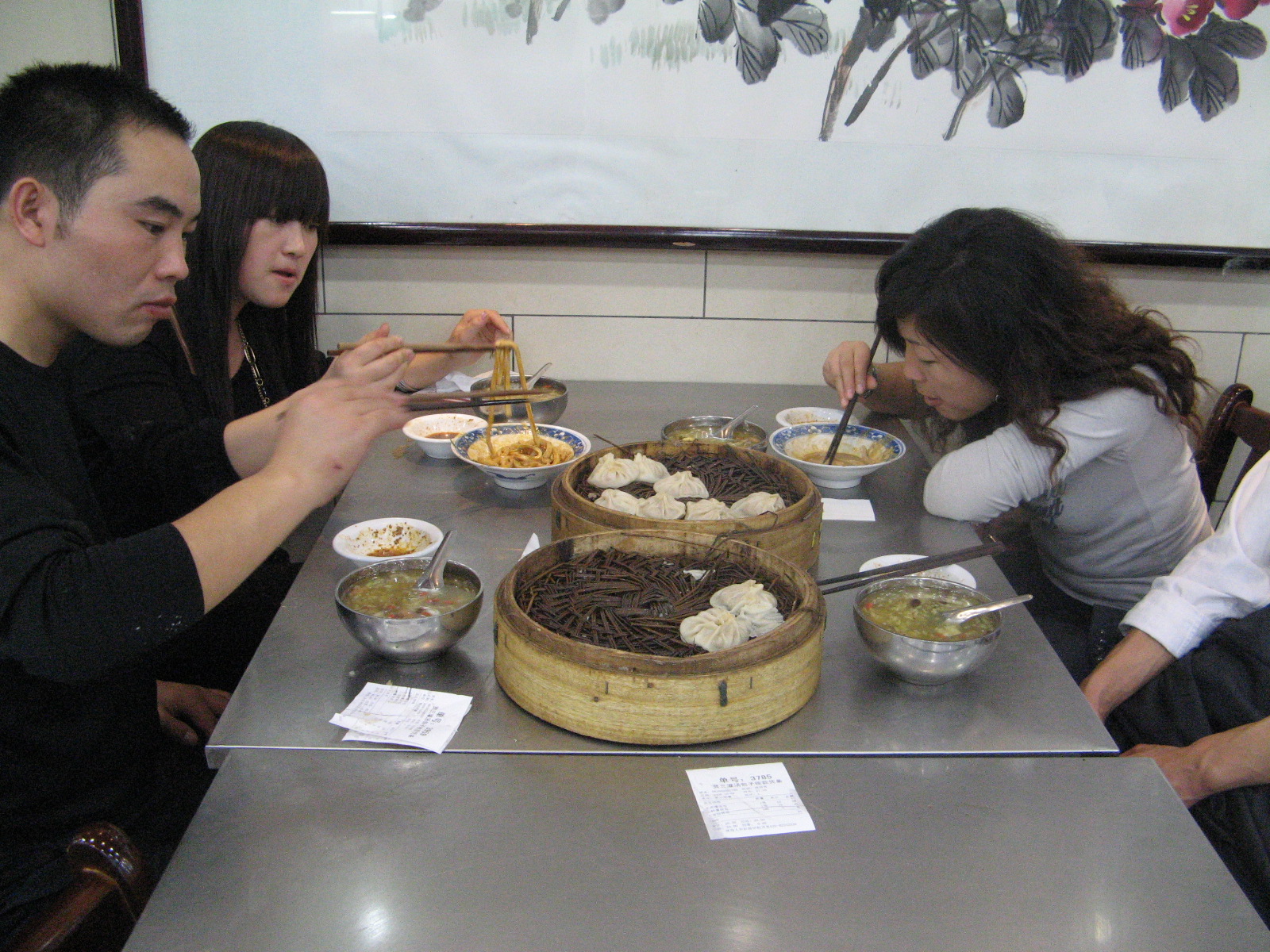
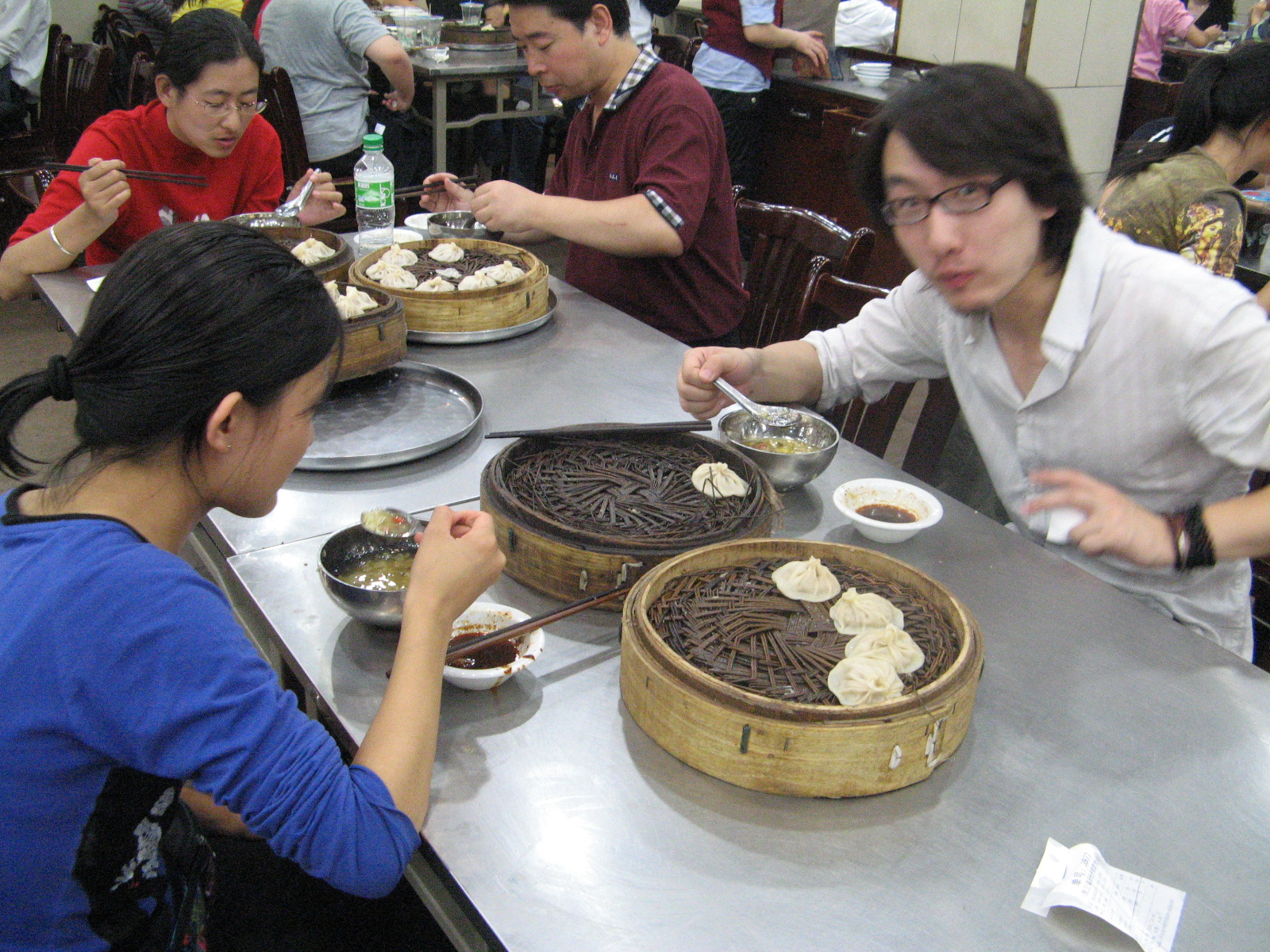
Most people come just for their dumpling portion which is served in steaming hot in bamboo trays/baskets hipped on top of each other. It is inexpensive, fresh and tasty.
In Tibet and Tibetan villages in Northern India it is served mainly as a dumpling inside the soup, in Nepal it is served with hot chili broth poured over the dumplings, and in Bhutan served on its own with thick chili sauce as a side spice, In fact, in Bhutan, it seems that chilies are usually the vegetable of Bhutanese cuisine and not just an added spice to the food. In Bhutan you get momos with Chillies, Yak cheese and Ferns, these ferns are picked young when still tender and they taste like Asparagus, served as a veggie side dish.
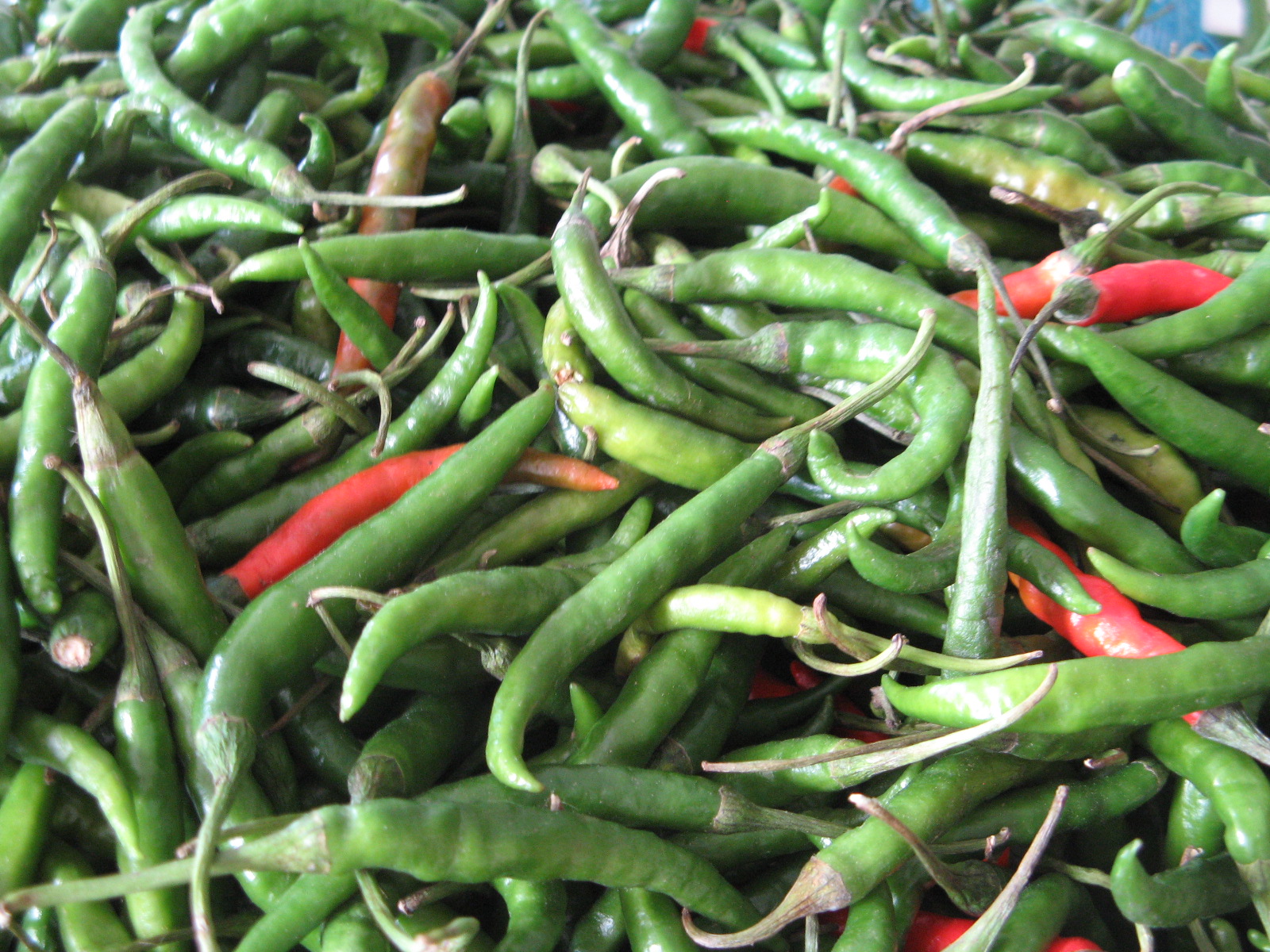

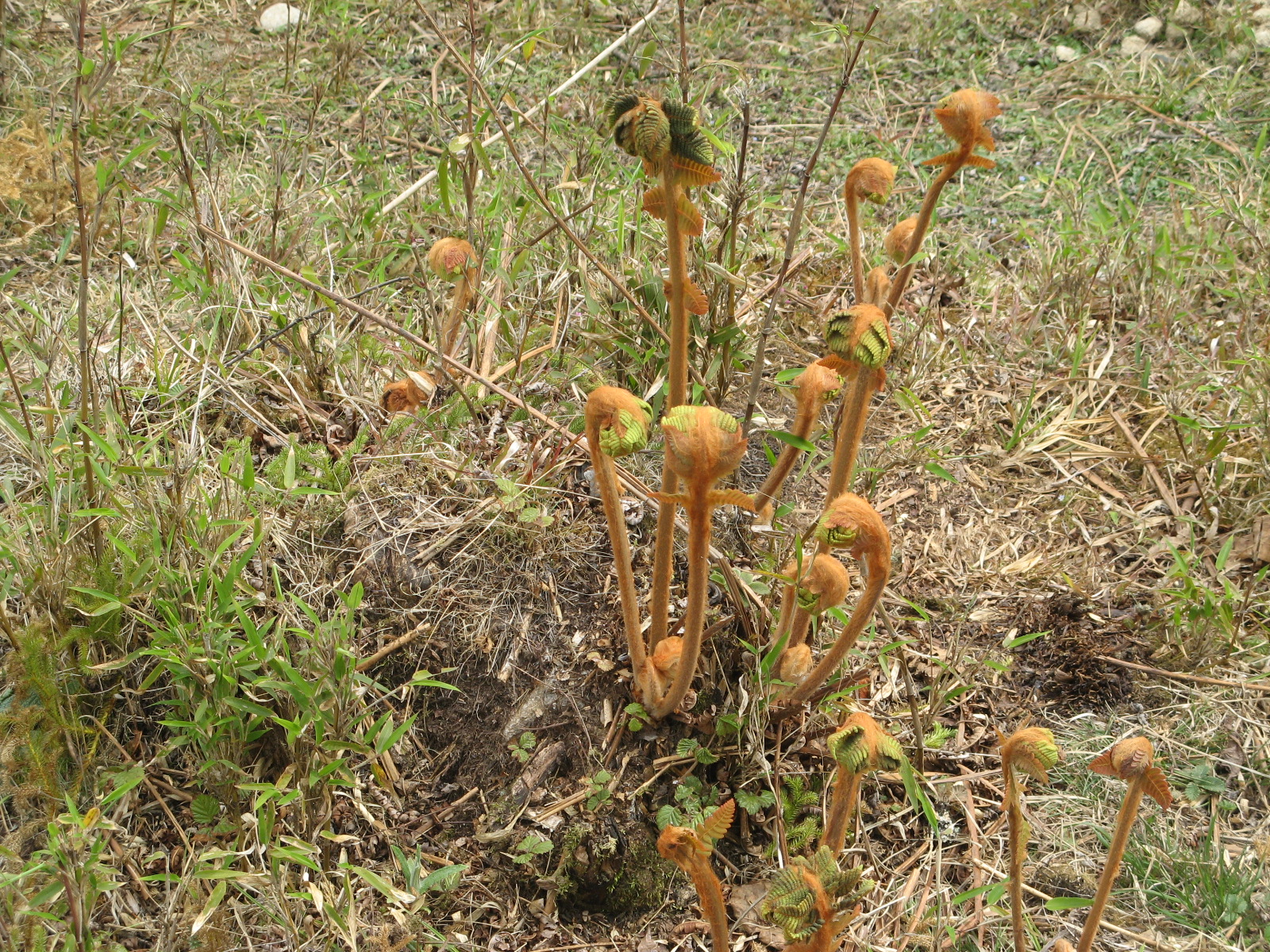
In the Himalayan region Momo is served either on its own with chilly sauce on the side, or in a chilly meat soup/broth. At best Momo’s come with hot sauce made of broth of yak bones and chilies and the aroma in the air that is floating down the market street is enchanting and irresistible. Momos are served everywhere, at street stalls as “fast food” and at the best restaurants.


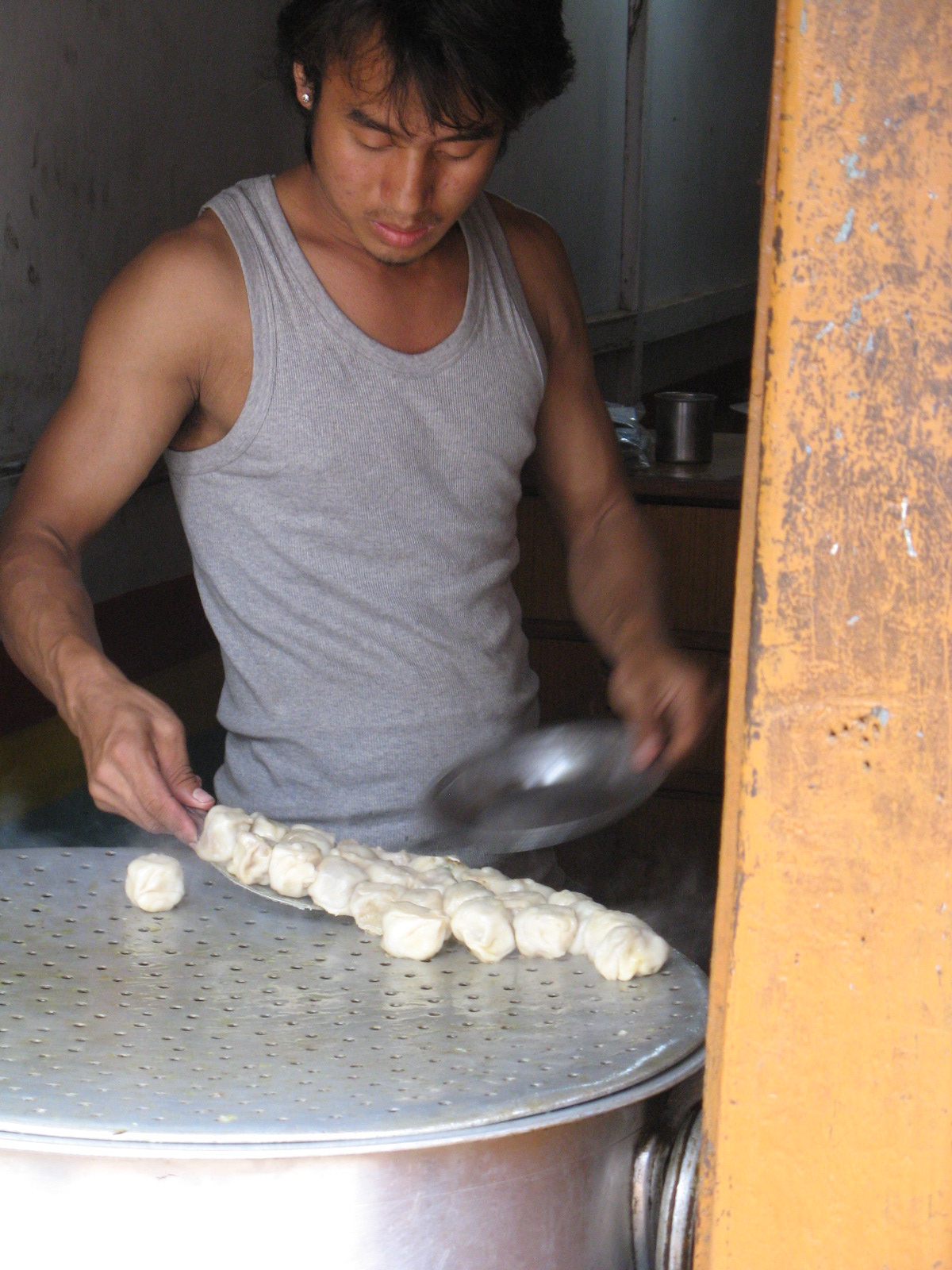
In this region, my favorite Momo’s of all, where the Nepalese momos. Of those the ones I had in small establishment in the market of the small town of Bhaktapur, (near the potters market). Bhaktapur is one of 3 Royal cities in the Kathmandu Valley in Nepal and considered a cultural gem, rich with a fascinating history and enchanting Architecture. There was this small “hole in the wall” with a long line of patient people awaiting their turn to enter the humble “shop” with just 2 tables that seat 6 people each. There is an “order” of entry you eat and go and the seat is immediately reclaimed by the next in line. Here they serve ONLY Yak’s meat momos with a biting chilly broth soup to die for. In fact it is the smell of the broth that spreads through the market that allured me to this small “shop”, and what a delight it was! Almost every 5 minutes a fresh tray of momos is carried down from the floor above the sitting place, up there, a group of 3-4 ladies make the dumplings to be freshly served. There is a short wait of about 5 minutes after the change of tray on the steamer, the demand is so high.
Tibet in Exile – in Mcleod Ganj near Daramsalla India, Tibetan dumplings are served cooked in soup or fried on their own usually filled with vegetables.
Dumplings in various filling and dough casings are served in Dim Sum meals, mainly for Lunch in “China Town” restaurants over the world.


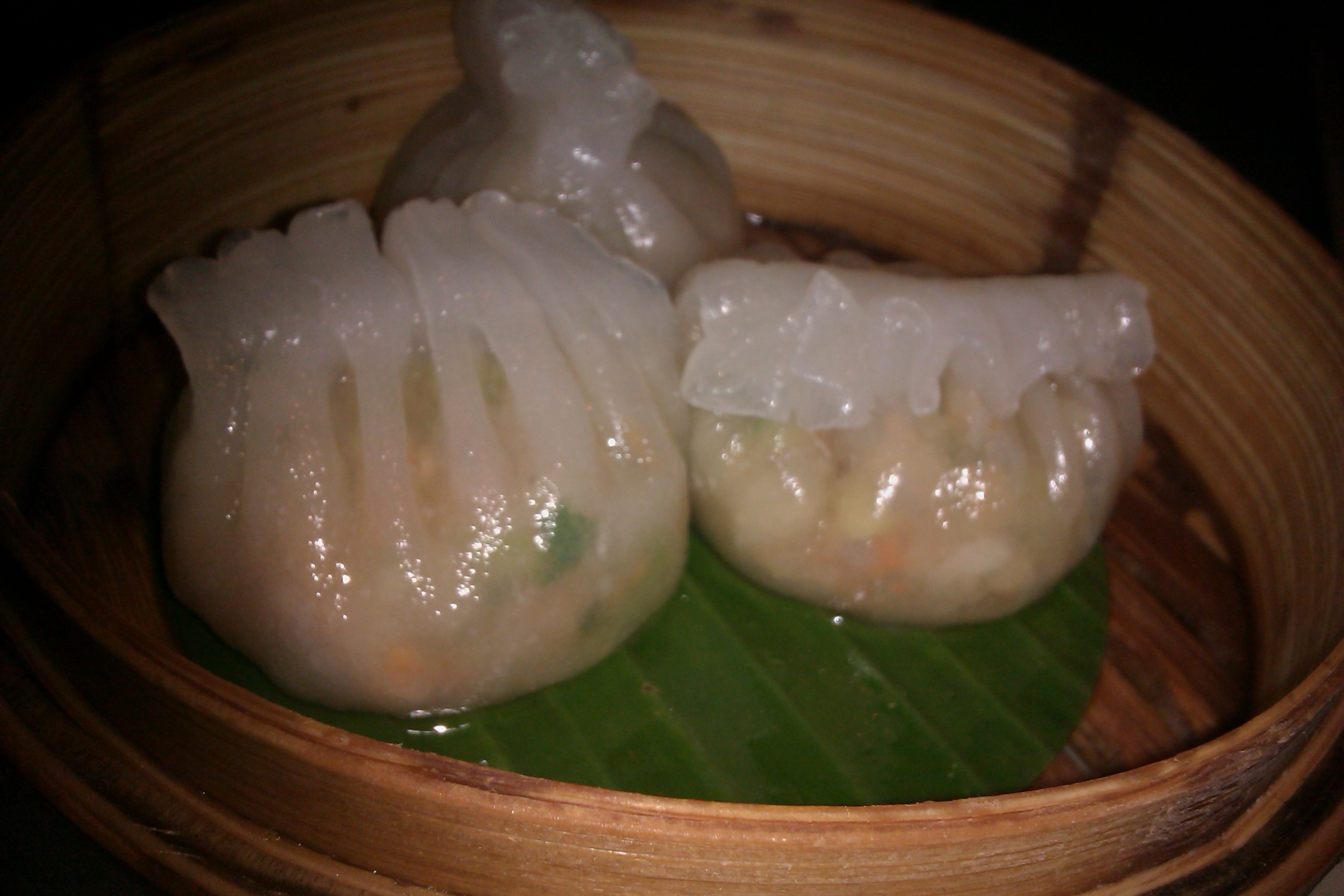
For me, Yauatcha (a dim sum Michelin star, London Soho restaurant on 15 Broadwick Street London, W1F 0DL, Tel: 020 7494 8888), is worth mentioning, here they serve a great variety of delicious dumplings from all over China. With a slight diversion from the dough dumplings of northern china along the Silk Road I have to mention one of my favorites Cheung Fun, this is a rolled variety of steamed rice roll or rice noodle roll, Cheung Fun, is a Cantonese dish from southern China and Hong Kong, commonly served as a variety of dim sum. It is a thin roll made from a “wide strip” of shahe fen (rice noodles), filled with shrimp, pork, beef, vegetables, or other ingredients. Served with plain, sweet or hot soy sauce poured over the dish upon serving. The rice noodle is also known as chee cheong fun. These are not “true dumplings” they are made of glutinous rice flour and water, but resemble the idea and are so delicious especially the Three Style Mushroom type.
For others (My friend Judy Chang) the “perfect” dumpling from the Michelin star shanghainese dumpling from DIN TAI FENG in Taipei

The Italian Ravioli and Tortellini deserve a separate post (in the near future)
For Rosh Hashana meal (in my family), the Lady of the house always prepares Kreplach the Jewish version of Dumplings:
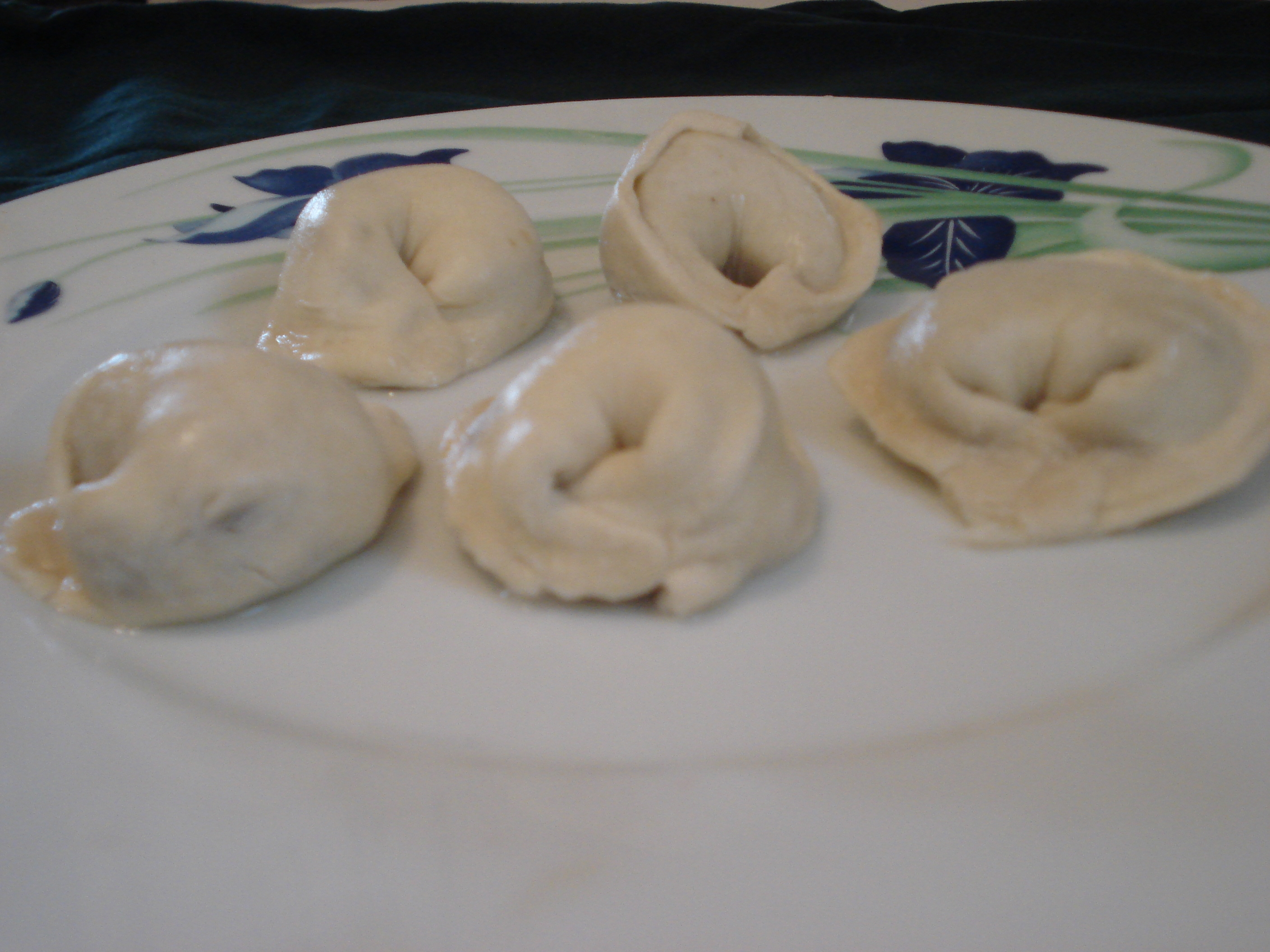
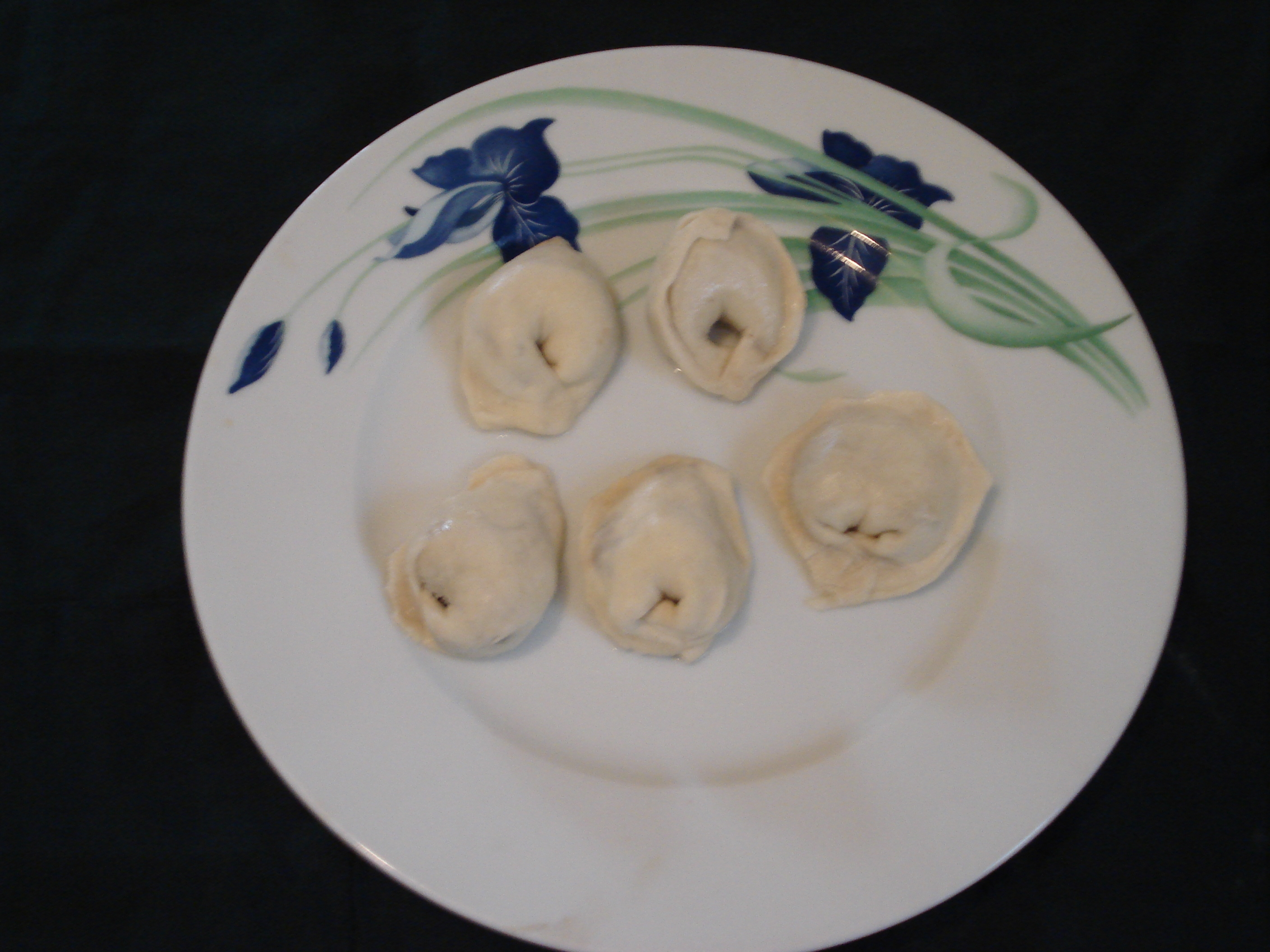
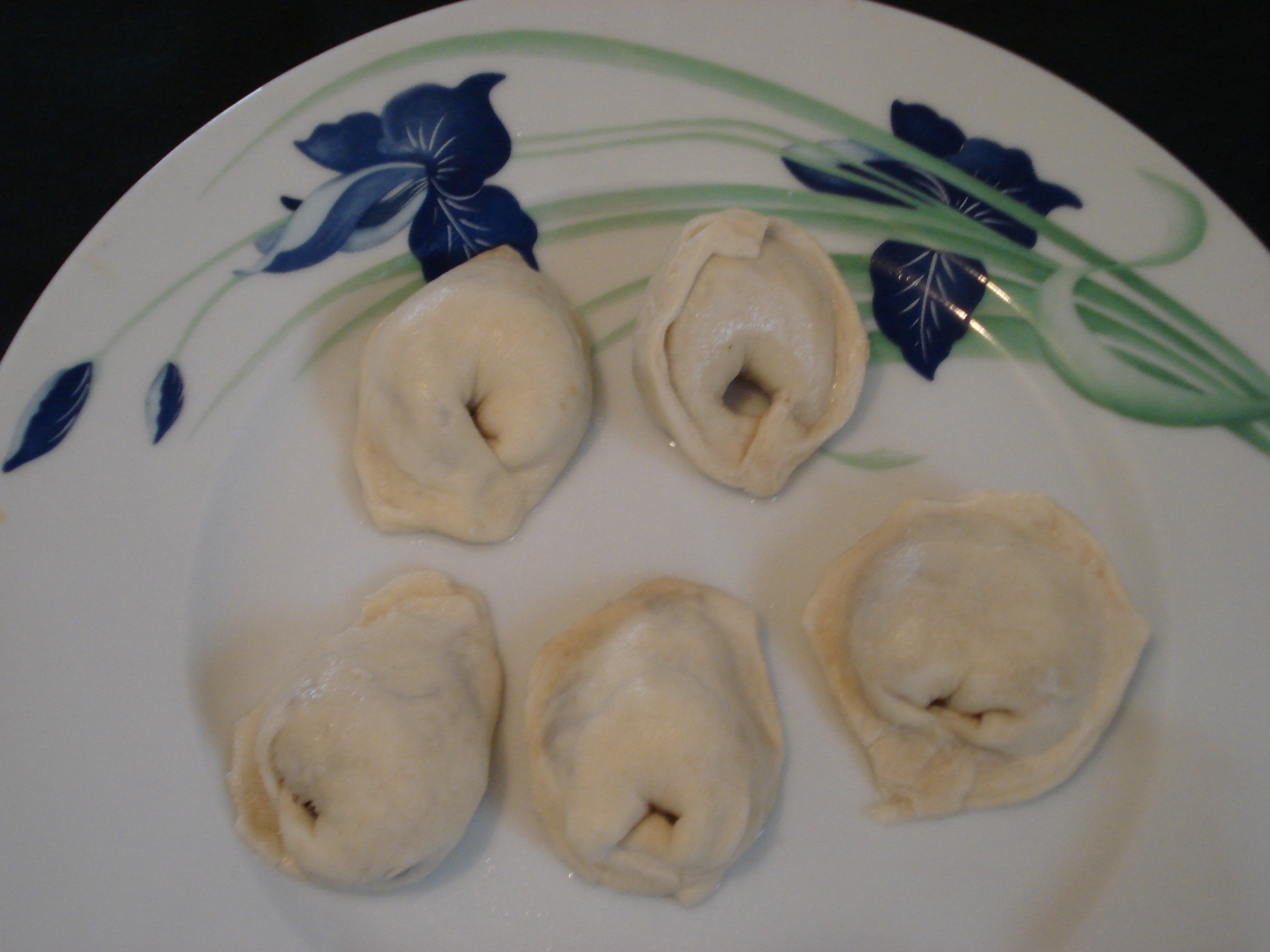
My Grandmother’s recipe prepared by my Mum – Savta Aviva:
For the dough:
3 glasses plain flour (about 500-600 grams), 1/2 teaspoon of salt
50 grams of Margarine (to keep it Kosher), 1 glass boiling water, 1 egg
The Filling:
1.5 Kg of stewing beef (shoulder), 6 large Onions, 3 Carrots
2 cloves of Garlic, Salt, Pepper
Prep:
The dough:
Kneed 1 glass of flour and softened margarine, add the boiling water and mix thoroughly and set aside to cool, add the remaining flour and egg kneed well to get a smooth dough (add water or flour to get a nice “pasta dough” consistency not too sticky not too hard). Divide into 4 “balls” cover with cling film and keep refrigerated.
The filling:
In a stewing pot, fry 3 of the onions until golden brown add the carrots (peeled and cut to 1inch pieces) add and seal the meat on all sides until brownish, add salt and freshly ground pepper, 2-3 whole cloves of garlic, add water to half the meat height and cook in a pressure cooker for about 90 minutes.
In a separate frying pan fry the other 3 onions till golden brown (adds sweetness to the filling) and optionally fry in the same pan half a Kg. of chicken livers (to enrich the filling)
Grind the meat livers and onions in a meat grinder Twice to get a smooth meat paste finish spicing with salt and pepper to taste.
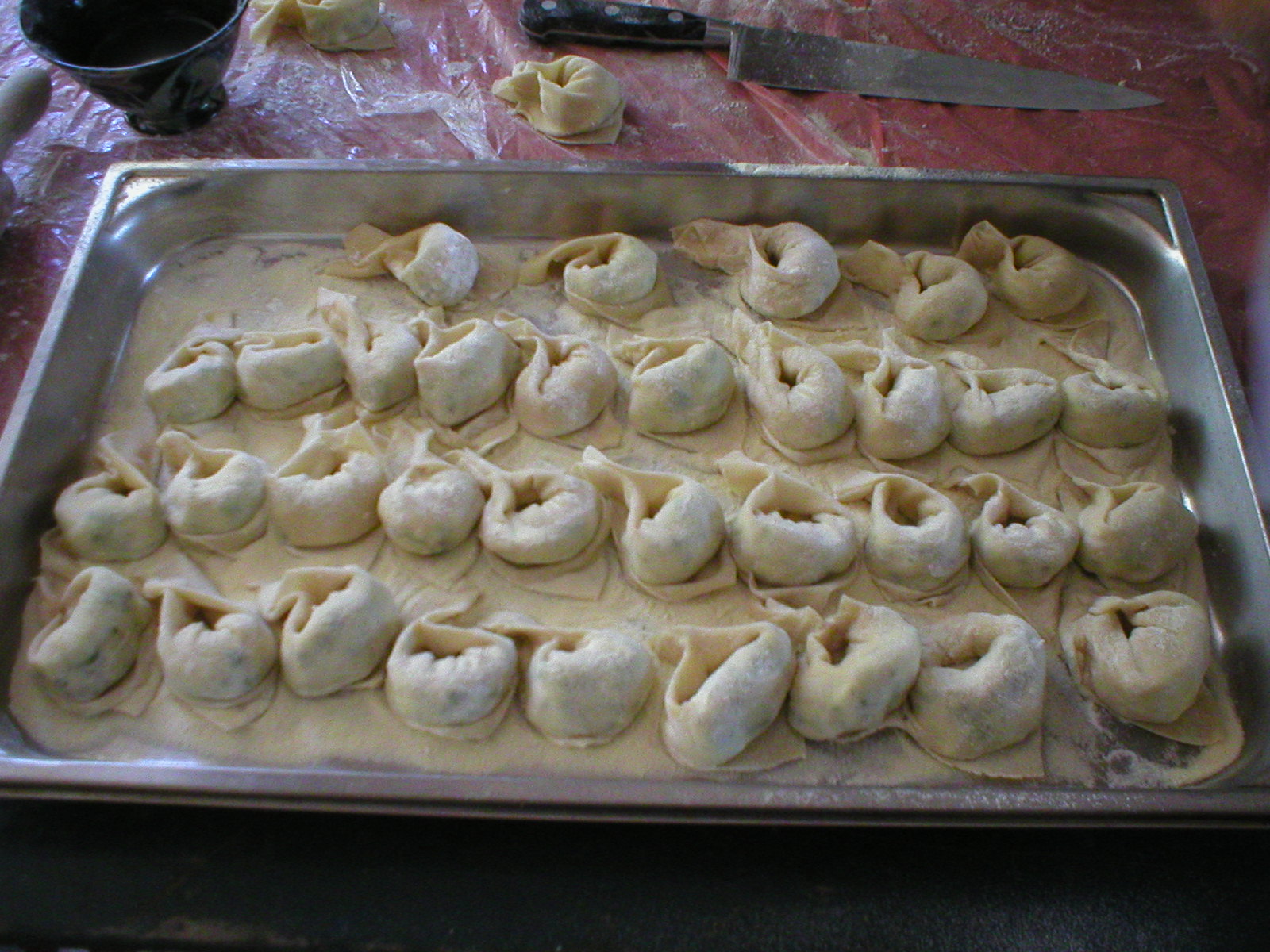
Roll the dough thinly, cut to 9X9 cm squares put 1 tablespoon of the meat filling in the center of each, fold over to form a triangle, seal the edges with slight finger pressure, connect two of the triangle edges (ears) to form a ring.
Cook the Dumplings/Kreplach in chicken soup for 5-7 minutes (till the dough is ready and the dumplings float up)
Set aside serve hot or add cold to clear chicken soup.
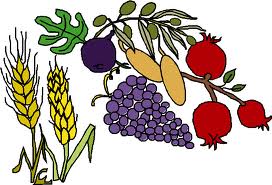
All Jewish holidays start with wine blessing, The Grape is one of Seven Species, (seven agricultural products), that are listed in the Hebrew Bible (Deut 8:8) as being special products of the Land of Israel. Wheat, Barley Grape, Fig, Pomegranates, Olive, and Dates.
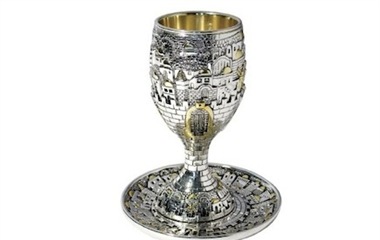

Wine is the Most important drink for men it nourishes and fills with happiness, therefore a special blessing was formulated especially for it: “Creator of the Vine fruit, Grape” “בורא פרי הגפן”. Since unlike other fruit juices (blessed as fruit of the tree) Wine transcends to a higher level from grape juice to wine, and the special blessing is thanking the Lord for this great gift of WINE (these are the words of Jewish sages not mine), but as you imagine I certainly do concur on this matter with all of them.
So, drink and be merry, with any wine of your preference, white and red go well with this dish
Happy New Year – SHANA TOVA to all.
The Wineguide
Memoires Gastronomique 1 – Fredy Girardet
The phone does not stop ringing at the hotel de Ville. It must be the first Monday of the month. This is the only day you can book a table at Fredy Girardet’s Restaurant Girardet fg in Crissier, not for the coming month but rather 3 months in advance. Their phone is ringing constantly mine, well to be exact my friend’s Kobi‘s auto dialer is working overtime and the line is engaged all the time. Luckily autodialing prevails and Kobi books us a table for two at Fg, the 80’s are about to end in a year or two and we’re about to meet the chef of the century and his creations for the first time.
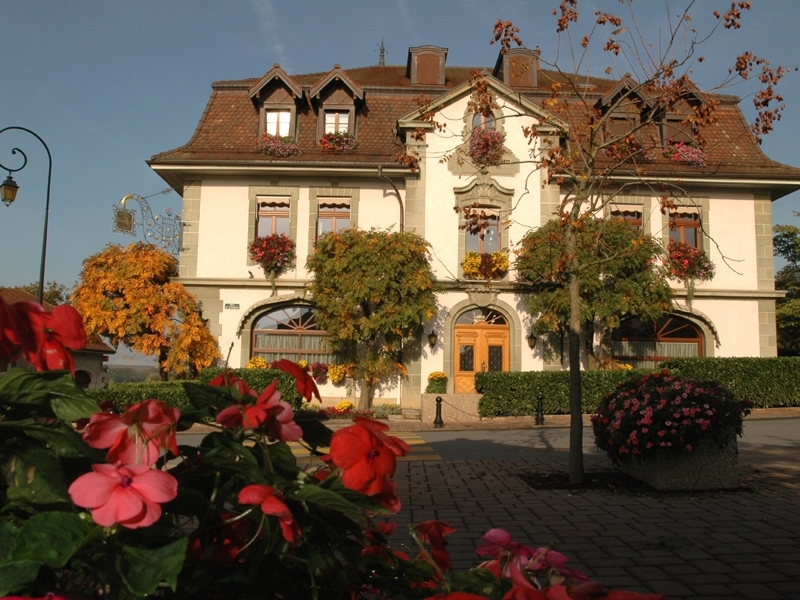

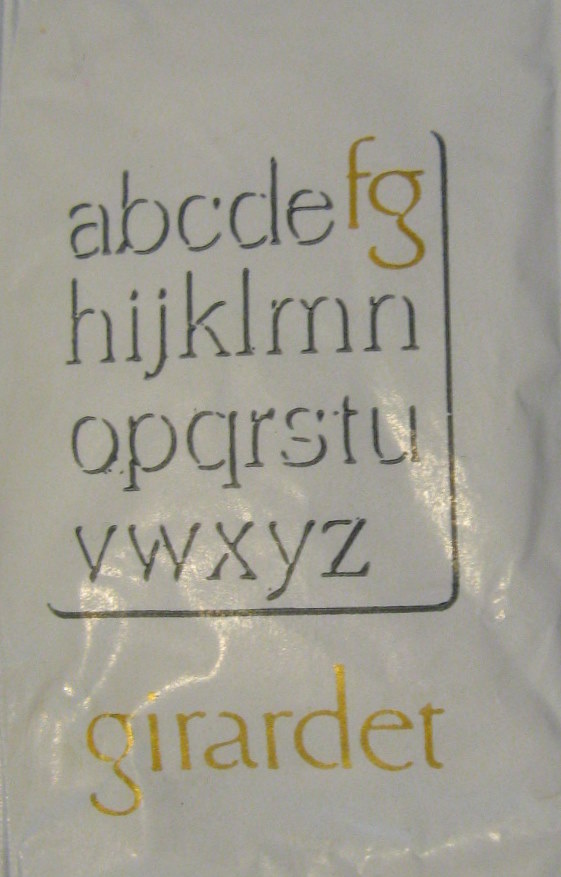
Great meals or dishes leave us with memories that linger on for a long time beyond the event. A good meal at a perfect restaurant is an event, a lifetime event. This is surely the aspiration of every chef, cooking a meal for his guests. A meal to remember, but alas very few manage to attain this goal.

Contrary to the notion that the perfect wine as a whole, is relying on the imperfection of its parts: (https://wine4soul.com/2012/05/02/perfect-wine-and-the-paradox-of-perfection-12/), A perfect meal must be perfect in all its aspects: The products, cooking technique, balance within the dish, balance between the dishes on the menu, the decor, ambiance, service, wine list, general atmosphere, even light or the ability to see the food or read the menu and many more. But above all, it is the chef’s declaration of his own taste and preferences as they are expressed in each and every dish. No “almosts”, no trying to aim slightly low, to a mediocre common denominator taste, but rather a declaration: Welcome to my restaurant here you will be served (with the outmost of courtesy) my dishes, spiced the way I like them, presented the way I see them and Bon Appétit !
A perfect meal is a memory for life. Some people even have to talent to be able to relive the memory / experience as a real sensation of lingering heavenly taste. I for one carry these good memorable memories and they last a very long time, forever? I can only hope so.
I must say I had quite a few of these memorable culinary moments, that enriched the “essence” of my life, or as defined in Traditional 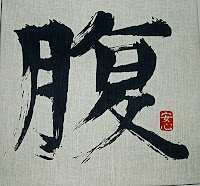 Chinese Medicine (TCM), JING:: 精; it is the Chinese word for “essence”, it is considered one of the Three Treasures (Sanbao) 三寶. Ancient Chinese sages said we are born with a fixed amount of Jing, consume Jing continuously in life; by everyday activities and when jing is completely consumed… we die. Jing can rarely be replenished, mainly by forms of stimulation such as meditation, Chi Gong, sex practices etc. I guess that being a part of an event I describe as a perfect meal is without a doubt one of the few Jing replenishers. It is good for the mind, body and soul, the perfect medicine.
Reminiscences of great meals are a great joy and to start my Gastronomic diary, a meal at Fredy Girardet fg Restaurant is the most fitting prelude.
Fredy Girardet was born on 17th November 1936 in Lausanne Switzerland. At the end of September 1996, Fredy Girardet, chef of the Century and owner of restaurant fg in Crissier, Switzerland, announced that he will retire from the Restaurant business at midnight on 30.11.96 as he turned 60, and the world of gastronomy Cried.

After 40 years of work in kitchens, twenty year of them at his own restaurant (at the hotel de Ville at the center of the village), he deserved a break but what about us????
As a child all Fredy wanted, was to become a professional football player. During a wine-buying tour in Burgundy for his father’s restaurant, a vintner took him to La Maison Troisgros in Roanne. Girardet describes the meal, his first visit at a renowned restaurant, as an almost “spiritual experience”, that convinced him to become a chef. When his father died unexpectedly at age 56, he took over the bistro. He started cooking in classic French cuisine style, it did not take long before he began to experiment with lighter and more innovative styles, joining forces with his contemporaries to develop the emerging nouvelle cuisine movement, no one knew than that he had decided almost from the start to “hang his apron” at the age of 60
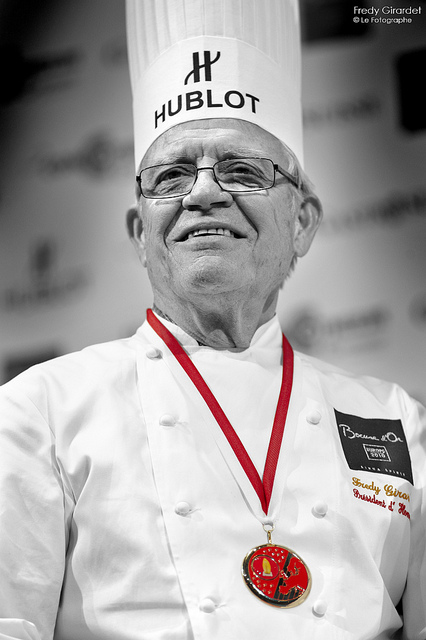 Freddy Girardet is not just chef, the Gault Millau guide awarded him the Gault-Millau Cle d’Or and selected him Chef of the century with 19.5 points out of 20 the title of honor received together with Paul Bocuse and his good friend Joel Robuchon.
In my view after dining several times at the restaurant for Dinners, through the years he was the personification of the genius of culinary art. A combination of rare stimuli of all five senses in one creation, A DINNER. There isn’t an artist in any one of the arts who can successfully stimulate all of the senses, Freddie, Ladies & gentlemen did it every day for a small group of happy 84 Diners, 42 around noon for Lunch and then again 42 lucky ones for a Dinner Event, 84 happy winners of the chance to dine in the Artist’s atelier: the Restaurant at the Hotel de Ville in Crissier.
It was he who provided me, whenever I visited the restaurant with everything and anything I always expected from a meal. The meal  always combined all the wonderful elements that make a meal at a three-star Restaurant an exciting event, an unforgettable experience. Every detail was perfect, starting from respect for the food product and their origin, details of the finished dish, the pure balance between tastes color, even position on the plate. Of course the restaurant’s location, décor and service, the staff attitude towards their guests, all “thrown into one neat careful “packet”.
The Meal:
The photos were taken in an era of analogue cameras and film/prints documentation (late 1980’s) most are slightly out of focus due to the effort to take the pictures without flash not to disturb the other diners. I have decided to include them as is.
Royale de blanc de poulette aux truffes a la crème de celeri pistachee
Imagine a consommé of chicken frothed with truffled celery cream that is so smooth clean and delicate. got it? That’s it! And with the array of wonderful breads and first class butter, who can complain?
The meal is very laid back, there’s a “wait” of 20 minutes between dishes, after a while you get the hang of it and see the reason behind the pace, calm down this is not an eatery, enter the experience of a meal event…and it works well we’re sipping on the wines, now about the wines we did not have the knowledge to order the right wines and let the sommelier guide us through the huge wine list/book for the white he picked the ultimate white wine for this meal:


Domaine Ramonet Chassagne Montrachet Les Ruchottes 1986 At the time I thought what a wine, although this wine improved and reached its peak only at around 2000 -2003, it was crisp yet rich with exotic white & yellow fruit aromas, excellent concentration but the wood oakiness felt on the slightly strong side with little minerality and great fruit. powerful at its young age still delicate with a very long buttery finish. (I had this wine on many occasions later when the wood all blend in and it still kept it’s freshness and fruit)


Raie bouclee a l’agretto de Montevertine en verdure de poireaux
Reduction of sweet Italian vinegar (Agretto de vino santo) from Montevertine in Toscana with blanched young green leaks sauce. The touch is very delicate feels almost steamed done to perfection with a great balance between the fish and the leak complementing and flavoring each other, melting in your mouth on each bite…remember me…remember me! (We did).
A double fillets of thornback ray, this kite shape exquisite looking fish, is so delicate in the sea and on the plate.

Greque de Langoustine safranée aux legumes croquants
A single large langoustine forming a bridge over a delicate saffron vegetable and langoustine stock, clear and light, yellow orangey in color with an arrey of crispy squares of spring vegetables, each done to perfection and precision in cooking time. This is what we came here for I have never had 3 consecutive dishes so precise in execution and each projecting the essence of all its products, BRAVO! This is the ultimate glimpse into the secrets of genuine Haute / Nouvelle cuisine. This is the base of what we all eat today in great restaurants, Thank you Fredy.


Coquilles Saint-Jacques aux oignons nouveaux, jus beurré au thym citronné
A fresh Saint-Jacque steamed over onion infusion served in its shell with the Saint Jacque liquor reduction of butter lime & thyme frothed over.
Why do all these dishes fell as if they where steamed and not cooked in any other cooking method? I guess this is the secret, the touch that separates the premier league players, teams and managers from all the others, this guy scores goals (around his kitchen) every time he touches the ball (our meal products)
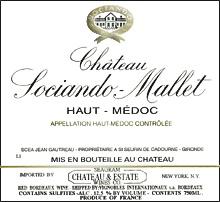 The white wine is all gone and it is time to choose our Red wine, unfortunately not knowing better at the time we opted for a Bordeaux and were proposed by our Maitre D’ the Château Sociando-Mallet 1987 ( he said “The 1986 is too powerful”) thankfully we opted for his advice and the wine which is according to Jancis Robinson in the list of this wine’s “Over-performing vintages” it was light, Smooth, Supple and approachable with cassis and light cedar notes. It gave us great pleasure throughout the next part of the meal. (nowadays I would opt for a Bourgogne wine but I was young than)
On the menu the next dish is the Cote de veau but our devoted Maitre D’ Louis Villeneuve saw that we came to sample as much as we could (who knows when we would be able to revisit this experience), so he kindly offered treat us with 2 separate meat dishes and allow us to share 2 different dishes off the menu which is extremely irregular for a menu degustation for two, it is the small gestures like that that enhance your dining experience at the palace of the KING. Almost a year later when we revisited the restaurant for another meal his utmost professionalism as a Maitre D’ (head waiter / “master of the establishment,” ), when while ordering our menu he pointed out: “You had this dish last year so I will change it for you to another dish off the menu” What a bliss, this guy saw us once, it is true we are full of enthusiasm and expectation allowing ourselves to be immersed in the meal experience, still he saw us once in his entire life and remembers minute details? Another piece in this puzzle of perfection. Thank you Louis Villeneuve the dedicated liaison between the kitchen and dining hall, who welcomed the guests, recommended wines, did the meat and poultry carving on a pedestal table, in front of the guest (an old custom he has reintroduced in Crissier), and was rightly awarded the “Welcome and Service Prize” by the International Academy of Gastronomy, the first time this prize was awarded to someone who is not a chef . I don’t know about you but I am impressed not surprised though. So, first we were offered (off our menu as I said):

Volaille de Bresse en cocotte aux morilles at asperges vertes.
The flesh of this chicken from Bresse is juicy full of delicate poultry flavors bursting in your mouth, mind you “chicken roast” is probably the most difficult dish to serve at a sophisticated restaurants but give Fredy a product and trust him to raise it to gastronomic heights after all this poultry posses a gamey depth of flavour, with fine, tender flesh and delicious clean-flowing fat together with the fresh morilles and asparagus which are in season this time of the year, the jus of the Bresse chicken is sublime.
The cocotte as you know is a shallow individual baking dish the rest of the secret lies with Fredy.

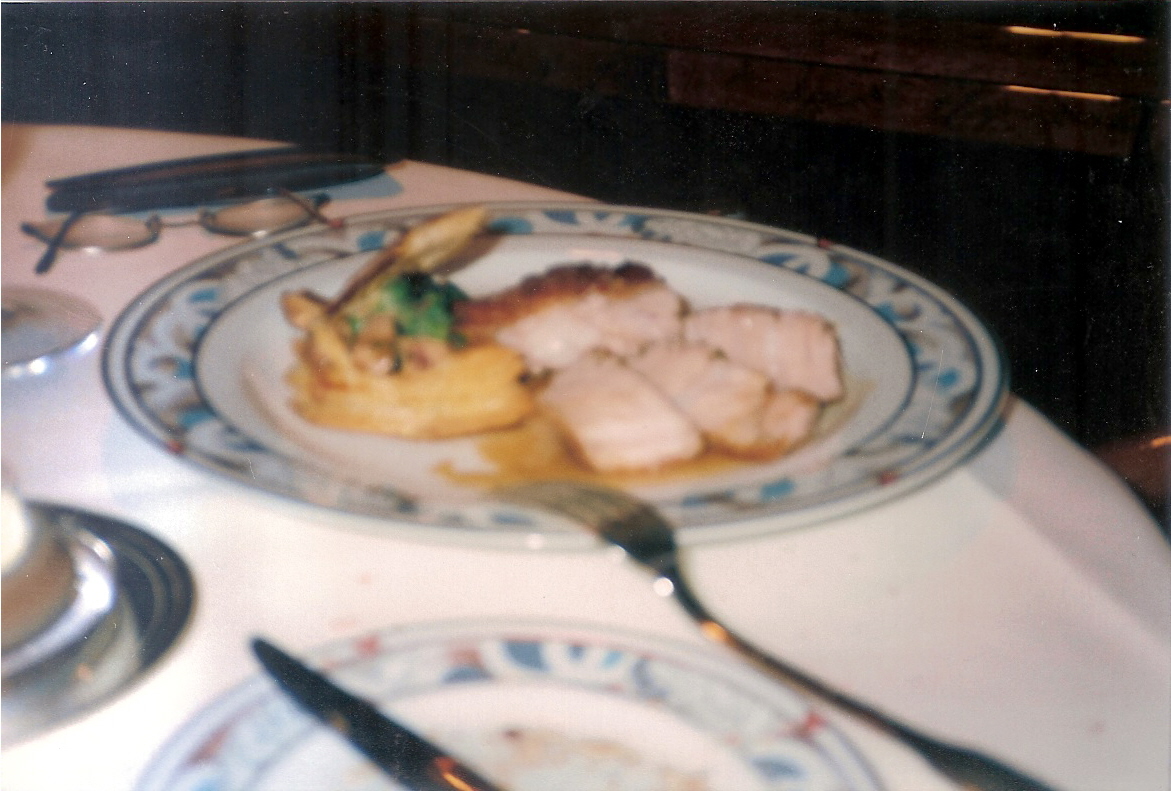
Côte de veau en casserole à la fricassee de béatilles at aux asperges.
A casserole of milk veal with a fricassee of “tidbits” mixture of inner organs: liver, sweetbreads, kidneys etc. in a casing of Vol-Au-vent or puff pastry shell.with asparagus and casseroled new potatoes, carved and served by the table to the last drop of the light sauce, delightful.

Than came a large selection of cheeses from the trolley (a very large selection I might add, which surprised the young cheese waiter attending to us) cheeses from the various appellations of France and Switzerland to “die” for with the breads they were perfect, enhanced I might add with a glass of Port Porto Barros 1963 and a glass of 1985 Chateau Suduiraut, Sauternes,.


Just before the Chariot de desserts with at least 18 different desserts of fruits, tarts, cakes and other delicious sweets on a trolley, we politely asked if we can share before sampling (most) of the desserts the famous Passion fruit soufflé, which was served to us with great pleasure I guess (it was on the house, looking now at the bill which I found amongst the menu and photos all of these contributed to enhancing the memories of this meal) from the deserts pears in white wine and vanilla (had it on a different occasion as white peach in vanilla) .
Now the soufflé as you see in the picture is served in a Porcelain Ramekin puffed up and fluffy, a slightly warm lightly sweetened passion fruit juice is poured in the center and you get to eat a passion fruit cloud that dissolves in your mouth both passionate and calming (I think I’m gonna try and make it for tomorrow’s New Years dinner (Jewish New Year) the recipe is in the book Cuisine Spontanee – Fredy Girardet (Papermac UK edition 1986) .
We were also served 3 types of sorbets: Banana, Raspberries and red grapefruit but the ice creams chocolate and sublime Vanilla and the two spoon serving method I encountered for the first time are still in my mind. We ended the meal with pettit fours and coffee and a glass of Armagnac XO, not noticing that we are the last guests in the room, guests were sitted along the walls and the center of the room was left for the service crew to function. (at 42 diners each sitting this is possible.) Mr. Villeneuve with the utmost politeness told us he took the liberty to order us a taxi so we don’t get stuck in Lausanne before the last train to Genève takes off around 1.00am, and so we left after a short visit to the already clean and polished kitchen.


Fredy entered the room after the last diner was served his main dish.His apparent shyness, his modesty (felt when he would enter the dinning room at the end of each service) was not expressed in his style of cooking, that was exciting, creative, full of imagination and always accentuated the flavor of the main product of this dish be it a vegetable, fruit, meat, poultry, fish, or seafood, each in its short season. He called it cuisine spontanée, I call it HEAVEN!
The secret of the approach was that sophistication was born out of simplicity. The approach was: minimum cooking, maximum flavor, minimum vanity, maximum service, minimum talk, maximum action, Maximum occupancy, all tables are booked months ahead 48- 49 weeks a year for lunch and dinner day in and day out. Max points 19.5-scoring and no compromise in quality.
The restaurant lies in the neutral zone at the border between Italy and France, in a small town. There were significant touches of French and Italian influence, Italian truffle risotto and frogs legs. An amazing combination of exquisite and refined cuisine of both worlds and all the ingenious touch won slightly reminiscent of greatness in the ultimate meeting of the three basic cuisines: French Italian and Chinese cooking.
These elements brought out the artistry of cooking to produce a meal that left every guest who dine on a table thinking as if he was the only guest at a special one off occasion that was not like it before and who knows if there will ever be such an experience any time after. A feeling that repeated itself on each and every visit.

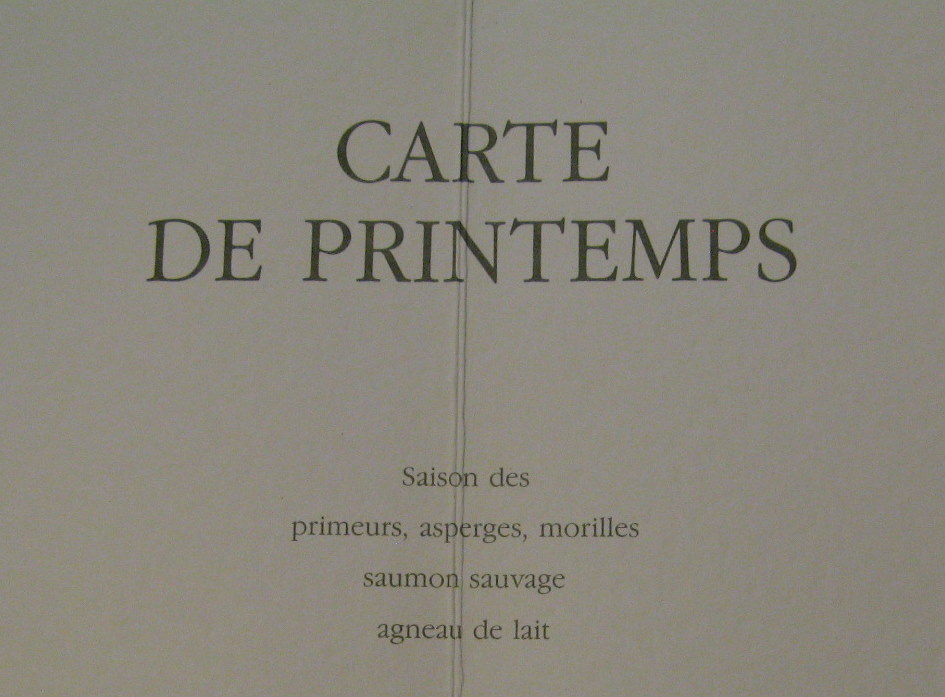
He was rightfully awarded the: Gault&Millau golden key, agricultural Knight of Merit, an entry in the Petit Larousse, honored for outstanding achievements in cooking, Golden Form Award given by the International Food & Wine Travel Writers Association, cook of the century at the same time as Paul Bocuse and Joël Robuchon, international grand prix in the Art of Cooking, awarded by the International Academy of Gastronomy, plus 19.5 points awarded by Gault&Millau, “Memory and Gratitude” grand Prix, awarded by the International Academy of Gastronomy, Knight of the Legion of Honor, 3 stars in the first edition of the Michelin guide for Switzerland. So although I use too many superlatives and adjectives of awe and amazement they are all justified.
Thank you Fredy for opening the gates to the world of true cooking for me, my perspective was changed completely after visiting Crissier. Thank you Kobi for being persistent on the phone, for being a good companion throughout the years, on all our food trips, for having such a good taste And Thanks for the memories…
YOUR WINEGUIDE
MEAT of LUST at YOEZER WINE BAR
 Yo’ezer Wine Bar / Bistro, is without a doubt the Best wine bar / bistro in Israel. This is a posh little place, wine and food wise, But lately on Mondays ONLY they have a weekly occasion at the restaurant, they call it: Bloody Monday, when they serve amongst other Monday specials, a YBurger; Yoezer own version of the famous and infamous American Burger. It comes Yoezer style: chopped or roughly minced entrecote of beef with beef bone marrow (the marrow is scooped out of the bones, than frozen, cut into cubes and mixed in its frozen state, with the minced meat to make the basic Patties.
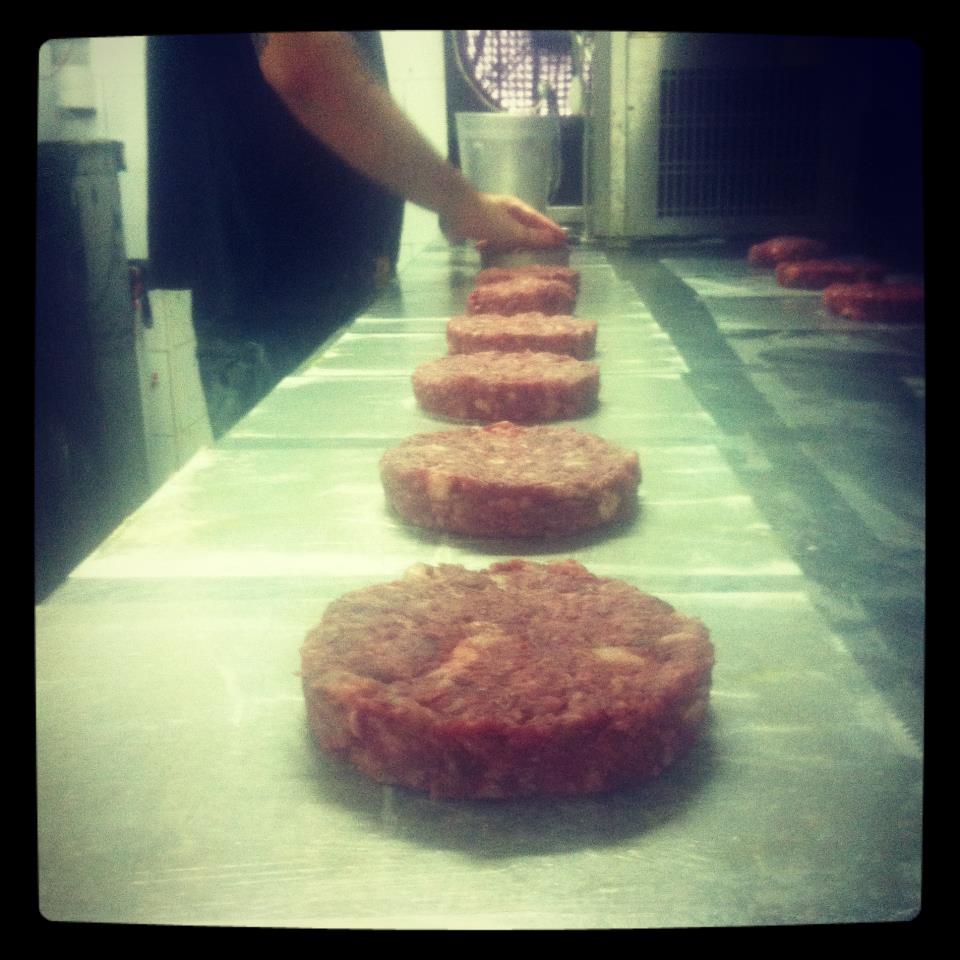

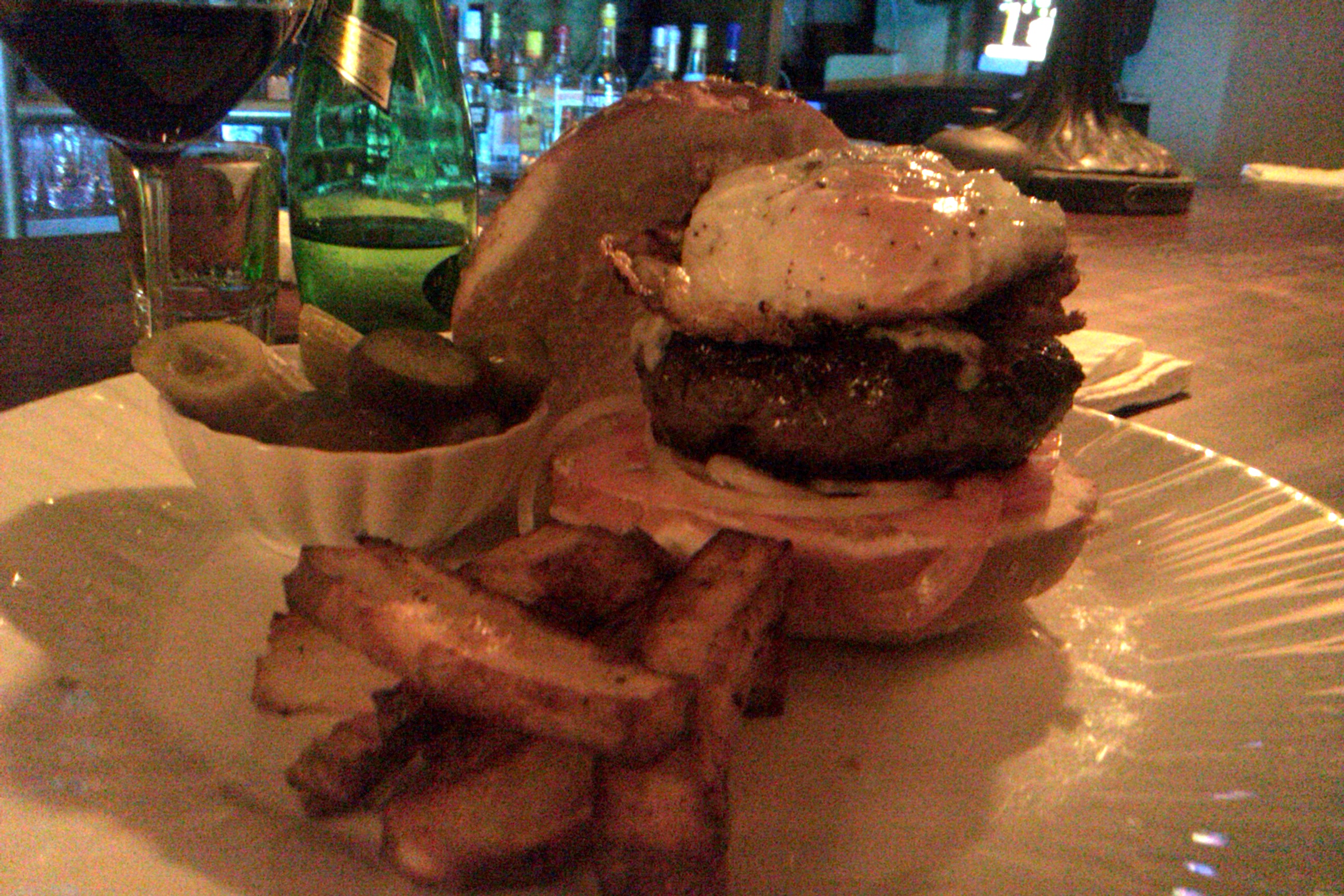
For those who like Great Burgers American style, this is as close as you can get to the best of the best (maybe better) no sauces BBQ or Worcestershire sauce are added to the meat mixture Just Meat, Marrow, salt and pepper (I think) and being a once a week novelty everyone is flocking to get a bite, so do I.
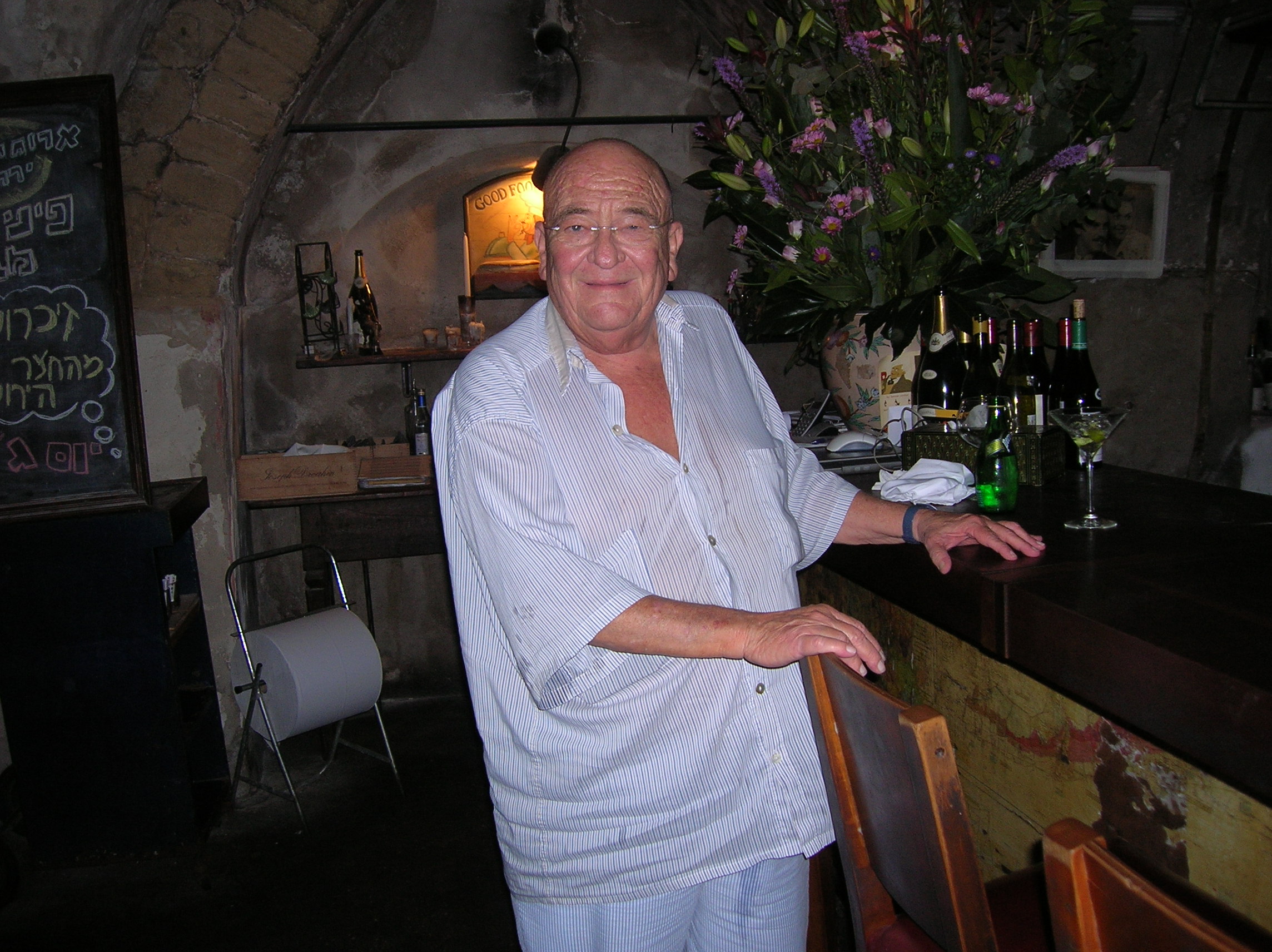
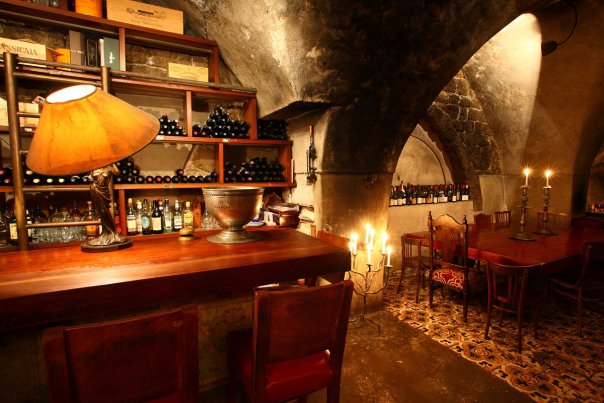 Entering the “cave” I see Shaul Evron the owner sitting on the left side of the Bar (his usual place) beside him, Chef Rafi Cohen (one of the 5 best chefs in Israel & owner of “Rafael” Restaurant in Tel-Aviv)…:”Hey what are you doing here? I’ve come for a Burger… imagine, so did I and 10 minutes later, Chef Jonathan Roshfeld (yet another top chef from the same top 5 list) tapping on my shoulder to say hallo he’s here also for the Burger… in fact the place is packed with diners and culinary personalities all here for the YBurger. Now most of these people have dined in the last 20-25 years with the best chefs of France some of them worked in 3 star Michelin Restaurants and they saw it all from High to Haute cuisine still they flock for THE YBURGER (isn’t that something?). So why are they flocking? What is the alluring magic that pulls people in magic strings to eat Hamburgers? I don’t know the answer there must be more than one… I’m sure you know how sometimes you just feel like a sandwich. Well not just A sandwich but one that has it all, and it tastes so delicious you start thinking, no wonder people around the globe of all different races like it so much (It comes in slightly different forms from place to place but basically it’s all the same). According to Author Linda
  Stradley who wrote: History and Legends of hamburgers, started ages ago during the times of – Temugin – Genghis Khan (1167-1227), http://whatscookingamerica.net/History/HamburgerHistory.htm check it out it is quite fascinating.
Here at Yoezer you can have it Complete (egg bacon and cheese) or with whichever topping you prefer of course with great Dijon mustard and ketchup in separate dishes (spice it as you like) pickles and chips. The Y is a real Bliss, simply delightful! We wash it down with Givry 1er Cru Clos de la Servoisine Rouge 2002 Domaine Joblot, which was the proper wine for a super burger not a grand Bourgogne but had all the qualities of freshness and fruit to accompany our Munch. We moved on to the more serious Gevrey Chambartin cuvee’ vielles vignes 1999 Domaine Esmonin Sylvie, this is a more serious wine which started with all the expected earthy aromas of a good Côte de Nuits, rich fruit flavors with rounded but present tannins well balanced with the fruit Perfect.
 Being one of THE best restaurants “around” and my favorite Bistro, Yoezer was a one man’s dream that came true, the man is Shaul Evron. He is a culinary sage and is considered by many as the Hight Priest of Israeli culinaria.
When Shaul opened his first restaurant in Nave Tzedek on the border between Tel-Aviv and Jaffa (1970’s) very few even knew what is a good juicy steak is and how to prepare it shame on us 45 years ago!!! I guess the problem was availability of ingredients, treatment of cattle and meat, and ill effects of religious beliefs and practices:
“Only be sure that thou eat not the blood: for the blood is the life; and thou mayest not eat the life with the flesh”. The Book of Deuteronomy Chapter 12, 20-23 and there goes your juicy “bloody” steak!
Between us this is quite a nice proposition if read on its own but in the next verse, Verse 21, reads : 21 “If the place which the LORD thy God hath chosen to put his name there be too far from thee, then thou shalt kill of thy herd and of thy flock, which the LORD hath given thee, as I have commanded thee, and thou shalt eat in thy gates whatsoever thy soul lusteth after.”
This is where the debate on the idea of MEAT of LUST , starts: This is exactly the place and reason of the prohibition of the Torah. Nothing is totally forbidden in absolute terms, as there is nothing being allowed in absolute terms. The purpose of the prohibition is to keep us away from things in which we cannot “taste” the spiritual taste in our current state. Indeed when we ascend to a higher level of spirituality the Lord will allow us of the forbidden fruits. After all, there would no longer be any reason for the prohibition, and we praise the Lord for allowing the prohibitions.
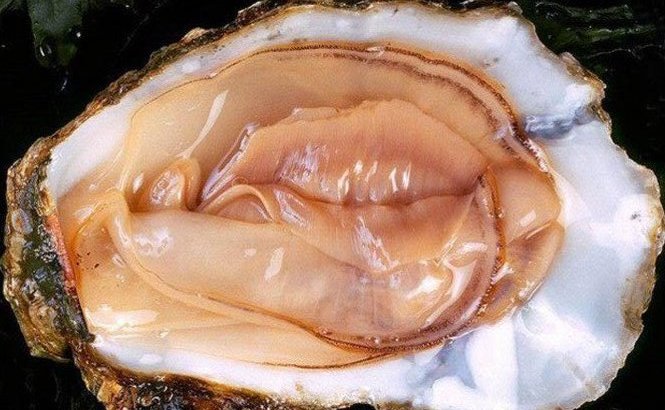 It is possible that people that do not abide by the “laws” of religion are simply in a higher spiritual state???
I do not look at Shaul as a priest or an oracle but rather as a friend, with a great taste, A great taste in food, in fact a lover of good food, one of the few who can find a woman’s voluptuousness in food, he loves for instance oysters, He’s a great lover of both rustic and fine French cuisine, Bourgogne cuisine and wines in particular. For all of these he opened 17 years ago his “baby” Yoezer.
He’s a conservative Pinot Noir Chardonnay kind of guy, he loves wine dungeons and bars, he’s a lonely guy with thousands of friends, a lonely wolf at the head of a wine guzzling pack. He says that I am a wine necrophiliac and I say he, is a wine pedophile. He loves them young, or can’t resist his urge to taste a wine even when it is too young to enjoy (for me) and claims I like wine corps (too old). But through the years we’ve managed to prove each other wrong on many occasions…
The menu at Yoezer is Basically meat orientated, that’s the owner’s favorite food product it comes in all forms and excels in all:
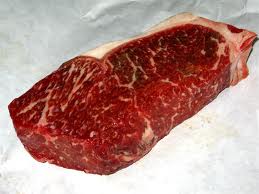 Raw Meat: as in the Steak Tartar or Américain, both on the menu. Américain is the Belgium version of steak tartar served with fries. It is known as “filet américain” – American fillet with onions and more seasoning than a normal steak tartar. Trust me, it is much better here than anywhere in Belgium! I guess Shaul Likes it and the kitchen here cooks for him, his taste, his dreams… The kitchen stuff holds his culinary views and understanding in such reverence and anxiety NOT FEAR, that they cook to please him personally with each dish that comes out of the kitchen, and we the diners are benefited by getting almost always the best according to Shaul, what more can one expect from a meal? Did I forget the Carpaccio??? The name of a typical dish from the Alba region in Piedmont “La carne all’albese” it is named carpaccio after the 15th-century Italian painter Vittore Carpaccio and first served under this name in 1950 at Harry’s Bar Venice. Yoezer make the carpaccio from entrecote heart (rib-eye)
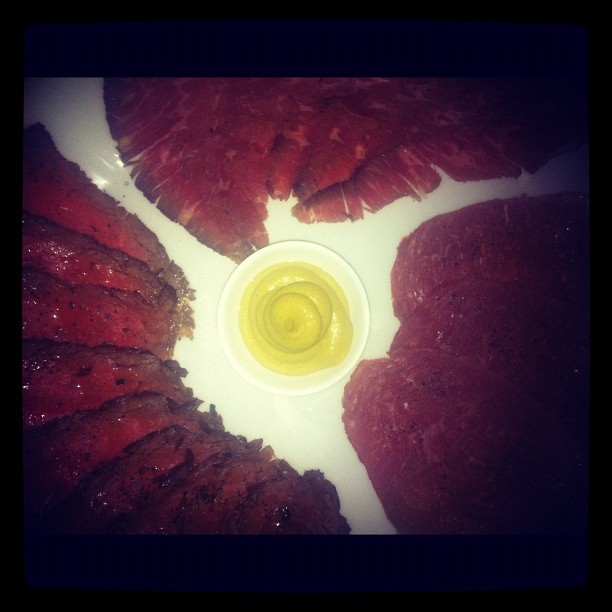
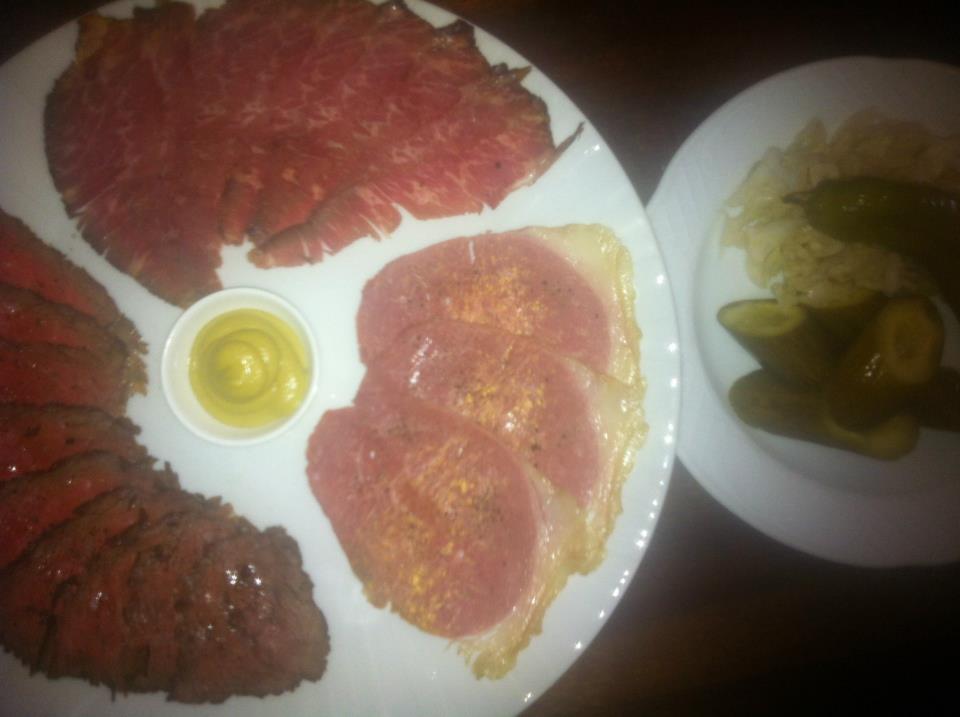 Smoked, Cured, Boiled and Stewed Meats: from smoked meats and poultry to the best Pastrami in town Corned Beef and Weissbraten cooked in clarified butter and injected with butter occasionally, to the French style luscious confit de canard, or Porchetta which is a fatty boneless pork roast (fat and skin rolled over) Italian Style. Porchetta is usually heavily salted in addition to being stuffed with herbs rosemary, garlic, thyme oregano etc. Smoked sausage with warm Sauerkraut “sour cabbage”, Jambon de Paris Comme il Faut!! And Bulls tail stew to name but a few on this section… They used to make here great homemade Boudin Noir (blood sausage) and Pied de Cochon these are off the menu due to lack in demand they are great but do not conform to the Israeli taste (unfortunately)…
 Pasta and Pastry : the most distinguished dishes in this section are the “infamous” 40 egg yolks Homemade pasta cut in different styles as Fettuccine or pappardelle with a variety of meat based sauces or just truffles… and of course the double amazing truffle in puff pastry (yes one whole truffle), on the most delicious thickened almost toffee like beef stock with truffle’s oil Sublime!!!
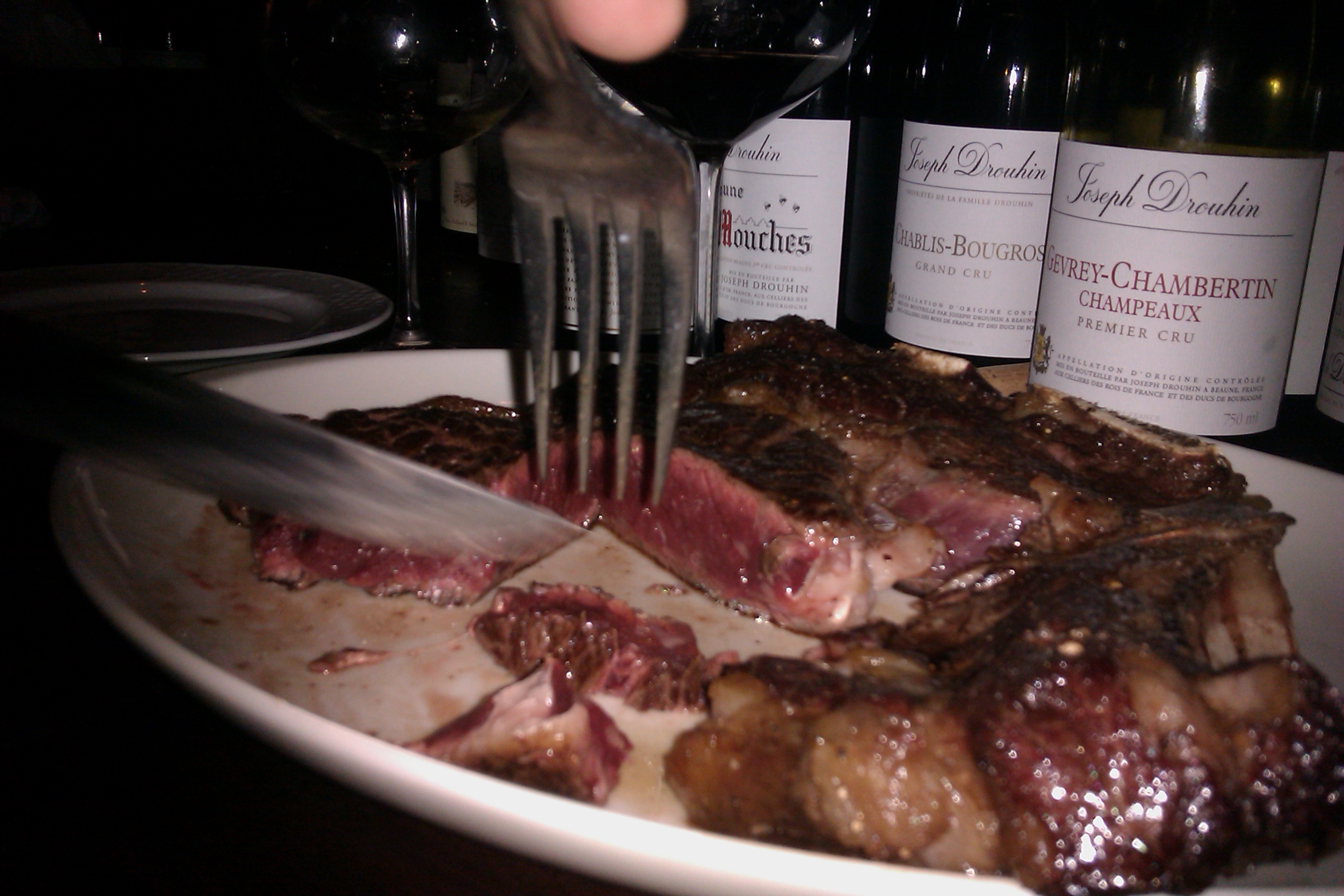 Fried and Grilled meats: You have your basic Steaks from the best cuts available from the local beef, made to perfection around rare to medium rear depending on the cut. A giant côte de boeuf always served with lightly fried crispy greens and potatoes.
Now beef in Israel is not the best in the world… compared with Italy’s Bistecca alla fiorentina from the Toscana’s Chianina breed of cattle, France, or England/Scotland with such as Aberdeen-Angus, bred in Scotland, and often called doddies, Galloway, from Scotland, Shorthorn, an English breed of cattle. and Montana beef in the USA why Montana? I don’t know I just have this memory stuck in my mind as I exited the Billings, Montana airport heading toward Yellowstone Park a Huge Road sign Welcome to Montana EAT BEEF! Greeted me and got stuck in my mind…This is cowboy country and I Love Wild West cowboy’s myths and legends, and the way they make use of beef meat in the open fire rolling on a spit.
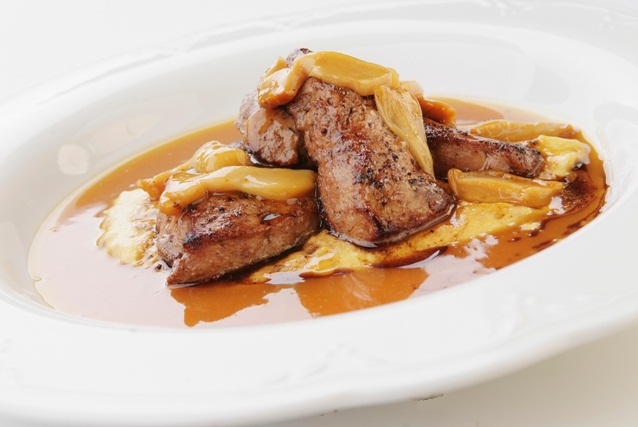
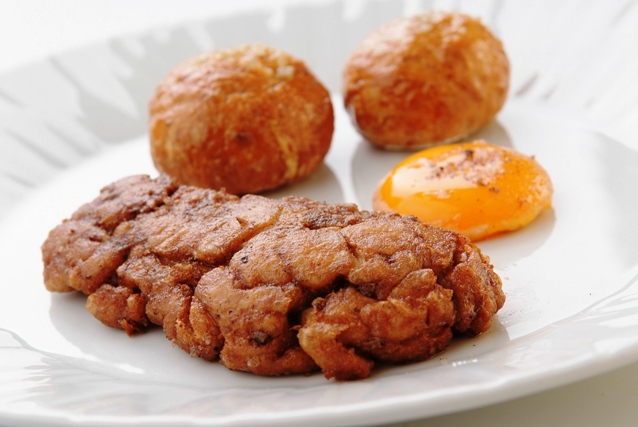
photo by Eliya Melinkov
From the present menu my favorite dish by far and in danger of extinction (again not enough people order it), is the Milk Calf’s Liver on a bed of fresh corn and dried Porcini mushrooms polenta topped with fried fresh porcinis (Ceps more likely) This dish is so well balanced with a slight sweetness that compliment the liver with the aroma of fresh porcini delicately flavoring the dish. PERFECT!! and the butter fried calf’s brain or sweetbreads served with an egg-yolk and rounded Pretzel buns . My Thanks to the young, innovative, shy and extremely talented chef BEN TIDHAR.

Yo’ezer Wine Bar / Bistro ( Yo’ezer Ish Habira 2 Jaffa) Tel: 03-683-9115
The wines
Oh the wines we had through the years while dining at yoezer are special and plentiful. There were downs as well as ups but the ups are on the winning side for me, for I can enjoy a near perfect wine if all around is perfect: food, company, spirit and atmosphere, Shaul is different if the wine is not totally amazing a new bottle has to be opened immediately, lately he is mellowing down this attitude to a more sensible approach still it is an admirable quality.
We had so many mainly Bourgogne’s and Champagnes but also some great Bordeaux’s. But the occasion is always more important than the list.

Our memorable wines together are numerous but some that come to mind are without a doubt from the “Necrophilia” to me the most memorable and the last bottle of the case is without a doubt the near perfect Chambolle-Musigny 1er Cru Les Amoureuses Domaine G. Roumier 1982.
The other wine will be mentioned in the right context in the future
Your Wineguide
Cooking for Pescetarians
A post with Culinary Thoughts, Tips for cooks, not a cooking lesson.
Pescetarianism is the practice of diet that includes seafood and fish, but not the flesh of any other animal.
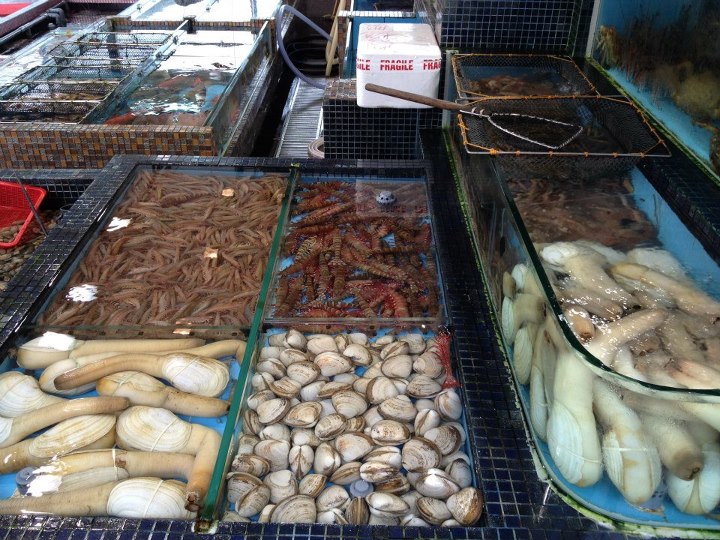


Apart from eating from the harvest of the sea, pescetarians eat from the harvest of the land and their diet is essentially vegetarian and includes fruits, vegetables, grains, beans, nuts, eggs, and dairy products.
Pescetarians in Action from the BBC
One of my special guests for the summer (my daughter Daphne, fresh from London on her summer break) is “pescetarian” and prior to her arrival she requested on a mobile message, to me: “…Crabs in herbs for me pls! XXX “. What a Joy! Who can reject such an opportunity to give Joy to a person you LOVE, through a skill you acquire through the years and people around you “grew” to appreciate and love. That is what food and cooking is all about, each time you present the people you like/love with a “present” they remember in color, presentation, smells and taste. These memories are long lasting in your heart and head although they are totally consumed (and gone) by the end of the Meal. It is the pride of any cook or chef when nothing is left on the plate, and a certain “smile” of contentment appears in the eyes not the lips of your guests.


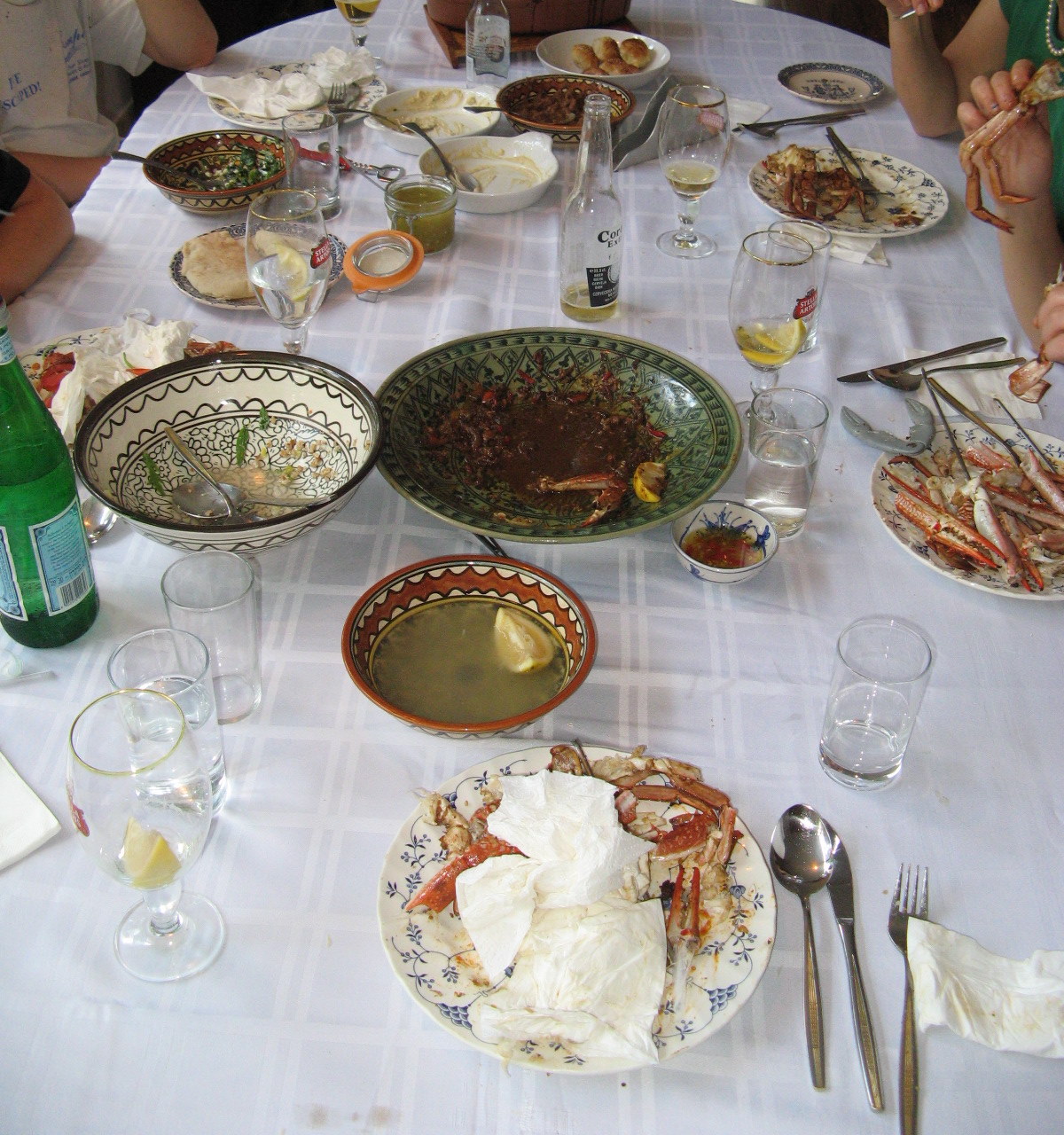
Cookery is a “sad” kind of ART, for it is consumable and short lasting, still it involves all the 5 senses including touch smell and taste and thus is judged by a more scrupulous set of senses than any other of the arts.
At first I could not get the Mediterranean Blue Crabs I needed to fulfill her request but I went on a Journey (Quest) to find what was required and indeed found it at one of the fishmongers in Jaffa “fresh from the sea”.
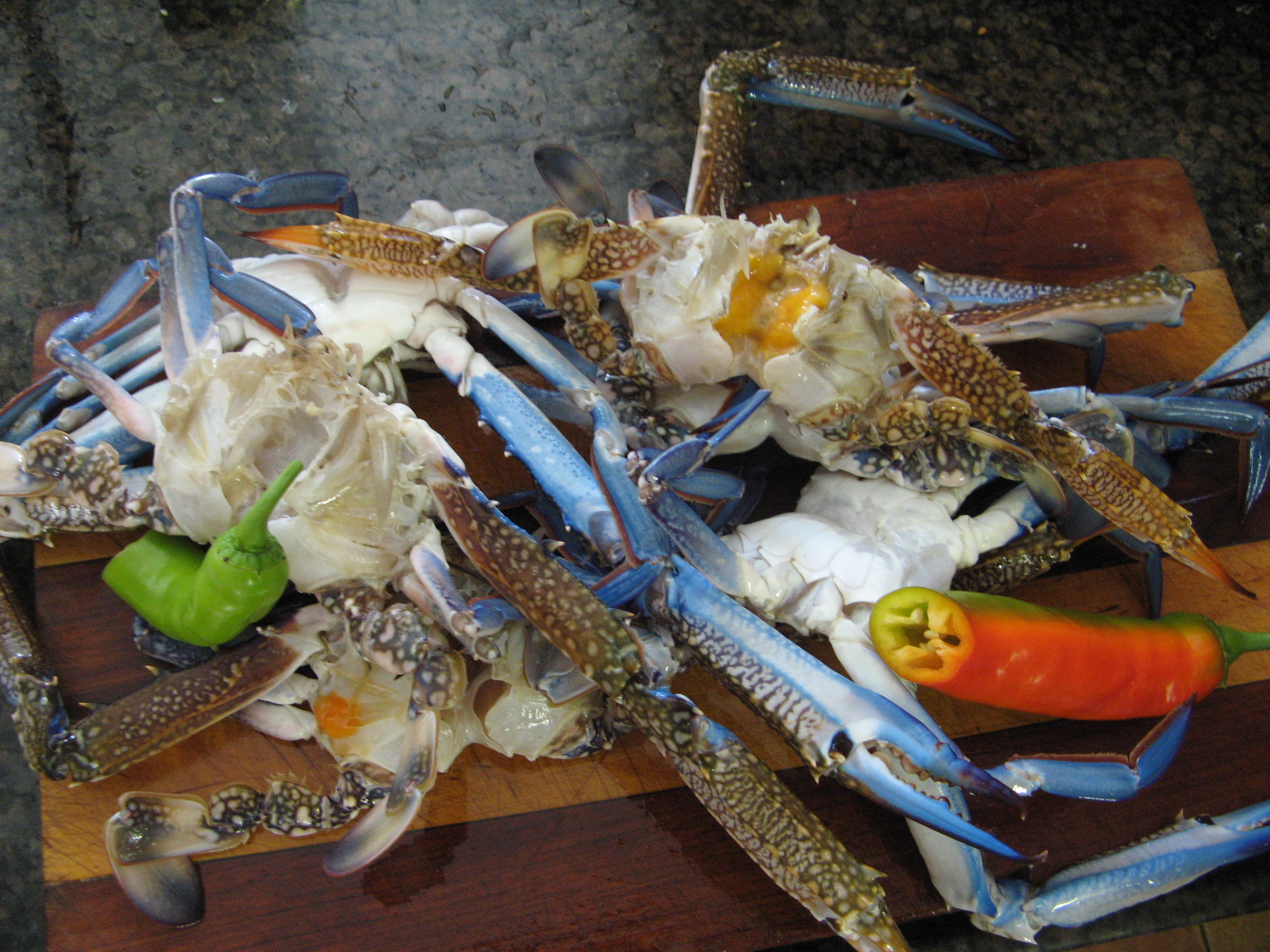
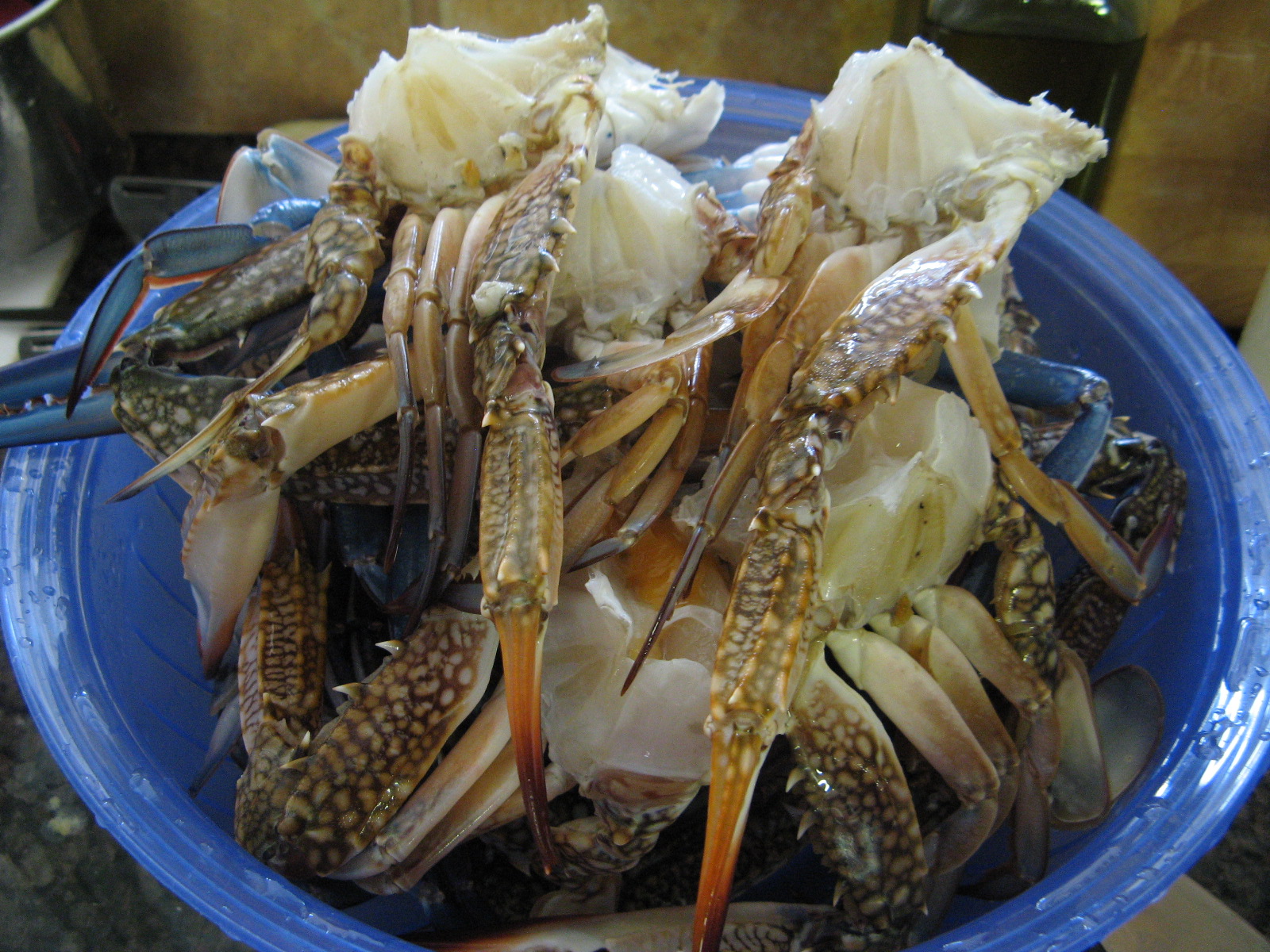
Blue Crab – Portunus pelagicus
This one was made into: Blue Crabs in corona beer and Lemon, Saffron & chilies butter, a delightful easy recipe taken from his cookbook Fish & seafood of my friend and one of the best chefs in Israel Jonathan Roshfeld, it is slightly hot and a good appetizer for the meal to come.


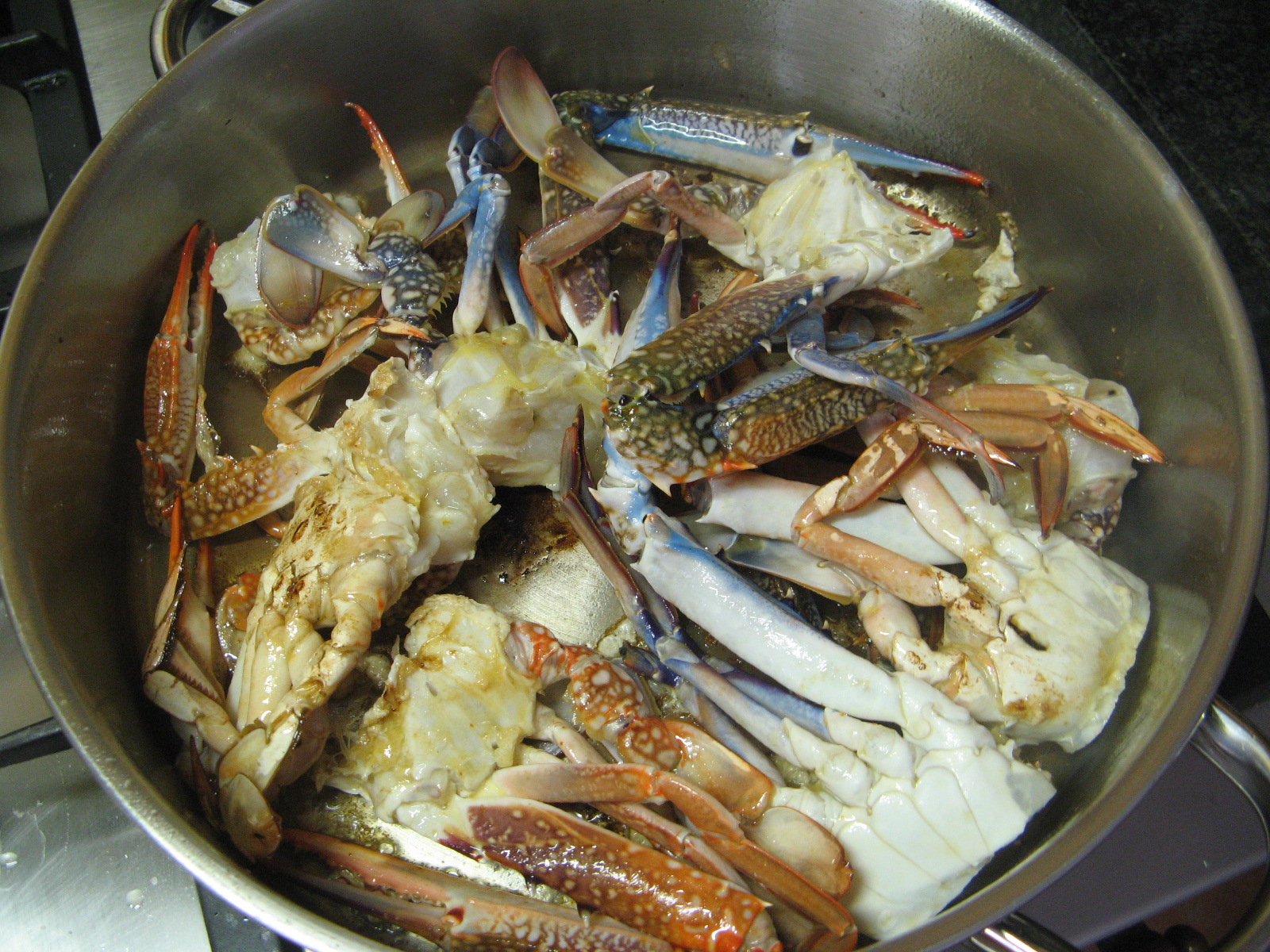
Corona beer Saffron and chillies The Chilly Butter From Blue to Orange
I cooked the remaining crabs separately in water vegetables and cooking fresh tomatoes taken out all the white and claws meat added several diced shrimps to it, and separated the Crustaceans meat from the liquids, to make the “filling” for the open ravioli and the liquids as a base for the sauce.
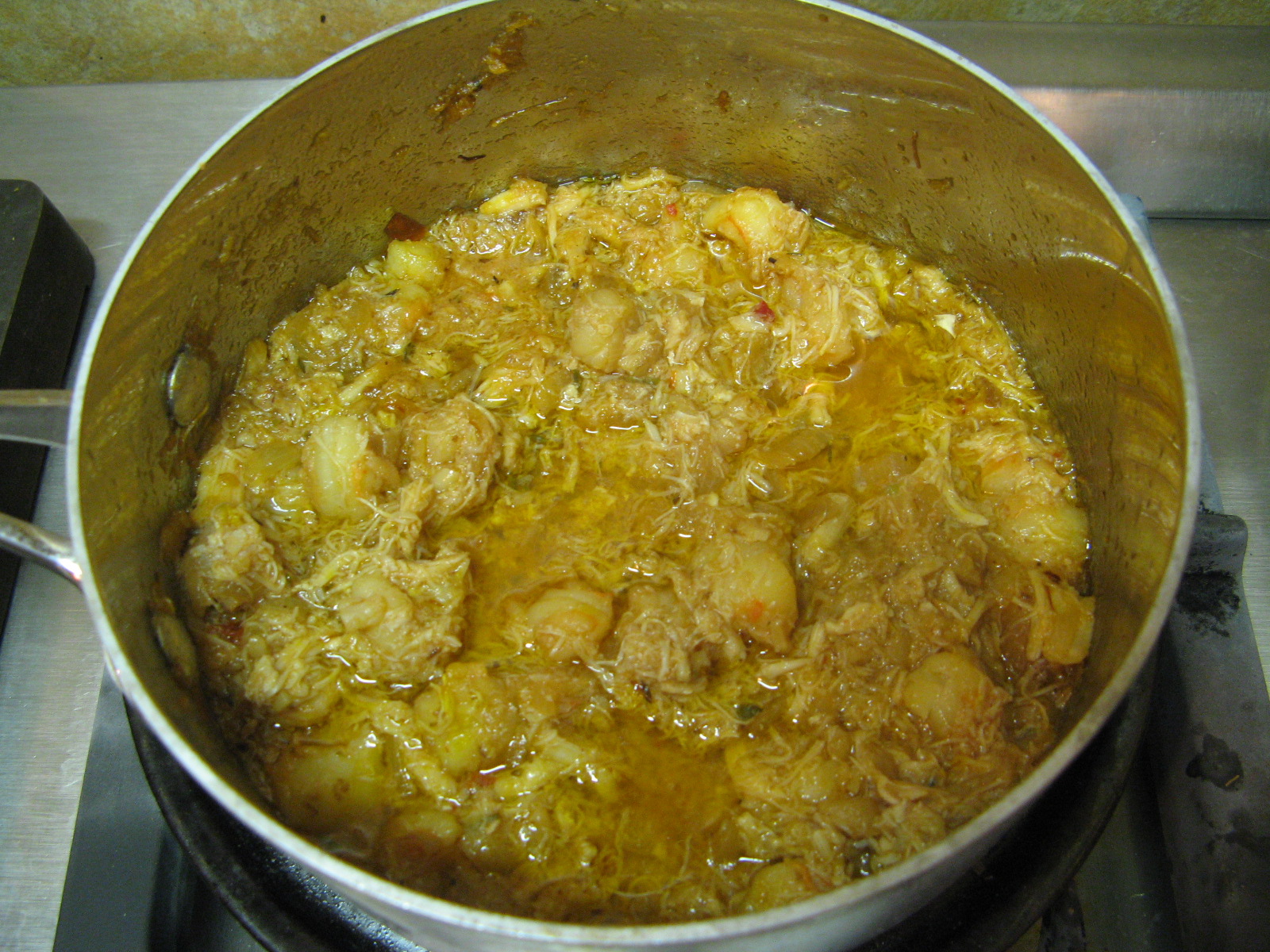
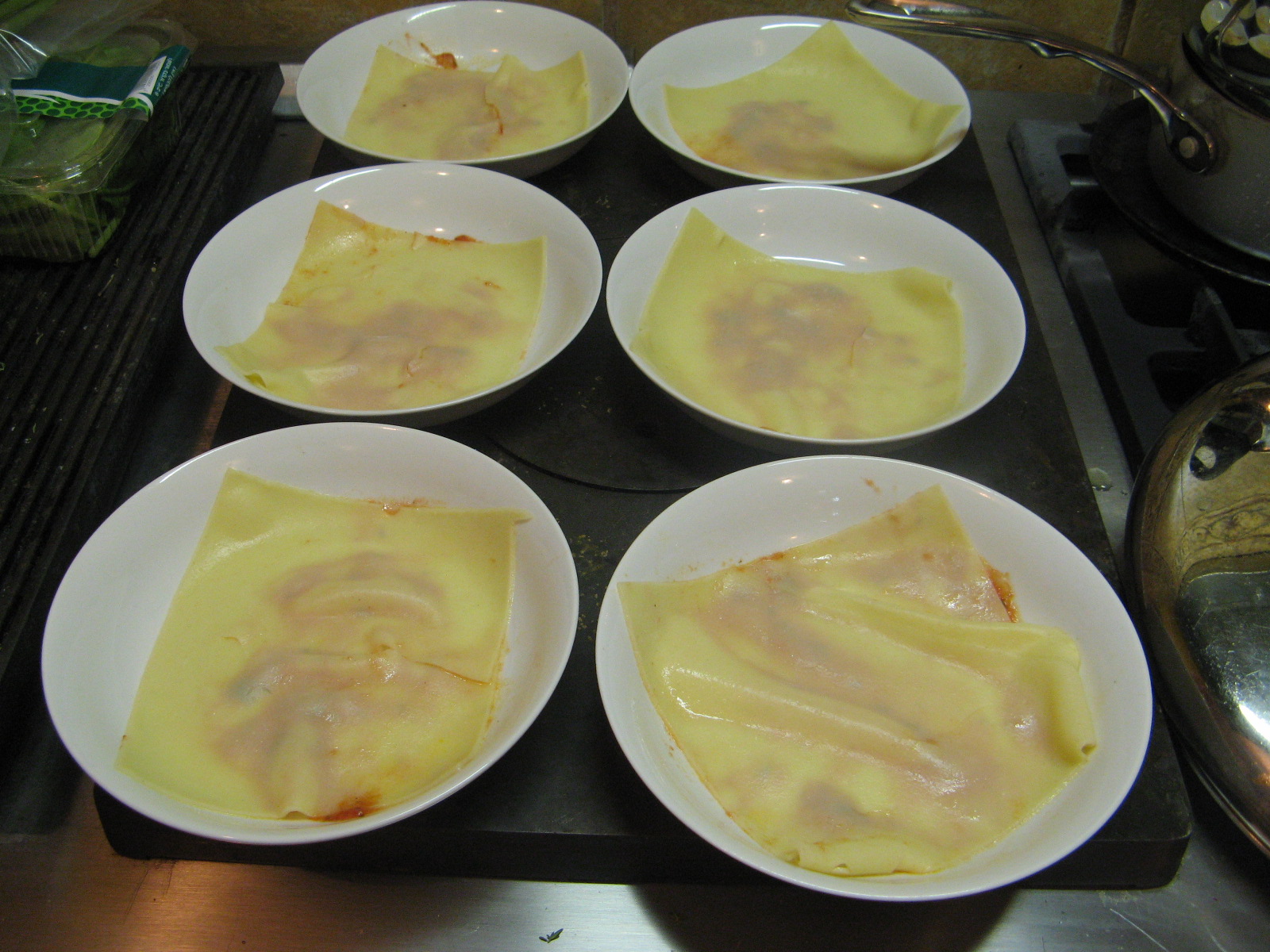

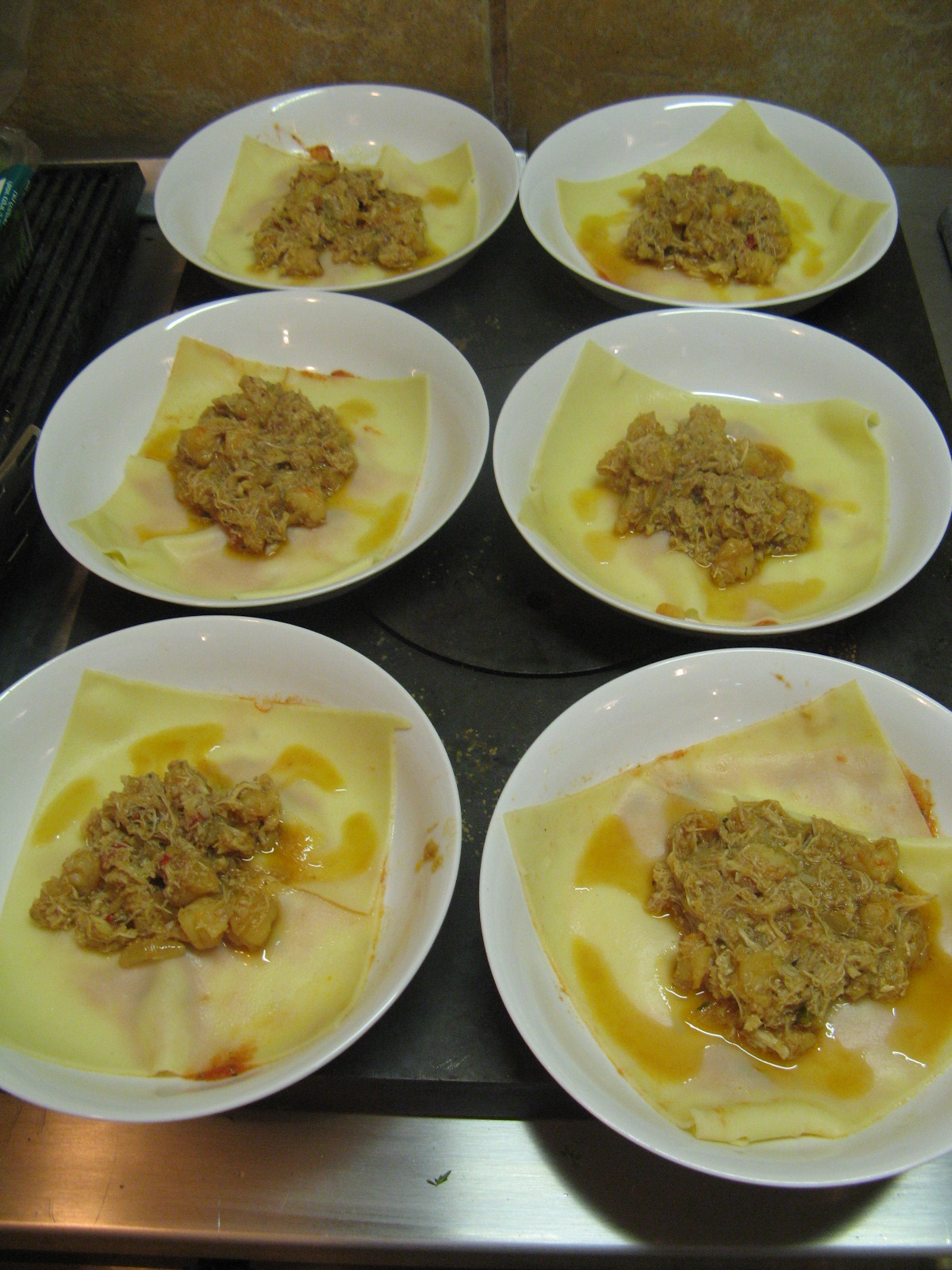
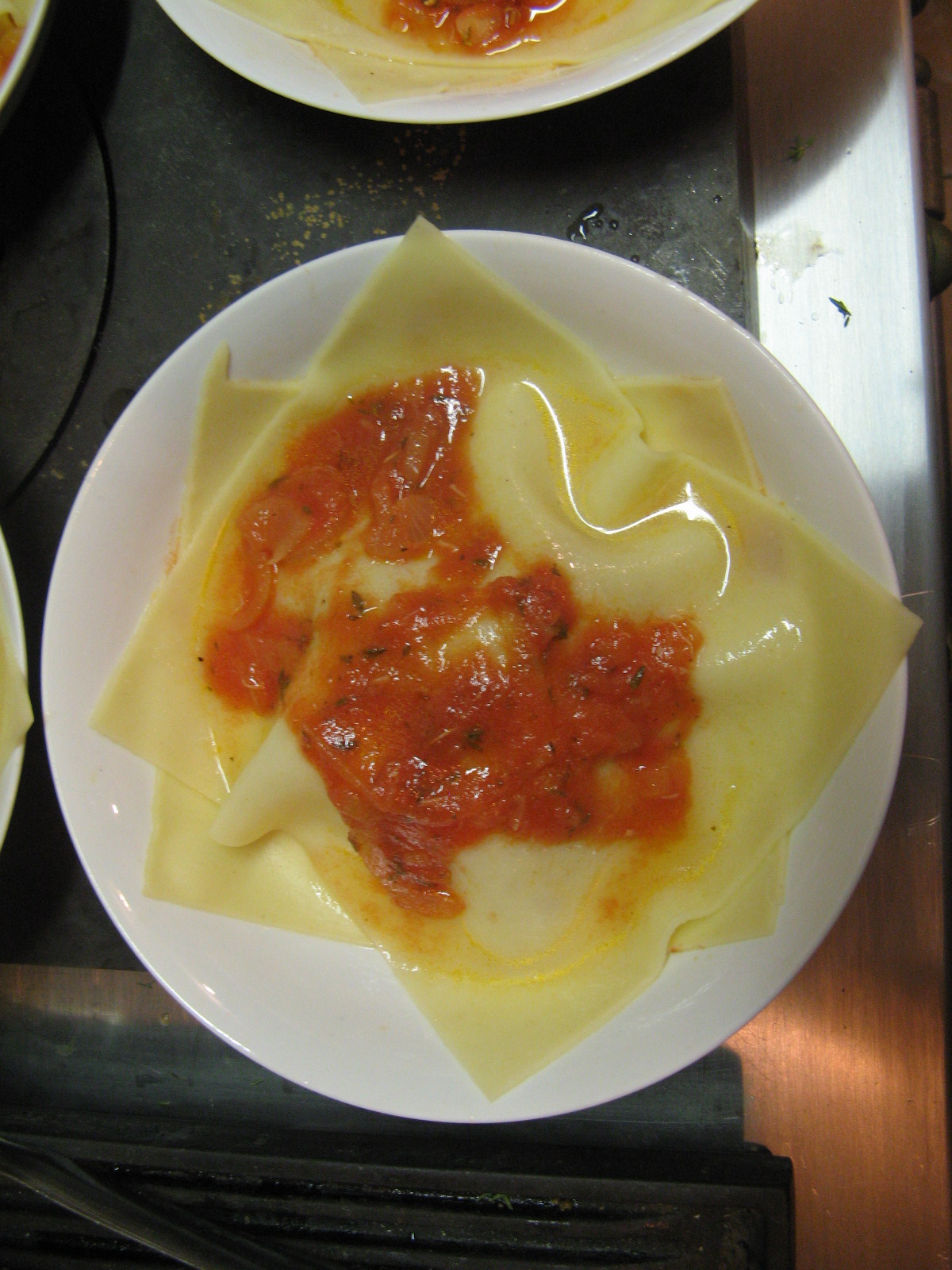
Through the years we had many “own” version on great chef’s recipes from Fredy Girardet (Cuisin Spotanée) – Lobster with Cream of Sweet Peppers, Joel Robochon‘s Giant Shrimps wrapped in Zucchini and champagne Saffron sauce (instead of langoustine), Gordon Ramsey‘s Halibut with or without smoked Salmon and sauce Albert with its wonderful fresh horseradish touch, my own poor versions of Sashimi’s, Sushi’s Carpaccio of AKAMI of Tuna with Takuan, Ginger, and wasabi sesame, Nori & Penko crusted Tuna, sashimi style soy and wasabi sauce, Black Cod (Nobu style, I wish…) with Pumpkin noodles, caramelized Pumpkins sauce. Sea food Pasta and risotto dishes and many more.
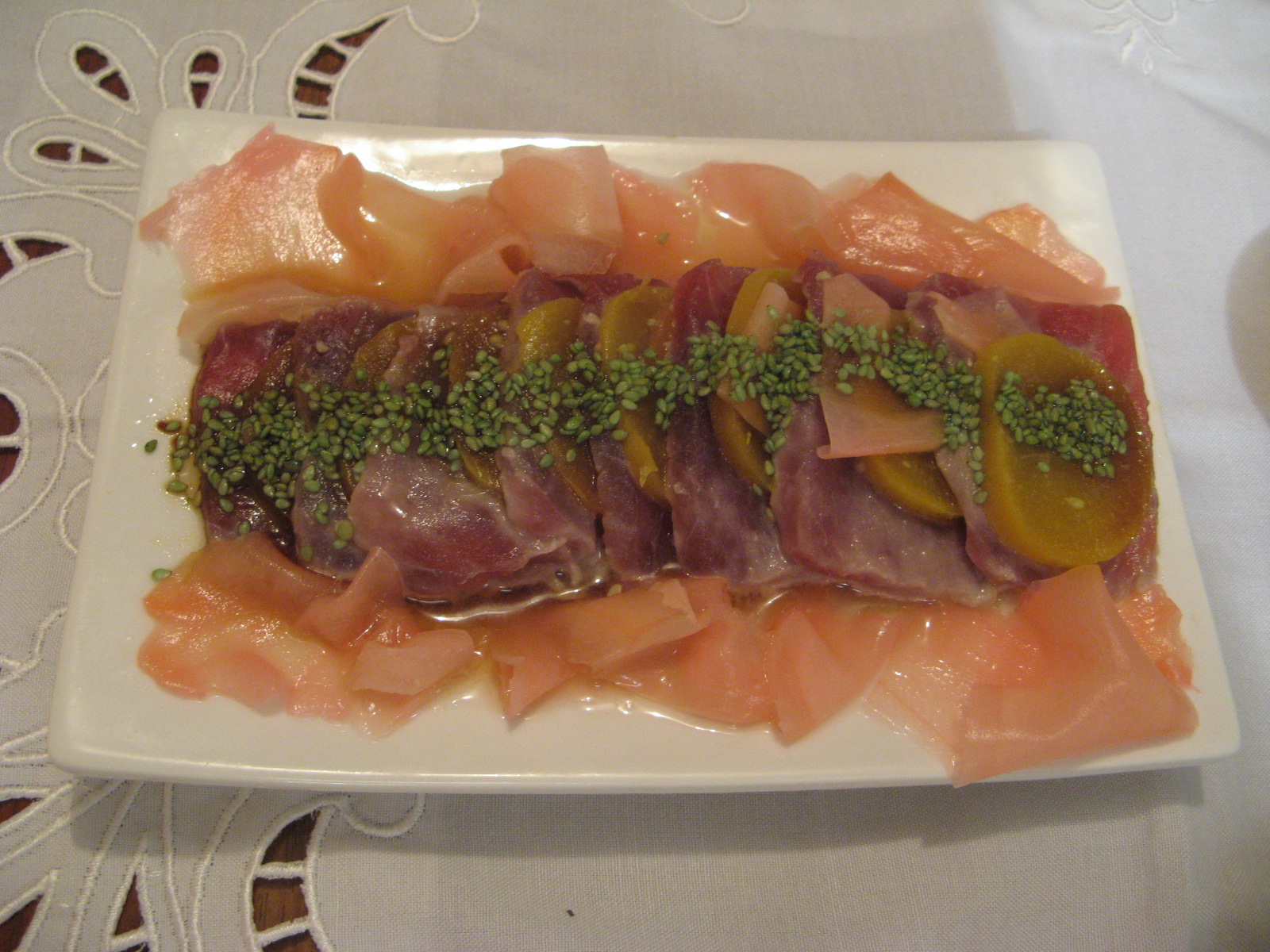

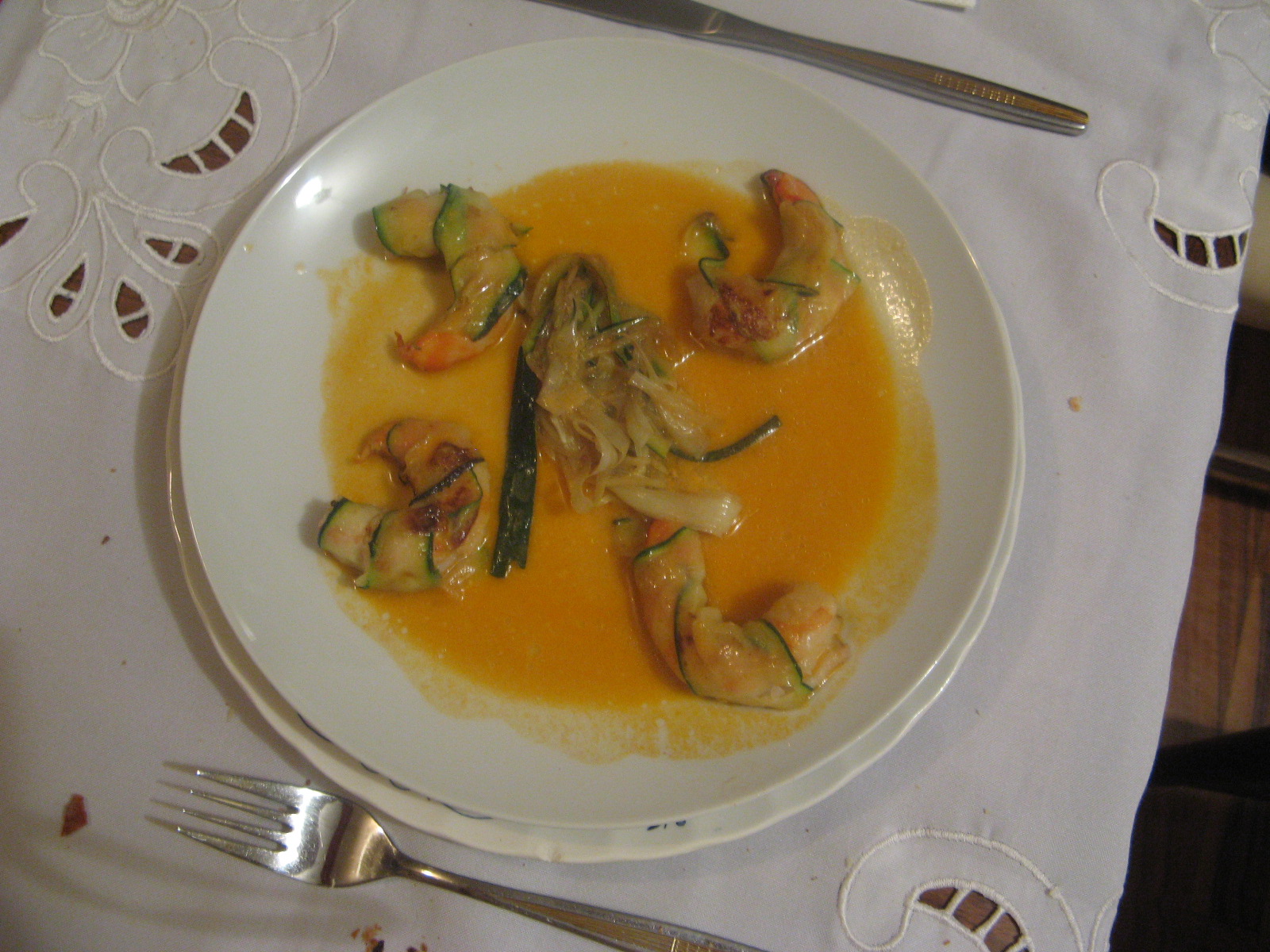
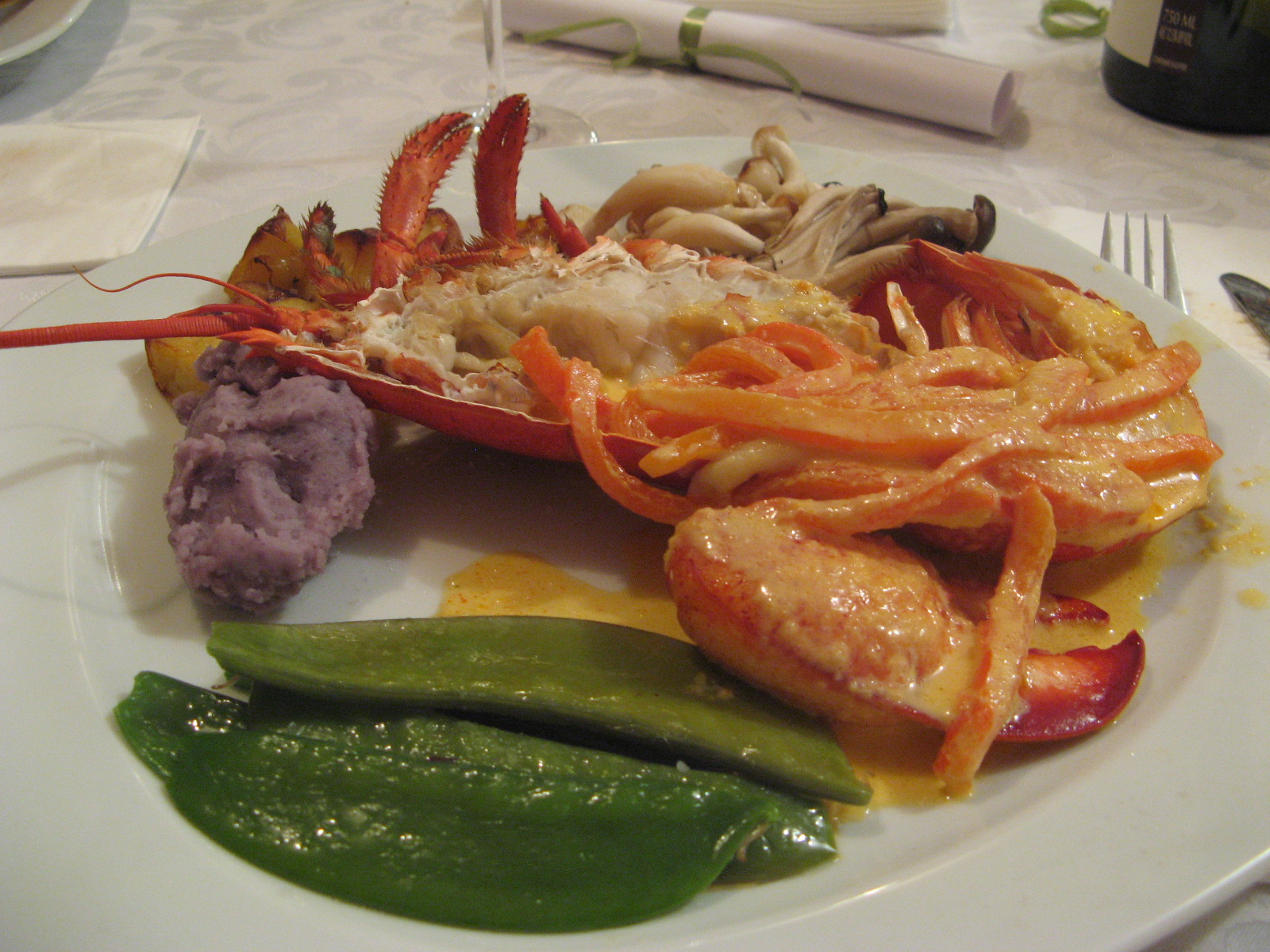
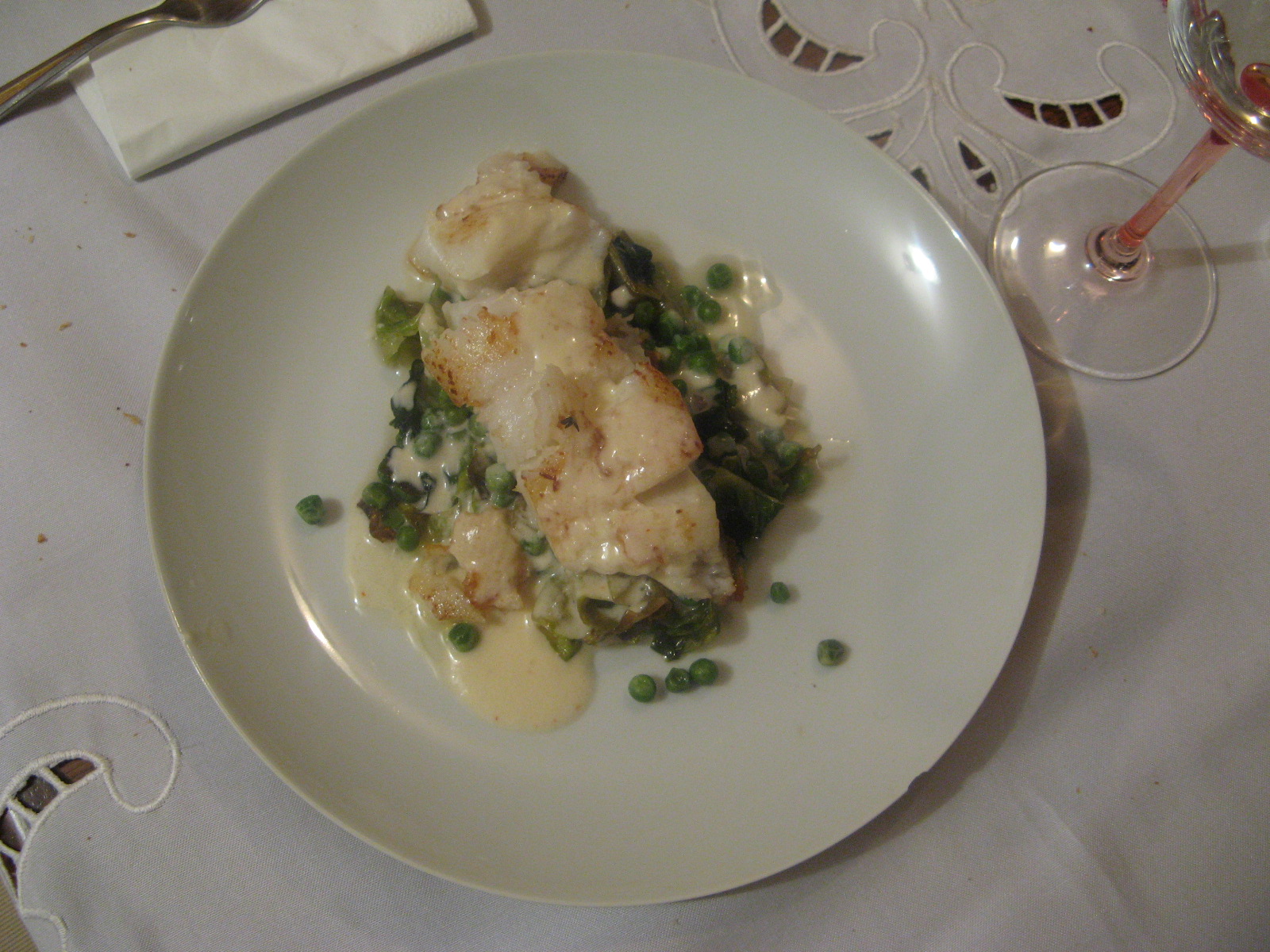
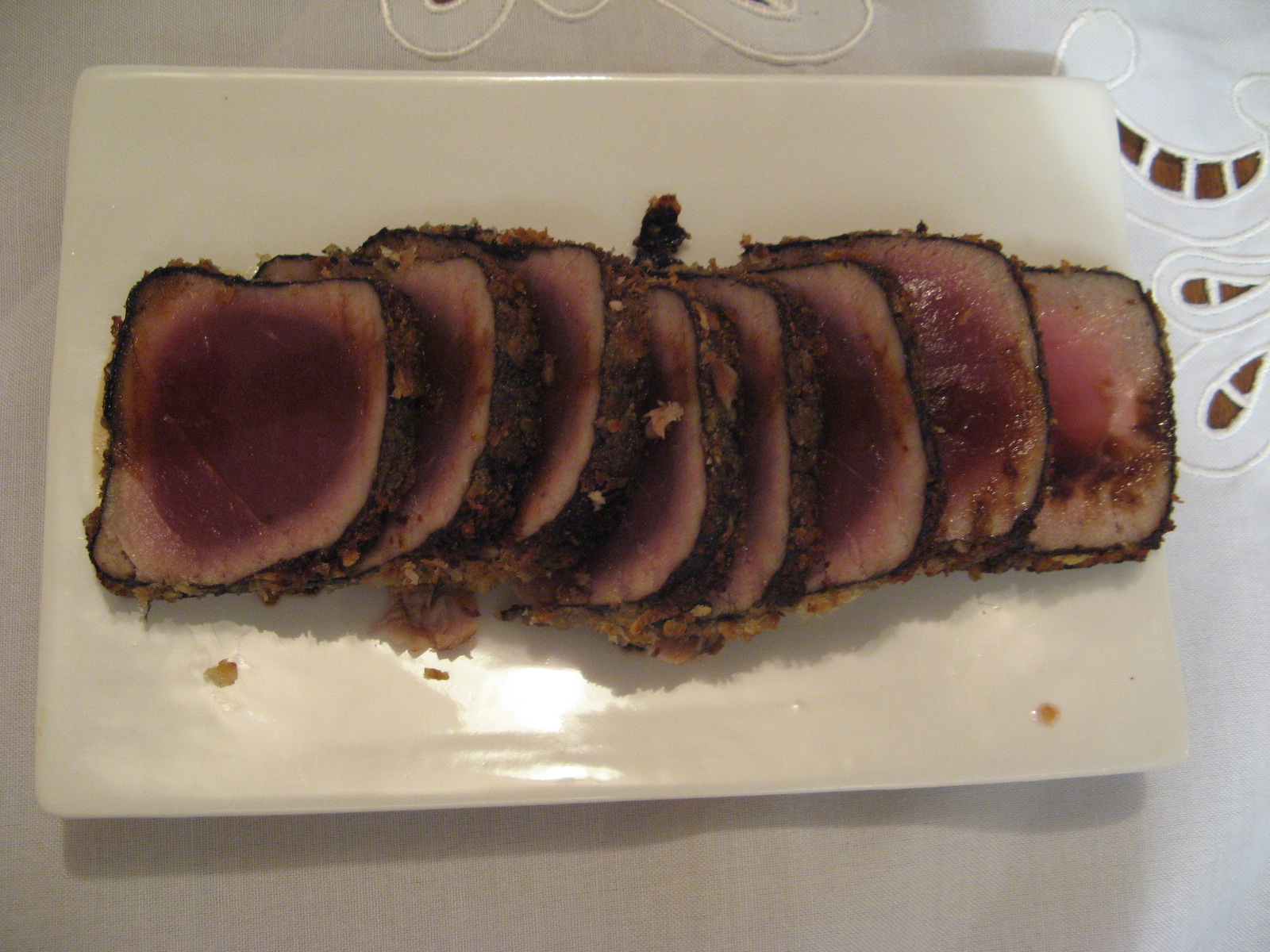


The basic idea with cooking in general and fish/seafood cooking in particular is the freshness and quality of the products. After that you don’t really have to be a genius, you need though, good reference points (eat at the best restaurants and try to “analyze” the food), look at chefs working in their kitchens, read good cookbooks and pay attention to the “tips” and of course LOVE messing about in your kitchen / atelier. When eating at a good restaurant for those dishes you like try getting to the bottom of the different spices used in a dish, read between the lines of the description on the menu. You MUST learn well basic cooking techniques and principles of basic stocks and sauces, this is where you learn the basic principles of combinations of herbs, spices, and product be it Vegetables, fish, meat etc. You also have basic knowledge of Gastronomy: The study of the relationship between culture and food. The art of cooking (Culinary art), is only a small part of your Gastronomy studies. When culture, food, artistry, and good senses meet in one place you transcend to a different level of cooking achievements but… beware! There’s no going back from this route, it pulls you deeper and deeper into new heights of achievement you aspire to (that is what separates great chefs from just cooks, and I am by the way just a cook)
A few weeks ago a very polite French foodie and the owner of a well known Alsatian winery, Etienne, tried and succeeded in giving me a great compliment, which although not true was the most polite thing to say at that moment during a dinner in his honor cooked by me at my house (must be read in French accent): “Are you trying to give French CUISINE a bad name”? Hinting that my cooking is of great quality (of course I had my cock-up’s and falls- literally), he saw me sweating over the oven for each dish and maybe felt sorry for me when in fact that was my double Joy the actual act of cooking, for good friends and family, with the best available wine trying to make it original and interesting and I thought I succeeded reasonably well on all counts (including the fall…)
Cock-up is a British Slang noun meaning: A blunder or a mess.
Cock-up’s in cooking are a daily occurrence for cooks, but for Chefs they are completely forbidden! Inexcusable!! A Disaster!!! The trick for cooks is not only to taste often but also to have some tricks under your hat for much needed corrections. As you know Taste comes in 6 traditional Forms : Sweet, Sour, Salty, Bitter, Umami and Piquance (The latter 2 added as the need was formed)
Piquance (hotness, spicyness, burning) was considered a sensation rather than a taste. Since piquance is sensed by taste buds and other nerve endings on the tongue and palate and is created by addition of certain spices, Piquance should be recognized as one of the basic tastes.
Your basic blunders in the kitchen are of the TOO kind: Too Sweet, too Sour, too Salty, too Bitter, and too Piquant too hot, the trick is how to bring you food back to the balance which has no TOO’s in it, dilute your sauce, add a dash of cream or even cream of coconut, a bit of wine, a dash of salt in a sweet dish or a dash of sugar in a salty dish. Make sure the balance of pairing / combining your ingredients is right pairing is not just for taste it is also for color, arrangements etc. as time goes by you improve…
It also MUST look right IF IT DOES NOT LOOK RIGHT IT IS PROBABLY NOT RIGHT, BUT if it looks right it is not necessarily tasty and food MUST be tasty!
For Fish Seafood in detail including voluptuous recipes may I refer you to the Mul-Yam Seafoodpedia an amazing cookbook of the BEST seafood restaurant in Israel– Mul-Yam,, chef Yoram Nitzan. glimpses can be followed in http://dan-alexander-blog.com/tag/mul-yam/
Amazing photos by the legendary food photographer Clay McLachlan edited by Yair Yosefi
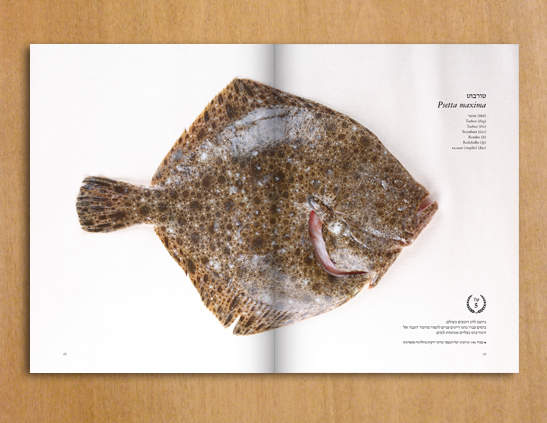

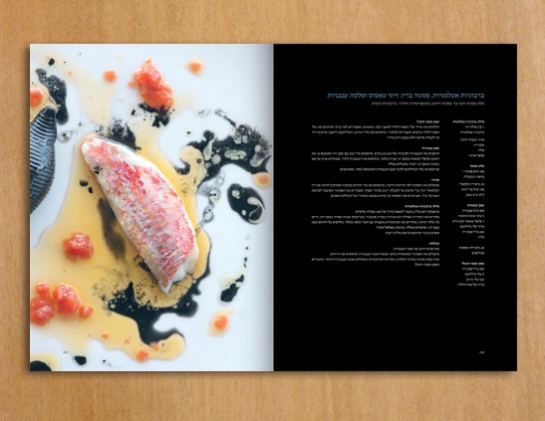
As for the WINES anything goes from beer to Champagne and anything in between pairing is not an impossible task I’m sure you can work it out. Need help? Just ask!
Thank you Daphne and Udi, for giving me the joy of cooking, for challenging and encouraging me at the same time and being such good invitees.
Miss you already but C U soon
Aba, The wineguide
P.S Thanks Judy (Soledad Bleu Etoile) for the Fish market photos
Tarte Tatin for Judy
press play for background music

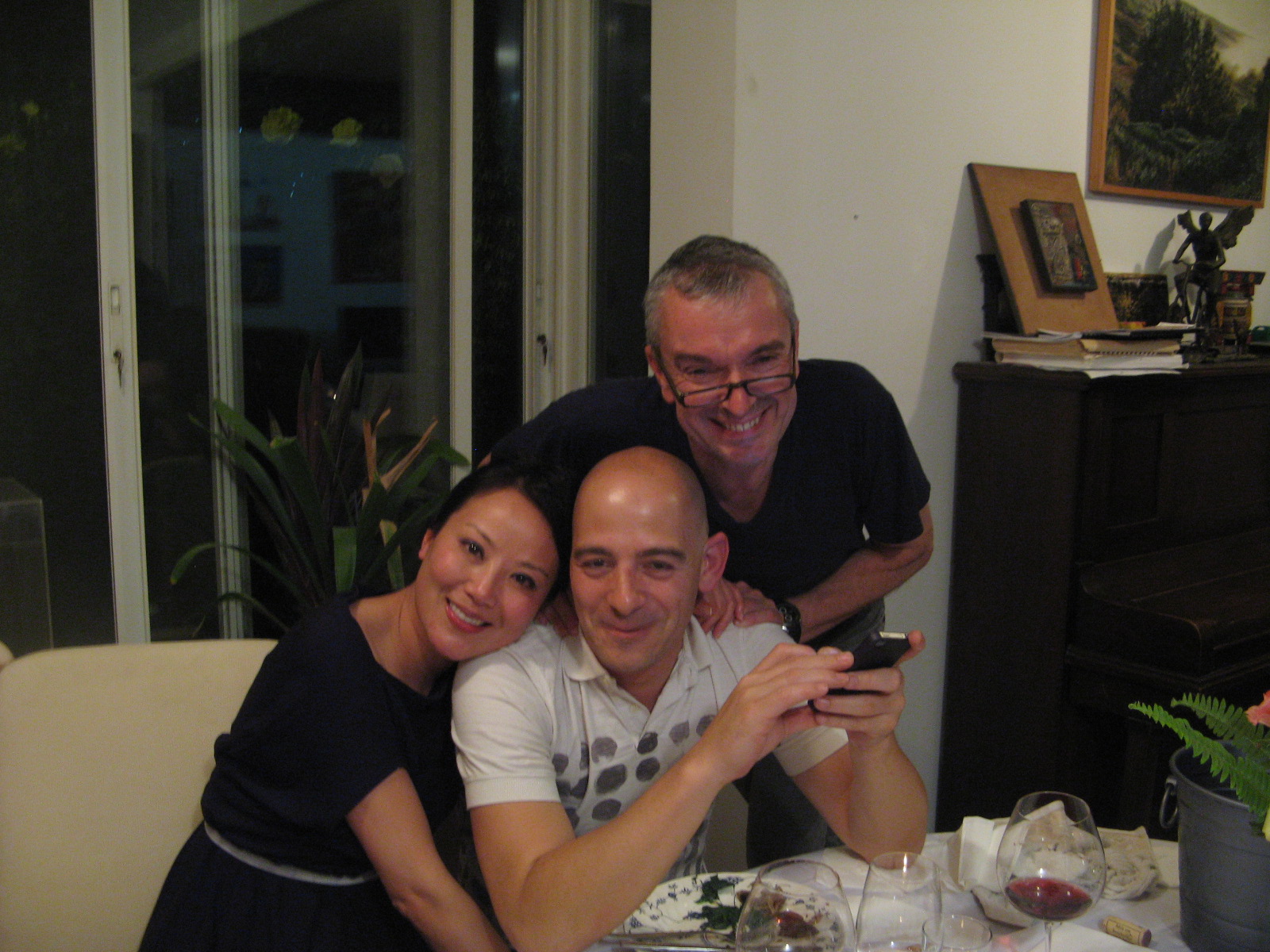
My friends Judy and Yair Judy Yair and Etienne Hugel Chez moi
My friend Judy Chang is a food and wine Junkie of the 4th kind. She’s always on the look for the Best in Wine and Food wherever she is, and she gets around A LOT!!! She is almost “obsessed” with food and wine, follows the best of the rest in each category in all 5 continents, relentlessly guzzling and drinking her way to oral and nasal senses heaven.
She is an American of aristocratic Chinese decent (Taiwanese), with a Jewish Israeli Chutzpa – (Yiddish word that can’t really be translated but is something between “outrageous”, “insolence” or “audacity” “impudence” or “cheekiness”) this is where her charm lies and usually acts as a door opener, she finds her Aladdin Caves of food or wine and opens them with the right command, but one day she will say “Iftah ya simsim” (“Open sesame”) in a wrong place or at the wrong time she might be faced with the “Forty Thieves”…(Ali Baba is the good guy)
In short She Loves Wine, Food, Wine & Food, Food & Wine and anything in between, still she prefers the best of what Chinese, Japanese and French cuisines have to offer. She is more beautiful than any of the most beautiful dishes she ever had (and she’s had quit a few…) and she is Soledad Bleu 😦
She wrote to me recently:
Dearest Amir,
You need to get to NYC and teach the Spotted Pig (Michelin) how to make a proper tarte tatin!! Dono what’s going on here but its too soft and floury and quite unedible!!! It’s more like a darn fruit cake/half ass scone! (She’s a bit biased in favor of my cooking I guess) we all know the disappointment of getting something which is just not IT.
Since I cannot get to NYC right away or in the very near future all those concerned will have to do with this post.
Tarte Tatin is basically (as you know…), an upside-down caramelized fruits tart. (The fruits in the original recipe were apples)
Tales of origin
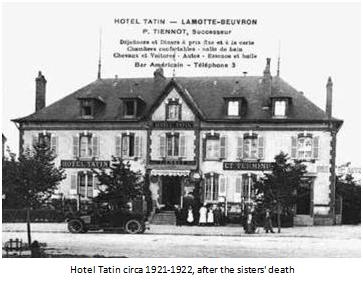 Some claim that Tarte Tatin was first created by accident by the cook, Stéphanie Tatin at Hotel Tatin. The hotel was run by the sisters, Stéphanie and Caroline Tatin in Lamotte-Beuvron, France, (150 km South of Paris), sometime during the 1880. sister Stéphanie Tatin, who was in charge of cooking at the hotel, started to make a traditional apple pie as part of her daily chores, but left the apples cooking in butter and sugar for too long. Smelling the burning caramel, she tried to rescue the “dessert of the day” by putting the pastry base on top of the pan of apples, and put the pan in the oven for the pastry to bake, after the pastry was baked properly she turned over the tart, and served it hot from the oven. She was astonished not only to find a pleasing result but also to learn that most of the hotel guests requested a second helping.

It must be said that the concept of the “upside down tarts” was not a new one. Chef patissier M.A. Carême (The King of Chefs and the Chef of Kings) already mentions glazed gâteaux renversées adorned with apples from Rouen in his glorious cook book “Patissier Royal Parisien” in 1841.
Ingredients


Originally, Tarte Tatin was made with two regional apple varieties: Reine des Reinettes (King of the Pippins), and Calville. But my choice of apples is Granny Smith or Cox which are hard and will hold their shape while cooking, and tangy and sour enough to balance the sweetness of the caramel (toffee). “Toffee is basically sugar and butter, Caramel is sugar and cream or milk, with butter occasionally in the mix.”
Tarte Tatin can be made with other fruits or vegetables such as pears, pineapple, and even tomatoes or onions and leeks. As for the pastry top/bottom the Larousse’s recipe opts for shortcrust which is in my mind the downfall of all those attempting this simple dish, my pastry of choice and the only pastry suitable is puff pastry which is certainly NOT the pastry used at the Tatin Hotel. (I’ve learned the basic ideas for this recipe, ages ago from the award winning recipe Pear Tarte Tatin – tarte tatin de poire by Marco Pierre White voted as the best dessert of one year during the 90’s) I must admit I use less than half the recommended butter and sugar and simplified the method to fit home cooking. (and it works!!!!)
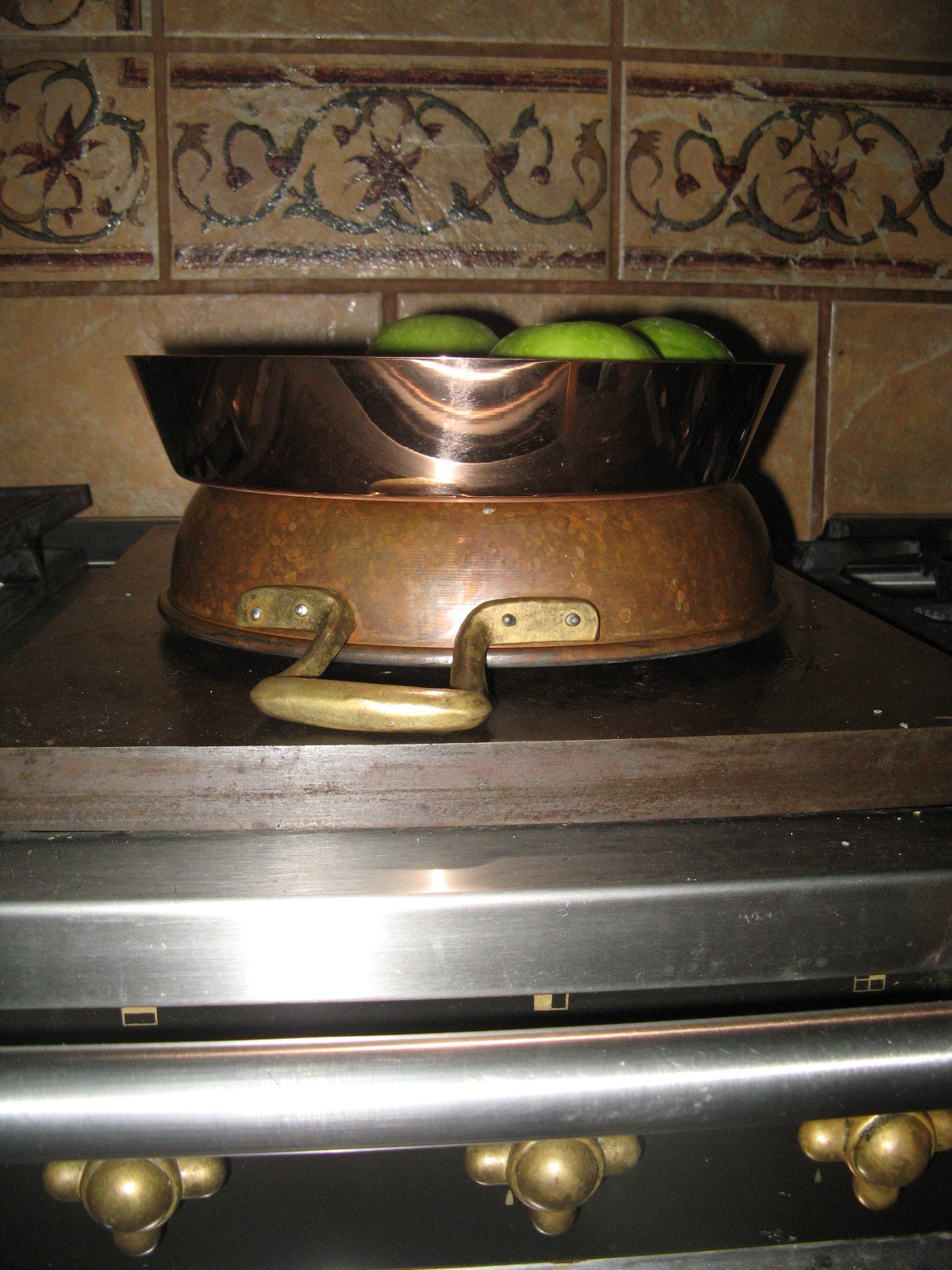
For a Tatin dish 28cm diameter serves 6-7 people:
6-7 green apples: a mix of Granny Smith & Cox is best
100g Demarara sugar
70g butter + 30g butter cut to dots for spreading on top of the apples
1/2 a teaspoon of fresh ground cinnamon
A 20 cm square of best ready-made butter puff pastry
Prep:
- Core and peel the apples and cut into quarters (keep in cold water with a squeeze of half a lemon, can be prepared well in advance) (if using pears core peel and cut in half)
- Melt the butter in the Tatin dish on low heat making sure not to burn the butter and sprinkle most of the demarara sugar on top. Crowed the apples as much as possible (round side down core side up), no need to arrange the fruits in any particular order the apples will “arrange” themselves. Turn the heat slightly up and allow the sugar to start bubbling.
- Dust the puff pastry (room temperature) and kneed to a circle 5 cm larger than your dish.
- Dot the apples with the remaining butter sprinkle with sugar and the cinnamon evenly.
- Cover the dish with the pastry circle and tuck in the extra pastry around the inner rim to “hug” the outer ring apples
- Keep on medium heat the pastry will balloon up and the butter and sugar will start to caramel at the edges wait until dark amber brown color froth appears at the edges around.
I stand over the dish at this stage with pastry leftovers patching up any punctures in the dough that deflate my balloon. Once the edges turn the right color place the dish in the center of a preheated oven 190º C
- Bake the tarte Tatin for about 20-25 minutes, or until golden, with crispy dark brown caramel pieces bubbling up from around the edges. Take it out of the oven. NOW you need to turn it over, which isn’t hard – but you do need to be careful with that hot caramel. So get a serving plate larger than the dish wearing oven glove. Put the plate on top of the pan, then quickly in a smooth confident move, turn it over don’t worry if the occasional apple gets stuck onto the dish, use a Silicone spatula to collect the caramel and “drop” the apple to its place in the crowd…and the remaining caramel/toffee all over.
- Serve with the best Vanilla ice cream you can get your hands on while hot.


And most importantly the wine pairing for this dessert, All of these are suitable depending on personal taste my selection:
Niepoort 10 Years Old White Port – best served chilled with our dessert .
of course the Hugel Vendange Tardive Riesling 2001 (for those who feel LARGE…)
Or a good 4-5 Puttonyos Tokaji
As Judy would say: YUMMM!!!!!!!!
BTW she’s at soledad–bleu-etoile.blogspot.com check her out.
Your Wineguide
Bill Withers – Ain’t No Sunshine
Writer(s): MOLINA JR., ARTURO/WITHERS, BILL
Ain’t no sunshine when she’s gone
It’s not warm when she’s away.
Ain’t no sunshine when she’s gone
And she’s always gone too long
Anytime she goes away.
Wonder this time where she’s gone
Wonder if she’s gone to stay
Ain’t no sunshine when she’s gone
And this house just ain’t no home
Anytime she goes away.
And I know, I know, I know, I know,
I know, I know, I know, I know, I know………..
A Feast at the Fat Duck
“Bring the sense of FUN”.
A Feast at The FAT DUCK
10:38pm Late September 2011 a “rain” of emails from my old buddy Spike in London, came pouring down on me: Hey Buddy – we have a table for lunch @ the Fat Duck next Tues. – really really really looking forward to it buddy sweet dreams SPIKEY X”
“The table is booked 12.30 as that was all they could get so we have 2 leave earlier – fergus p.r@ st J. did it & he said it was a right carry-on lets make sure we get there on time innit?
looking forward 2 it buddy sweet dreams SPIKEY X”
The buzz of enthusiasm caught me as well, a visit to the Fat duck, is a meal I “promised” myself for the last 10 years (since the Restaurant got its first Michelin Star) and the raves regarding a new star in the culinary sky started to tickle my taste buds and imagination, but somehow I never got down to arranging it well ahead enough and kept missing my opportunities for a meal at “The Restaurant at the end of the Universe”. This is: “The ultimate hot spot for an evening of apocalyptic entertainment and fine dining, where the food (literally) speaks for itself”. (From “The Restaurant at the End of the Universe”, by Douglas Adams.).
Spike, through his web of connections finally managed to arrange a meal at the Fat Duck, the restaurant that serves Bacon and egg ice cream, snail porridge and all, molecular cooking (As it is often described in the media)
Such a sense of culinary anticipation had not struck me since I (obsessively) dined, ( 20 years earlier), with the world greatest: Fredy Girardet, Joel Robuchon, Bernard Loiseaux, George Blanc, Jacques Lamellose, Pierre Gagnaire, Alain Ducasse, Marco Pierre White, Pierre Koffman, Daniel Boulud to name but a few…
As a matter of fact I like this feeling of tastes and flavors hype that engulfs you at a perfect meal, (a kind of addiction), it is as if these guys (Top Chefs), know of the anticipation and expectations most of their customers come with… and have this magic touch to form the perfect setting for that very day, for the man who came to dine (ME).
I must admit I’m not much into culinary terms such as Molecular gastronomy or molecular cooking as the “great” Mr. Herve This, calls the cooking at El Bulli or The Fat Duck, or the “late” term”: nouvelle cuisine”, which is actually an old term (since the 1740s) used throughout the centuries for anything new at the time, in the preparation combination or presentation of food, for example, the cooking of Vincent La Chapelle 1735, or François Marin was described as nouvelle cuisine of the time, in 1890s the cooking of the great Auguste Escoffier, the epitome of traditional cuisine was described with the term “The modern” – Nouvelle..
I like restaurants that try and succeed to “give pleasure and meaning to people through the medium of food”. As our host Heston Blumenthal neatly put it: “Build food while predicting the effect on the eater.”
We did arrive on time, and Bray is not a big place, but if you don’t look up and catch a glimpse of the Restaurants Logo you will not find it as it is well hidden behind the walls a modest looking English country House, no boasting, very dignified, and we missed it (what anticipation does to you…) so we strolled up the street to peek inside the ‘The Hinds Head Pub’ 30 yards down the road and ask for DIRECTIONS. You open the door yourself (I like that), it feels like entering your own home, no gate keepers, or other paraphernalia which is inseparable in some 3 Michelin star restaurants. Thank God I can’t stand these tedious manners.
They let you settle down and do all the necessary bits and bobs of bread, water and wine. Which is if you think about it a necessity of any restaurant, but also a traditional welcome almost in all cultures: bread and water or bread and wine were served as a welcome gesture since biblical times.
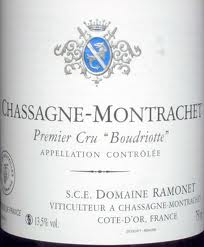
So we ordered a 2004 Chassagne-Montrachet 1er Cru, Boudriotte, Domaine Ramonet That went very well with the first half of the dishes in the menu. Now we are “all set” as the restaurant needs our full attention with the opener which I would call an Amuse-bouche, usually a “mouth amuser” which serves here as a Meal amuser The LIME GROVE- Nitro poached green tea and Lime mousse. The liquid Nitrogen is bubbling and evaporating in a white mist in a container into which a ball of lime mousse is tossed in and turned around in a freezing temperature of −196 °C as the mousse hardens, a dust
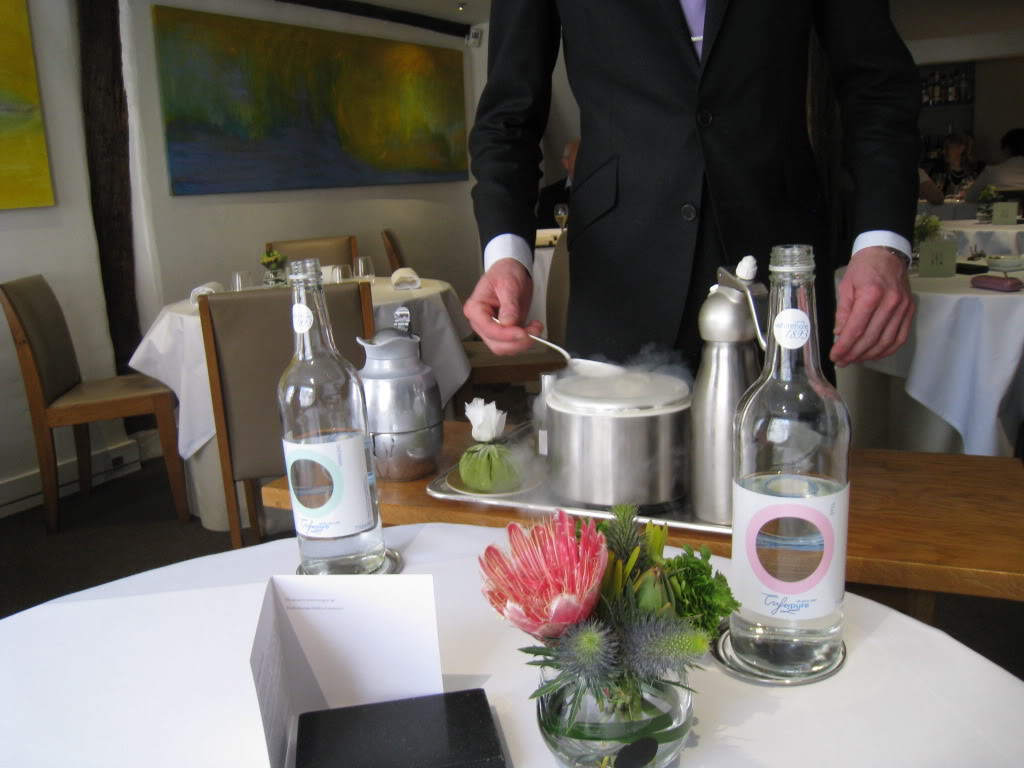
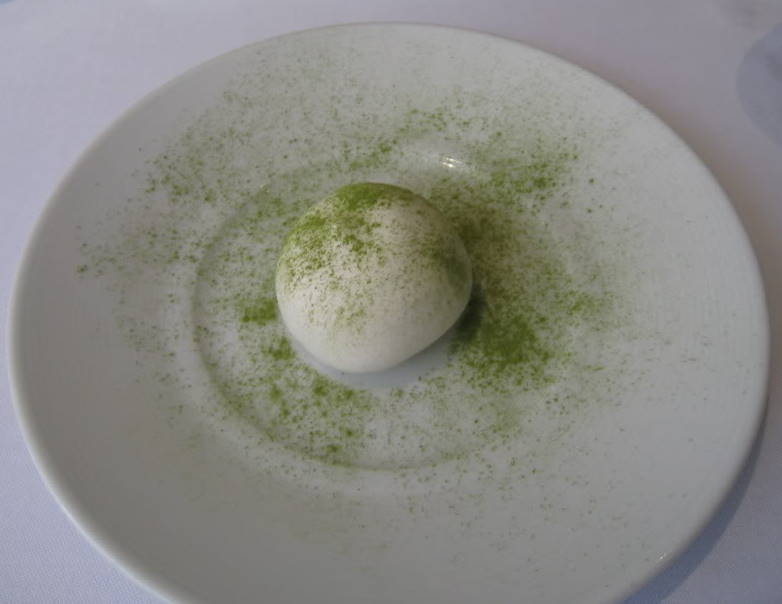
of green tea is sprinkled over and just before you’re requested to put it whole in your mouth the finishing touch of Lime fragrance is sprayed over your head and engulfs you with the aroma of lime inside and out and the mousse melts in your mouth as you bite the “hard / soft” ball of delight. It is fresh and fun and tingles your taste buds with the sense of fun it is intended, still with the correct concentration of the flavor of what it is meant to be: a lime mousse in a bite. Welcome to the Fat Duck, Here life is beautiful… The theatrical curtain opener is over, but as in the theatre the show must go on and the first course is served: RED CABBAGE GAZPACHO served with ice cream of Pommery Grain Mustard. Well, Pommery mustard, also known as Moutarde de Meaux, this is truly a culinary historic gem. This jewel of condiment comes from Meaux, France, (just northeast of Paris). It is said that French kings have been dining on this mustard since the early 1600s. Of all gourmet mustards, this particular mustards blend is on the top of the list, both for its richness and its simplicity. It is said that the secret recipe for pommery mustard originated with an ancient religious sect that lived in the town of Meaux,. In the year 1760, the secret was revealed to the Pommery family, and they have kept it safe ever since.

Back to the dish, though the photo speaks for itself, a deep purple smooth Gazpacho or traditional Russian Borscht (both would fit the description) decorated with a delicate grained white ice cream with a hint of very fine mustardy flavor that looked like the sun setting into an ocean of purple bliss, as in the Deep Purple song Lalena that came right to my mind (press play to listen to the song as you read on, to ease the pain)
When the sun goes to bed
That’s the time you raise your head
That’s your lot and life, Lalena
Can’t blame ya, Lalena!
Lalena is the name of the Russian girl eating her Borscht and sour cream… You dig? I can’t blame YA. Aren’t we having fun??? I am now as I was then, slurping the meticulously spiced almost “Gazpacho essence” with a morsel of ice cream to melt on my tongue on every bite. We’re through the first two dishes and your Tenzo is giving you a “break”, as I was given between each and every dish (of around 15-20 leisurely moments) for our five senses to sink into the meal’s atmosphere We slid down the rabbit hole and still have 10 more dishes to go,so patience my friends,
Create one mouth full of food with 3 separate flavors Feast at the Fat Duck
…We cleared our palate from the delicate Gazpacho, flavored with a hint of the tiny cucumber cubes (brunoise) and mustard, with the excellent breads on offer (which bread would you like Sir?.. a bit of both, of course! …) especially when enhanced with the voluptuous sea salted french butter, I love good bread it is so basic yet can reach heights of pleasurably delights under the loving care of a good Baker, and even better, wrapped up with some more sips of the fresh Chassagne-Montrachet 1er Cru, Boudriotte, Domaine Ramonet 2004 , served by the capable, gentle, and knowledgeable Mr. ISA BAL the Duck’s head sommelier . Though the 2004 is not the best vintage year for Bourgogne’s whites, Boudriotte always displays finesse, elegance with a long, ripe finish yet crisp with a strong sense of green apple peel, balanced with notes of crème patissière and toasted butter brioche. My wine of choice to fit the occasion, it went very well with the first four offerings. Now, the table is being laid down with the stage setting of act 3 of the show: “welcome to your very own tiny oak forest, the only place truffles grow…”. It is a wonderfully orchestrated Homage to Alain Chapel legendary dish Jelly of Pigeons with 3 chicken oysters and young vegetables, The FAT DUCK version: Jelly of Quail, crayfish cream, chicken Liver Parfait, Oak Moss & Truffle Toast. A game of associations…A long name and an elaborate setting to go with it, first a wooden box with Oak moss that looks like a rectangle piece of grass, which brought another smile and sense of fun to the table with two “fat duck Oak films” to melt over your tongue which has a delicate aroma of Oak that spreads around your mouth and evaporates through your nose with an oaky bark sensation and a touch of wet oak moss,

as the films melt over our tongues the waiter pours hot water and oak scented oil on the turf box causing vapors of oak scented mist, to crawl out of the box and over the table cloth onto our laps, what a wonderful sight luring you into an enchanted forest where truffles may be found under the Oak trees.
Quite rightly Spike said: “Heston Blumenthal must b mad as a brush!” What a load of fun… And that is the basic Idea behind all this so far wonderful meal, innit? The whole scene immediately reminded me of Woody Allen’s father’s “Piece of Land” from the movie Love and Death (Have a look and tell me I’m wrong!
The rest of the dish is laid around with sensuous pastel colors of brownish peach and some surprises after you dug in (if you dare) to disturb the beauty of the triple wrapping “Babushka” arrangement of, outer layer of liver parfait covering the quail’s jelly with the “mushy peas” inside like a savory “Mozart” chocolate (Salzburg Mozartkugeln) course you do bite on it almost impatiently, after all we came to eat!!


All the rest is a bonus. The liver parfait is light and smooth coating a concentrate of quail stock jelly that really tastes of quail stew that bursts open to reveal a galantine pea mousse a smooth “mushy peas” style flavor and all of that swimming in a bowl of Langoustine cream.

We ordered some more bread and wiped the bowls shining clean Superb!The truffle and oak toast was forgiven due to mitigating circumstance concerning the time of the year being way beyond the truffle season. Most diners, (I know I would), could easily be fooled by some drops of good truffle oil or white truffle paste to enhance the aroma and flavor of the truffle toast, we happily settled with the Oaky atmosphere that was bestowed upon us.We were in a state of constant blissful smile which threatened our facial skin so I looked around the restaurant and literally every guest was HAPPY! The sense of fun caught all forty four of us diners, mission accomplished as far as the Kitchen and the Ducks philosophy is concerned : ” We believe that cooking can affect people in profound ways, and that a spirit of collaboration and sharing is essential to true progress in developing this potential.“ So Bring in the sense of FUN in life” through food and a visit to the restaurant. I too, always felt, that this is the idea behind a good restaurant, a good meal, a good food and wine outing.
Next came the Snail Porridge, Jabugo Ham, Shaved fennel. A dish always mentioned when the restaurant is in the media. Personally I’m not too keen on “Porridge” in its traditional preparation form, it’s not a food I was raised on or “learned to like” at early age, and you can’t deny it’s an acquired taste kinda food and consistency… neither am I hot for snails, they usually disappear in tons of herbs and garlic. This is my “challenge” dish and there it came the first thing that came to mind was the fresh parsley green color the same unique parsley green color of Bernard Loiseau’s legendry dish: Escargots Au Veloute De Persil. The Porridge was not overcooked and mushy (which is probably what I dislike about porridge), and the scent of the Jabugo Ham* added depth to the dish that was decorated with some braised and then butter sautéed snails, and some shavings of fennel.
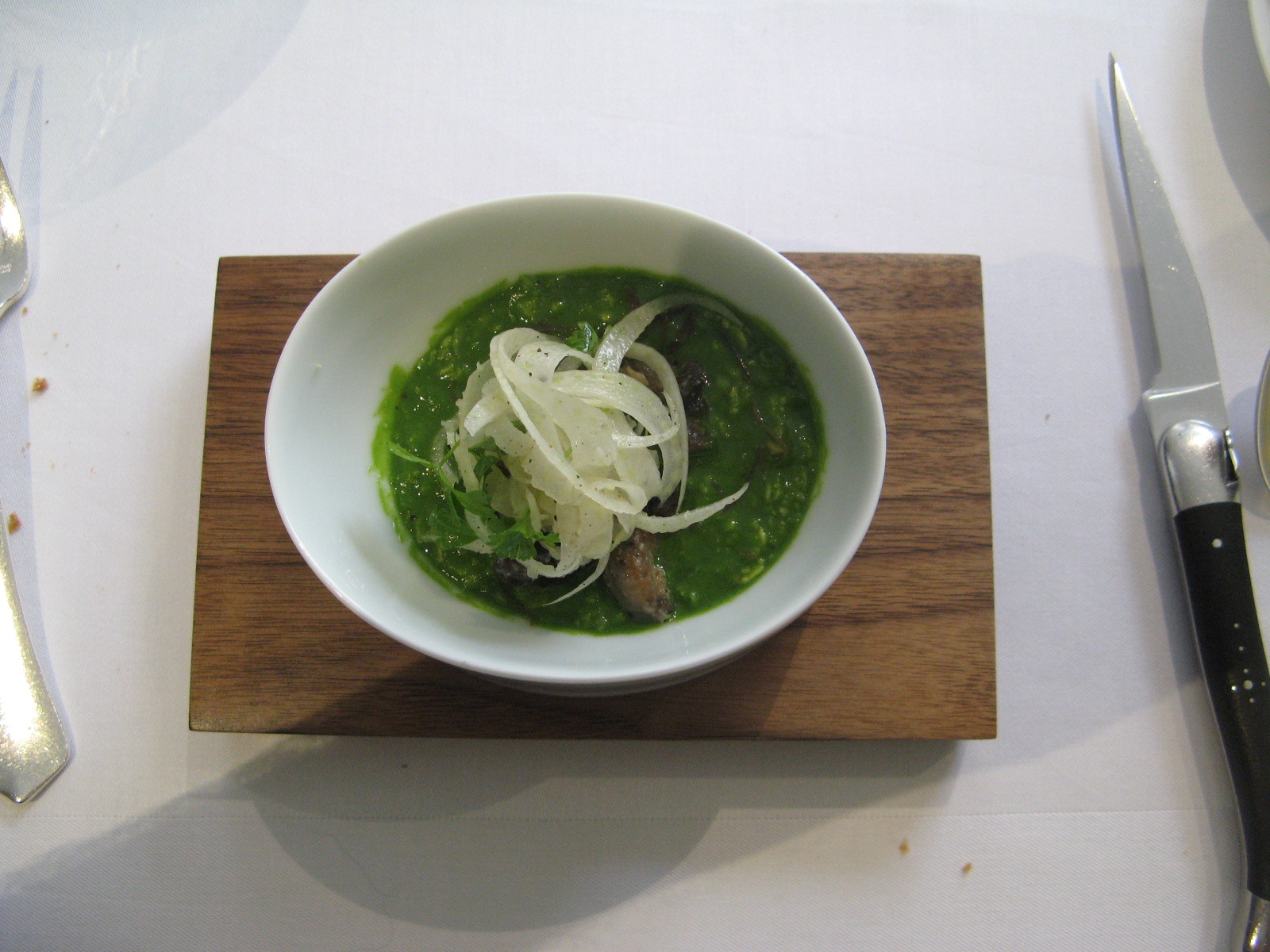
Needless to say it was again meticulously spiced and well balanced. *They say that “Jabugo breed pigs are the only animals of this species in which stored fat is redistributed thoughout the body, infiltrating the muscle fibers. These pigs consume a diet with a high acorn content their fat is of superior quality, giving the flesh its characteristic texture, aroma and flavour.
We were now served the Roast Foie Gras, Gooseberry, Braised Konbu and crab biscuit.

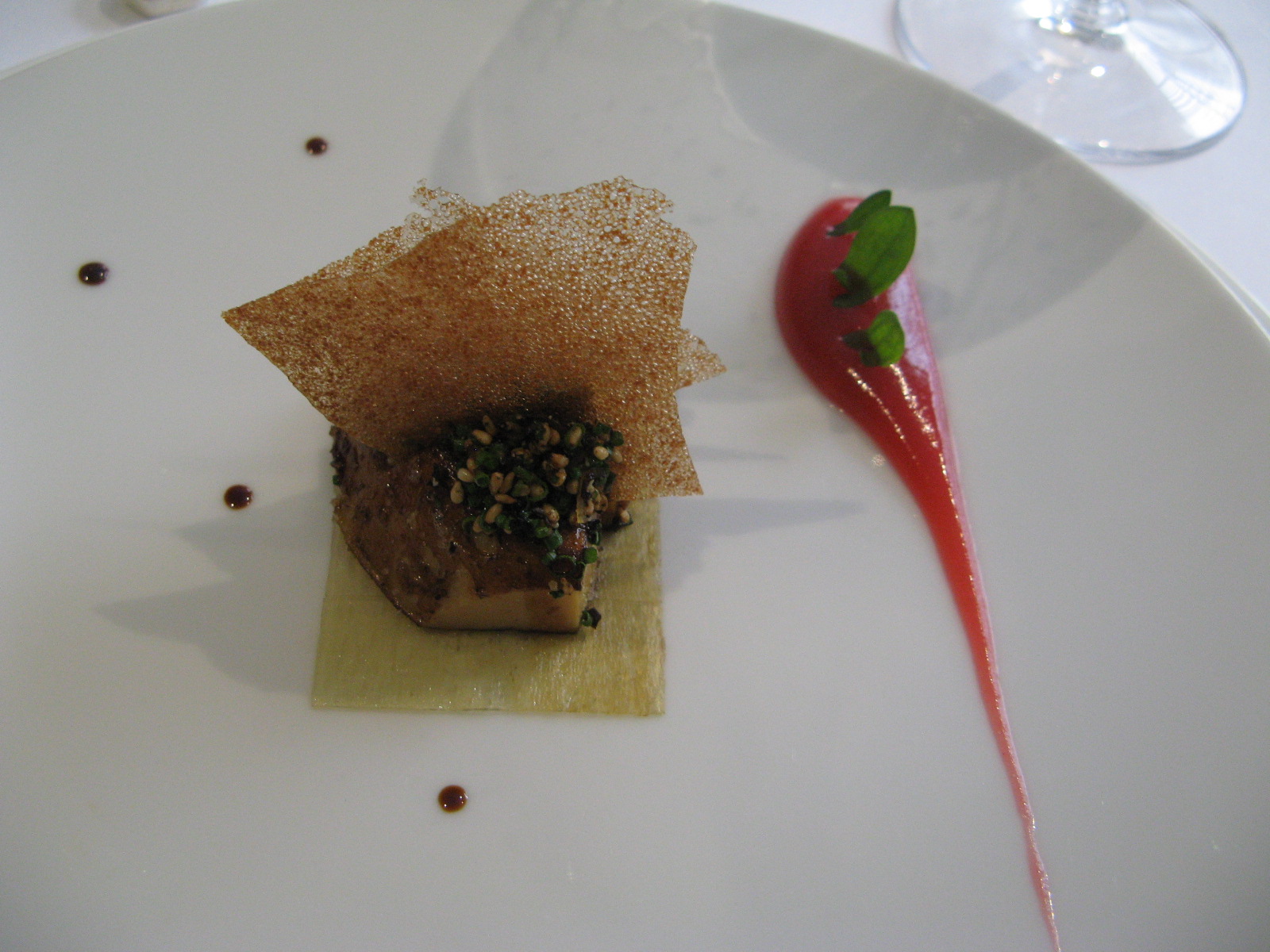
The foie gras was made to perfection, the pinkish late season, gooseberry coulis was a great compliment to the foie gras yearning for a touch of fruity acidity and the Konbu (Japanese sea weed) and crab thin and crunchy biscuits added antagonism in texture and taste with its sea saltiness to complete the balance. Great !!! As I went out for a short break and a phone call to my dear friend Yair to consult on the next wine I am about to order from a shortlist I have prepared the night before, I thought to myself, what a pleasure it is to enjoy a really good meal in the right lighthearted manner and pleasant fellow dinners And until I do decide upon the suitable wine I leave you till next time…with seven more dishes to go, where we’re invited to A Mad Tea-Party with ALICE.

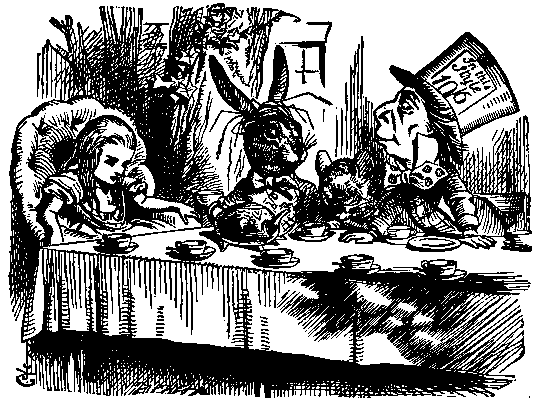
Like Alice in wonderland we were only half way down the rabbit hole, we were falling the very deep and wondrous well, and had plenty of time as we went down, Alice, Spike and I, to look about us and to wonder what was going to happen next.
One thing I was sure of the wine we ordered is about to finish and a new bottle suitable for the next 4 courses should be ordered. Now the wine list at the Fat Duck is fairly large in volume and selection and I dislike reading book size wine lists in the middle of a pleasant meal so I made the effort and looked into it, the night before (Hooray for a good internet site) such as the Fat Ducks: http://www.thefatduck.co.uk/The-Menus/The-Wine-List/ and made myself a shortlist of about 5 wines (Spike drinks only whites) after being satisfied with my first choice I thought a more “reddish” white wine will be more suitable, and the meal was so enjoyable up till now, I decided to consult with a “telephone friend”. Yair my dear friend was the obvious choice and although he and later Isa (the house sommelier) tried to direct me in a more fresh and elegant direction, and even tried to “warn” me of the extra oakiness of Mounir Saouma touch, on this specific wine. Still I knew I wanted to taste the wine of my fellow countryman Mounir who “made it big” in Bourgogne which is not a trifle matter and so I opted for the Chassagne-Montrachet 1er Cru, La Romanée, Lucien Le Moine 2004, which turned to be on the day a wine well suited for the rest of the meal. While the bottle is opened and given a much needed “breather” let us have another look at the oaky mist (this time) from our very own table:The break is over and I felt like the March Hare mumbling to himself: ‘Oh dear! Oh dear! I shall be late!’ I returned to our table to get ready for the next dish: MOCK TURTLE SOUP “Mad Hatter Tea” , In the words of Lewis Carroll it is : A Mad Tea-Party (CHAPTER 7, Alice’s Adventures in Wonderland by Lewis Carroll 1865)
As the card by our plates explains Turtle soup was highly popular in 19th century England but was so expensive and hard to get (sea turtles were rare and difficult to import) that a mock turtle soup was developed using calves head and feat (that is why Lewis Carroll, mentions in length the story of the mock turtle and John Tenniel whose drawings accompany “Alice in Wonderland” drew the Mock Turtle with calves head and feet).
 Welcome to our very own Mad Hatters tea party. We are each served a 24 karat gold leaf plated, fob watch, which we put (or dip) into a cup of tea and boiling water are poured over it, we’re in the scene: “The March Hare took the watch and looked at it gloomily: then he dipped it into his cup of tea”

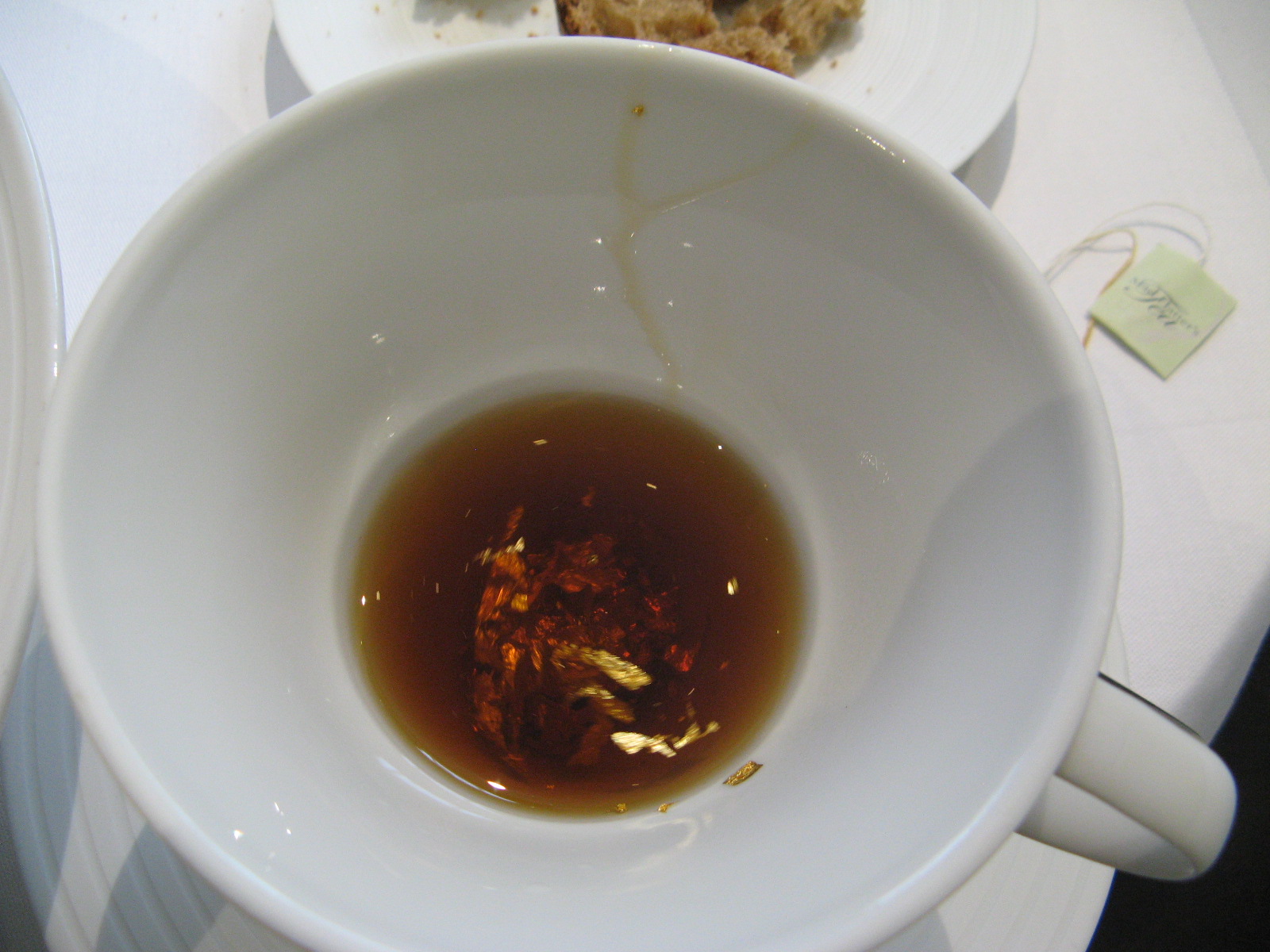
our mock fob watch dissolves like a tea bag and glitters of gold leaf “swim” in a cup of boiling water that turns into a brownish broth (the mock turtle soup), with a deep meaty concentrate aroma and flavor. The bowl in front of us is a setting of the complimentary scene: what goes with mock turtle? Mock turtle egg It looks like an egg but the white is turnip mousse and the yolk is Swede and saffron nothing is what it is it just looks like what we think it is… confused?? Add some enoki mushrooms to keep the wonderland atmosphere going, and an ox tongue and Colonnata Lardo (from Fausto Guadagni) Terrine that gives the fatty feel of what is described as genuine turtle soup.

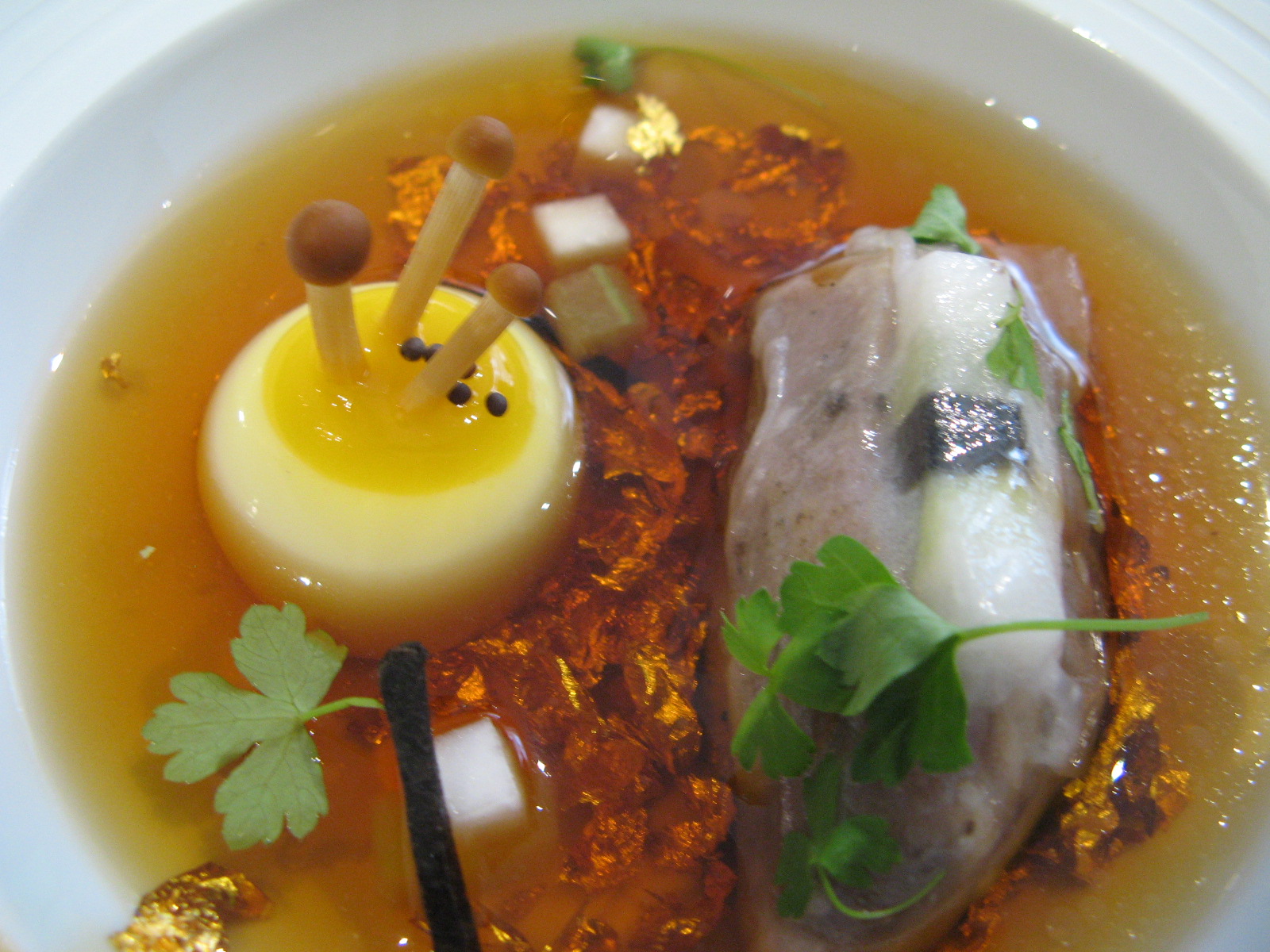
“Colonnata is a small village in the hills of Tuscany that happens to make the world’s best lard. Fausto Guadagni is one of the last, and best, of the traditional producers. The Lardo is treated with spices and matured for six to eight months in marble tubs, known as conche, in caves cut out of the same stone. The result is fragrant, melting and joyous.” Now, garnish the bowl in your mind with cucumber, pickled turnip, truffle cubes, and some leaves of micro parsley. pour the golden broth from the cup onto the enchanted scene bowl, and there you have it; Mock turtle soup. I trust Heston this is as close to turtle soup as you can get!! And as in the the Mock turtle sad song, on the day it was:Beautiful Soup, so rich and green, Waiting in a hot tureen! Who for such dainties would not stoop? Soup of the evening, beautiful Soup! Soup of the evening, beautiful Soup!It was glorious in the bowl and wonderful on your tongue and over your palate as you swallowed each spoonful of golden fairytale in a bowl. And yes we’re still having fun and yes the wine is a bit over oaky but the bourgognian Chardonnay from La Romanee, (chassagne) is powerful enough to withstand the wood without losing its character. Can we hope to proceed with anything to match the ingenuity and originality of the wonderland soup?
A large Conch a symbol of old, is laid down in front of us with a pair of modern I Pod ear phones sticking out of it…

The conch, this is one of the most important emblems of the India God Vishnu. He is the protector of the world and the restorer of moral order (dharma). He is peaceful, merciful, and compassionate. The blowing of the conch symbolizes the primordial creative voice and Indian mysticism links it to the sacred sound OM  , which is said to be the breath of Vishnu, pervading all space.
This is a good sign to what is going to come, but are we going to say OM or sigh UMMM to the taste of THE SOUND OF THE SEA.
, which is said to be the breath of Vishnu, pervading all space.
This is a good sign to what is going to come, but are we going to say OM or sigh UMMM to the taste of THE SOUND OF THE SEA.

A sea shore scene on a glass slab is laid before us here’s the sand made of Tapioca mixed with fried grounded baby eels, some Japanese sea weed for taste and decoration, with a triptych of sashimi of mackerel, Halibut and yellow tail, and the foam of the sea I guess a foam of a fish consommé to “kiss” the sand and the fish. The sound of sea waves and sea gulls take you to somewhere on a British shore line, the tapioca sand is really sandy between your teeth, with a deep but delicate sea saltiness flavor and aroma added by the ground eels, and the foam is a fine touch to wrap the sea taste in your mouth and mind, we went UMMM, but felt the breath of Vishnu pervading our taste buds and nose, OM we blessed the chef…for serving us a “sunny day down at the beach”, on a plate. Today, the conch is used in Tibetan Buddhism to call together religious assemblies. During the actual practice of rituals, it is used both as a musical instrument and as a container for holy water. We kept the earphones in for a longer while as the sound is calming and the total effect is outrageous or as Spike put it on an email to his friends: “…a dish called SOUND OF THE SEA came: a conch shell with headphones 2 put in yr ears (it had an ipod inside) b4 they brought over a beach on a tray with frothing sea + sand + seafood – all edible – whilst u listened 2 seagulls + waves, I kid u not baby!” We are still before our main dishes of fish and than Pigeon and a whole lot of desserts and sweets. All or at least mostly in part 4 to come real soon. but at the moment we savor our Chassagne-Montrachet, and cherish the joy this meal is giving us.
Our next dish Salmon poached in Liquorice with Artichoke, Vanilla Mayonnaise and Golden Trout Roe, is a perfect example of cooking which utilizes the scientific knowledge of what is called Molecular Gastronomy, and turns the knowledge into eatable food of the highest quality and finesse which is in one word cooking or even Haut cuisine for some. Not the bubbling mist of ultra cold gases in their “frozen” liquid form as they warm up in room Temperature, (although I must say it is a lot of fun), or other stunning paraphernalia (I like firework displays), but cooking at its highest standard with precision and care in which the ingredients are scrupulously picked from the best producers of each ingredient around the globe, and then prepared to perfection. (Pommery Mustered from Meaux, France, Jabugo ham from Huelva, Andalusia, Spain, Konbu from Japan,Lard.From Fausto Guadagni in ColonnataToscana, Pigeons from Anjou etc.). Still, all the time keeping the flavor taste and texture of each ingredient meticulously.
Two separate ingredients rarely or never assembled together in one dish are combined together because they contain a mutual chemical compound, Asparagine; (One of the 20 most common natural amino acids on Earth). Originally the dish was constructed of liquorices and asparagus both have very high content of Asparagine, combination that in Blumenthal words brings the Bitter sweet effect (bitter being the Asparagus and sweet the liquorice) but kitchens get “tired” of the same dish looking the same and tasting the same day in and day out, so changes are made with the “decor” or the secondary ingredient of the dish, but not with the idea behind the basic thought, or the essential core that combines the dish. We were served the Salmon poached in Liquorice, with Artichoke as a veggie bitter touch. Artichoke contains mostly phenolic compounds such as chlorogenic acid, but also asparagine and other substances. Connection re achieved!!!

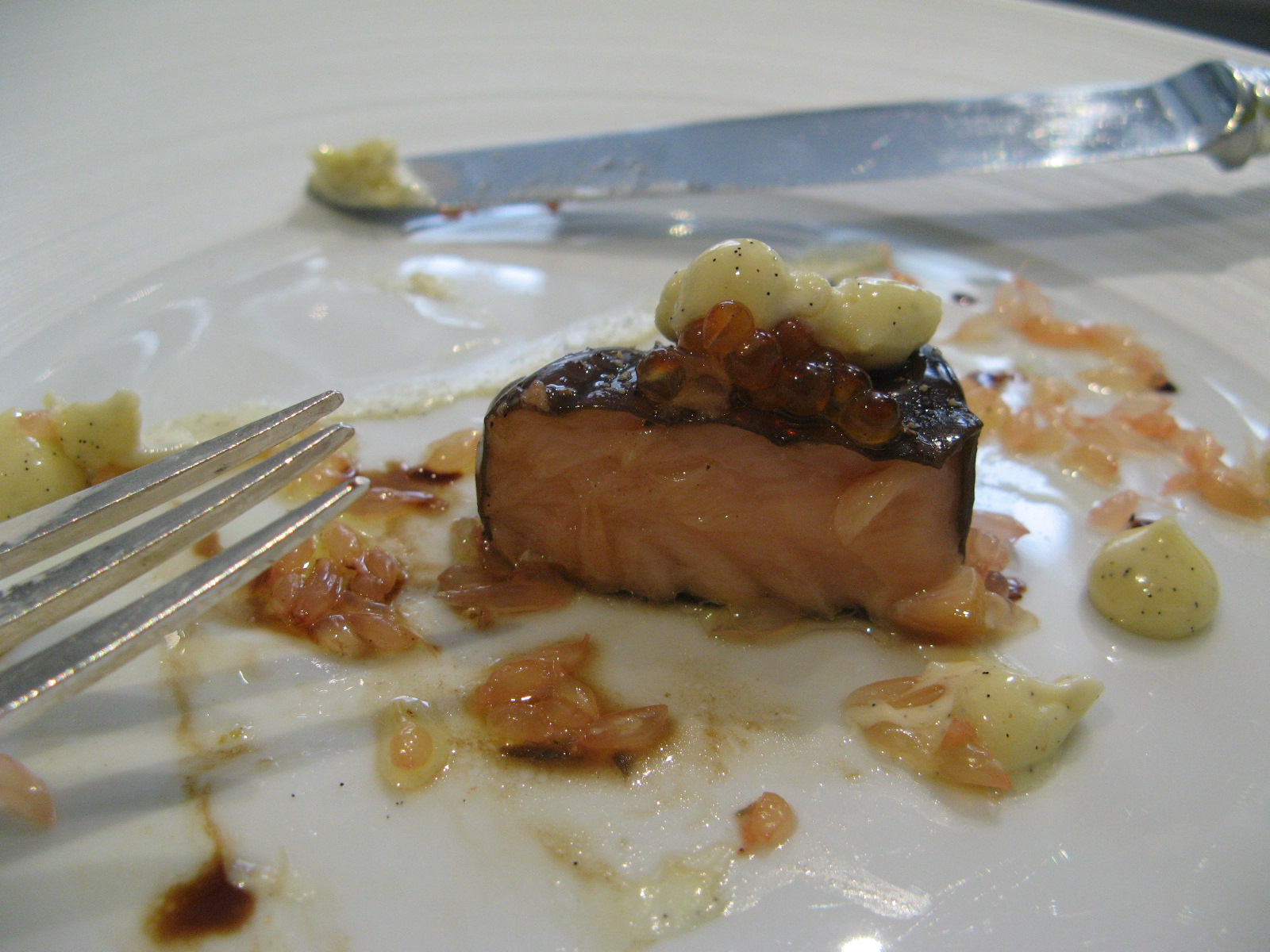
The substance to this dish is a nice square of fillet of Salmon which is strong, fatty and “rich” enough to withstand the overpowering strength of Liquorice. And it works! The slice of pink salmon is cooked in “the Lab” (poached in a sous- vide bag under exact pressure of 60mbar at precisely 42ºC for around 25 minutes (puphhhhhhh) thank god there’s a restaurant with all that equipment, no wonder they reach near perfection in depth of cooking, texture, color, and consistency, but I must confess all that is not good enough if you don’t have a good sense of taste and that they do at the Fat Duck.Add the Vanilla mayo, the Golden Trout Roe, and the pink grapefruit individual fruit cells, (for acidic touch, which is also glorious on the plate as decoration), combine them all in one bite, and the balance as much as it is hard to predict is amazing this is a real achievement in taste of “paring the impossible” (Though I’m not mad on Liquorice, it’s taste and after taste, I was impressed.)I will Iet you into a small secret (I left myself some of the Chassagne Boudriotte), enough to go with this dish and they went famously together.
Our next serving is POWDERED ANJOU PIGEON (c.1720) Blood Pudding Potted Umbles, Spelt and Pickles According to British historian Joan Thirsk, this is a periods of excess cereals. In post-Black Death Europe, the smaller human population meant grains could be put aside for feeding birds; similarly, the low grain prices in the late seventeenth and early eighteenth centuries also translated into increases of raising pigeons. Spelt which is basically a wheat species, was an important staple in parts of Europe from the Bronze Age to medieval timesDuring the Baroque era, English cuisine consisted of various breads, meat pies, fresh fruit, sweets and desserts. for the first time the dining room became a clearly defined space within a house dedicated to one particular purpose-the service and enjoyment of food and all the pomp and circumstance that can surround it. In the French manner, at each course all the different dishes were placed on the table at the same time and in exactly prescribed locations. The diners would help themselves to whatever was near at hand without moving the dishes, and if necessary pass their plates to their neighbors to get food that was out of their reach. At large dinners this meant that it was impractical for guests to sample all the dishes, so it was important to have an interesting selection of foods near each guest. And this is precisely what we have here,
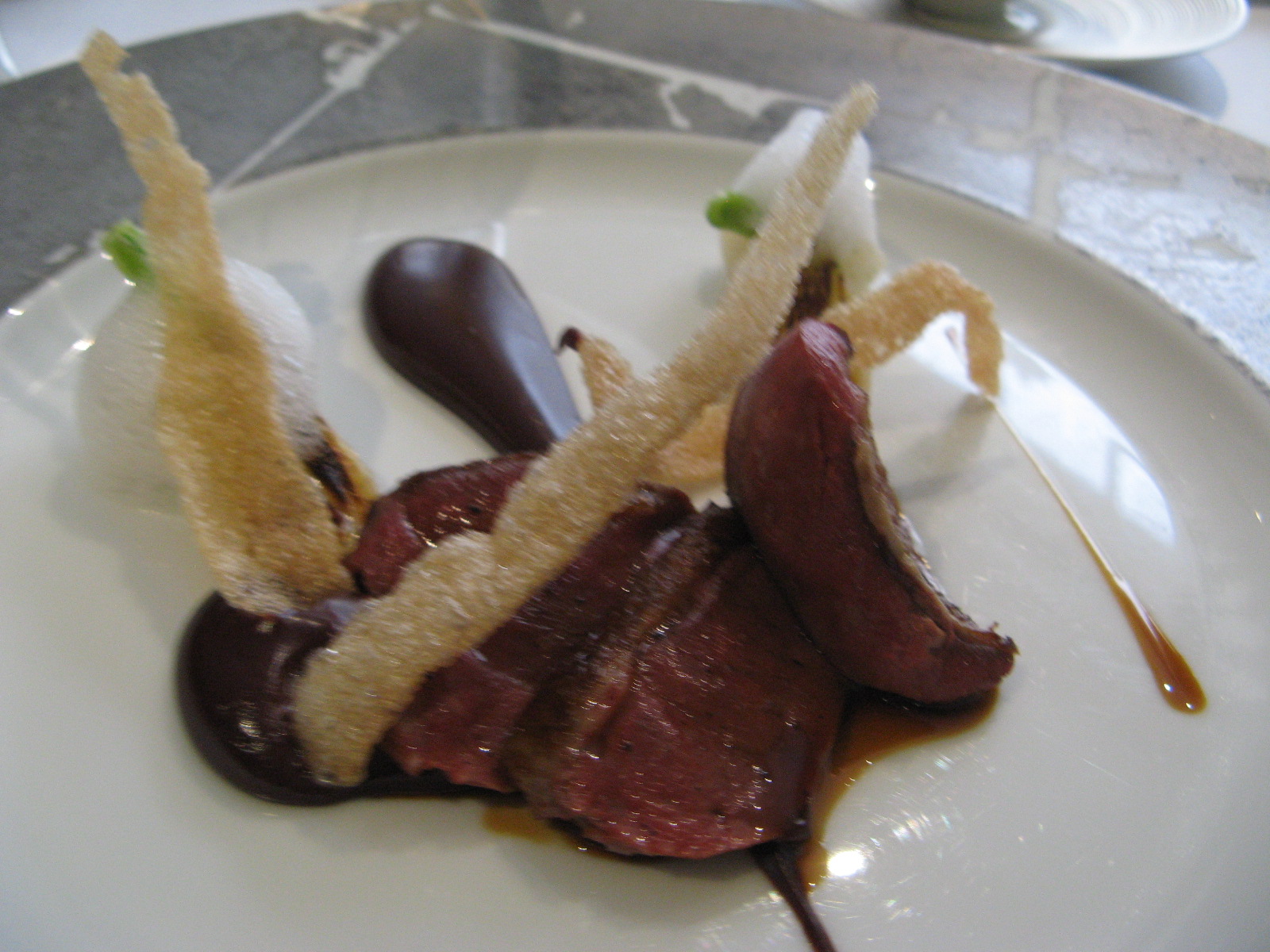
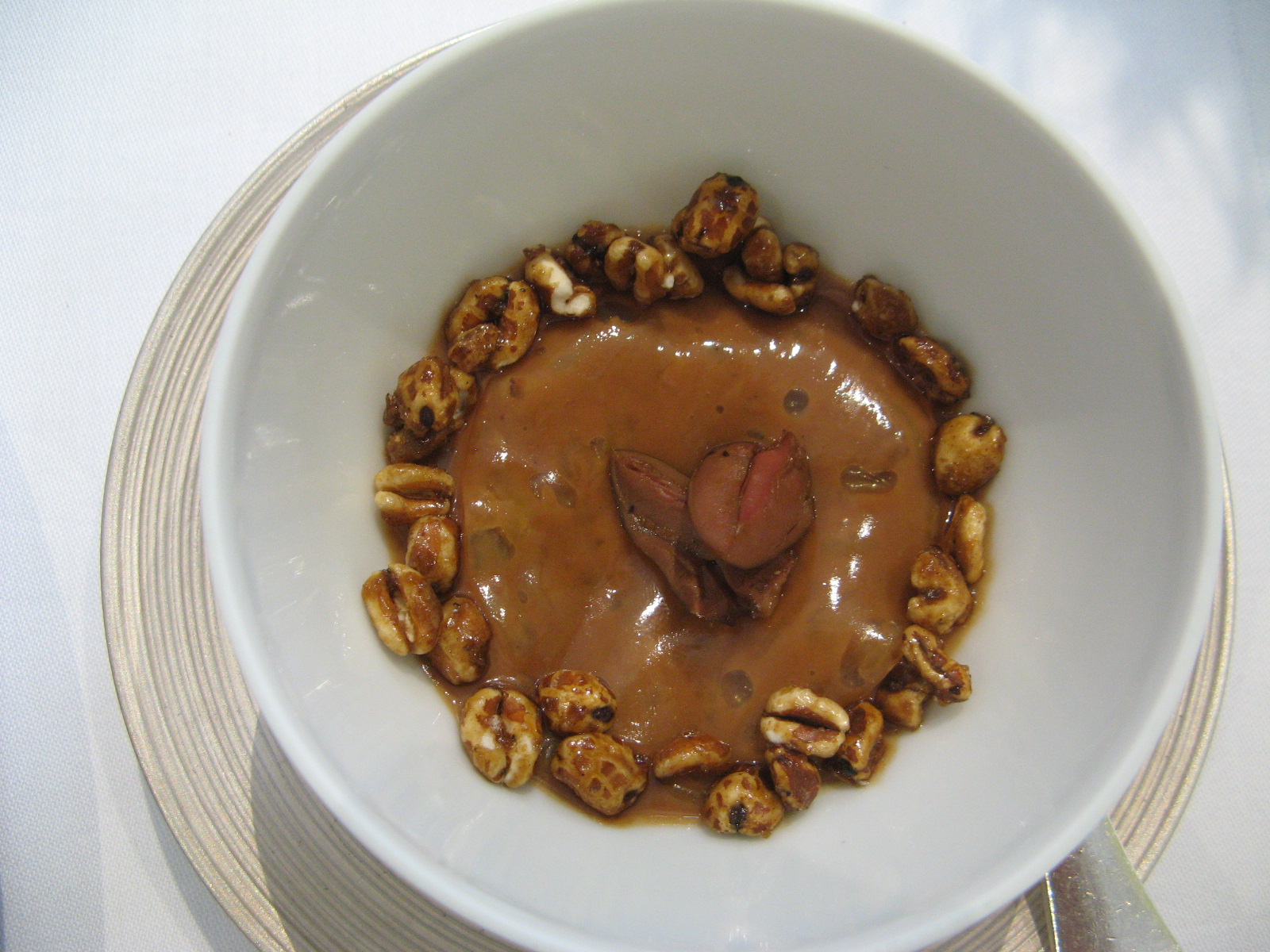
a plate adorned with Pigeon Ballotine (powdered with Transglutaminase powder), pigeon and duck crunchy crackers, Pig’s blood black pudding, baby turnips and Grelot onions pickled in a foam of junipers berries brine, and a second violin a bowl of Potted Umbles mousse and puffed Spelt with some whole sautéed pigeon livers on top. As in the concerto where the violins rush after each other meeting at times in a crescendo of sounds the dish does the same in your mouth, the tastes and flavors separate and join together with volume and intensity that gradually increases and all the time keeping the deep dark complex flavor of this wonderful game bird.Just looking at the photo reveals the fact that the meat was cooked/prepared to perfection with the aid of the transglutaminase but the surprise of the dish is without a doubt the smooth black pudding with a rich chocolate ganache color, feel, and look which is also quite deceiving at first and cleaned off the plate completely at the end. Magnifique !
Before we start our desserts we are served the Fat Duck Palate cleanser, HOT& ICED TEA, Palate cleansers, by nature, are used in the middle of a meal to remove lingering flavors from the mouth so that the next course may be enjoyed with a fresh perspective and that is certainly required after the intensity of the pigeon & Co.
They use earl grey tea but the aroma flavor and medicinal effects of Lemon verbena infusion could be a winner here. You have to gulp it in one go and Yes it is both cold and iced at the same time and yes it is a jelly of tea using Gellan F. to form Tea flavored jellies, cold and Hot (over 70ºC) assembled vertically in a glass.
I is THE BIG FRIENDLY GIANT –THE BFG, THAT’S ME… (by Roald Dahl) Feast at the Fat Duck part 5
Our palates are cleansed and the first dessert TAFFETY TART (C1660) Caramelizd Apple, Fenne,Rose and Candied Lemon, is served.Not before we order our dessert wine. Not because I think it is necessary but because Spike usually does…so we order by the glass, Tokaji Aszú, 6 Puttonyos, Oremus, Tokaj-Hegyalja, 2000. As tokajis go this one is a youngling to the ones I would drink at home (I love good dessert wines), but I’m not chez moi (unfortunately, wine wise I mean). TAFFETY TART (C1660) I wonder what happened in 1660 or who wrote the recipe for this tart in mid 17th century England? This is really a wonderful desert to look at and of course to sample (which is not the right word to use) since we finished it to the last drop of anything. I think a photo of spike eating it will sum up our feelings.
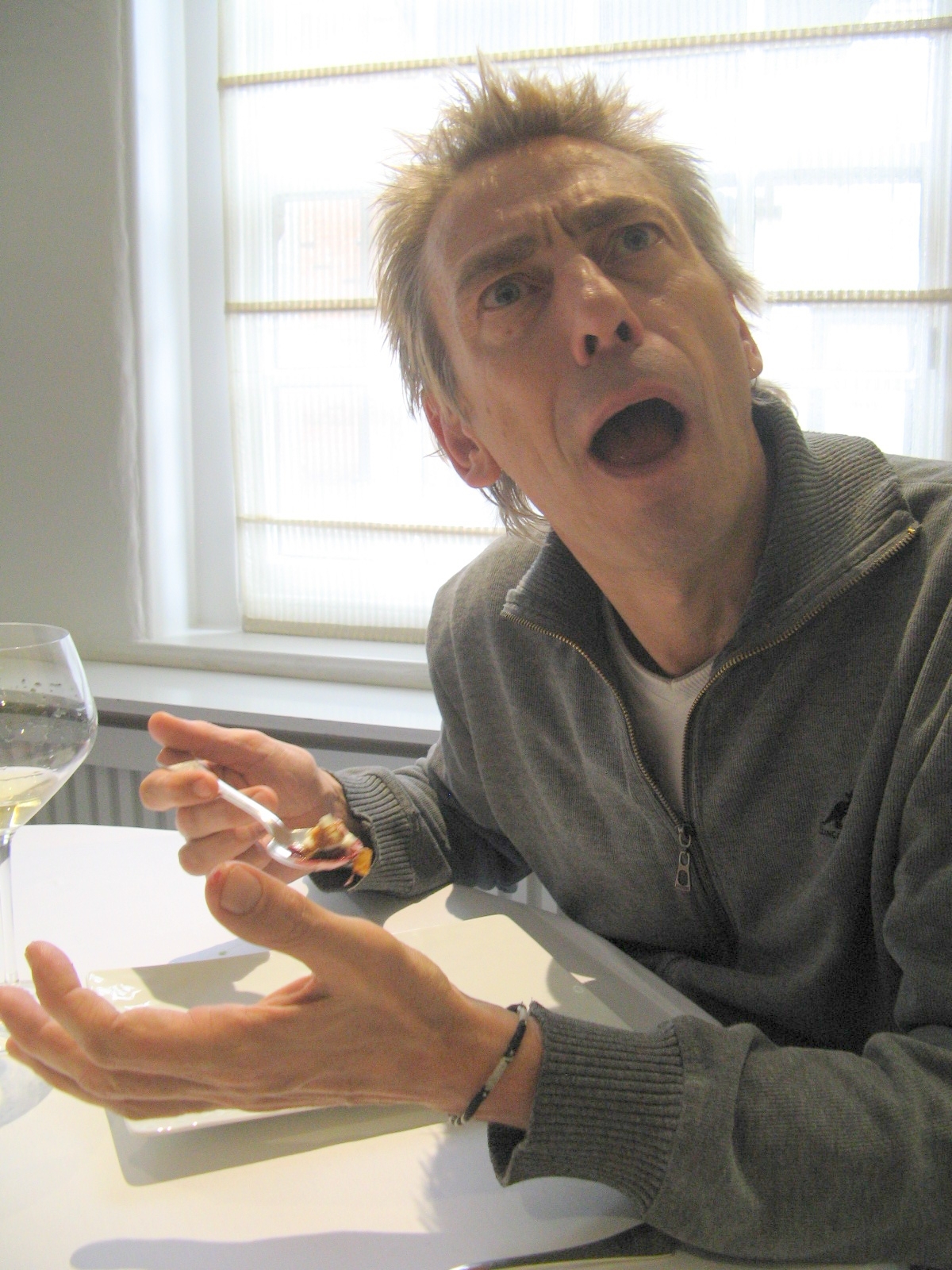
The elegance which you see in front of your eyes is really the call of the WILD, into this wonderful dessert which is just at the right amount of sweetness (meaning not too sweet still crisp crunchy and fresh and voluptuous, I think it “speaks for itself.
As a matter of fact “toffee” (or “taffy”) is a relatively new word, (early nineteenth century). It must surely be related to “taffeta”, which has referred to a glossy fabric since at least the fourteenth century, ad for taffeta we find recipes for Taffety Tarts, which usually contained apple. It is a spectacularly fragrant version – the apple pulp scented and flavoured with orange, quince, rose-water, and violets, This recipe is first published in The Cook’s and Confectioner’s Dictionary” 1724) Mix a quarter of a Pack of Fine Flour, with a quarter of a Pint of Yeast, and as much hot Liquor as will make it into a stiff Paste, with two Pound of butter, the Yolks of twelve Eggs, and half a Pound of fine Sugar; make it up into small Balls, and then roll it out into thick Plates; wash round their Brims with Milk: Boil Pippins soft, peel them and scrape the Pulp from the Cores, mingle the Pulp with fine Sugar, a little Marmalade of Quinces, the Scrapings of candied Orange-peel, and Rose-water: Make up your Tarts, dry them in a warm Place, bake them, scrape Sugar, and sprinkle Essence of Violets or Roses over them, and serve them up.
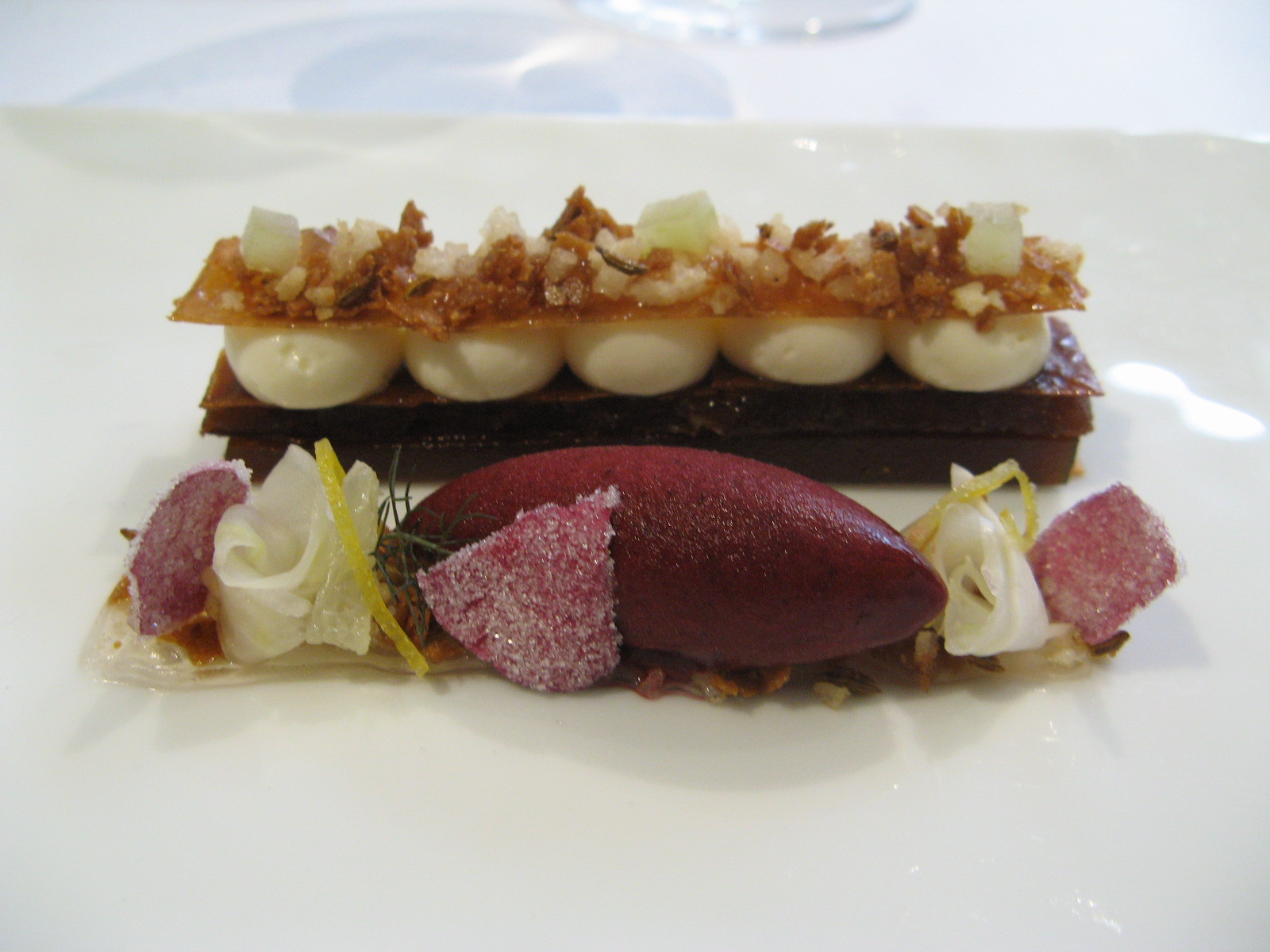
So the cake we are served is a fine and delicate assembly of all that is described in the recipe above in a manner that makes sense. (I’ve read thousands of recipes and cooked from them, but the above C.1724 instructions, will amount to nothing that looks or tastes like a tart. Thanks H.B… for your High end of “tart couture”, it is indeed made in the finest tradition of Haute couture.
Taffeta (sometimes spelled taffety) The word is Persian in origin and means “twisted woven”, It is a crisp, smooth woven fabric made from silk or nowadays synthetic fibers. It is considered to be a “high end” fabric. This “Tart” is laid down in style and colors which resemble Elizabethan fashion
The Next desert is THE BFG Black Forest Gateau. During the 80’s you could find horrible BFG’s in every English supermarket or food chain which gave the cake a bad name and shivering memories down my spine – it consists of several layers of chocolate cake, with whipped cream and cherries between each layer. Then the cake is decorated with additional whipped cream, maraschino cherries, and chocolate shavings.But we’ve been in Victorian wonderland why can’t we be “thrown” into 20th century fantastic stories of Roald Dahl’s The BFG: One dark night, an orphan named Sophie is snatched from her bed by a giant, and whisked away to another world. Fortunately, her abductor is the Big Friendly Giant (BFG for short), a likeable guy who spends his time giving good dreams to children. He’s also the only one of his species who doesn’t eat humans, but as the smallest and weakest, he’s powerless to stop his brutal neighbors. As long as Fleshlumpeater, Bloodbottler, and all the rest are free, Sophie will never be safe, so she and the BFG concoct a plan to stop the evil giants and save humanity – once and for all!
This BFG is a Black Forest Gateau and it is not your everyday BFG, it is a fantasy of how this southern German dessert / cake: Schwarzwälder Kirschtorte, literally “Black Forest cherry cake” should have always been it restores English German relations and gives a good name to the Black forest horrific landscapes that inspired Grimm’s fairy tales. Anyway it really burrows its name from the specialty liquor of that region, known as Schwarzwälder Kirsch(wasser) a kind of eau de vie or Schnapps distilled only from the Schwarzwälde region tart cherries. HB: ” the pastry chef at the Confiserie Gmeiner had told me that the cake should contain four tastes sweet sour salt and bitter” with contrasts in taste and colors,

add the Kirsch and sour cream ice cream and you have the complete requirements in a compact dolls house of 8 layers of various chocolates mousses and cherries hidden behind the chocolate dusted outer layer with an amarena cherry on top and as before the secret remains well hidden until the first bite of cut through the cake. This BFG restores this traditional cake’s reputation.You like wine gums? I do I always did not the sticky artificial flavor version we have today … The Whiskey Wine Gums in the “spirit” of wine gums, arranged over a map of Scotland Ireland (and one from the American Colony in Old Tennessee) all 5 wine gums, taste different in strong whisky flavors as if your having a deep sniff into a glass of well distilled spirit.

My favorite was No.2 West Highlands Oban-The little Bay and so it is, look it up in the Map.
With our coffee we receive a pink stripped paper bag (like the goodies bag you get on birthday parties) Called Like Kids in 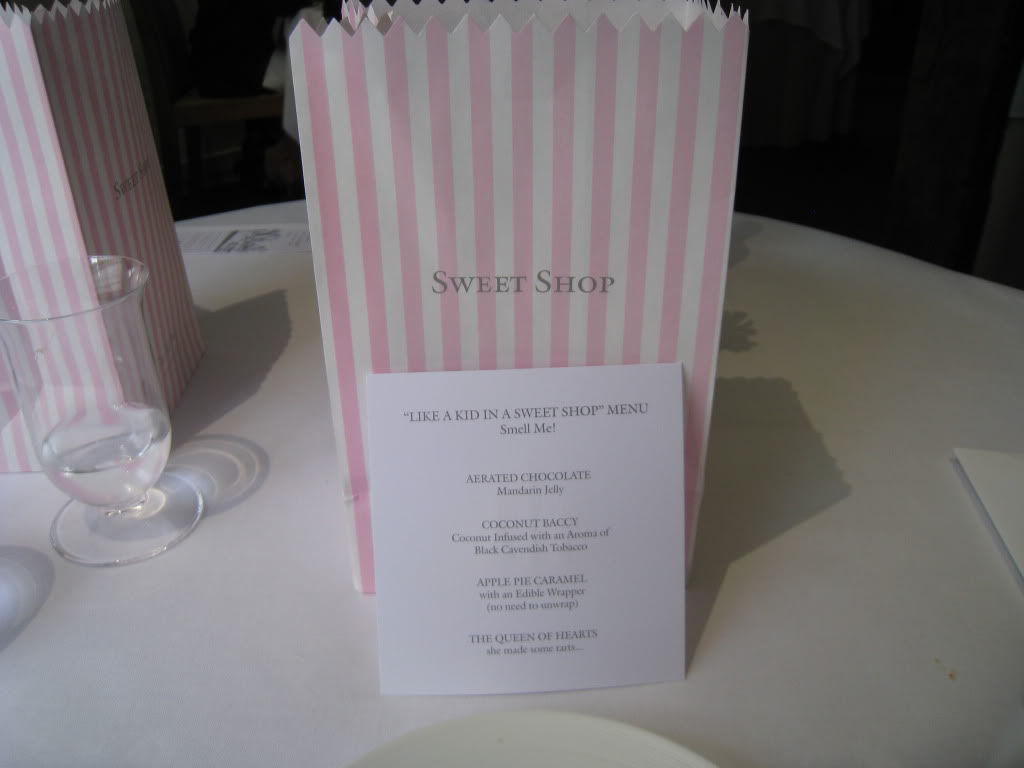 a Sweet Shop bag which contains sweets and “surprises” (all edible of course including the wrappers) and all tasting deliciously rascally. Each and every one winks at you with a childish mischievous look.
Well our dinner is over and we are happy, satisfied and amused and what more can you ask from a dinner I ask you and myself and to those who think I am new to these occasions, and that is why I am so thrilled by this joyous Lunch experience, rest assure I am experienced enough to understand how good it is to enjoy the work of an artists whose satisfaction is your joy. All the intricacies of this meal are directed with the thought that this is their mission and I say mission accomplished Spike and I and all the diners with whom we had eye or verbal contact where feeling the same. As for the restaurants requirements from themselves let’s have a look at their goals and see if they were achieved in our view:
ONE : Three basic principles guide our cooking: excellence, openness, and integrity. Check!
TWO: Our cooking values tradition, builds on it, and along with tradition is part of the ongoing evolution of our craft. Check!
THREE: We embrace innovation – new ingredients, techniques, appliances, information, and ideas – whenever it can make a real contribution to our cooking. Check!
FOUR: We believe that cooking can affect people in profound ways, and that a spirit of collaboration and sharing is essential to true progress in developing this potential. Check!
Allow me to wave off with (almost) ridicule and contempt those who have not been WOWed enough or those who suggest that the price is too high let me tell you that for this amount of thought, use of ingredients (some very expensive), amount of kitchen stuff work, number of stuff per diner, quality of glassware and silverware, and sheer 5 hours of contentious fun and enjoyment this meal is more than fairly priced!!! As a matter of fact it is rather inexpensive at around £150 plus service charge!We slid happily down the rabbit hole and came out through the looking glass, and on the day The Mock Turtle soup turned into a real, most precise and pure consommé of turtle, like the one in Babette’s Feast, the one you saw, read, heard about but would never be able to taste, and there it was caressing my taste buds and filled my heart with childish happiness, and so were all the other dishes served upon us with love and care guests  deserve.
*Although not specifically mentioned I have used “The Big Fat Duck Cookbook” (a wonderful “cook book” by the way), as a reference and insight into the ingredients and ways of prep of most dishes and Mr. Blumenthal’s “notes” on the ins and outs of the Fat Duck dishes. Thanks H.B and all at the FAT DUCK, I know I have missed some of the dishes and I do intend to return this time for dinner (we had Lunch), after I visit the new venue Dinner by Heston Blumenthal at the Mandarin Oriental hotel in London.
Your WINEGUIDE

 WINE FOR SOUL
