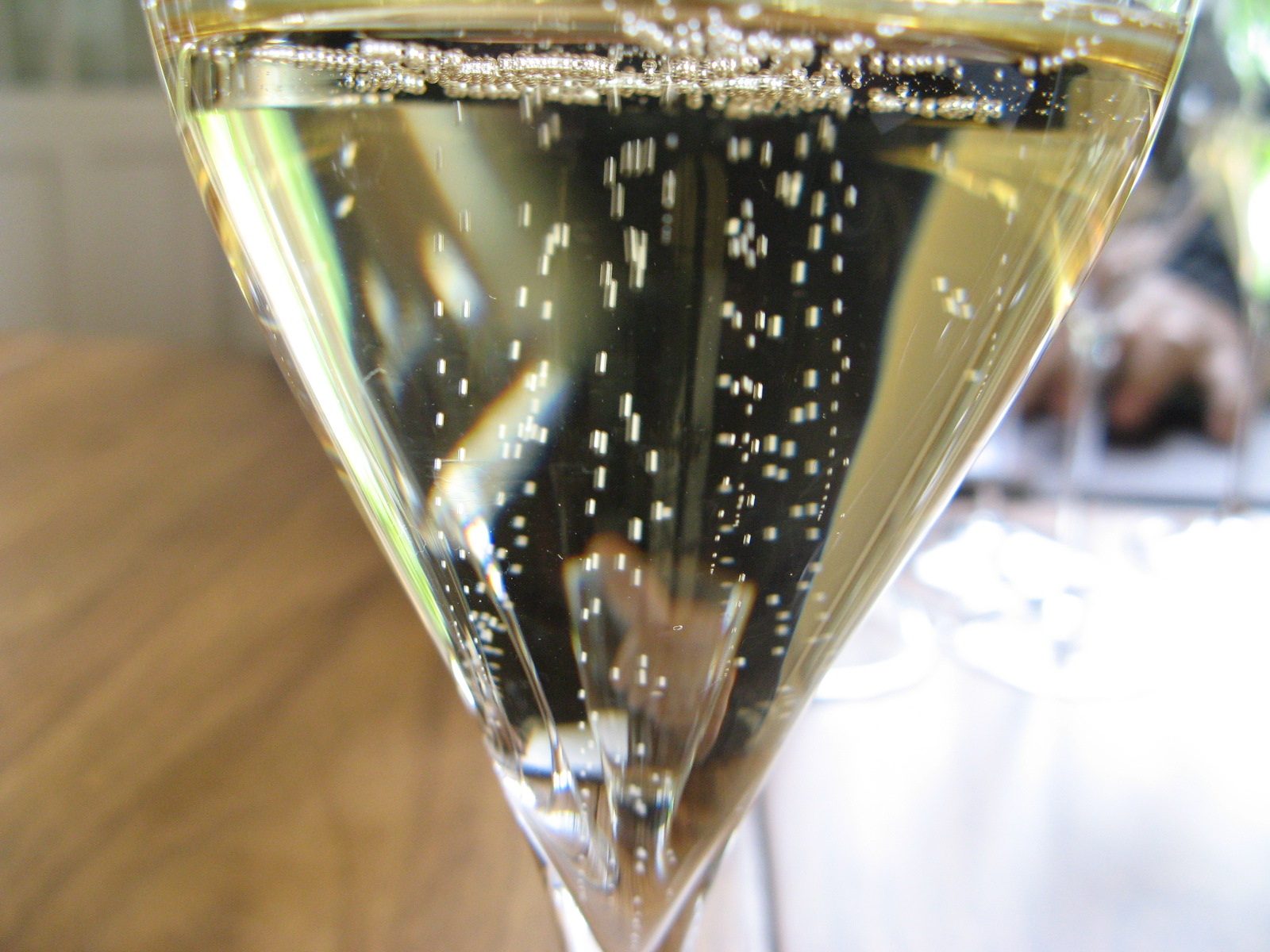
A meal at Yauatcha Soho – A Birthday Party

Menu                         Yauatcha Downstairs Diningroom

One of my devoted “followers” is Daphne, and she has her birthday each year on 31st of March. (Yes I invite my regular “followers” to dine on their birthdays, it is a means to increase the volume of readers of my blog: WINE4SOUL.com, a PR stunt and it works) [press play to hear music].

Her choice was; dinner at Yauatcha Soho. Not for the first time may I add and the joy, as always is complete. YAUATCHA is basically a Dim Sum joint at the edge of Soho London. But… there’s dim sum and other “touches of hearts”. This is dim sum at its best with other Chinese nibbles on the side. See menu: http://www.yauatcha.com/soho/files/2011/07/Yau_ALC_271112_no-prices.pdf It serves some of London’s best and most exciting Cantonese food.
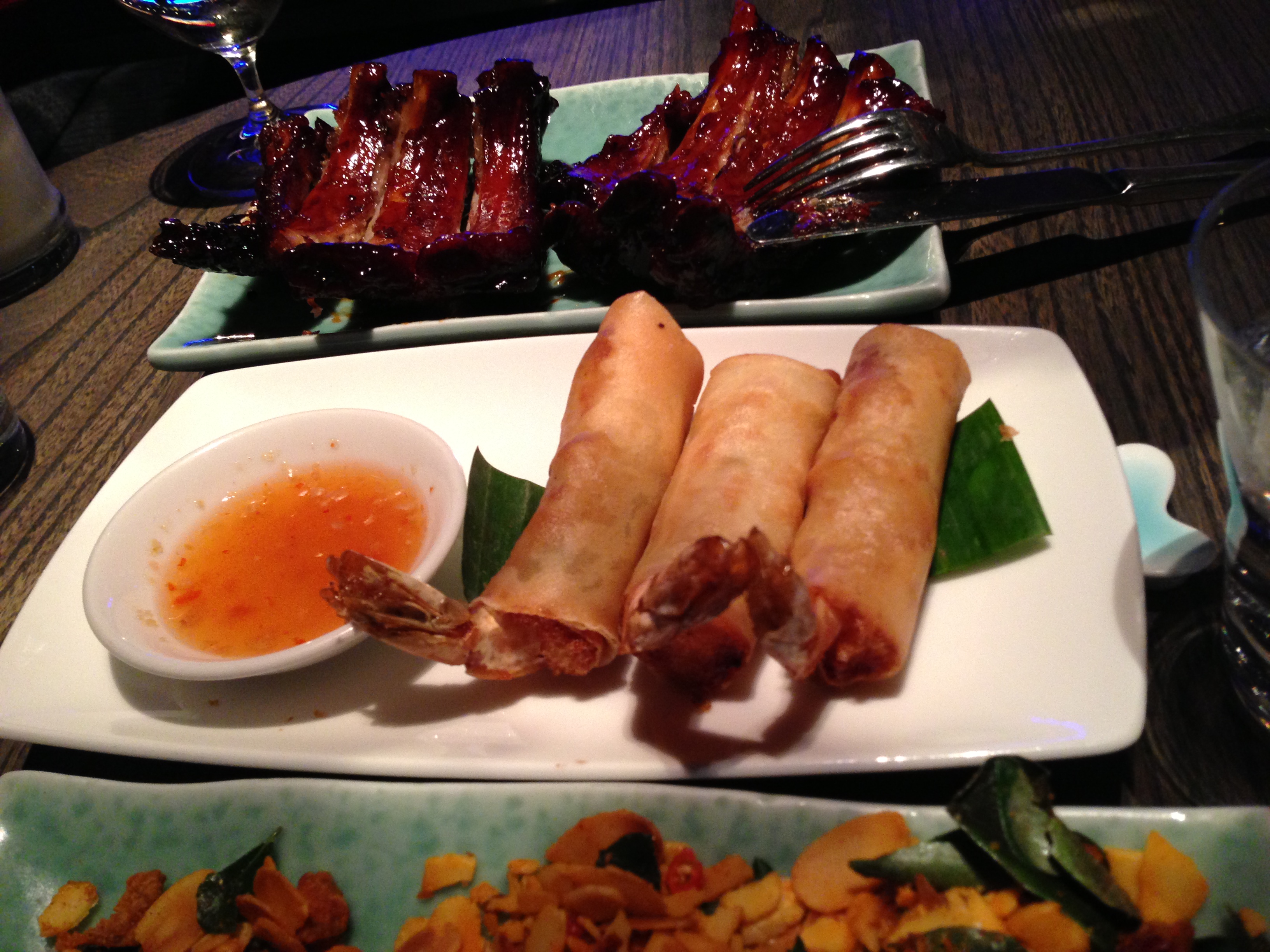
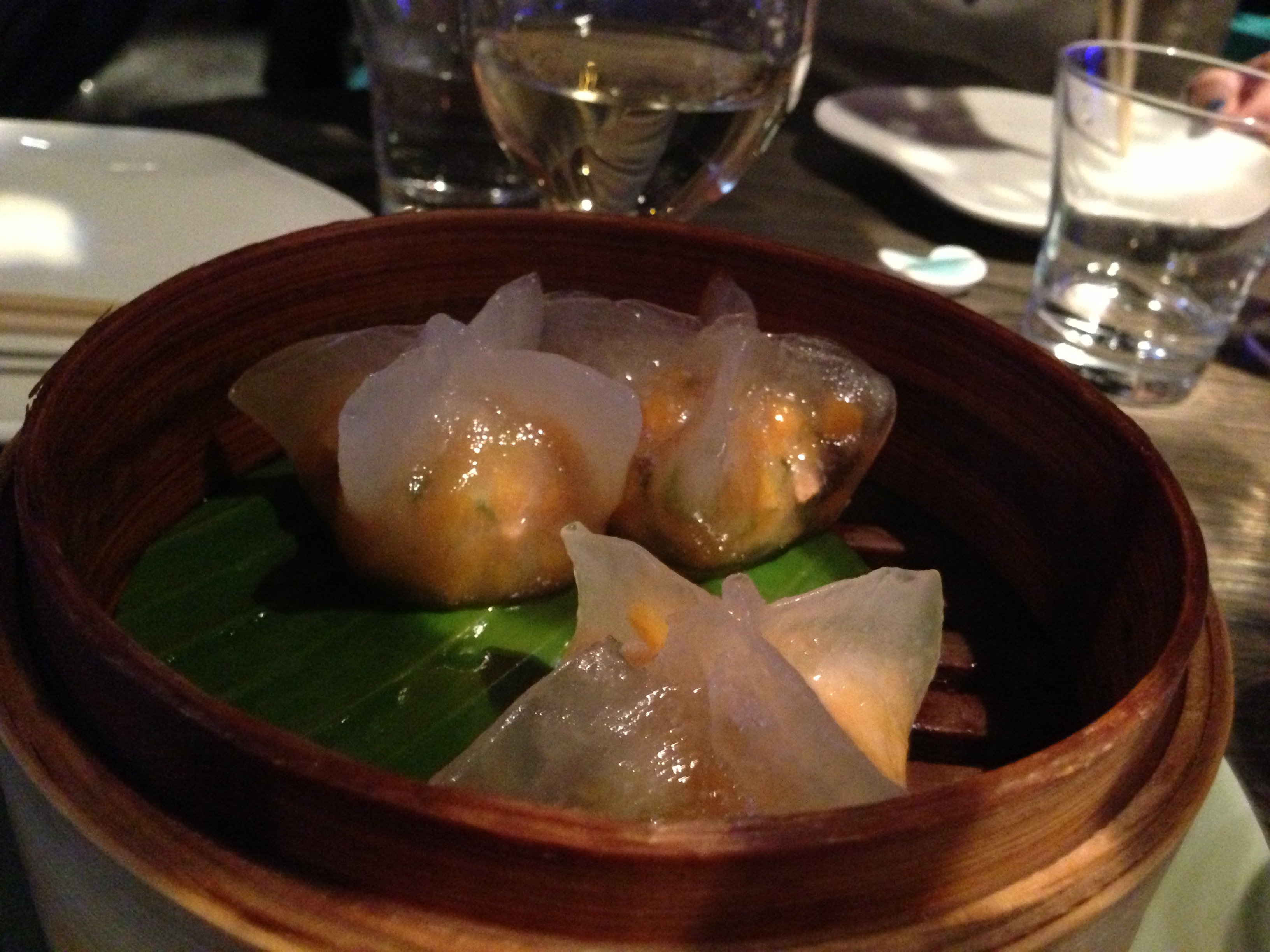
IMG_0580         IMG_0575  IMAG0277
Dim sum 点心 (meaning in Chinese: touch the heart) is (as you all know) a style of Cantonese food prepared as bite-sized or tea at yauatcha1individual portions of food, served either steamed in small steamer baskets or fried, grilled, or baked bite size gems . Eating dim sum at a restaurant is usually known in Cantonese as going to “drink tea” (yum cha, 飲茶), as tea always was typically served with dim sum.
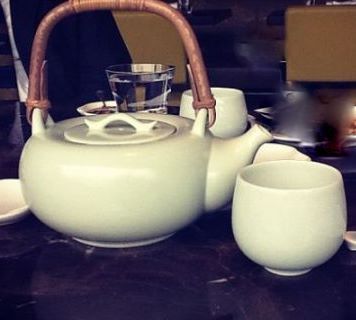
Dim sum has its roots in small establishments that serviced travelers on the ancient Cantonese traveling routes. Those small tea houses, served at first as stations for travelers needing a rest and have a cup o’ tea. Teahouses were established along the roadside. Travelers, merchants and farmers, would go to teahouses for a relaxing afternoon of tea. No food was served as it was considered “inappropriate” to combine tea with food, for dietary reasons. While dim sum was originally not a main meal, only a sort of snack, meant to “touch the heart”, (very much like “Spanish Tapas” traditionally served with Sherry, rather than tea), it is now one of the pillars of Cantonese culinary culture.
The unique culinary art of dim sum was transformed from “yum cha” a relaxing tea break to an exciting dining experience. The traditional dim sum restaurant typically serves dim sum until mid-afternoon. However, in modern society it has become more common for restaurants to serve dim sum at dinner time, Yauatcha follows this trend. In Hong Kong, and in most cities and towns in Guangdong province, many restaurants start serving dim sum as early as five in the morning. It is a tradition for the elderly to gather and eat dim sum after morning Tai Chi exercises.
The characteristics of the elaborate cooking methods of Chinese imperial cuisine, of strict selection of material, which are often extremely expensive, rare, or complicated in preparation, visual presentation as a crucial aspect, and significance of color and shape of the dish arrangement were adopted by Dim sum “masters” who transformed the dishes into Art on a plate.
Dim sum by the way, should not automatically be assumed to be healthy as it contains fatty dishes and ingredients that should be balanced with lighter vegetable dishes.
At Yauatcha, as they testify themselves, “you can sample the delights that first made the restaurant famous when Alan Yau opened it in 2004: top-quality dim sum that’s served day and night. (Yau has long since released control of the business), but standards remain high. Yauatcha is a modern reinterpretation of the old Chinese teahouse. Designed by Christian Liaigre, the restaurant’s open-plan layout and visible kitchen energizes the entire space, engaging both the outside street scene and Yauatcha’s customers. Yauatcha received a michelin starMichelin star within a year of its opening and retained it to date”.
A limited number of restaurants are chosen for the MICHELIN Guides and all aspire to be nominated for entering their “star system” but earning a star is one of the highest honors in the industry. Although The only known criteria on which they judge a restaurant for a Michelin star are: Quality of the products, Mastery of flavour and cooking, techniques, The “personality” of Chef in his cuisine, Value for money, and Consistency between visits, which are vigorously kept at Yauatcha, it is usually more than just that… that enters the list of considerations and very few bustling, noisy, multi service packed restaurants are awarded the Honor of the restaurant industry, Yauatcha, is rightly awarded the aspired accolade. IMG_0595
One star indicates a very good restaurant in its category, offering cuisine prepared to a consistently high standard. (A good place to stop on your journey, as defined by the guide). It is worth a visit even out of your journey, I’ve been doing it since the day it was opened.
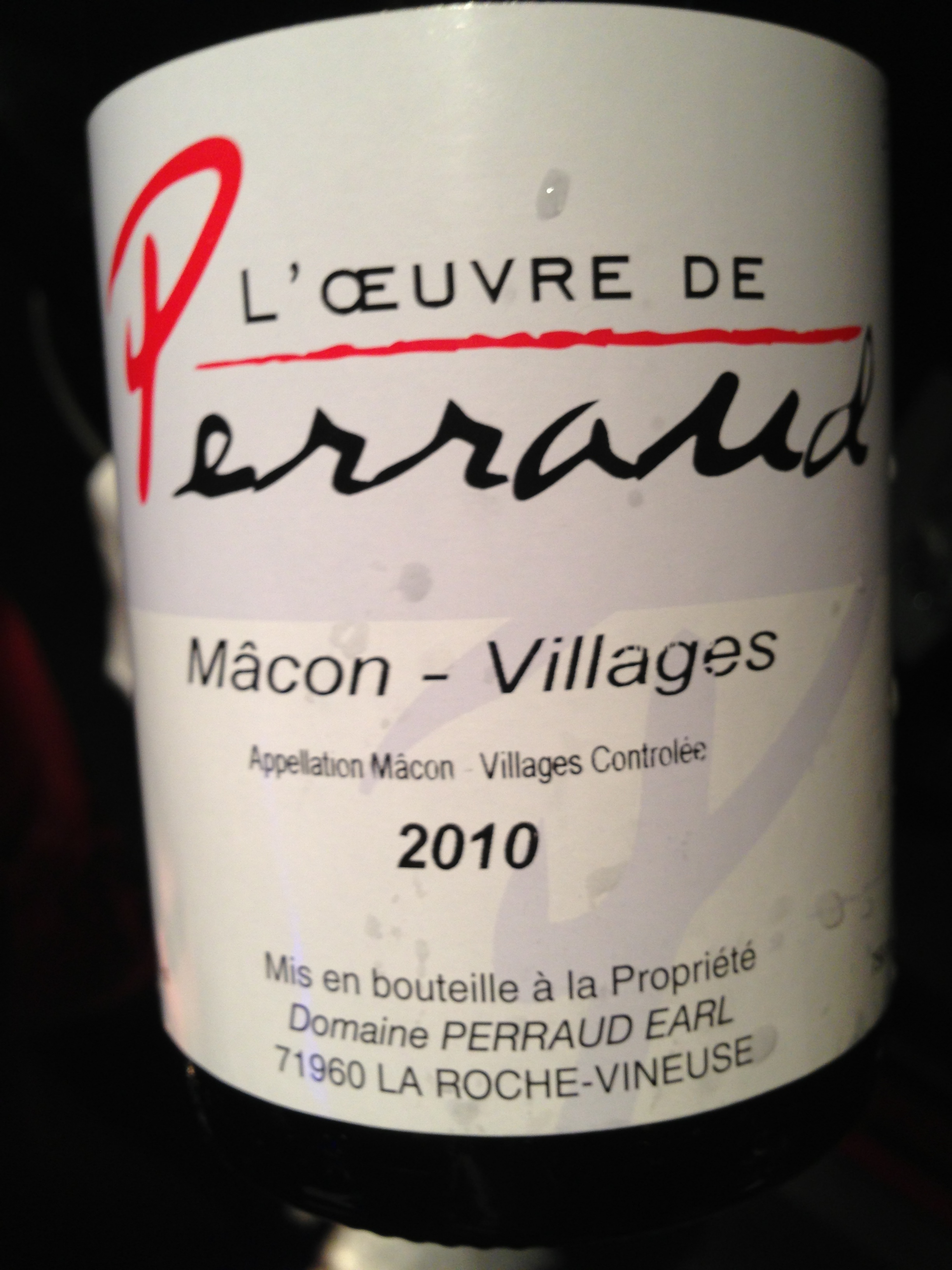
On this visit we had a selection of the following Dim Sum, and other dishes accompanied by 2010 L’oeuvre de Perraud,Domaine Perraud Mâcon-Villages not a great wine by any standard but perfect for the meal ahead, fresh multilayered with green apple and touches of tropical notes, a light and easy fun wine with no apparent faults.
We had:
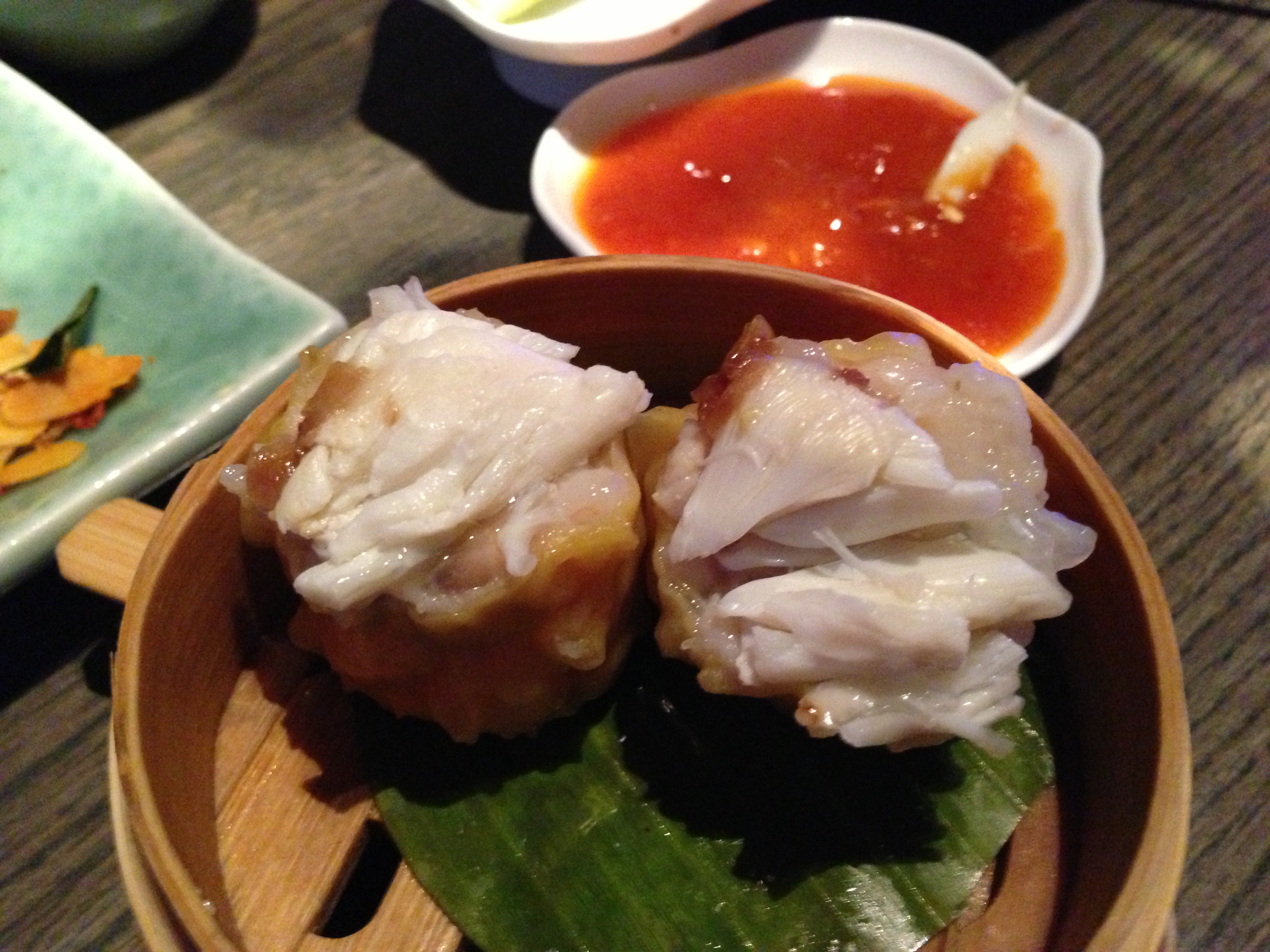
IMG_0586Blue swimmer crab shui mai with pork was an interesting combination of white crab meat and minced pork.
Steamed vegetable dumpling – so well performed and presented the photo says it all
King crab dumpling – simply delicious
Prawn and bean-curd cheung fun an old favorite of mine and one of the ” spécialité de la maison”IMAG0280 the perfect balance of oral touch sensation the bite starts at the outer smooth jelly, followed by crispy lining of bean-curd that crunches between your teeth as you get to bite the springy fresh prawn exquisite!
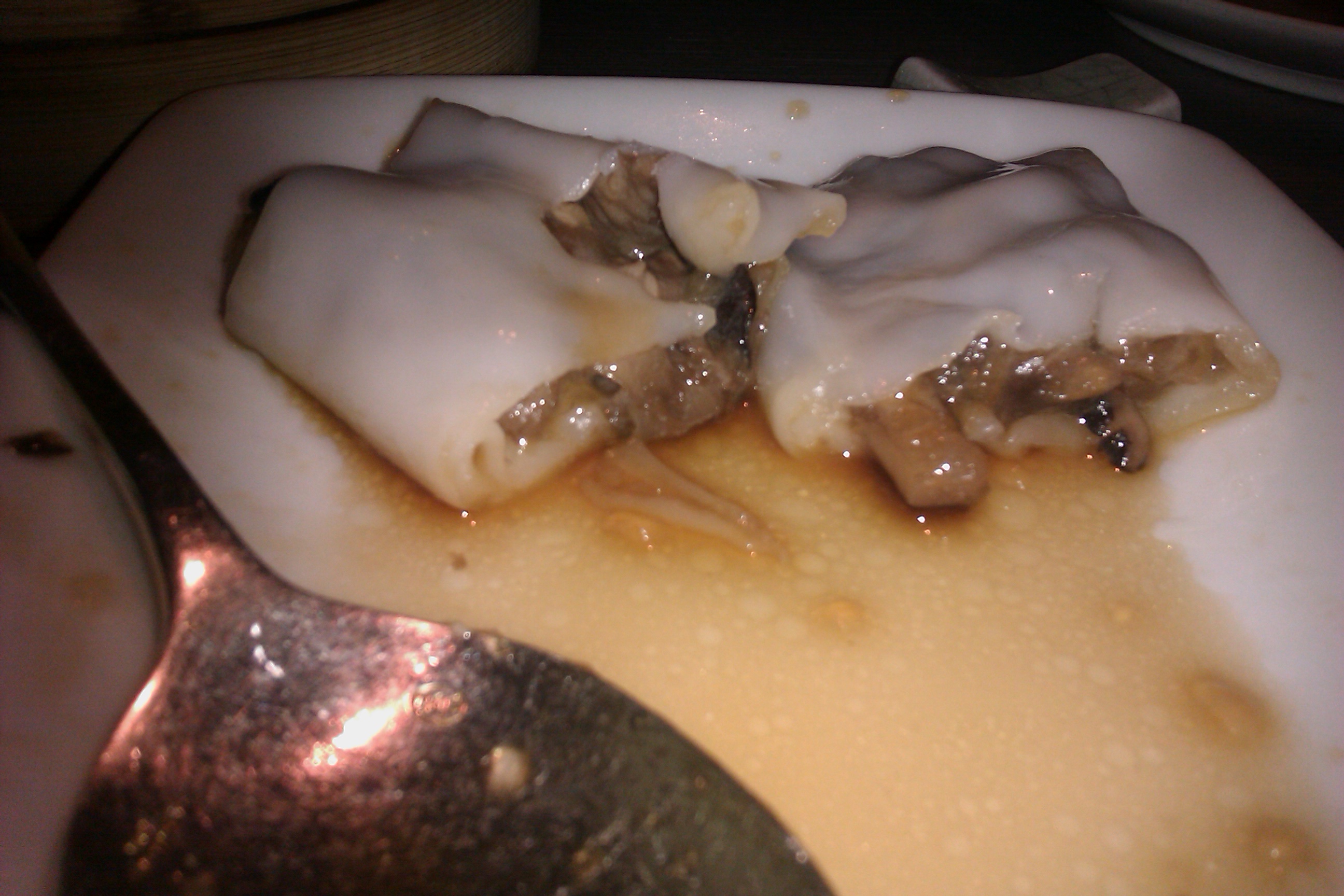
Three style mushroom cheung fun another “house specialty” the gelatinous “flat rice noodle” wraps precisely spiced and deliciously scented mushroom filling.
IMAG0282
Of course we could not resist the fried Spicy soft shell crab so we ordered 2 and could have devoured at least 2 more between the 4 of us. The chilly spiced roast almonds with fried and fresh curry leaves and a well fried soft shell crab “swimming” in a yellowish saffron colour, a delight with every bite.
Soft-shell crab is a term for crabs which have recently molted their old exoskeleton and are still soft, most crabs molt their shell and are a delicacy at this precarious stage of their cycle.IMG_0578
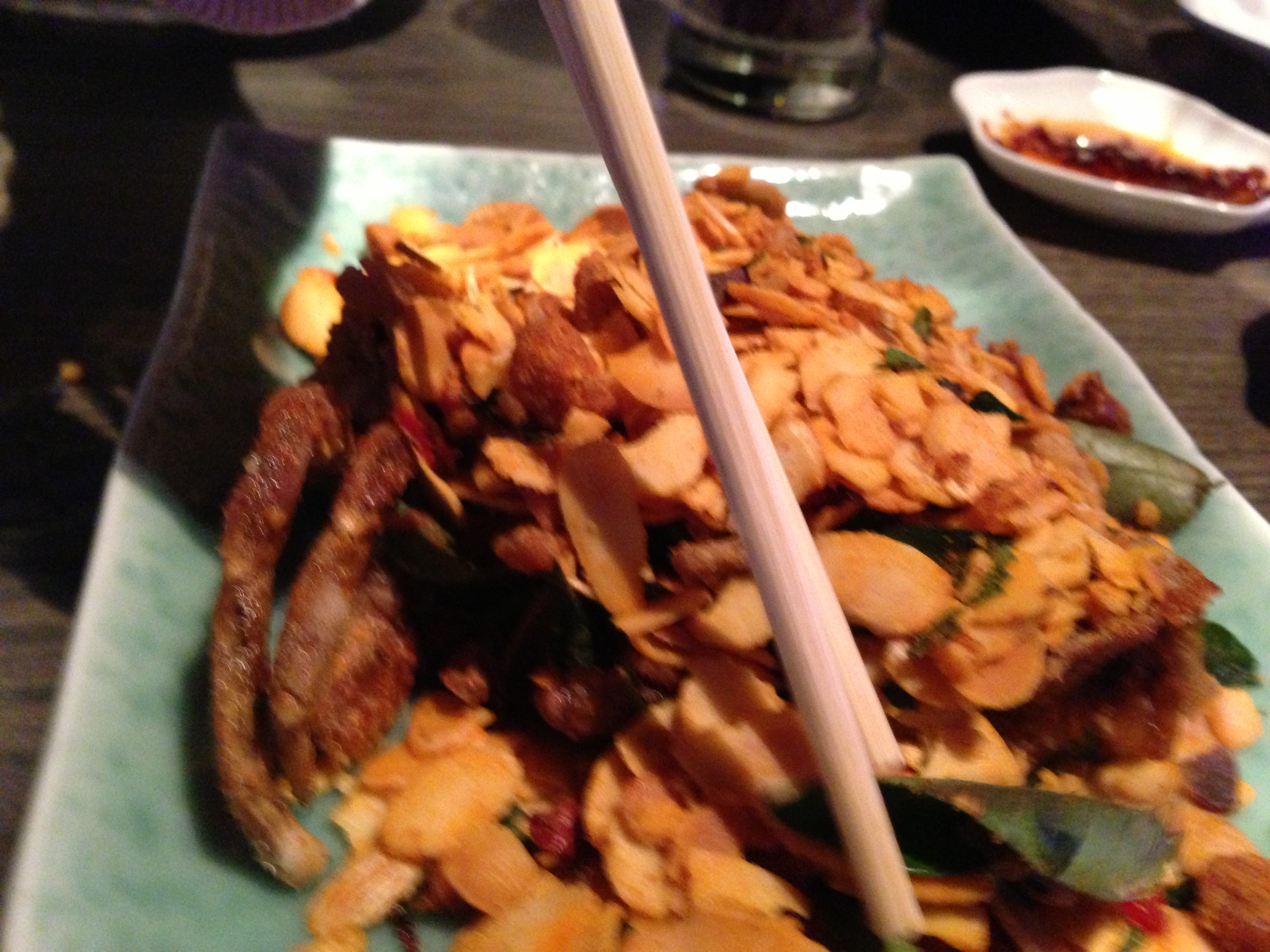
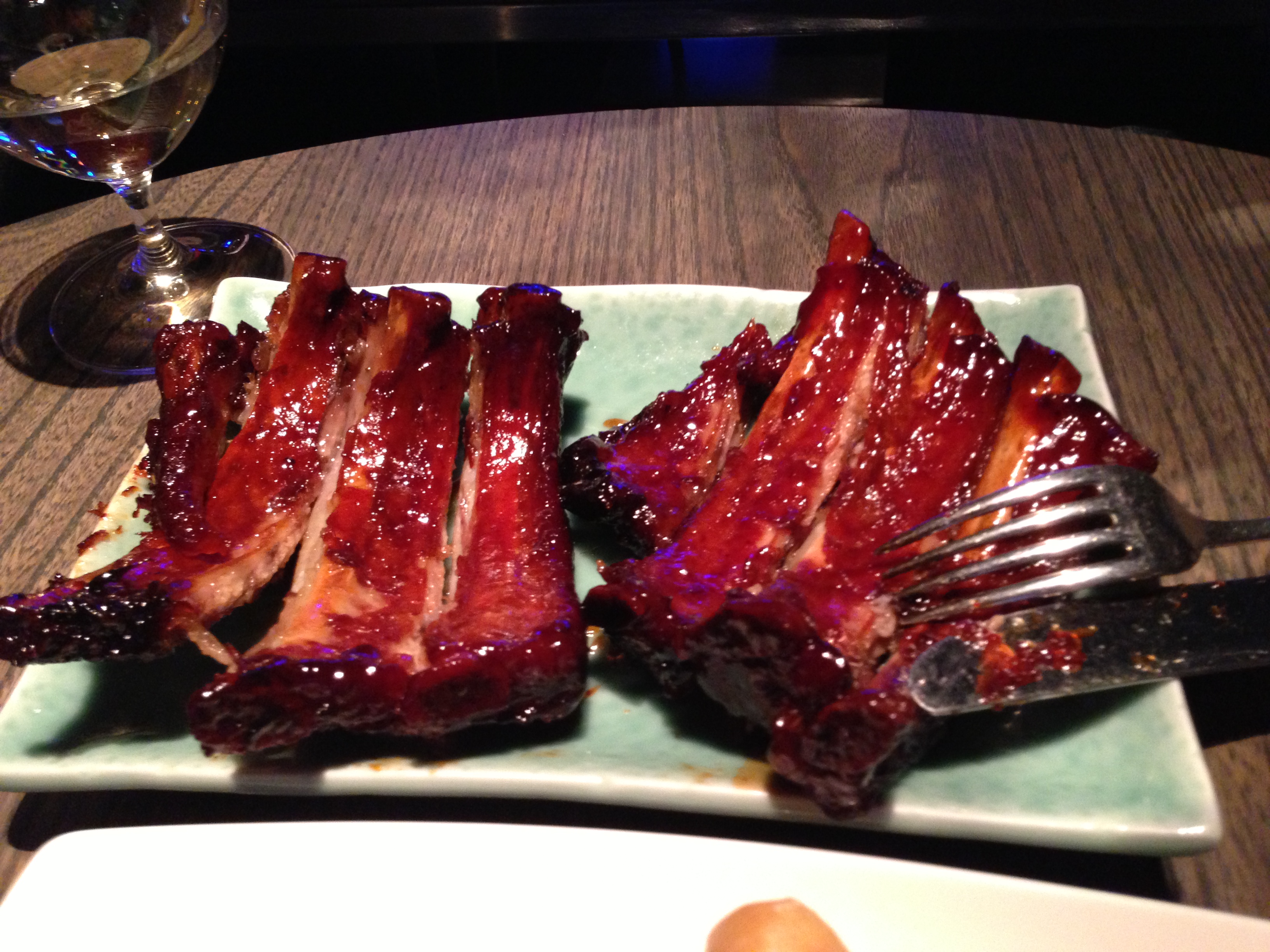
IMG_0581Jasmine tea smoked ribs – so tender and well seasoned to “die for”
Crispy aromatic duck – this is almost a fetish of mine to sample crispy aromatic duck (a most common dish) in every chineese mealand this one tops them all all the fat turned to crunchy crisp deliciously spiced and scented, I like it here, I can skip the whole self wrapping part and just eat it on it’s own.
For vegetables Spicy aubergine, Sato bean, okra and French bean – the wide array of tastes enhanced by the Hedonistic peculiar IMG_0606taste of the Sato bean is sensually perfect.
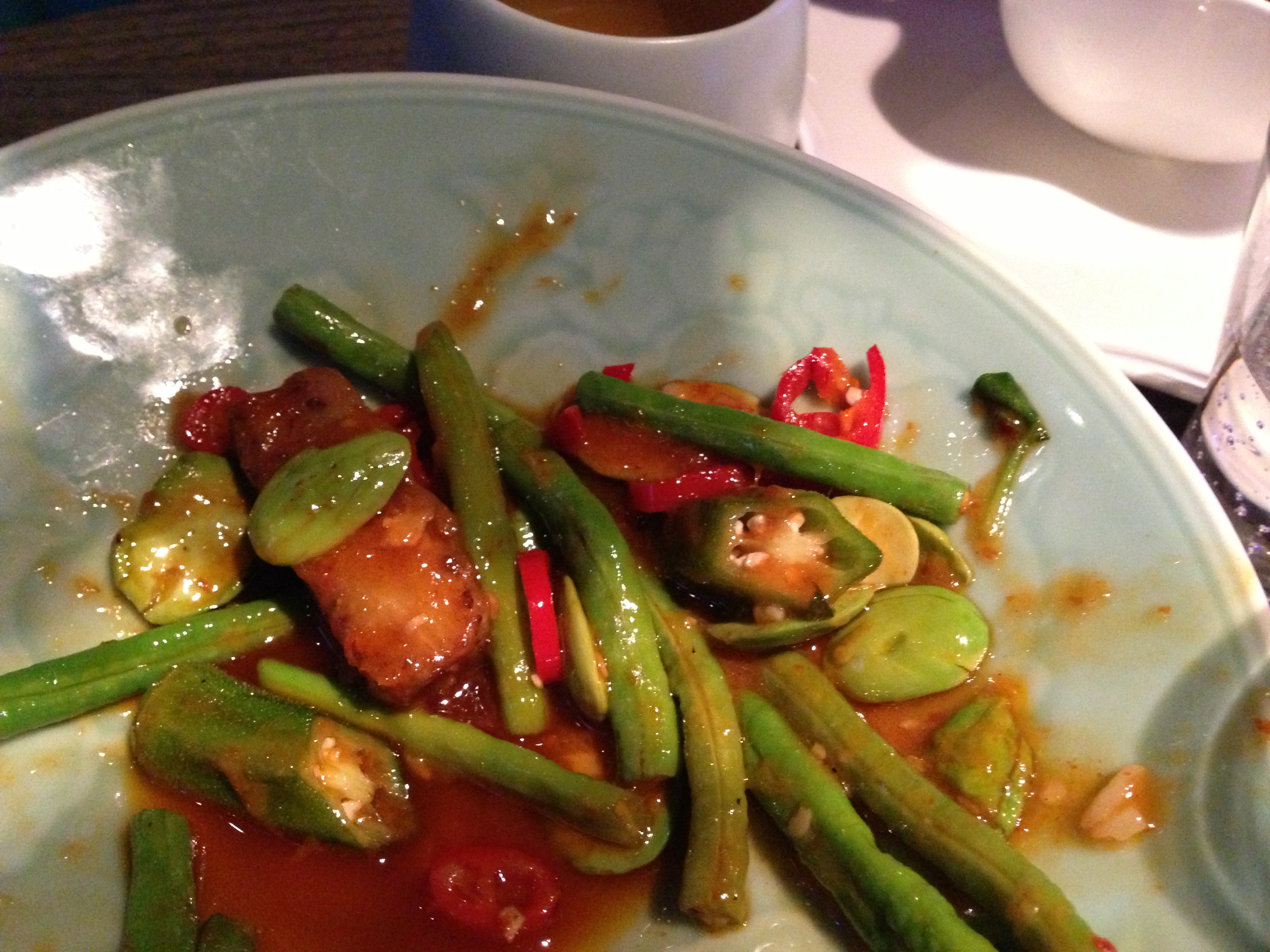
sato beans Parkia speciosaSato Bean is a plant of the genus Parkia in the family Fabaceae. It has almonds shape, long, flat edible beans with bright green colour  which have a rather peculiar but Hedonistic smell, similar (but stronger) to the Shiitake or even rotting mushrooms. A popular culinary ingredient in most south Asian countries, mainly: Indonesia, Malaysia, Singapore, Laos, southern Thailand, Burma, and northeastern India.
Egg white fried rice with dried scallop and asparagus – my favorite rice here
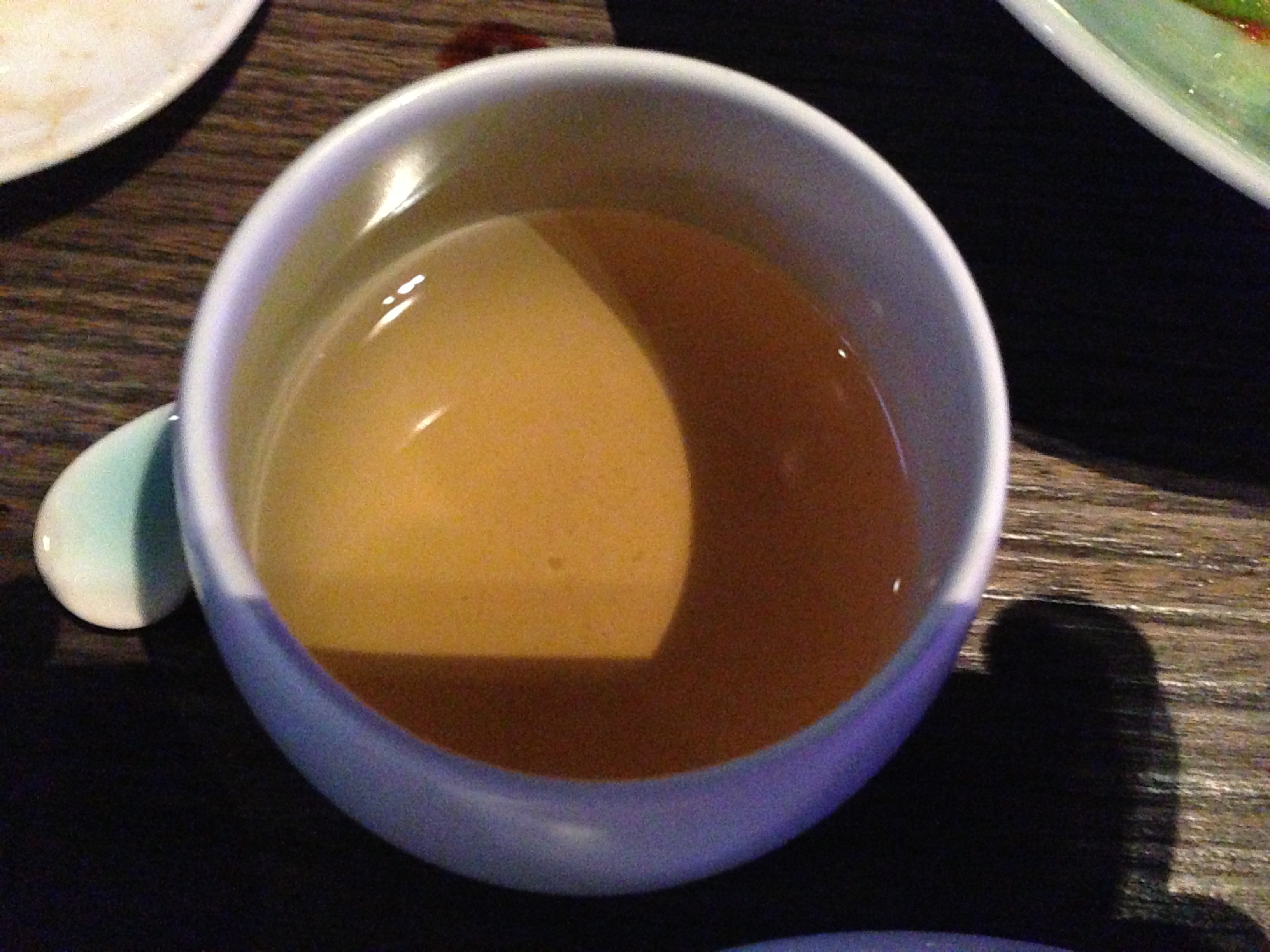
We finished with a well brewed cup of tea and a complete balance of body and mind was achieved yet again.
The service (as always), was kind supportive informative and efficient.IMG_0614
Yauatcha :15-17 Broadwick Street. Soho, London, W1F 0DL,
Tel:+44 (0) 20 7494 8888.

Happy Birthdat dear Daphne

YOUR WINEGUIDE

Square Meal

The Sense of Taste and wine

Anatomy and physiology of the sense of Taste (Gestation), in wine tasting (Part 1)

noah planting grapes       bacchus      IMG_3384

Wine, the most pleasant of drinks, whether we owe it to Noah who planted the vine, or whether it is due to Bacchus, who Jean_Anthelme_Brillat-Savarin booksqueezed the juice out of the grape, dates from the infancy of the world.

(Anthelme Brillat-Savarin, writer of: “The physiology of taste”, French gastronomer- the “father” of Food Writing. (1755-1826)

image066Taste is another sense which communicates knowledge of our surrounding to the brain. Multiple cranial nerves, including cranial nerves VII, IX and X, transmit taste information from the mouth and pharynx to the brain via the brain stem. Cranial nerve V is responsible for the oral sense of touch which with the sense of smell are complimentary to the overall sense of flavour.
ANATOMY and PHYSIOLOGY of TASTE
The sense of taste is one of the five senses. Taste is the sensation produced when a substance of certain chemical properties reacts chemically in the mouth with the chemo-receptors of the taste buds on the tongue.
Wine like any other food or beverage, consumable product, affects our sense of taste and smell through the chemical effect of its constituents on the chemoreceptors of the smell and taste sense organs. The sense of taste is basically our ability to sense and react to soluble molecules and Ions called tastants –or taste emitting products.
Although there are five different types of taste receptors known: salt, sweet, sour, bitter, and Umami, Since there are very few salty or savoury, (Umami) wines tastes, wine is manifested taste wise, only as one of the 3 primary tastes: sour, sweet, bitter. Or their combined tastes.

All of our taste receptors are located in the oral region and most of those, are on the tongue. These receptors are known as taste cells, and they are contained in bundles called taste buds, which are contained in raised areas known as papillae. They are located on the upper surface of the tongue, soft palate, upper esophagus and epiglottis.

Tongue2
There are four types of papillae present in the human tongue:
Fungiform papillae – these are mushroom-shaped protrusions that make up most of the coating of the dorsal surface of the tongue, aspapillae___tastebuds well as at the sides contain taste receptors and Innervated by the Facial nerve (cranial nerve 7)
Foliate papillae – these are ridges and grooves towards the back part of the tongue on both sides. They contain taste receptors and are Innervated by facial nerve (front papillae) and glossopharyngeal nerve (papillae at the back).
Circumvallate papillae – there are around 12 of these papillae in most people, and they are present at the very back of the tongue, and form the far border of our tongue. These papillae are associated with the ducts of Von Ebner’s glands, contain taste receptors and are innervated by the glossopharyngeal nerve.
Filiform papillae – these are thin, “V”-shaped cones, elongated papillae that do not contain taste buds and are not involved in gestation, but are the most numerous. These papillae provide mechanical reception (sense of touch). They are characterized by increased keratinization contributing to the roughness of the tongue surface and probably an evolutionary remnant that allows “scraping meat remains” off bones (highly evolved in the Cat family)
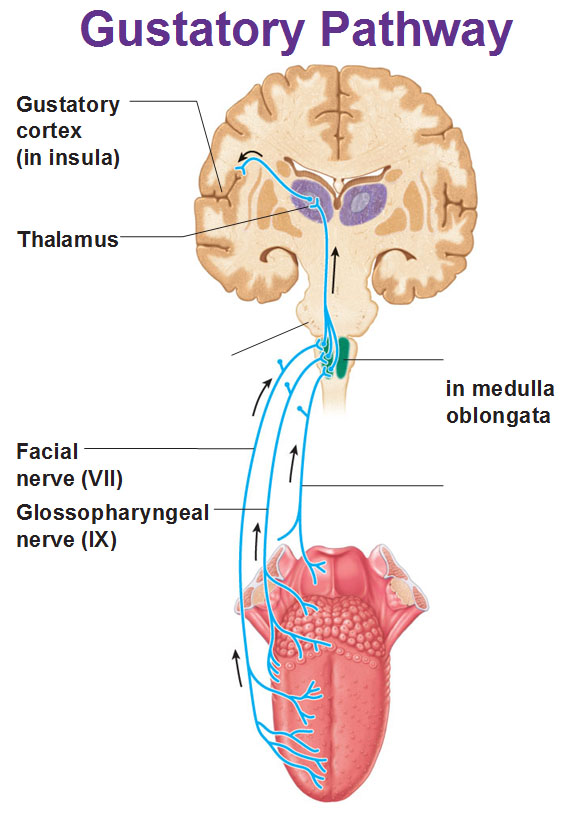
Each taste bud houses gustatory cells that control the function of taste sensation. Soluble food particles dissolved in the saliva, flow into the taste bud and the cells react. Nerve signals are sent to the brain and reach the gustatory section of the sensory cortex, the so-called taste center.
photo
gustatory-pathway-cortex-in-insula-facial-and-glossopharyngeal-nerve-in-medulla-oblongataThe primary gustatory cortex is a brain structure responsible for the perception of taste the: anterior insula on the insular lobe and the frontal operculum on the inferior frontal gyrus.
There are some 10,000 little taste buds on our tongue that perceive the taste of food and wine. Once signals reach the taste center, the brain interprets the food by its tastes as good or bad. Chewing food also sends volatile molecules of food via the Nasopharynx to the olfactory center in the nose which is interpreted as smell. Taste and smell receptors send signals to the brain, which simultaneously is translated as flavour (combined smell and taste) in the brain. Nasal congestion may diminish the sense of taste (inability to smell essentially obliterates the sense of taste).
The cerebellum, or the forebrain, controls taste buds. Sensory neurons from the tongue send electrical impulses to the brain to determine a substance’s taste. The “primary gustatory region” is located just behind the temporal lobe.
Cranial nerves associated with taste are: Cranial nerve VII – Facial nerve controlling the front 2/3 tongue , Cranial nerve IX – glossopharyngeal nerve the back 1/3 of the tongue , Cranial nerve X – Vagus the Epiglottis
Taste unlike the sense of sight (Optic nerve), or hearing (Auditory nerve) which are large, visible bundles of neurons with all sensory information carried through them to one center in the brain (sight or hearing), utilizes several cranial nerves to take part in transforming the stimuli none of which is doing so as its primary function.
Taste (gestation), along with smell (olfaction) and trigeminal nerve sensation of touch (the sensation of texture, pain, and temperature), determines flavors, the sensory impressions of wine or other substances.
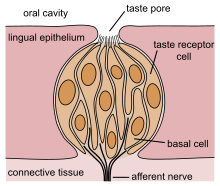
Taste_bud.svgTaste Buds Structure:
The bud is formed by two kinds of cells: supporting cells and gustatory-taste cells.
The supporting cells form an outer envelope for the bud. Some are found between the taste cells.
The gustatory (taste) cells are spindle-shaped, and each possesses a large spherical nucleus near the middle of the cell, with a chemoreceptor, that occupies the central portion of the bud.
Each cell ends up at the gustatory pore (hole) in a fine hair filament, the gustatory hair. Soluble chemicals in the saliva affect the receptors and give rise to a certain taste sensation.
Wine is a special drink in the sense that it is revealed taste wise in layers of exposure, it contains 3 of the 4 tastes whether directly sweet, sour and bitter or in case of very dry wine (there are still 4gr of sugar /Liter) sweetness can often be felt by association.

taste centers tongue
Although each bud contains receptors to all tastes there are zones on the tongue sensitive to one of the 5 tastes in particular.
Sweet sensation is located mainly at the tip of the tongue (front).
Salty sensation are around the sweet zone.
Sour sensation: acidic foods like vinegar or lemon are located along both sides of the tongue
Bitter taste: alkaline foods like quinine or unsweetened coffee are located at the base of the tongue (far back)
sugar1Sweetness
Sweet sensation is produced by the presence of sugars. At least two different variants of the “sweetness receptors” must be activated for the brain to register sweet sensation. The average human detection threshold for sucrose is 10 millimoles per liter. For lactose it is 30 millimoles per liter.
Sournesslemon
Sourness is the taste that detects acidity. The sourness of substances is rated relative to dilute hydrochloric acid; Sour taste is detected by small groups of cells that are distributed across all taste buds in the tongue. The most common food group that contains naturally sour foods is fruit, such as all citrus especially lemons, tamarinds, grapes. Wine also has a sour tinge to its flavor, and if not kept correctly, it will spoil and attain the sour taste of vinegar.
Saltiness           salt
Saltiness is a taste produced primarily by the presence of sodium ions. Other ions of the alkali metals group also taste salty.
Bitterness
Bitterness is the most sensitive of the tastes, and many perceive it as unpleasant, sharp, or disagreeable, but it is sometimes desirablebittergourd and intentionally added via various bittering agents. Common bitter foods and beverages include coffee, unsweetened cocoa, olives, citrus peel. Quinine is also known for its bitter taste and is found in tonic water. A large number of natural bitter compounds are known to be toxic. The ability to detect bitter-tasting, toxic compounds at low thresholds is considered to provide an important protective function. Taste receptors, type 2, also known as T2Rs coupled to the G proteingustducin are responsible for the human ability to taste bitter substances.
roast meatUmami
Umami is a savory (appetitive) taste described as meaty taste. Monosodium glutamate (MSG), produces a strong Umami taste It can be tasted in cheese, soy sauce, meats and in many other fermented and aged foods. Some say that Umami taste buds respond specifically to glutamate in the same way that “sweet” ones respond to sugar. Glutamate binds to a variant of G protein coupled glutamate receptors.
Others say that Umami is not one of the primary tastes but rather a “taste” evoked by conditioning and is a result of a learning process. When we eat proteins they are broken through digestion into amino acids one of which is Glutamate. Glutamate receptors in the “in our intestine” sense glutamate and send signals to the brain regarding Protein consumption which is connected to the meat, cheese, eggs we have just consumed and since proteins are required as body building materials the brain “makes us like” them through glutamate receptors in the gut and not on the tongue – taste receptors. We learn to like body builders essential to our body, same goes with fats, fats are tasty because our body needs them not because they have taste.
The sense of taste and olfaction are connected to our emotional state as well as their chemical effect on the chemo receptors and their proximity to the “emotional and memory centers” in the brain.
On Gustation and wine tasting in particular on my next anatomy and physiology post
YOUR WINEGUIDE
The Flavour of wine- Scent (Part 2)

Anatomy and physiology of smell in wine tasting.

The sense of Smell in wine tasting

Two of our five senses respond to the chemical stimuli from our surroundings: taste and smell. Both depend on chemical interaction, known as chemoreception. Taste is: contact chemoreception, because to sensing the taste of anything requires contact with it. Smell is: remote chemoreception, it is airborne, and can be sensed from a distance.

The Sense of Smell – press to watch Video  

(from The Sense of Smell (Brief Overview for Primary/Secondary Grade Students) http://www.youtube.com/watch?v=dIDBG-UPRUI

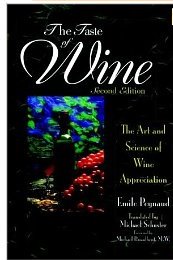
jilly goolden In 1990 BBC books published a small (soft cover) book, by Jilly Goolden, titled “The Taste of WINE, for me it was one of the basic ABC’s to wine tasting. It meticulously described all the “Smells of wine”, not TASTE (divided by country of origin, grape variety, local blends etc.). Semantically, it follows the title of the reference book by Emile taste of wine E PPeynaud: The Taste of Wine: The Art Science of Wine Appreciation (1984). Both books are titled mistakenly: The taste of wine. But it is by the aromas of wine (the sense of smell) that wine is “tasted”. It occurs mainly by accumulating information from smelling the wine in the glass before tasting and retro-nasally through the back of the mouth as the wine is swirled in the mouth, It is here that vapors of wine smells travel via the Nasopharynx to the olfactory bulb, and finally translated in the form of flavour by the brain. The human tongue (sense of taste) is limited to the primary tastes perceived by taste receptors on the tongue: sour, bitter, salty, sweet and savory (Umami). The wide array of fruit, earthy, floral, herbal, mineral and woody flavours perceived in wine derive from aroma notes which are interpreted in our brain through chemical information obtained by the primary receptor cells in the olfactory membrane.

.In professional wine tasting,  a distinction is made between wine odors:  “aromas” and “bouquet.

grapes3Aroma is used to describe the smells of a young wine, or of fermenting wine must, and represent odors mainly from the fruit, vegetable and mineral families.

The term Bouquet refers to the smells that arise from the chemical reactions of fermentation and aging of the wine in the bottle as part of the wine aging process, these are more complex kind of smells, combined together to induce an odor from our memory bank of smells (ground coffee, cigar box, leather, Tarte tatin, toasted bread, compost, caramel, toffee, mint etc.)

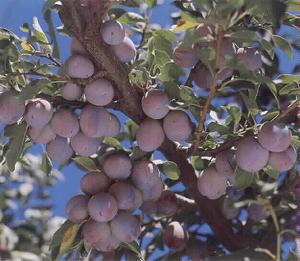
strawberry    prune    blackberry   Grannysmithapple

Apart maybe from wines made from the Muscat grape no wine smells like the juice of the grapes variety it is made from. Aroma refers to the smells unique to a certain grape variety, and is most readily demonstrated in varietal wines–such as Raspberries and blackcurrants with Cabernet Sauvignon, exotic fruits and canned Leeches with Gewürztraminer or Gooseberries and freshly cut grass in Sauvignon Blanc. These are smells that are commonly associated with a young wine.

As wine ages chemical reactions between the acids, sugars, alcohols and phenolic compounds, create “new smells” that are known as a wine’s bouquet. These can include honey in an aged Sauternes or mushrooms even truffles in a Pinot noir, and others listed above. The term bouquet can also be expanded to include the smells derived from fermentation and exposure to oak. Wine aromas are sub-divided into three categories-primary, secondary and tertiary aromas.

Primary aromas are those specific to the grape variety itself. Secondary aromas are those derived from alcoholic fermentation and oak aging. Tertiary aromas are those that develop through bottled aging.

Wine contains volatile and non-volatile compounds that contribute to the overall wine aroma. The majority of volatile compounds responsible for aroma combine with sugars in the wine to form odorless glycosides. Through the process of hydrolysis, caused by enzymes or acids in the wine, the odorless compounds revert into an aromatic form, thus the act of tasting wine is essentially an act of smelling vaporized aroma compounds

 Of the human senses, the sense of smell is the most precise, with high sensitivity to minute amount of odorant. It is also the most fragile. Most of us have experienced detecting an aroma of bread baking, even from a long distance and certainly in the bakery, yet after a fairly short but continuous exposure of just a few minutes, that same smell is less noticeable. This “fatigue” is really an accommodation process of the sense of smell by means of sensory adaptation and occurs in other senses as well.

image088                                    pl-dans-vignes

Since olfaction is connected directly to the Limbic system in our brain that supports a variety of functions, including emotion, creativity, long-term memory, and olfaction. Being primarily responsible for our emotional life, the formation of memories and smells in the same brain center facilitates connection of certain emotions that were evoked with a certain odor “background” a memory of that smell will be unconsciously related to an emotion. A connection between emotion memory and smell is created in our brain. The memory/olfaction connection plays a major role in the ability to relate (by association) wine odors to groups of smells fruity floral vegetal etc. which is a basic requirement in wine tasting. In fact of all our senses, the sense of smell is the most intimately connected with the brain.

The amount of odors in wine and their inner intricacies present a huge vocabulary from which to choose when coming to describe a wine.  Ann C. Noble of University of California, Davis, formulated an aroma aid called the “Aroma Wheel”. It divides the various wine aromas to groups and sub groups within them covering the most commonly aromas encountered in table wines this was a means to try and “standardize” terms used to describe wines to a point that wine tasters, wine journalist, wine novices and readers of wine articles will “know” what was meant by a certain description:

The Aroma Wheel provides a visual graphic of the different categories and aroma components that one can encounter in wine.

The wheel breaks down wine aromas into 12 basic categories and then sub-divides them into different aromas that fit those main categories:

    Fruity – Aromas like blackcurrant, apricot, apples and plums

    Vegetative – Aromas like Green pepper, asparagus or artichoke       Aroma wheel inner circle

    Floral – Aromas like rose, acacia, or Jasmine

    Spicy – Aromas like cloves, cinnamon or anise

    Microbiological – Aromas like yeast and lactic acid

    Nutty – Aromas like pine nuts walnut and hazelnut

    Caramelized – Aromas like butterscotch and molasses

    Woody – Aromas often imparted by oak like vanilla and coffee

    Earthy – Aromas such as mushroom compost and mildew

    Chemical – Includes aromas like sulfur and petroleum or nail varnish

    Pungent – Aromas like alcohol and vinegar                                                  

    Oxidized – Aromas like Sherry or acetaldehyde                                                                    

Aroma Wheel: property of Aromaster wine aroma kits  http://www.aromaster.com/product/wine-aroma-wheel/

A drawback of the wheel is that it does not contain terms used to describe the sense of touch on the palate, like texture or astringency, which affect the overall “tasting experience” and are a major factor in determining a wine’s quality, balance.

image053

 Prior to tasting the wine, a good swirl of the glass releases wine odorants into the glass bowl. Some glasses are specifically designed to enhance aromatic qualities and characters of different wines, these assist in capturing more aromatic compounds within the glass for the taster/sniffer, to detect. Wines served at warmer temperature will be more aromatic than wine served cooler due to heat’s ability to increase the volatility of aromatic compounds in the wine. Swirling aerates, the wine and increases available surface area, increasing the amount of volatilized aromatic molecules. Some subtle odors can be hidden by a more dominant smell that arise after swirling, so most professional tasters will sniff the wine briefly first before swirling.

sejour-degustation selosse

The deeper our nose is stuck inside the glass, the greater the chance to capture the specific wine aromas.  Our nose can detect and distinguish between thousands of different smells, which increase by means of training through exposure.

When wine is sipped, it is warmed in the mouth and mixes with saliva to vaporize the volatile aroma compounds. These compounds are then inhaled “retro-nasally” through the back of the mouth to where it is received by the millions of nerve receptor cells in the olfactory bulb. An average human can be trained to distinguish between thousands of smells but can usually name only a handful at a time when presented with a wide variety of aromas. Professional wine tasters will use their vast “library” of memorized aromas, for those with a lesser collection of memorized odors a visual aid like the aroma wheel.

Detecting an aroma is only part of wine tasting. The next step is to describe or communicate what that aroma is verbally. In this step subjective nature of wine tasting is most prominent. Different individuals have their own way of describing familiar scents and aromas based on their unique smell experiences, memories and “smell vocabulary”. Furthermore, there are varying levels of sensitivity and recognition thresholds among humans of some aromatic compounds. This is why one taster may describe different aromas and flavors from another taster sampling the very same wine.

le nez du vinIn 1981, as a result of his research into vocabulary used to describe wine, Jean Lenoir created Le Nez du Vin®, a unique and learned combination of written works and collection of bottled aromas covering a large array of odors which form a part of the scents of wine.

“Le Nez du vin is a The 54 Aroma Master Kit has been the reference for wine aromas vocabulary. Our sense of smell is very delicate and highly sensitive. Practice through daily training allows us to recognize and identify the 54 aromas most commonly present in wine; thus, improving our appreciation and enjoyment of wine. These are the typical aromas found in red and white wine (including Champagne) from France and around the world. They give us an indication of the wine’s origin, the grape variety as well as the vineyard, the winemaking techniques used and the aging conditions. Memorizing these aromas provides an accurate and coherent vocabulary to further stimulate our appreciation of fine wines”

The 54 Aromas of Le Nez Du Vin are:

23 Fruit Aromas, 6 Floral Aromas, 10 Vegetal Aromas, 5 Spices, 3 Animal Aromas and 7 Grilled Aromas (full list could be found in: http://www.winearomas.com/master_kit.html

IMG_0171 IMG_0172

“It is widely accepted that sensory interactions can, and do, occur during wine consumption. To this concern, many studies have dealt with aroma-taste interactions which have been attributed to physicochemical interactions in the product itself, interactions at the receptor level or cognitive interactions. Although the understanding of these interactions has grown during the years and it has been demonstrated that they are strongly product-dependent, investigations have seldom gone beyond that of model solutions with a reduced number of components (volatile and/or nonvolatile molecules). Recently some investigations carried out in this field have been conducted with more complex matrices in an attempt to simulate interactions in real wine samples. The aim of this chapter is to review these latest advances in the research of wine sensory interactions, and to highlight the magnitude, relative importance and qualitative nature of such sensory effects.” (From: Sensory Interactions in Wine: Effect Of Nonvolatile Molecules on Wine Aroma and Volatiles on Taste/Astringency Perception  Authors:  (María-Pilar Sáenz-Navajas, Eva Campo, Dominique Valentin, Purificación Fernández-Zurbano, Vicente Ferreira).

The “correct” scent of wine can quite easily be reached at the winery level but the quality of wine starts at the flavour’s level which is a combination of taste and smell add to those the sense of touch on our palate and the balance of the wine can be judged to give a complete view of the wine’s quality.

Next post of the sense of taste continues “our” journey through the symphony of senses in relation to wine tasting.

YOUR WINEGUIDE

The scent of wine (Part one)

The Anatomy and physiology of Olfaction-(smell) in Wine Tasting,

IMG_0358                                IMG_0360

The sense of Smell – Sense No. 2 in wine tasting.

Cranial nerve No. 1 the Olfactory nerve.

      smelling wine 4                 tasting whites                         smell YH

Smell refers to 1: Olfaction, the actual act of smelling an odor, or 2: odor, as simply the smell that is being emitted by vaporized molecules of a volatile material.

It is through the aromas of wine that wine is tasted. The human tongue is limited to the 5 primary tastes perceived by taste receptors on the tongue: sour, sweet, salty, bitter and Umami, so if an orange is sweet and sour and a strawberry is also sweet and sour, it is the “sweet and sour” with an orange or a strawberry aroma that distinguishes between the two. Taste and aroma together – Flavour, is the final interpretation of consumed food or beverage in our brain. Of the five senses, smell is of the highest sensitivity, approximately 10,000 times more sensitive than the sense of taste. The part of smell in what we define as flavour is 75% smell (olfaction) and 25% taste. Since smell is 10,000 times more sensitive than taste it requires that amount less Chemical Stimuli to be manifested clearly in the brain.

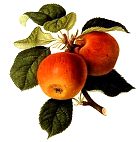
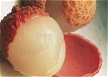
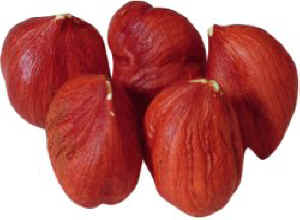
rose pomme140 mushroom lychee Hazlenut2 Grannysmithapple blackberry

The wide array of fruity, vegetal, earthy, floral, herbal, mineral woody and other flavours perceived in wine are derived from aroma notes interpreted by the olfactory bulb. In wine tasting, wine is often smelled before being drunk in order to identify some components of the wine that may be present. Different terms are used to describe what is being smelled. Aroma can be referred to as “pleasant” even alluring smell as opposed to odor which is referred to as unpleasant or repelling smell (mainly found in wine faults). The term aroma maybe further distinguished from bouquet which generally refers to the smells that arise from the chemical reactions of fermentation and aging of the wine as it ages in the bottle (tertiary aroma).

Smell (or Olfaction) allows humans and other living organisms with smell receptors, to identify their food, mating partner and warn against approaching enemies, it provides both sensual pleasure (the odor of the opposite sex, flowers and perfume) as well as warnings of danger from spoiled food, nearby predators and chemical hazards: toxins and poisons. It is a means by which all living creatures communicate with their surroundings and environment.

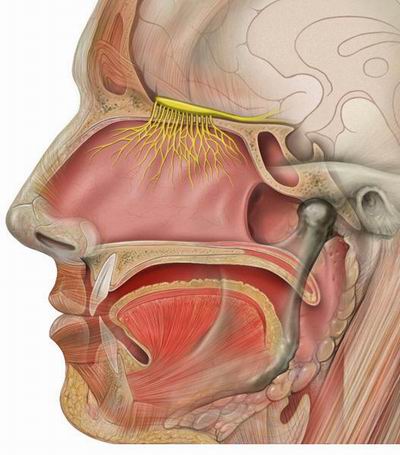
The sense of smell is a direct chemical sense, but in order to smell any product, it must be Volatile so that vaporized molecules from it penetrate through the nose, and reach the center is the odor in the nose, the olfactory bulb.

image088   IMG_0359   olfactory bulb

Everything we “smell”: from flowers, vegetables, fruit, baking odors fragrances, perfumes, to even putrid chemicals, are volatile chemical molecules i.e. molecules dissolved as gas vapors in the air. These come to “contact” with the smell center in the upper roof of our nose. Only highly volatile materials are distributors of smell that affect the olfactory bulb our smell center.

General Physiology of Olfaction: The smell sense organ and the OLFACTORY NERVE (Cranial Nerve No.1)

Olfactory_nerve cross sec             800px-Olfactory_system.svg

 Odorants are volatile chemical compounds that are carried by inhaled air to the Regio olfactoria (olfactory epithelium) located at the roof of the two nasal cavities of the human nose. The olfactory region of each of the two nasal passages in humans is a small area of about 2.5 square centimeters containing in total approximately 50 million primary sensory receptor cells. This is not so many in comparison to a rabbit : 100 million of these olfactory receptors, or a dog: 220 million. Humans are nonetheless capable of detecting certain substances in dilutions of less than one part in several billion parts of air. An odorant must possess certain molecular properties in order to provide sensory properties. It must have some water solubility, a sufficiently high vapor pressure, low polarity, an ability to dissolve in fat (lipophilicity), and surface activity (these are all physical terms) The sense of smell is able to distinguish among a practically infinite number of chemical compounds at very low concentrations .

Nasal ciliaThe olfactory region consists of CILIA (Tiny, hair-like structures) projecting down out of the olfactory epithelium into a layer of mucous which is about 60 microns thick. This mucous layer is a fatty-rich secretion that bathes the receptors at the outer surface. The mucous layer is produced by special glands which are present in the olfactory epithelium. The mucous lipids (fats) assist in transporting the odorant molecules, as only volatile materials that are soluble in the mucous can interact with the smell receptors and initiate the signals that our brain interprets as smell. The olfactory cilia are the sites where molecular reception with the odorant occurs and sensory transmission starts.

Odorant receptors:

415px-Early_Olfactory_System.svgFor a long while it was thought that there are specific receptors for different odorant molecule and smell is initiated only when the right receptor is affected. An interesting feature of the physiology of smell was discovered by the 2004 Nobel Prize winners Linda Buck and Richard Axel. In contrast to the simple but specific key-lock model that governs taste, smell is dictated by a whole set of sensory cells. One type of fragrant molecule interacts with more than one receptor type, so the overall sensation is created by the combination of activated receptors and not a specific receptor as thought prior to their study.

Humans are able to distinguish between around 10,000 different odors. There are a combination of specific odor-sensing receptor cells that are capable of perceiving o it and the accumulation of the mixed information of these  receptors pass the information of the “smell” of the specific odorant, on to the brain for their final disclosure. Although all people can identify most of the smells, some people trained as professionals “sniffers” in the fragrance/ cosmetics industry or professional food and wine tasters are considered to be in the high-end image080of this sensual ability they are more focused in distinguishing between the different odors and subsequently poses higher ability to describe the smell verbally, mainly by association.

Aroma refers to any volatized odor that reaches the olfactory bulb at the top of our nose. This odor can be sensed either through the nose or retro-nasally through the back of the mouth in the form of flavour. When the brain combines the taste stimuli with the aroma stimuli, flavor is perceived. (Tactile sensations such as the astringency from tannin or alcohol also play a role in flavour. Partially from: http://www.cf.ac.uk/biosi/staffinfo/jacob/teaching/sensory/olfact1.html#Tasteandsmell

Groups of Odors:

the Primary odor groups that appear in wine are: Fruity: ethyl acetate, Floral: flowers scent jasmine, roses, Spicy: ginger, pepper, Minty – Herbal: either from the mint family or fresh herbs, Resinous: resin, smoke, Burning:  tar, toasted wood, Pungent: vinegar ,formic acid, acetic acid. There are Other Odor groups such as: Ethereal : Dry cleaning chemicals : Musky:  muscone, Camphor – the smell of mothballs, eucalyptus oil, Rancid: smell of decomposition (isovaleric acid, butyric acid), Putrid: Foul rotten egg. Many esters have distinctive fruit-like odors, and many occur naturally in the essential oils of plants.

Ethyl acetate is the most common ester in wine, being the product of the most common volatile organic acid — acetic acid, and the ethyl alcohol generated during the fermentation. The aroma of ethyl acetate is most vivid in younger wines and contributes towards the general perception of “fruitiness” in the wine. Excessive amounts of ethyl acetate are considered a wine fault. Exposure to oxygen can exacerbate the fault due to the oxidation of ethanol to acetaldehyde, which leaves the wine with a sharp vinegar-like taste. (from Wikipedia)

Ester Name s and their Odors: Allyl hexanoate :  pineapple, Benzyl acetate : pear, strawberry, jasmine, Bornyl acetate :  pine, Butyl butyrate: pineapple, Ethyl acetate : nail polish remover,  model airplane glue, Ethyl butyrate : banana, pineapple, strawberry, Ethyl hexanoate:  waxy-green banana, Ethyl cinnamate : cinnamon, Ethyl formate: lemon, rum, strawberry, Ethyl heptanoate :   apricot, cherry, grape, raspberry, Ethyl isovalerate: apple, Ethyl lactate: butter, cream, Ethyl nonanoate: grape, Ethyl pentanoate: apple, Geranyl acetate: geranium, Geranyl butyrate: cherry, Isobutyl acetate: cherry, raspberry, strawberry, Isobutyl formate: raspberry, Isoamyl acetate: pear, banana, Isopropyl acetate: fruity, Linalyl acetate: lavender, sage, Linalyl butyrate: peach, Linalyl formate: apple, peach, Methyl anthranilate: grape, jasmine, Methyl cinnamate: strawberry, Methyl pentanoate (methyl valerate): flowery, Octyl acetate: fruity-citrus, Pentyl butyrate (amyl butyrate): apricot, pear, pineapple, Propyl hexanoate: blackberry, pineapple, cheese, wine.

The sense of smell (or olfaction) is our most primitive sense. Scent messages pass directly through the limbic system (the emotional center of the brain), on its way to a conscious identification in the cortex. The Limbic system, supports a variety of functions, including emotion, behavior, creativity, motivation, long-term memory, and olfaction. It appears to be primarily responsible for our emotional life, and has a great deal to do with the formation of memories.

Since wine only very rarely possesses the tastes of the juice of the grape it is made of, Professional wine tasters use associations and analogies to everyday materials to describe aromas. Wine tasters Experts practice and use their sense of smell very frequently and they in fact “train” their sense of smell to improve, by methodical exposure to specific smells of a known origin. Accumulation of memories from known smells increases the smell vocabulary to a point that wine taste will “provoke” an association to other memorized smells from the Brain’s library of thousands of smells.

The sense of smell is one of the few senses that can be improved by training. It is possible to train our nose (and brain) to distinguish better, between smells. This can be achieved by sniffing something with a strong odor for a period several times a day. If we add new odors at set intervals continually for some time, our “vocabulary” of different odors will increase and we will be able through learning and memory to distinguish between larger arrays of the 10,000 or so existing odors. Our sense of smell, will also get stronger and association to known odors emitting materials will get faster.

bread nuts blueberryIMG_0029lavendervanilla

People list smells which “make them happy. These are all part of their top 20 smell vocabulary: Freshly baked bread, Clean sheets, Freshly mown grass, Fresh flowers,   Freshly ground coffee, Fresh air after rain fall, Vanilla, Chocolate, Fish & Chips, Bacon frying, Roast Dinner, Babies, Lemon zest, Lavender, Petrol,  Apple and blackberry crumble in the oven, A freshly lit match, Roses, Party poppers, Rubber tyres. Apparently smell emotion and memory are interrelated in the brain as they originate in the same Limbic system

Next post on the specific scents of wine… soon.

YOUR WINEGUIDE
Hands off, my 330,000,000 wine bottles!!!

I beg to differ, Aged wines? Yes please!

Thoughts on Matt Kramer’s recent essay:  Is It Worth It to Age Wines Anymore? (Subtitled: Wines have changed and so have our palates).

matt_kramer2On January 8, 2013 Matt Kramer; an American wine critic since 1976 and a regular contributor to Wine Spectator Magazine, who has been described as “perhaps the most un-American of all America’s wine writers” “HAD AN ENLIGHTENMENT “, an insight to the true nature of reality. (As far as I know, He is not a practicing Buddhist)

He rushed to write an article titled: Is It Worth It to Age Wines Anymore? Wines have changed and so have our palates. This was posted in his column drinking out loud in the wine Spectator web site, read it on:

winespectator

http://www.winespectator.com/webfeature/show/id/47848  , It goes:

IMG_3220“My greatest wine dream, was a wine cellar, so full that I could easily forget about whole cases of wine for years at a time, the better to let them age to a fantasized perfection. That dream came true… I was motivated, obsessed even, by a vision of what might be called futuristic beauty. How soaringly beautiful it would be in 15 or 20 years! I wasn’t wrong—then. But I wouldn’t be right for today. What’s changed? Surely me of course.(He says), I’ve had decades of wine drinking to discover that my fantasized wine beauty only rarely became a reality. But I had to find that out for myself. And I’m glad I did…. In recent years it’s become obvious that an ever greater number of wines that once absolutely required extended aging no longer do”

Really?  And if so, I am quite sure that if only one odd GREAT wine on his “list of grandeur”, it was still worth it. I bet you that this is the only wine he really remembers most, a memory that focuses on the finest, minute detail of taste, flavor, aroma and even appearance, from all the other hundreds even thousands of wines he had since 1976. After all, he had all the great wines of the 60’s 70’s 80’s and 90’s of the 20th century to sample and enjoy. He continues in saying: “Simply put, most of today’s fine wines—not all, mind you—will reach a point of diminishing returns on aging after as few as five years of additional cellaring after release. Stretch that to a full 10 years of additional aging and I daresay you will have embraced fully 99 percent of all the world’s wines, never mind how renowned or expensive”.

aged wines

I agree that less than 1 percent of world wines are really Great, but how many bottles of wine is 1%? Well, in 2011 248 million hectoliters of wine were produced, 1 hectoliter = 100 liters, that is 24 trillion 800 million liters of wine, more than 33 trillion bottles, one percent of which is 330 million great bottles! each year!  That is a lot of great wines (if 1% is an accurate measure according to Kramer). Between us 1% of excellence in anything is reasonable, when counting the number of wine writers or any other group of professionals who really know what they are talking about (1% would be just right). When excellence is the sought after, high quality of 1% is a very good starting point, and ultimately this is not such a small quantity. Allow me to beg to differ yet again, on the “5-10 years at the most will improve by aging” maybe this is the best American wines can get to (I am no expert on American wines so I will take Mr. Kramer’s word for it. Is it the trends in new world winemaking methods that initiated Kramer’s Enlightenment? Is it an American way of always looking at their own as a reference for the best of the rest? or maybe it is the odd, rather new “varietal taste” that had led to this horrific conclusion?

He continues: “Well, what about them old great Old world wines (he lists French, Italian from great wine regions). Yes, all of those wines and still others, such as German and Alsatian Rieslings, Napa Valley Cabernets and Hungarian Tokajis, reward aging. But let me tell you something: With only a handful of ultra traditionalist exceptions, the modern versions of even these wines don’t require anywhere near as much aging as their forebears.”

And I beg to differ again, after all these “ultra traditionalist exceptions”, are the reference wines for all “great wines” of the present and future, the summit all those “modern versions” strive to achieve, copy, imitate, taste like, feel like, affect our senses like… of course, most imitations are “groupies” of the real thing. They may succeed in each and every aspect of excellence separately but Alas fail to stand out as a complete product, lacking the overall balance that separates between the many: good, very good, excellent and EXTRAORDINARY wines.

“… it’s that fine wines have universally changed, sometimes radically so. And our tastes have changed, too… Modern wine offers us a fuller, richer, more rewarding view sooner. Think of an old oil painting carefully and respectfully cleaned of an obscuring varnish, allowing both color and texture to leap out almost three-dimensionally, and you’ve got it.

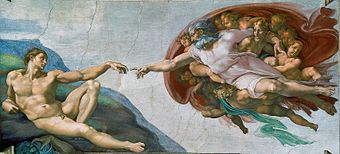
                        340px-Creación_de_Adán_(Miguel_Ángel)      sphinx

Well, I think the beauty of an old painting is in the craftsmanship rather than it’s cleanliness. Please do not clean or fix Michelangelo’s or Da Vinci’s work, don’t fix the Sphinx’s broken nose and don’t tell me that modern wines can even be compared with the good old traditional wines of the old world made by hundreds of beacon bearers around the world, if that’s the wines you like fine just don’t tell me “our (my) palate have changed”

The bottom line: Today’s wines are far more drinkable, far more gratifying, far more rewarding when drunk younger than their counterparts of 20 years ago.Can they age as long? Yes, I think they can. But that’s not the issue. Rather, the key question is: Do they need to? I think not. Only a very small handful of even the best wines truly require more than five years aging—10 years tops—in a cool space.

I find most “modern wines” harsh, over alcoholic, lacking in Elegance, Finesse and Balance, still they are designed to fit a general taste those so called modern winemakers “brainwashed” their consumers to like, basically they are sales orientated and I expect respected wine critics not to fall in the same trap which is a PR stunt directed at wine novices rather than “wine experts”.    

Of course there are wines today that stubbornly withhold their favors, such as Vintage Port and those few white wines that do not go through malolactic fermentation, such as Trimbach Rieslings, Mayacamas Vineyards Chardonnay or the white Burgundies of Maison Louis Jadot.

How can you put in one sentence Wine Houses that make very few wines mostly single vineyards (Trimbach make only 4 different wines) to Maison Louis Jadot (with all due respect) that produces approximately 150 different wines each year many of which from the general area?

…I am now convinced that today’s wine lover is well advised to buy fine wines, cellar them in a cool space for five years—10 years, tops—and then drink them in secure confidence that the great majority of their full-dimensional goodness is available to you. After that, it’s all just fantasy—and the very real likelihood of an increasingly diminishing return on your already delayed gratification.

Kramer describes in one of his books how he began his career as a wine writer in 1976, then a food writer of a weekly paper, in a meeting with his publisher. As the advertising department had altered the food page contents to include a “wine of the week” column, to the advertisers’ approval, Kramer was told that he would write this new column. Kramer resisted, saying, “But I don’t know anything about wine”, but the publisher replied, “That’s all right. Neither does anyone else”. Kramer went on to become a respected wine writer yet I hope his publisher did not convince him, because I for one do know quite a few who know A LOT about wine! Most of who have a gift of extra sensitive sense of taste and smell and flavour, I envy them from time to time and know that they do poses a gift that make them better judges of overall quality of wine in a broader sense than I would ever achieve.

jancis-robinsonKramer once criticized wine critics in his New York Sun column, pointing to “almost desperate attempt by some of today’s wine tasting potentates to bolster their credibility by suggesting a physical superiority”. Kramer summarized that, “suggesting a linkage of taste buds to wine judgment is like confusing eyesight with insight”.  Robinson later addressed the issue in an article that suggested Kramer may not have read Robinson’s own account before publishing his column, stressing that to suggest physical superiority “was the last thing [she] was attempting” (from Wikipedia)

Since Jancis Robinson cannot suggest physical superiority herself, let me say that without a doubt she and a few others I know do poses it, they should not be ashamed with the gift they possess, it is a blessing, Kramer and I can only be envious!  Some people poses better sensibility in various sense organs you must admit you heard of people with absolute pitch, perfect pitch when it comes to the sense of hearing/sound, some people have a perfect sense of smell or taste and when combined with knowledge be it perfumes or wine or food, they are better judges! Their vocabulary is richer!

Thank God for wine writers like Matt Kramer of Wine Spectator, if only more and more people will be convinced in this assertive fallacy, more well aged and sublime wines will be left for us wine lovers (of excellent aged wines whose palates have not changed overnight) at more sensible prices. I for one, promise not to “touch” wines from their list, as long as they leave my 1% of suitable wines to enter the “aged wines” list alone. All the wines in my “top ever wine list” that I remember with pleasure and longing, are wines of well over 15 years of “aging”.

 Wine is a live commodity, it keeps changing in time and the ones that change for the better are worth all the patience and endurance, they are the hope of every winemaker, the completion of his aspirations and his expression as an artist of wine making and not simply a maker of wine.

Kramer by the way is the guy who wrote: “How to Really Taste Wine, The six most important words in wine tasting” He very sensibly lists: Complexity, Texture, Midpalate Density, Proportion, Finesse and Balance as his “six pillars of wine tasting wisdom”…quite a good reading (and writing) http://www.winespectator.com/webfeature/show/id/47792 , I do not know what came over him recently but when one has many followers/readers, they should be careful with the effect of the written word on the less informed.

I beg to differ is: a polite way of saying that you disagree with something that someone has said (from the free dictionary dot com) and so my friends, allow me to BEG TO DIFFER! (I hope Mr. Kramer will take it in the polite way it is intended), I agree to disagree!

YOUR WINEGUIDE


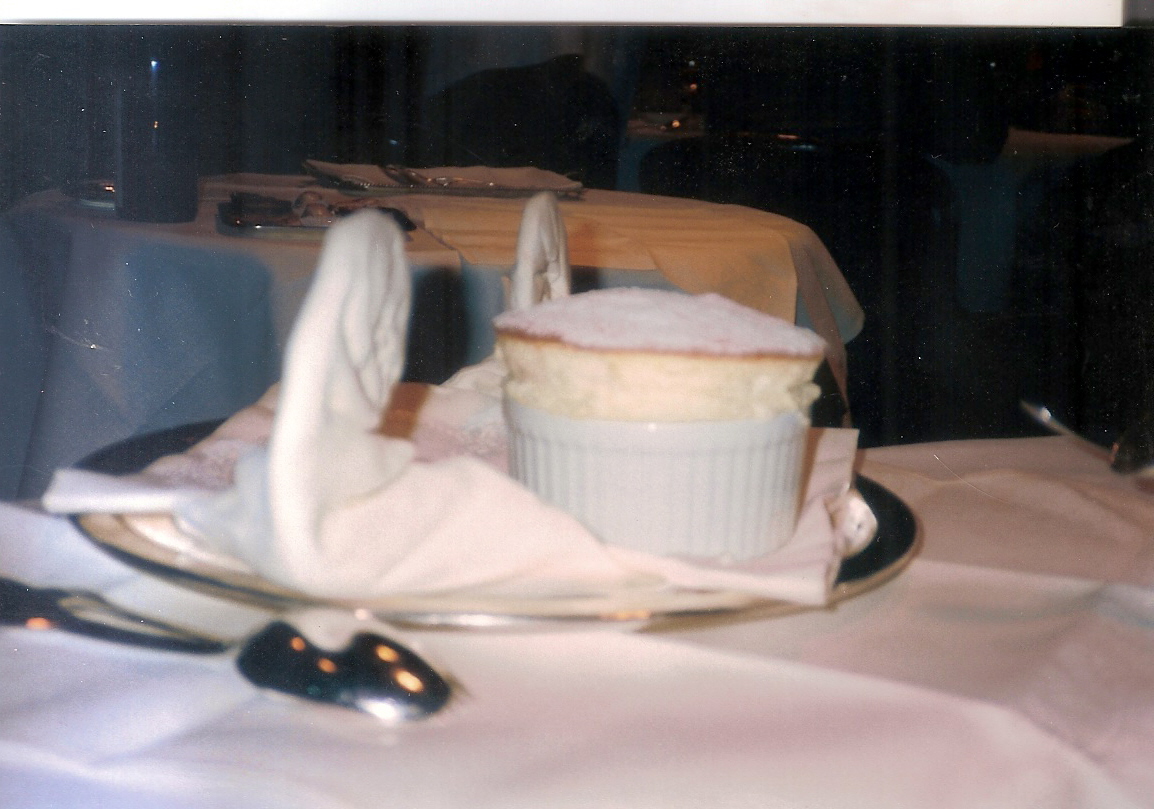
Soufflé, ‘Le Beauvilliers’ Restaurant 1782 Paris, Hot Air Balloons and the Montgolfier brothers.

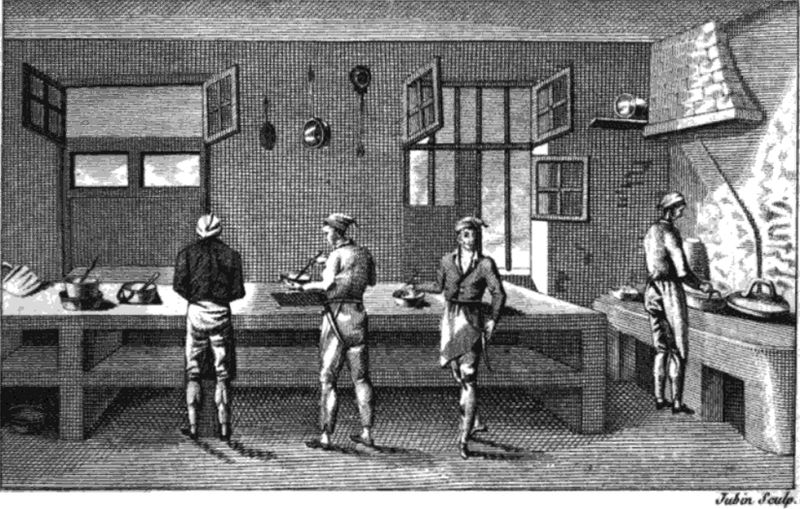
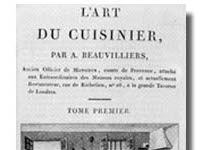
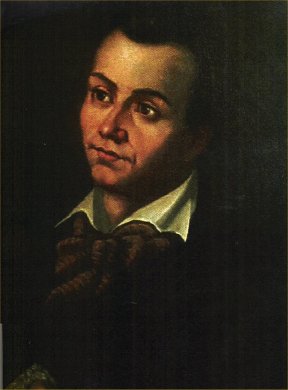
Beauvilliers kitchen  The first true big restaurants in Paris, worthy of the name restaurant as we know it, was ‘Le Beauvilliers’ . It was opened in1782 on the eve of French Revolution in Palais-Royal district, by Antoine Beauvilliers, a famous French restaurateur, once cook of King Louis XIV and later owner of the first real restaurant in Paris, served many soufflés in his career, although his L’Art du Cuisinier containing the first printed soufflé recipes wasn’t published until 1814. The restaurant, ‘Le Beauvilliers’, under his own name, was one of the nicest restaurants of the capital. In fact, Antoine Beauvilliers, is considered to be one of the top “culinary artists” of his century, and is also known as the “inventor of Soufflé”

mongolfier bros         Choco_souffle            annonay vol

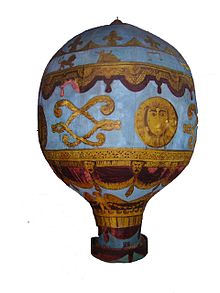
The first hot air balloon was created on December 14, 1782 by the Montgolfier brothers, shortly after a visit to Restaurants ‘Le 220px-Montgolfier_BalloonBeauvilliers’ in Paris. The Montgolfier’s, while enjoying their dish of ” Soufflé du jour” noticed that the baked, fluffy, light, airy dish was puffed up by expending hot air bubbles trapped in egg protein of the whisked eggs in the mixture. Soon they borrowed the idea to heat up air in a large balloon shaped envelope that would expand fill up with hot gas and pick up their balloon and the basket attached to it up in the air. This is not really how things happened but you must admit it is a nice story (the “connection” was inevitable).
L'art du cuisinier coverDuring the time Political changes and persecutions that made Antoine Beauvilliers leave his beloved trade, he composed, one of the best works known in the culinary arts, the famous, 2 volumes cookbook: the “Art du Cuisinier”, published in 1814; This cookbook was translates into English under the title of The Art of French Cookery, in London, in 1825. Antoine Beauvilliers, (1754-1817), is buried in Père-Lachaise cemetery in Paris possibly near Jim Morrison’s grave??
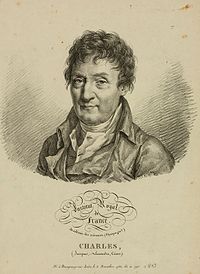
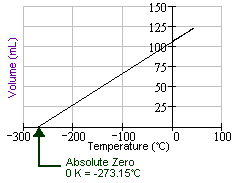
The physical law that explains the rising of souffle as it is baked was described a few decades after its Jacques Alexandre César Charles“invention”, also by the French scientist and balloonist, J.A.C. Charles. It describes how gases tend to expand when heated. Charles’s law says that: the volume occupied by a given weight of gas is proportional to its temperature.

Charles2 If you heat air into a balloon the balloon expands (fills up with more air), and lifts up. So if you put a soufflé mixture in the oven the air bubbles trapped in the mixture will heat up, swell, and expand out beyond the top of the dish. Since there is also evaporation of water from the whisked egg bubble walls inwards, the bubbles expand even more when they reach the boiling point and turn into gas, as more liquid water becomes gas, the quantity of gas in the bubbles increases applying pressure on the bubble walls, which causes the bubbles to expand even more, thus our Soufflé rises more and more. If the Soufflé bubbles cool, the air they contain contracts in volume, the vapor condenses to form heavy drops of water and the Soufflé falls, but only as it begins to cool. So Soufflé’s tend to “fall” as they cool down which is why they have to be served immediately from the oven.
(partially from “On Food and Cooking: The Science and Lore of The Kitchen” by Harold McGee [Scribner:New York] 2004, (p. 109-113)

My friend Judy sent me this wonderful Video: Il Carciofo di Aimo e Nadia by Elisia Menduni that “speaks” for itself from

 Gazzetta GastronomicaGazzetta Gastronomica :

Last New Year’s Eve I made a wonderful soufflé: soufflé of French goat cheeses and fresh porcini mushrooms, as one of the dishes that comprised the meal as described in one of my early posts: https://wine4soul.com/2012/05/08/a-new-years-eve-dinner-2/,  a few days later, my friend Shaul Evron, after looking at the photos, as I was describing to him the meal, surprised me in saying: “I really miss souffle’s I have not had one in ages”. I’ll make you some I replied, they are real easy to make and I get them right each time. He said “maybe you should come one day to Yoezer and make some with the kitchen stuff”. They were not enthusiastic about the idea cause it would engage one of the ovens at all times, just for that dish, in case Shaul would decide he would like one on the menu. So the idea was “kept on ice” for the time being and now Shaul is gone… and this post is dedicated to HIM.

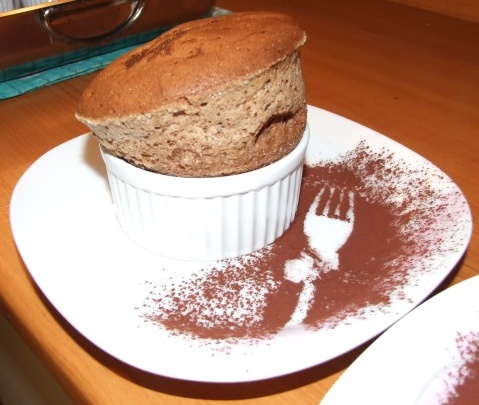
Air bubbles in souffleA soufflé is a light, fluffy, baked preparation made basically with a good Béchamel sauce, egg yolks combined with other ingredients that give it the specific flavor, fluffed with stiff beaten/whisked egg whites, baked in a special dish and served directly from the Oven while it is still well risen above the rim of the Soufflé dish. It can be as a savory starter, main dish or sweetened as a dessert.
The word soufflé is the past participle of the French verb souffler which means “to blow up” or more loosely “puff up” which is exactly what happens to this combination of custard/ Béchamel and egg whites.
Beauvilliers was making soufflés, possibly as early as 1782 (though he did not publish his L’Art du cusinier until 1814). Mentions of recipes for various kinds of soufflé appear in Louis Ude’s (a French Cook) cookbook 1813, and later, in 1841, Careme’s Patissier Royal Parisien, goes into great detail onMarie Antoine (Antonin) Carême the technique of making s soufflé, which acquired an undeserved reputation for being difficult to prepare and deserving special care and “silence” in the kitchen while making it, (from: Oxford Compantion to Food, Alan Davidson [Oxford University Press:Oxford] 1999 (p.735).
In fact, souffles are reliable and easy to prepare as long as there is sufficient air in the mix, the laws of physics will take over your culinary expertise and cause it to rise in the oven, all legends concerning special care and no opening of the oven door are quite false and usually do no harm. As long as a soufflé is in the oven it will be well risen Just don’t over bake it or let the top burn. It is when the soufflé comes out of the oven that it will start to fall after a few minutes depending on the room temperature, (as any other baked dough)
The traditional dish to make soufflé in is a ramekin.
Basic Béchamel sauce
60g butter,
4 hipped tablespoons of plain flour
2 cups milk (400ml)
75g parmesan cheese, finely grated
1/4 teaspoon salt
pinch ground nutmeg
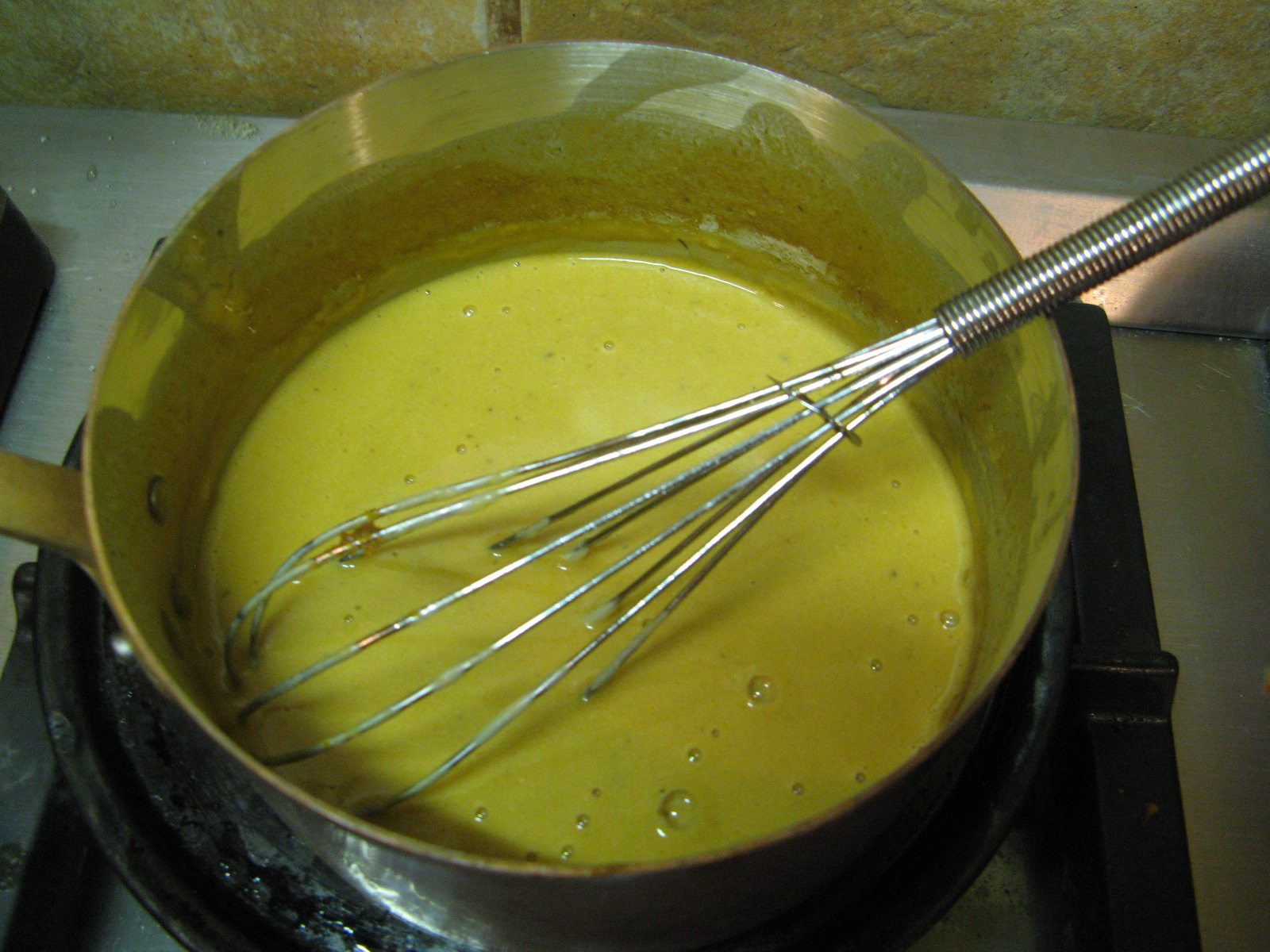
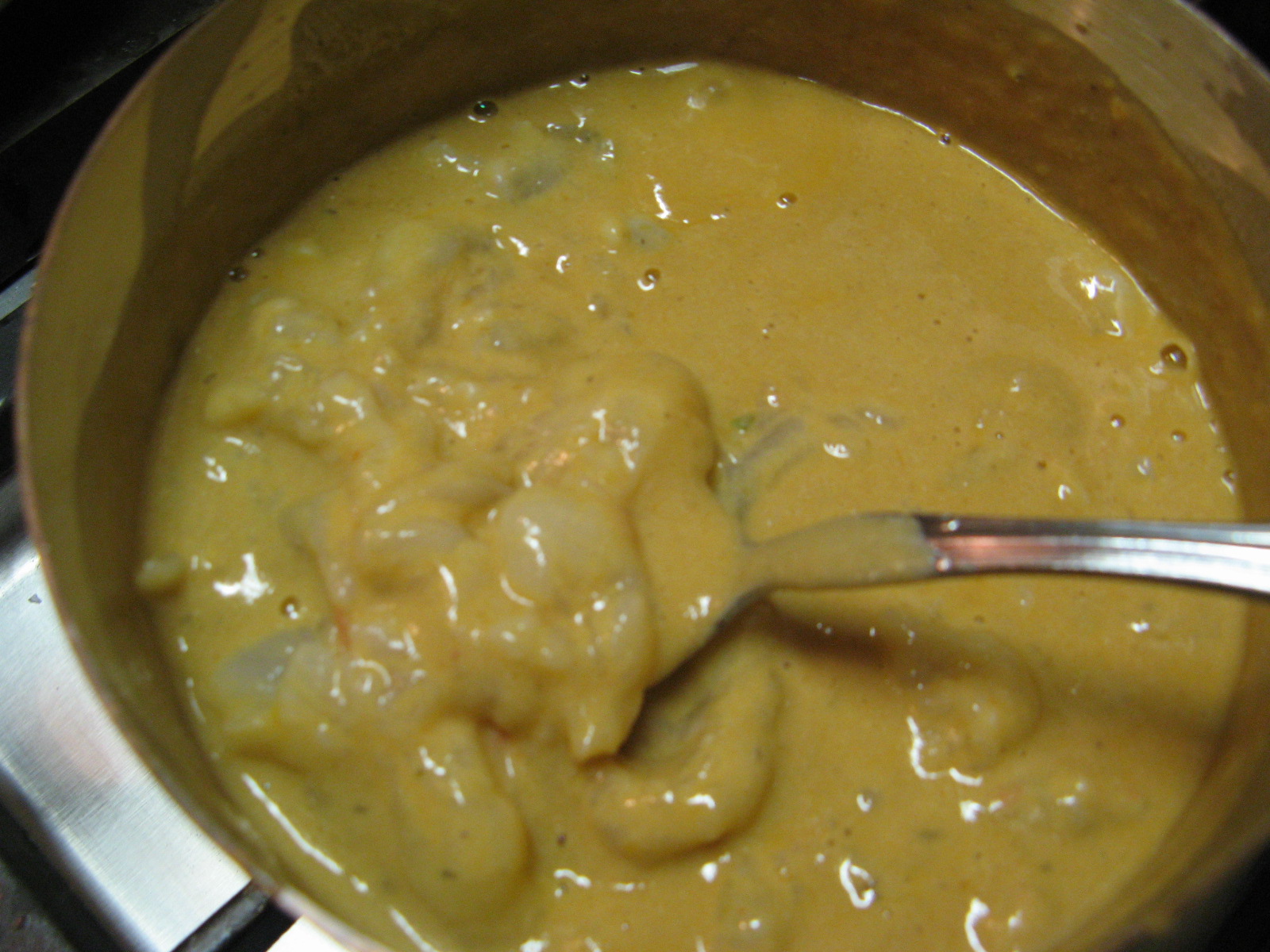
Melt butter in a medium saucepan over medium-high heat until foaming. Add flour. Mix well into a smooth paste constantly stirring, about 1 minute over low heat, until slightly bubbling. Remove from heat!!. Slowly add milk, whisking constantly, until mixture is smooth. Return to heat. Cook, stirring with a spoon or whisk, until the sauce starts to the boil, starts to thicken and coats the back of a wooden spoon. Remove from heat. (You don’t want it too thick keep it nice and cearmy). Stir in parmesan, salt and nutmeg, set aside to cool.

IMG_5655      IMG_5656        IMG_5658

Sometimes I flavour the Béchamel sauce by using the stock of the flavouring part instead of half the liquids added (milk), langoustine or crab stock for instance will give the Béchamel sauce colour and flavour and will concentrate the character of the main ingredient

folding egg whitesNow comes the flavouring part, of turning the Béchamel and turn it to the “soufflé base”, for cheese and mushroom soufflé, fry a few shallots and several kinds of mushrooms, fresh thyme, oregano, salt and pepper, add to the Béchamel sauce , mix well and add to the mixture 4 egg yolks, keep aside, next fold in the whisked 4-5 egg whites (the heavier the base you will require more egg whites to fluff it up, when you fold the egg whites in keep some “islands” of pure egg whites whisk in the mix). start with about a third of the beaten stiff egg whites to lighten up the flavoured Béchamel sauce than add the rest by carefully folding in the rest. One last tip all ramekins have to be well oiled/buttered and than dusted IMG_5653either with Parmesan cheese or fine bread crumbs or a mixture of both and for sweet soufflé granulated sugar, all are good for making the inner side of the ramekin coarse and rough enough to ease the soufflé in climbing up and beyond the rim without “slipping down”.

Larousse Gastronomique lists a long list of both savoury and sweet soufflé, any flavourings of the base for savoury goes, from brain soufflé, cheese, liver, crab, langoustine, fish, game or any poultry, any vegetable : potato, endive, asparagus, tomato, spinach mushrooms, truffles (“à la Royale”) cheese of all kinds be creative but keep the combinations in context with each other, don’t just mix ingredients off your sleeve !
For sweet: from chocolate to coffee, all berries, (pureed) all fruits some sweet liquors, fruits of your choice etc. of these the most delicate recipe is of course Freddy Girardet recipe (below)
Famous soufflé Recipes
Michel Roux’s soufflé Suisesse (swiss cheese soufflé as Served at Le Gavroche)
la gavroche cheese souffle1Serves 4
45g butter
45g plain flour
500ml milk
5 egg yolks
salt and freshly ground white pepper
6 egg whites
600ml double cream
200g gruyère or emmental, grated
Heat the oven to 200ºC/gas 6. Melt the butter in a thick-based saucepan, whisk in the flour and cook, stirring continuously, for about 1 minute. Whisk in the milk and boil for 3 minutes, whisking all the time to prevent any lumps from forming. Beat in the yolks and remove from the heat, and season with salt and pepper. Cover with a piece of buttered greaseproof paper to prevent a skin from forming.
Whisk the egg whites with a pinch of salt until they form firm, not stiff, peaks. Add a third of the egg whites to the yolk mixture and beat with a whisk until evenly mixed, then gently fold in the remaining egg whites. Spoon the mixture into four well-buttered 8cm-diameter tartlet moulds and place in the oven for 3 minutes, until the tops begin to turn golden.
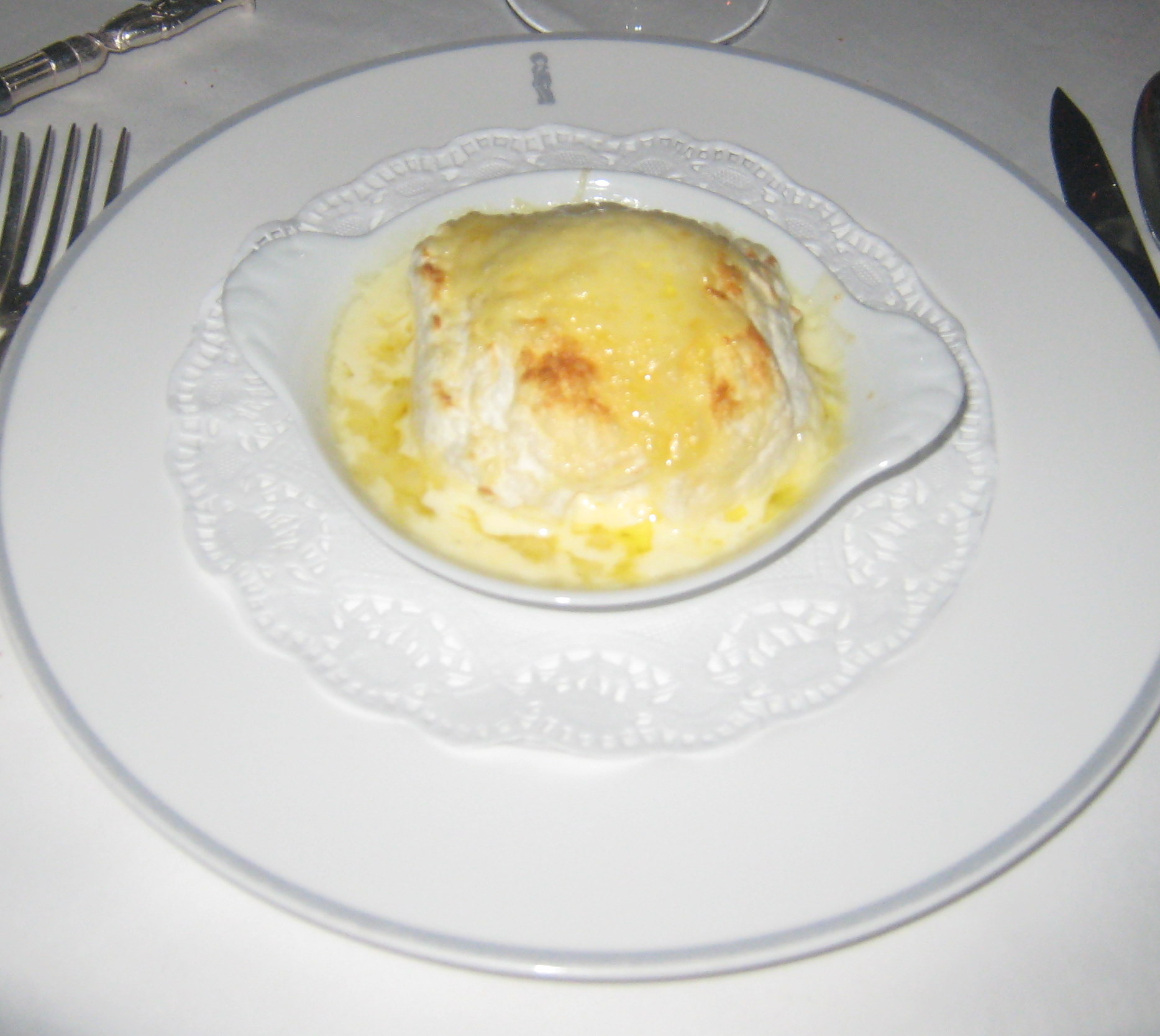
Meanwhile, season the cream with a little salt, warm it gently and pour into a gratin dish. Turn the soufflés out into the cream, sprinkle the grated cheese over the soufflés, and then return to the oven for another 5 minutes. Serve immediately.

IMG_5362                                                IMG_5355
Fredy Girardet’s passionfruit soufflé– In my book, the most delicate and the lightest ever soufflé, sublime!
passiflore souflee fg4 eggs, separate to 2 yolks and all 4 whites (keep the other 2 yolks aside)
100g caster sugar
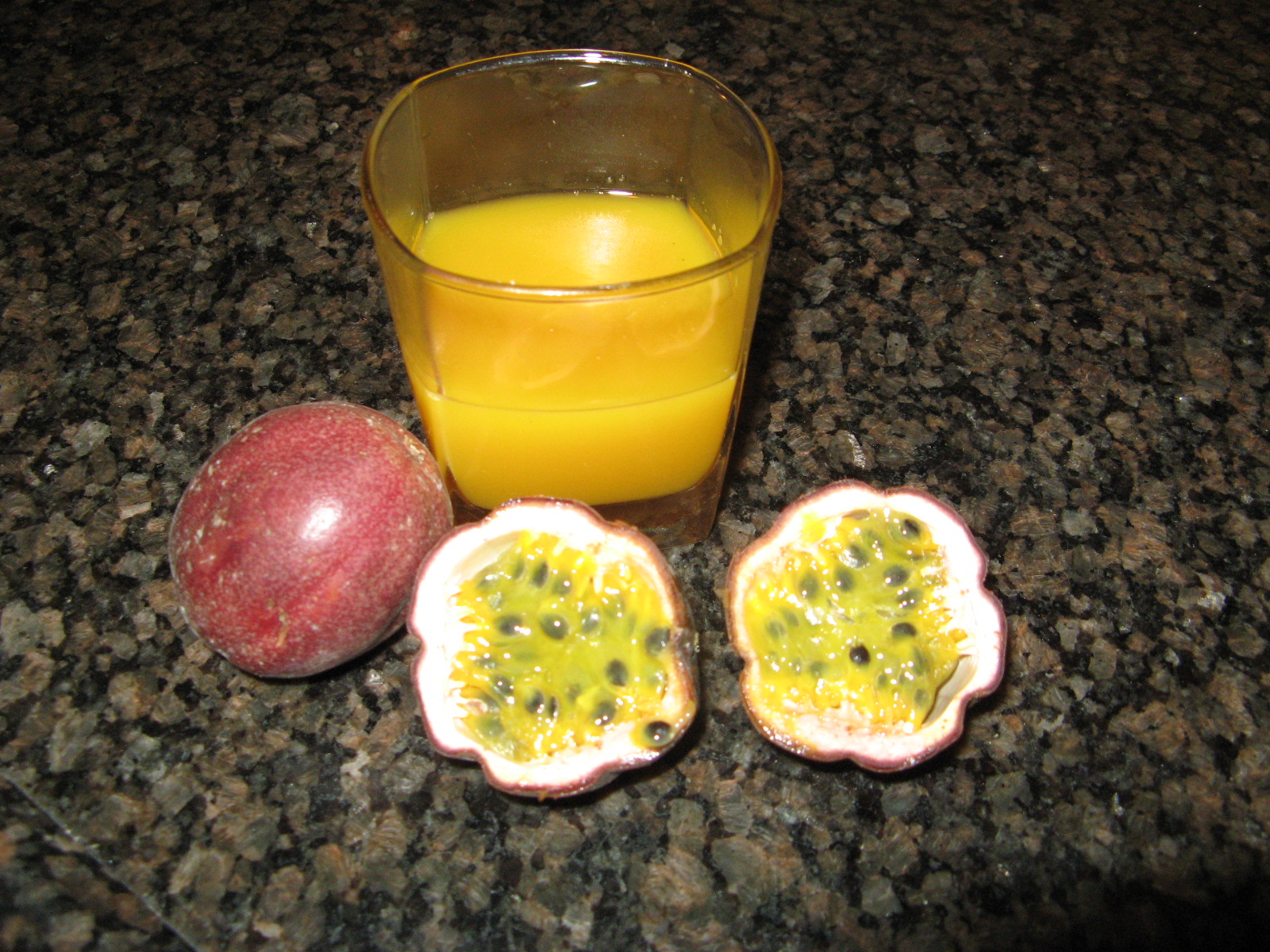
3/4 cup of seedless passion fruit juice
1. Whisk the yolks furiously with half the sugar, added bit by bit, until the mix thickens, then becomes light and fluffy and lighter in colour. Incorporate as much air as you can into the yolks. You can’t have too much air, the more the merrier with any soufflé.
2. Whisk 4 egg whites with the remaining half of the sugar until you reach a soft but firm peaks consistency.
3. Lightly butter individual soufflé bowls- ramekins and coat the buttered container with granulated sugar, just the amount that sticks to the oily surface. Pour 1 tea spoon of passion fruit juice into the bottom of each of the buttered bowls.
4. Add the 2 spoonful of the remaining passion fruit juice, a little at a time to the egg yolk mix, whisking it in as you go. Fold 1/3 of the whisked egg white into the mixture than daa the rest and fold with a spatula. Leave Islands of egg whites whisk. Fold gently, trying to keep the mix the light. Continue drizzling the rest of the juice into the mix as you fold. It should have a strong smell and taste of passion fruit.
5. Fill each bowl, and bake in a pre-heated, 190°C oven for somewhere around 15 minutes .
Dust with caster sugar and serve immedeiately.
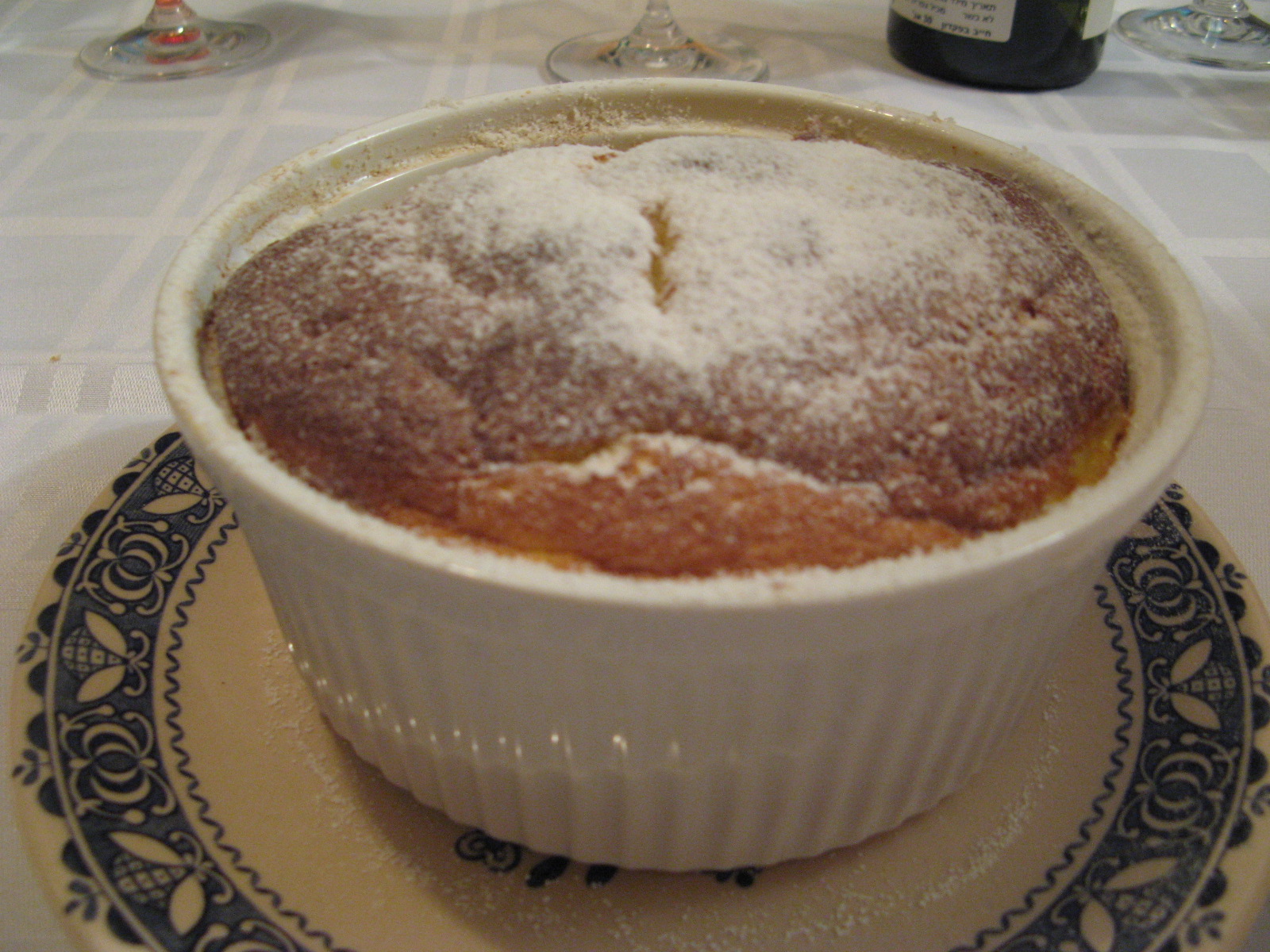
The souffle should be firm on the outside, soft and creamy and just warm in the middle. The top should be raised above the rim and brownish in colour.
Girardet’s souffle turns out so light because it is basically air, held together by sugar, egg yolks and whites flavoured by passionfruit juice, NO FLOUR!!!
Some old soufflé recipes
220px-Careme_2Marie Antonin Carême (1783-1833), often called the father of French “Grande Cuisine” and known as “The King of chefs and the chef of Kings” was not the inventor of the soufflé. He was certainly one of the best and the most inventive pastry chefs of all times and was one of the first to publish a detailed recipe for soufflé.
To Carême the soufflé was “la reine de la pâtisserie chaude, ancienne et moderne” (the queen of hot pastry, ancient or modern). In his days soufflés were baked in a pastry case, called a croustade prepared in the “Pâtisserie de la rue de la Paix”, his Parisian pastry shop.
The original recipe for strawberry soufflé (Soufflés Parisiens aux fraises), as written in one of his many cookbooks: (Le Patissier Royal Parisien ou Traité Elementaire et Pratique de la Patisserie Ancienne et Moderne, 1828, pp. 364-365. )
After picking over a large basket of good strawberries and fruit, crush them. Strain them to a purée through a fine-meshed sieve. Temper with one and a half pound of powdered sugar, than fold with eighteen stiffly beaten egg whites. When everything is well mixed, you mix in the strawberry purée until it is perfectly absorbed. Pour the preparation in a pastry crust as usual and bake. You can proceed in this manner to make soufflé with raspberries, red currants, or any other pureed fruit“.
For me Champagne is the most appropriate wine to go with any soufflé, some go with Blanc de blancs some with blends, some soufflés call for a blanc de Noirs or even Rosé, just use your judgment and preferences the rest will fit in…
About Marie Antonin Carême, and his amazing unique 127 dish The Regency Banquet – 18 January 1817 at The Royal Pavilion, Brighton Staged by the prince regent for the state visit of Grand Duke Nicholas of Russia on one of my next Post.
Till then, lift you spirits, rise over your own little ramekin rim and stay warm.
Your WINEGUIDE

New Year’s Eve Dinner 2012-2013

Another Year passed by and preparations for this almost “traditional” gathering at our house,  to celebrate the passing of one year with the hopes for the new year to come with “spoils” of food and wine are gathering momentum.

220px-StonehengeSunrise1980sLast year’s dinner party/meal was recorded as one of my first posts on May 8th 2012: https://wine4soul.com/2012/05/08/a-new-years-eve-dinner-1/ , since then, I passed on my gastronomical memories and some culinary activities, some happy a few sad moments, all through the grapevine of wine and food encounters.

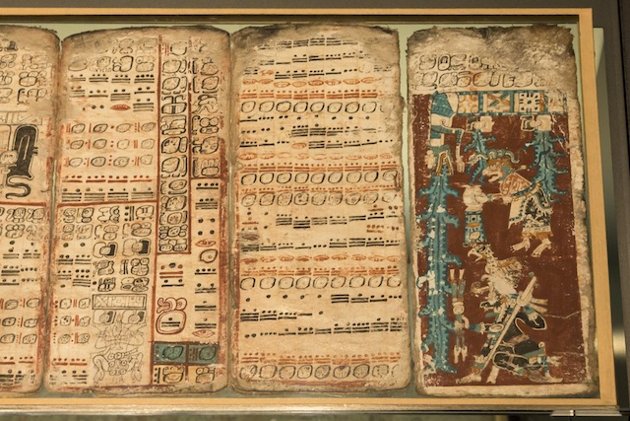
 As the year passed towards the winter solstice, (the Southern solstice), which is the official first day of winter, on which the Sun appears at noon at its lowest altitude above the horizon in the Northern mayan calenderHemisphere, (the Sun is at its southernmost point in the sky), usually occurring on December 21 to 22 each year.

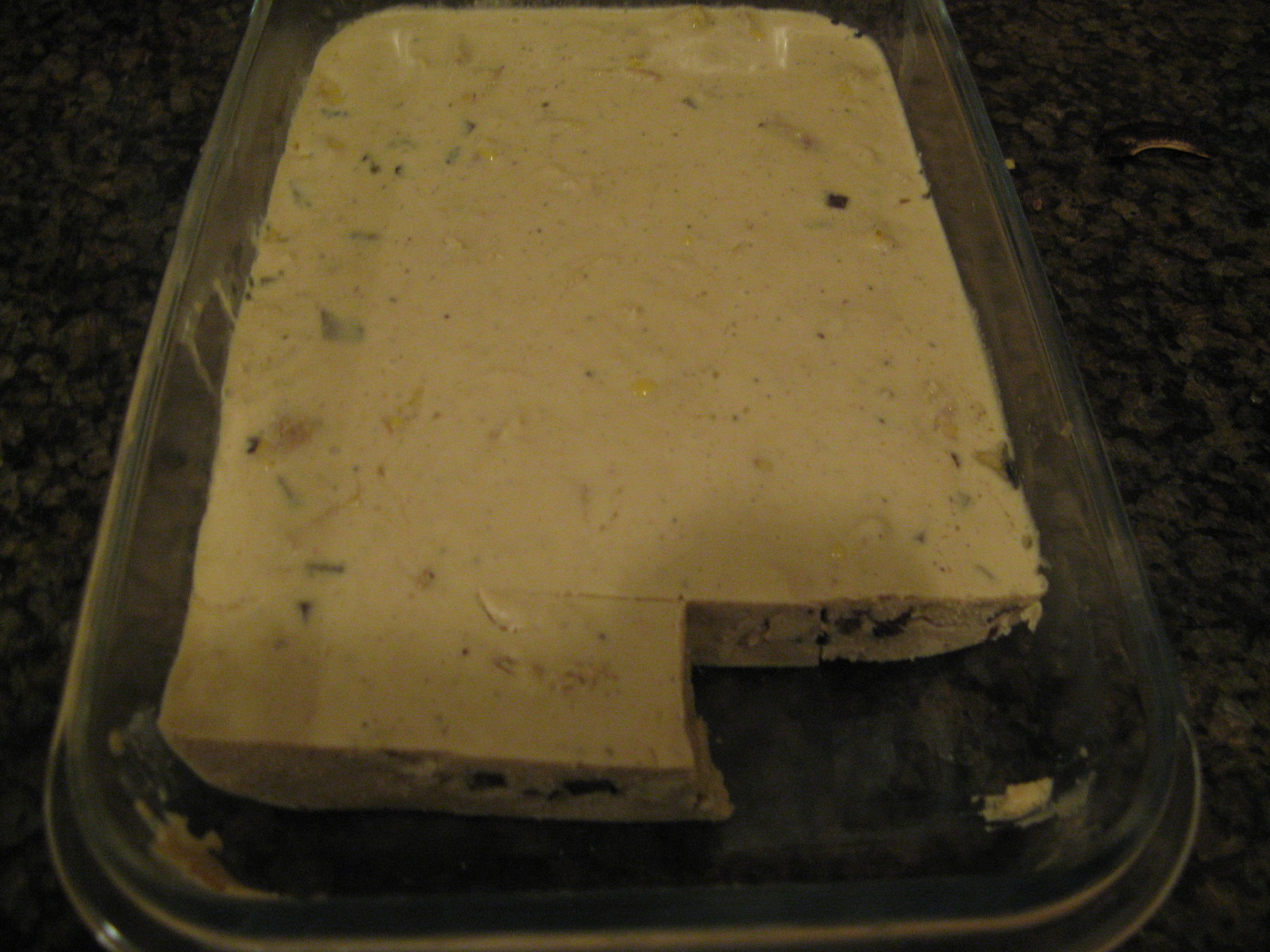
This year, is no ordinary December 21st It was feared as a day of doom, according to the Mayan calander. The Mayan doomsday’, predicting the “end of the world”, a date when disasters of cataclysmic proportions were expected with fear by misinformed esoteric legend enthusiasts. In spite of the fact that real Mayan experts say and always said that the Mayan tradition as appeared on scrolls and engraved on stones, never actually predicted the end of the world on this date. The truth regarding the date, according to renowned Maya scholar Professor David Stuart, is that the day is indeed meaningful — but not in the mayan scrollway people thought. The “end of the world Mayan prophecy” was totally misunderstood by “scientists” who visited Mayan temple sites and misread the inscriptions to make up stories about the Maya, but they did not read the signs correctly. When so called experts write about a prophecy in the name of the Maya, and say that the world will end in December 21st 2012. They made the Mayan elders angry! “The world will not end. It will be transformed to the new era”, says Mayan elder and priest Carlos Barrios. Indeed no major or unusual disaster was recorded around the “doomed date” , apart maybe from a culinary mini disaster on Dec. 30th around midnight when I attempted to test my pre dinner trial of Foie Gras Cromesquis, a dish I never tried before, I must say I have followed (almost to the letter…) chef Marc Meneau’s recipe.

                   Cromesquis Jelly                           crosmesquis1                                          the Jelly looked good, with a great scent of black truffles, I have used my “knowledgeable contacts” and received complete instructions including secret hints from the grand masters but alas the final result was a total disaster. I doubt very much that the Mayan doomsday/disaster prophecy which was written sometimes between 2000 BC to AD 250, was in fact intended for my attempt in making Cromesquis?!  This is part of my planned first course of: triptych of Foie Gras that was chucked out (on time may I add) to the bin. I had enough time for a slight change in menu in preparations to my New Years Eve Dinner. The first course of Foie Gras suffered yet another blow when for the first time ever! My terrine of Foie Gras and pears in Calvados fell apart it did not hold together upon slicing, it will have to be reassembled in a different manner tomorrow the day of the meal.

IMG_0808                 IMG_5641                 IMG_5663

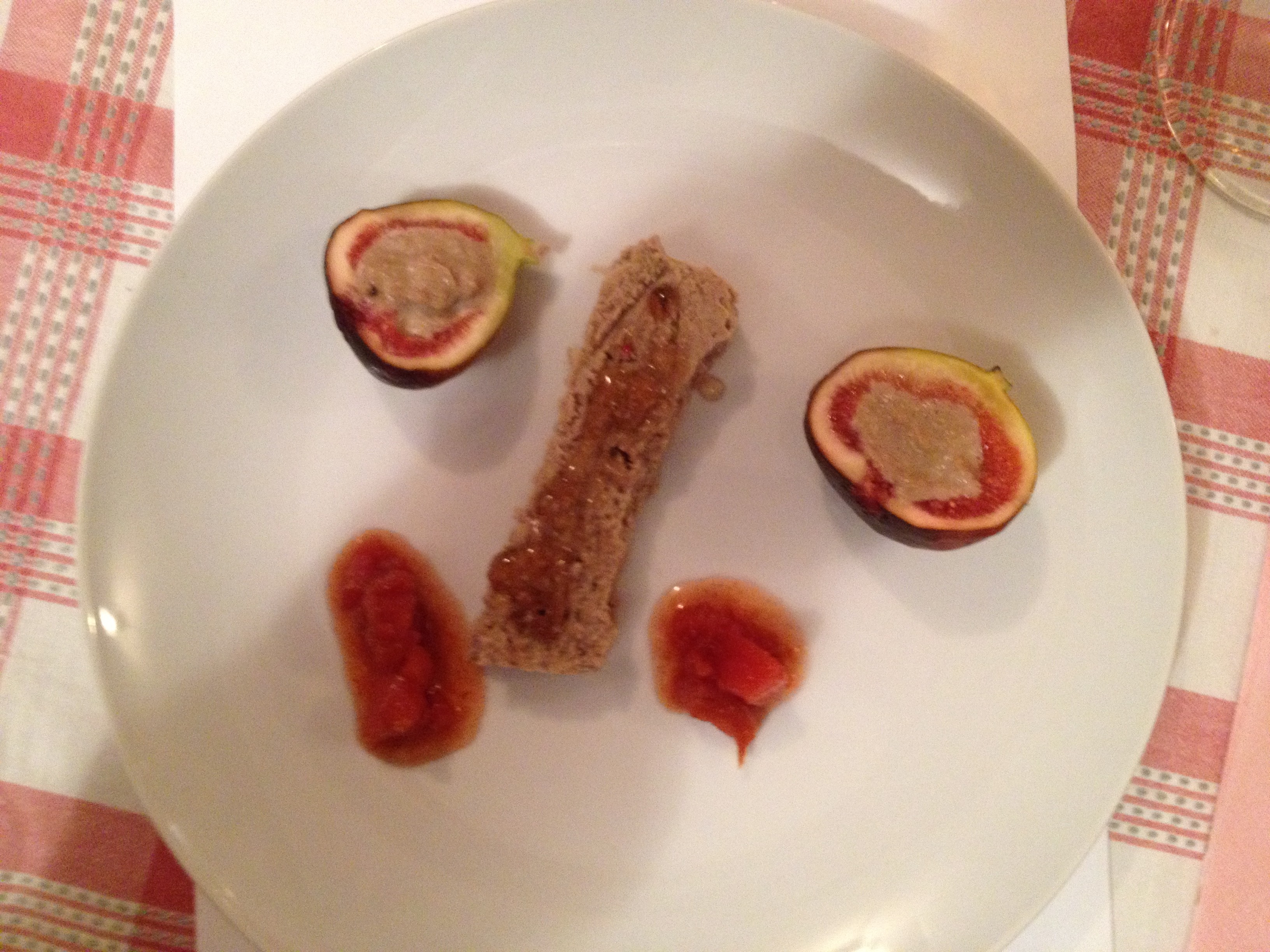
Mousse of Foie Gras, Figs & Quince.

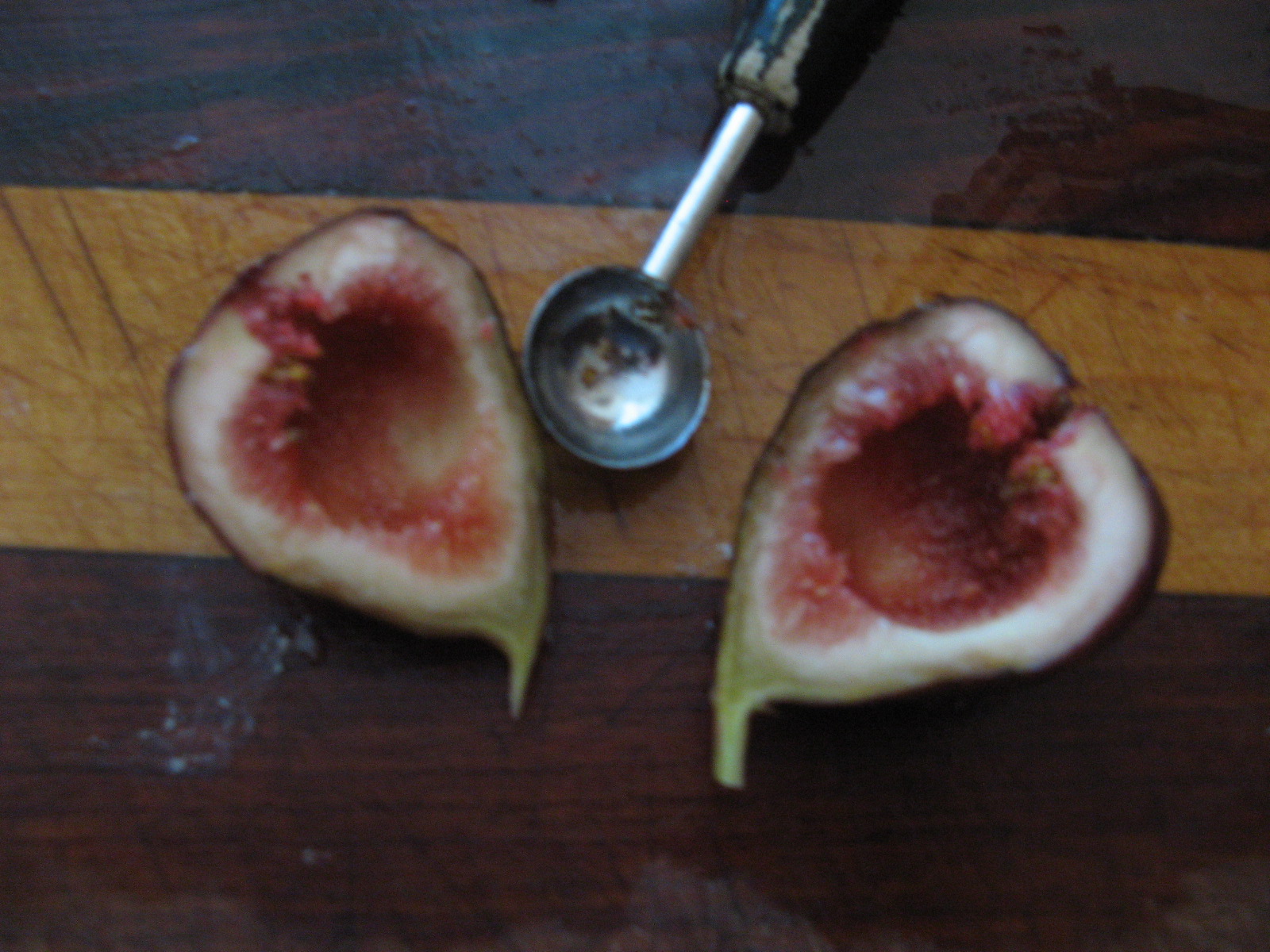
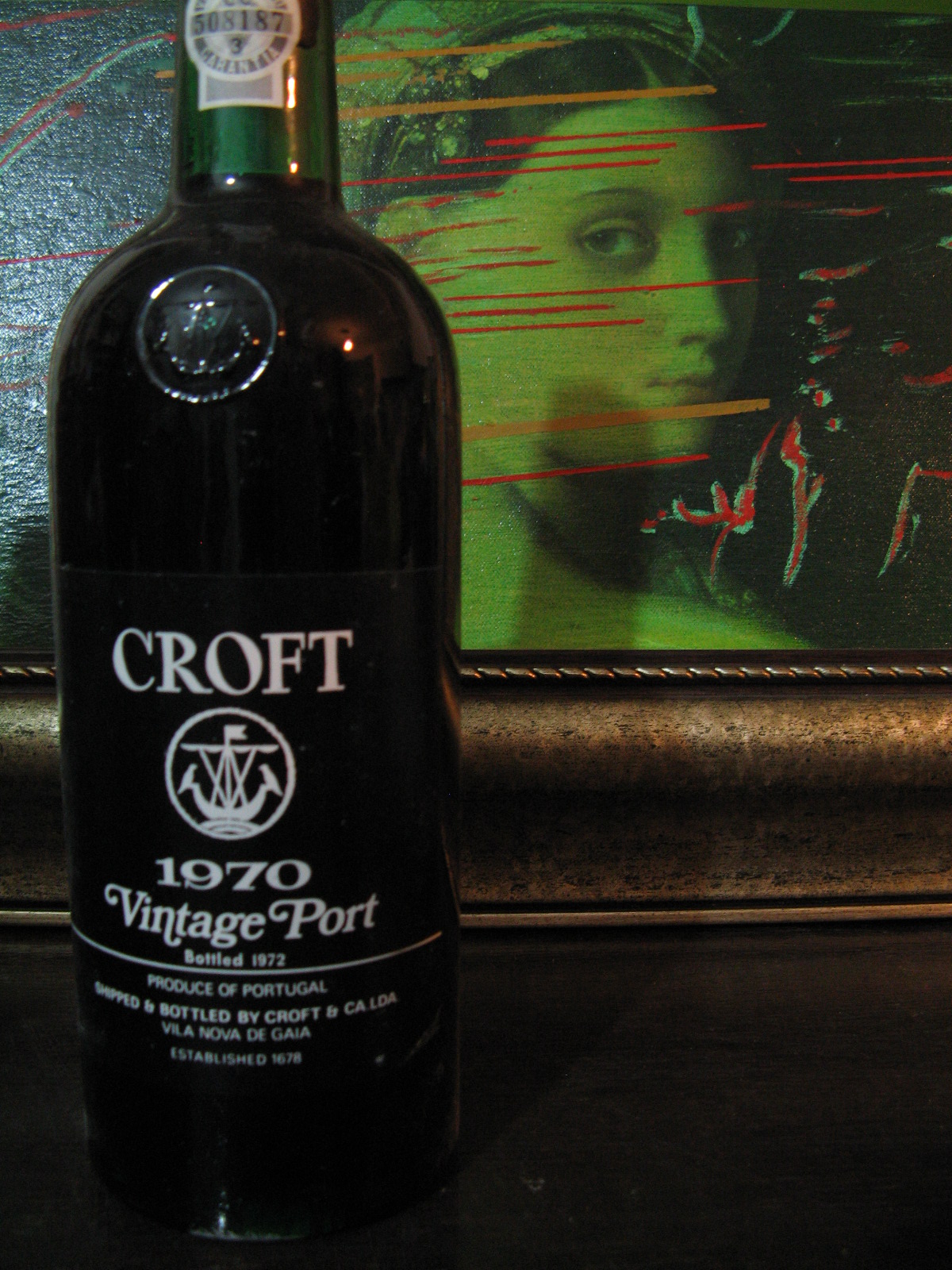
And so my triptych became a Solo Mousse of Foie Gras Figs & squares of preserved Quince, very much like the Musical Quartet of “Pepper-land” elders (in the Beatles Yellow Submarine movie) diminishing to a Solo upon the Bleu Meanies attack, but “young fred” fled to the rescue to bring HELP, this time in the shape of a bottle of Chateau Suduiraud 1988 Sauternes, that accompanied a Mousse concocted from the Foie Gras pieces, shallots, Croft 1970 Vintage Port a touch of cream de cassis and Armagnac XO  (after discarding the pears…), before it set I filled up some fig halves with a scoop of mousse the rest was left to set in a terrine dish for later, a sigh of relief which allowed me to get on with the rest of the meal.

calamari in black   IMG_5646   IMG_5647   IMG_5665

Calamari in Black cappuccino, thyme Grissini sticks.

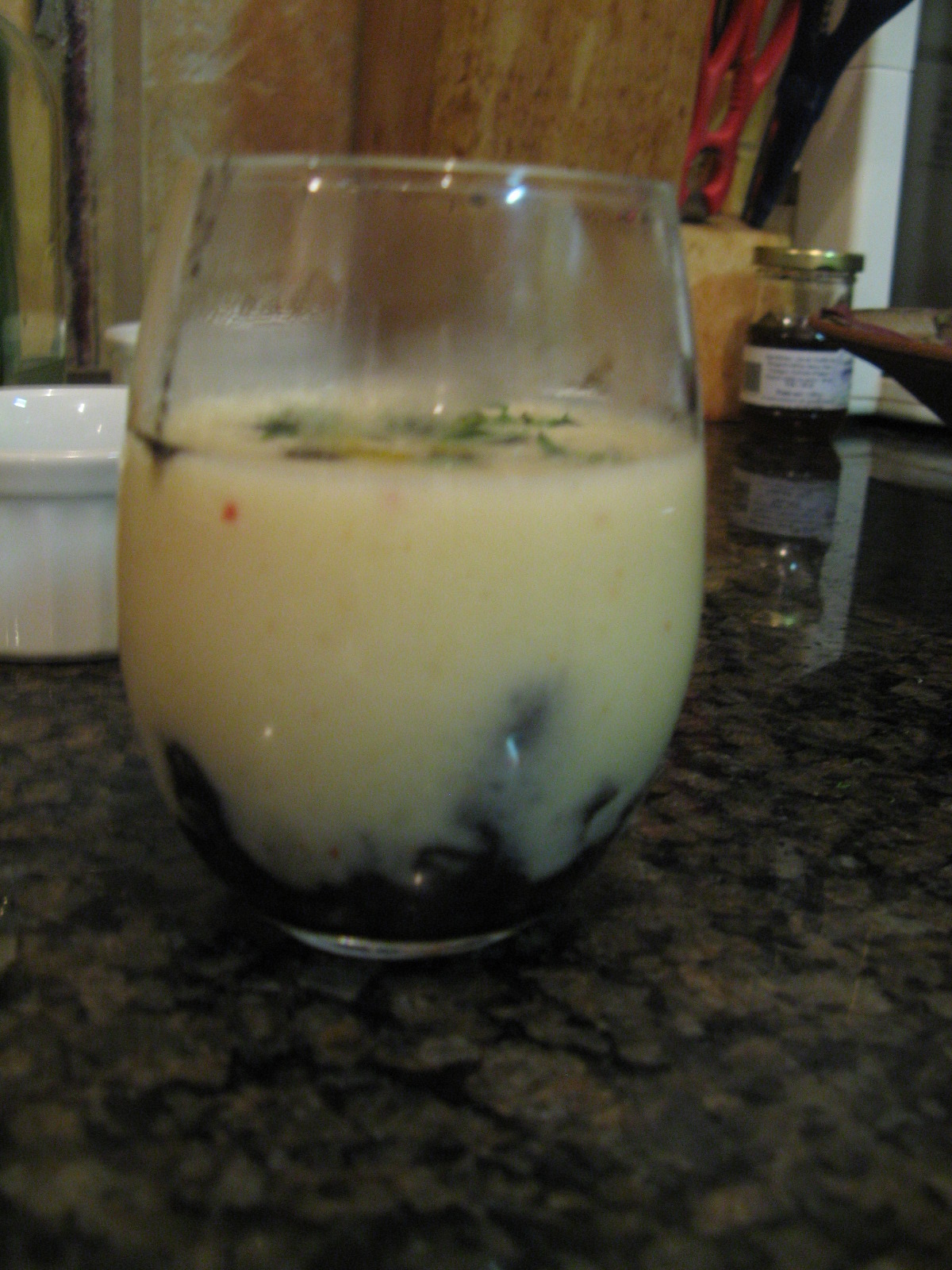
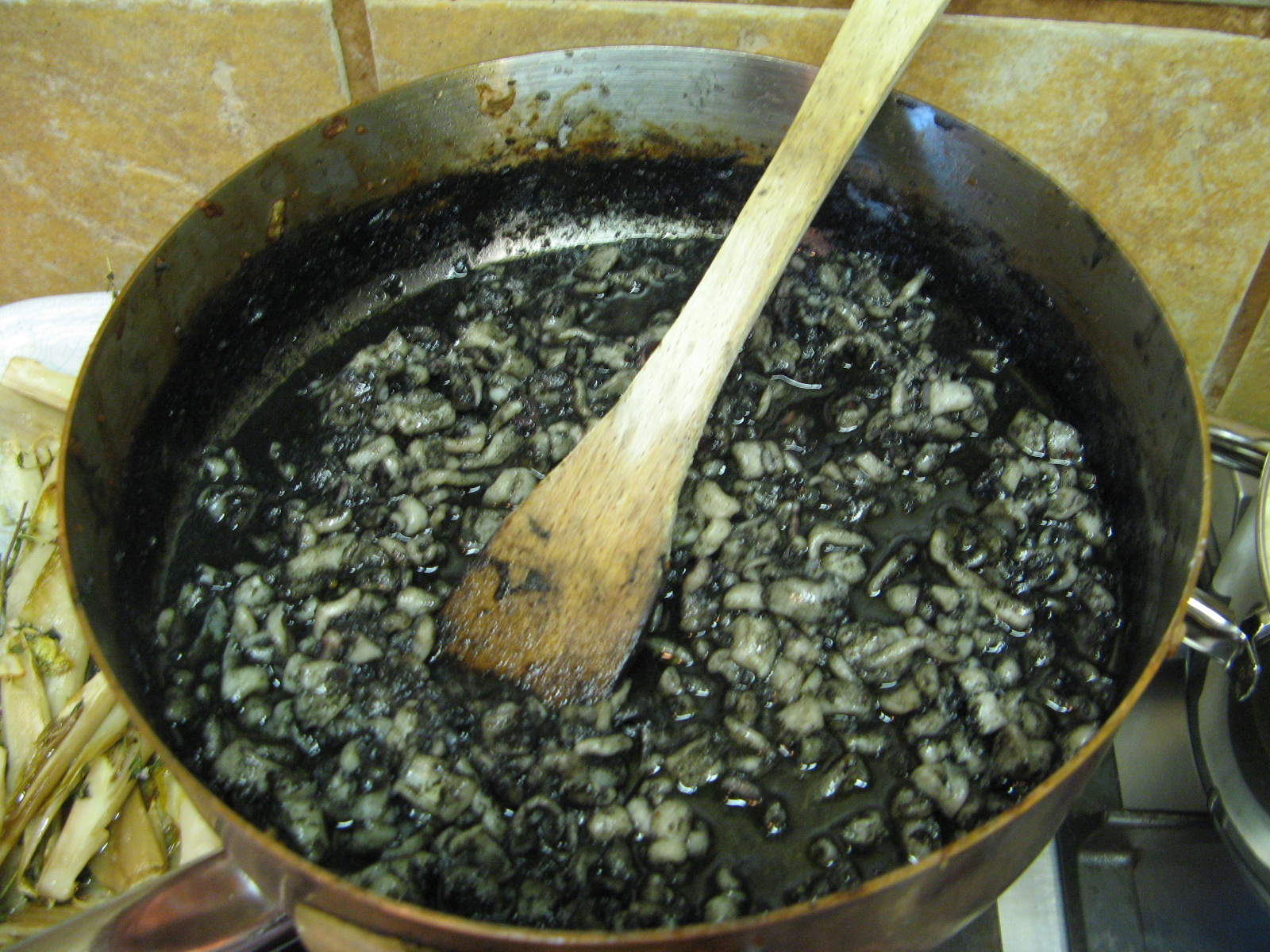
This is one a takeoff on Massimiliano Alajmo’s (The youngest 3 Michelin star Italian chef) “Cuttlefish in the black Cappuccino”, here as (Calamari in Sepia topped with potato cream soup).

Basically it is cubes of calamari fried and cooked in wine Vegetable broth and some cuttlefish ink at the bottom of the glass, topped by a hot cream of potato soup, and garnished on top.

LARMANDIER TRADThe dish was accompanied by the precise yet down to earth champagne Larmandier-Bernier Tradition 1er Cru NV Champagne, the perfect wine for this salty inky dish it has finesse yet rustic enough to deal with the strong taste of sepia, it is a blend of 80% Chardonnay and 20% Pinot Noir with some reserved wines added. The dosage is minimal (5g/l ) allowing the ‘terroir’ to show off as pure and crisp as can be around the 1er Cru village of Vertus.on the Côte des Blancs. This wine accompanied the next dish of our meal as well.

   IMG_5651 IMG_5654   IMG_5650

souffle 2

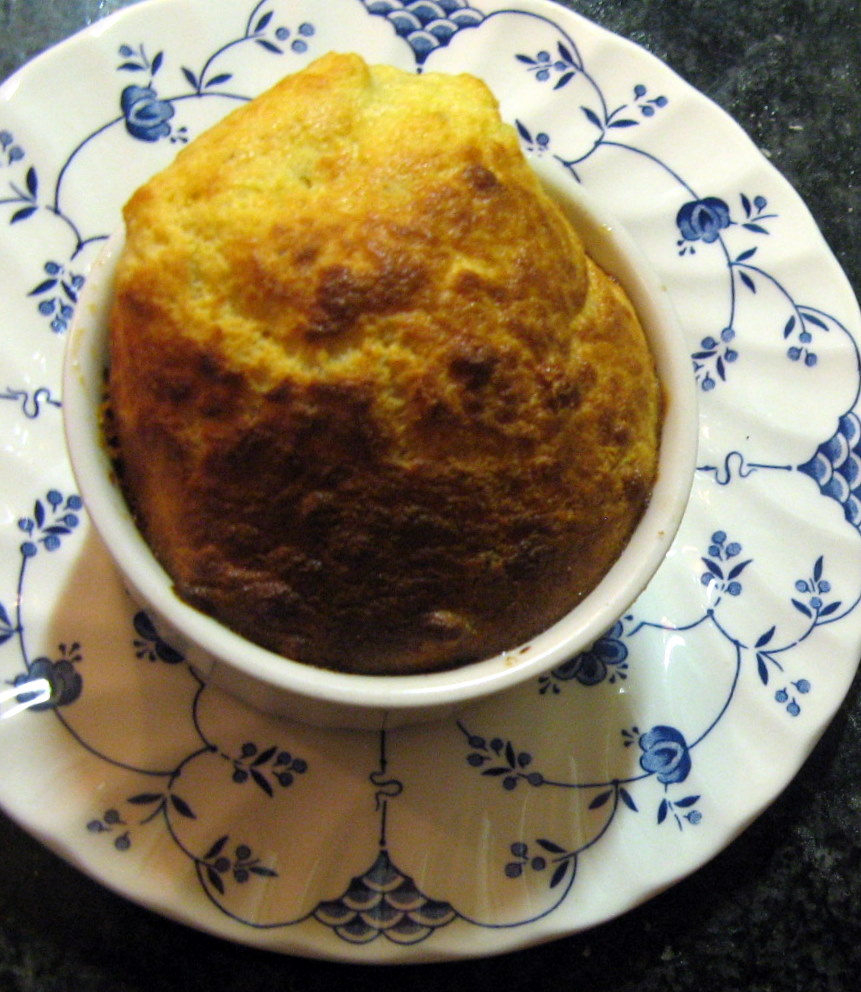
Soufflé de Langoustine Sauce Nantua.

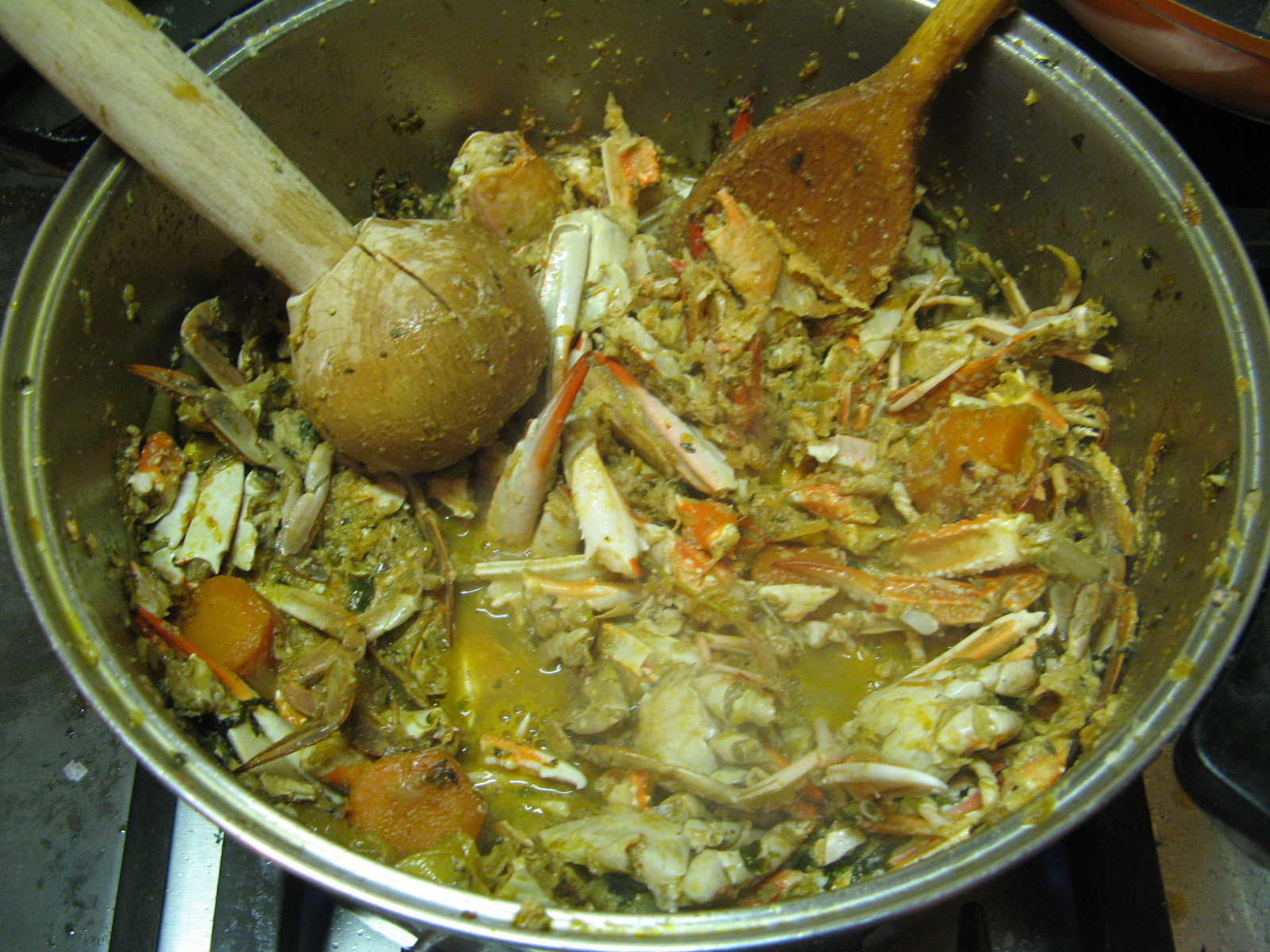
It came out light and airy with a delicate touch of Langoustine in the concentrated Sauce Nantua, and a morsel of langouste tail occasionally. The sauce was prepared from the Langoust heads and claws plus some local blue crabs and a bottle of Alsatian Riesling, tomatoes and stock vegetables. All “blitzed” in a food processor, sieved and reduced, than thickened with some Roux as a thickening agent for the sauce, and the base of the Soufflé half the liquids were the reduced sauce the other half milk…

We played it by the book:” the guests did wait for the soufflé, as the soufflé can’t wait for the guests.” LEOVILE L CEnjoying every bite, without a doubt this was my favorite dish of the meal, a success!

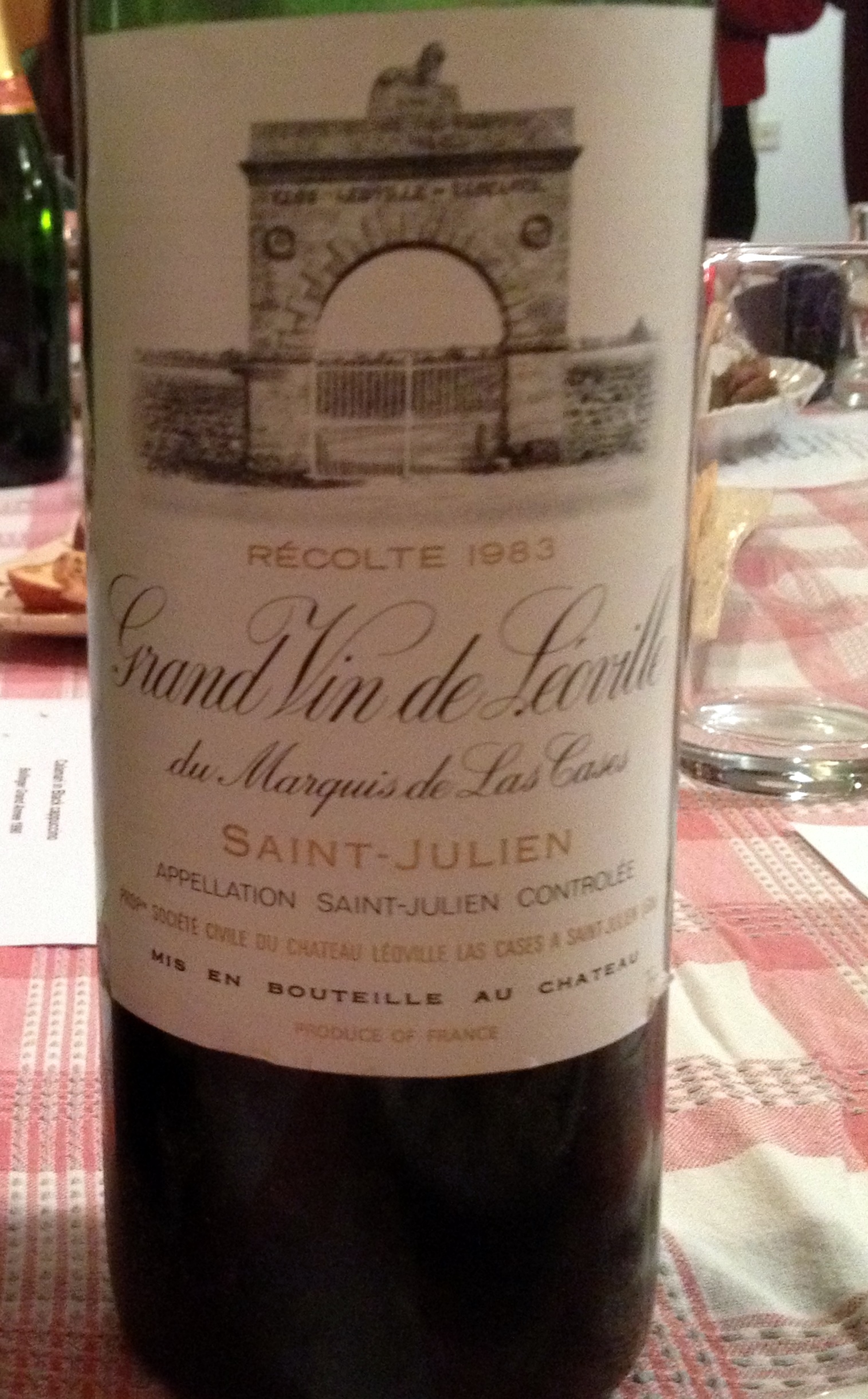
We opened a bottle of Grand Vin de Leoville du Marquis de Las Casses 1983 and allowed it to breath in the glasses. It was delightful from the moment I gave it the first sniff and well into the cheese. It still retains its purplish  youthful hue, after all the wine is 30 years old and still drinking so 150px-Chateau_Leoville_Las_Cases_Entrancewell, with all the fruit and acidity combined with rounded pleasant tannins in a glorious balance, to finish with aromas of freshly ground coffee adorned by scents of cigar box and violets.

Being a prominent winery in Saint-Julien, where the wines are full bodied and powerful but elegant. The list of the best properties around includes Chateau Léoville Barton, Ducru Beaucaillou, Gruaud Larose, Léoville Poyferré, Gloria and Talbot a very decent list and we are blessed by Chateau Leoville Las Casses. (Thank you my Dear Marquis). It was servrd with our main course:

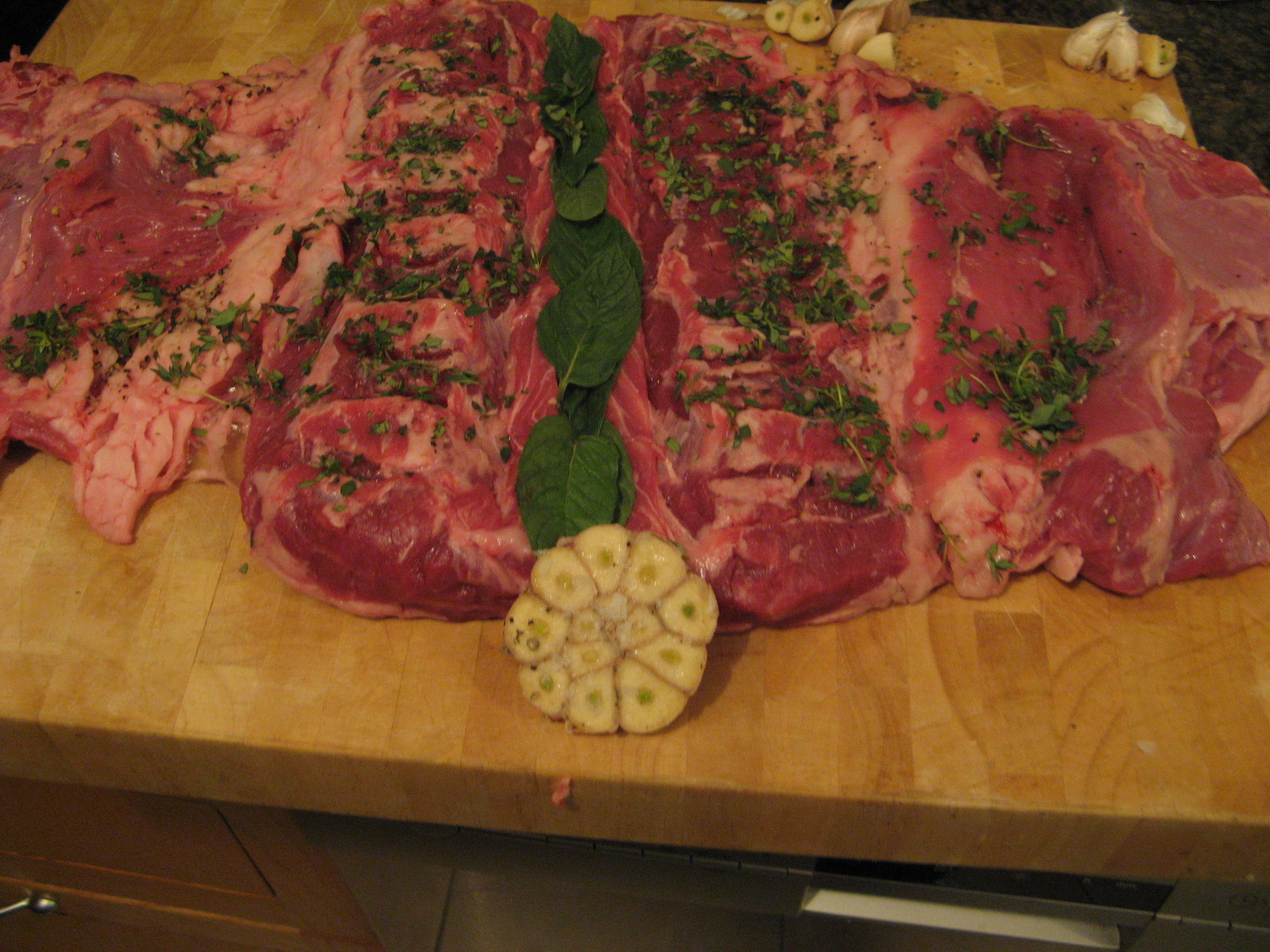
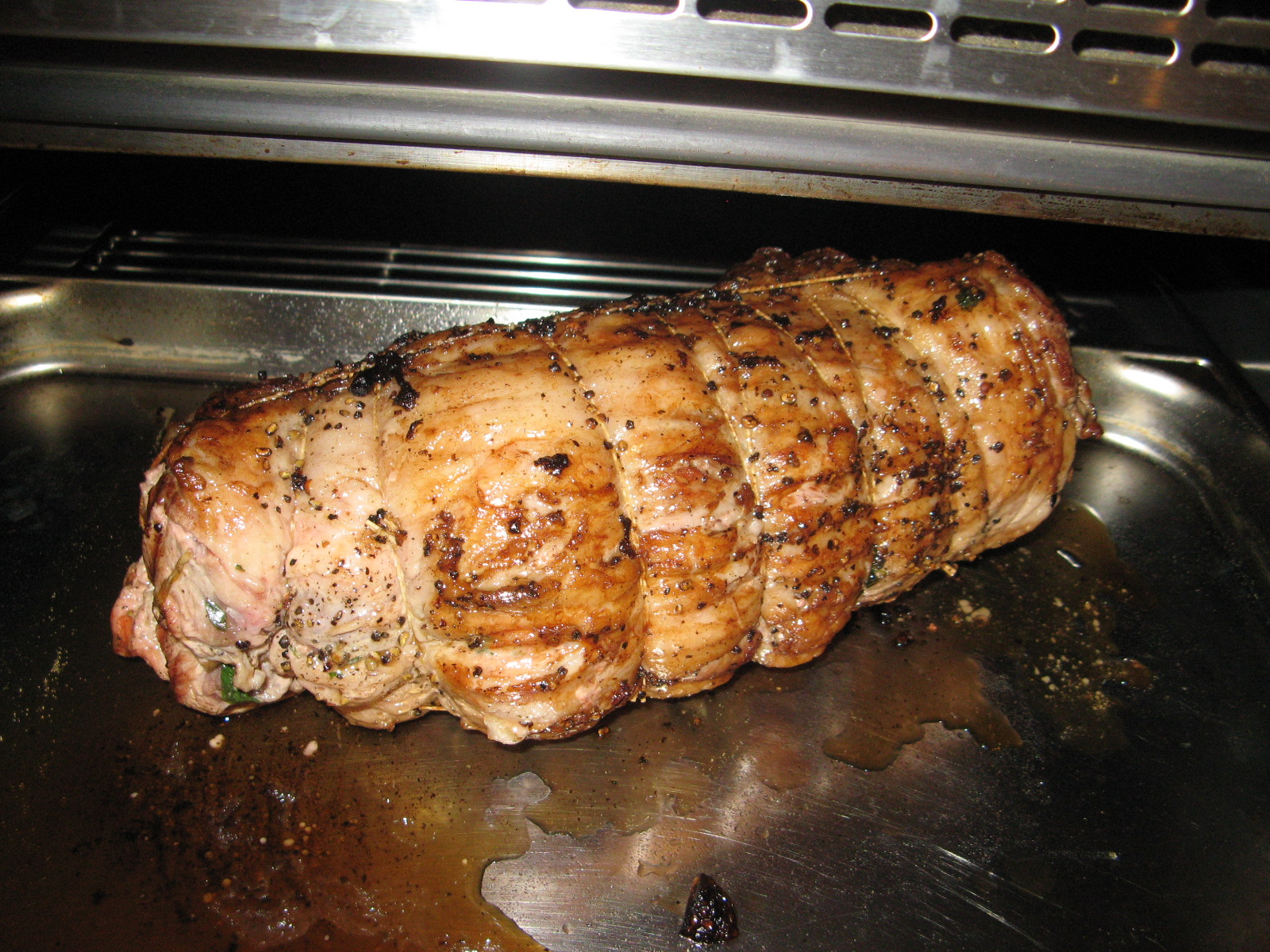
Stuffed Saddle of Lamb, mushrooms and spinach. 

IMG_5627  IMG_5634 IMG_5661 IMG_5675

Gordon Ramsay style with minor changes related to taste (I prefer mint and thyme with lamb), the Lamb type and customs of the local butchers. I guess it would have been a bit on the dry side if the belly fat part was not incorporated in the cut. The stuffing held extremely well the next day to make a great cold sandwich.

IMG_5687                              IMG_5697                      warres 94

Cheese and Port

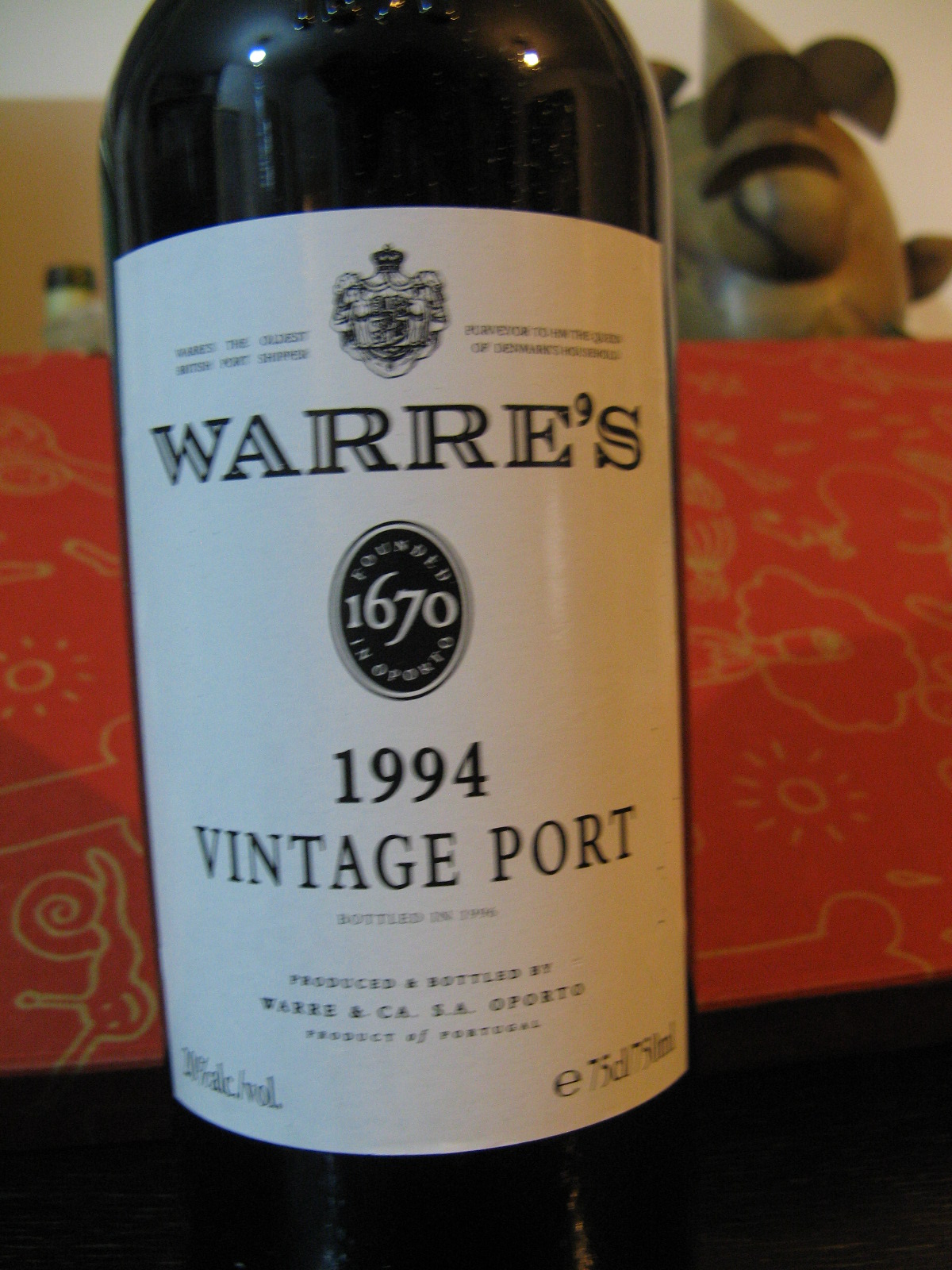
Warre’s Vintage Port 1994

IMG_5683Desert – cream caramel.

Osnat and I would like to Thank you, Dana (my young sister, for making yet again a Cream Caramel to perfection, smooth, seductive without a hint of the downfall of many caramel creams (tasting like scrambled eggs.

Coffee and Petit Fours

Petit Fours, by Vivian Landesberg, who labored to produce amazing Pistachio Financiers and her famous vanilla roasted pecan nuts bites. Thanks Vivian.

Many thanks to my friend Nir Mamon who assigned himself (in his words), as a Sous Chef and turned to be an invaluable (Extremely useful; indispensable) part, in keeping the meal a success, on track, on time throughout.

Wishing you a Very Happy New Year from the Very Holy Land.

Your WINEGUIDE

PORT for the HOLIDAY SEASON

 “Any time not spent drinking Port is a waste of time.”, Percy Crof.

Port is regarded historically as a British drink especially as a traditional British Christmas drink. Surprising for a country that haschristmas embraced drinking Port since the 17th century, most English households buy just one Port bottle a year – mainly at Christmas! Do you see the French or Italians buy just one bottle of wine a YEAR??? Or Russians buy just one bottle of Vodka per annum? Still, most Brits drink Port as a festive drink on a festive season; Christmas.

Sun SetChristmas or “Christ’s Mass” is actually Jesus Christ’s Birthday, it is a Christian holiday, celebrated in the old Jewish tradition of celebrating an occasion or a holiday on the eve of the day (from sun set to sun set), as the “official” birthday is on December 25th, millions of people around the world celebrate evening and midnight masses on a very important date on the Christian calendar Xmas eve, on December 24th. The reason celebrations occur on Christmas Eve, is because the traditional Christian liturgical day starts at sunset, an inheritance from Jewish tradition, which is based on the story of Creation in the Book of Genesis: “And there was evening, and there was morning – the first day.” (Genesis 1:3-5) –“ויהי ערב ויהי בוקר יום אחד”

pagan decoChristian religious, old pagan and secular themes are mixed in this holiday which is near or on the days of winter solstice. The ancient Egyptians decorated palm branches during the winter solstice to symbolize resurrection. Ancient Greeks decorated evergreen trees in worship of Adonia, who was resurrected by a serpent. Romans covered their trees with metallic decorations and candles to honor Bacchus (our winespirit-of-yule god), The ancient Germans decorated evergreen trees in worship of Woden. Apart from Christmas tree, and presents giving (of course), the holiday include a special meal. The Christmas dinner is the primary meal traditional for Christmas Eve and Christmas Day (at Lunch). Christmas dinner around the world may differ and the local traditional aspects affect the content the traditional products used and even the colours of the dishes, they all usually serve as symbols to commemorate aspects of life from religious to cultural and local even climatic points of view. In the United Kingdom the main Xmas meal is usually eaten as lunch on December 25th.

Christmas-Dinner

The dinner usually consists of roast turkey or better stills goose, duck, pheasant, or other Roasts, in medieval England, the main course was either a peacock or a boar, in fact King Henry VIII was the first English King to have turkey for Christmas. Served IMG_5615with stuffing, gravy and cranberry sauce or redcurrant jelly; bread sauce; Side veggies are traditionally: Brussels  sprouts, parsnips and carrots (as if there was any other choice at the time the tradition was laid down and throughout the centuries and up to the late 1980’s). The dessert is Christmas pudding (or plum pudding), sometimes mince pies or trifle, with brandy butter…Port of different qualities may be served with each of the traditional dishes including the Roasts, but the best and most classic combination is Vintage Port served with a good quality Stilton or other blue cheese even well matured Cheddar, and Parmesan, accompanied by nuts mainly Walnuts, chestnuts, cashews, and hazelnuts that bring out the best in port.

One story regarding the appearance of Port is that a wine merchant from Liverpool, sent his sons to Portugal in 1678 to find a wine source due to shortage of Bordeaux wines (Clarets). They came upon a monastery in Lamego in the Douro Valley where the abbot was adding brandy to the wine already during fermentation rather than after, producing a port-type wine with higher sugar and alcohol content. A nice legend which happens one hundred years after the first recorded shipment of Port in 1588, and so remains a legend, but certainly sometime during the end of the 1600’s or beginning of the 1700’s, someone came up with the idea of stopping the fermentation with brandy while the wine was still sweet, fruity, and strong of which the English aristocracy could not have enough…

barco_rabelo                                                        ch1_Douro_boat

British wine merchants moved to a suburb of Oporto, Vila Nova de Gaia that lies opposite Oporto town and made it the true home to Port. The wine comes used to be shipped down the river from the spectacular terraced hillsides of the Douro valley to Oporto, shipped down the river by distinctive looking boats called ‘barcos rabelos’ . Oporto which lies at the mouth of the Douro river. Vila Nova de Gaia became dominated by British Port wine lodges, with over fifty wine companies based in its narrow, twisting streets many still carry British families names: Barros Gilberts, Sandeman, Robertson’s, Graham’s, Warre’s, Smith Woodhouse and Cockburn’s, The Symington Family, Croft, Taylor etc.

It is here in Vila Nova de Gaia, that aging and blending of most of the world’s supply of Port wine takes place. One of these families (knownCroft-2 as Croft), was originally Phayre & Bradley founded over three hundred years ago. The earliest evidence of the firm’s activity as a Port shipper dates from 1588, coincidentally the year of the first ever recorded shipments of Port wine. after its founding partners and took its present name Croft, in 1736 when it was joined by John Croft, a member of an old and distinguished family of Yorkshire wine merchants.

Although well established in Oporto, the Crofts never lost touch with their Yorkshire origins. In his treatise, John Croft describes himself as ‘Member of the Factory at Oporto and Wine Merchant of York’. The family returned to England in the nineteenth century, after the Peninsular Wars, and there are no longer any Crofts in the firm. The family maintained its affection for the fortified wines of the Douro and the late Percy Croft, who died in 1935, is credited with the famous words: “Any time not spent drinking Port is a waste of time.” (I just can’t resist in reciting again this wonderful saying.)IMG_4749

In 1911 the House of Croft was acquired by the Gilbeys, the distinguished English wine trade family. It isterraces now owned and run by descendants of two old Port wine families, the Yeatman’s and Fladgate’s. It is those wondrous vineyards: the famous Quinta da Roêda,  that are largely responsible to its ownership of one of the finest estates of the Douro Valley, earned for centuries by croft, that keep on ,the place of distinction earned by Croft and its wines.

The best and most classic combination is Vintage Port served with a good quality Stilton but also consider blue cheese or a Cheddar, or Parmesan, accompanied with walnuts or chestnuts, in fact nuts of all sorts bring out the best in port.

Croft 1970‘Declared’ Vintages are the best Vintage years, averaging 2-4 each decade, which produce wines of great concentration and longevity. They are usually blended from the best produce of more than one estate. Croft’s declared Vintage Ports, although based on the wines of Quinta da Roêda, sometimes also contain wines from other top estates. Croft is one of the most famous Vintage Port houses and it’s declared Vintage Ports, such as the legendary 1945 and more recently the award winning Croft 1994 are among the most sought after Ports. (from Croft www site)

This is all written due to my recent acquisition of one case (of 12 bottles) of Croft 1970) I have has a fewcroft_port_12_bottle bottles of this port in the past (from the Cambridge University cellars yearly “clear out”) and they were simply divine. The Croft 1970’s has incredible structure and good acidity and residual tannins to make it last, even beyond 2020. Croft 1970 has a tawny red colour with a touch of deep purple, the nose is delicate and refined. The fruit is still apparent with flavors of dried fruits: sultanas and prunes and touch of tobacco, aand a mixture of dried exotic sweet spices. Some bottles are better than others depending on the cork quality and endurance they tend to start seeping at a certain stage, I am sure it will give me pleasure in the coming years.

But the cellar has more to offer:

Vilanova 1977One of my favorites is a non “pedigreed” LBV (late bottled vintage) from a co-op called Porto Vilanova vintage 1977 (a great Port Vintage year,) which were bottled for me, on different years as the time gone by from 1987 and on, and it got better each time I tasted it and as the years went by and the wine was still “brewing” and maturing in its original Barrel (I shared one whole barrel) and still have some for special occasions. It has deep scent of spiced coffee, chocolate and black prune concentrated prune (Powidl style) taste, simply delicious.powidl

Powidła or Powidło in Polish is a plum stew. Unlike jam or marmalade,  Powidl is prepared by cooking prunes (for hours) without additional sweeteners or gelling agents just  sheer dehydrating, and achieving  concentration of the fruit natural sweetness. The plums used should be harvested as late as possible, ideally after the first frosts, in order to ensure they contain enough sugar.

1937 and 1963 Barros Port

Barros 1937                                    Barros 63                                    IMG_5621

The 1937 Port has brownish red appearance with deep amber hue, seducting aromas of vanilla scented tobacco, golden raisins and chocolate gingerbread.  The  rich, hazelnuts and dark raisins and a touch of fig.

There are also: Grahams 1994 LBV, Cases of 1994 Vintage Warre, and Dow’s many more mainly 1977 and 1994 Port to sweeten our lives for years to come..

 Not to forget the young but beautiful Neipoort Vintage Port 2009 and Neipoort 2001 Colheita we had recently (the complete story https://wine4soul.com/2012/05/15/the-magnificence-of-the-douro/ ) 

Now I have to choose which one is my “Festive Port” for this year’s celebrations, I have this tingle at the tip of my fingers and tongue to “go for” the 1963 Barros, This is an LBV in the Best British tradition as Yair says, and LBV’s always surprise you to the better, it is a good Barros Vintage, we’ll see after all I always choose by the guests, atmosphere, and the meal.

…In the meantime

I will leave you with warmest season’s greetings a a delightful version of this Christmas classic Vintage 1954 by the Drifters. Sweet animation with  Santa and Reindeer Singing White Christmas (Animated version), of this Colheita quality Song. judge for yourselves!

Cheers and a very HAPPY NEW YER from the very Holy Land…

Your WINEGUIDE
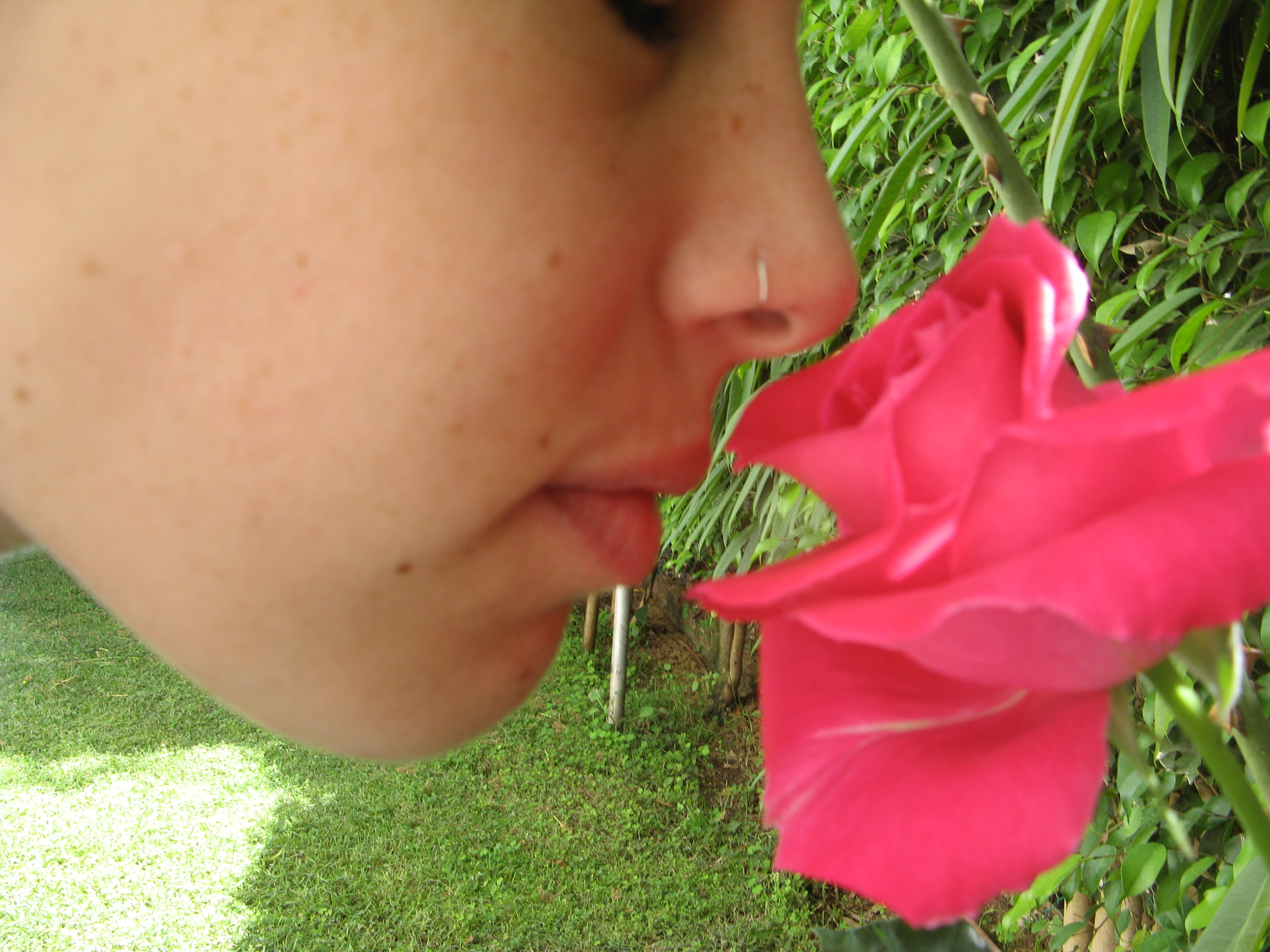
Wine colours and the Brain, Anatomy and Physiology of Vision in Wine Tasting – Part 3 The Brain

Reality is an illusion that occurs due to a lack of wine.

Anatomy and Physiology of wine tasting as appeared in part 2: https://wine4soul.com/2012/12/08/wine-sight-receptors-brain/ continues… How We See Colour?

retina-layers              orientation-map        rods and cones

There are millions of colour photoreceptors; cones in the retina, and three different types of cones, each type of cone is sensitive to a different wavelength of light. Different wavelengths correspond to different colours. When light strikes a photoreceptor it releases a chemical that begins a process that enables the brain to recognize the “right” colour. In order to see colour properly, all three types of cones must be present, or the person’s eye will not have the photoreceptor that reacts to that particular wavelength, and colours are a combination of a variety of wavelengths. The chemical stimulus, from the cone to the brain that enables colour vision is facilitated through a chemical reaction of the reflected light with a light-sensitive protein called: Rhodopsin, which is present in the disk membranes of rod cells, and causes a reaction that acts as a trigger inside the cell. Rhodopsin requires the help of an intermediary chemical called the G-protein (I guess this is complicated enough). The human eye and brain together translate a certain reflected light into colour. Light receptors within the eye transmit messages along the optic nerve to the vision center in the brain, which produces the “recognition” of a certain colour.


The brain’s neural mechanisms also uses “memory” and experience to help with speedy identification, of which colour belongs to what object, so we do not mistakenly see a translucent wine in a red glass.

Without the neural processes of the brain, we wouldn’t be able to understand colours of objects any more than we could understand words of a language we hear but don’t know,” said Steven Shevell, color and vision specialist .
The surface of an object reflects some colors and absorbs all the others. We perceive only the reflected colors. Thus, red is not “inside” red wine. The surface of the wine reflects the wavelengths we see as red and absorbing all the rest.
800px-Modern_Color_Vision_Model.svgThe immediate process of judging a colour begins in the retina, which has three layers of cells. Signals from the red and green cones in the first layer are compared by specialized red-green “opponent” cells in the second layer. These opponent cells compute the balance between red and green light coming from a particular part of the visual field. Other opponent cells then compare signals from blue cones with the combined signals from red and green cones.
The human eye can perceive more variations in warmer colors than cooler ones. This is because almost 2/3 of the cones process the longer light wavelengths (reds, oranges and yellows).
ROSÉ WINES

20110627-wine-rose-primary
Rose wine displayed above exhibit hues of Pink, a pale tint of red. Pinks can range from:
Onion outer skin,
Salmon hue,
Raspberry Rosé,
Coral pink,
Pinkish Orange colour.
All the above depend on their grape origin and variety, plus the wine making method. Although they may exhibit exquisite colour array, these wines are rarely suitable for keeping more than 2 years beyond their vintage year. Their colour is not as stable as most reds and quality white wines.

The Colors of Red Wine:
cabernet1Blue & red Anthocyanins which are present in the grape skin dissolve into the grape juice while crushingCopy (2) of pinotnoir3 than before the fermentation process, the juice and skins are moved into the fermentation tanks, and because anthocyanins are soluble in alcohol they tint the liquid RED. The style and “depth” of the pressing process facilitates their dispersal into the wine. The dissolved Antocyanins are the contributors of the red / purple color of red wine. The aging process of wine in oak barrels and in the bottle tie these dyes to tannins to form long and heavy tannin molecules become less lively, loses a little from the purple shade and develops into shades of Red that vary, depending on the grape variety, region of origin, exposure to oxygen, climate/fruit ripeness before harvest etc.. Within a few years these molecules get “older” in a bottle and turn to rusty shades of red to maroon or even brown.

RED WINES

220px-Color_icon_red.svg
Main Shades:
1. Ultraviolet: Almost all young red wines of deep purple, purple color usually indicates age young wine or wine is
2. Purple- Crimson: Dark red color with a little blue. This is the color of most reds from all over the globe including those of Bordeaux and Bourgogne in their youth immediately after bottling.
3. Red Bordeaux: Bordeaux wine colour: colour that is colour of the majority of Bordeaux wines during the transition between shades and hues as they start to mature, as they approach readiness and full maturity, Scarlet.
The English used to call it CLARET a red wine from Bordeaux. Indicating it being also clear.
4.Cherry- Bright Red: The higher the wine’s acidity (low pH) amount of red pigment to a higher and more active radiating health and indirectly implies the ability the wine’s ability to preserve fruit flavors for a longer period, with chances of maturing in proper balance increasing. Cherry is also the colour of fresh Sangiovese, and Zinfandel.
5. Brown-Red Tile: The colour of the fully matured red Bordeaux wines. If this colour appears in a relatively young wine, it usually indicates exposure to intense heat in various stages of the wine-making process, including the period before the harvest (extreme heat wave), or over exposure to oxidation in the barrel.
6. Reddish Brown mahogany colour – milder than the above, less extrovert colour, is the shade of a typical high quality red Bordeaux wines aged 15-30 years or less, fully “ripe” and ready for drinking, or unfortunately wines from a lesser origin , beyond their peak showing signs of fatigue.
7. Orange-brown colour of wines more than 30 year of age that might have oxidized to oblivion. This color is missing a spark and suggesting the “death” of the wine we look at, wine gone bad?
.
Many terms are used to describe the main colors in red wines are:
Purple-red: the common shade for young, often immature wines. Purple is also the colour of Barbera, and Amarone
Ruby ; the color of the polished ruby gemstone: a more evolved but still youthful shade also the colour of young Pinot Noir, or Tempranillo.
Garnet: the color word for classic wines at the peak of their maturity
Lust: is a rich shade of red.
Crimson: is a strong, bright, deep red color combined with some blue, resulting in a slight degree of purple.
Rusty is red colour with brownish tints of rust – some Old Bordeaux’s of over 25 years of age exhibit this colour
Fire Brick color of oven fire brick. – Old Bourgogne wines of over 25 years
Redwood rose – the colour of the wood of the Sequoia/ redwood tree
Maroon – chestnut brownish red – Tawny Port
Blackish red – Shiraz, Vintage Port

Maturing wines tend to change to Brick red: paler shades associated with older but still healthy wine, sometimes Copper as in Aged Grenache, Brick red Mature Pinot Noir, aged Bordeaux, Garnet as in Cabernet Sauvignon, Merlot, Nebbiolo.
Depth of color

IMG_5533                                        IMG_5562

Wine colour’s depth or opacity measure of how dark is the wine. In wine tasting, the depth of color results from the concentrations of color and the wine substance, the more deep the color the less light to passes through it and it will appear darker, or “richer” in colour. Wines with less depth may appear diluted, watery almost transparent.
Depths of wine colours vary greatly depending on the grape variety used to produce the wine, the vintage conditions, production process methods: fermentation steel or oak vats, aging methods before and after bottling.
Depth of color, when used as a measure of quality, typically applies to red wines, as they naturally contain more coloring, tannins, and other components that can alter the wine’s depth.
depth of wine colour is defined as: watery, pale, medium, deep, dark, or opaque.

Visible Defects
IMG_5582Various types of defects in manufacturing – affect Wine faults in clarity.
Wine with faint colors that do not sparkle may suggest a flaw, Light cloudiness such as milky appearance, reminiscent of the appearance of whole unfiltered apple juice.Some wine fouling is associated with air pollution or related to metal parts (iron or copper) or residual products in genetically engineered residual yeast and in wine that was not filtered or sank at the bottom of tank / barrel..
An old wine with sediment that was violently shaken prior to its opening, will introduce dairy cloudy effect even though it has no real fault, but it may tarnish the visual enjoyment from the wine and as we see this is an important introduction to our primary approach to the wine.oil contamination

Faded or dull colours in wine appearing “unpolished” might refer to a fault, surface of wine after pouring to the glass should appear shiny if it has “stains” reminiscent of oil floating on liquid, or as a soap bubble surface that reflects prismatic rainbow appearance all of these are an indication to a fault in the wine or contamination that is problematic. Small bubbles remaining for a very long time around the rim of very mature / old wines might refer to over maturity… the wine yielded to the “pressures of time” and is beyond its peak.

Hue
The hue of a wine color is the inner definition of colour description beyonf the basic colours: red, yellow, pink. Your own interpretation of what colour you see and how would one describe it?
When you describe what you see, association comes into mind and affect the semantic interpretation of what you actually see.In white wines the most common descriptions would be anything from transparent through greenish to yellows in varying depths to gold and amber. Rosé wines range from pink to salmon and orange. Red wines, from purple-red, ruby, to garnet brown and even black,. Take note if the color hue is consistent throughout the glass when tilted or does it form a rim of different hues. Some wines, particularly older wines will start to show color changes within the body of wine in the glass towards the outer edge – the rim or meniscus.
Clarity was discussed on the previous post, As a rule most wines are relatively clear sometimes sediments are present in the wine they are residual fruit that sank slowly in the bottle, these sediment are not harmful and perfectly safe to drink it but may add a bitter taste to the finish if chewed. If sediments are stirred while pouring wine it can give the appearance of a slight haziness.As a rule, severe cloudiness in wine is considered a flaw.

WineLegs1Viscosity: “Legs”

Wine “legs” are the stripes of translucent liquid that runs down the sides of the glass after swirling the wine. Sugar concentration is one of the several factors that influence wine legs. With higher sugar content, the liquid is more viscous. Therefore, dessert wines will always have much more pronounced legs. Another factor that influences increase in viscosity of wine is alcohol content. Since alcohol is more viscous than water wines with more alcohol will have more legs. Any compound that affects viscosity produces wine legs.
functional areas brainAll of these factors in wine Colour: shade, hue, clarity and depth are “met” by just the first sense in wine tasting: Vision and its sophisticated organ the Eye. And all these electrical signals that somehow are interpreted by our brain to what we call sight, It is a wonder, that is only partially understood (let alone explained) but that will have to do for now.
Next post we “move” to sense number 2 in wine tasting SMELL and the fun will continue…

Your WINEGUIDE

Sight, Anatomy and Physiology of Wine Tasting – Part 2 Sight Receptors

Wine is sunlight, held together by water. – Galileo

 sense one in wine tasting – SIGHT, as appeared on https://wine4soul.com/2012/10/28/vision-anatomy-and-physiology-of-wine-tasting/ continues…

Physiologically, sight is initiated when reflected light of different wave lengths: colour, hit the eye.

reds                             external-eye-xsection

We have the bottle before us, the glass is filled (no more than a third up), the reflected light in different colours hits the external surface of the eyeball: The Cornea, travels through the lens and inwards through the Vitreous Humor, to hit the Retina, the innermost layer of the eye ball. The Retina consists of nerve tissue, Photo-receptors that sense the light entering the eye, and start translating it as the images of our vision in the form of shape and colour in the brain.

The Physiology of sight

color sight

Photoreceptors are specialty cells in the Retina, they allow us to see shapes, colors and the combination of both, something we all take for granted.

How is it done? The retina contains 2 kinds of photoreceptors:

rods and cones1. Rod cells: These function only in dim light and are blind to colour. Only the highest-intensity output gets through; so contrast and visual definition are improved.

These receptors enter into function when we enter a dark cellar full of wine wonders, or when we stroll down the vineyard at night (with or without our lover, better with!)

2. Cone cells: The other kind of photoreceptor cell. There are three different types of cones, sensitive to different light wave lengths (Red Green & Blue). The cones operate in bright light and are responsible for high acuity vision, as well as ability to “see” colour.

Rods and cones form an uneven mosaic within the retina; there are 10 times more rod cells than cones. Rods are concentrated at the outer edges of the retina. There are approximately 130 million rod cells in the human retina. Rod cells are almost entirelyrod_and_cone_cells responsible for peripheral and night vision. They are 100 times more sensitive to a single photon than cones so rods require less light to function than cones and allow us to see in the dark. Single Rod cells collect and amplify light signals. However, this convergence comes at a cost to visual acuity / resolution, because the accumulated information fovea and receptorsfrom several cells simultaneously is less accurate than information from each rod cell individually. But that will have to do since we look at wine under good light conditions and not in the dark.

In the retina’s center – fovea, cones are highly concentrated 5-10 times more than on the rest of the retinal surface, this area is described by Nobel Prize winner Jeremy Nathans as: “the most valuable square millimeter of tissue in the body.”

spectrum

 The first kind of cone responds to red colour (light of Long wavelengths – L around 564–580 nm); The second type responds to green colour (Medium wavelength – M, 534–545 nm), The third type responds to blue colour (Short wavelength – S, 420–440 nm), The difference in the signals received from the three cone types in varying degree of stimulus strength which allows the brain to perceive all possible colours.  The brain combines the information from each type of receptor to give rise to different perceptions of different wavelengths of light and ultimately the correct colour.

sweet wineWine comes in a wide variety of colours shades and hues. It is these receptors and the wonders of the final interpretation of these signals into what we call sight, in our brain, will allow us to distinguish between different grape varieties, wines from different regions, wines in different state of evolution and wine making methods just by mere sight, with no other senses involvement.

Several theories explain the mechanism of colour vision, Helmholtz’s trichromatic theory & Hering’s opponent process theory, they differ on the exact point colour processing actually begins, either within the800px-Modern_Color_Vision_Model.svg receptor cells in the retina or slightly behind it, at the level of retinal ganglion cells and beyond. Visual information is then sent to the brain from retinal ganglion cells via the optic nerve to the optic chiasm: a point where the two optic nerves meet and cross each other. Information from one visual field crosses to the other side of the brain to the visual cortex.

Cone cells allow us to stabilize the colour constancy of an object, so when we look at red wine we preserve an ability to see the true colours of our object for instance red wine in different hues and shades.

clarity:

The wine clarity is wine easily examined at a slight tilt under clear light conditions either with the background of a white paper or a well lit background. And brightness is reflected from it. Fresh wine should have a clear spark ‘sneaky’ kind of wink and it looks sleek and shiny.

Clarity is graded to 3-4 levels:

Brilliant or Crystalline: perfect transparency; the surface of the wine reflects the light with a sparkle.

Clear: normal state of clarity

Dull: a partial lack of luster

Cloudy or slushy: with or without suspended particles visible to the naked eye

IMG_5531

Wine, whatever its category should be clear, perfectly transparent and free of foreign deposits or suspended particles, most suspended particles are wine deposits and are not associated with wine faults. Signs of cloudiness may indicate a defect. A fine wine of any color at its prime should be not only clear but also bright with a luminous quality.

Type of Wine – Obviously, different types of wines will have dramatically different wine colour..White wines tend toward the more clear yellow and gold end of the spectrum while red wines can vary from light red to deep purple. Rosé wines are somewhere in between. Additionally, your expectation of what a wine should look like depends on the type of wine in question. For example, while many Cabernet Sauvignon, JPEG Image (31024)based wines will be dark purple or even close to opaque, Pinot Noir-based wines tend to be lighter with less depth of color and a lighter hue.

Is the color of the wine appropriate for the type of wine you taste? You will learn this as you go along and get more experience with different types of wines.

The COLOURS of WINE

Colour is simply light of different wavelengths and frequencies that we can actually see and is made up from photons, reflection of light from the wine (as our object) is what we see in form, shape, and colour with its inner diversity of different hues and shades.  .

Wine colours, originate from the grape’s skin. Grape juice from red or white varieties is usually transparent (clear to cloudy). Anthocyanins are the chemical compounds that give wine white or red its colour, or pigment.

Different “exposure” to grape treatments like: amount and type of crushing, which exerts colors into the liquid. Changes in temperature, contact of broken skin with the juice, exposure to oxygen, fermentation with or without the skins (lees), length of fermentation, type of tanks: barrel or steel, etc. All of these factors change and affect the wine’s colour, which keeps changing even after bottling, as aging affects the depth and hue of the basic color of each wine. Different grape varieties contribute different hues of white yellow or red as described below.


WHITE WINES

chardonnay1Polyphenols contribute to the yellow colour of white wines, phenols concentration in different grapeCopy (2) of muscat_blanc variety varies: level of phenols in the Riesling grape is very low hence they appear almost transparent, Chardonnay on the other hand due to high phenolic concentration will appear darker : yellow lemony colour. Apart from phenols, maturity level of the grape will also affect the colour. The riper the grape, the darker shades of yellows in white wines.

 The colors of the wine can vary strongly depending on age, concentration and wine making techniques. Colour of white wines deepens with age, tending toward full straw or pale gold. More mature dry wines, particularly if aged in wood, take on rich golden tones, sometimes even with hints of copper or brass. Brown hues are a sign of over oxidation, (a defect in wine), but in certain fortified wines such as Marsala, it is a normal feature. Hints of red in a white wine are usually indications of a fault.

White Wine Colours:

The grapes and wines below, usually exhibit the listed colors.

Clear with a greenish tint-: Indicative of young wines with residual chlorophyll, mainly from cold growing regions: Chardonnay from Chablis, German Rieslings, and young New Zeeland Sauvignon Blanc    .wine_color_white_01

Greenish yellow: Sauvignon Blanc from slightly warmer growing regions    wine_color_white_02

Pale yellow – Straw: Colombard, Grüner Veltiner, Gewürztraminer               wine_color_white_03

Light gold-Gold : Chenin Blanc also characteristic of great wines in their mature state  wine_color_white_04

Golden yellow: Older Bourgogne Chardonnay, Viognier, Sémillon               wine_color_white_06

Gold: Dessert wines                       wine_color_white_07

old white wine colourBrownish yellow: Sherry, over matured white Burgundy   wine_color_white_08

Amber: Vin Santo, Tokaji            wine_color_white_09

Amber Tawny: typical of OLD dessert or wines made from partially dried grapes. Also the unhealthy shade of oxidized wine.wine_color_white_10

Brown: Marsala

These colours are an indication to the content of the glass on the eye level, well before our nose or taste buds go into wine tasting action! Wines exhibiting colours beyond their expected, ordinary hue may already be “suspected” of a fault of some sort either in the winemaking process, or more likely in their maturing state. Above is the colour of the 1962 Maison Noemie Verneaux Mersault Charmes, we opened (a magnum) the wine forty years old now!!! was slightly oxidized but still drinkable! This was its colour, (between us from now on I will photo real wine colors and exchange the colours above, with them!), I would say it falls between deep “old gold” and Amber what a delightful robe adorns these wineglasses.

Wine colour and state of clarity are mentioned as old as the New Testament (Proverbs 23:31):

King James Bible (Cambridge Ed) Look not thou upon the wine when it is red, when it giveth his colour in the cup, when it moveth itself aright.

New American Standard Bible : Do not look on the wine when it is red, When it sparkles in the cup, When it goes down smoothly;

Holman Christian Standard Bible : Don’t gaze at wine because it is red, when it gleams in the cup and goes down smoothly.

International Standard Version: Don’t stare into red wine, when it sparkles in the cup and goes down smoothly.

Next post will continue re: Rose’ and Red wines their colours and the way we see and perceive them

You’ll SEE

YOUR WINEGUIDE